Crystal & Stones
Opalite Meaning, Colors & Healing Properties Explained
Discover what Opalite really is, its meaning, colors (blue, pink, purple), chakra links, healing uses, and how to spot authentic p…
 KnowMastery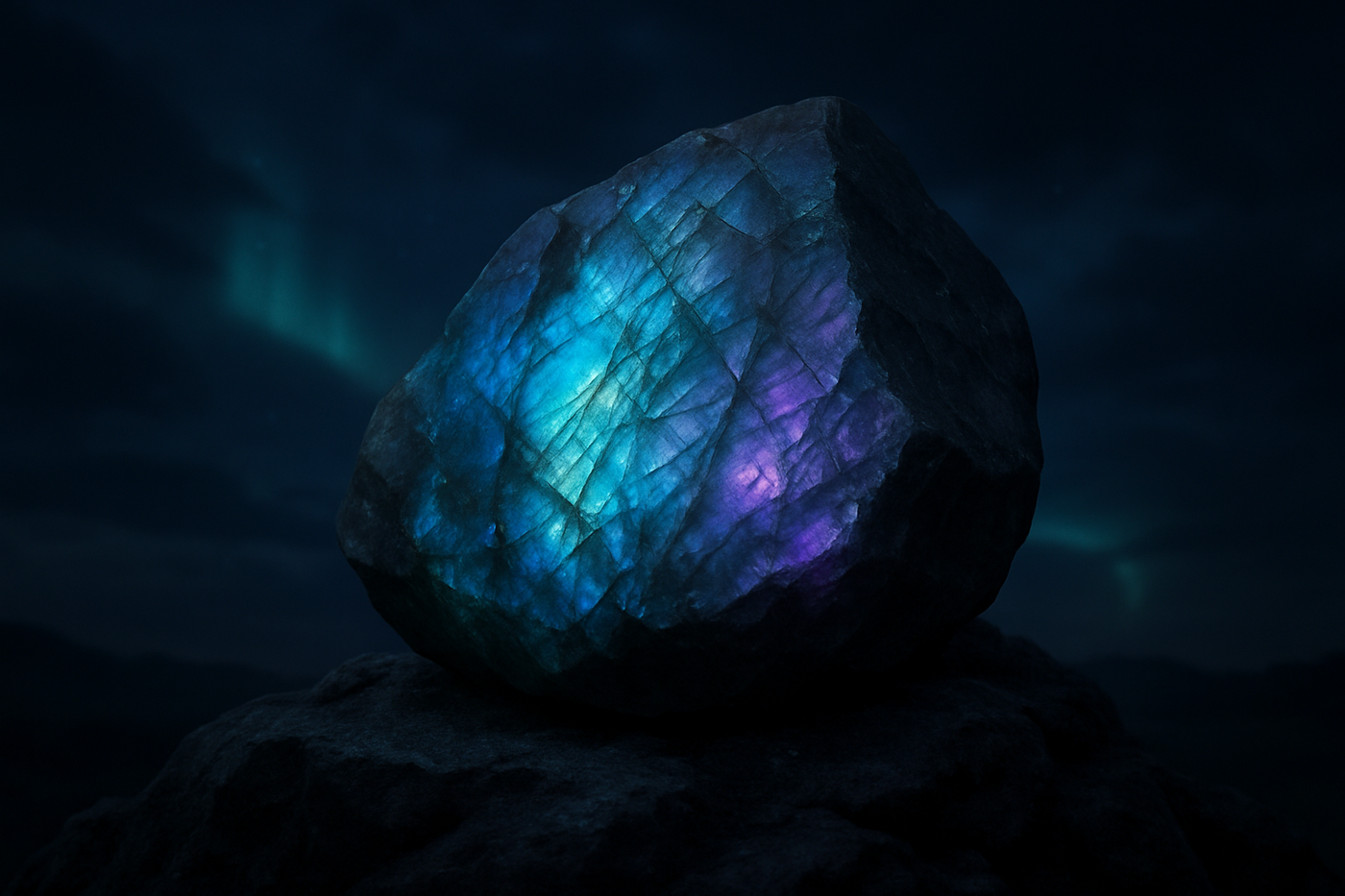
Labradorite is known as the Stone of Transformation and Magic — a feldspar mineral prized for its shifting flashes of blue, green, gold, and violet light, called labradorescence. Spiritually, it's believed to awaken intuition, shield the aura from negative energy, and guide the bearer through periods of deep personal change. Its swirling colors are said to mirror the Northern Lights, connecting the stone to ancient sky myths and modern crystal healing alike, which is why it's one of the most requested stones for meditation, protection work, and major life transitions.
Hold a piece of labradorite up to the light and something strange happens: a stone that looked like plain gray rock suddenly ignites with electric blue-green fire. It feels less like geology and more like a secret being revealed only to those patient enough to look twice.
That flash — fleeting, unpredictable, almost alive — is exactly why generations of miners, mystics, and healers have treated labradorite as something more than decoration. It seems to hold a piece of the aurora itself, trapped inside stone, waiting for the right angle of light to let it speak.
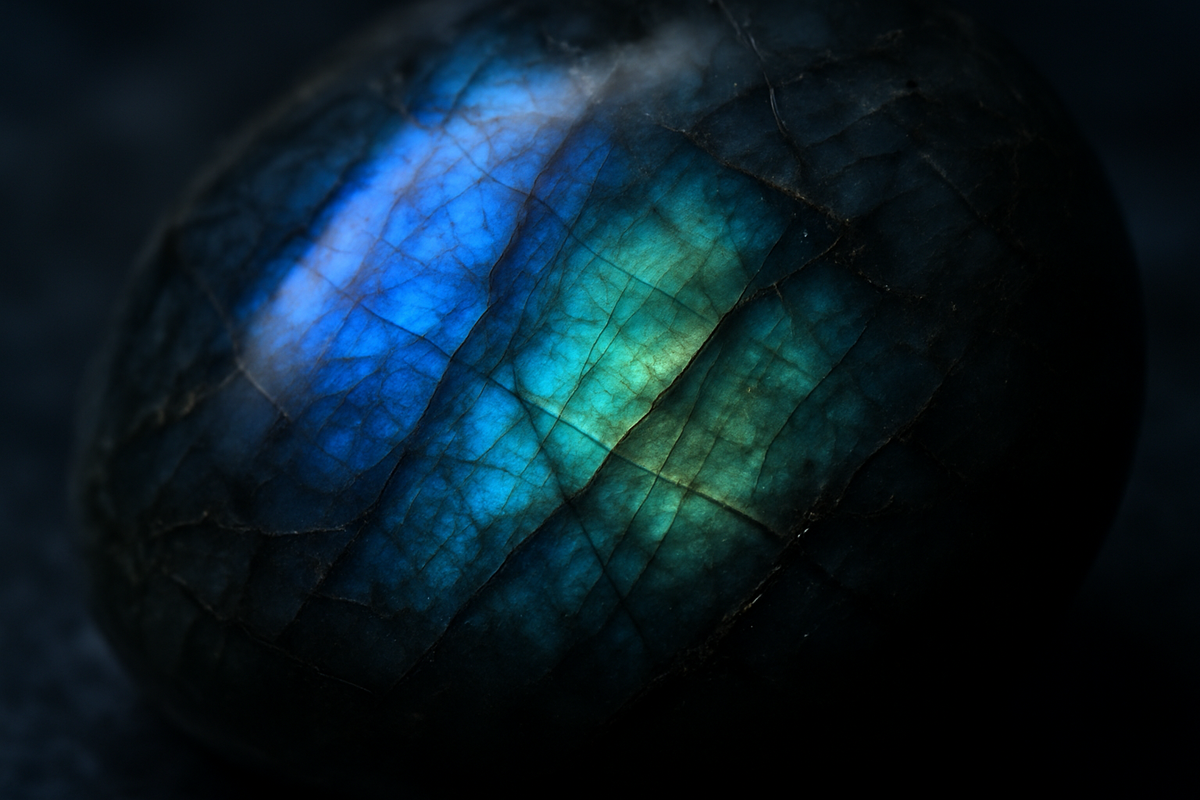
Labradorite is a plagioclase feldspar mineral first documented by Moravian missionaries near Nain, Labrador, Canada, in 1770 — which is how the stone got its name. Its signature optical effect, labradorescence, occurs because light entering the stone bends and reflects off thin internal layers of alternating composition, splitting into distinct bands of color. No two pieces flash exactly alike, which is part of why the stone feels so personal to those who work with it.
Chemically, labradorite sits close to sunstone and moonstone on the feldspar family tree, but its coloring is far more dramatic. Base tones range from steel gray to black, blue-gray, or even a rare champagne shade, while the labradorescent flash can appear in blue, green, gold, violet, or a full rainbow spread depending on the thickness and spacing of the mineral's internal layers. Gemologists call this specific optical effect the Schiller effect, and it's the same physical principle — thin-film interference — that produces the sheen on a soap bubble.
Metaphysically, labradorite is called the stone of magicians, shamans, and seers because it's thought to strengthen the mind's veil-crossing abilities — intuition, psychic perception, and lucid awareness. Crystal healers often describe it as a stone that reveals your own inner light while simultaneously acting as a shield, deflecting the energetic "leaks" that occur when we overextend ourselves emotionally.
The most enduring origin story comes from the Inuit of Labrador and Nunavik. According to the legend, the Northern Lights were once trapped inside a great rock along the coastline. A wandering warrior struck the rock with his spear, freeing most of the lights to dance across the sky forever — but some remained sealed inside the stone itself. That trapped aurora, the story says, is what still flickers inside every piece of labradorite today.
After Moravian missionaries brought labradorite specimens back to Europe in the late 1700s, it quickly became a curiosity among mineralogists and eventually a favorite of Victorian jewelers, who prized its unpredictable flash as a "living stone" and often set it in mourning jewelry alongside jet and onyx. Norwegian folklore separately links a similar shimmering feldspar found along the coast to the aurora borealis, with local fishermen describing it as sky-fire cooled into rock.
Madagascar and Finland are two of the largest modern sources of labradorite, along with the spectrolite variety mined specifically near Ylämaa, Finland, since the 1940s. In both regions, the stone has been carried by travelers, sailors, and fishermen as a guardian stone — something to hold onto during long journeys, harsh winters, or difficult decisions where clear judgment matters most.
The dominant flash color in a piece of labradorite is often used by crystal practitioners to fine-tune its intended use, since each hue is believed to resonate with a different chakra or intention.
| Flash Color | Associated Chakra | Primary Meaning |
|---|---|---|
| Blue | Throat Chakra | Clear communication, honest expression |
| Green | Heart Chakra | Emotional healing, compassion |
| Gold | Solar Plexus | Confidence, personal power |
| Violet | Third Eye / Crown | Intuition, spiritual insight |
| Spectrolite (rainbow, Finland) | All Chakras | Full-spectrum energy alignment |
Labradorite is often reached for during anxious or uncertain seasons of life. Practitioners say it calms overactive thoughts, reduces stress-driven overthinking, and helps quiet the inner critic that flares up during change. It's also considered useful for people-pleasers, as it's thought to reinforce healthy energetic boundaries so empathy doesn't tip into exhaustion.
In crystal healing traditions, labradorite is associated with supporting the respiratory system, easing tension-related discomfort, and promoting restful sleep when placed near the bed. As with all crystal work, these beliefs are complementary and not a substitute for medical care.
Most commonly linked to the third eye chakra, labradorite is used to enhance intuition and inner vision, though blue-flash stones are favored for throat chakra work and green-flash pieces for heart-centered healing. Some practitioners layer several flash colors together — a practice sometimes called stacking — to work on more than one chakra during a single session.
Dreaming of labradorite is often interpreted as a sign that hidden truths are about to surface — a message that your intuition already knows something your conscious mind hasn't caught up to yet. If the stone appears glowing or flashing in a dream, it may point to an approaching turning point or a spiritual awakening. A dull or cracked labradorite in a dream can suggest fear of change or a need to protect your energy from someone draining it.
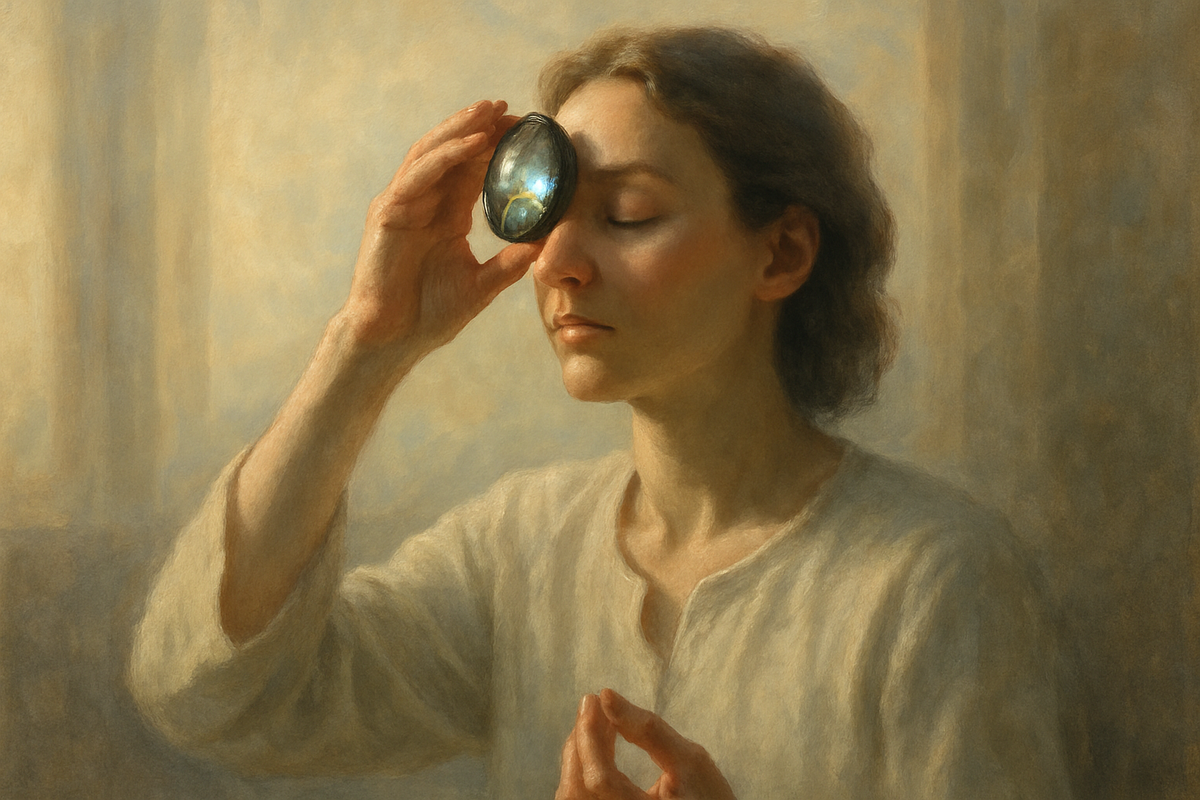
Cleanse labradorite under moonlight, with sound (singing bowls or bells), or by smudging with sage — avoid prolonged sunlight, which can dull its flash over time. Because it sits at a moderate 6–6.5 on the Mohs hardness scale, store it separately from harder stones like quartz to prevent scratching.
While labradorite is often claimed as a general all-purpose stone, astrologers frequently recommend it for signs drawn to intuition, transformation, and independent thinking. It pairs especially well as a supporting stone for Aquarius, whose visionary nature resonates with the stone's magical reputation, and for Pisces, given its deep connection to intuition and dreams. Fire sign Leo also benefits from labradorite's ability to reveal inner confidence without ego, while grounded, detail-oriented Virgo can use it to soften self-criticism during periods of change.
Spiritually, labradorite is believed to strengthen intuition, protect the aura from negative energy, and support smoother emotional transitions during major life changes. Many practitioners use it as a meditation stone to access deeper self-awareness and psychic clarity.
There's no traditional restriction against wearing labradorite, though some practitioners caution highly sensitive or empathic individuals to pair it with grounding stones, since its intuitive-opening properties can feel intense at first. As with any crystal practice, it should complement — not replace — medical or mental health care.
No, though they're related feldspar minerals. Moonstone displays a soft, glowing sheen called adularescence, while labradorite shows a bold, multicolored flash called labradorescence, making the two visually and energetically distinct despite belonging to the same mineral family.
Many people place labradorite near entryways or windows to act as a protective filter for incoming energy, or on a desk to support focus and creative problem-solving. It's also commonly kept on nightstands to encourage vivid dreams and restful intuition work overnight.
Discover what Opalite really is, its meaning, colors (blue, pink, purple), chakra links, healing uses, and how to spot authentic p…
Introduction to Peridot, Sardonyx, and Spinel August boasts of three different options – peridot, sardonyx, and spinel – making it…
Introduction to Topaz and Citrine November’s birthstones, topaz and citrine, are reminiscent of the sun’s golden glow as the leave…