Animal Symbolism
Magpie Symbolism: Spiritual Meaning, Omens & Dream Guide
Magpie symbolism explained: one for sorrow/two for joy, spirit animal traits, dream meanings, and what it means when a magpie cros…
 KnowMastery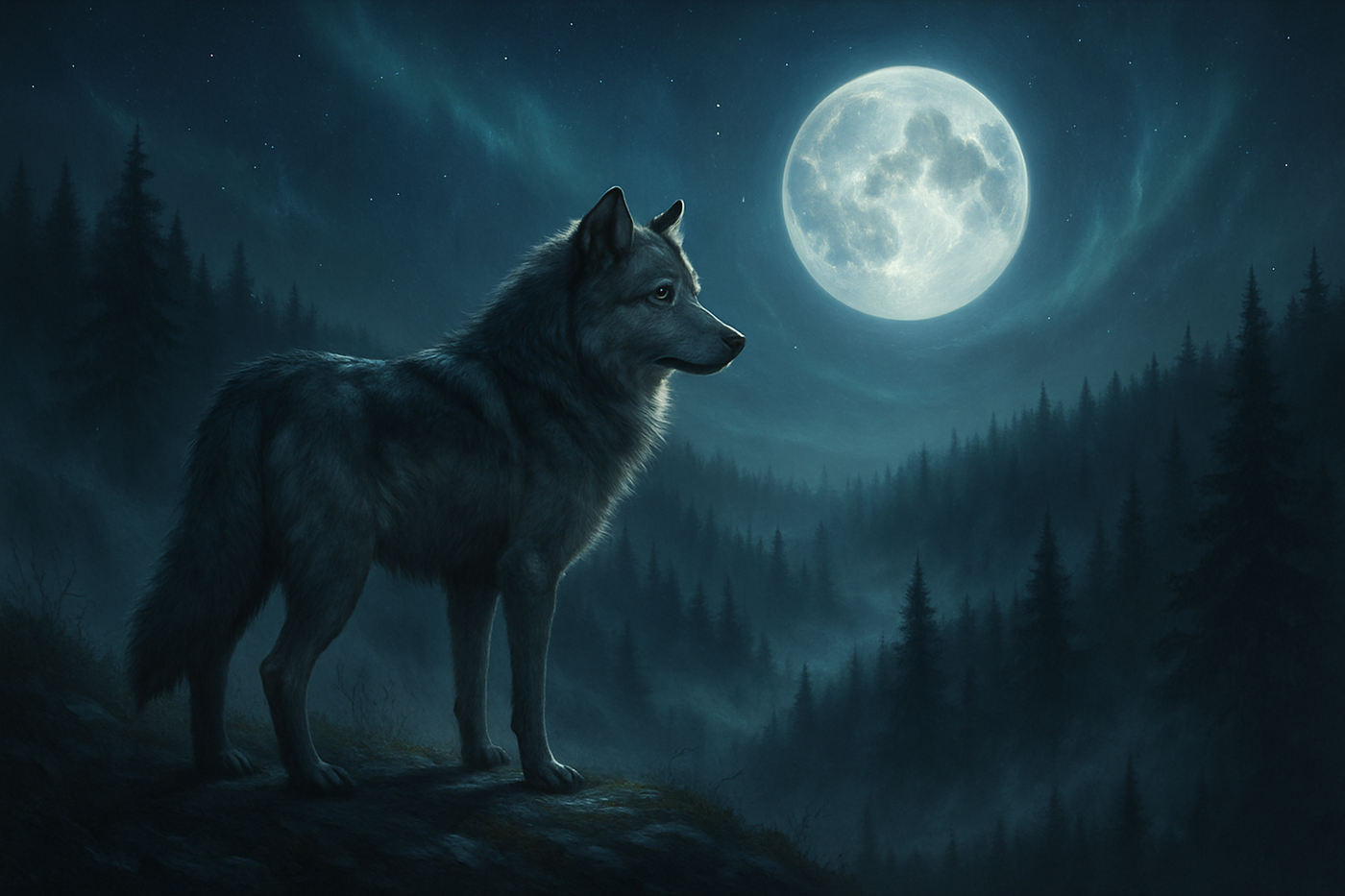
A wolf symbolizes loyalty, intuition, freedom, and leadership — representing the balance between fierce independence and deep devotion to family and community. Across cultures, the wolf is seen as a guide between worlds: a teacher of trust in one's inner voice, a protector of loved ones, and a reminder that independence and belonging can coexist. When a wolf appears in your life — whether in the physical world, in a dream, or as a recurring thought — it is widely interpreted as a call to reclaim your authentic power and reconnect with your pack.
There is a reason the howl of a wolf raises the hair on your arms before your mind even understands why. It is a sound older than language—one that speaks directly to something buried deep in the human nervous system, a memory of firelight, cold nights, and the comfort of not being alone.
For thousands of years, people have looked to the wolf and seen a mirror. Fierce yet devoted. Solitary yet fiercely social. Feared yet revered — much like the scorpion, whose sting is read as both warning and protection rather than pure menace. To encounter this animal, even symbolically, is to be asked a quiet question: are you honoring both your wild nature and your need for connection?
At its core, the wolf represents a paradox that humans have always found magnetic: the tension between the individual and the group. Wolves hunt with extraordinary cooperation, raise pups communally, and maintain some of the strongest family bonds in the animal kingdom—yet they are also solitary travelers capable of covering enormous distances alone. This duality is why wolf symbolism so often centers on these themes:
Color shifts the meaning of the wolf almost as much as behavior does, which is why "black wolf meaning" and "white wolf meaning" are two of the most common questions people bring to this symbol. A black wolf is most often associated with shadow work, hidden strength, and protection—it represents the parts of yourself you keep concealed, the instincts you haven't fully trusted yet, and the quiet power that moves unseen. Seeing a black wolf, whether in a dream or in art, is frequently interpreted as an invitation to face what you've been avoiding rather than something to fear.
A white wolf, by contrast, is almost universally tied to purity, spiritual guidance, and clarity. In many winter and northern traditions, the white wolf is viewed as a messenger from the ancestors or the spirit world, appearing during moments that call for discernment and higher guidance. Where the black wolf asks you to look inward, the white wolf is often said to point you outward, toward a decision or path that requires moral clarity.
The grey wolf, the most common coloring in nature, is generally treated as the archetypal wolf itself—representing balance, adaptability, and the full spectrum of wolf symbolism without leaning toward either shadow or light. Many traditions read the grey wolf as a sign that you are being asked to integrate both instinct and wisdom rather than choose one over the other.
In shamanic and animistic traditions, the wolf is frequently regarded as a power animal or spirit guide—a presence that walks alongside a person during a period of transformation. Unlike animals associated with fragility or fleeting beauty, such as the hummingbird, the wolf's spiritual message tends to be one of grounded strength and sustained commitment rather than momentary joy.
Spiritually, the wolf is thought to appear when:
Many practitioners of animal totem work believe the wolf teaches that true strength is not found in isolation, but in knowing when to stand alone and when to call upon your community—much like how the hawk is said to symbolize clear vision from above, the wolf symbolizes clear direction from within.
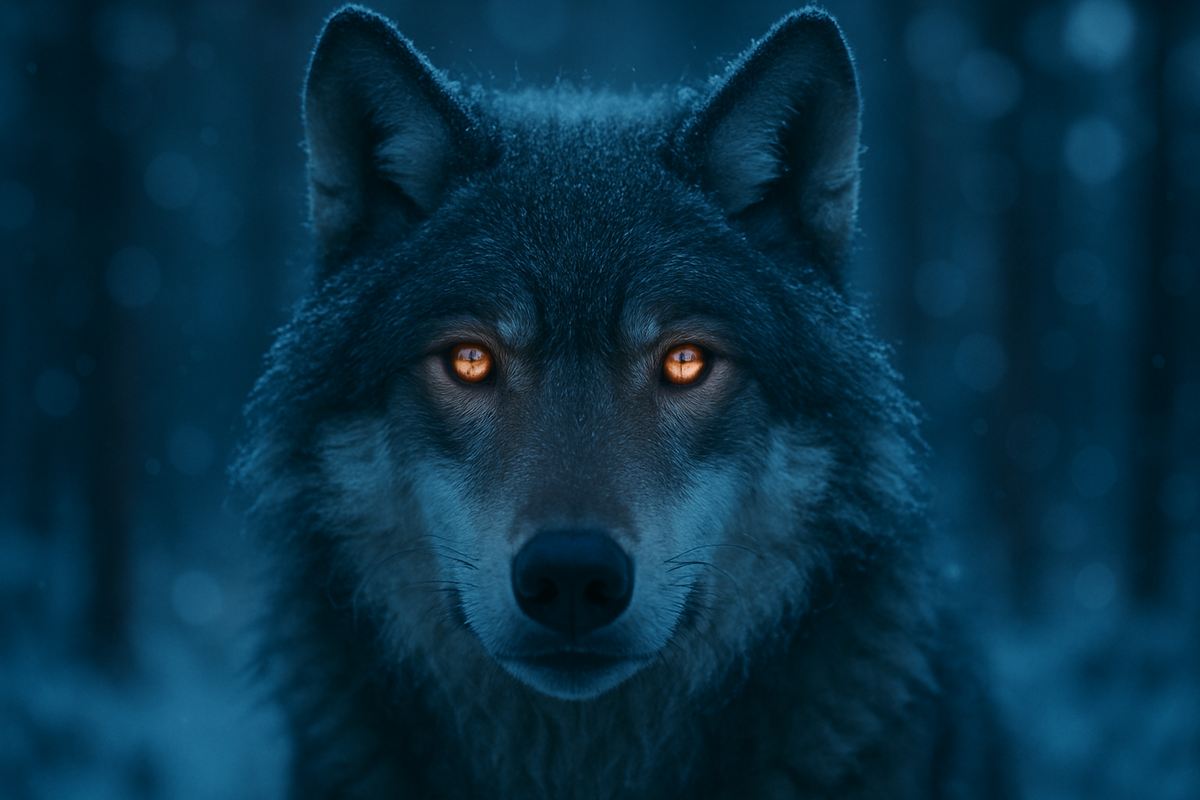
Among many Native American nations, the wolf holds a place of profound respect. The Pawnee's Skidi band, known to other tribes as the 'Wolf People,' associated the wolf with the star Sirius, which they called the Wolf Star, and in wider Native American tradition wolves were seen as guardians linking the worlds of the living and the dead. In Anishinaabe tradition, Ma'iingan is a wolf said to have walked alongside 'Original Man,' and Ojibwe belief holds that the trickster-hero who rules the afterlife shares that role with a wolf brother whose fate runs parallel to his own.
In Norse mythology, wolves occupy a complex space of both menace and majesty. Odin, the All-Father, kept two wolves, Geri and Freki, as loyal companions who accompanied him into battle and to whom he gave his own share of food, trusting wine alone to sustain him. Yet the same mythology features Fenrir, the monstrous wolf destined to devour Odin himself during Ragnarök, illustrating the wolf's role as both guardian and harbinger of fate.
Rome's very founding myth centers on a she-wolf, the Lupa Capitolina, who found and nursed the abandoned twins Romulus and Remus. Here the wolf is not feared but honored as a nurturing, life-giving force—proof that even in Western antiquity, the wolf was seen as a protector rather than solely a predator.
Turkic mythology's Asena legend describes a she-wolf, often depicted in tradition as grey, who raised a surviving boy and became the ancestral mother of the Göktürks, with her story revered as a symbol of common descent across Turkic peoples. This origin story cemented the wolf as a symbol of national identity, resilience, and survival against annihilation.
Apollo Lykeios (or Lyceus) was a Greek cult aspect linked in tradition to wolves — though scholars debate whether the epithet originally meant 'wolf' or 'light' — and a sanctuary to Apollo Lyceus, sometimes translated as 'Apollo the wolf-god,' stood at the Lyceum in Athens. The myth of Lycaon, a king transformed into a wolf by Zeus as punishment for his cruelty, added a darker layer—casting the wolf as a symbol of both divine judgment and the thin boundary between civilization and savagery.
| Culture / Variant | Wolf Association | Core Meaning |
|---|---|---|
| Native American (Pawnee, Ojibwe) | Pathfinder, spiritual companion | Guidance, connection to the unseen world |
| Norse | Odin's companions & Fenrir | Loyalty and cosmic fate |
| Roman | She-wolf of Romulus & Remus | Nurturing, protection, origin |
| Turkic/Mongolian | Asena the ancestral wolf | Survival, national identity |
| Greek | Apollo Lykeios & Lycaon | Divine judgment, the wild within |
| European Folklore | Big Bad Wolf, werewolves | Hidden danger, transformation, fear of the wild |
| Black Wolf (Color Symbolism) | Shadow, mystery, hidden power | Shadow work, inner strength, protection |
| White Wolf (Color Symbolism) | Purity, ancestral messenger | Spiritual guidance, clarity, divine insight |
| Grey Wolf (Color Symbolism) | The archetypal wolf | Balance, adaptability, resilience |
Dreaming of a wolf often reflects your relationship with instinct, trust, and belonging. As with many animal dream symbols, the context and emotional tone of the dream matter more than the animal itself.
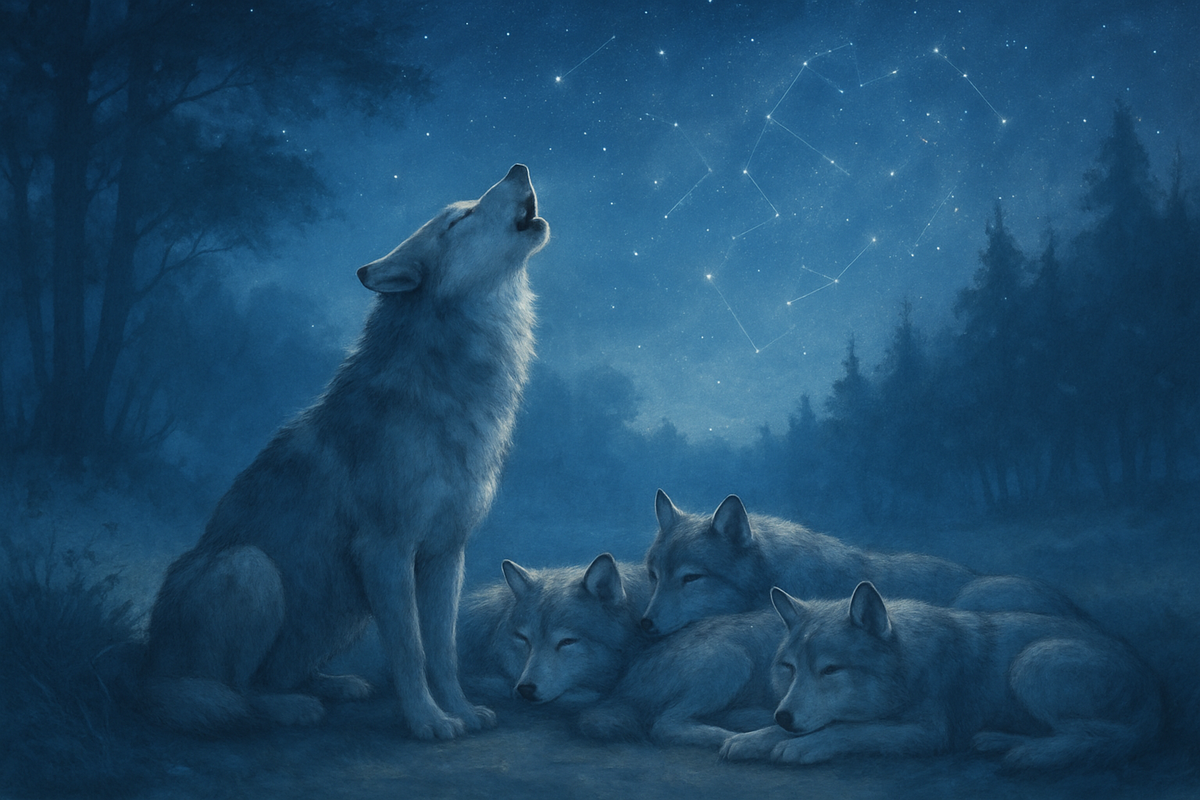
Seeing a wolf in waking life—whether in person, in a photograph that catches your eye repeatedly, or even in casual conversation—is often interpreted as a nudge toward reclaiming personal power. This encounter tends to arrive during moments when you've been overly compliant, ignoring your gut feelings, or isolating yourself from people who genuinely support you.
Just as encountering an owl is said to signal hidden truths coming to light, and much like the ladybug, long regarded as a positive omen of good fortune, a wolf crossing your path is rarely considered a bad sign. Rather, it affirms that you're on the right track and encourages you to act with more confidence and instinctual clarity in a specific area of your life—career, relationships, or a decision you've been delaying.
In matters of the heart, the wolf is often read as a symbol of deep, almost unbreakable loyalty. Wolves famously mate for life and co-parent their young with shared responsibility, which is why wolf symbolism in relationships tends to center on partnership, fierce protectiveness, and commitment rather than fleeting romance. To dream of or repeatedly notice a wolf while thinking about a relationship is often interpreted as confirmation that the bond you're in—or seeking—is built for the long term.
Within twin flame and soulmate frameworks, the wolf frequently represents the moment a "lone wolf" finally meets a counterpart who matches its intensity without threatening its independence. Two wolves walking side by side, rather than one leading and one following, is a common image used to describe a twin flame connection: two whole, self-sufficient individuals choosing to run together rather than needing to merge into one. If wolf imagery has been surfacing during a significant relationship or reunion, many spiritual readers interpret it as a sign that mutual respect and equal footing are essential to the connection's survival.
If the wolf has appeared as a meaningful symbol in your life, consider these practical ways to engage with its energy:
These same principles of trusting instinct and reading subtle signs appear across animal symbolism generally—consider how crow symbolism also emphasizes paying attention to intuitive nudges in daily life.
Spiritually, seeing a wolf is often interpreted as a sign to trust your instincts and reconnect with your closest support system. It can also indicate an upcoming period of personal transformation or a call to embrace both independence and community simultaneously.
The wolf is generally considered a positive and empowering omen, symbolizing loyalty, guidance, and inner strength, though interpretations vary by culture. In European folklore the wolf sometimes carries a more cautionary meaning related to hidden danger, but most spiritual traditions, from Norse to Native American, view it as protective rather than threatening.
In the Bible, the wolf carries dual symbolism depending on context. Passages such as Matthew 7:15, which warns of "wolves in sheep's clothing," use the wolf to represent deception and false prophets, while the prophecy in Isaiah 11:6, describing the wolf lying down with the lamb, uses the same animal as a symbol of radical peace and divine restoration.
A wolf tattoo most commonly symbolizes loyalty, family, protection, and a fiercely independent spirit, making it popular among people who value both self-reliance and close bonds with loved ones. Color choices add nuance—black wolf tattoos often lean toward themes of shadow work and resilience, while white wolf tattoos are more frequently chosen to represent spiritual guidance or a fresh start.
Among nations like the Pawnee and Ojibwe, the wolf is seen as a pathfinder and spiritual guide, closely tied to loyalty, family, and the connection between the physical and spiritual worlds. It is often regarded as a teacher animal that models balance between independence and community devotion.
Dreaming of a wolf usually relates to themes of trust, instinct, and belonging, with the specific meaning shaped by the wolf's behavior in the dream. A calm or guiding wolf often points to awakening intuition, while a threatening wolf may reflect fears or instincts you've been avoiding in waking life.
Magpie symbolism explained: one for sorrow/two for joy, spirit animal traits, dream meanings, and what it means when a magpie cros…
What do moths really symbolize? Explore the spiritual meaning of moths—transformation, intuition, and hidden light—across myth, dr…
Discover what a praying mantis really means spiritually, from patience and intuition to ancient myths, dream meanings and totem wi…