Greek Mythology
Orpheus and Eurydice: Myth, Story, Ending & Symbolism
The full myth of Orpheus and Eurydice, its ancient sources, ending, and what the tragic backward glance symbolizes about grief and…
 KnowMastery
Mythical creatures are legendary beings — part animal, part human, or entirely otherworldly — that appear in the folklore, religion, and oral traditions of cultures across the globe. They range from fire-breathing dragons and shape-shifting werewolves to wise centaurs and vengeful spirits, and they typically embody a culture's fears, values, or explanations for the unknown. This guide catalogs over 100 mythical creatures from Greek, Norse, Japanese, Hindu, Native American, Slavic, and other traditions, organized by type — aquatic, airborne, humanoid, undead, elemental, and hybrid — so you can explore the full breadth of world mythology in one place.
Non-humanoid mythical beasts are legendary creatures with no human body plan — entirely animal, reptilian, or elemental, such as the Kraken, Hydra, Cerberus, dragons, and Thunderbird. They differ from humanoid beings like elves and shape-shifters such as werewolves, or hybrids like centaurs, which retain a human-like torso or shape. Below is the complete list of non-humanoid mythical beasts grouped by Aquatic, Airborne, Land, Elemental, and Demon/Monster categories.
For quick scanning, here is every non-humanoid mythical beast covered in this guide — entirely animal, reptilian, or elemental in form — tagged by category:
If you only have a minute, these are the ten creatures that dominate global searches and pop culture:
| Creature | Origin/Culture | Type | Known For |
| Dragon | Global (many cultures) | Hybrid/Reptilian | Fire breath, guarding treasure |
| Phoenix | Greek | Airborne | Rebirth from its own ashes |
| Unicorn | European | Land | Purity and healing horn |
| Kraken | Norse | Aquatic | Sinking entire ships |
| Centaur | Greek | Humanoid Hybrid | Wild strength, occasional wisdom |
| Medusa (Gorgon) | Greek | Humanoid Monster | Petrifying gaze, snake hair |
| Werewolf | European | Shapeshifter | Transforming under a full moon |
| Griffin | Greek/Persian | Hybrid | Guarding treasure and sacred sites |
| Mermaid | Global | Aquatic | Alluring song, dual nature |
| Cerberus | Greek | Hybrid Guardian | Guarding the underworld's gate |
| Sphinx | Egyptian/Greek | Hybrid | Riddles and guardianship |
| Kitsune | Japanese | Shapeshifter | Fox-spirit trickery and wisdom |
| Yeti | Himalayan | Humanoid Cryptid | Elusive mountain sightings |
| Baba Yaga | Slavic | Humanoid/Witch | Hut on chicken legs |
| Valkyrie | Norse | Spirit | Choosing the slain for Valhalla |
| Wendigo | Algonquian | Demon/Monster | Cannibalistic curse of the wilderness |
| Fenrir | Norse | Legendary Beast | Prophesied to break free at Ragnarok |
| Naga | Hindu/Buddhist | Shapeshifter | Serpent guardians of water and treasure |
| Djinn | Islamic | Elemental | Wish-granting and mischief |
| Banshee | Irish | Spirit | Wailing omen of death |
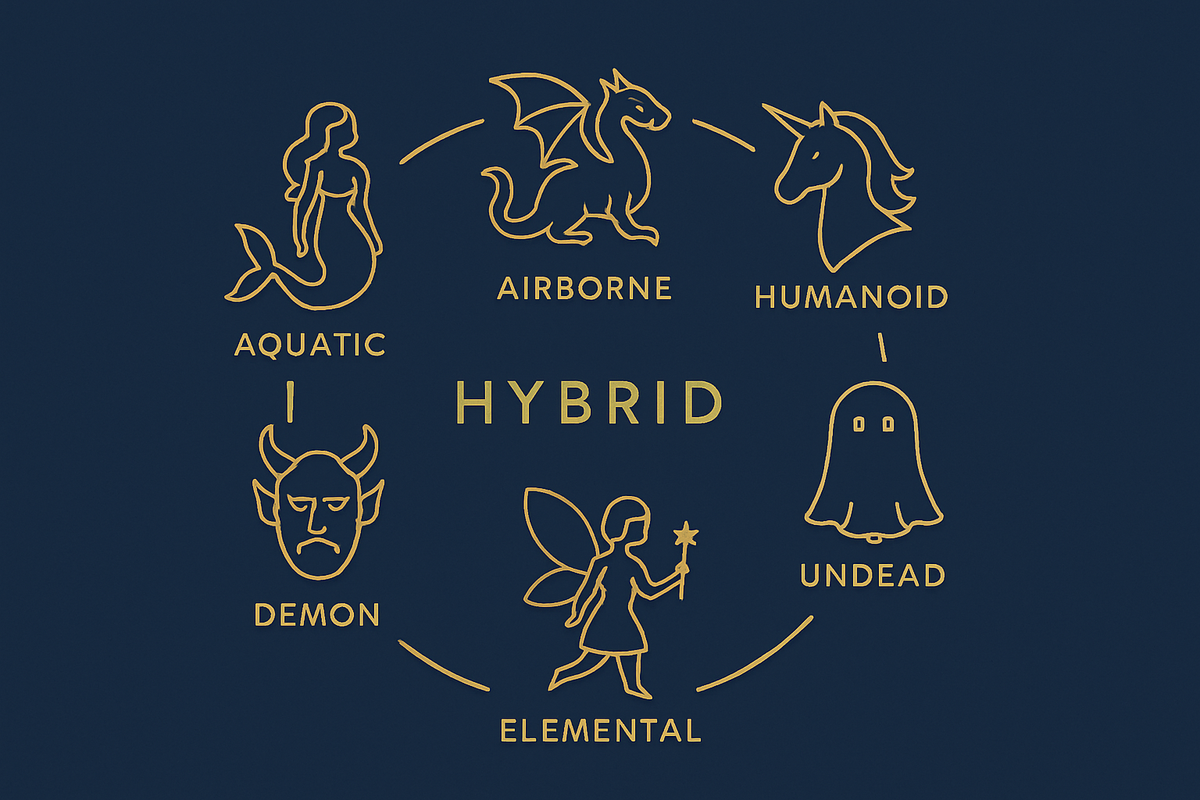
| Aquatic and Marine Creatures | Elemental Creatures |
| Land Creatures | Undead and Spirits |
| Airborne Creatures | Demons and Monsters |
| Humanoid Creatures | Hybrid Creatures |
| Shape-shifters | Legendary Beasts |
The deep seas have always inspired dread and wonder. Note: the shape-shifting Selkie also belongs here by habitat, but since its defining trait is transformation, its full entry appears in the Shape-shifters section below.
According to Greek mythology, Cetus was an enormous sea monster often represented as a large fish or whale. It was sent by Poseidon to ravage the coast of Ethiopia and was eventually killed by Perseus.
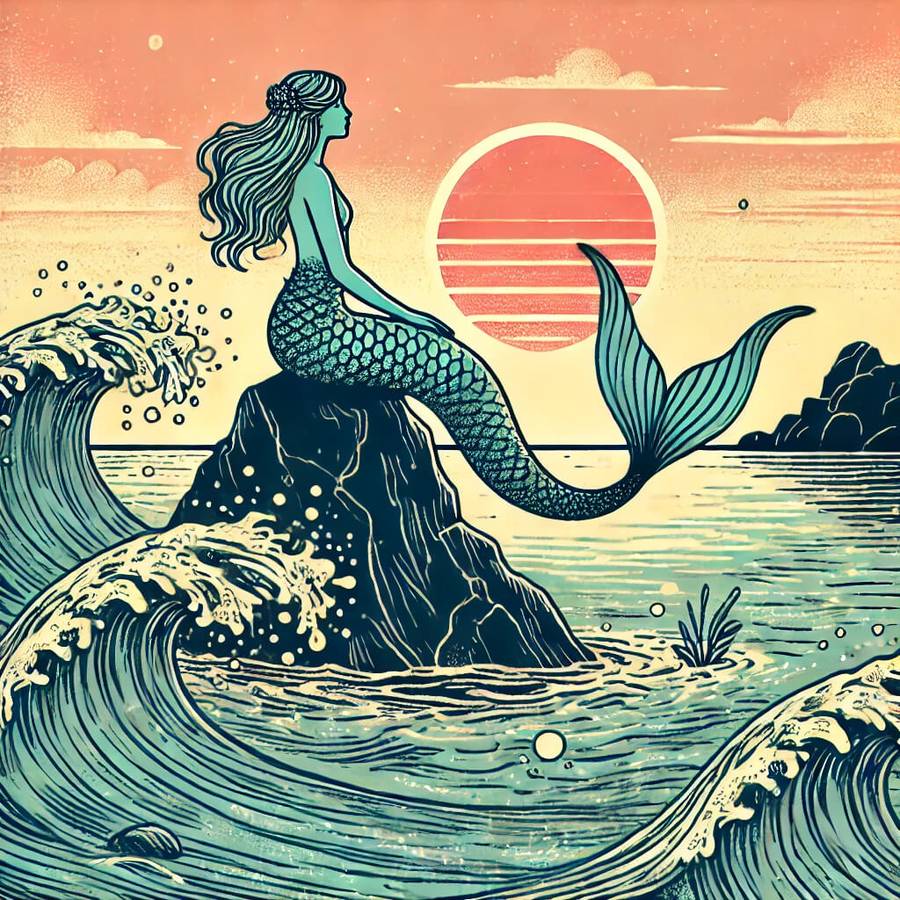
Mermaids are legendary aquatic creatures with the upper body of a human and the tail of a fish. Various cultures have stories about mermaids, which often describe them as beguiling but dangerous beings.
The Kraken is an enormous legendary sea monster said to dwell off the coasts of Norway and Greenland. It is usually depicted as a giant squid or octopus capable of pulling whole ships down into the depths.
In Hebrew mythology, Leviathan is a gigantic sea serpent associated with chaos and destruction. It is mostly linked with cataclysms at the end of time and divine confrontations.
The Loch Ness Monster, affectionately known as Nessie, is a cryptid said to inhabit Loch Ness in Scotland. Descriptions vary, but it is often depicted as a large, long-necked creature resembling a plesiosaur.
The Sirens are mythical creatures from Greek mythology known for their enchanting music and singing voices. They lured sailors toward rocky shores, causing shipwrecks.
More Aquatic Creatures:
A unicorn is a legendary creature with the body of a horse and one spiraling horn projecting from its forehead. It is often considered an emblem of purity and grace, believed to heal sickness and purify water with a touch of its horn.
The Phoenix is a mythical bird that cyclically regenerates through its ashes. Whenever it dies, the phoenix bursts into flames and rises again, representing immortality, rebirth, and renewal.
The Griffin is a legendary creature with the body of a lion and the head and wings of an eagle. Often seen as protectors over treasures or sacred places, Griffins represent bravery, combining the king among beasts with the king among birds. You'll see this creature referenced again in the Legendary Beasts section below, alongside the article's original featured image.
The Chimera is a mythical creature with the body of a lion, a goat's head rising from its back, and a serpent's tail. It breathes fire and is often seen as an allegory for chaos in Greek mythology; it was famously slain by Bellerophon riding Pegasus, a steed connected to Zeus's divine favor.
Dragons are legendary creatures found in many different cultures around the world. Usually portrayed as large scaled serpents with wings and fire breath, dragons may represent potency, wisdom, or peril, and are commonly perceived as sentinels of great wealth.
The Basilisk, meaning "the king of serpents," has the power to kill anyone who looks into its eyes with its deadly glare. It is usually represented as a large snake or a rooster-headed, snake-bodied being.
The Manticore is an imaginary animal from Persian legend with the body of a lion, the tail of a scorpion, and a human head. It possesses extreme ferocity along with the ability to shoot poisonous spines from its tail, symbolizing fearsome danger.
More Land Creatures:
Pegasus is a legendary winged horse in Greek mythology, born from the blood of Medusa and later favored by Zeus, who placed him among the stars. Pegasus is closely connected with the Muses and stands for poetic inspiration and heroism.
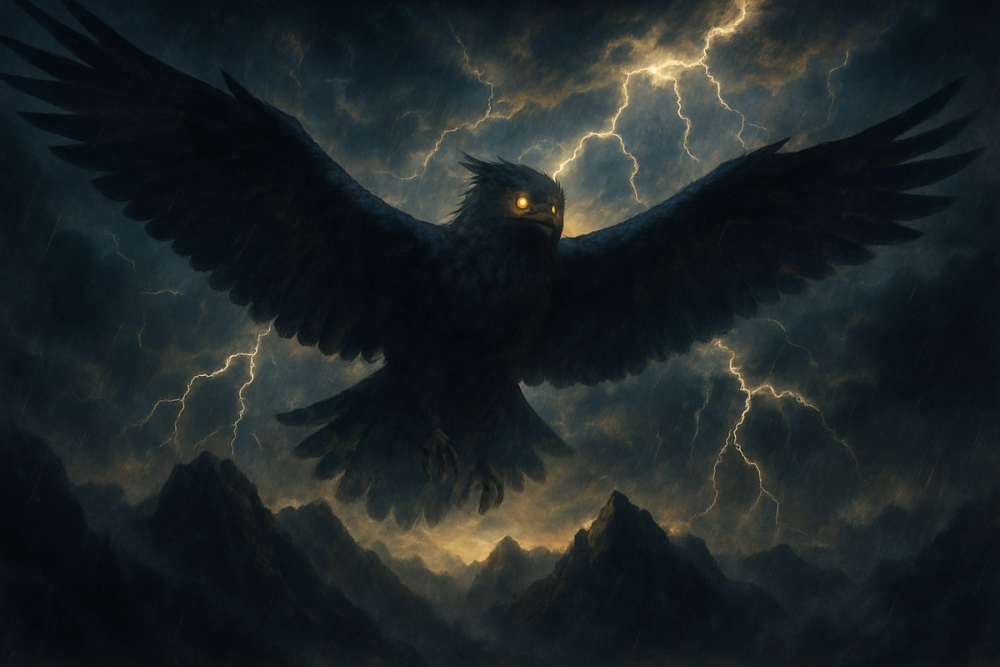
A Harpy is a bird-like creature with the face of a woman instead of a beak. Harpies are often seen as agents of punishment who snatch away wicked people, representing the destructive power of storm winds.
The Roc is a mythical Arabian bird known for its size and strength, great enough to lift elephants with its claws. It appears in stories such as Sinbad the Sailor from One Thousand and One Nights.
Did you know? The Roc's gigantic size and prodigious strength have been frequently portrayed in literature and folk tales as representing the overpowering mightiness of nature.
The Thunderbird is a powerful spirit in Native American folklore that brings thunder, lightning, and rain. Often depicted as a massive bird capable of controlling weather, it symbolizes strength and protection.
In Hinduism, Garuda is a birdlike mythical creature serving as the mount for Lord Vishnu. With an eagle's wings and a human-like body, Garuda represents swiftness and power.
A Wyvern resembles a dragon but has only two legs instead of four, along with wings. Unlike traditional dragons, wyverns are usually associated with poison or pestilence.
Tengu are supernatural beings from Japanese folklore, often depicted with a mix of human and bird features, including wings and sometimes a long red nose. Once considered dangerous demons, they later became protective, if mischievous, mountain and forest spirits skilled in martial arts.
More Airborne Creatures:
In Greek mythology, the Minotaur had the upper body of a man and the lower body of a bull. It lived in Crete's labyrinth until it was finally killed by Theseus, representing the destructive power of untamed animalistic instincts.
Centaurs were wild creatures with the upper body of a man and the lower body of a horse. Most were known for savagery, though some, like Chiron, were wise healers and teachers.
Greek Satyrs have goat legs, horns, and ears below the waist paired with a human-like torso. These beings are associated with Dionysus, god of wine, and are known for their love of music and dance.
Medusa is the most famous of the Gorgons, female figures with serpents instead of hair and the power to turn onlookers to stone. In myth, Medusa was cursed by Athena after a transgression in her temple, transforming her into the monster later slain by Perseus.
Elves are fictional creatures described in Germanic folklore as beautiful, immortal beings with supernatural powers. They are usually linked with nature, artistry, and wisdom, and are common in fantasy literature and games.
In Norse mythology, dwarfs were known for their short stature and strength, used in mining and crafting. They're famous as skilled blacksmiths who created powerful magical items.
Did you know? According to Norse mythology, dwarfs forged some of the most powerful weapons in existence, including Thor's hammer Mjolnir and Odin's spear Gungnir.
Cyclopes were giant beings from Greek mythology with a single eye in the center of their forehead. The most famous, Polyphemus, was blinded by Odysseus in Homer's Odyssey, and cyclopes were also said to forge Zeus's thunderbolts.
Baba Yaga is a fearsome witch from Slavic folklore who lives in a hut that stands and spins on chicken legs. She can be a helper or a devourer of those who seek her out, embodying both danger and hidden wisdom.
The Yeti is a legendary ape-like cryptid said to inhabit the Himalayan mountains of Nepal and Tibet. Described as a large, hairy, bipedal creature, it symbolizes the untamed, unexplored wilderness at the edge of human reach.
Did you know? Yeti sightings are so embedded in Himalayan culture that parts of Nepal have informally protected the creature's supposed habitat.
Bigfoot, also called Sasquatch, is a legendary ape-like creature said to roam the forests of North America. Reported sightings describe a large, hairy, bipedal being, and it remains one of the most searched-for cryptids in modern folklore.
More Humanoid Creatures:
A werewolf is a legendary creature that changes from human form into a wolf or lupine beast, typically on the full moon. The transformation is usually involuntary, and those afflicted are considered cursed, torn between human emotion and animalistic instinct.
Nagas are mythological serpentine entities found in both Hinduism and Buddhism. Able to take the form of humans, snakes, or a combination of both, they are usually depicted as protectors of treasures and water bodies.
A skin-walker is a witch or sorcerer from Native American folklore with the ability to transform into any animal they desire. These beings are often considered malevolent and use their powers for harmful purposes.
In Japanese mythology, a kitsune is an intelligent fox creature with magical abilities, most notably shape-shifting into human form. Kitsune can be benevolent or malevolent depending on the tale and are often associated with Inari, the Shinto god of rice.
Selkies are creatures from Scottish and Irish folklore who transform from seals into humans by shedding their skins. They are known for their beauty and the tragic stories surrounding their human lives, often involving a stolen skin that traps them on land.
The Púca is an Irish fairy creature known for its ability to shift between the shape of a horse, a goat, or a human, often appearing at night to lead travelers on wild, harmless rides.
More Shapeshifters:
A salamander in alchemy is typically represented as being able to emerge unharmed from fire, symbolizing invulnerability to heat since ancient naturalists like Pliny the Elder believed real salamanders had this capability.
For alchemists, an undine is a water elemental appearing as a beautiful female figure, representing fluidity and emotion associated with the element of water. Undines are believed to inhabit rivers, lakes, and other bodies of water.
In alchemy, a Sylph is an air spirit frequently represented as a winged, ethereal being. It stands for intellect, communication, and the breath of life, all associated with the element of air.
In alchemical tradition, gnomes are considered earth spirits who dwell beneath the surface among minerals. These small, stocky creatures represent stability, material wealth, and the hidden aspects of nature.
Islamic mythology holds djinn as supernatural beings capable of manipulating fire, air, and water, making them elemental spirits. They represent great power and boundless freedom, though malevolent intentions sometimes accompany these entities.
Efreet is a kind of djinn associated with flames, appearing huge in size with a fiery body and tremendous, often destructive, might. Within Islamic tradition, such creatures are believed to cause great harm when unleashed.
Nymphs were minor deities in Greek mythology associated with natural sites like trees, rivers, and mountains. These eternally youthful beings often served as part of Artemis's retinue, embodying the spiritual fabric of the environments they inhabited.
More Elemental Creatures:
Vampires are legendary monsters found across many world cultures, commonly shown as undead beings who sustain themselves by consuming the blood of the living. Vampires are known for their immortality, superhuman strength and speed, and sensitivity to sunlight.
According to Haitian folklore, zombies are reanimated corpses brought back through necromancy or other magic. In modern media, they appear as mindless creatures driven to consume flesh.
Often called apparitions or spirits, ghosts represent the souls of individuals who have passed away but continue to linger among the living. They typically take transparent forms, able to pass through walls with minimal physical interaction.
The Banshee is a spirit from Irish folklore known for its mournful wail, believed to foretell the death of a family member. She is often depicted as a pale woman with long hair, appearing at night as an omen.
In German folklore, poltergeists are noisy ghosts that throw things, make loud noises, and move objects around houses, causing fear among occupants. Some accounts describe them as more playful than malicious.
Valkyries are female figures in Norse mythology who decide which warriors die in battle and which survive, escorting the fallen to Valhalla. They represent fate, honor, and the glory of a warrior's death.
Did you know? Belief in vampiric revenants dates back over a thousand years, with many European villages once staking or burning corpses believed to rise from the grave.
More Undead and Spirits:
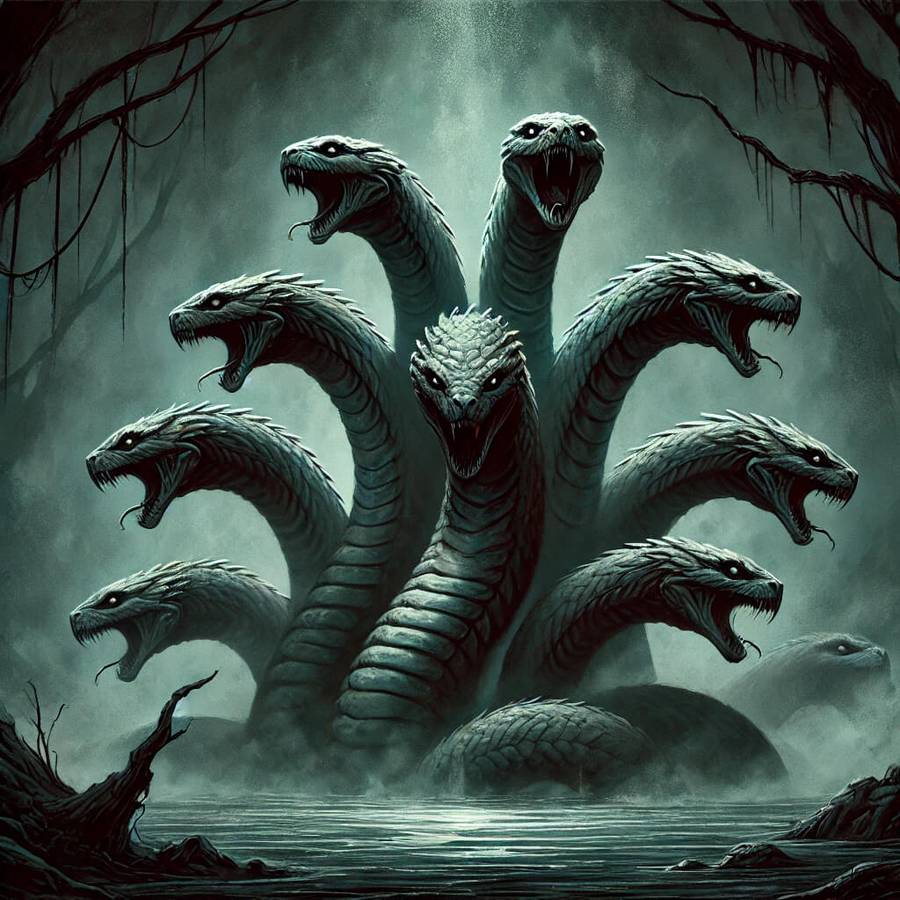
A serpentine water monster from Greek mythology, the Hydra has many heads, and if one is cut off, two more grow in its place. The hero Heracles killed the Hydra as part of his Twelve Labors.
Cerberus is a multi-headed dog that guards the entrance to the underworld in Greek mythology, preventing the dead from leaving and the living from entering. It is usually depicted with three heads and a serpent's tail.
The Chupacabra is a legendary creature from Latin American folklore that attacks and drinks the blood of livestock, especially goats. It is often described as a reptilian creature with spikes along its back.
Oni are demons from Japanese folklore, often portrayed as large, fearsome creatures with horns, sharp teeth, and claws. They are strong, malevolent beings who bring disaster and chaos wherever they go.
The Balrog is a demonic creature from J.R.R. Tolkien's Middle-earth legendarium, able to manipulate fire due to its shadowy form. These ancient servants of Morgoth were powerful, destructive beings.
The Wendigo is a malevolent spirit from Algonquian folklore associated with winter, famine, and cannibalism. A person could transform into one through greed or cannibalism, symbolizing insatiable hunger and the dangers of excess.
Rakshasas are powerful demons in Hindu mythology known for their shape-shifting abilities and taste for human flesh. Some are portrayed as monstrous warriors, while others can disguise themselves as beautiful humans to deceive the virtuous.
Did you know? Heracles defeated the Hydra's regeneration with help from his nephew Iolaus, who cauterized the neck stumps with a firebrand after each decapitation.
More Demons and Monsters:
The Hippogriff is a mythical creature with the body of a horse and the wings, head, and claws of an eagle. More than most creatures on this list, hippogriffs stand for honor and bravery.
The Sphinx has the body of a lion and the head of a human. In Egyptian mythology it is often a guardian figure, as seen in the Great Sphinx at Giza, while in Greek myth she asked travelers riddles and devoured those who answered wrong.
Did you know? In ancient Greek legend, the Sphinx's riddle was: "What goes on four legs in the morning, two at noon, and three in the evening?" The answer: a human, who crawls as an infant, walks upright in adulthood, and uses a cane in old age.
Mermen are the male versions of mermaids, with human-like upper bodies and fish-like lower halves. Across different mythologies, they sometimes protect sea creatures or warn sailors of coming danger.
Lamia is a creature from Greek mythology with the upper body of a woman and the lower body of a serpent, known for her beauty and her ability to entice and consume children. She represents dangerous, seductive female power.
The Kirin is a mythological creature from Japan resembling a combination of a dragon and a deer, regarded as a sign of good luck and prosperity, often associated with the arrival of a wise ruler. Note that the Chimera and Centaur, both true hybrids, are covered in full under Land Creatures and Humanoid Creatures respectively to avoid repetition.
More Hybrid Creatures:
Fenrir is a monstrous wolf from Norse myth, son of the trickster god Loki, prophesied to break free of his chains and play a major role at Ragnarok, the end-times battle between gods and giants.
The Nemean Lion is a beast from Greek mythology with golden fur so tough that no weapon could pierce it. It was killed by Heracles as one of his Twelve Labors, signifying an impossible task overcome.
Sleipnir is an eight-legged horse from Norse mythology that carries the chief god Odin. Known for incredible speed and the ability to travel between worlds, Sleipnir represents swift movement and the connection between the realm of gods and humans.
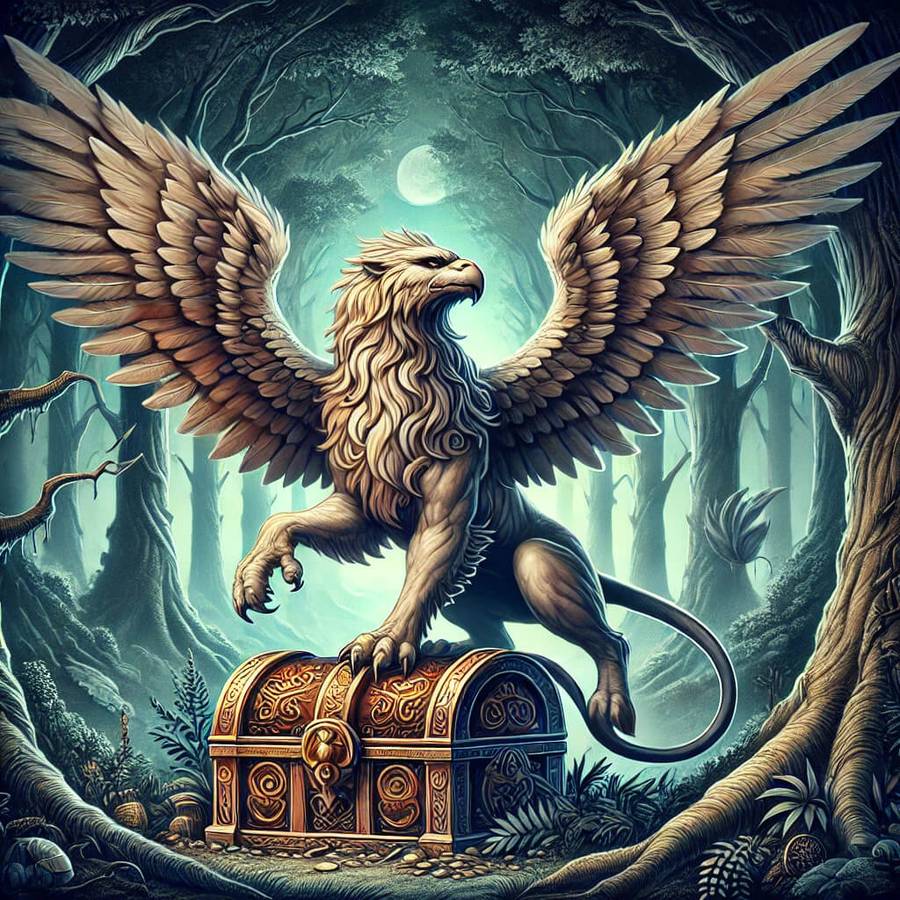
Jormungandr, also known as the Midgard Serpent, is a giant sea snake said to encircle the entire earth. Another child of Loki, it is destined to fight Thor during Ragnarok, representing the vastness and uncontrollability of natural forces. This same imagery of scale and power is echoed by the Griffin, Cerberus, and Chimera covered earlier in this guide — all frequently grouped together as the most iconic "legendary beast" archetypes in world mythology.
More Legendary Beasts:
For centuries, mankind has included mythical creatures in its stories to represent deepest fears, desires, and dreams. Whether lurking in the darkest seas, flying through the highest skies, prowling primordial woods, or ruling over undead kingdoms, these entities never cease to amaze us. They stand for what is still hidden and magical, connecting us to countless legends that shape our cultural background — signs marking extraordinary events beyond common reality.
There is no single fixed number — scholars have documented hundreds of distinct mythical creatures across world cultures, and many overlap or share traits across regions. This guide alone catalogs over 100 named creatures and variants, organized by type, and new cryptids and folklore figures continue to be documented today.
A myth is a traditional story, often involving gods or supernatural forces, that explains natural phenomena, origins, or cultural beliefs and is generally understood as symbolic rather than historical. A legend, by contrast, is typically rooted in a real person, place, or event that has been exaggerated or embellished over time, such as the Loch Ness Monster or Bigfoot.
A Chimera is a lion with a goat's head on its back and a fire-breathing serpent tail, symbolizing chaos in Greek mythology. A Griffin, meanwhile, has an eagle's head and wings on a lion's body and is typically considered a noble guardian of treasure rather than a destructive force.
Yes, many mythical beasts are thought to be based on actual living species. The Kraken may have come from sightings of giant squids, Yeti stories could be influenced by large unidentified primates in the Himalayas, and dragons may have been inspired by dinosaur bones or the remains of large reptiles.
The earliest recorded account of the Loch Ness Monster is traditionally traced to a 6th-century encounter attributed to Saint Columba, though it was recorded a century later in a river, not the loch itself, and skeptics view it as a stock hagiography motif rather than a true sighting. Modern interest was sparked in the 1930s following a wave of sightings and subsequent investigations.
Different cultures view dragons very differently. In Western traditions, they are shown as huge, fearsome, fire-breathing monsters representing evil forces that must be defeated by heroes, while in Eastern cultures such as China, they are seen as wise, benevolent creatures symbolizing power, strength, and prosperity.
Different cultures depict mermaids in different ways. In Greek mythology, they were often portrayed as dangerous beings who lured sailors to their death with enchanting voices, while other European folk tales paint them more kindly, sometimes helping humans or falling in love with them.
The phoenix represents immortality, rebirth, and renewal. As its legend goes, when a phoenix dies it burns up only to rise again from its ashes, making it an eternal symbol of life and the ability to start over after complete destruction.
A common trait among shape-shifters in folklore is the ability to change forms, typically into animals or other people, sometimes with magical or supernatural origins. They are often known for trickery and deceit, though some serve as protectors and guides in various legends.
The full myth of Orpheus and Eurydice, its ancient sources, ending, and what the tragic backward glance symbolizes about grief and…
Who was Prometheus? Explore the Titan's myth, punishment, fire symbolism, tattoo meaning, and what he teaches us about progress an…
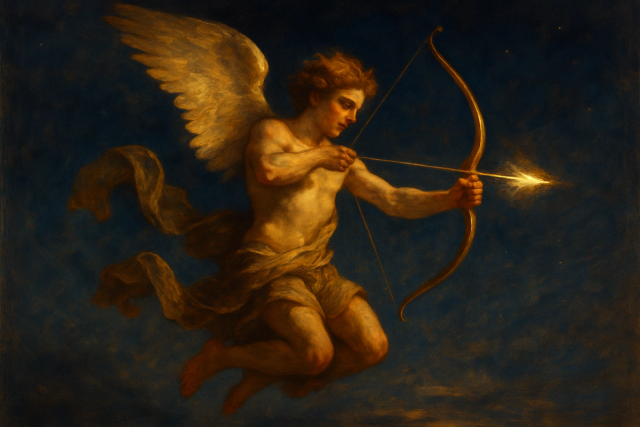
Who is Eros? Discover the Greek god of love and desire—his myths, symbols, spiritual meaning, and how to invoke his passionate ene…