Animal Symbolism
Bison Symbolism: Spiritual Meaning, Totem & Dream Guide
Bison symbolism meaning explained: spirit animal traits, totem power, dream meaning, bison vs buffalo, and sacred Indigenous wisdo…
 KnowMastery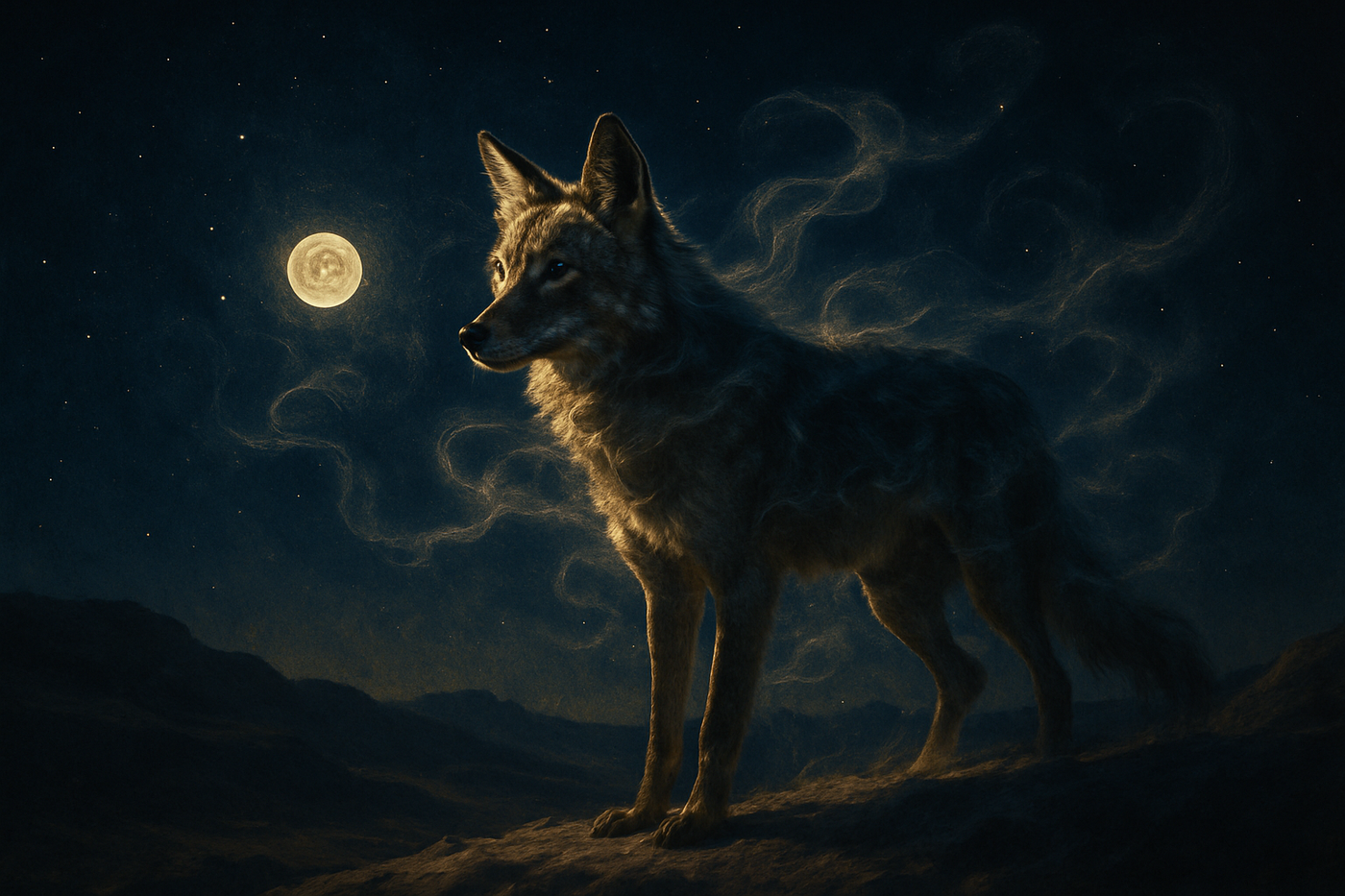
What does a coyote symbolize spiritually? A coyote symbolizes adaptability, cleverness, transformation, and the ability to thrive through both mischief and mastery. Often seen as a trickster figure, the coyote appears to teach you how to laugh through uncertainty, outsmart chaos, and trust your instincts when logic runs out. Whether you've spotted one crossing your path, heard its howl at night, or dreamed of one repeatedly, the coyote's message centers on resilience, reinvention, and seeing through illusion.
Last updated by the KnowMastery Editorial Team, specialists in animal symbolism and spirit-animal traditions. Sources include Native American oral tradition, Aztec mythology, and modern totem-animal practice.
Have you ever heard a coyote howl in the distance and felt it stir something primal in your spirit? That sound, that moment—it often marks a turning point. In myth, dream, and totemic tradition, coyotes appear when you’re being asked to navigate life’s curveballs with wit and resilience. Here’s what the coyote is really telling you.
Spiritually, the coyote is a shapeshifter—a symbol of survival, humor, trickery, and the thin line between chaos and wisdom. Much like the crow's trickster and omen symbolism, the coyote uses cunning not to harm but to reveal what's hidden beneath appearances.
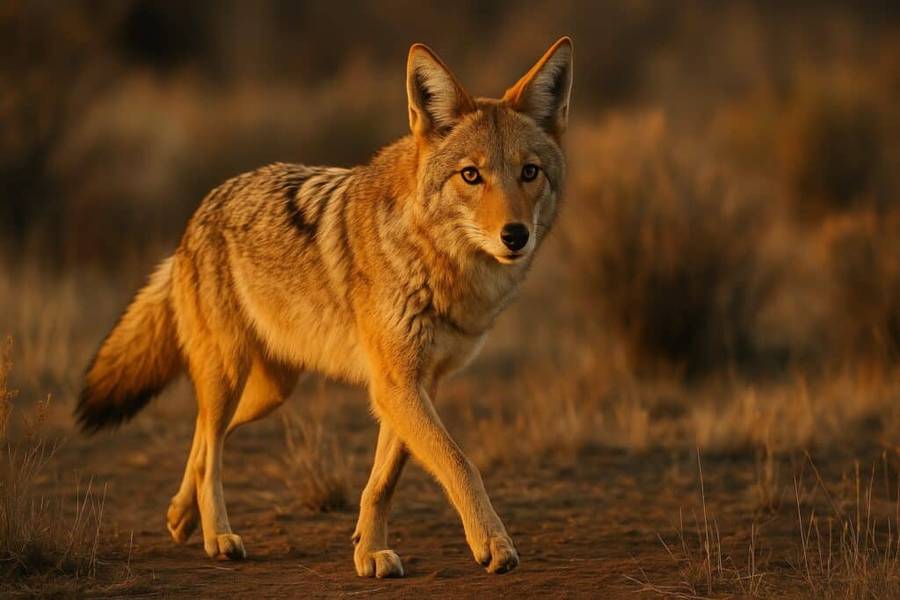
“The coyote teaches through contradiction—he tricks you into awakening.”
If the coyote is your spirit guide, you walk a path of unpredictable brilliance. You learn through detours. Your strength? You thrive where others fall apart. If you're comparing totem energies, the coyote's cunning contrasts with the sharp-eyed vigilance of the hawk as a totem animal or the quiet inner-knowing of the owl spirit animal guide—all three are messenger animals, but the coyote delivers its lessons through mischief rather than stillness.
Storytime: Kayla began seeing coyotes in her dreams during a season of betrayal and burnout. Each time, the coyote appeared smiling, elusive. At first, she thought it was mocking her pain. Later, she realized it was teaching her how to laugh, rebuild, and outsmart a system stacked against her. That’s coyote energy: tough love, cloaked in mischief.
If the coyote walks beside you, life won’t be easy—but it will be fiercely, wildly yours.
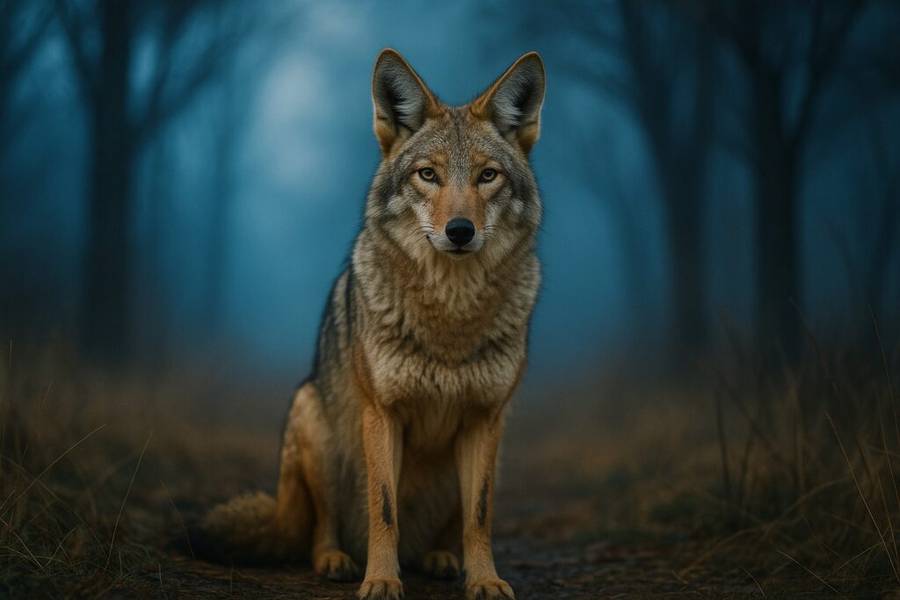
Dreaming of a coyote often means you’re being asked to embrace change, question illusions, or protect yourself from trickery. If you frequently track your dream symbols, it's worth comparing this to the spider's dream symbolism, another creature whose dream appearances often signal that something is being woven behind the scenes of your waking life.
| Dream Scenario | Interpretation |
|---|---|
| Coyote chasing you | You’re running from a truth or challenge you’re meant to outwit, not fear. |
| Coyote watching you silently | A spiritual warning: deception may be near—trust your intuition. |
| Hearing a coyote howl | A call to awaken your voice, your humor, your instinct. You’re too quiet about something that matters. |
| Talking coyote | Divine guidance is speaking through your subconscious—listen to the message, not the mouthpiece. |
Dream coyotes are not random. They are spirit-coded, often showing up at major turning points in your life path.
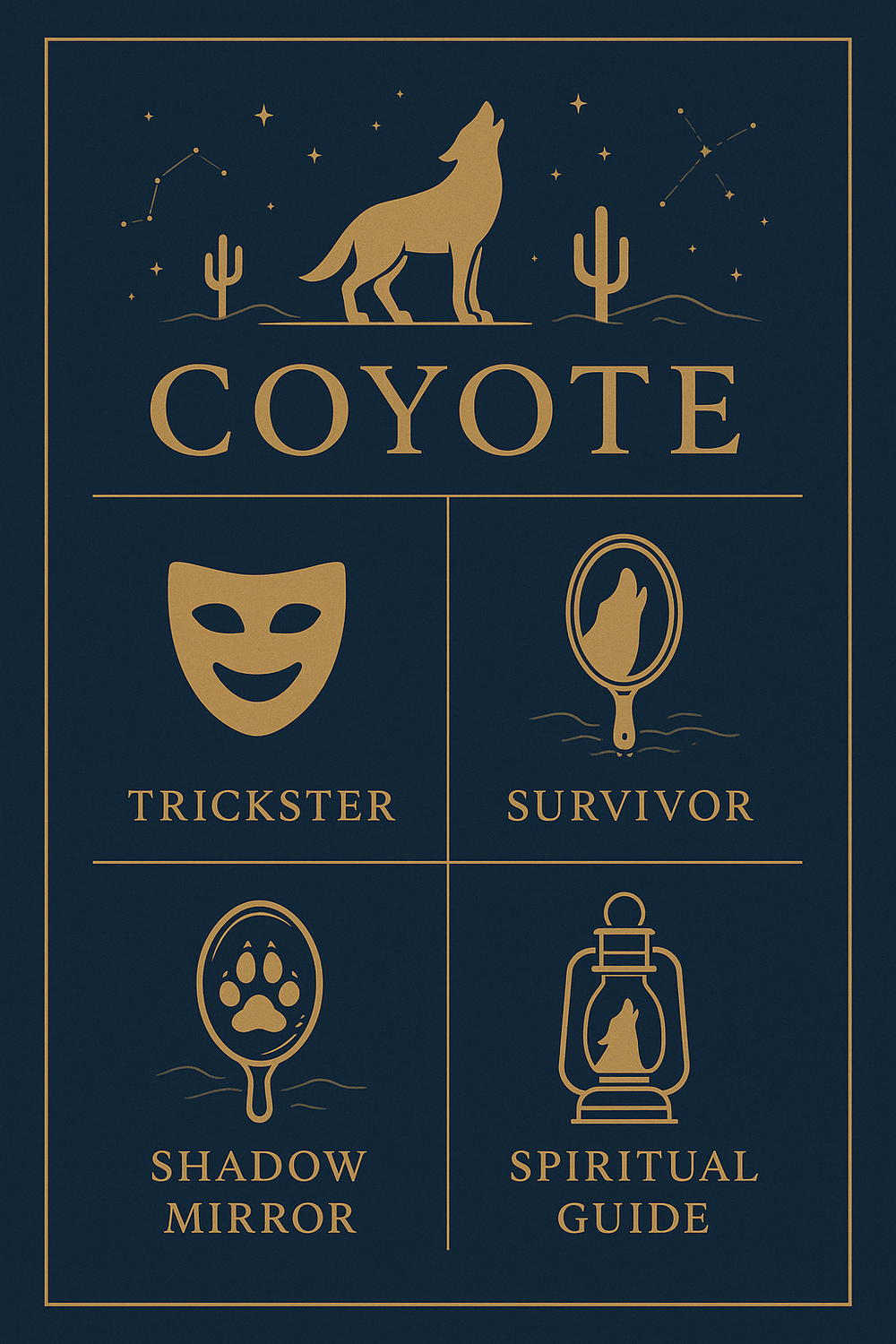
| Symbolic Role | Spiritual Meaning |
|---|---|
| Trickster | Teaches through reversals, pranks, or irony |
| Survivor | Adapts to anything—even the most hostile conditions |
| Shadow Mirror | Forces you to face your own contradictions |
| Spiritual Guide | Delivers truth through chaos and humor |
Seeing two coyotes together usually signals balance, partnership, or a message meant to be shared rather than kept to yourself. In the wild, coyotes typically pair up monogamously and raise their pups as a family unit, though their social structure is flexible and they can sometimes form looser packs of unrelated individuals.
In many traditions, seeing coyotes in numbers amplifies the message rather than diluting it—so pay closer attention to what you were thinking or discussing the moment they appeared.
Finding a dead coyote is rarely a literal omen of death—spiritually, it marks the end of an exhausting survival cycle and the release of an outdated persona or pattern. The coyote's trickster energy, when it appears "dead," suggests that the version of you who had to hustle, adapt constantly, or hide behind humor to survive is being asked to rest or retire.
This encounter often lands during periods of deep transformation, similar to the shedding symbolism carried by the scorpion's shadow and rebirth meaning—both animals ask you to let something die so something truer can emerge. A dead coyote on a road specifically can also be a nudge to slow down and stop outrunning a truth you already know.
Throughout history, the coyote has prowled through mythologies as more than just a wild dog—it’s a divine disruptor, a shapeshifter, and a teacher cloaked in mischief.
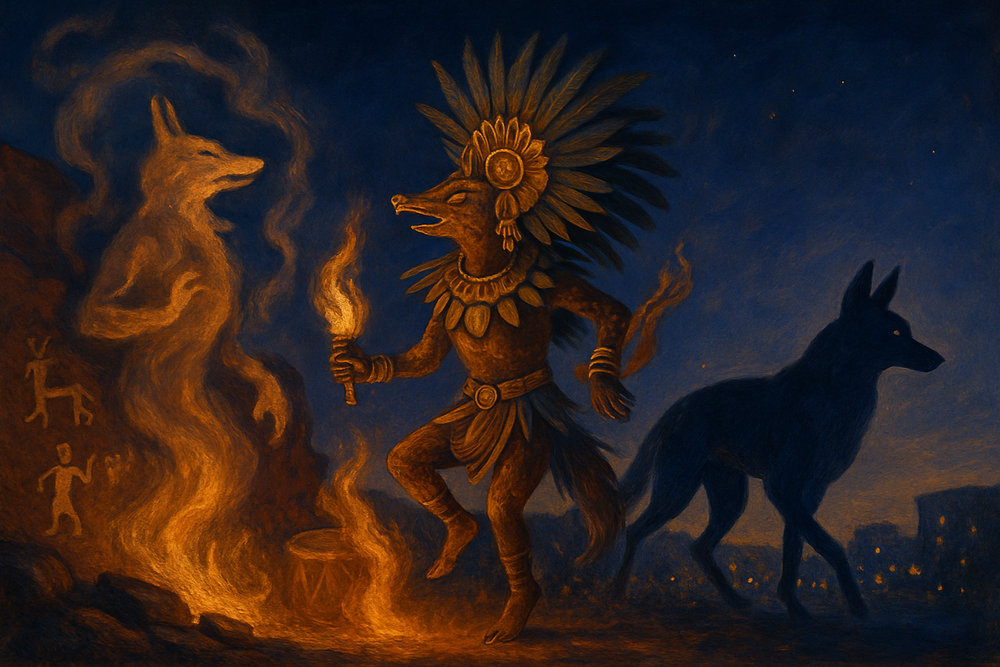
Among many Native American tribes, the coyote is revered and feared as the "Sacred Clown" or Trickster God. Known as a creator and a destroyer, he often brings both lessons and laughter. Some tribes see the coyote as a cosmic fool whose pranks ultimately lead to truth and balance.
The Aztecs honored the god Huehuecóyotl, or “Old Coyote.” He ruled over music, dance, and revelry, but also sowed confusion to unveil deeper truths. He was a trickster—but not a villain. His antics were meant to expose pretense and reveal authenticity.
Today, the coyote thrives even in concrete jungles. From Los Angeles alleys to suburban fields, the coyote is an icon of urban survival and evolution. Spiritually, this symbolizes your ability to adapt, evolve, and outwit stagnation no matter where you’re planted.
Across cultures and centuries, the coyote remains the same: unpredictable, unforgettable, and undeniably wise beneath the mask of mayhem.
Coyote, wolf, and fox symbolism often overlap since all three are canine messengers, but each carries a distinct spiritual signature. Use this comparison to identify which energy is actually speaking to you.
| Animal | Core Symbolism | Approach | Spiritual Message |
|---|---|---|---|
| Coyote | Adaptability, trickster wisdom, humor | Chaotic yet clever | "Laugh through the chaos and outsmart the trap." |
| Wolf | Loyalty, instinct, pack protection | Structured and protective | "Trust your tribe and lead with intuition." |
| Fox | Cunning, stealth, strategy | Solitary and calculated | "Outmaneuver obstacles quietly, without drawing attention." |
If you’ve seen, heard, or dreamt of a coyote recently, reflect on the following:
The coyote doesn’t just visit. It tests. It teaches. It transforms.
If you’re willing to dance with the trickster, you’ll emerge wiser, freer, and far more aligned with your wild truth.
Seeing a coyote during the day signals a spiritual wake-up call. It means a truth is trying to reveal itself in broad daylight—don’t ignore it. Pay attention to what feels off or too coincidental.
Yes, but not always in a fearful sense. A coyote crossing your path often warns that trickery, deception, or unexpected shifts are nearby. Stay alert, question what you're told, and double-check your path forward.
Hearing a coyote's howl is often a call from your higher self. It could be an invitation to speak your truth, release your fears, or reawaken your primal instincts. Coyotes howl not just for territory—but for connection.
Neither—and both. The coyote is an omen of transformation. It shows up when dualities (light/dark, truth/illusion, fear/joy) are at play in your life. It’s not "good" or "bad"—it’s catalytic.
Though not directly mentioned in the Bible, the coyote's symbolism aligns with the broader trickster archetype found in animals like the crow. Spiritually, it represents cunning, watchfulness, and divine disruption. Like prophets who deliver truth wrapped in riddles, the coyote carries sacred unpredictability.
Coyote color variations intensify the core message rather than change it. Some spiritual and folk traditions assign different meanings to a coyote's coat color, though these associations reflect personal or modern spiritual belief rather than documented cultural or biological fact.
In tattoo symbolism, a coyote is often chosen to represent qualities like adaptability, cunning, or resilience, though the exact meaning varies with the wearer's own intention and design. Many people choose it after surviving a major life reinvention, wearing it as a permanent reminder that they can outsmart and outlast whatever chaos comes next.
Bison symbolism meaning explained: spirit animal traits, totem power, dream meaning, bison vs buffalo, and sacred Indigenous wisdo…

Cicada symbolism explained: rebirth, patience, and voice, with dream meanings, cultural history, and ways to work with the sign.
Crows and ravens look alike but carry different spiritual meanings. Here's how to tell them apart and what each one is really tell…