General
Famous Wizards: 15 Legendary Magic-Wielders from Myth & Fantasy
Meet 15 legendary wizards — from mythological figures like Merlin, Circe & Baba Yaga to fantasy icons like Gandalf and Dumbledore.
 KnowMastery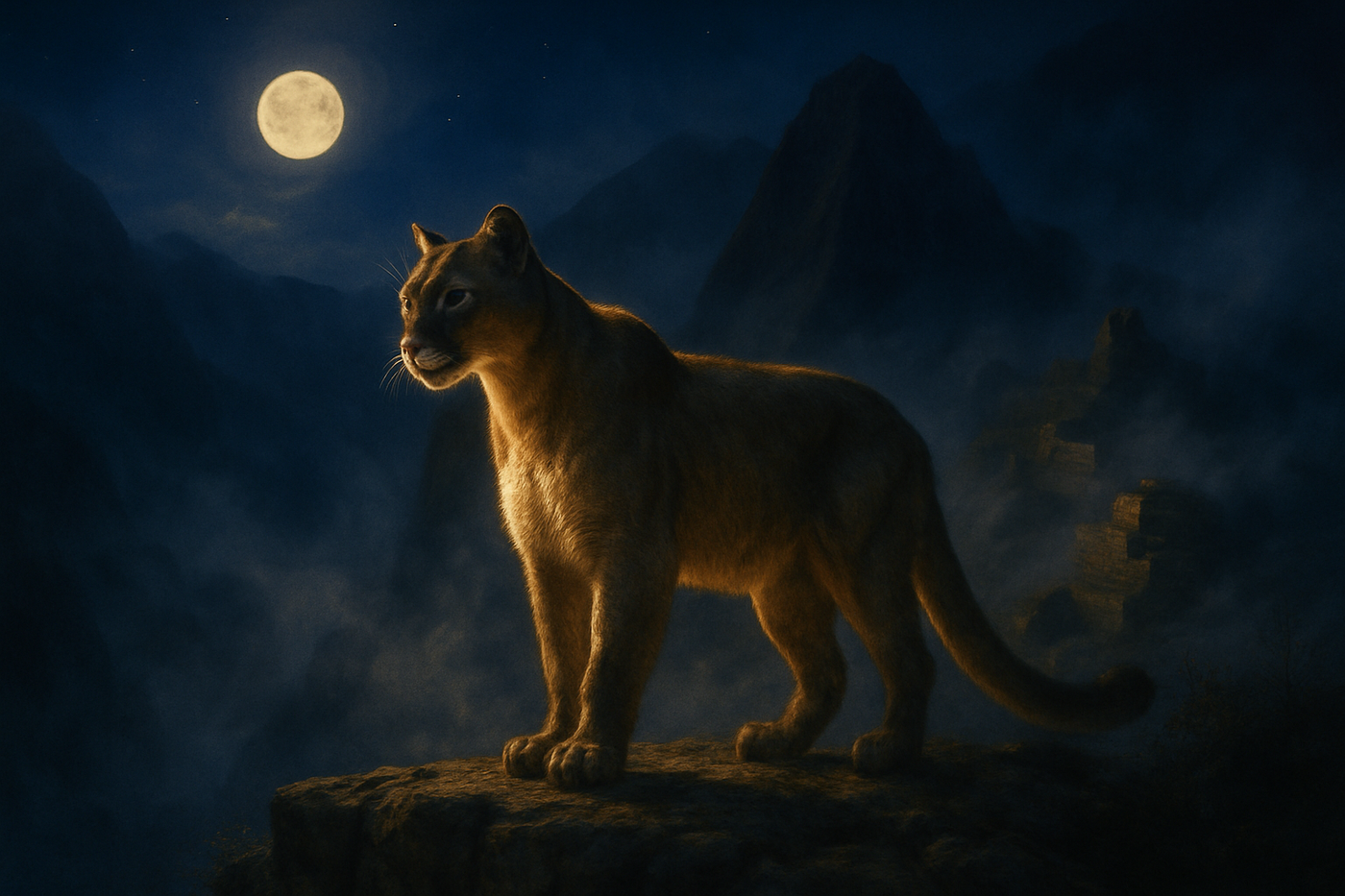
The puma symbolizes strength, stealth, independence, and quiet leadership. Also known as the cougar, mountain lion, or panther, this big cat has been revered across the Americas as a guardian spirit, a totem of inner authority, and a dream symbol pointing toward personal power. Rather than roaring for attention like a lion, the puma moves in silence — teaching that true strength doesn't need to announce itself.
In this guide, you'll discover what the puma represents spiritually, how different cultures — from the Inca to Native American tribes — have honored it, what it means to have the puma as a spirit animal or totem, how to interpret puma dreams, the meaning behind puma tattoos, and the distinct symbolism of the rare black puma (melanistic panther).
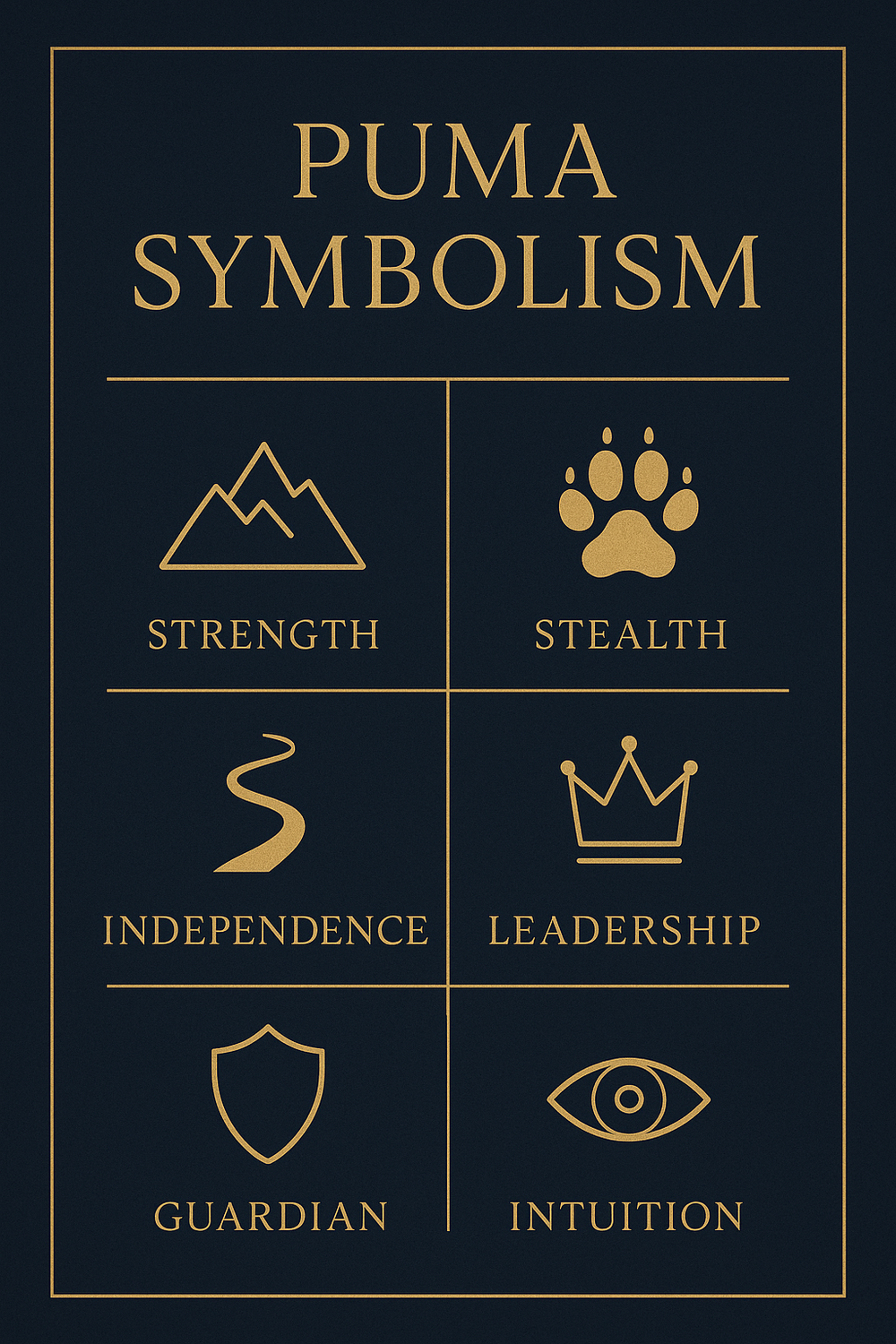
The puma symbolizes strength, independence, stealth, leadership, and spiritual connection to the earthly realm. In many indigenous cultures, it's seen as a guardian spirit and a powerful totem for those walking a path of quiet resilience and inner authority.
In the spiritual beliefs of the Inca, the world was divided into three realms:
The puma represents Kay Pacha, the middle world where humans live. It was believed to embody physical strength, leadership, and a deep connection to nature. The ancient city of Cusco, the capital of the Inca Empire, was even designed in the shape of a puma—a powerful testament to its spiritual significance.
"The puma is not just an animal. It's the spirit of the Earth, walking softly with great power."
– Traditional Quechua Saying
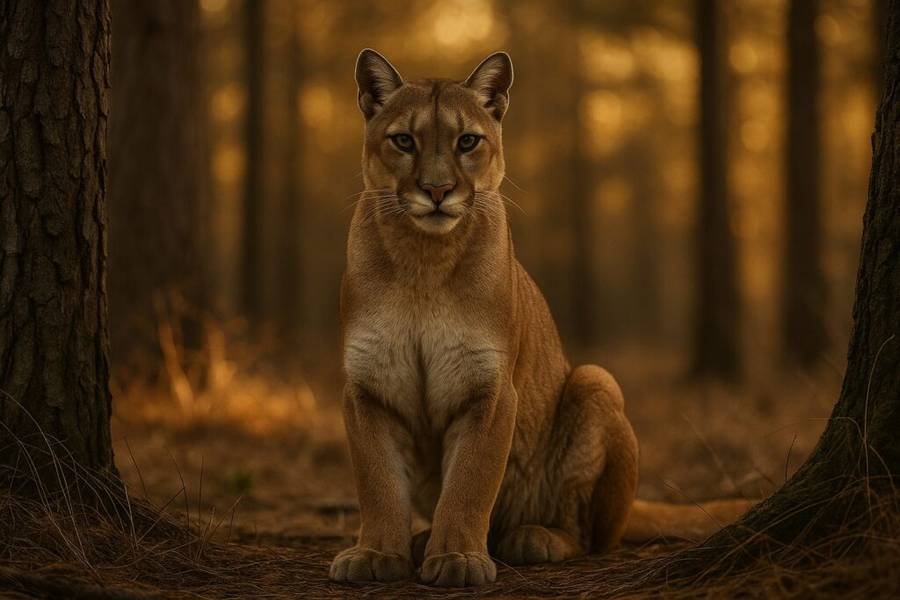
To have the puma as your spirit animal or totem — a concept closely tied to the idea of kindred spirits and animal guides — means you're likely someone who walks their own path. You don't seek approval—you move with purpose, quietly but confidently. You may also:
If the puma has shown up in your life—whether in dreams, art, or a random encounter—it could be a spiritual invitation to step fully into your personal power. Many practitioners describe this shift as a change in spiritual energy and aura, as if the puma's calm confidence begins radiating outward.
Among various Native American tribes, the puma holds different meanings, but many agree on one thing: it is a guardian spirit. The Zuni and Hopi tribes saw the mountain lion as a protector of the North and a powerful hunter who knew the land intimately.
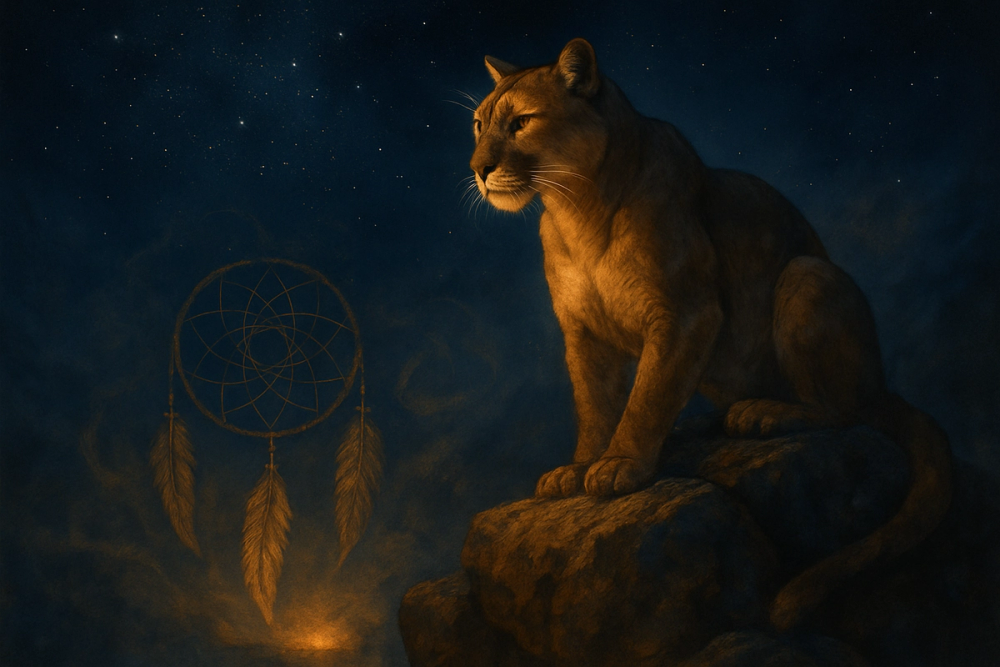
For others, like the Chickasaw or Guarani, the puma was revered as the "cat of God", a divine and sacred creature associated with transformation and power, capable of traversing both physical and spiritual realms. It was said to appear to those who needed to reclaim their strength, especially after loss or defeat.
Dreaming of a puma often points to something stirring in your subconscious—something powerful, quiet, and ready to awaken.
| Dream Symbol | Possible Interpretation |
|---|---|
| Puma stalking you | A hidden fear or shadow aspect is gaining ground—you may need to face it head-on. |
| Puma watching silently | You're being reminded to pause, observe, and plan your next move carefully. |
| Fighting a puma | You're in a battle for self-control or resisting personal transformation. |
Tip: Keep a journal by your bed. Write down details if a puma appears—it could be your higher self speaking in symbols.
The puma is a popular choice for animal-symbolism tattoos because it combines beauty with quiet menace. A puma or cougar tattoo typically represents protection, feminine power, solitary strength, and fearless independence. Unlike lion or tiger tattoos, which often signal boldness and dominance, puma tattoos tend to carry a subtler message: strength that doesn't need to be proven, only trusted.
Placement and style can shift the meaning slightly:
Many people choose puma tattoos during periods of personal transformation — after overcoming hardship, stepping into a leadership role, or reclaiming confidence they once lost.
While "panther" is often used interchangeably with puma, it's worth clarifying: a true black panther is a melanistic big cat — usually a jaguar or leopard with excess dark pigment — rather than a distinct species. True melanistic pumas are extraordinarily rare, which is part of why the "black puma" carries such a potent mystique in folklore and modern spiritual symbolism.
Symbolically, the black puma or panther represents:
Where the standard tawny puma is often linked to grounded, earthly leadership, the black variant leans into the mystical and introspective side of the same archetype — the same quiet strength, viewed through a darker, more esoteric lens.
You don't need to live in the Andes or practice shamanism to connect with the puma's spirit. Here are some simple ways to invite its energy into your life:
Try meditating with an image or figurine of a puma. Imagine stepping into its skin, feeling its muscles, grace, and watchful calm. How would your life shift if you led like the puma—calm, focused, and deeply connected?
Today, the puma continues to resonate with those seeking to embody quiet power. Whether you're climbing the career ladder or navigating personal transformation, this spirit animal reminds us that we don't need to roar to lead. Much like the great warriors and leaders throughout history, presence, poise, and purpose can be far more effective than force.
It's no surprise that companies, sports teams, and even luxury brands use the puma as a symbol—it's agile, sleek, fearless. But beyond marketing, there's a deeper pull. In a chaotic world, the puma teaches us to move with intention, to rest when needed, and to strike only when the moment is right.
Big cats share overlapping themes of power and instinct, but each carries its own distinct symbolic signature. Here's a quick comparison:
| Big Cat | Core Symbolism | Cultural Association |
|---|---|---|
| Puma | Quiet strength, independence, stealth, guardianship | Inca (Kay Pacha), Native American tribes |
| Jaguar | Raw power, shadow realm, transformation, spiritual sight | Maya & Aztec cosmology |
| Tiger | Courage, passion, dominance, bold action | Chinese & Hindu tradition |
Where the tiger roars into action and the jaguar rules the underworld's shadows, the puma occupies the middle ground — grounded, watchful, and deliberate. For a deeper dive into a related big cat archetype, see our full tiger symbolism guide.
"If the puma walked beside you today, what decision would you face with calm, silent confidence?"
Let this question sit with you. The puma isn't about noise—it's about knowing. And when you trust yourself, truly, you don't need permission to lead your life with strength.
The puma represents inner strength, spiritual awareness, stealth, and leadership. It is a guide for those learning to walk confidently and act wisely, often appearing as a totem during periods of transition or self-reclamation.
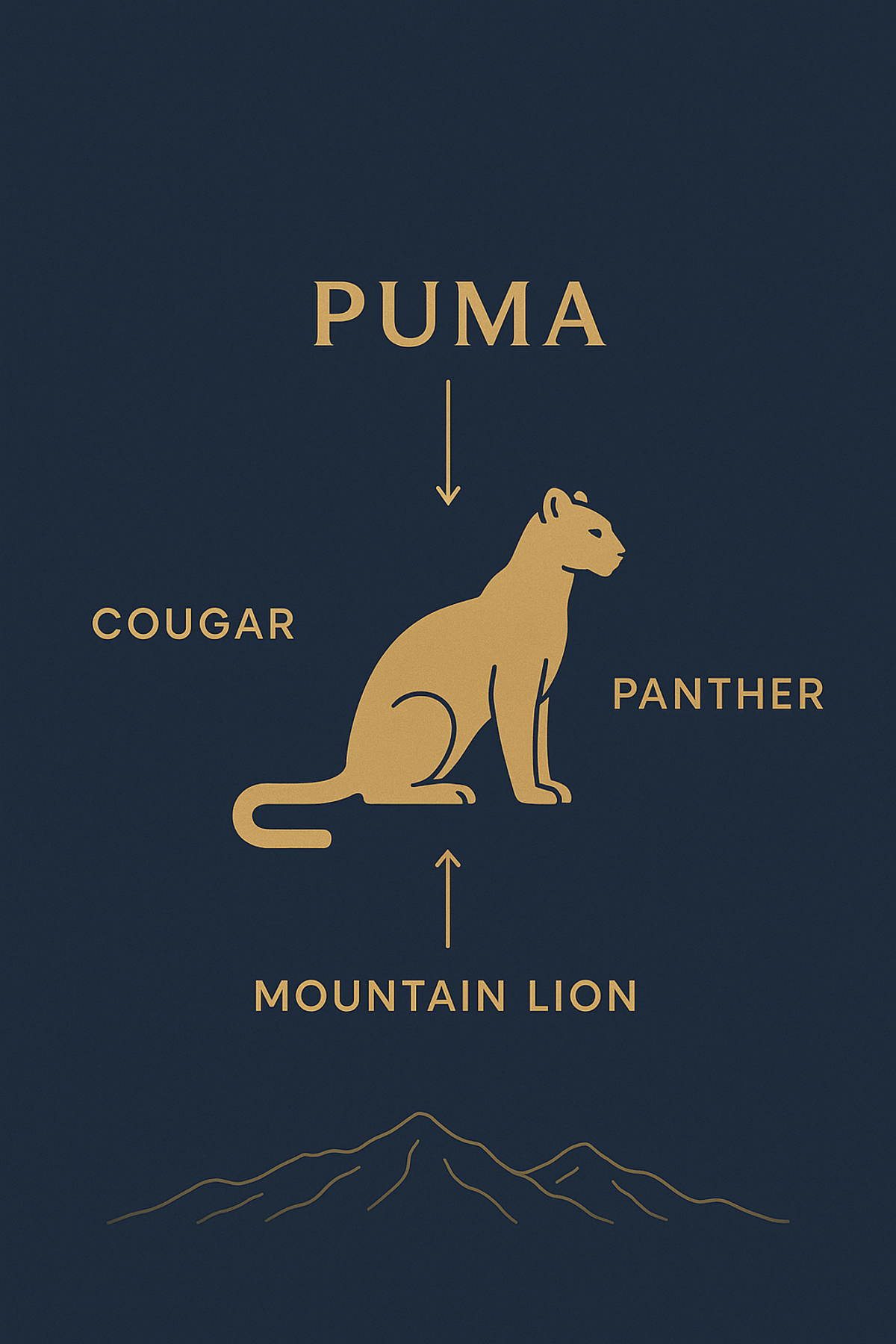
No — puma, cougar, and mountain lion all refer to the exact same animal, Puma concolor. "Panther" is sometimes used as a regional nickname for the puma, though it more commonly refers to a melanistic jaguar or leopard. Symbolically, they all share the same core meaning of quiet strength and intuitive leadership.
A puma tattoo generally symbolizes protection, feminine power, and solitary strength. Placement often adds meaning — a shoulder puma suggests guardianship, while a spine or back placement represents strength carried quietly and privately.
The puma doesn't appear directly in the Bible, since it's native to the Americas and biblical texts originate from the Middle East. However, it holds a prominent mythological role in Incan, Andean, and Native American traditions, where it was often treated as a sacred, god-like guardian of the earthly realm.
A black puma or panther symbolizes shadow work, mystery, and rebirth. Because true melanistic pumas are extremely rare, the black variant is often seen as an intensified, more introspective version of standard puma symbolism — power that moves unseen until the moment it's needed.
Seeing repeated images may be a spiritual sign urging you to embrace your independence, sharpen your intuition, or reclaim your power after a difficult time. It can also be an invitation to slow down and trust your instincts before acting.
The puma is a rare teacher in the wild—a symbol not of chaos, but of deliberate movement. If you feel drawn to this majestic animal, consider it an invitation. To trust yourself more. To act from wisdom, not reaction. And to lead not by domination, but by presence.
In the end, the puma doesn't need to be seen to make an impact. And maybe, neither do you. 🌒
Have you ever had an encounter—real or symbolic—with a puma? Share your story in the comments or journal about the message it may have carried.
Meet 15 legendary wizards — from mythological figures like Merlin, Circe & Baba Yaga to fantasy icons like Gandalf and Dumbledore.
![Surgical vs. Stainless Steel: 10 Key Differences You Need to Know [Expert Guide]](https://cdn.sanity.io/images/95ij27ee/production/5ede7dec1ac37b50b03109e5e7f46991b9770805-1792x1024.jpg?w=640&auto=format&q=75)
Are you puzzled by the differences between surgical and stainless steel? You’re not alone. These two materials often cause confusi…

Though women’s underwear belongs to the sphere of comfort and fashion, it also shows more profound causes related to body confiden…