Crystal & Stones
Carnelian: The Stone of Vitality, Warmth, and Fertility
Table of Content What is Carnelian? Carnelian Stone: History, Culture, Mythology, and Folklore Benefits of Carnelian Stone and Cha…
 KnowMastery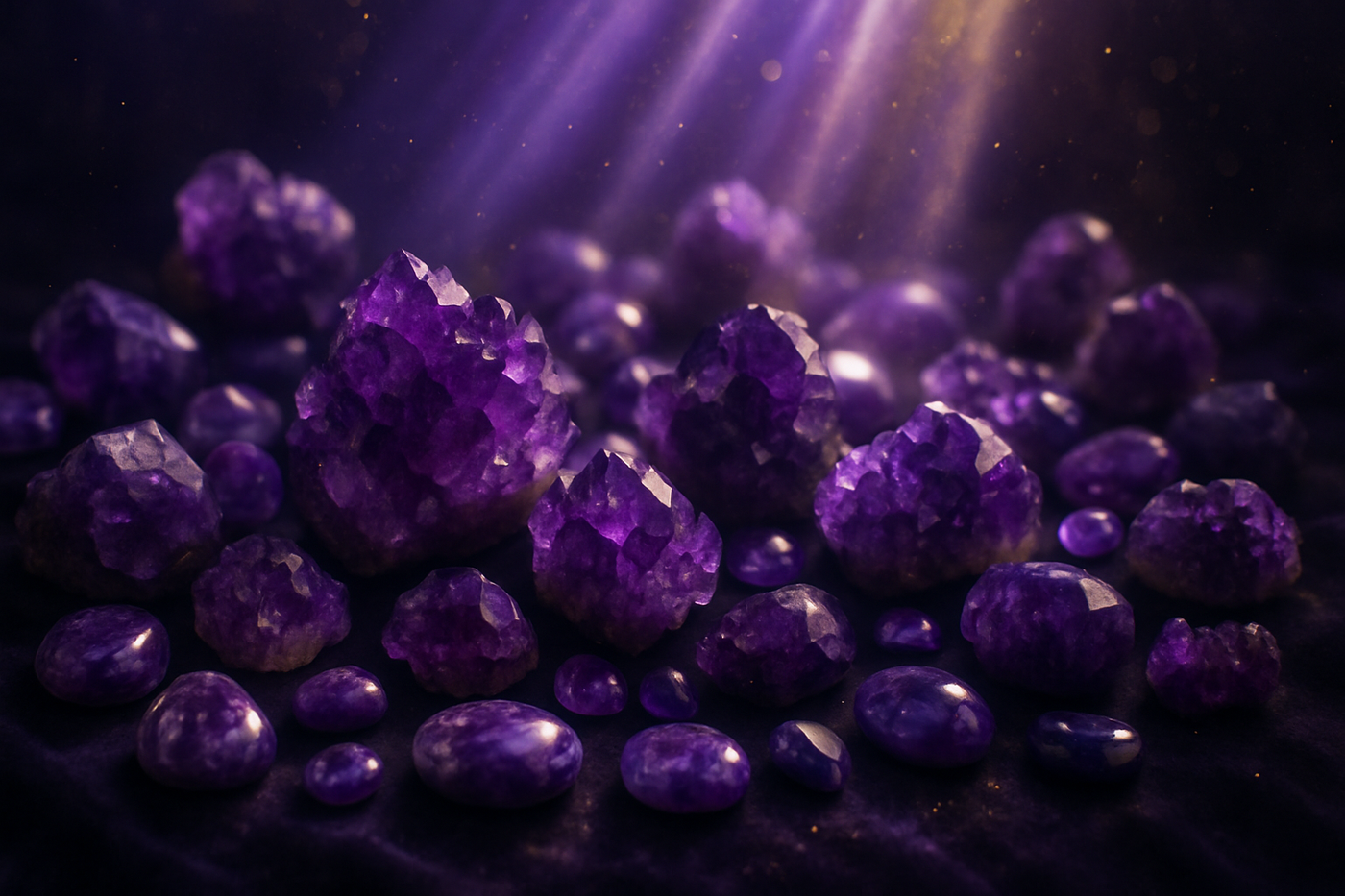
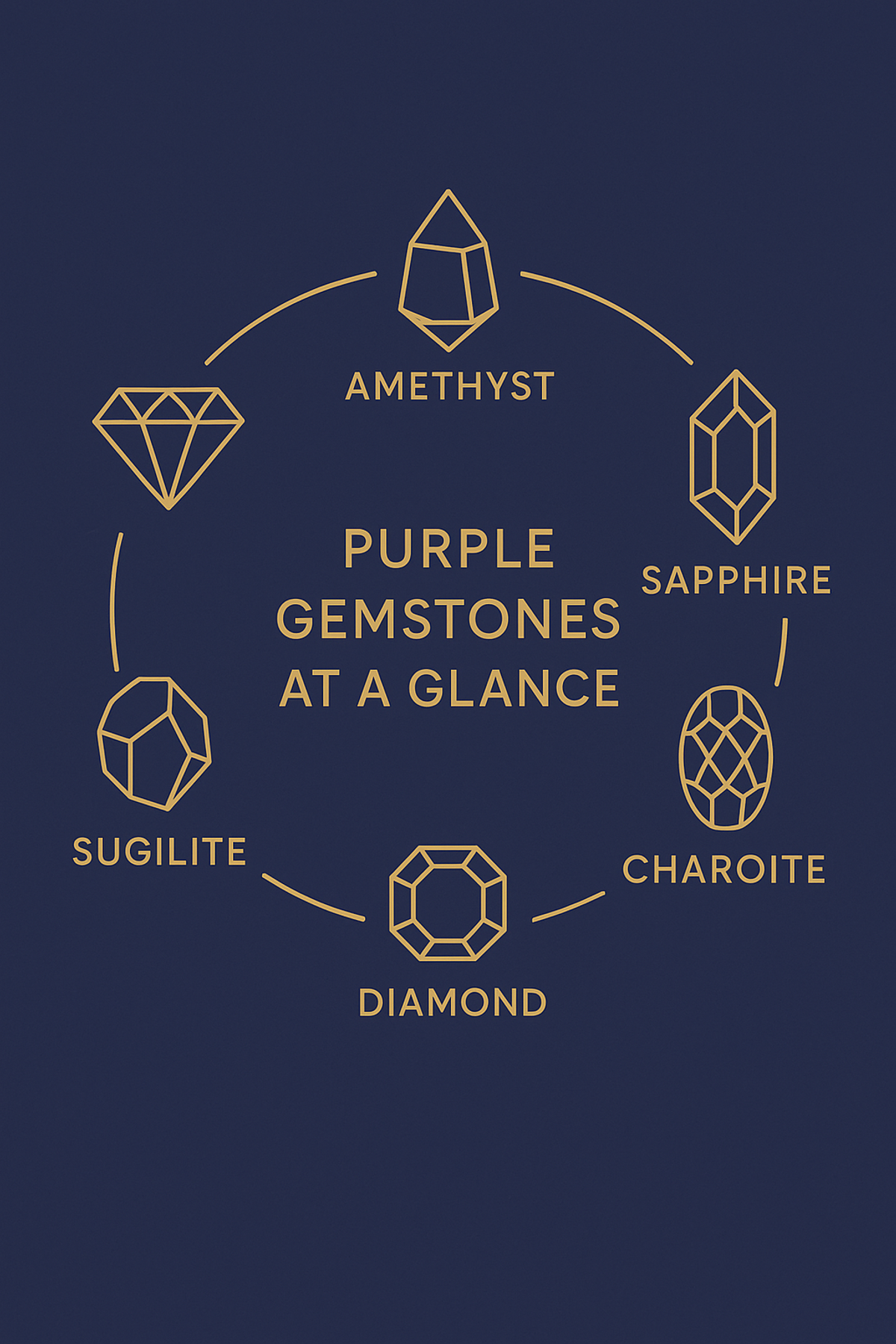
Purple gemstones are minerals and organic gems that display a violet-to-lavender color, usually caused by trace iron, manganese, or titanium within the crystal structure. The five names people search for most are Amethyst (purple quartz), Sugilite, Charoite, Tanzanite, and other Amethyst-family quartz varieties such as Ametrine. Beyond these five, dozens of rarer purple minerals exist — from budget-friendly Purple Fluorite to million-dollar Purple Diamonds — each with its own hardness, origin story, and folklore.
How we sourced this list: Every entry below has been cross-checked against standard mineralogical references and rated using the Mohs hardness scale, with pricing ranges reflecting typical retail and wholesale gem-market data rather than crystal-shop marketing copy. Where a stone carries widely-repeated metaphysical folklore, we present it clearly as traditional belief rather than scientific claim — consistent with the consumer-education approach used by gemological bodies like the GIA.
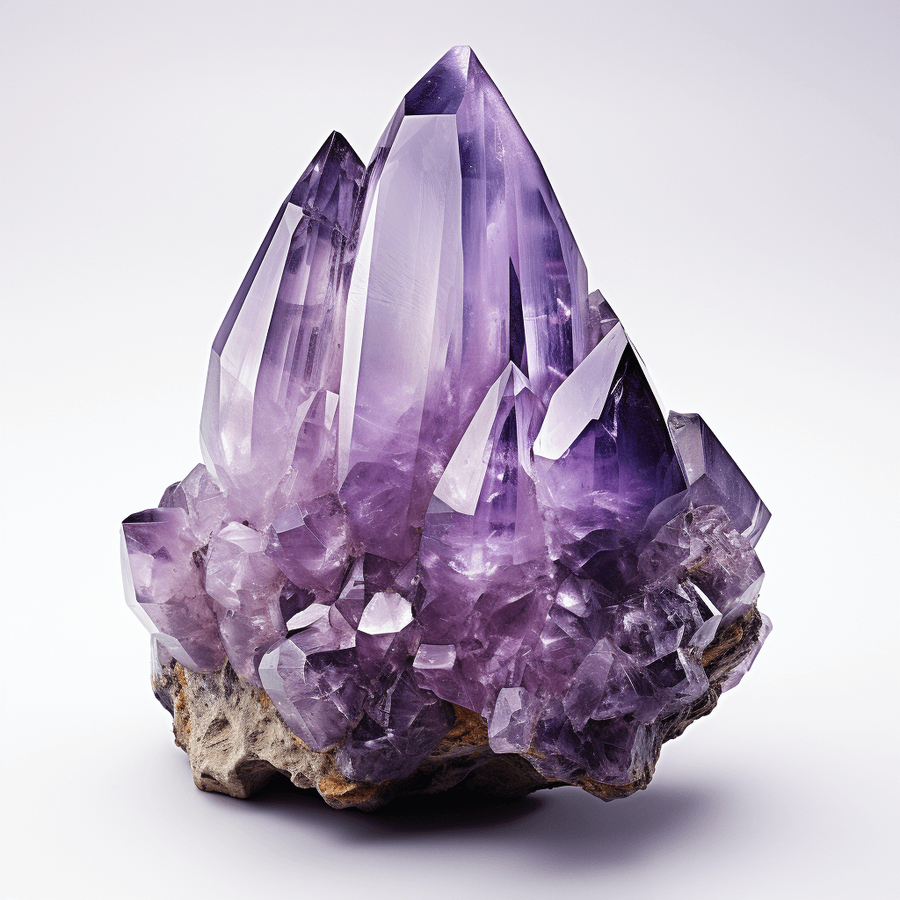
Amethyst is undeniably the most recognized purple gemstone. Belonging to the quartz family and rated 7 on the Mohs scale, its color spectrum ranges from light, lavender hues to deep, rich purples, often exhibiting zoning within a single specimen. The Ancient Greeks and Romans believed Amethyst could prevent intoxication, giving it a name that translates to "not drunken." Today it's classified simply as a durable, affordable quartz variety popular in birthstone jewelry for those born in Pisces and February.
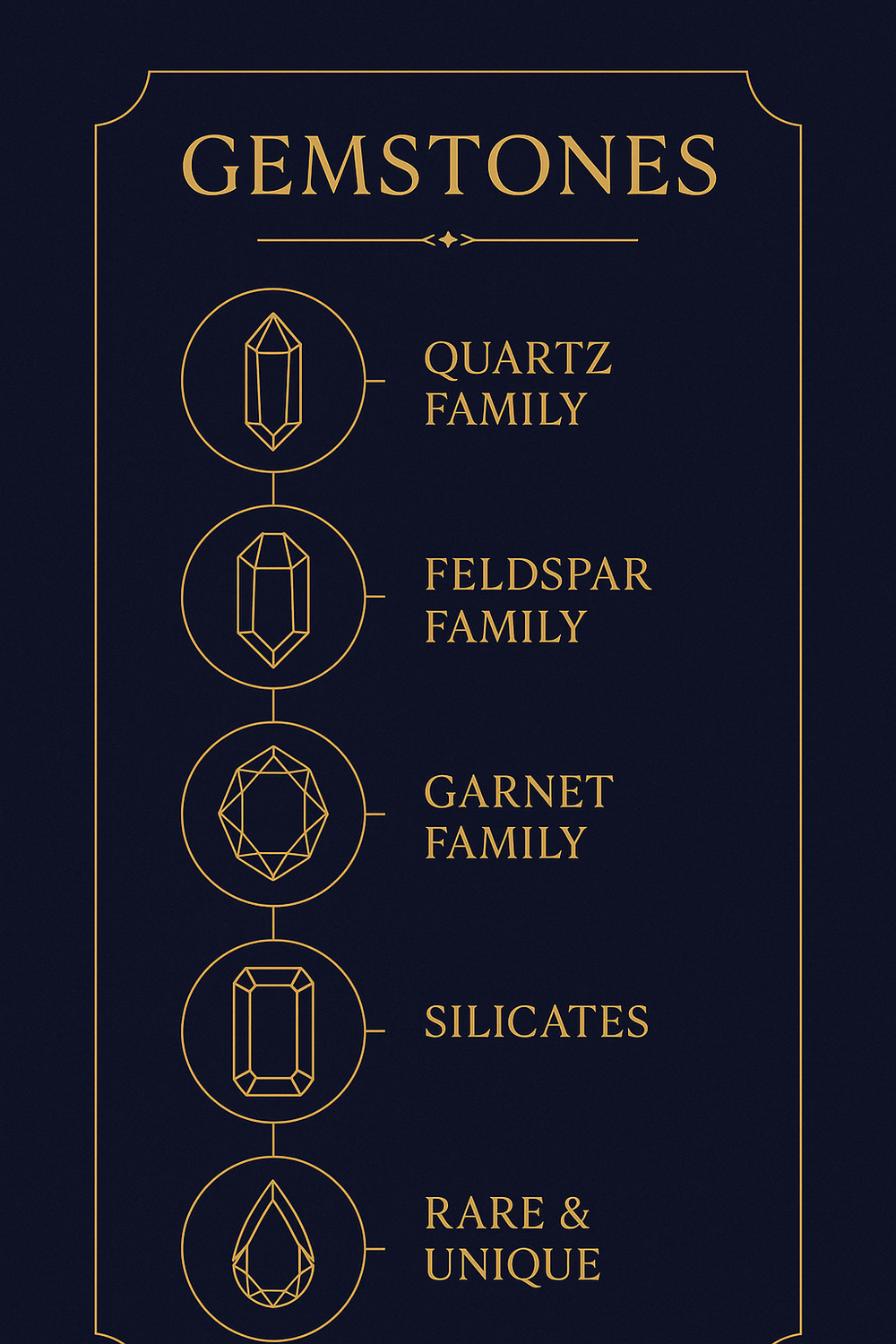
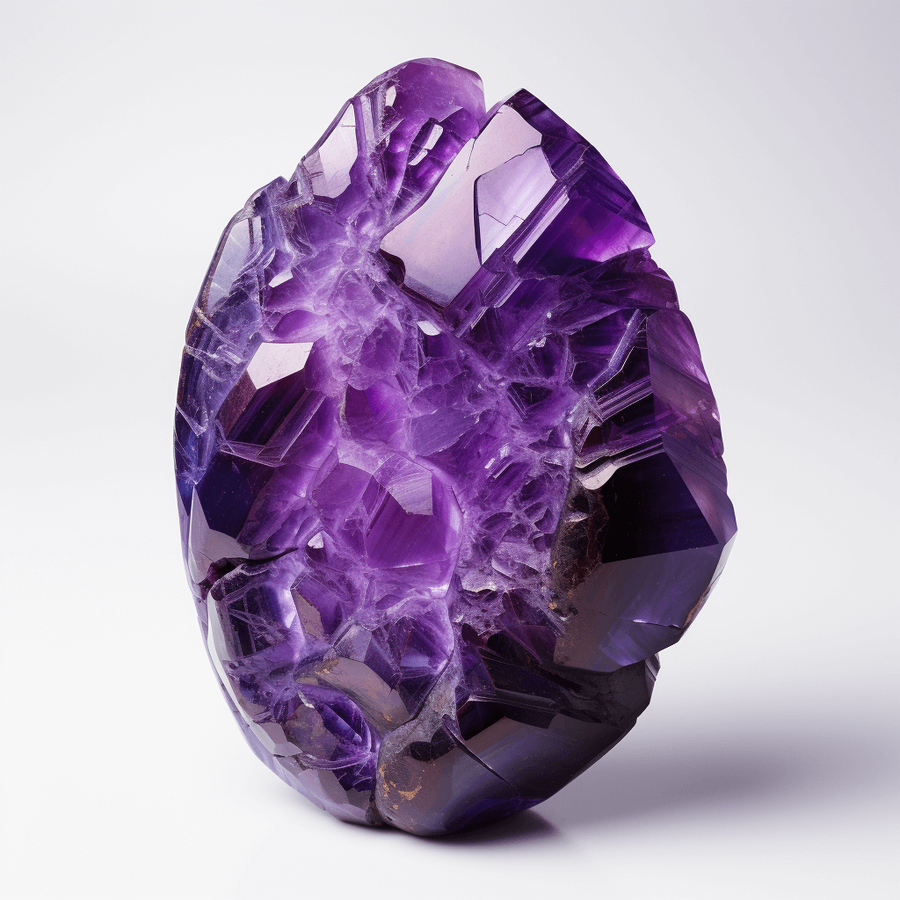
Sugilite, also marketed under the trade name Luvulite, is a cyclosilicate mineral with shades ranging from pinkish-purple to deep bluish-violet, rated 5.5–6.5 on the Mohs scale. Sugilite specimens were first collected in Japan in 1944, though the mineral wasn't formally described and named as a new species until 1976. In metaphysical circles it's nicknamed "a healer's stone," said to shield the wearer from negativity — though as with all crystal-healing claims, this is folklore rather than mineralogical fact.
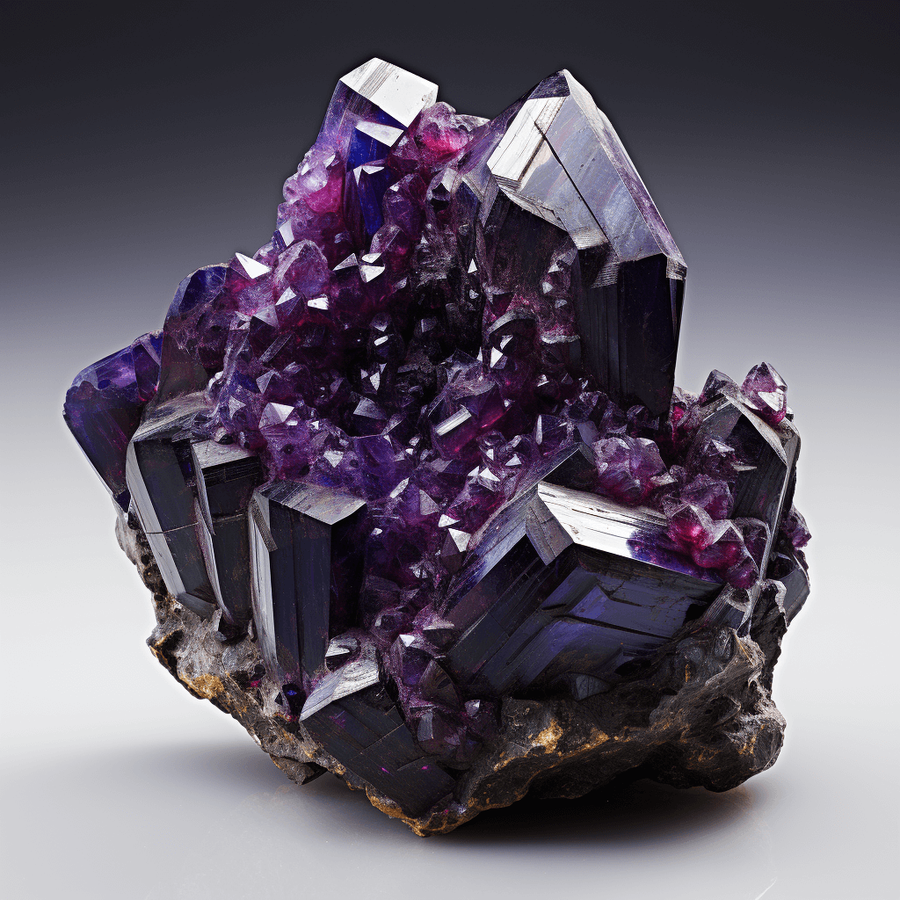
Because Sugilite and Luvulite are chemically the same mineral, this guide treats them as a single entry rather than counting them twice — a common source of confusion in older gemstone lists.
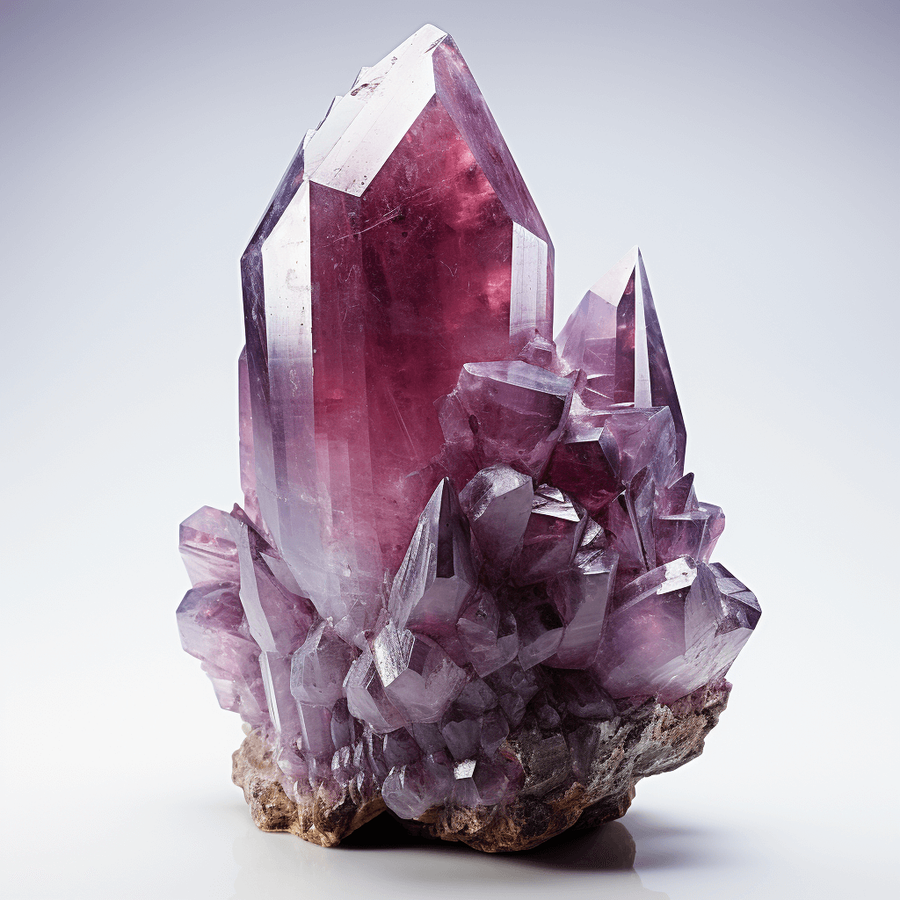
With lovely lilac to rose-violet hues, Lepidolite is a type of lithium-rich mica, rated only 2.5–3 on the Mohs scale, meaning it's best kept as a display piece rather than everyday jewelry. It's considered a stone of peace and tranquility, often used in crystal healing for stress relief and emotional balance, and is also linked to a sense of independence and calm awareness.
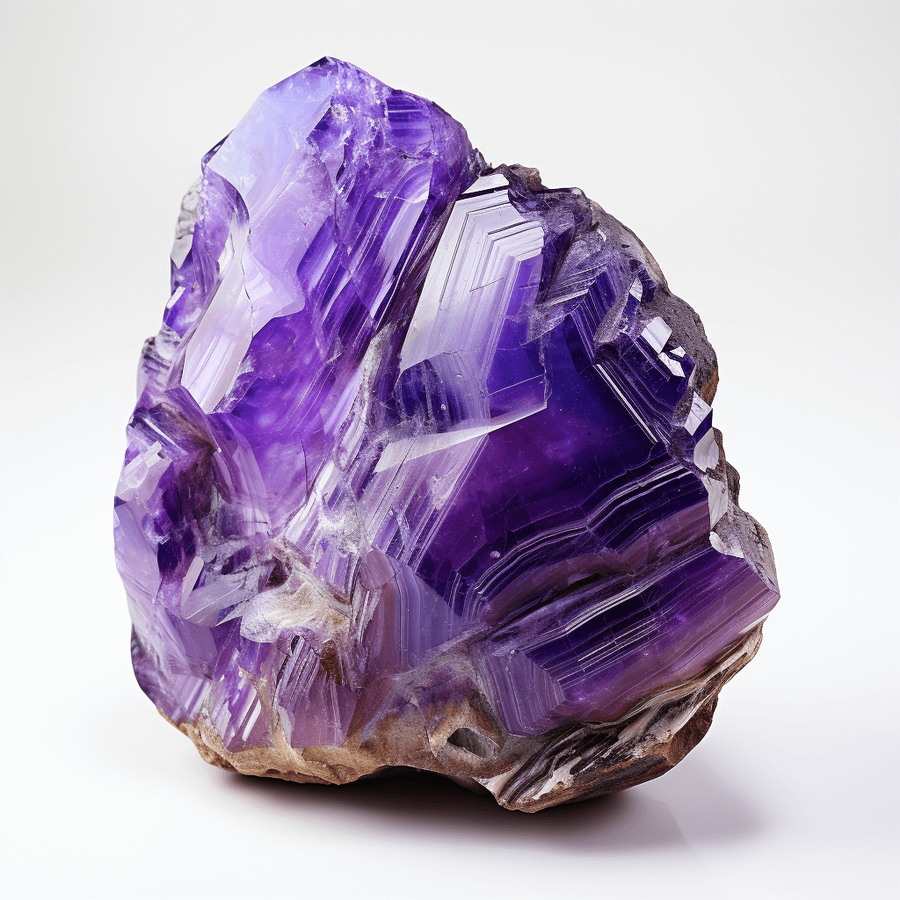
The swirling patterns of violet, lilac, and white make Charoite truly a gem to behold. Charoite is found exclusively at one deposit in Russia's Sakha Republic and is named after the Chara River, even though that deposit actually lies about 70 km away from the river itself. It's prized in jewelry for its dramatic patterning and is believed to stimulate inner vision and a calm, focused state of mind.
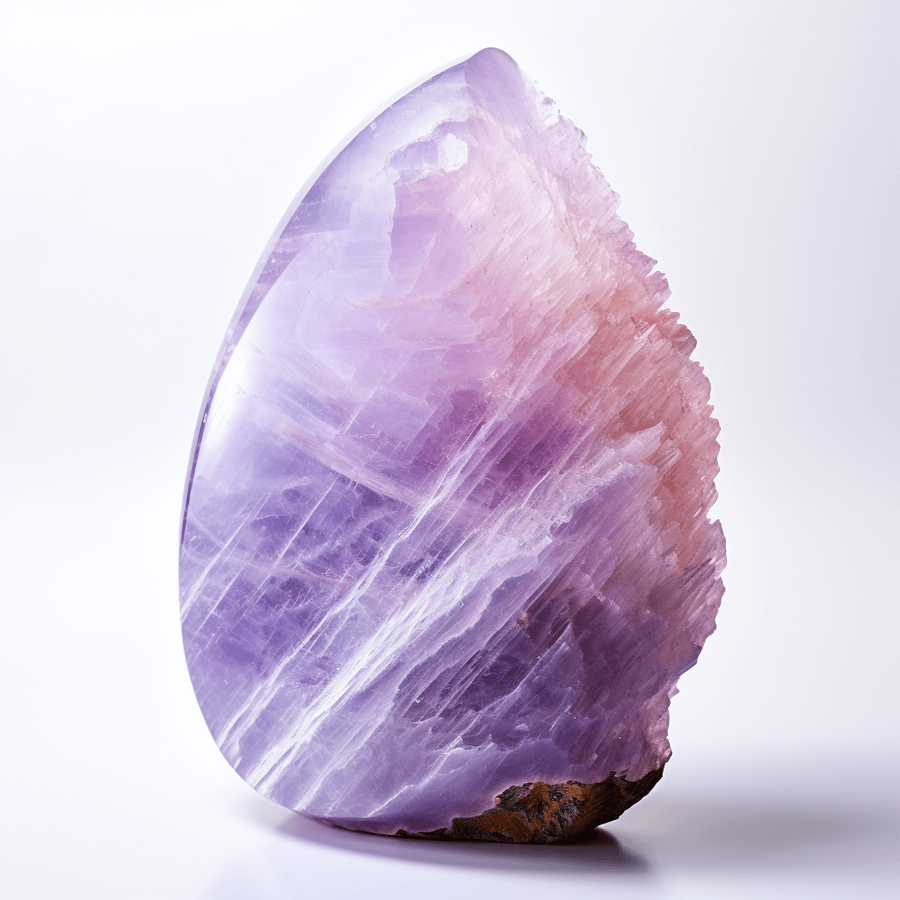
One of the lesser-known members of the jadeite family, Lavender Jade is a mesmerizing gemstone rated 6–7 on the Mohs scale, making it durable enough for daily wear. Its tranquil lavender hues create a calming effect, and it is relatively rare, making it sought after among collectors. Traditionally, jade is associated with purity, harmony, and balance, qualities amplified here by its soft, soothing color.
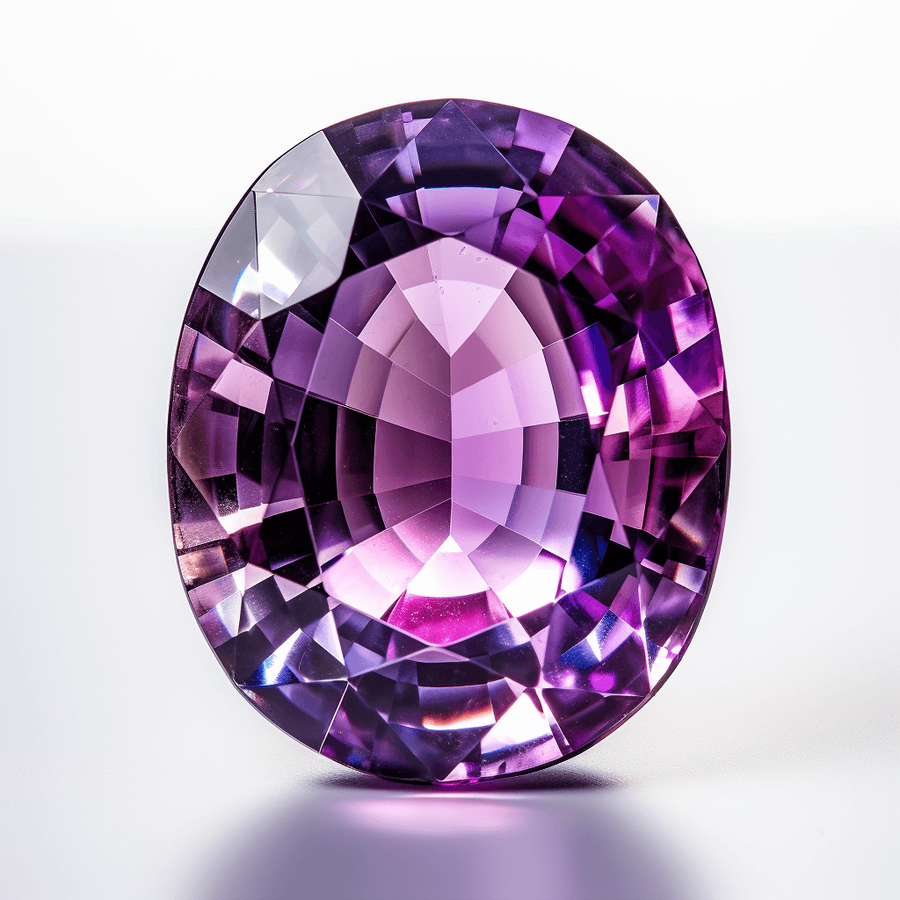
Purple Sapphire is not as widely recognized as its blue counterpart, but it's actually the rarest corundum color, rated a hard, durable 9 on the Mohs scale. Its color ranges from light lavender to dark violet. Symbolically, sapphires are associated with wisdom, virtue, and good fortune, making this variant a striking and meaningful choice for fine jewelry.
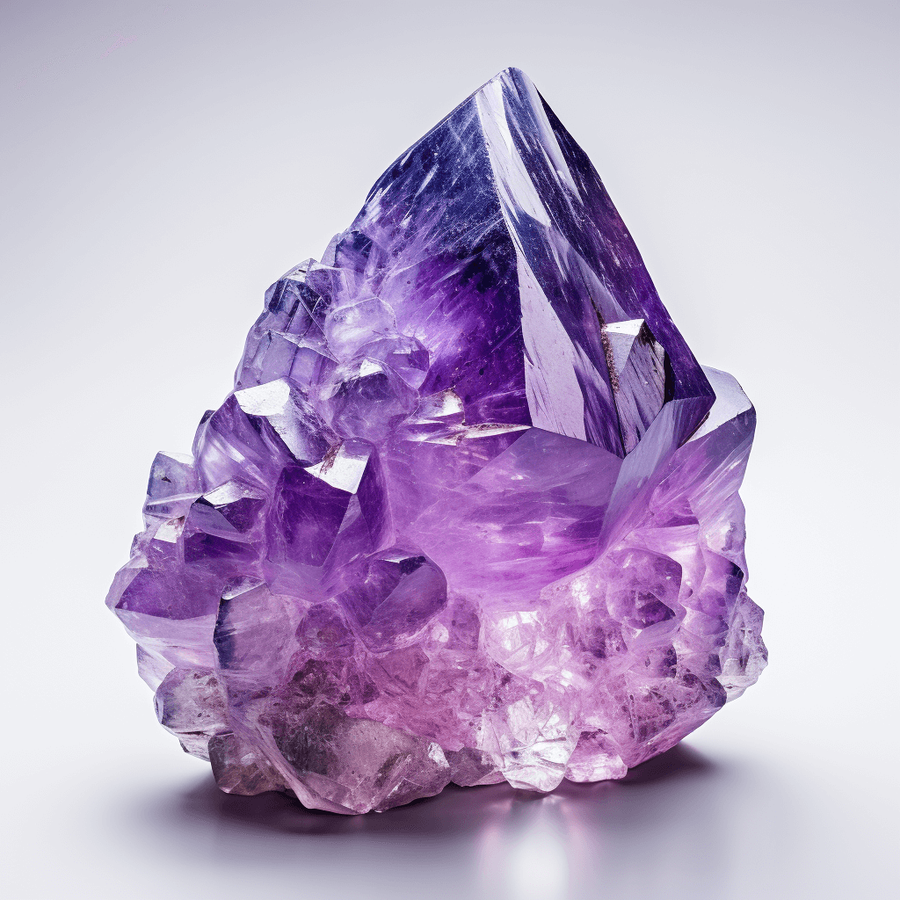
Purple Fluorite ranges from pale lilac to deep royal purple and is sometimes called "the most colorful mineral in the world" for its ability to display multiple colors in one stone. Rated a soft 4 on the Mohs scale, it's better suited to display pieces or pendants than rings. It's a popular pick among Aquarius and Pisces crystal collectors seeking clarity-focused stones.
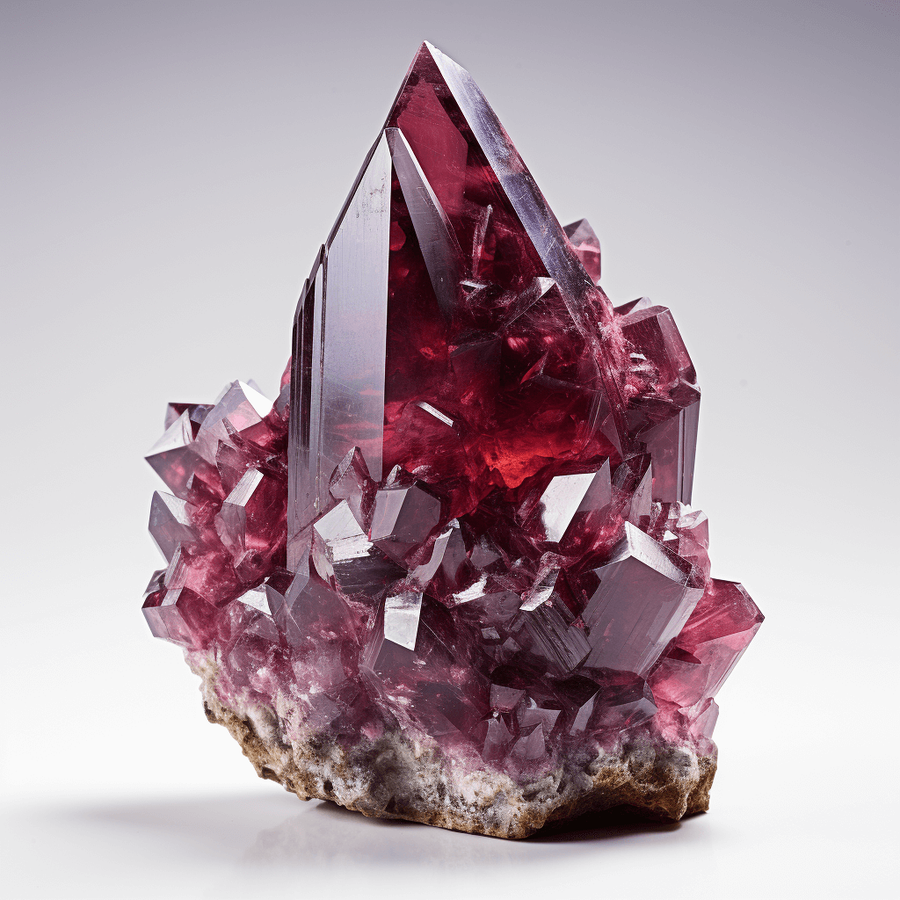
Garnets are usually pictured as deep red, but the family also produces purple hues ranging from grape to raspberry, rated 7–7.5 on the Mohs scale. This stone exudes mystery and sophistication and is traditionally associated with creativity, confidence, and business success. As a January birthstone, it's a favorite for Aries crystal collections.
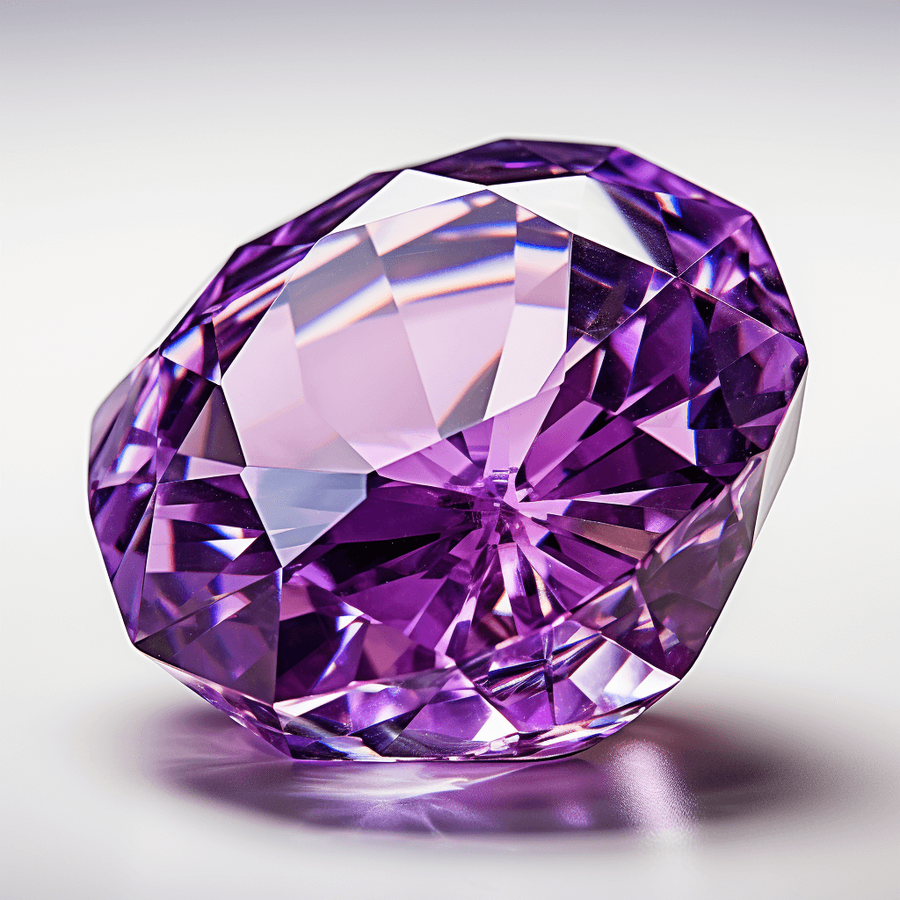
Regarded as one of the rarest and most valuable gemstones, the Purple Diamond tops the Mohs scale at 10, the hardest natural material known. Its hue ranges from light lilac to deep violet, and its rarity — rather than any special properties — drives prices into six and seven figures per carat. It's considered a symbol of power, wealth, and creativity.
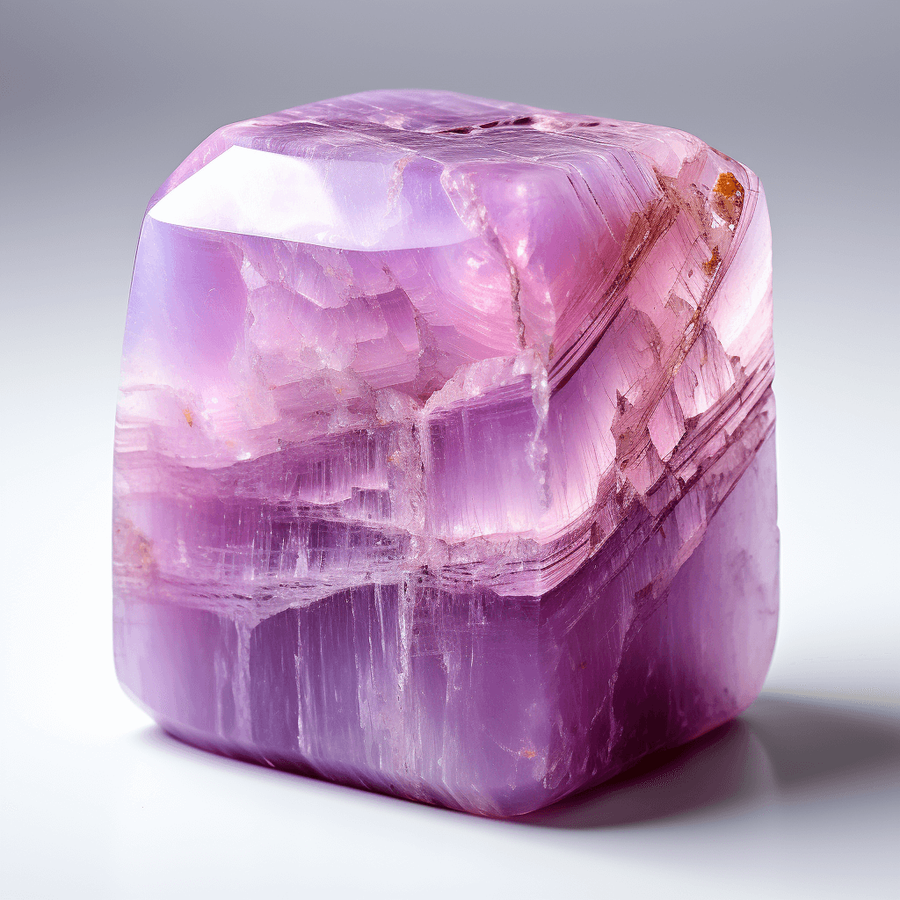
Purple Jadeite is a rare variety of jade showing a delicate mix of lavender and light pink, rated 6.5–7 on the Mohs scale. Valued by collectors for both beauty and calming energy, it's associated with tranquility, purity, and love, and commands strong prices in fine Asian jewelry markets.
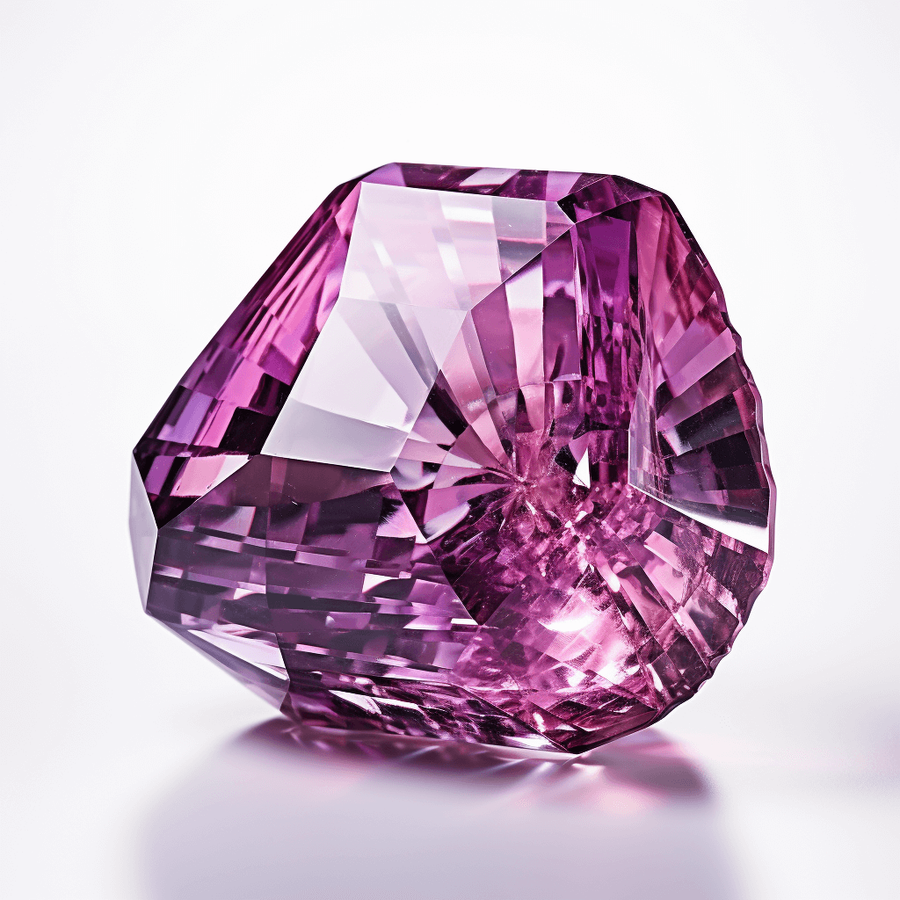
Long confused with ruby and sapphire historically, Purple Spinel is a hard (8 on the Mohs scale), durable gem ranging from deep violet to vibrant magenta. Known as the "stone of immortality," it's believed to renew energy and ease stress — and its excellent hardness makes it genuinely practical for everyday jewelry.
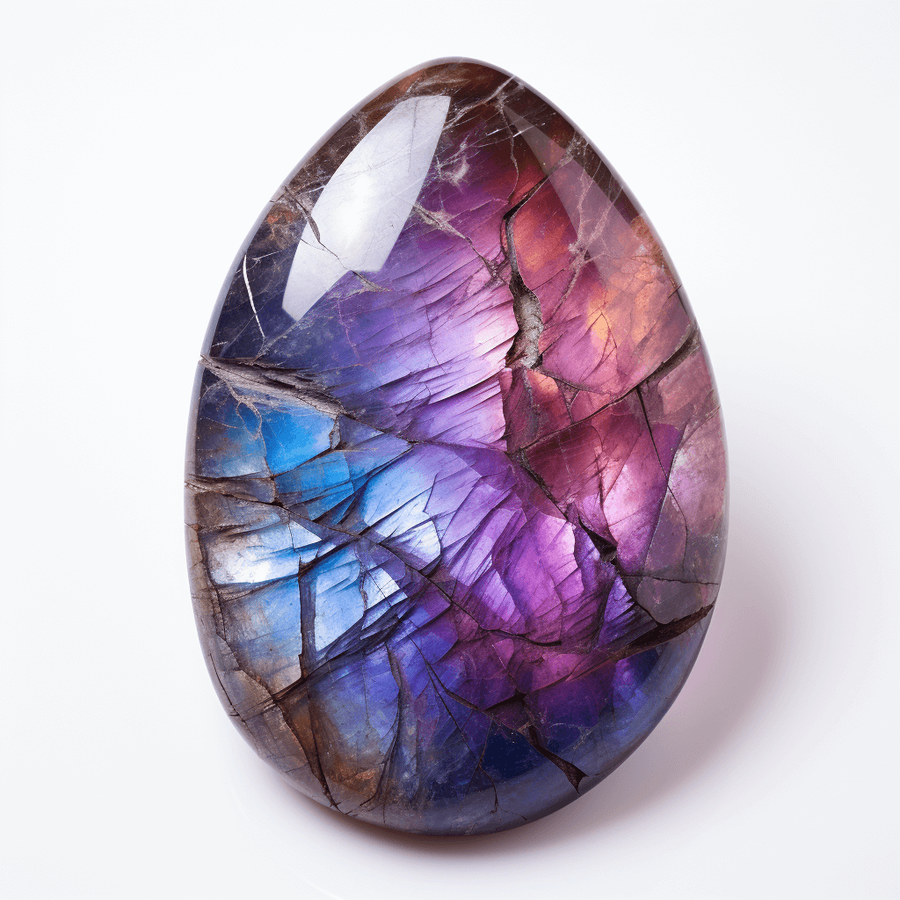
With its captivating labradorescence — flashes of peacock blue and green across a grayish-purple base — Purple Labradorite, rated 6–6.5 on the Mohs scale, is a favorite for statement jewelry. It's traditionally considered a stone of transformation and intuition.
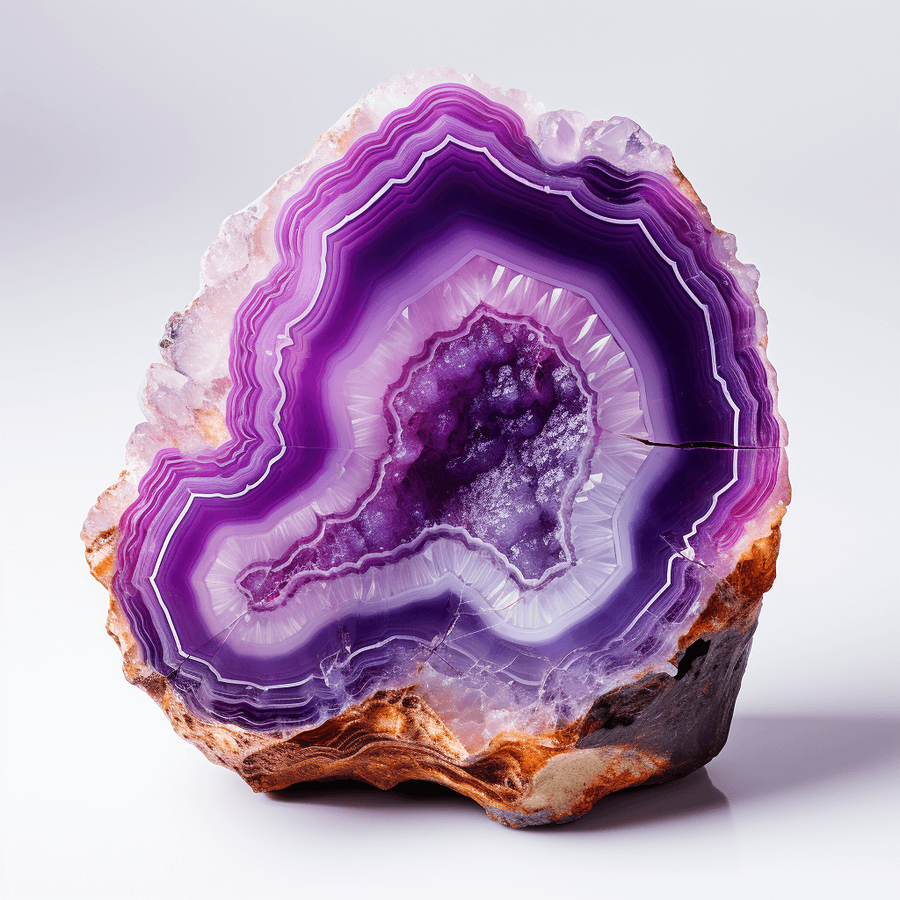
Purple Agate, rated a durable 7 on the Mohs scale, often showcases banded patterns from rhythmic crystallization, ranging from light lavender to deep purple. Traditionally associated with stability and grounding, it's a comforting, affordable choice for both jewelry and display pieces.
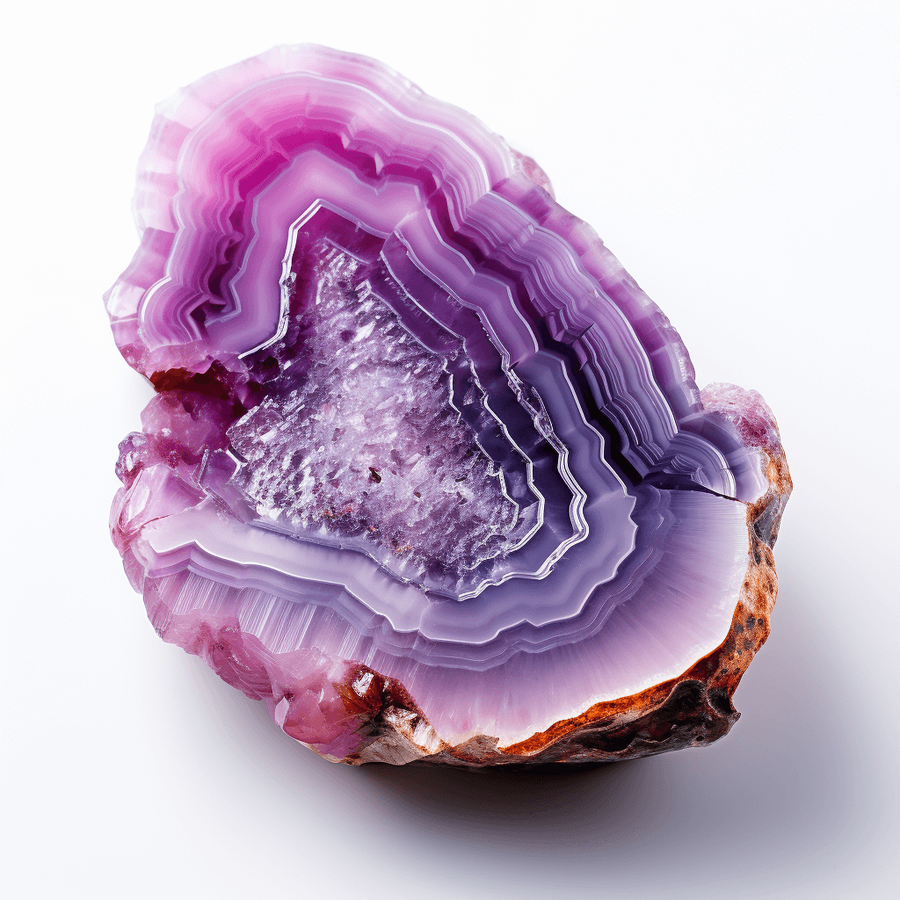
Purple Chalcedony is a quartz variety with a waxy-to-vitreous luster, rated 6–7 on the Mohs scale, ranging from light lilac to deep lavender. It's traditionally believed to absorb negative energy and foster positivity, and its affordability makes it popular in everyday jewelry.
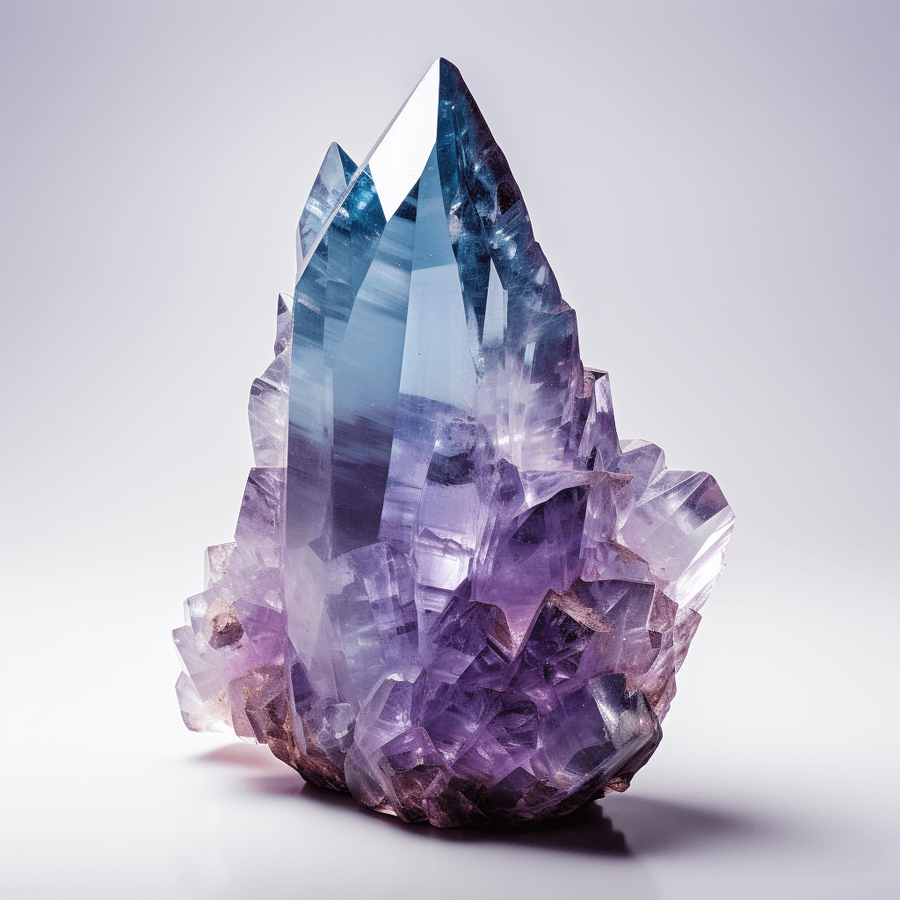
Purple Quartz, rated 7 on the Mohs scale, is essentially an umbrella term for lightly-colored amethyst-family quartz ranging from soft lavender to deep royal purple. It's associated with spiritual growth and meditation, and it's one of the most affordable and widely available purple gems on the market.
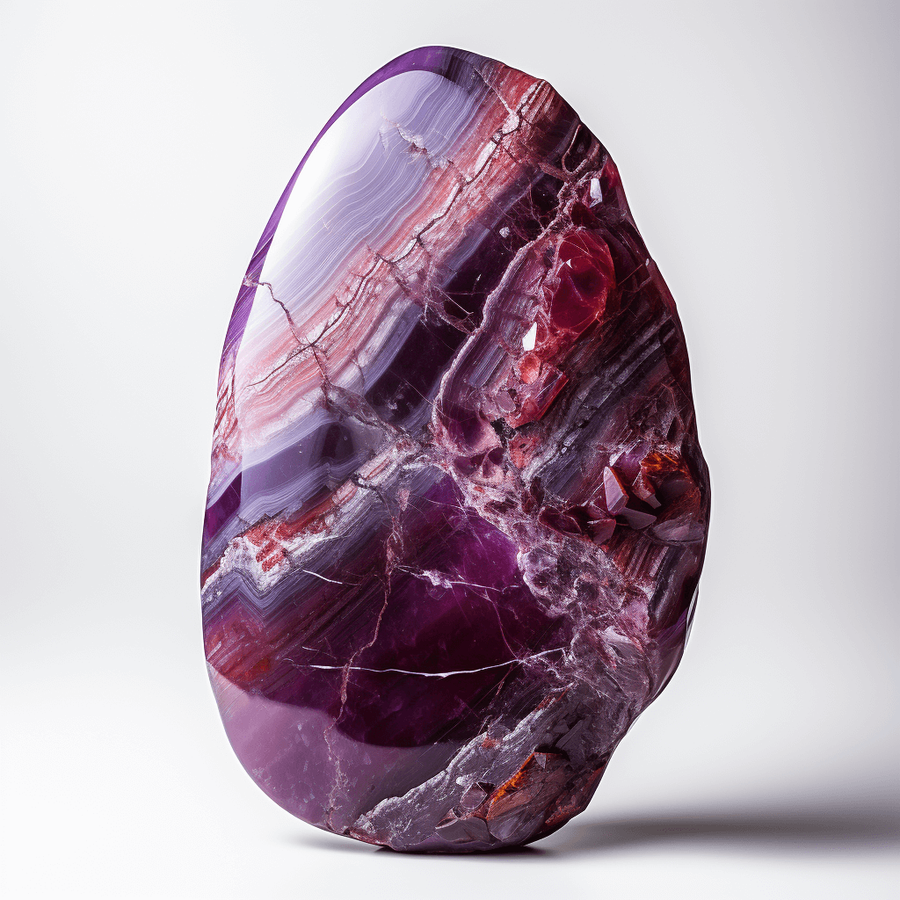
Purple Jasper combines the toughness of Jasper (6.5–7 on the Mohs scale) with an earthy purple palette of bands, specks, and swirls. It's traditionally considered a protective, grounding stone believed to absorb negative energy and stabilize mood.
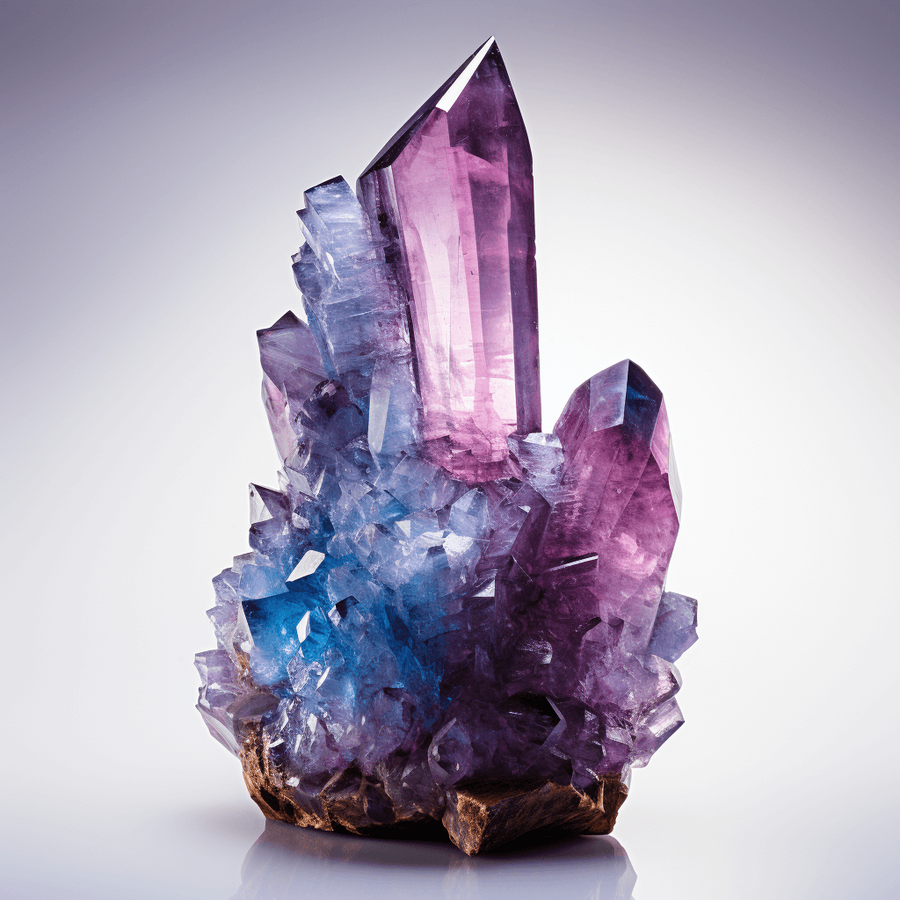
Purple Apatite, rated a moderate 5 on the Mohs scale, displays a vivid, sunset-like color that's popular with collectors more than everyday jewelry wearers, given its softness. It's associated with clarity, spiritual guidance, and self-expression.
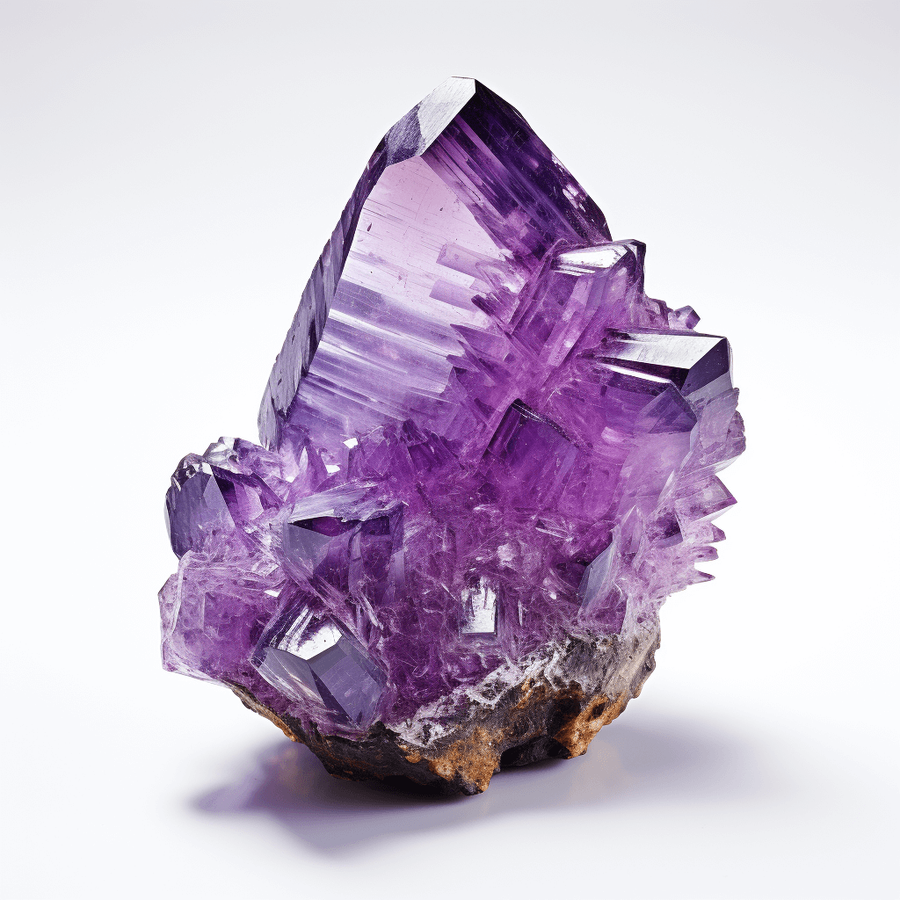
Purple Scapolite, also known as Wernerite, is a captivating gemstone prized for its rarity and vitreous luster, rated 5–6 on the Mohs scale. Colors range from violet to soft lavender, and it's said to inspire responsibility, practicality, and problem-solving. Earlier gemstone lists sometimes list Scapolite twice under separate numbers — it is one mineral, presented here as a single entry.
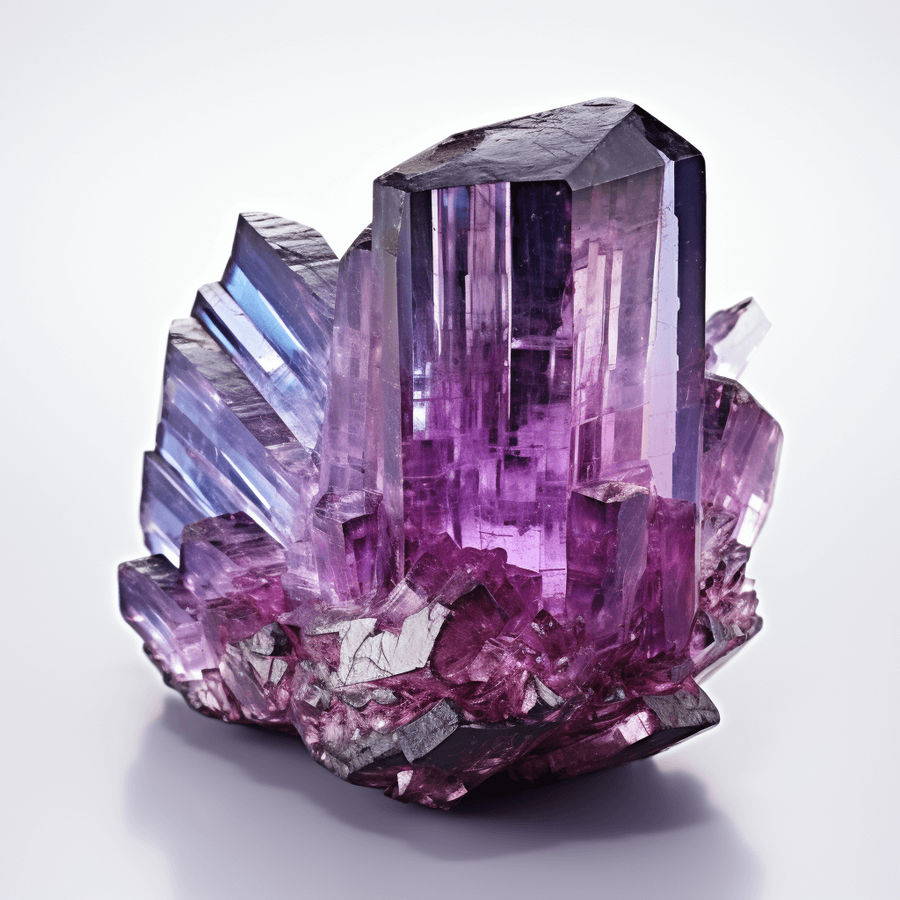
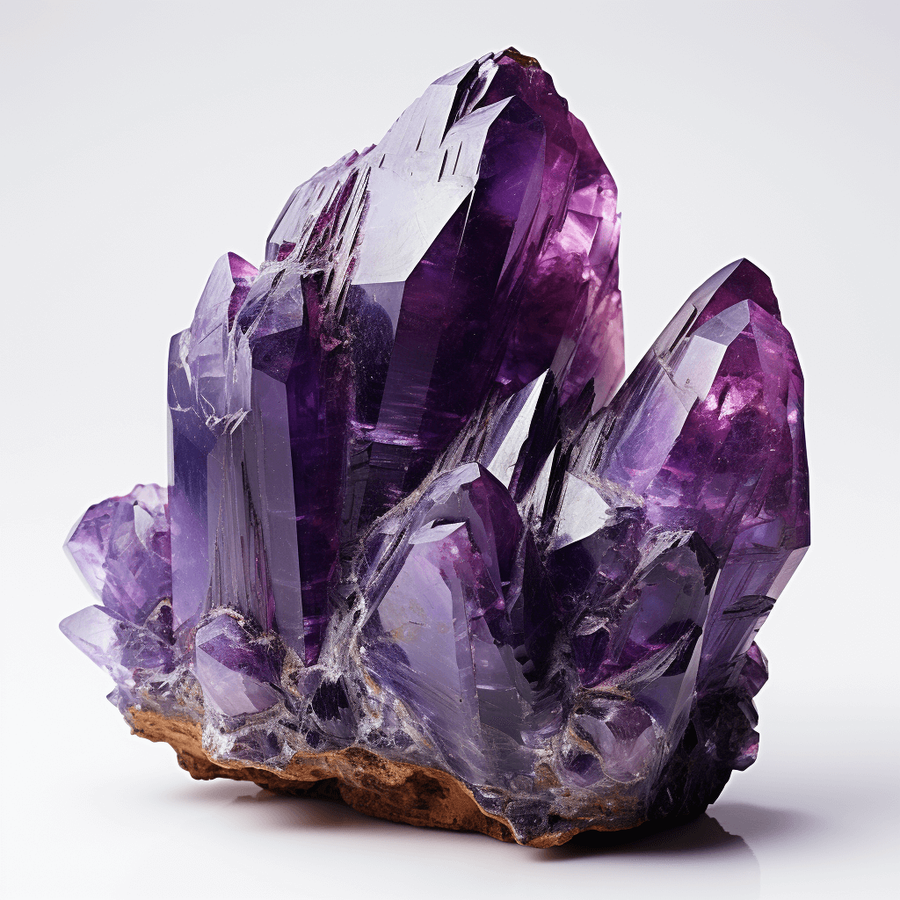
Purple Hematite is a unique variant of the more common silver-grey Hematite, rated 5.5–6.5 on the Mohs scale. Its deep, dark purple sheen adds mystery, and it's traditionally used for grounding and calming energy.
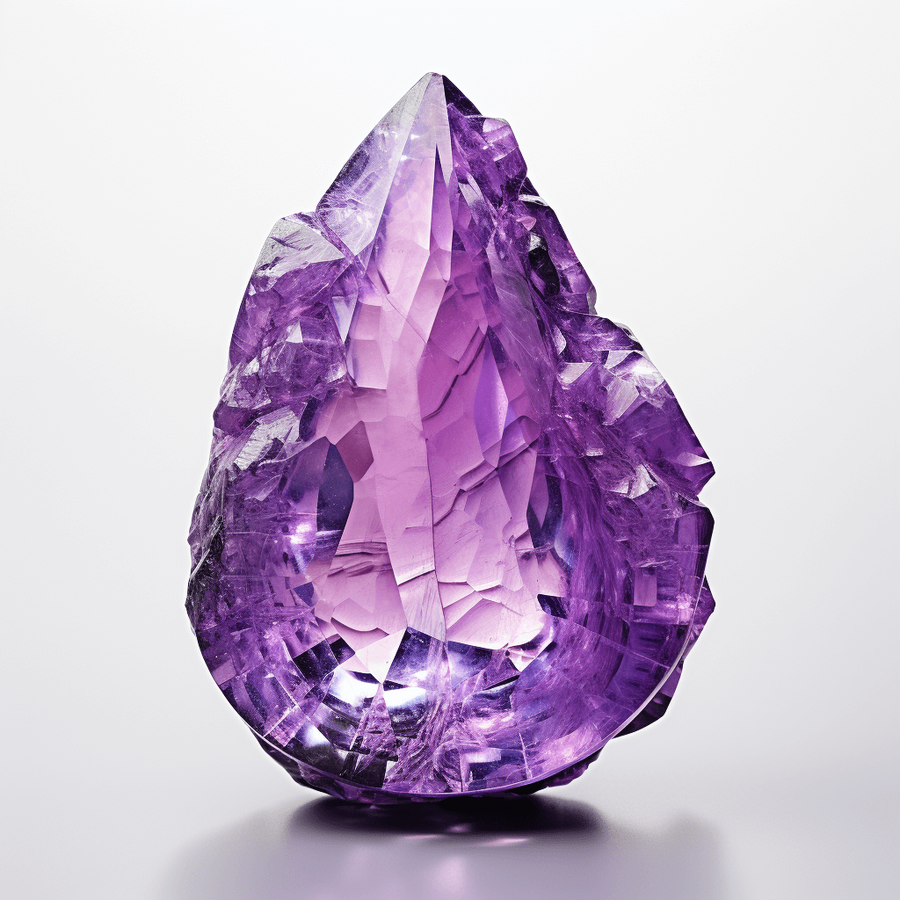
Purple Topaz is a rare and valuable member of the Topaz family, rated a hard 8 on the Mohs scale, known for its brilliance and durability. Historically associated with royalty, it's a favorite for fine jewelry that needs to withstand daily wear.
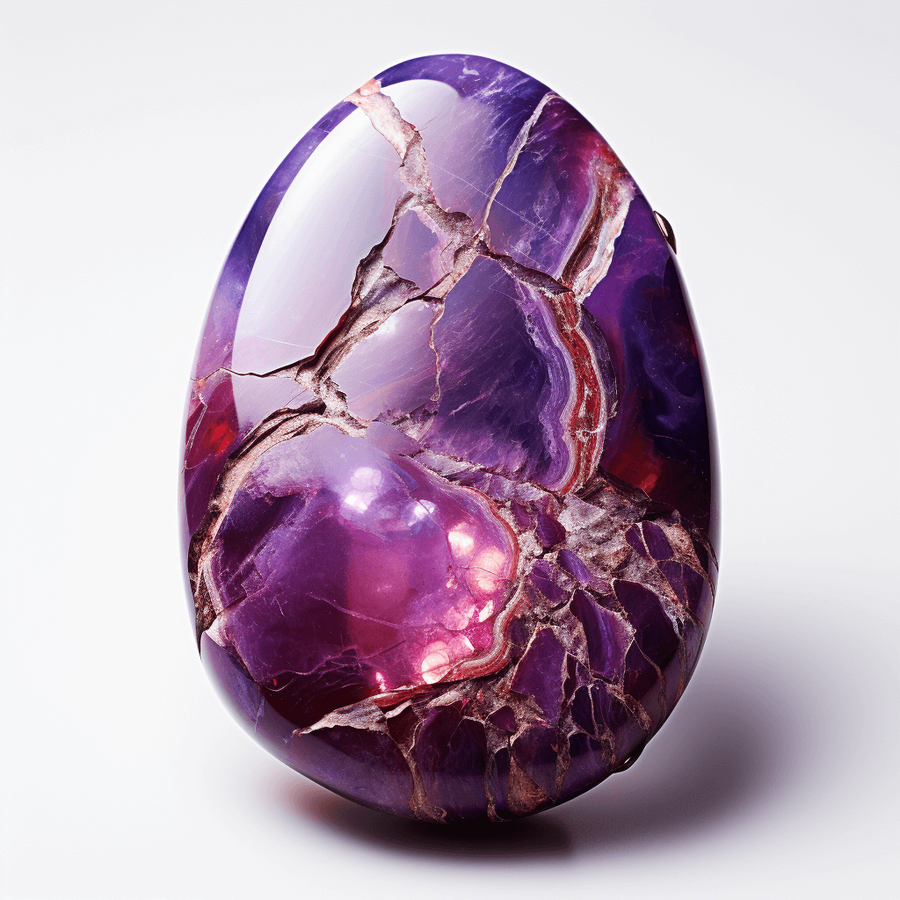
Although less common than white or black opal, Purple Opal, rated 5.5–6.5 on the Mohs scale, captivates with its play-of-color phenomenon. It's traditionally believed to facilitate emotional healing and enhance self-worth.
Purple Sunstone, rated 6–6.5 on the Mohs scale, is known for aventurescence — a sparkly, metallic-looking luster. Symbolically it's said to carry solar energy, promoting optimism and enthusiasm.
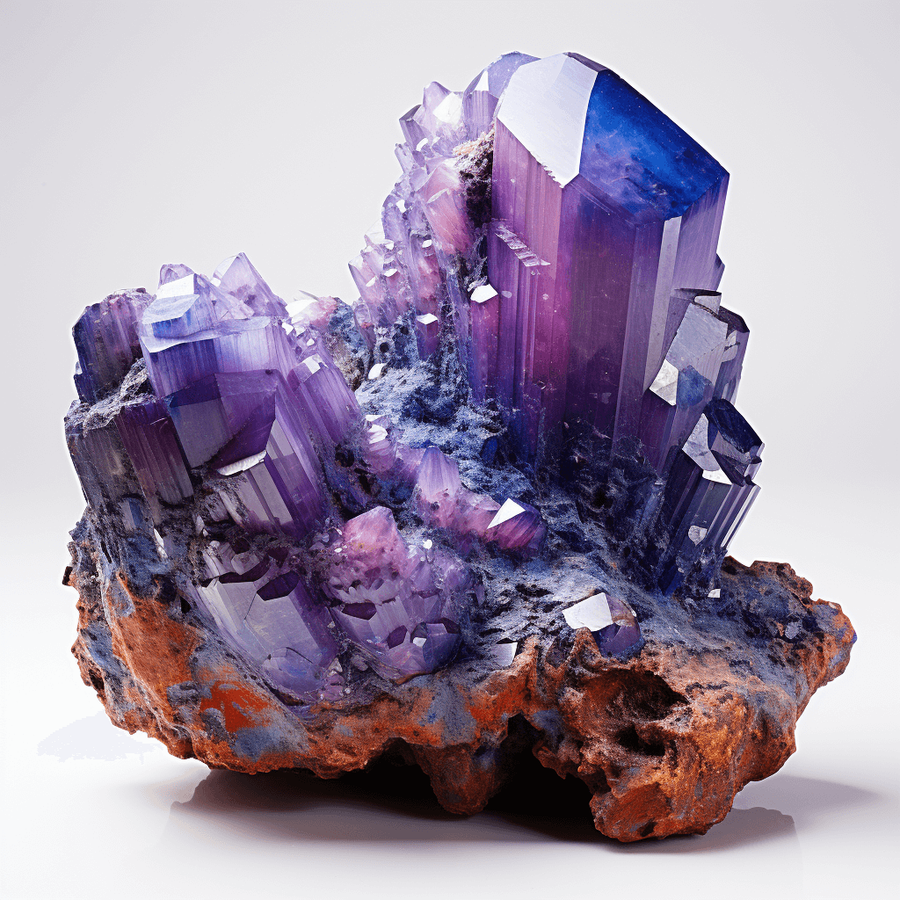
Referred to as the "Stone of Heaven," Purple Azurite is a soft mineral (3.5–4 on the Mohs scale) known for fine crystals and a rich blue-to-purple color. Historically it's been linked to third-eye and intuition symbolism.
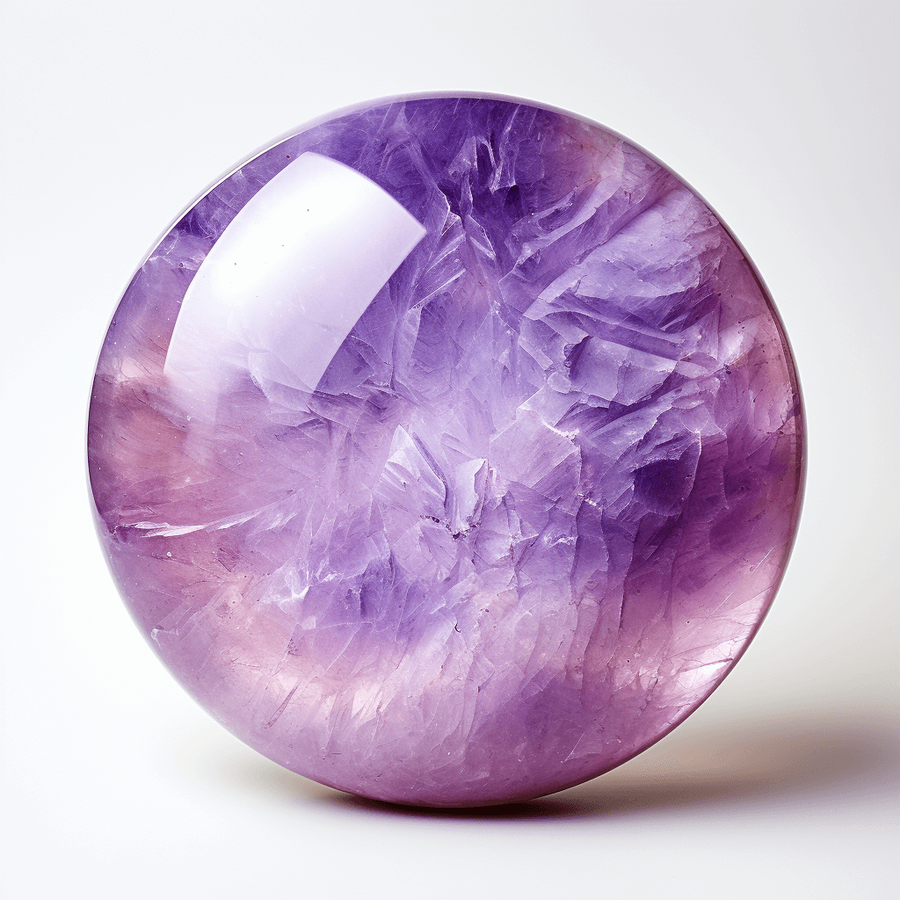
Purple Moonstone, a Feldspar-family gem rated 6–6.5 on the Mohs scale, is known for adularescence — a billowy, moonlight-like sheen. It's traditionally linked to intuition, balance, and the divine feminine.
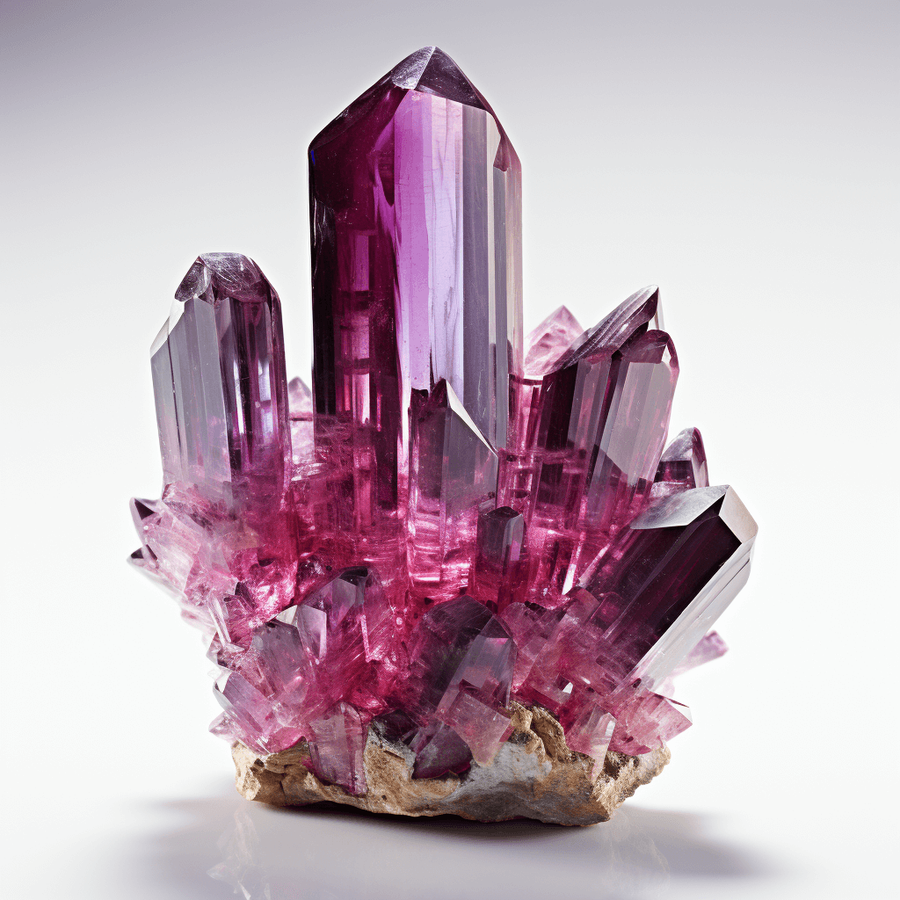
Often multicolored with a striking vitreous luster, Purple Tourmaline, rated 7–7.5 on the Mohs scale, is a durable, versatile faceting gem believed to harmonize energy and foster creativity and calm.
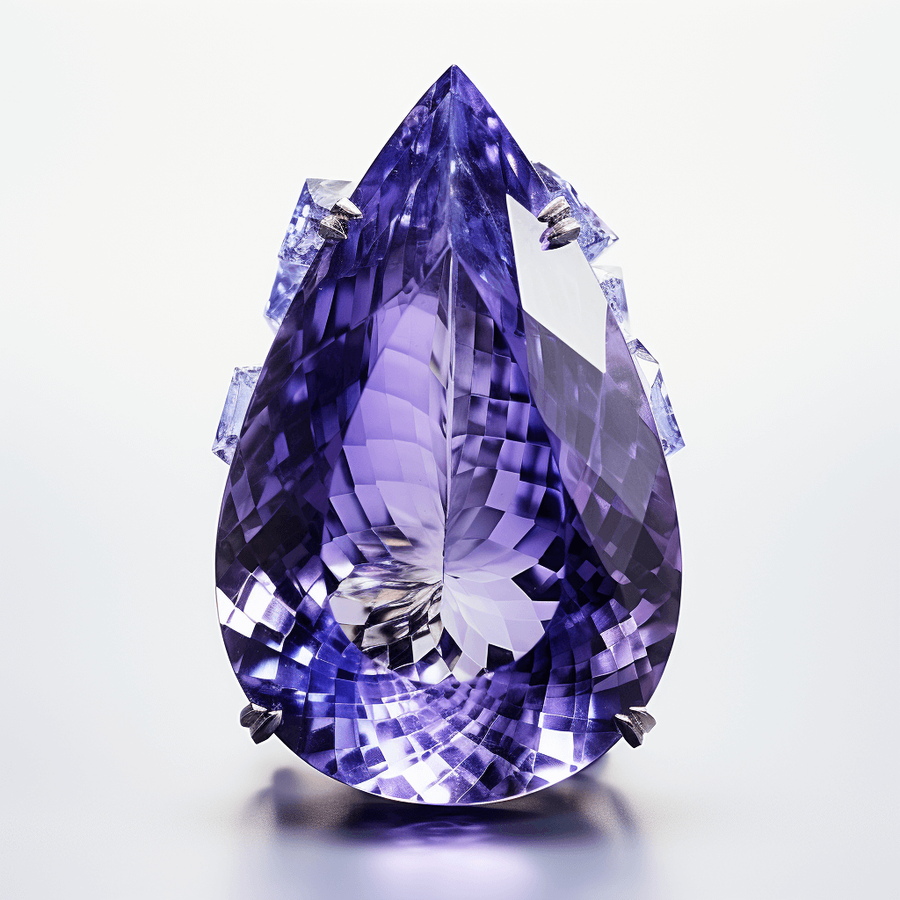
Discovered relatively recently and mined in a single deposit in Tanzania, Tanzanite is a pleochroic gem — meaning it shows different colors from different angles — often shifting between blue and violet. Rated 6.5–7 on the Mohs scale, it symbolizes transformation and is a popular pick among Libra crystal collectors, alongside its cousin Iolite.
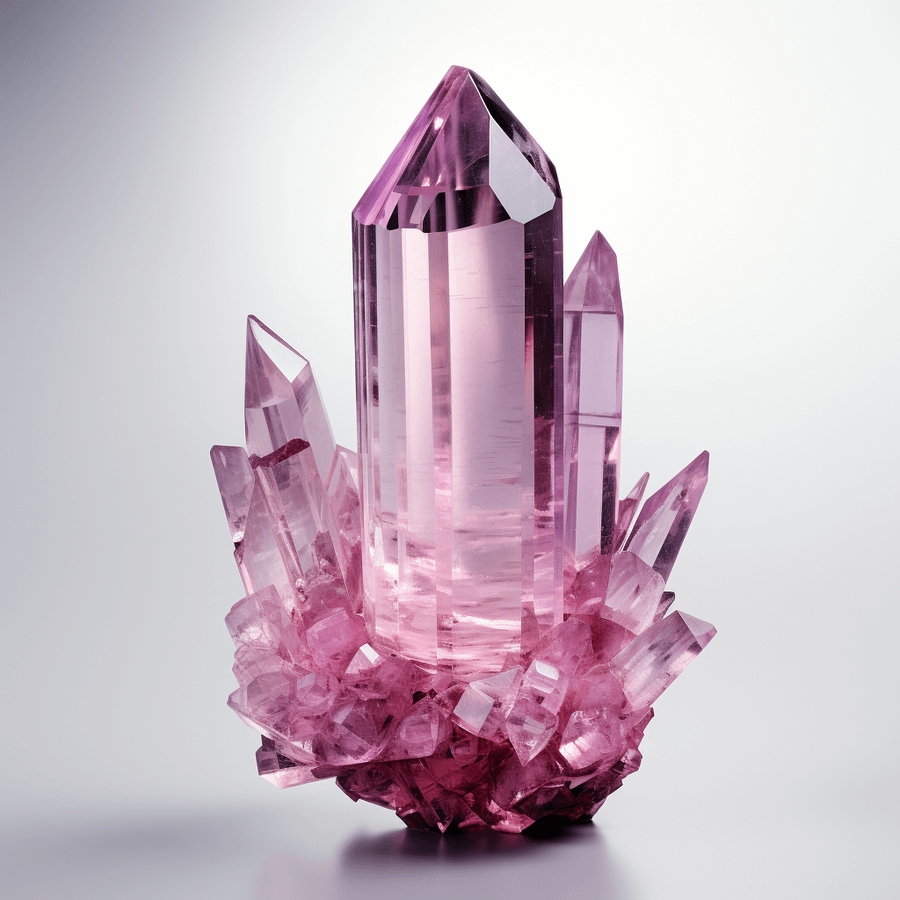
A light-to-deep pinkish-purple gemstone rated 6.5–7 on the Mohs scale, Kunzite is known for pleochroism and brilliance. It's associated with love and emotional healing and remains popular among gemstone designers for its clarity.
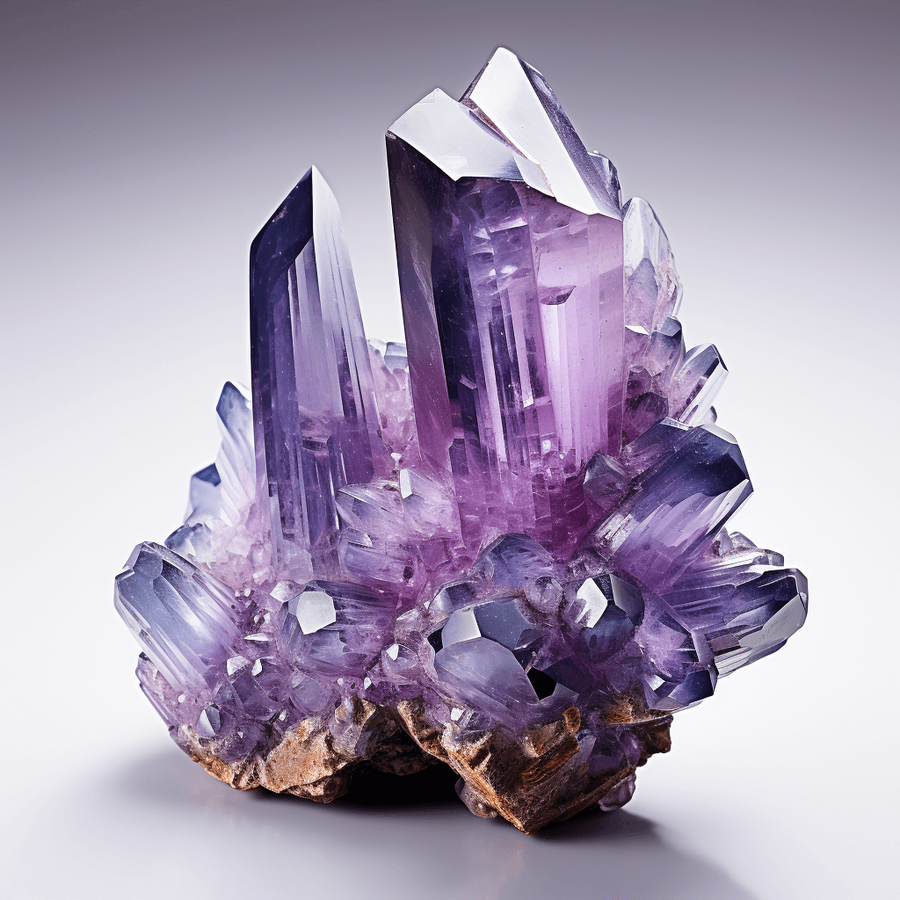
Phosphosiderite, rated 3.5–4 on the Mohs scale, comes in beautiful shades of orchid purple. Metaphysically it's associated with the third-eye chakra and is said to encourage spiritual growth and self-awareness.
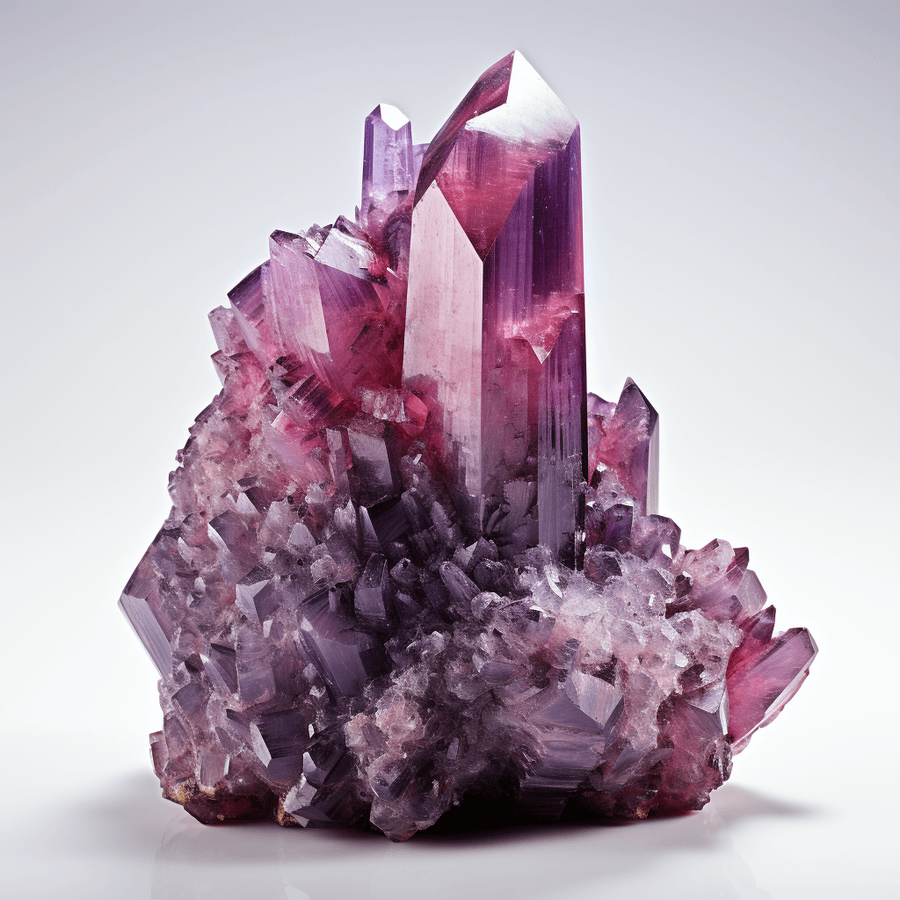
Purple Lepidocrocite, rated 5–5.5 on the Mohs scale, is often found included within quartz. It's associated with emotional balance and mental clarity.
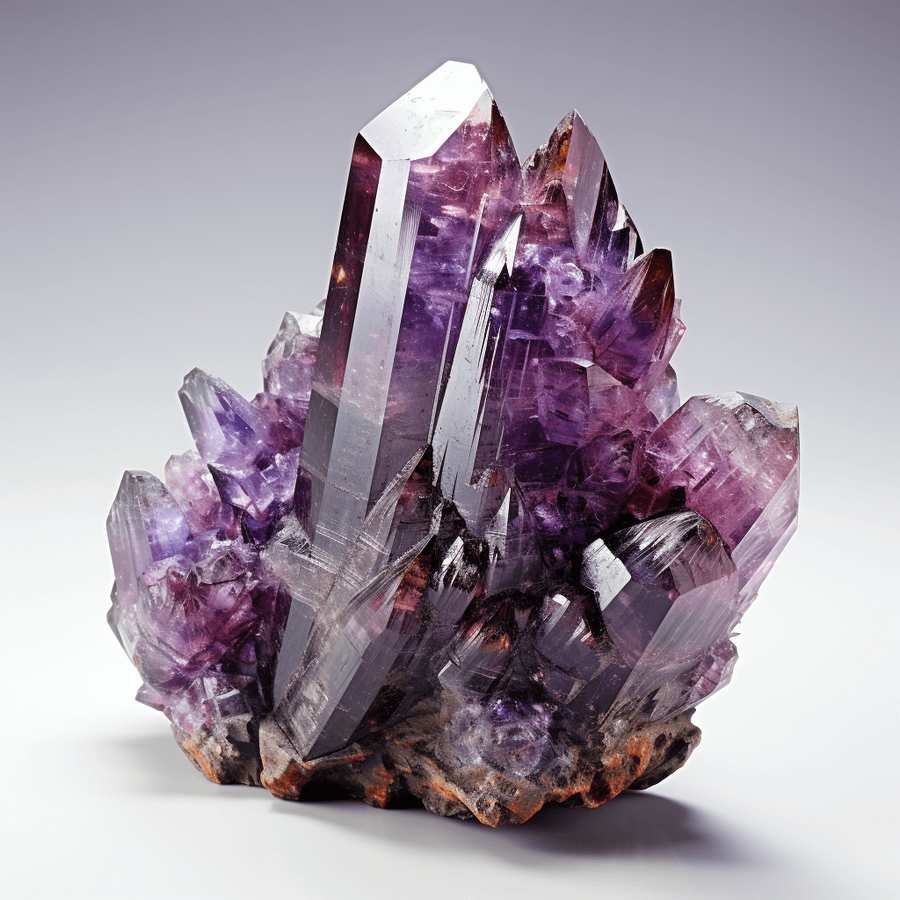
With an alluring purplish-brown color and strong pleochroism, Purple Axinite, rated 6.5–7 on the Mohs scale, is believed to aid in revealing truth and balancing polarities. It's a favorite among collectors more than mainstream jewelers.
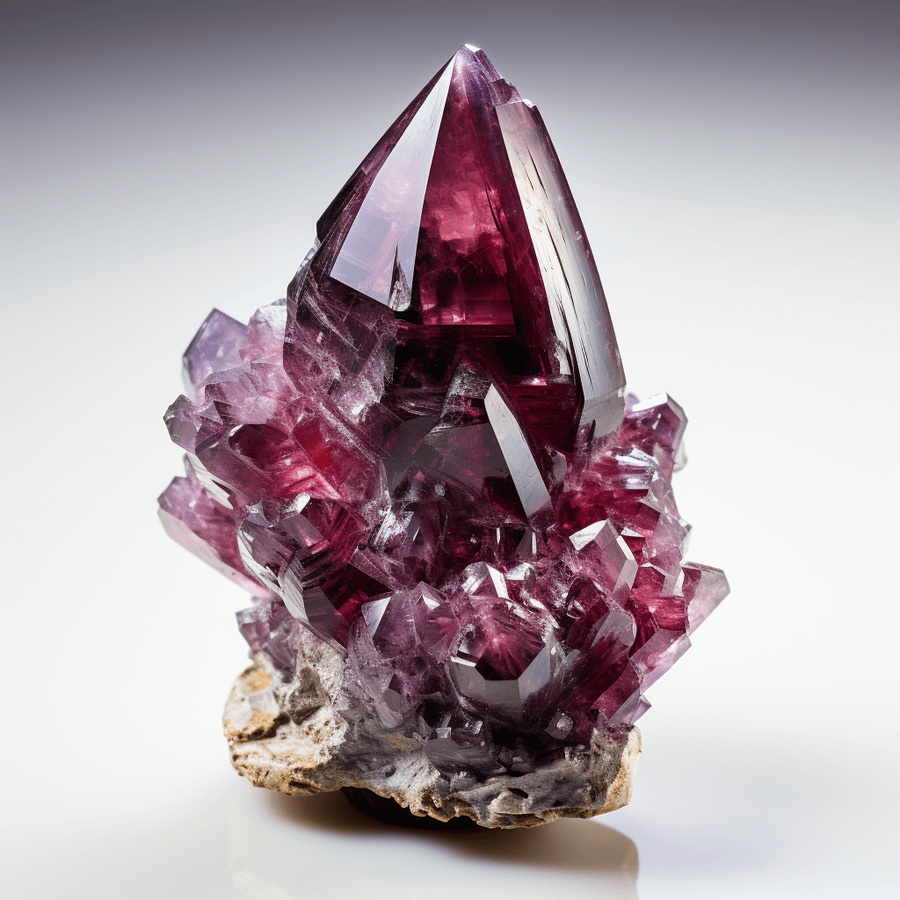
A variety of garnet rated 7–7.5 on the Mohs scale, Purple Rhodolite ranges from raspberry-red to purplish-pink. Its name derives from the Greek "rhodon" for "rose," and it's associated with inspiration and self-worth.
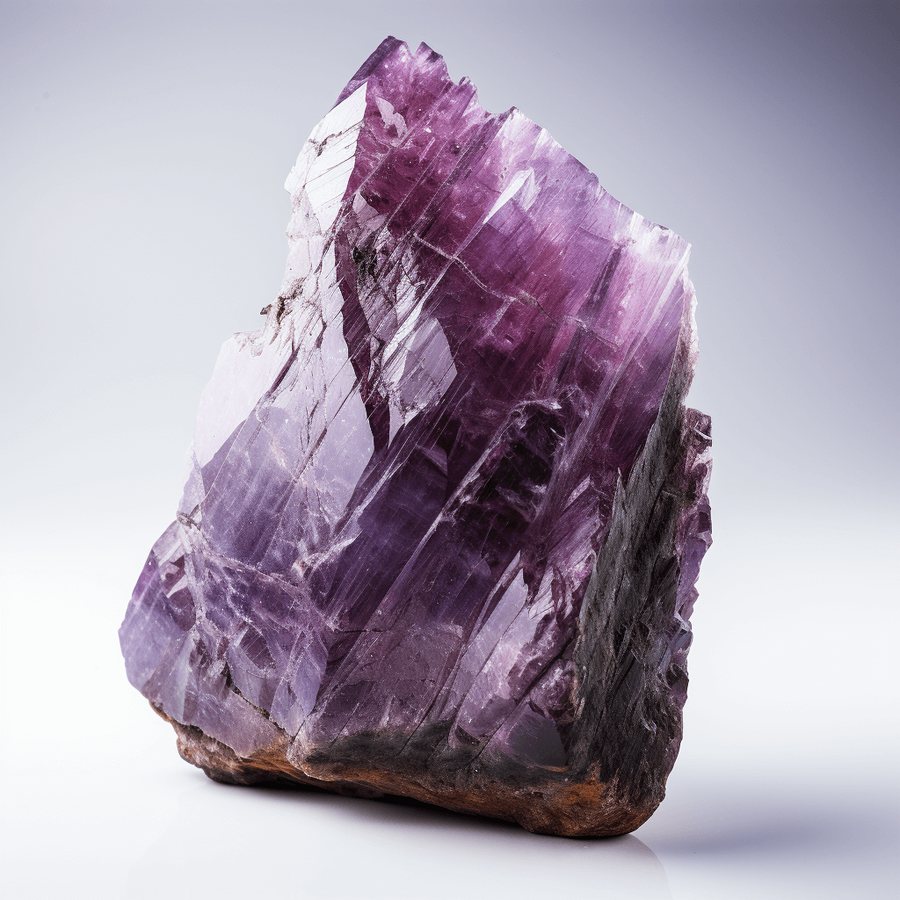
Typically known in green or blue-green tones, Amazonite, a type of Feldspar rated 6–6.5 on the Mohs scale, can also occur in shades of purple. It's believed to create a soothing energy that promotes harmony and balance.
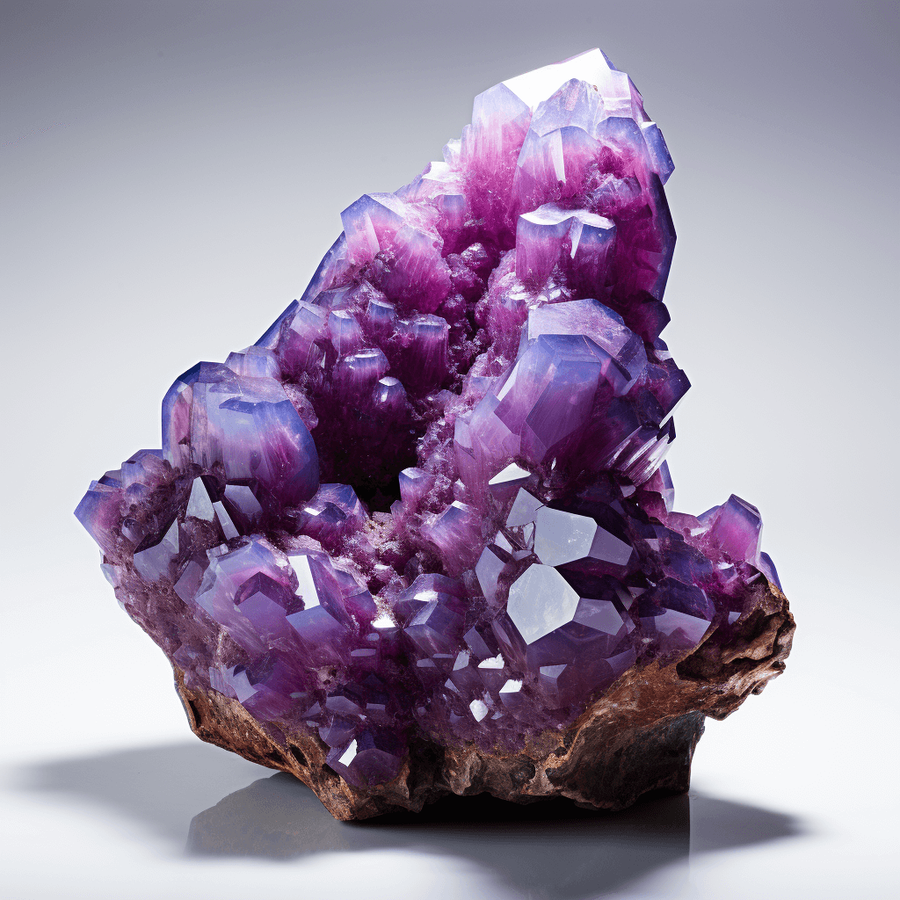
A rare collector's gemstone rated 4–4.5 on the Mohs scale, Purple Smithsonite is praised for tender lavender-to-pinkish-purple tones and a pearly luster. It's said to foster compassion and charisma.
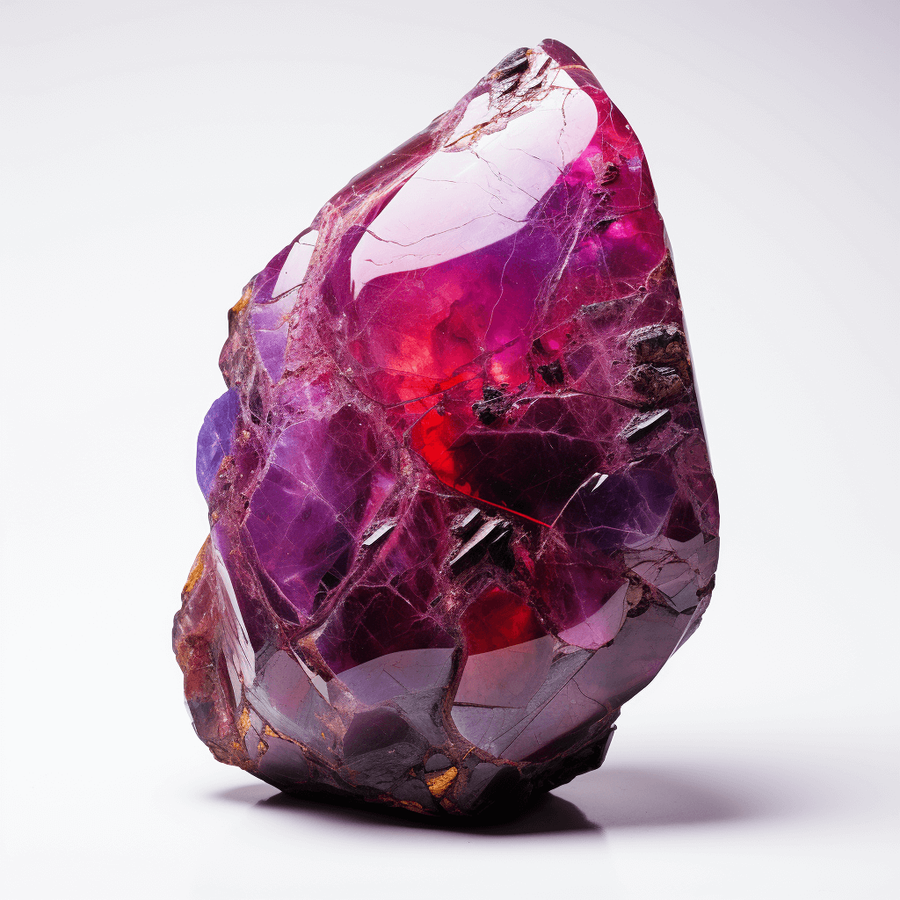
Distinct for its rich purple-to-pink hues, Stichtite is a very soft mineral (1.5–2 on the Mohs scale) often found alongside serpentine or chromite. It's believed to stimulate love, forgiveness, and emotional flexibility.
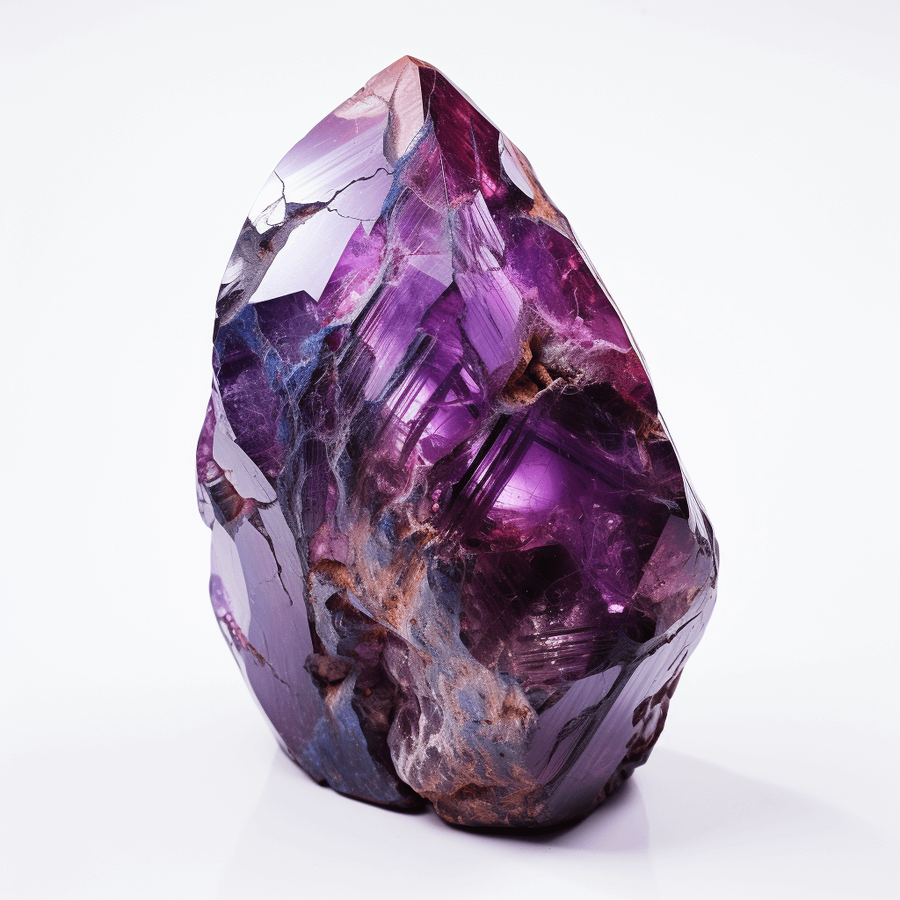
Purple Obsidian is a naturally occurring volcanic glass, typically black but occasionally found in shades of purple, rated 5–5.5 on the Mohs scale. It's often used for spiritual growth and releasing negativity.
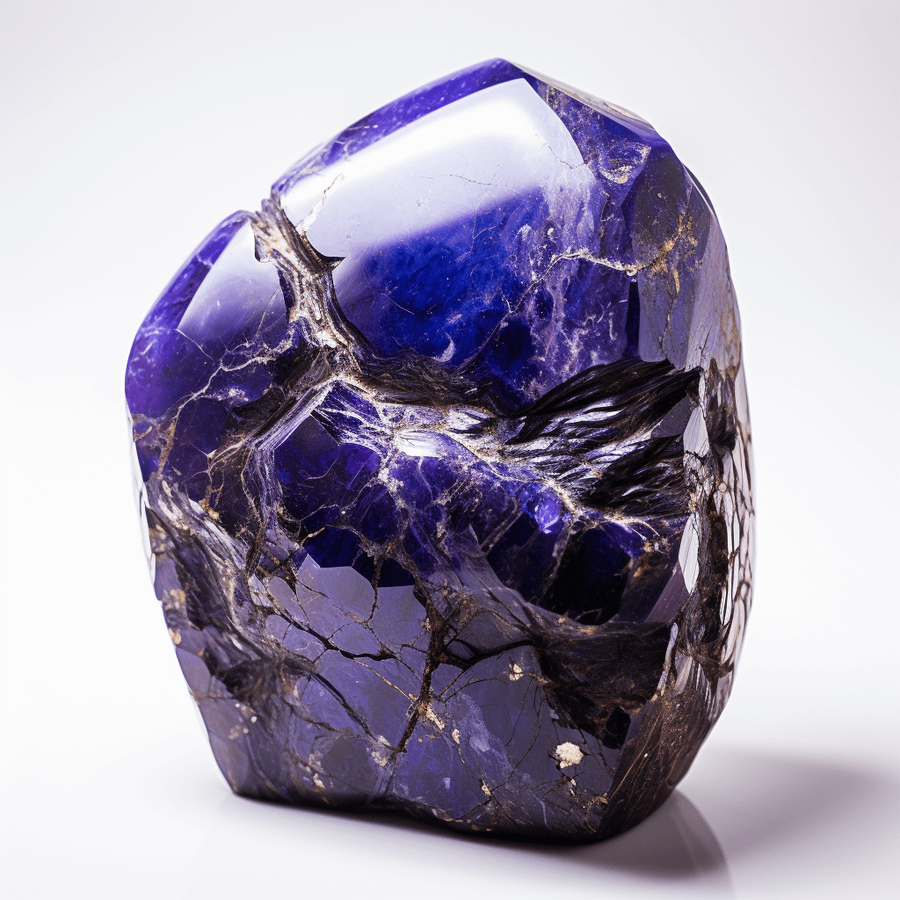
Though predominantly known for royal blue, Lapis Lazuli, rated 5–6 on the Mohs scale, can occur in unique purple shades. It's traditionally linked with wisdom, truth, and enlightenment.
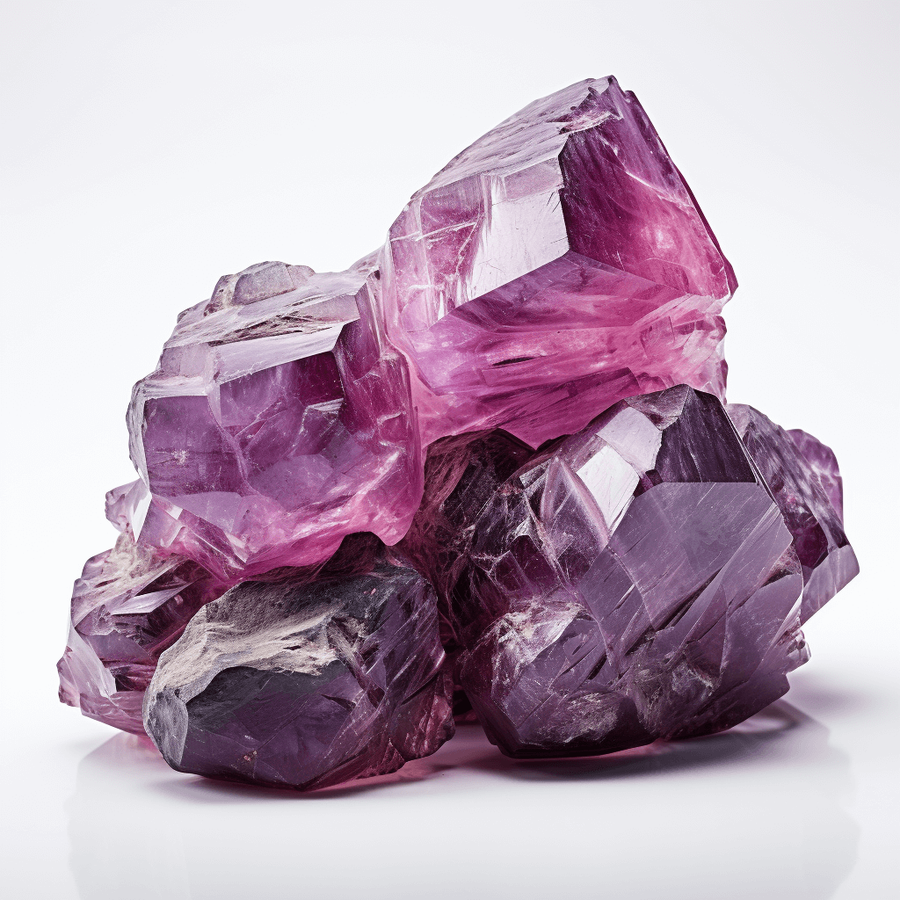
With strong, bold violet tones, Purpurite, rated 4–5 on the Mohs scale, is known as a "Stone of Transformation," believed to encourage openness, courage, and self-confidence.
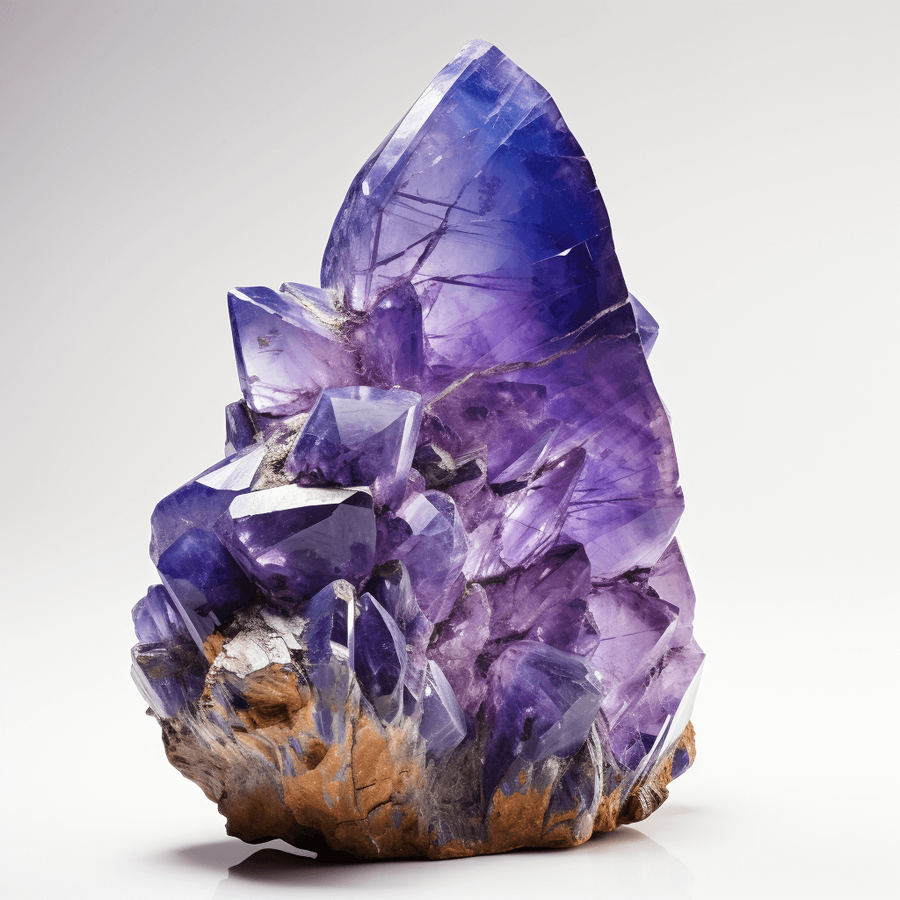
Often called the "water sapphire," Purple Iolite, rated 7–7.5 on the Mohs scale, was historically used by Vikings as a polarizing navigation lens. Today it's associated with self-discovery and inner clarity, and pairs symbolically with Tanzanite for Libra crystal work.
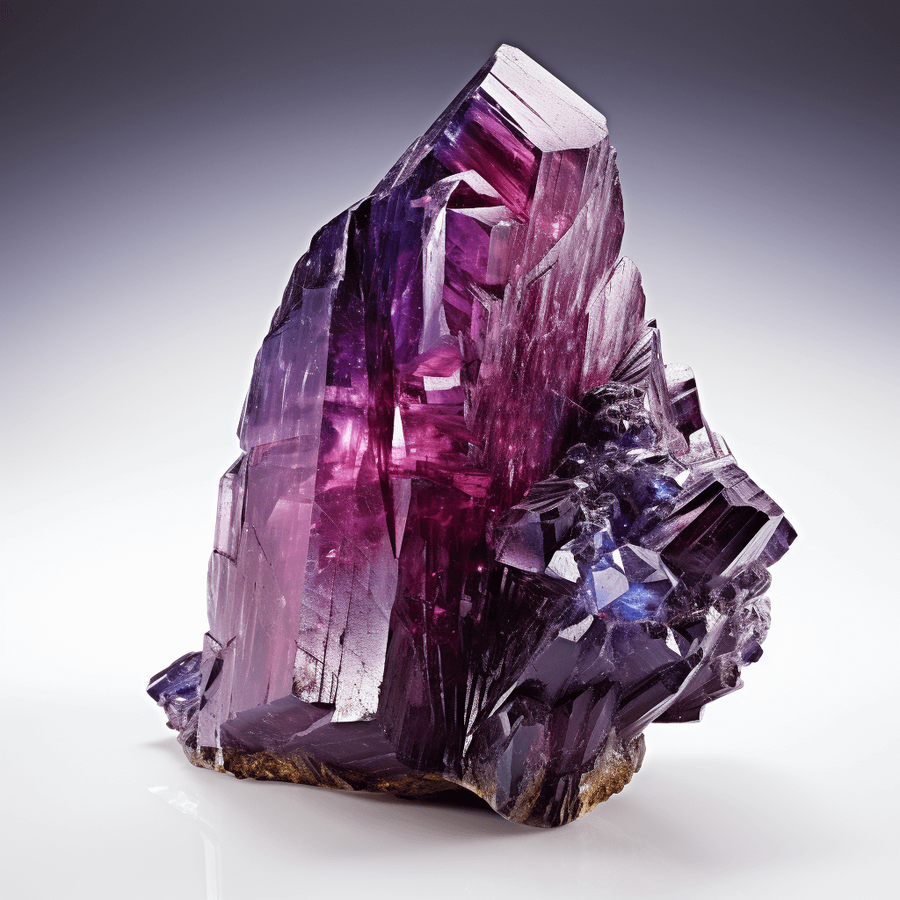
Named for its discovery site at Mount Vesuvius, Purple Vesuvianite (Idocrase), rated 6.5 on the Mohs scale, is believed to link the heart and the will, helping the wearer follow their heart's desire.
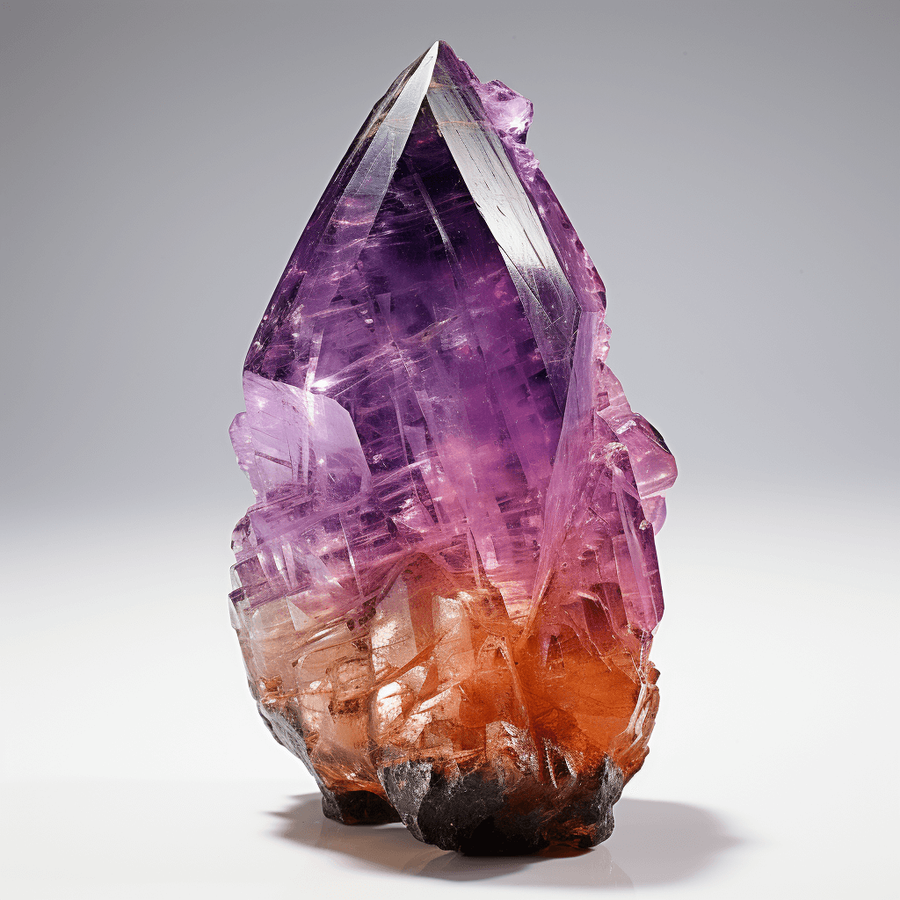
Ametrine, rated 7 on the Mohs scale, is a natural blend of Amethyst and Citrine occurring in the same crystal. The striking juxtaposition of yellow and purple symbolizes a balance of passion and logic, combining tranquility with prosperity symbolism.
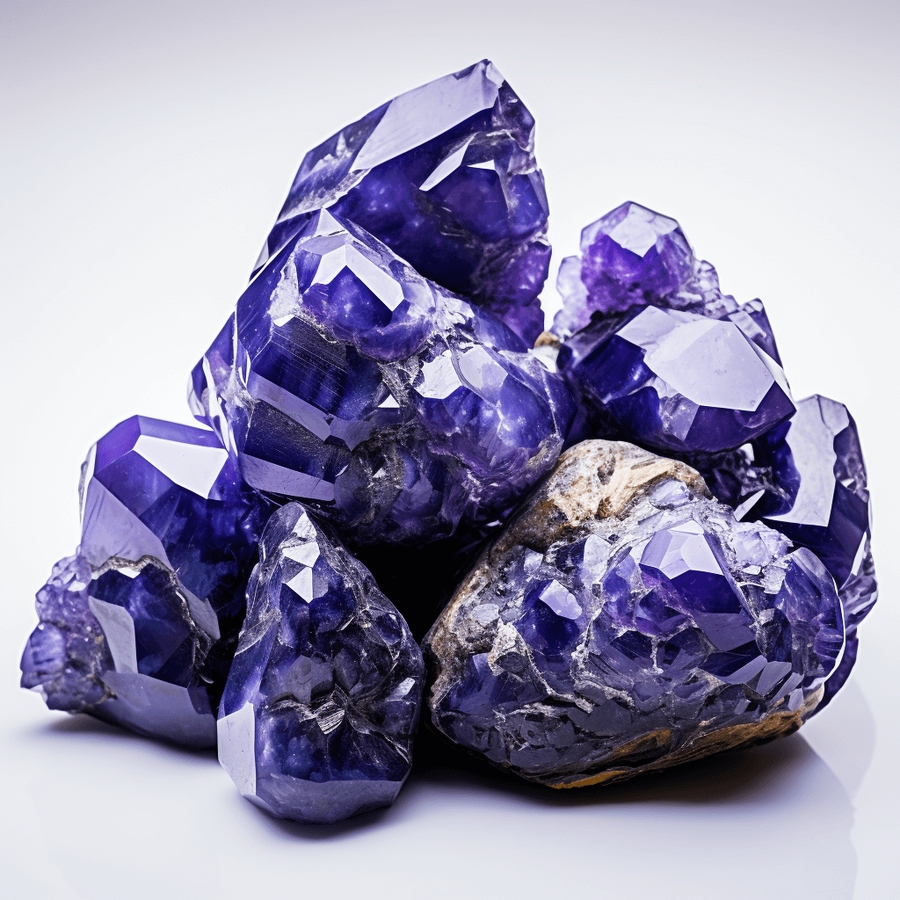
Though typically blue, Sodalite, rated 5.5–6 on the Mohs scale, can also come in purple shades. It's associated with self-expression, creativity, and confidence.
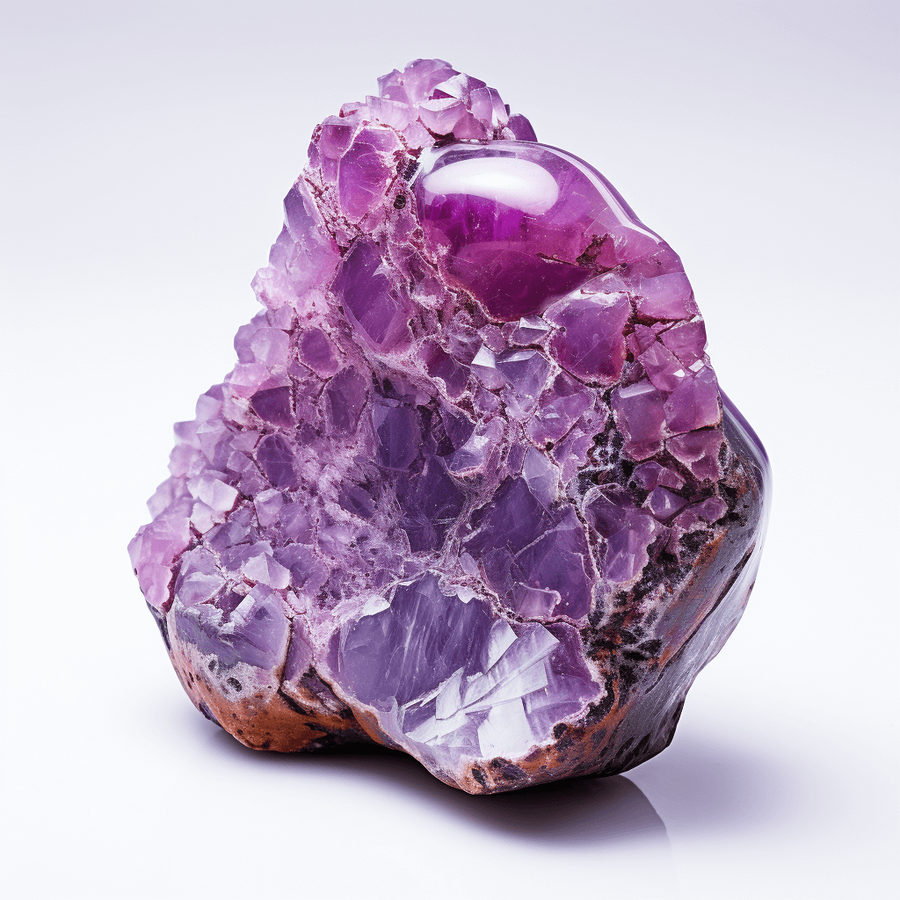
Recognized for calming colors from light lavender to rich purple, Variscite, rated 4.5–5 on the Mohs scale, is often associated with prosperity, success, and emotional healing.
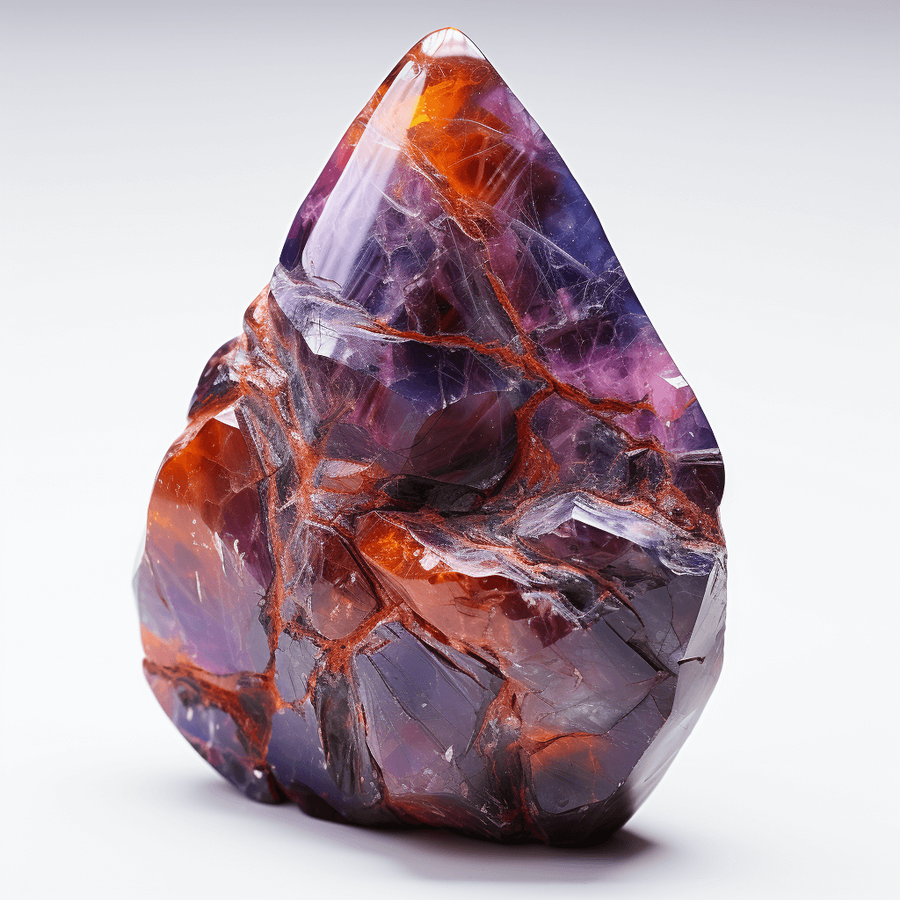
Originally discovered in Namibia, Pietersite, rated 6.5–7 on the Mohs scale, is nicknamed the "Tempest Stone" for its swirling blue, gold, and purple color play. It's linked to willpower, courage, and spiritual vision.
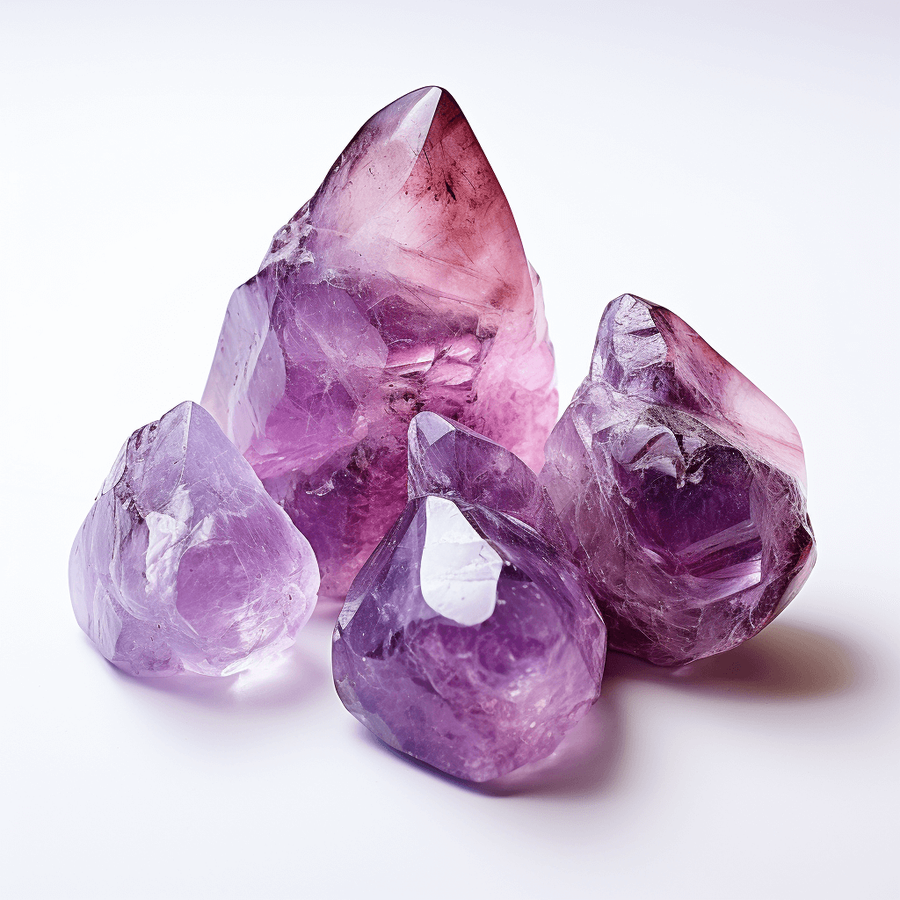
Prehnite, though typically green, occasionally occurs in purple shades and is rated 6–6.5 on the Mohs scale. It's known as the "stone of unconditional love," associated with peace, forgiveness, and acceptance.
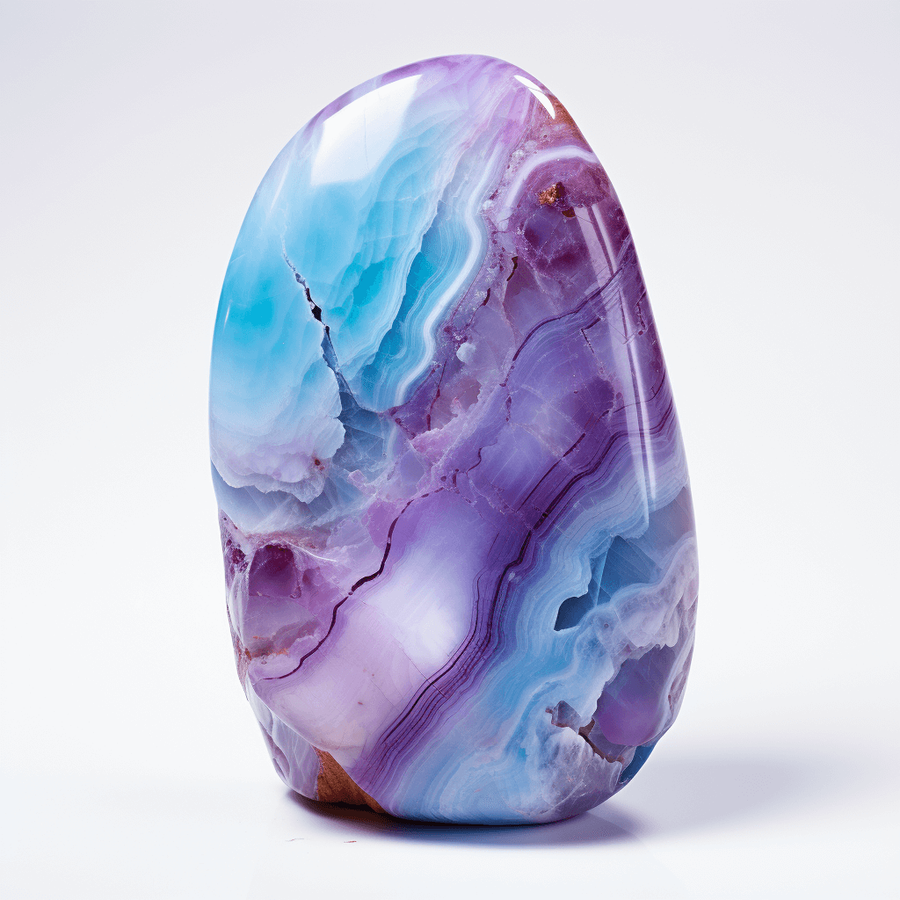
Primarily found in the Dominican Republic, Larimar, rated 4.5–5 on the Mohs scale, is mostly blue and white but occasionally displays rare purple tones. It carries the same tranquil, ocean-like energy as its blue counterpart.
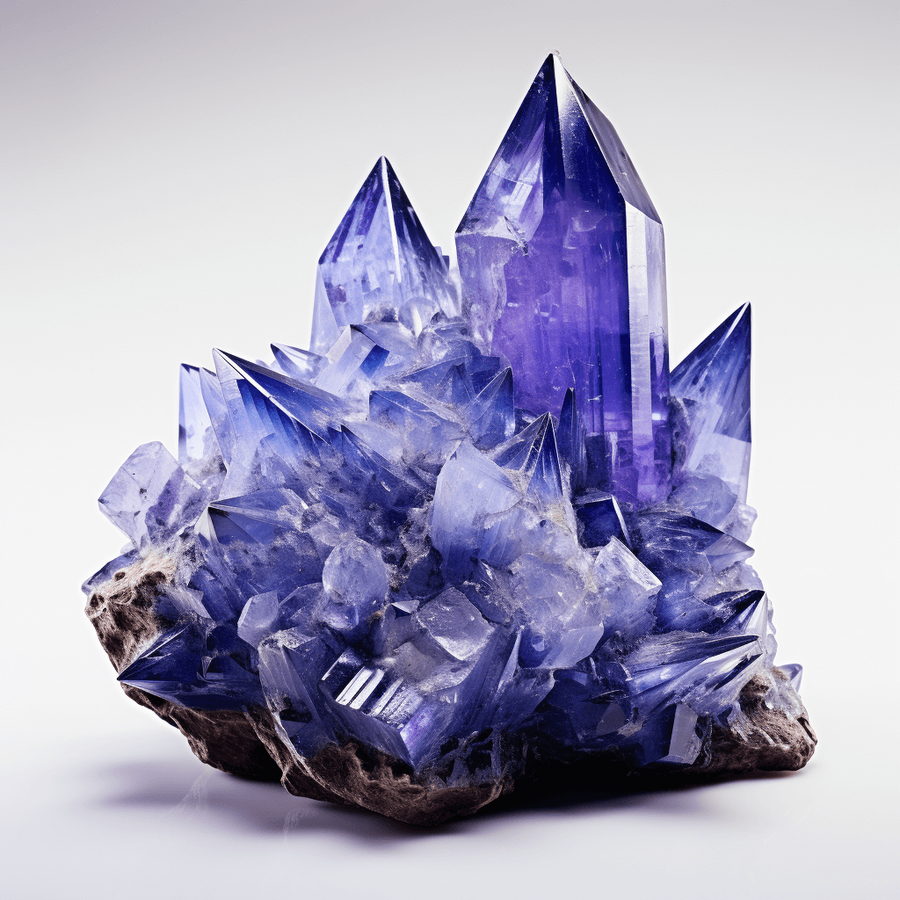
Benitoite is California's official state gem, designated in 1985, and rated 6 to 6.5 on the Mohs scale. Its fluorescence under ultraviolet light adds to its collector appeal.
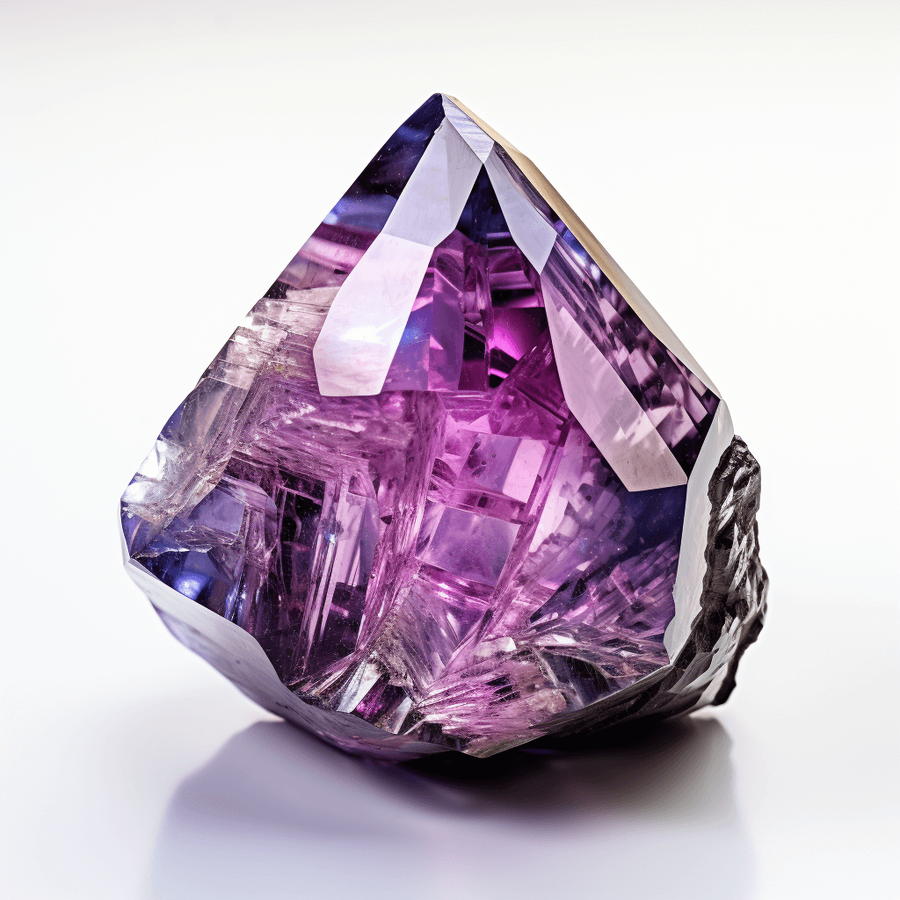
Alexandrite, rated 8.5 on the Mohs scale, is famous for dramatic color-change properties, shifting from green to red and, on rare occasions, to a captivating purple under different lighting. This phenomenon makes it one of the most valuable gemstones in the world.
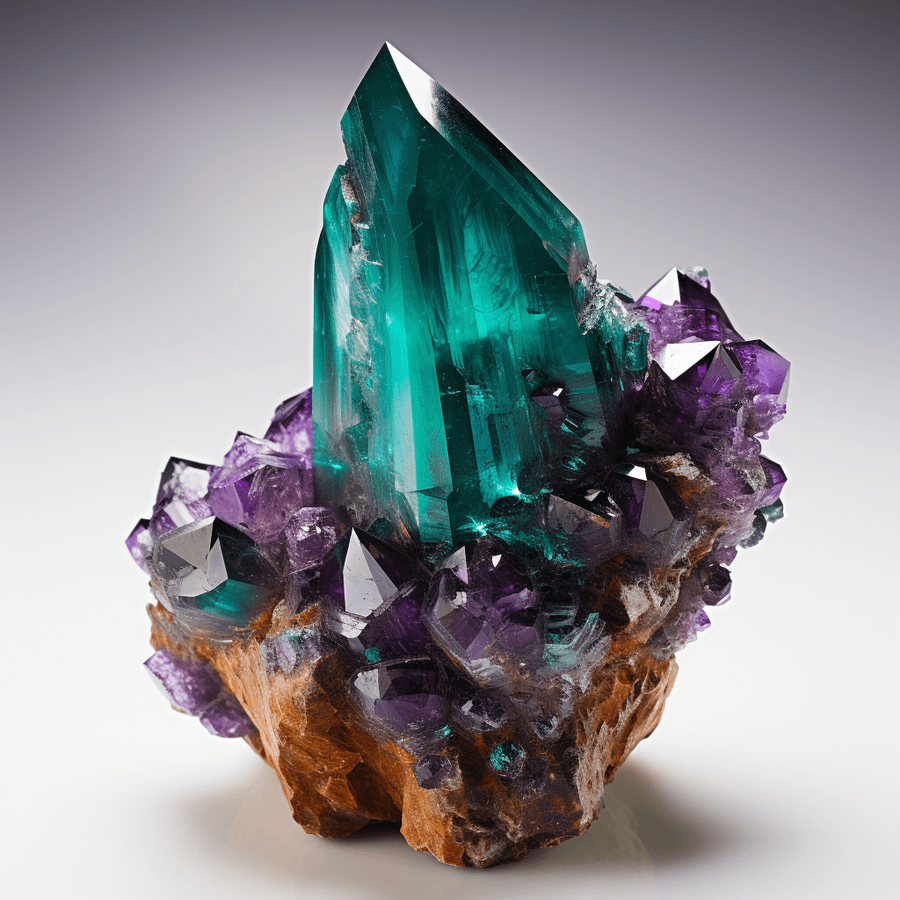
Primarily known for its intense green hue, Dioptase, rated 5 on the Mohs scale, can also exhibit a rare, deep purple color. It's associated with the heart chakra and traditionally linked to emotional healing.
Pezzottaite, marketed as "raspberry beryl," is a raspberry-to-purple member of the beryl family first identified in Madagascar in 2003. Rated a hard 8 on the Mohs scale, it's chemically related to emerald and morganite, and its scarcity keeps prices in the $500–$1,500 per carat range for fine specimens.
Zultanite, the trade name for gem-quality diaspore, shifts from champagne or kiwi-green in daylight to a raspberry-purple under incandescent light. Rated 6.5–7 on the Mohs scale and mined almost exclusively in Turkey, it rounds out our list as one of the most striking color-change purple gems available today.
| Gemstone | Price (approx.) | Mohs Hardness | Common Uses |
|---|---|---|---|
| Amethyst | $2 – $8 per carat | 7 | Rings, necklaces, earrings, meditation stones |
| Purple Sapphire | $100 – $1,500 per carat | 9 | Fine jewelry, engagement rings |
| Purple Garnet | $500 – $5,000 per carat | 7-7.5 | High-end jewelry, collector's items |
| Purple Diamond | $10,000 – $1,000,000+ per carat | 10 | Luxury jewelry, investment |
| Purple Jadeite | $200 – $3,000 per carat | 6.5-7 | High-quality jewelry, carvings |
| Purple Spinel | $200 – $2,000 per carat | 8 | Fine jewelry, collector's items |
| Purple Topaz | $30 – $200 per carat | 8 | Jewelry, gem collections |
| Purple Tourmaline | $50 – $500 per carat | 7-7.5 | Jewelry, gem collections |
| Purple Tanzanite | $300 – $1,000+ per carat | 6.5-7 | Jewelry, gem collections |
| Kunzite | $60 – $400 per carat | 6.5-7 | Jewelry, gem collections |
| Purple Rhodolite | $20 – $150 per carat | 7-7.5 | Jewelry, gem collections |
| Ametrine | $10 – $100 per carat | 7 | Jewelry, gem collections |
| Purple Iolite | $50 – $500 per carat | 7-7.5 | Jewelry, gem collections |
| Purple Benitoite | $3,000 – $4,000 per carat | 6.5 | Rare gemstone investment |
| Purple Alexandrite | $500 – $12,000 per carat | 8.5 | High-end gemstone investment |
| Purple Beryl (Pezzottaite) | $500 – $1,500 per carat | 8 | Collector's jewelry |
| Gemstone | Price (approx.) | Mohs Hardness | Common Uses |
|---|---|---|---|
| Sugilite (Luvulite) | $500 – $1,000 per carat | 5.5-6.5 | High-end jewelry, collector's pieces |
| Lepidolite | $1 – $10 per piece | 2.5-3 | Ornamental pieces, healing tools |
| Charoite | $20 – $60 per carat | 5-6 | Artisan jewelry, collector's pieces |
| Lavender Jade | $10 – $3,000 per piece | 6-7 | High-end jewelry, decorative items |
| Purple Fluorite | $5 – $10 per piece | 4 | Home decor, healing crystals, jewelry |
| Purple Labradorite | $5 – $50 per piece | 6-6.5 | Jewelry, healing crystals, home decor |
| Purple Agate | $1 – $20 per piece | 7 | Jewelry, decorative items |
| Purple Chalcedony | $10 – $100 per carat | 6-7 | Jewelry, decorative pieces |
| Purple Quartz | $5 – $50 per carat | 7 | Jewelry, decorative items |
| Purple Jasper | $2 – $20 per piece | 6.5-7 | Jewelry, decorative pieces |
| Purple Apatite | $5 – $50 per carat | 5 | Jewelry, gem collections |
| Purple Scapolite | $20 – $200 per carat | 5-6 | Jewelry, gem collections |
| Purple Hematite | $2 – $20 per piece | 5.5-6.5 | Jewelry, decorative pieces |
| Purple Opal | $50 – $300 per carat | 5.5-6.5 | Jewelry, decorative pieces |
| Purple Sunstone | $30 – $150 per carat | 6-6.5 | Jewelry, gem collections |
| Purple Diaspore (Zultanite) | $200 – $800 per carat | 6.5-7 | Jewelry, gem collections |
| Gemstone | Price (approx.) | Mohs Hardness | Common Uses |
|---|---|---|---|
| Purple Azurite | $2 – $100 per piece | 3.5-4 | Decorative items, collectors' pieces |
| Purple Moonstone | $10 – $100 per carat | 6-6.5 | Jewelry, decorative pieces |
| Phosphosiderite | $10 – $100 per piece | 3.5-4 | Decorative pieces, jewelry |
| Purple Lepidocrocite | $2 – $20 per piece | 5-5.5 | Jewelry, decorative pieces |
| Purple Axinite | $50 – $300 per carat | 6.5-7 | Jewelry, gem collections |
| Purple Feldspar (Amazonite) | $10 – $100 per piece | 6-6.5 | Decorative pieces, jewelry |
| Purple Smithsonite | $30 – $150 per piece | 4-4.5 | Jewelry, decorative pieces |
| Stichtite | $10 – $50 per piece | 1.5-2 | Decorative pieces |
| Purple Obsidian | $20 – $100 per piece | 5-5.5 | Jewelry, decorative pieces |
| Purple Lapis Lazuli | $1 – $100 per carat | 5-6 | Jewelry, decorative pieces |
| Purpurite | $10 – $50 per piece | 4-5 | Jewelry, decorative pieces |
| Purple Vesuvianite | $10 – $100 per carat | 6.5 | Jewelry, gem collections |
| Purple Sodalite | $1 – $10 per piece | 5.5-6 | Jewelry, decorative pieces |
| Purple Variscite | $10 – $100 per piece | 4.5-5 | Jewelry, decorative pieces |
| Purple Pietersite | $20 – $200 per carat | 6.5-7 | Jewelry, gem collections |
| Purple Prehnite | $5 – $50 per piece | 6-6.5 | Jewelry, decorative pieces |
| Purple Larimar | $5 – $100 per carat | 4.5-5 | Jewelry, gem collections |
| Purple Dioptase | $20 – $200 per piece | 5 | Jewelry, decorative pieces |
Steeped in history, mysticism, and beauty, purple gemstones have always fascinated humans with their enchanting allure. The color purple, a blend of blue's calm stability and red's fierce energy, holds significant symbolic meaning tied to power, nobility, luxury, and ambition. It also represents wealth, creativity, wisdom, dignity, devotion, and independence. Beyond aesthetics and symbolism, purple gemstones are traditionally believed to carry healing properties — though these should always be treated as folklore rather than clinical fact.
While the healing properties of gemstones should never replace traditional medical treatments, there's no denying the comfort and positivity they can bring into daily life.
With such a wide range of purple gemstones available, choosing the right one is a personal journey that should resonate with your personality, preferences, and needs. Here are five pointers to help:
There's no denying the captivating charm of purple gemstones. Their majestic hues, coupled with rich symbolism and purported healing properties, have captivated humans for centuries, from ancient nobility to modern gem enthusiasts. Whether you're drawn to the calming Amethyst, the creativity-stimulating Purple Fluorite, the prosperity-attracting Purple Diamond, or any of the other 47 stones in this guide, each offers unique vibrance and charm.
These precious stones are more than decorative elements — they can become personal talismans, symbols of identity, and tangible reminders of aspirations and beliefs. Whether you select a purple gemstone for its healing properties, beauty, rarity, or because it speaks to you on an intuitive level, it becomes part of your own story.
The Purple Diamond is generally considered the rarest and most valuable purple gemstone, with fine specimens fetching well over $1,000,000 per carat. Benitoite and gem-quality Purple Alexandrite are also exceptionally rare, with Benitoite found in commercial quantity at only one location in California.
Amethyst is the purple crystal most commonly described as "powerful" in crystal-healing circles, prized for its durability (7 on the Mohs scale) and long association with protection and clarity. Charoite and Sugilite are also frequently cited for their intense color and reputed metaphysical strength.
Standard commercial-grade Amethyst is quite affordable, typically $2–$8 per carat, because it's abundant worldwide. However, exceptionally deep, evenly-saturated "Deep Siberian" amethyst can command significantly higher prices at auction due to its rarity in that specific color grade.
Purple gemstones are traditionally associated with spiritual wisdom, transformation, intuition, and higher consciousness, drawing on purple's historic links to royalty and the divine. Many, like Amethyst and Charoite, are used in meditation practices believed to enhance calm and inner insight.
Amethyst is the official purple birthstone for February, while Tanzanite and Purple Sapphire are sometimes used as alternative or zodiac birthstones. Purple Garnet is also linked to January birthdays for those who prefer a violet variation on the traditional red garnet.
Table of Content What is Carnelian? Carnelian Stone: History, Culture, Mythology, and Folklore Benefits of Carnelian Stone and Cha…
Table of Content What is Fluorite? History, Culture, Mythology, and Folklore Benefits of Fluorite Stone and Chakra Healing Gemolog…
Discover what Opalite really is, its meaning, colors (blue, pink, purple), chakra links, healing uses, and how to spot authentic p…