Animal Symbolism
Bison Symbolism: Spiritual Meaning, Totem & Dream Guide
Bison symbolism meaning explained: spirit animal traits, totem power, dream meaning, bison vs buffalo, and sacred Indigenous wisdo…
 KnowMastery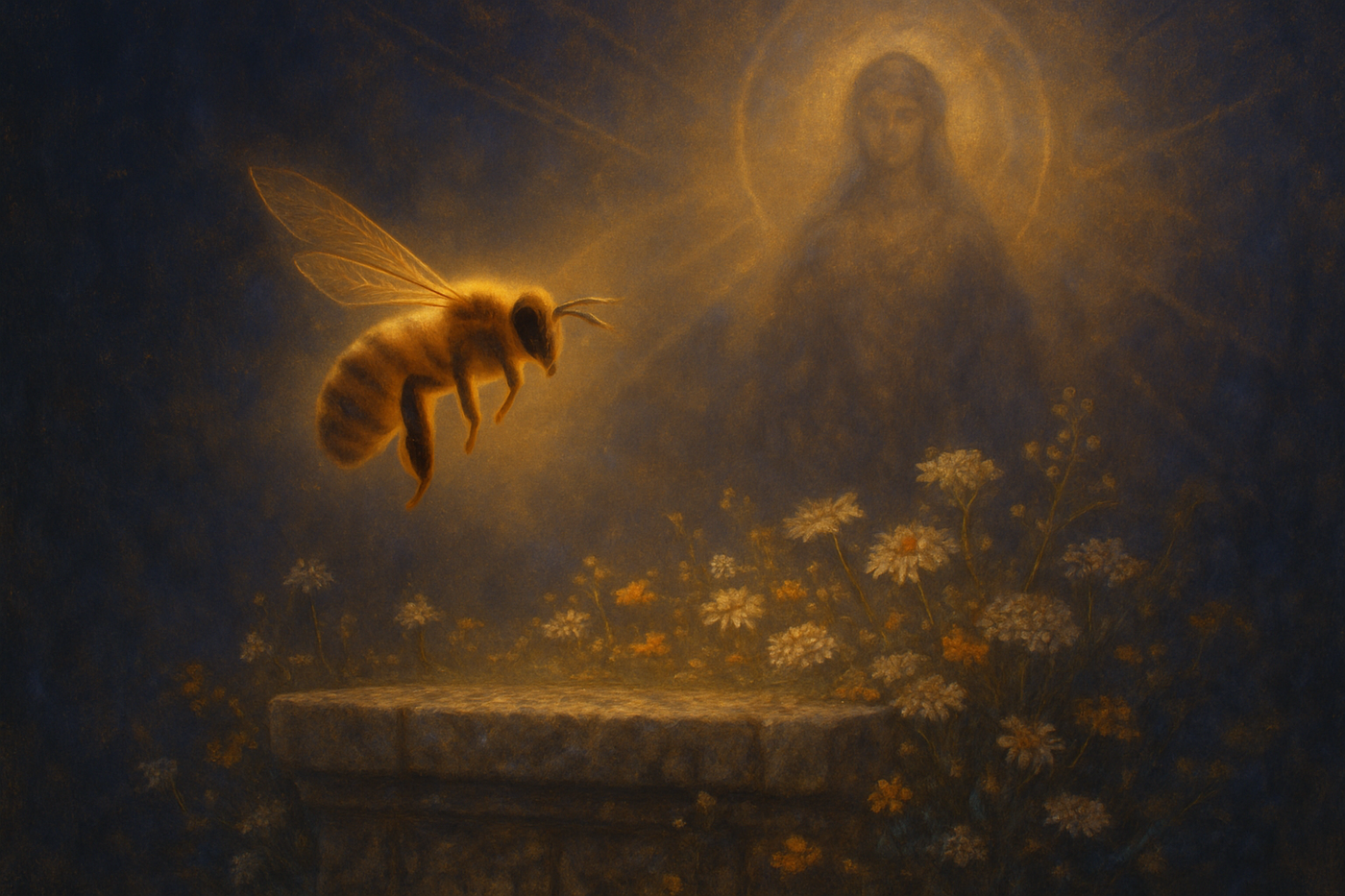
Bee symbolism centers on diligence, community, and abundance earned through sustained effort — spiritually, seeing a bee is widely read as a sign of good luck, a message that sweetness is on its way, or a gentle nudge from spirit to stay rooted in your purpose and your "hive." Across nearly every culture on earth, bees have been read as messengers of the divine feminine, symbols of community, and signs of abundance arriving through patient, diligent work.
Quick Answer: A bee appearing to you — whether landing on your skin, entering your home, or buzzing through a dream — is almost always interpreted as a positive omen tied to hard work, community, and reward finally arriving. The specific meaning shifts slightly depending on the encounter, but the bee's spiritual message rarely varies from themes of cooperation, purpose, and earned sweetness.
There is something almost hypnotic about the low hum of a bee moving between flowers, unhurried yet purposeful. It stops you mid-thought. For a moment, the noise of your own life quiets down to match that gentle vibration.
Maybe that is why bees have followed humanity through every age of myth and religion - not as background creatures, but as sacred emissaries. They carry pollen from bloom to bloom the way spirit carries messages from the unseen to the seen. When one shows up unexpectedly, it is worth pausing to ask what it might be trying to tell you.
At its root, bee symbolism points to industry, community, and the transformation of effort into sweetness. Bees do not work for themselves alone - every drop of honey benefits the entire hive. Spiritually, this makes the bee a powerful teacher of selfless service, teamwork, and the idea that abundance grows when we contribute to something larger than ourselves.
Bees are also deeply tied to the divine feminine. The queen bee governs the hive, and ancient priestesses in several Mediterranean traditions were literally called "bees." This links the insect to intuition, fertility, creation, and the nurturing power associated with goddess worship.
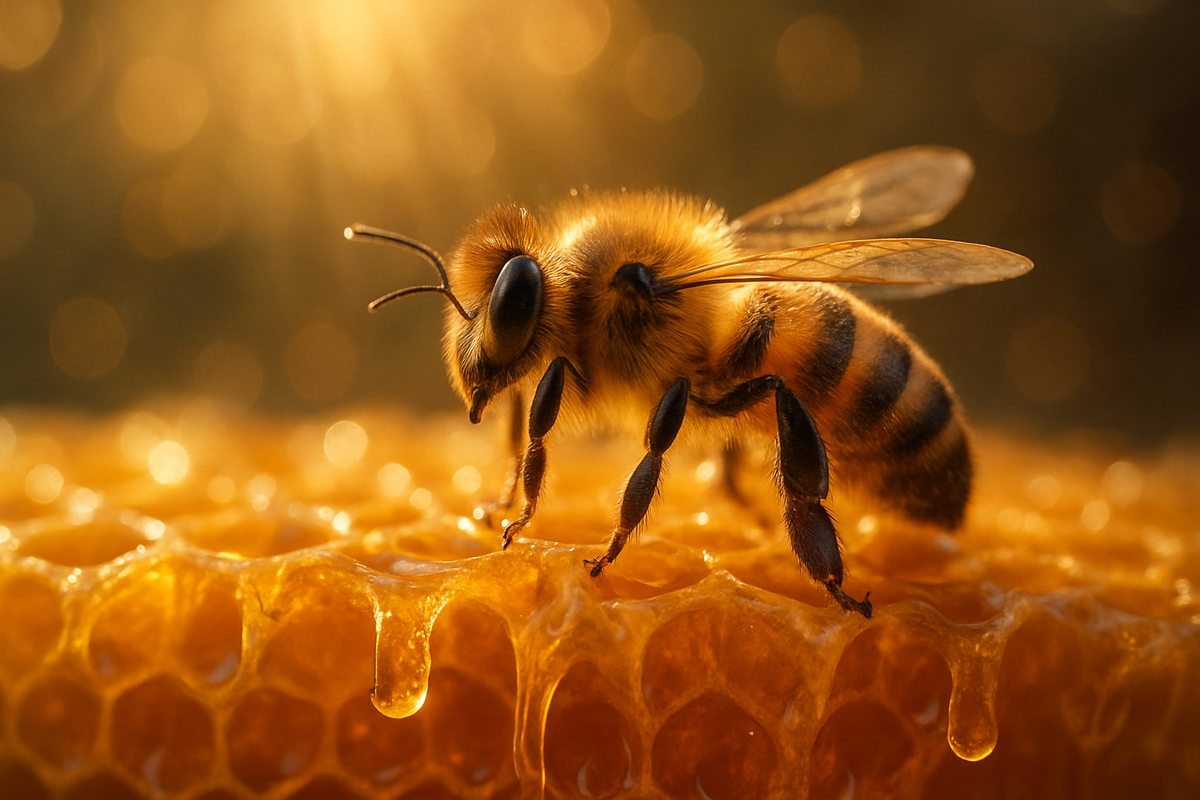
The reverence for bees is not a modern wellness trend - it stretches back thousands of years and spans continents.
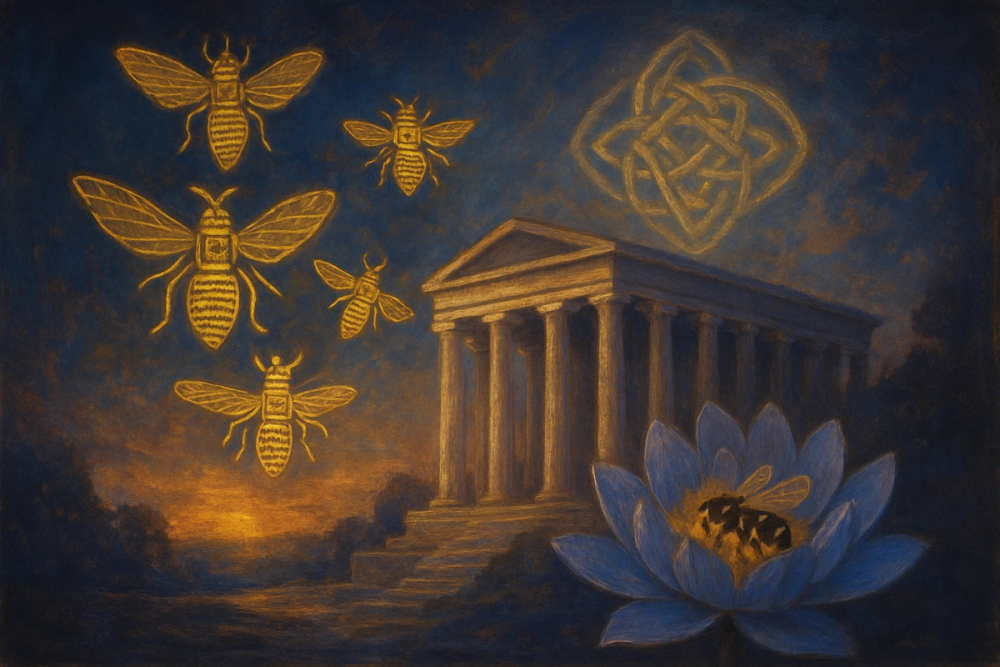
In Egyptian mythology, bees were believed to have been born from the tears of the sun god Ra as they fell to the desert sand. The bee was a royal emblem associated with Lower Egypt, and honey was used in temple offerings and as medicine in ancient Egypt, with some traditions also holding it was used to pay temple dues.
In Greece, priestesses of Demeter and Artemis were called Melissae, meaning "bees." The infant god Zeus, according to myth, was famously fed honey and nourished by bees while hidden in a Cretan cave from his father Cronus. Bees represented purity, prophecy, and the sacred feminine mysteries.
Celtic tradition held that bees carried wisdom directly from the spirit world. A widespread European custom called "telling the bees" required families to inform their hives of births, deaths, and marriages - the belief being that bees needed to be kept in the loop of human life or they might leave, taking good fortune with them.
In Hindu tradition, the god Vishnu is sometimes depicted with a blue bee resting on a lotus near his forehead, symbolizing transcendence and divine love. Bees also appear in Hindu depictions of Kama, the god of desire, whose bowstring is made of a chain of bees - linking the insect to attraction, longing, and creative energy.
A bee's sudden appearance is often read situationally. Context matters as much as the creature itself.
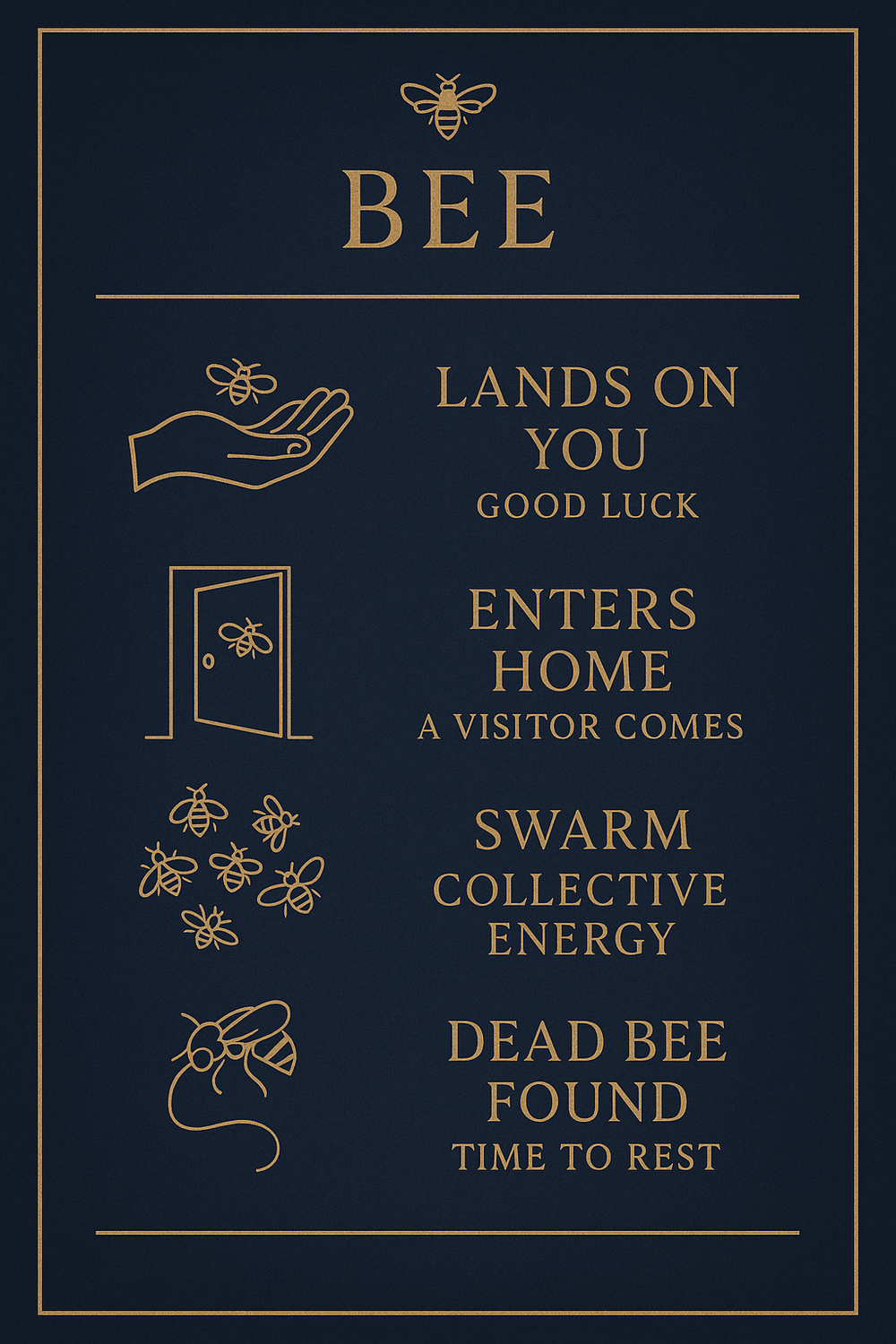
These interpretations echo how other small creatures are read as omens - much like the sudden leap of a grasshopper crossing your path or the unexpected appearance of a ladybug landing nearby, both treated as signs worth noticing rather than dismissing.
Dream interpretation traditions treat bees as strongly positive, though the details shift the meaning.
| Dream Scenario | Common Interpretation |
|---|---|
| Being stung by a bee | A warning about words spoken carelessly, or unresolved conflict needing attention |
| A swarm of bees | Feeling overwhelmed by responsibilities, or entering a highly productive life phase |
| A single bee flying peacefully | Guidance, good news, or a message from a loved one who has passed |
| Making or eating honey | Reward for past effort; sweetness and abundance arriving soon |
| A hive full of bees | Themes of community, family, or teamwork becoming central to your life |
| Killing a bee | Fear of losing an opportunity through impatience or aggression |
Bee dreams almost always circle back to the recurring themes of reward, community, and communication - rarely fear, unless the dream involves aggression or being stung.
Those who feel a strong pull toward bee symbolism - through repeated sightings, dreams, or an unexplained fascination with hives and honey - are often said to carry the bee as a spirit animal or totem. People with this totem tend to be:
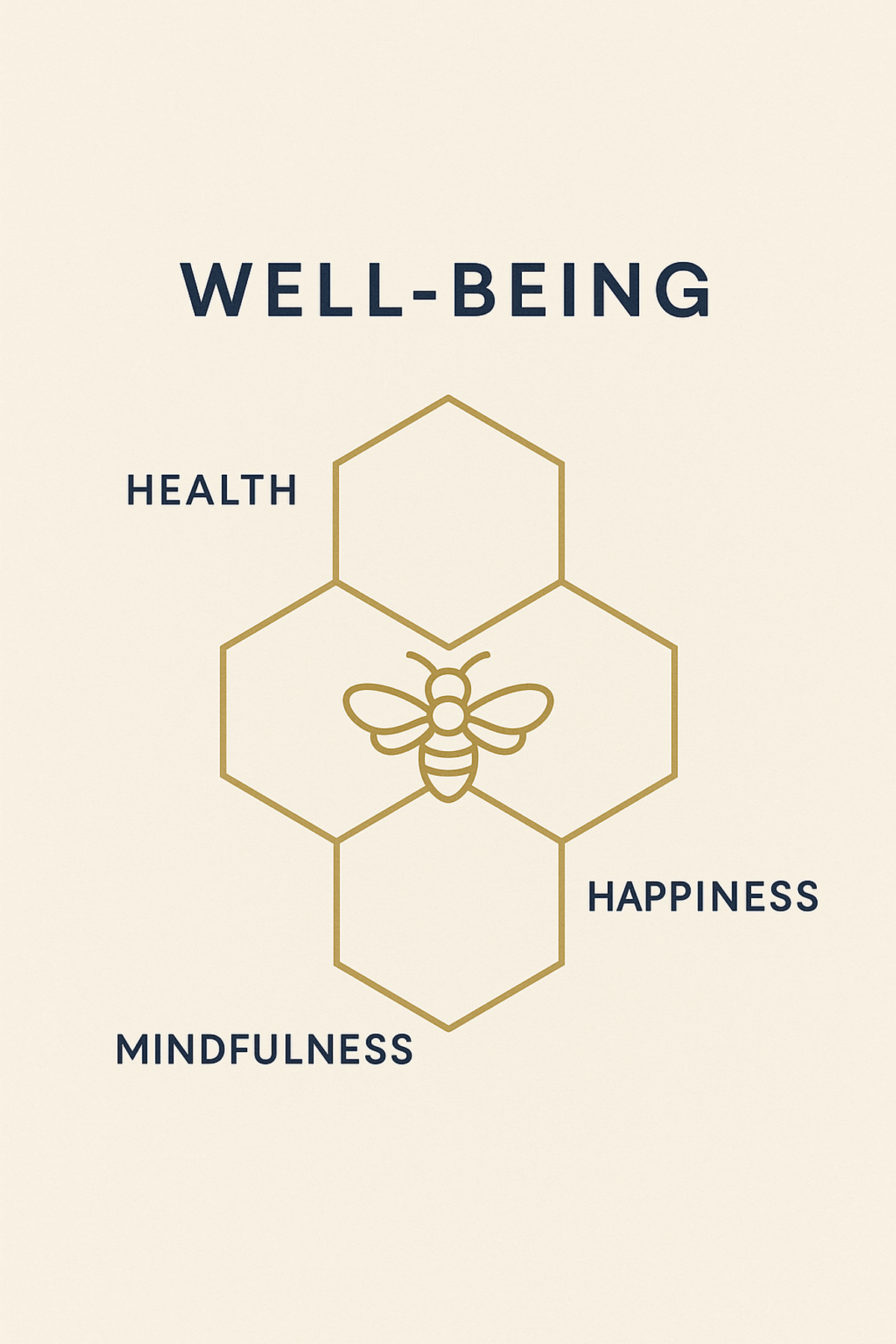
Much like hummingbird energy represents joyful lightness and constant motion, the bee totem represents something steadier: grounded, collective strength - the quiet power of many small efforts adding up to something extraordinary. This steady, communal energy also contrasts with more solitary totems like the hawk, whose gift is sharp individual vision rather than collective effort.
While most bees appear in familiar yellow-and-black stripes, symbolic traditions sometimes assign meaning to unusual colorings or the bee's overall energy in a vision or dream.
| Bee Color/Type | Symbolic Meaning |
|---|---|
| Classic yellow and black | Balance of joy (yellow) and grounded discipline (black); everyday productivity |
| Golden or glowing bee | Divine blessing, spiritual awakening, or a message from a higher power |
| Black bee | Protection, boundaries, and the need to guard your energy carefully |
| Queen bee (visually distinct) | Leadership, feminine authority, and responsibility to a larger community |
Not every bee carries the exact same spiritual weight. The bumblebee, round and solitary compared to its highly organized cousin, is often associated with defying expectations - folklore has long marveled at how something so "improbably built" manages to fly, making the bumblebee a symbol of achieving what logic says shouldn't be possible. Seeing a bumblebee is frequently read as encouragement to pursue a goal others have doubted.
The honeybee, by contrast, carries the fuller weight of traditional bee symbolism: structured community, hierarchy, and collective purpose. Because honeybees live and die by the health of the hive, their symbolism leans heavily toward cooperation, loyalty, and the idea that individual effort only matters in service of a shared goal. If you're drawn specifically to honeybee imagery, the message is usually about your role within a family, team, or community rather than personal ambition.
A black bee - whether a naturally dark-colored species or a bee that simply appears unusually dark in a dream or vision - is traditionally tied to protection and boundary-setting. Where a golden bee suggests blessing and abundance, a black bee is often read as a spiritual reminder to guard your energy, your time, and your "hive" from those who take without contributing.
The carpenter bee, known for boring into wood rather than building wax combs, adds its own layer of meaning. Because it works alone rather than in a colony, the carpenter bee is often interpreted as a symbol of independent effort, self-reliance, and the reminder that not all meaningful work needs a crowd to witness it. Seeing one may suggest it's time to trust your own solitary labor rather than waiting for a team to validate it.
Bee tattoos have become one of the most popular ways people carry this symbolism permanently, and the specific design usually shapes the meaning:
Regardless of style, the bee tattoo almost universally signals diligence, loyalty to community, and the belief that sweetness is earned rather than given.
Symbolism only matters if it becomes practical wisdom. Here is how to work with a bee sighting or dream instead of just noting it:
Christian tradition has occasionally linked bees to eloquence and diligence, with medieval writers praising the bee's tireless work as a model of monastic virtue. Beeswax candles were prized for church altars precisely because bees were seen as "pure" creatures untouched by reproduction as humans understood it (a belief rooted in ancient misunderstanding of bee biology, yet symbolically powerful nonetheless).
In more recent times, the bee has become a global symbol of ecological urgency - a reminder of how deeply human survival is entwined with the natural world's smallest workers. This modern layer adds environmental stewardship to the bee's ancient symbolic resume: it is no longer just about personal sweetness, but about collective responsibility to protect the systems that sustain us all.
A bee visit is generally considered a positive omen tied to good luck, upcoming news, or a reminder to stay connected to your community. Many folk traditions specifically interpret a bee landing on you as a sign that success or abundance is approaching.
When a bee lingers, circles repeatedly, or seems unusually persistent around you, folklore treats it as an urgent spiritual message rather than random behavior. It's often read as a sign that you're being asked to pay closer attention to a thought, decision, or relationship that's currently occupying your mind - the bee is simply insisting you notice it.
In twin flame frameworks, a bee is sometimes interpreted as a sign of imminent connection or reunion, since bees are creatures built entirely around partnership with the hive and with flowers they pollinate. Seeing a bee during a period of separation from a twin flame is often read as encouragement that the relationship, like the bee's labor, will eventually yield sweetness if both people continue contributing effort.
Dreaming of a bee sting is typically interpreted as a warning about words spoken carelessly, either by you or toward you, or as a sign of unresolved conflict that needs direct attention. It can also point to a fear of being "stung" by consequences after avoiding a difficult conversation for too long.
While bees are mentioned only a handful of times in scripture, they are generally associated with industriousness, divine order, and the sweetness of God's promises, as seen in references to the "land of milk and honey." Some interpreters also connect bees to disciplined community life, echoing themes of unity found throughout biblical teaching.
Across most folklore traditions, seeing a bee is considered good luck rather than bad, especially if it lands gently or enters a home peacefully. A bee behaving aggressively or a dead bee, however, is sometimes read as a caution to reassess your energy or relationships.
As a spirit animal, the bee represents hard work, loyalty to community, and the ability to turn small consistent efforts into lasting abundance. People who resonate with the bee totem are often natural team players who thrive when contributing to something larger than themselves.
Bison symbolism meaning explained: spirit animal traits, totem power, dream meaning, bison vs buffalo, and sacred Indigenous wisdo…
Discover what the lynx symbolizes spiritually—secrecy, intuition, and hidden truth—plus its meaning in dreams, myth, and as a tote…

Discover what the seahorse truly symbolizes - patience, protection, fatherhood, and inner strength - across myth, dreams, and mode…