Crystal & Stones
Apophyllite Meaning: Healing Properties, Chakra & Identification Guide
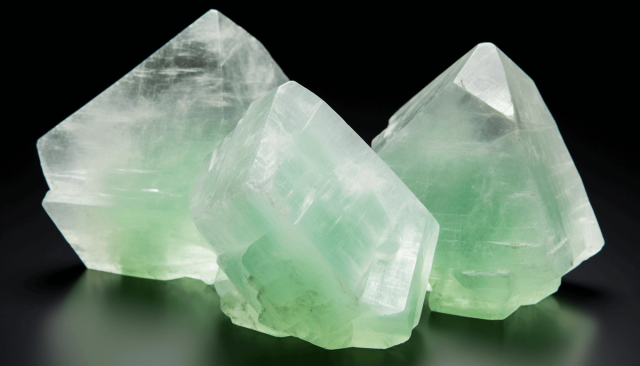
Apophyllite meaning, healing properties & chakra uses. Learn how to identify genuine crystals, cleanse them, and use them for spir…
 KnowMastery
Lapis lazuli is a deep blue metamorphic rock that has been prized for over 6,000 years as a symbol of royalty, truth, and inner wisdom. Its name comes from the Latin lapis, meaning stone, and the Persian lazhward, meaning blue. Flecks of golden pyrite scattered across its surface look like stars against a night sky. Spiritually, lapis lazuli is tied to the throat and third eye chakras, supporting honest communication, clear thinking, and protection from negative energy.
Long before crystal shops existed, this stone was buried with pharaohs, carved into amulets for goddesses, and ground into powder worth more than gold. People reached for it when they needed to speak a hard truth or see past their own confusion.
That pull still exists today. Hold a polished piece of lapis lazuli in your palm and it is easy to understand why ancient priests and queens kept it close. It feels old, heavy with memory, and oddly steadying in the hand.
Lapis lazuli is not a single mineral but a rock made of several minerals pressed together over millions of years. The main component is lazurite, which gives the stone its blue color, along with calcite (white streaks), pyrite (gold flecks), and sometimes sodalite or haüyne. The finest material, with a deep, even blue and minimal white calcite, comes from the Sar-e-Sang mines in the Badakhshan province of Afghanistan, where mining has continued for roughly 6,000 years. Smaller deposits exist in Chile, Russia's Lake Baikal region, and the United States.
Across cultures and centuries, lapis lazuli has consistently stood for a handful of core ideas:
It is also tied to communication. If you have ever struggled to say what you actually mean in a hard conversation, lapis lazuli is the stone people reach for to loosen that knot in the throat.
Egyptians imported lapis lazuli from distant Afghanistan through long trade routes as early as 3100 BCE. It was carved into scarabs, inlaid in the funerary mask of Tutankhamun, and ground into powder for the eye paint that lined the eyes of royalty and priests. The goddess Nut, who arched across the sky as the heavens, was often painted in lapis blue. Texts from the Book of the Dead name the stone as a material fit for the gods themselves.
In the royal tombs of Ur, archaeologists found lapis lazuli beads, cylinder seals, and the burial goods of Queen Puabi, buried around 2600 BCE. The Epic of Gilgamesh describes lapis lazuli tablets and jewelry as offerings worthy of the goddess Inanna. Sumerian priests connected the stone to the night sky itself, linking it to prophecy and divine favor.
By the Middle Ages, European artists ground lapis lazuli into ultramarine, the most expensive pigment available, sometimes costing more than gold by weight. Painters reserved it for the robes of the Virgin Mary in religious works, a choice that marked her as worthy of the rarest material on earth. Vermeer famously used it in Girl with a Pearl Earring.
In Tibetan tradition, lapis lazuli is associated with the Medicine Buddha, whose body is often depicted in deep blue. The stone represents healing, wisdom, and clear awareness, and it appears in Buddhist medicine bowls and prayer beads used for mental clarity during meditation.
In modern crystal practice, lapis lazuli is worked with mainly through the throat and third eye chakras. The throat chakra governs self expression, while the third eye governs intuition and inner sight. A stone that bridges both is useful for anyone trying to speak their truth from a place of real insight rather than reaction.
| Property | Association |
|---|---|
| Primary Chakra | Throat |
| Secondary Chakra | Third Eye |
| Element | Water and Air |
| Planet | Venus and Jupiter |
| Zodiac Sign | Sagittarius (primary), Libra, Virgo |
| Hardness (Mohs scale) | 5 to 5.5 |
Lapis lazuli is used to work through old patterns of self censorship, anger that was never spoken, or grief kept bottled up. People who carry a piece often say it gives them a beat to think before reacting during a tense conversation, rather than snapping or shutting down entirely.
Because of its third eye association, lapis lazuli is reached for during decision making or creative blocks. The idea is that it quiets mental noise enough to let a clearer thought surface, which is why writers and public speakers sometimes keep a piece on their desk while they work.
In folk healing traditions, lapis lazuli was linked to the throat, thyroid, and respiratory system, and ground lapis was once used in powdered remedies. These uses are historical and traditional rather than medically proven, and lapis lazuli should never replace care from a qualified doctor.
Dreaming of lapis lazuli, or of deep blue stones in general, is often read as a sign that a hidden truth is close to the surface. It can point to a conversation you have been avoiding, or to insight about a situation your waking mind has not fully admitted yet. A dream where you are given lapis jewelry can suggest that someone in your life sees your worth more clearly than you currently see it yourself.
Lapis lazuli is most closely tied to Sagittarius, matching that sign's love of truth and big picture thinking. It also pairs well with signs that value clear communication and depth. If you are curious how it fits alongside your own birth chart, it is worth checking guides like Aquarius crystals and stones or Pisces crystals and birthstones, since both water and air signs often respond well to lapis lazuli's calming, clarifying energy. Gemini, ruled by communication, can also benefit, as outlined in the guide to crystals and stones for Gemini.
One practical note: because lapis lazuli contains calcite, it can be damaged by water and acidic cleaners. Cleanse it with smoke, sound, or by setting it near moonlight overnight instead of rinsing it under a tap.
Because high quality lapis lazuli is expensive, the market has a lot of dyed howlite and reconstituted lapis sold under the same name. A few checks help separate the real thing from an imitation:
Lapis lazuli is sometimes confused with other blue crystals that carry different meanings. Here is how they compare:
| Stone | Color | Main Chakra | Key Meaning |
|---|---|---|---|
| Lapis Lazuli | Deep royal blue with gold pyrite flecks | Throat / Third Eye | Truth, wisdom, royal power |
| Sodalite | Blue with white streaks, no pyrite | Third Eye | Logic, rational thought |
| Azurite | Darker, more saturated blue | Third Eye | Deep intuition, inner vision |
| Blue Lace Agate | Pale, soft blue with banding | Throat | Gentle communication, calm |
For a look at how ancient, water-born materials carried their own symbolism, it is worth comparing lapis lazuli with the organic treasures discussed in the guide to mother of pearl meaning, where a very different kind of stone was treated as equally sacred by coastal cultures.
Lapis lazuli is seen as a stone of truth, wisdom, and protection. It is connected to the throat and third eye chakras, which is why it is often used to support honest speech and clearer intuition.
Anyone drawn to its color can wear it, but it is traditionally recommended for Sagittarius and for people working on self expression or decision making. It also suits anyone preparing for a situation that calls for confidence and honesty, such as a difficult conversation or a presentation.
It is best to avoid soaking lapis lazuli in water because the calcite content can be damaged by moisture and acidic cleaners over time. Instead, cleanse it with smoke, sound vibration, or moonlight.
Yes, lapis lazuli is one of the traditional birthstones for December alongside turquoise and zircon, and it is also linked to Sagittarius in astrology. It has held this role in gemstone lists since at least the medieval period.
Apophyllite meaning, healing properties & chakra uses. Learn how to identify genuine crystals, cleanse them, and use them for spir…
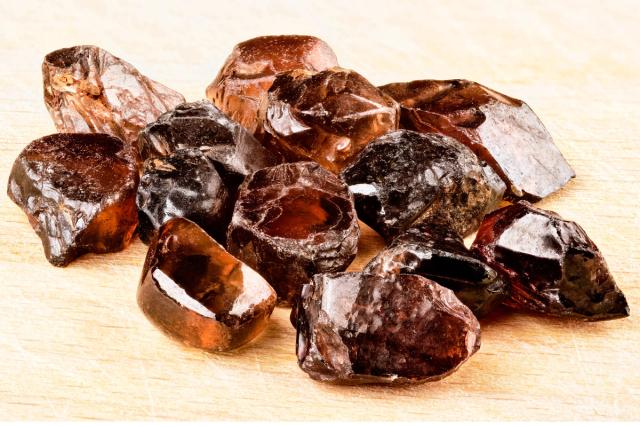
December's 3 birthstones—tanzanite, zircon & turquoise—cover Nov 22–Dec 21 (Sagittarius) and Dec 22–31 (Capricorn). See meanings, …
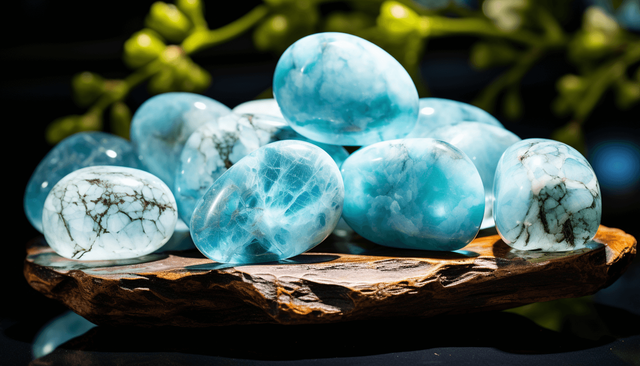
Discover Larimar's meaning, healing properties, chakra connections, and how to spot genuine stones from fakes. Full care and buyin…