Crystal & Stones
Emerald Meaning: The Heart of Nature’s Green Majesty
Table of Content Introduction to Emerald Formation and Geological Origins of Emerald The Mesmerizing Spectrum of Emerald Green His…
 KnowMastery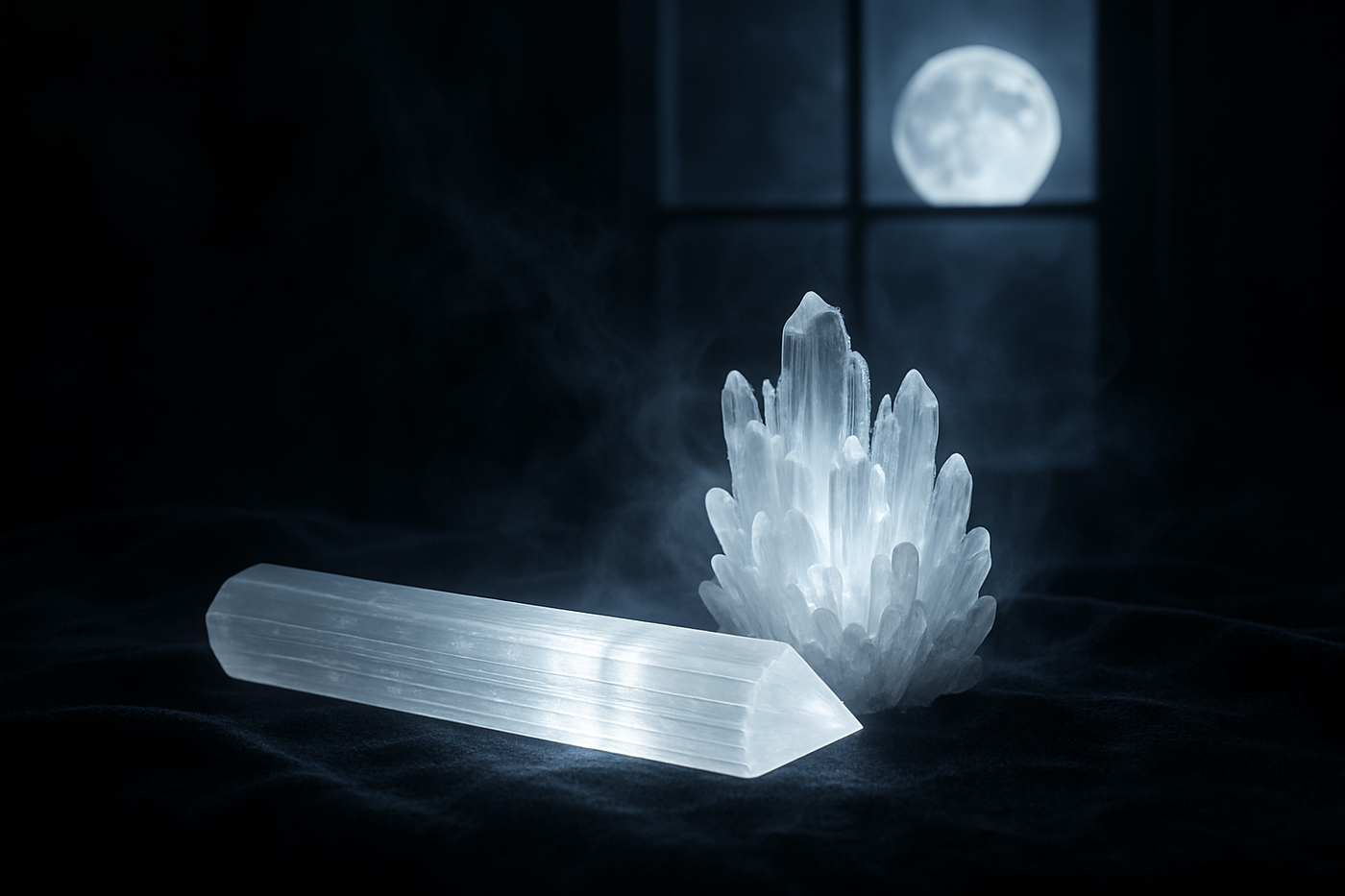
Selenite is a translucent, milky-white crystal form of gypsum best known as the "liquid light" stone of purification, mental clarity, and spiritual connection. Unlike most crystals, selenite is believed to never need cleansing itself, which is why it's widely used to clear stagnant energy from rooms, cleanse other stones, and open the crown chakra during meditation.
Hold a wand of selenite up to the light and you'll understand why ancient people named it after Selene, the Greek moon goddess. It glows faintly from within, almost like frozen moonlight trapped inside mineral. There's something quietly disarming about a stone that feels less like rock and more like solidified calm resting in your palm.
People who keep selenite on their nightstand describe the same thing, again and again: a subtle exhale, as if the room itself softened. Whether or not you believe in metaphysical energy, that feeling is real to the millions who reach for this stone during grief, anxiety, or the ordinary exhaustion of a loud world.
Selenite is a crystalline variety of gypsum (calcium sulfate dihydrate), prized for its silky, fibrous luster and near-transparent glow. It's remarkably soft — only 2 on the Mohs hardness scale, softer than a fingernail — which means it chips and scratches easily and should never be submerged in water for long, since it can slowly dissolve.
Major deposits are found in Mexico's Naica Mine, home to the famous "Cave of Crystals" where gypsum beams grow over 30 feet long, as well as in Morocco and Oklahoma, USA, where fishtail selenite forms in distinctive arrow-shaped clusters. Most commercially available selenite today is quarried in Morocco and cut into wands, towers, and charging plates.
The name "selenite" comes from the Greek selēnitēs lithos, meaning "moon stone," a direct reference to Selene, goddess of the moon. Ancient naturalists, including Pliny the Elder, wrote about a translucent stone that seemed to hold lunar light inside it — though historians still debate whether Pliny meant true selenite or a related pale mineral, since gypsum and satin spar were often confused in antiquity.
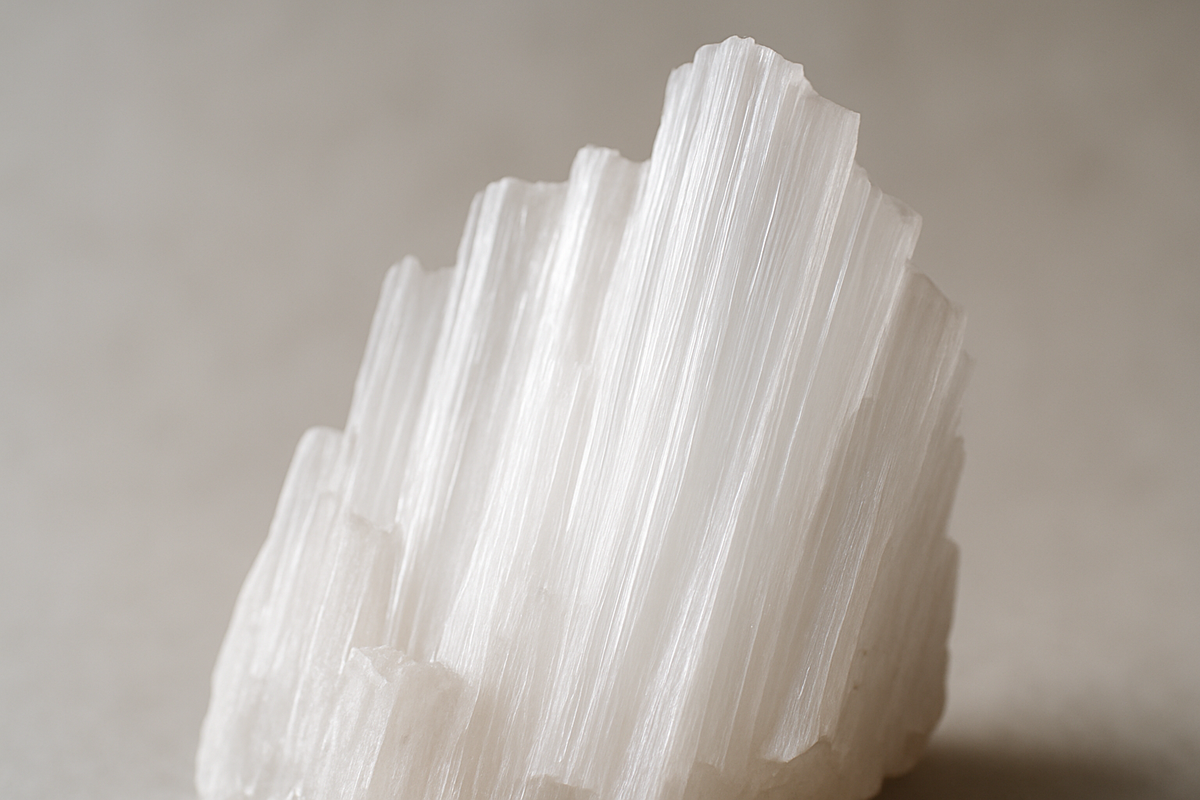
In crystal healing traditions, selenite is considered one of the highest-vibration stones available, associated primarily with the crown chakra and, in some practices, a theoretical "soul star" chakra just above the head. Practitioners say it represents:
Because selenite is thought to be self-cleansing, practitioners frequently use it as a base for charging other crystals, letting stones like amethyst rest on a selenite slab overnight to reset their energy.
In ancient Greece, selenite (or stones believed to be selenite) was tied to lunar deities and fertility rites. Pliny the Elder's Natural History, written around 77 CE, described a stone with an internal light that seemed to wax and wane like the moon — a poetic, if scientifically imprecise, observation that cemented selenite's lunar identity for centuries.
Thin sheets of gypsum selenite, called lapis specularis by Roman builders, were used as a translucent window material long before glass was affordable or widely available. This let moonlight-like light filter into homes, bathhouses, and temples, quietly reinforcing the stone's symbolic link to illumination and clarity.
Selenite rose to prominence in the New Age crystal healing movement of the late 20th century, popularized alongside quartz and amethyst as an essential tool for space clearing, Reiki practice, and crystal grid work. It's now a staple in metaphysical shops worldwide, sold as towers, wands, charging plates, and raw "logs."
In feng shui-influenced practices, selenite towers are placed near entryways or windows to invite clean, high-vibration energy into a home — functioning similarly to how salt lamps or sage smoke are used to reset a room's atmosphere without smoke or scent.
Crystal practitioners attribute a wide range of emotional and energetic benefits to selenite. While these claims are not scientifically validated, they remain widely referenced across holistic wellness communities.
| Property | Believed Benefit |
|---|---|
| Mental Clarity | Helps quiet racing thoughts and improve focus during decision-making |
| Emotional Calm | Soothes anxiety, grief, and emotional overwhelm |
| Energetic Cleansing | Clears stagnant or negative energy from spaces and other crystals |
| Spiritual Connection | Supports meditation, intuition, and connection to higher consciousness |
| Sleep Support | Placed near the bed to encourage restful, undisturbed sleep |
| Relationship Harmony | Used in pairs to symbolize balanced, honest communication |
Dreaming of a glowing white crystal or moonlit stone is often interpreted in dream symbolism circles as a sign of impending clarity — a message that confusion in your waking life is about to lift. Because selenite is so tied to lunar imagery, dreaming of moonlight, white light, or crystalline structures may reflect a subconscious desire for emotional cleansing or a need to release something you've been carrying for too long.
Some dream interpreters also connect these images to intuition awakening, suggesting the dreamer is becoming more attuned to inner guidance. A dream featuring a broken or clouded selenite piece, by contrast, is sometimes read as a warning that clarity is being blocked by unresolved emotional clutter.
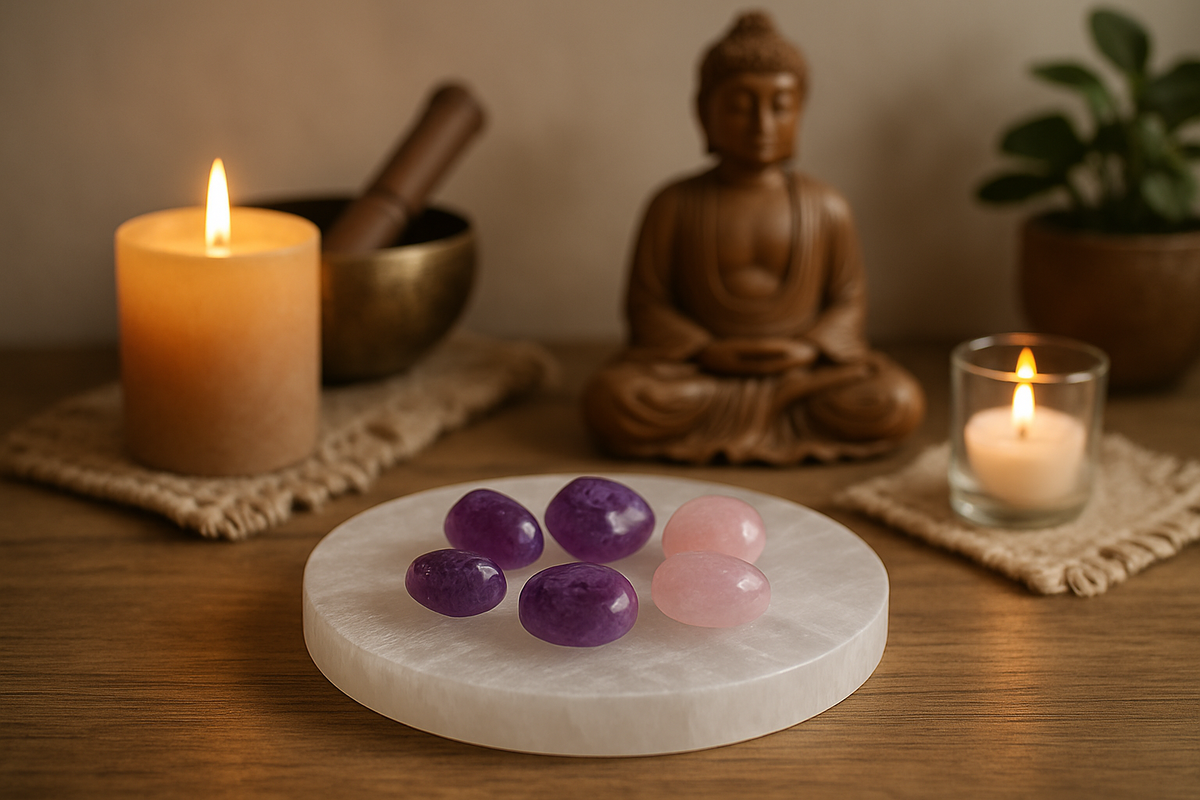
Place stones like rose quartz, citrine, or amethyst on a selenite charging plate overnight. This is one of the most common uses, since selenite is believed to clear absorbed energy from other stones without ever needing cleansing itself.
Sweep a selenite wand around a room, moving from corners outward toward doors and windows, to symbolically "push out" heavy or stagnant energy — a practice similar to smudging, but without smoke.
Hold a selenite wand or rest a small piece on your forehead during meditation to encourage mental stillness and a stronger connection to intuition and higher awareness.
Selenite isn't a traditional birthstone, but its calming, clarifying energy is often recommended for air and water signs seeking emotional balance. It pairs particularly well alongside the personal stones of Pisces, whose intuitive nature resonates with selenite's spiritual clarity, and Aquarius, a sign drawn to stones that support higher-minded thinking and mental clutter-clearing. Some practitioners also suggest it complements the emotional depth highlighted in Cancer's crystal profile, offering a gentle counterbalance to that sign's deep sensitivity.
| Crystal | Key Difference |
|---|---|
| Selenite | Soft (Mohs 2), fibrous luster, gypsum-based, associated with lunar purity |
| Moonstone | Feldspar mineral, harder, known for adularescence (a blue-white sheen), tied to fertility and intuition |
| Clear Quartz | Much harder (Mohs 7), used as a "master healer" amplifying other stones' energy |
| Howlite | Porous white stone with grey veining, often dyed, associated with calming an overactive mind |
Most crystal practitioners believe selenite is self-cleansing and never accumulates negative energy the way other stones do. This is why it's commonly used as a charging plate for other crystals rather than needing cleansing itself.
No — selenite is a soft, water-soluble form of gypsum, and prolonged exposure to water can cause it to dissolve, flake, or turn cloudy. It's best cleaned with a soft, dry cloth rather than rinsed under a tap.
Selenite is most closely linked to the crown chakra and, in some traditions, a higher "soul star" chakra above the head, both connected to spiritual awareness and clarity of thought.
No, despite sharing a lunar-inspired reputation, selenite and moonstone are entirely different minerals — selenite is a soft gypsum crystal, while moonstone is a harder feldspar known for its distinctive blue-white glow called adularescence.
Table of Content Introduction to Emerald Formation and Geological Origins of Emerald The Mesmerizing Spectrum of Emerald Green His…
Table of Content Introduction to Calcite Formation and Geology A Spectrum of Colors Historical Significance Metaphysical Propertie…
Table of Content Introduction to Apatite Geological Formation of Apatite Colors and Varieties of Apatite Historical Significance o…