Symbols
Lotus Flower Meaning: Purity, Enlightenment & Rebirth
Discover the lotus flower's meaning across Hinduism, Buddhism & Egypt—purity, enlightenment, rebirth—plus colors, dreams, and how …
 KnowMastery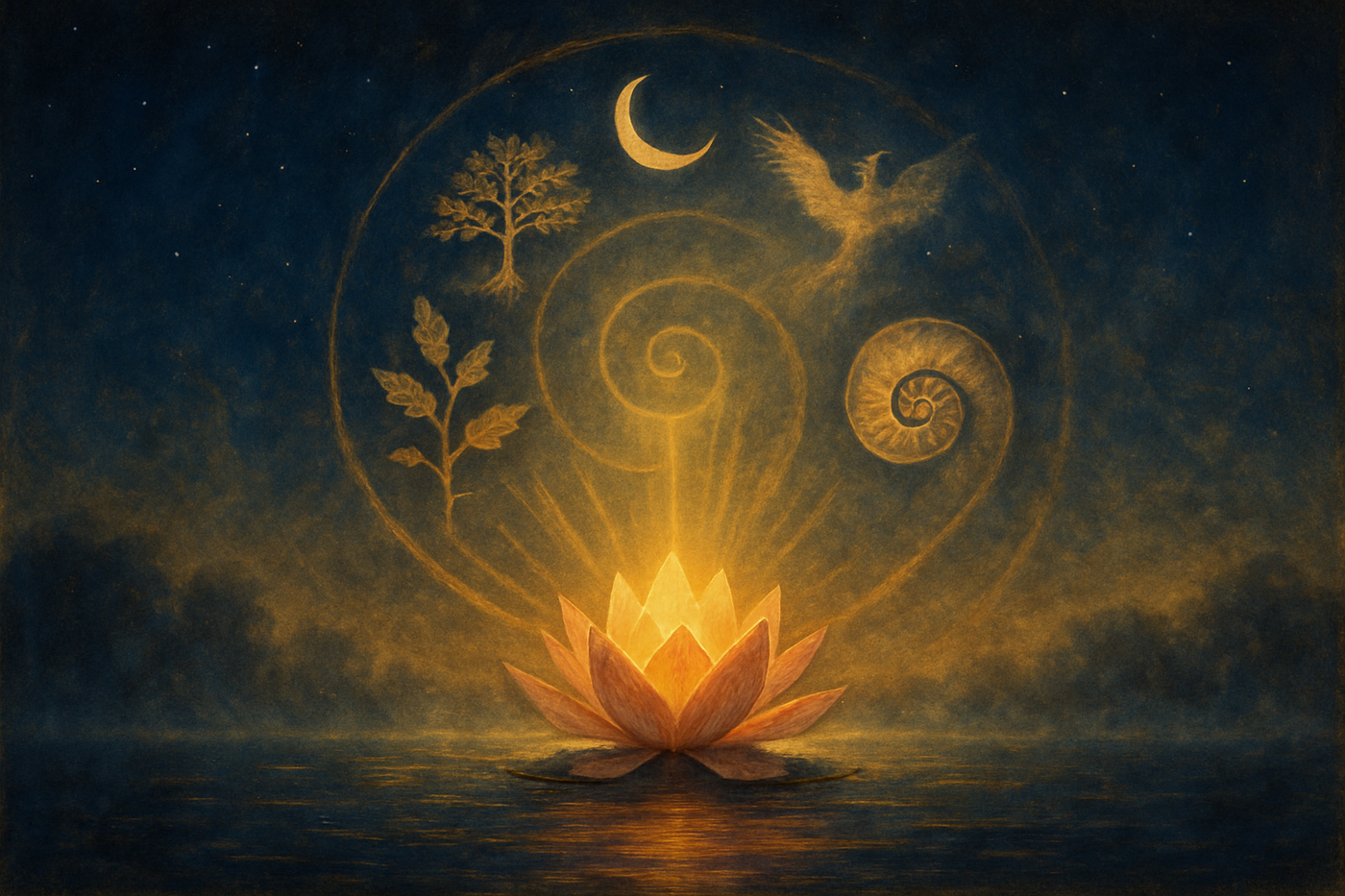
The best symbols for growth and development are those that map to a clear stage: the Seed and Acorn for early potential, the Koi Fish and Bamboo for the effortful middle stage, the Phoenix and Butterfly for breakthrough moments, and the Tree of Life and Nautilus Shell for sustained mastery. Together these icons give a visual framework for tracking both growth (expansion) and development (staged progress) in personal, professional, or spiritual life.
Growth and development are related but not interchangeable. Growth describes expansion or increase — more skill, more confidence, more reach — while development describes the staged, sequential process of maturing through distinct phases, from early potential to struggle to breakthrough to mastery. A single symbol like the Seed captures growth's starting point, but the full progression from Seed to Koi Fish to Phoenix to Tree of Life is what captures development as a journey with recognizable milestones, not just an upward trend.
Symbols of growth—like the Lotus, Phoenix, and Tree of Life—represent transformation, expansion, and renewal across nature, mythology, and spirituality. Each icon distills a different stage of development, from humble beginnings (the Seed) to hard-won rebirth (the Phoenix), giving people a visual shorthand for personal, professional, and spiritual progress.
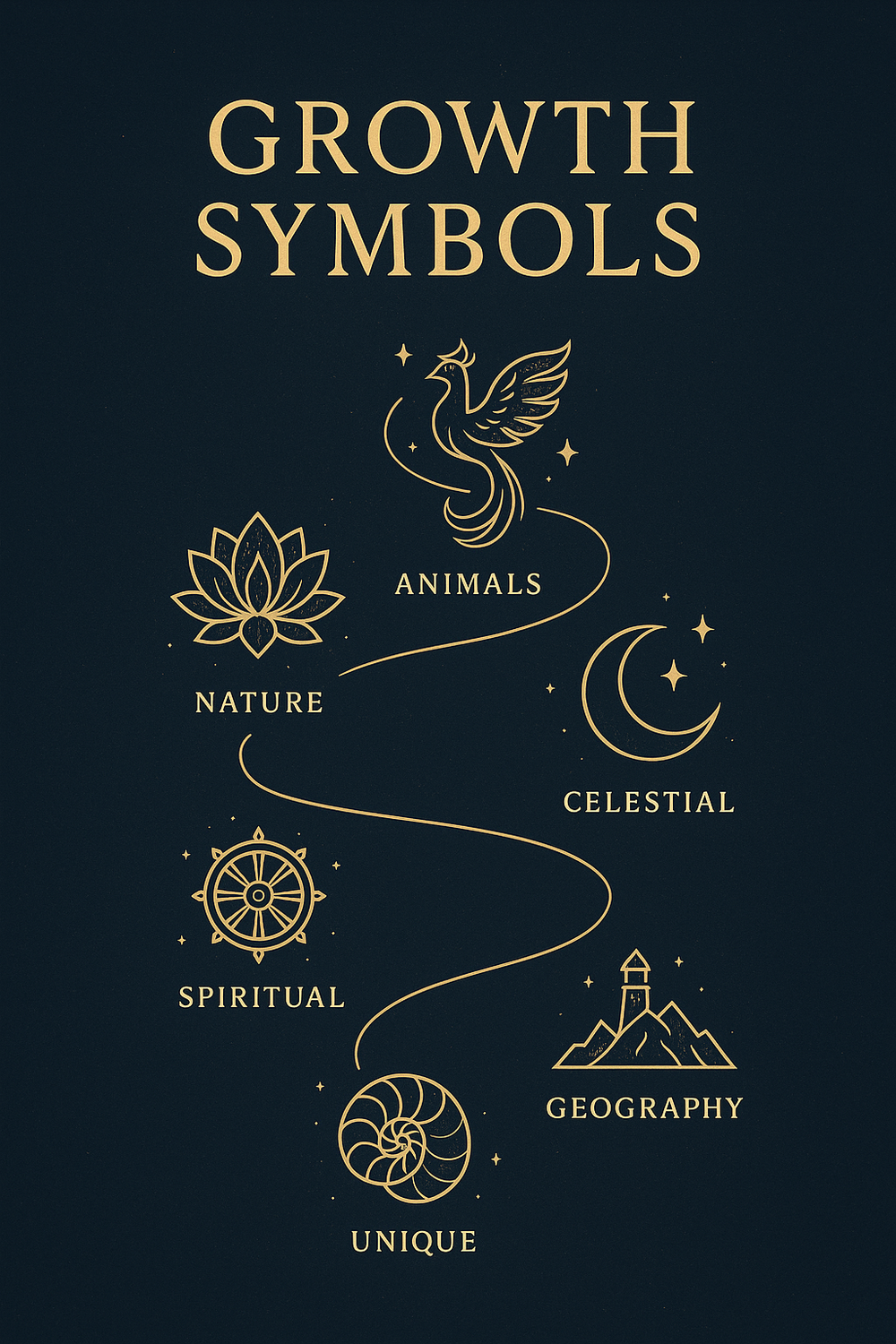
These 30 symbols span nature, animal totems, celestial bodies, spiritual iconography, geography, and a handful of unique cultural icons. Together they form a shared visual vocabulary that has crossed centuries and continents, letting people communicate ideas about progress, resilience, and renewal without a single word.
Development isn't a single leap — it's a process with recognizable phases, and different symbols speak to each one. Mapping icons to a stage can help you choose a more precise emblem for where you are on your journey, whether that's a new skill, a career shift, or a personal transformation.
This stage-based lens works alongside the category-based list below, so you can pick a symbol that matches either the type of growth you're pursuing or the phase of development you're currently in.
| Symbol | Category | Core Meaning |
|---|---|---|
| Lotus | Nature | Purity, enlightenment, rebirth |
| Sun | Nature | Vitality, new beginnings |
| Tree of Life | Nature | Interconnectedness, stability |
| Seed & Acorn | Nature | Potential, small beginnings |
| Bamboo & Oak Tree | Nature | Strength, resilience |
| Cherry Blossom & Sunflower | Nature | Beauty, renewal, loyalty |
| Pinecone & Vine | Nature | Potential, prosperity |
| Green Hummingbird & Robin | Nature | Joy, new beginnings |
| Garden & Willow Tree | Nature | Nurturing, flexibility |
| Koi Fish | Animal | Perseverance, transformation |
| Butterfly & Dragonfly | Animal | Metamorphosis, change |
| Phoenix | Mythical | Rebirth, renewal |
| Stag | Animal | Leadership, independence |
| Spider | Animal | Creativity, progress |
| Egyptian Scarab | Mythical | Regeneration, protection |
| Moon Phases | Celestial | Cycles, phases of life |
| Shooting Stars | Celestial | Wishes, opportunity |
| Rainbow | Celestial | Hope, promise |
| Dharma Wheel | Spiritual | Spiritual progress |
| Celtic Spiral & Spiral | Spiritual | Motion, progress |
| Chakras & Merkaba | Spiritual | Energy, awakening |
| Infinity Symbol & Labyrinth | Spiritual | Endless possibility, journey |
| Yggdrasil & Green Man | Mythical | Life, renewal |
| Waterfall & River | Geographical | Flow, movement |
| Mountain | Geographical | Stability, elevation |
| Lighthouse | Geographical | Guidance, hope |
| Snake | Miscellaneous | Renewal, transformation |
| Hourglass | Miscellaneous | Time, transience |
| Nautilus Shell | Miscellaneous | Steady growth |
| Arrow | Miscellaneous | Direction, momentum |
Nature, with its boundless beauty and relentless resilience, has long been a source of inspiration for symbols representing growth. These symbols, derived from various elements of nature, encapsulate the essence of life, transformation, and progress, serving as powerful reminders of the potential for growth inherent in all living things.
The Lotus symbol is a remarkable representation of triumph over adversity. Despite growing in muddy waters, the Lotus flower emerges pristine and untainted, symbolizing purity, enlightenment, and rebirth. Its journey from the mud to the surface encapsulates the idea of growth through challenges, making it a revered symbol in various cultures, especially within Eastern philosophies and religions.
Representing energy, vitality, and the perpetual cycle of life, the Sun is a universal symbol of growth. It nurtures and sustains life on Earth, driving the process of photosynthesis in plants and providing warmth and light essential for the survival of all living organisms. The Sun is often associated with new beginnings, enlightenment, and the promise of a bright future, making it a potent symbol of growth and development.
The Tree of Life is a timeless and universal symbol that illustrates the interconnectedness of all life. With its roots firmly in the ground and branches reaching towards the sky, it represents stability and growth, drawing parallels with the human journey of learning and expanding. For a deeper look at its history and variations across cultures, see our full Tree of Life meaning guide.
Both the Seed and the Acorn are profound symbols of potential and growth. A seed, though small, contains the blueprint for life, holding within it the promise of a plant or tree. Similarly, an acorn, the seed of an oak tree, symbolizes strength, potential, and growth from humble beginnings. These symbols remind us that greatness can sprout from small, unassuming origins, inspiring hope and perseverance.
The Bamboo and Oak Tree are both symbols of strength and resilience. Bamboo is flexible and fast-growing, able to thrive in various conditions; it represents endurance and adaptability. The Oak Tree, with its robust and sturdy trunk, symbolizes strength, morale, resistance, and knowledge, often considered a sacred symbol in various cultures.
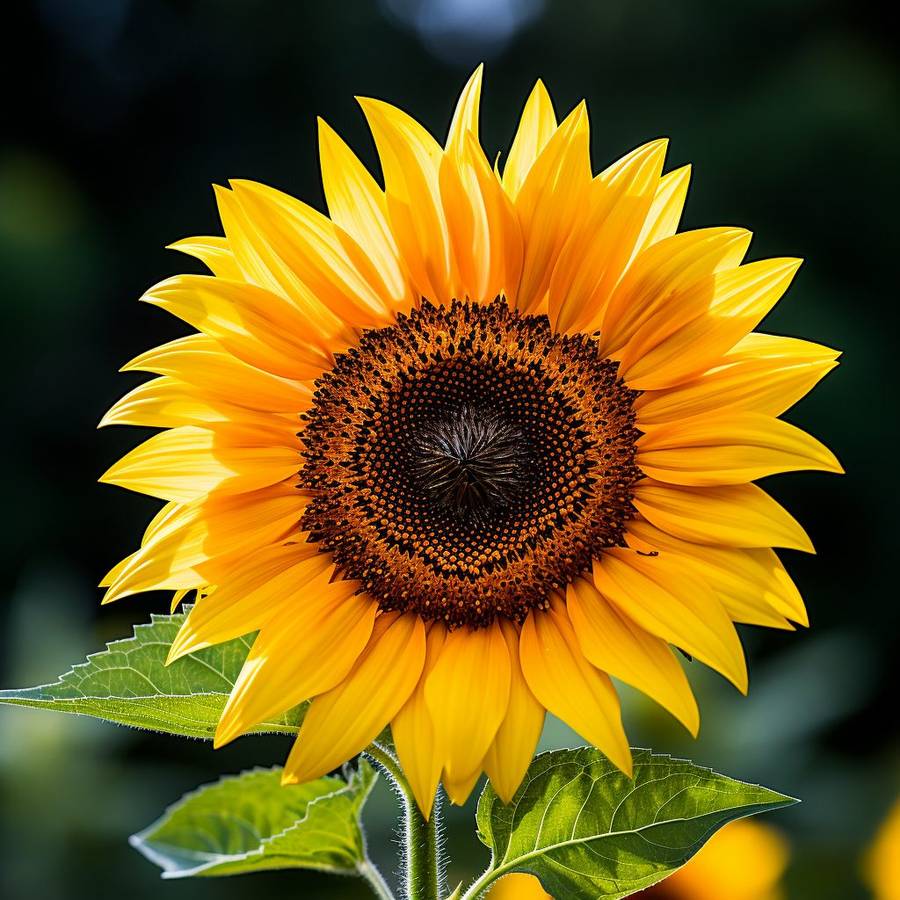
Cherry Blossoms and Sunflowers are vibrant symbols of beauty and renewal. Cherry Blossoms, with their short-lived blooming period, represent the transient nature of life, reminding us to appreciate the beauty in every moment. Sunflowers, turning to follow the sun across the sky, symbolize adoration, loyalty, and longevity — one of the reasons they're often paired with other devotion symbols like the Claddagh ring.
The Pinecone and Vine are symbols of potential and prosperity. Pinecones, with their unique structure, represent enlightenment and spiritual growth. Vines, with their ability to spread and cover ground quickly, symbolize expansion, growth, and connection, often used to represent relationships and strong bonds.
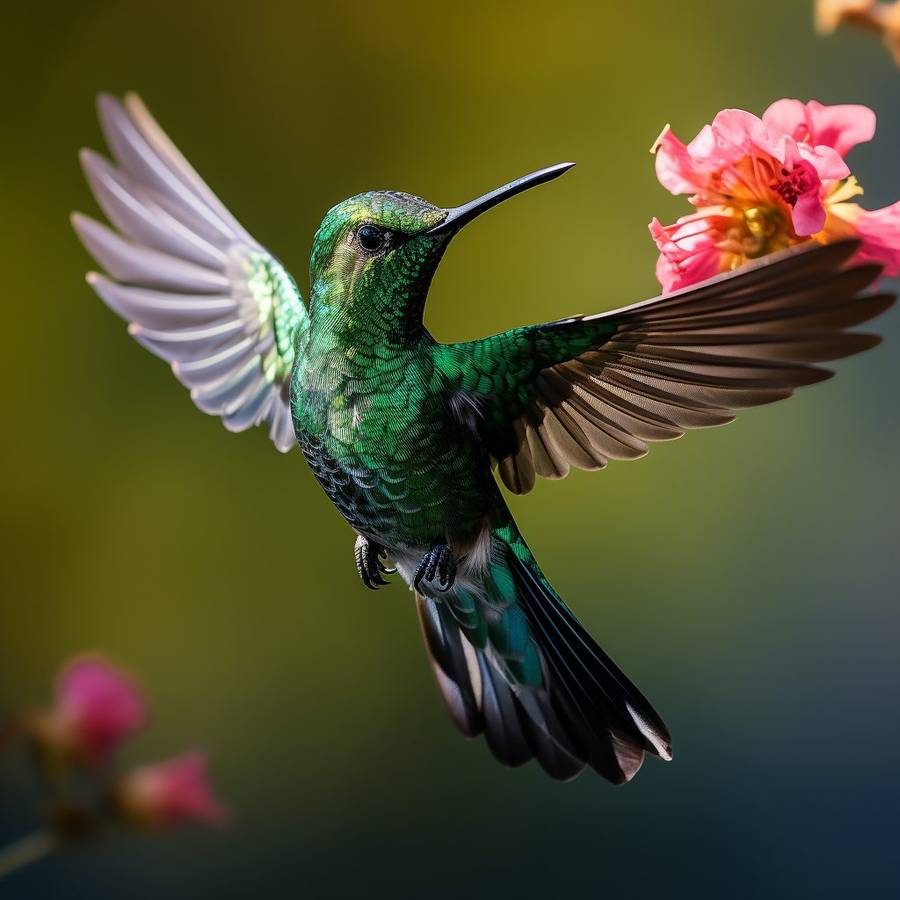
The Green Hummingbird and Robin are delightful symbols of joy and new beginnings. The agile and vibrant hummingbird symbolizes enjoyment of life and lightness of being, while the Robin, often one of the first birds to appear in spring, is a sign of renewal, rebirth, and the arrival of new opportunities.
The Garden and Willow Tree are nurturing symbols that also embody flexibility. A garden, with its diverse and harmonious ecosystem, represents the nurturing and cultivation of life. The Willow Tree, known for its flexibility and grace, symbolizes the ability to adapt and yield, embodying harmony and balance in the face of life’s challenges.
Animal totems have been revered across various cultures as powerful symbols of growth and transformation. These creatures, each with their unique life cycles and behaviors, embody the essence of growth in nature. They serve as spiritual guides, offering insights and reflections of our inner selves and life journeys. From the resilient Koi Fish to the transformative Butterfly, these animal totems encapsulate the myriad ways growth can manifest, providing inspiration and guidance for those seeking to navigate and embrace their personal development paths.
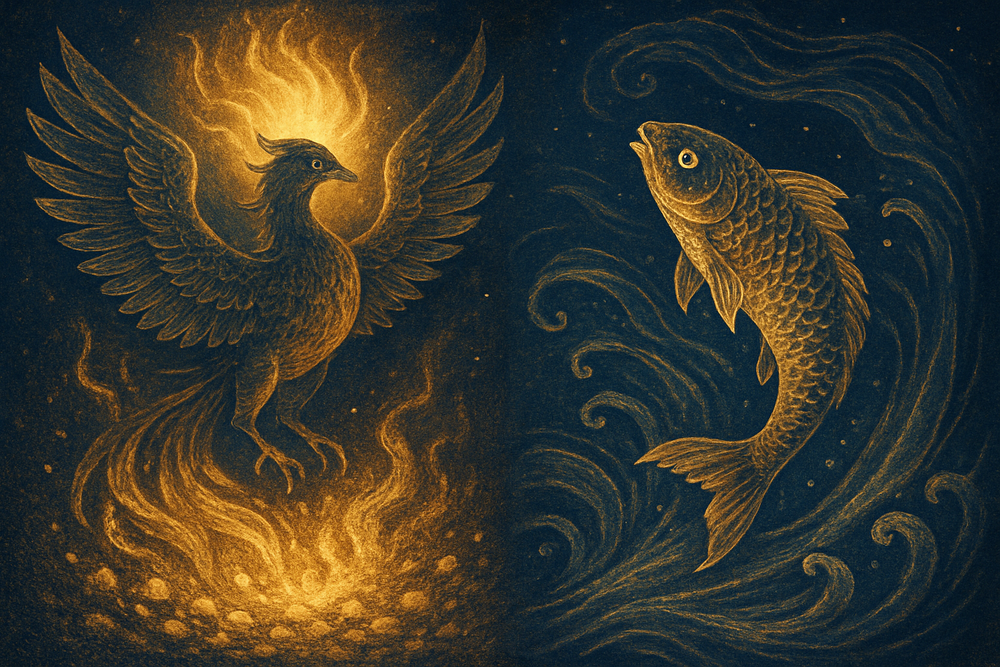
The Koi Fish is a potent symbol of perseverance leading to transformation. In various cultures, it represents overcoming adversity as it swims upstream, symbolizing the ability to fight through obstacles to achieve greatness. The Koi Fish is often associated with personal development and spiritual growth due to its transformative journey.
Butterflies and Dragonflies are both emblematic of metamorphosis and change. The Butterfly, with its transformative life cycle from caterpillar to winged beauty, symbolizes personal growth, change, and the ability to move through different life stages with grace. Similarly, the Dragonfly, with its agile flight and iridescent colors, represents change, adaptability, and a deeper understanding of life.
The mythical Phoenix is a universal symbol of rising from the ashes, embodying renewal, resurrection, and eternal life. It represents the cyclical nature of life, the possibility of growth and rebirth from the ashes of the past, inspiring hope and courage in the face of adversity.
The majestic Stag is a symbol of leadership and independence. With its impressive antlers, the Stag represents pride, strength, and sovereignty, often associated with spiritual authority and the regenerative powers of nature. It is a guide for individuals on their personal journeys, encouraging them to lead with grace and dignity.
The Spider, with its intricate webs, is a symbol of creativity and progress. It represents the weaving of destiny, the interconnectedness of all life, and the careful, deliberate progress made when creating something of value. The Spider encourages individuals to craft their lives with intention and focus, mirroring its meticulous web-building process.
The Egyptian Scarab is a symbol of regeneration and protection. In ancient Egyptian mythology, the scarab was associated with the divine manifestation of the early morning sun and the ideas of transformation and rebirth. It serves as a reminder of the infinite cycle of regeneration and the protective energies that accompany growth and change.
Celestial and atmospheric symbols serve as powerful metaphors for growth, change, and potential in various cultures. These symbols, often observed in the sky, not only inspire wonder and awe but also encapsulate deep wisdom about the cycles and phases of life, offering guidance and insight into the journey of personal and collective growth.
The Moon Phases symbolize the cyclical nature of life, with each phase representing different stages of growth and development. From the new moon, symbolizing new beginnings, to the full moon, representing fruition and completion, the Moon Phases offer a celestial mirror reflecting the ebb and flow of life's journey.
Shooting Stars are seen as carriers of wishes and heralds of new opportunities. They symbolize fleeting moments that hold immense potential, encouraging individuals to seize chances and pursue their dreams with determination and hope.
The Rainbow is a universal symbol of hope and promise. Appearing after storms, it signifies renewal and the possibility of a fresh start. Its vibrant colors represent the diversity and beauty of life, inspiring individuals to embrace growth with optimism and joy.
Mystical and spiritual symbols offer profound insights into the journey of growth from a transcendent perspective. These symbols encapsulate the essence of life's spiritual dimension, highlighting the continuous process of unfolding and awakening that marks the path of personal and collective evolution.
The Dharma Wheel, or Dharmachakra, is a potent symbol of spiritual progress in Buddhism. In Buddhist teaching, the Dharmachakra chiefly represents the Buddha's teaching and the Noble Eightfold Path toward liberation from suffering, while the specific image of the cycle of birth, life, death and rebirth belongs to a related wheel symbol, the Bhavacakra or 'Wheel of Life.'
The spiral and the triskelion are genuinely ancient motifs that predate the Celts by millennia and were also used by other Mediterranean and European cultures; later adopted into Celtic art, they are traditionally said to represent motion and progress, among other interpretations. With their continuous lines and curves, they symbolize the eternal rhythm of life and the universe, embodying the principles of perpetual growth and development.
Chakras and Merkaba are symbols deeply rooted in the spiritual traditions of the East. Chakras represent the energy centers within the body, each correlating with specific physical, emotional, and spiritual states. In New Age and spiritual traditions, this symbol is believed by some to aid awakening and ascension, though this is a matter of belief rather than an established or scientifically verified effect.
The Infinity Symbol represents endless possibilities and eternity, while the Labyrinth is a path of wisdom and journey. Both symbols guide individuals through the intricate dance of life, offering insights into the limitless potential and the maze-like journey of personal growth.
Yggdrasil, the World Tree of Norse mythology, is tied to renewal and new life, and the Green Man, a foliate face found mainly in medieval European church architecture, is generally read as a symbol of seasonal rebirth—though scholars still debate whether it truly descends from an ancient pre-Christian figure.
Geographical symbols are deeply connected with the natural environment, embodying the dynamic processes and stable structures found in the physical world. These symbols often represent the flow of life, the pursuit of stability, and the guiding light that leads the way towards growth and development.

Waterfalls and rivers are powerful geographical symbols representing the continuous flow and movement of life. With their relentless motion, they embody the idea of progress and the unstoppable force of nature, inspiring individuals to move forward with grace and determination amidst life's challenges.
Mountains stand as symbols of stability, strength, and elevation. They signify the lofty heights individuals can reach through perseverance and effort, offering a sense of achievement and the pursuit of higher goals — a steadfastness shared with other grounding icons like the anchor.

The lighthouse is a geographical symbol that represents guidance, hope, and safe navigation through turbulent seas. It stands as a beacon illuminating the path for travelers, symbolizing the light of wisdom and guidance that helps individuals navigate through the darkness towards growth and enlightenment.
Some symbols of growth don't fit neatly into categories but are equally powerful. These unique icons encompass various aspects of life and time, each telling a different story of development, momentum, and transformation.
The snake, with its ability to shed its skin, is a potent symbol of renewal and transformation. This process metaphorically illustrates the idea of letting go of the old to make way for new growth and opportunities, embodying personal development and change.
The hourglass is a timeless symbol that represents the transience and inevitability of time. It reminds us of life’s fleeting moments, urging individuals to make the most of their time, seize opportunities, and continually grow and evolve with each passing second.
The Nautilus Shell, with its spiral structure, represents proportional and steady growth. Each chamber of the shell is larger than the previous one, symbolizing gradual development and expansion, mirroring an individual’s journey of continuous learning and growing.
Arrows symbolize direction, force, movement, and power. Their flight represents momentum and the pursuit of objectives, embodying the journey towards personal and professional growth with focus and determination.
Growth and change overlap constantly, but they aren't identical: growth describes an upward or expanding trajectory, while change simply marks a shift from one state to another — sometimes gradual, sometimes sudden. Several entries on this list do double duty. The Butterfly and Dragonfly represent metamorphosis, the literal transformation of one form into another. The Phoenix and Snake both symbolize change through destruction and shedding before renewal can happen. Moon Phases and the Spiral illustrate change as a cyclical, repeating pattern rather than a single event. If you're researching symbols of change specifically, these six icons are the clearest bridge between the two concepts — each shows that meaningful growth almost always requires passing through change first.
Growth symbols endure because they translate an abstract, often invisible process into something we can see, wear, and reflect on daily. Whether you're drawn to the steady expansion of the Nautilus Shell or the dramatic renewal of the Phoenix, these icons — like the balancing forces captured in the yin and yang — remind us that growth and change are two sides of the same journey.
Quick recap: use the at-a-glance table above to find a symbol that matches your intention — nature icons for gentle, steady progress; animal totems for perseverance and transformation; celestial and spiritual symbols for cyclical or inner growth; and geographical or miscellaneous icons for stability, direction, and momentum.
The Sunflower is one of the best-known loyalty symbols, prized for the way it turns to follow the sun. Other well-known loyalty icons include the dog and the interlocking hands and heart on the Claddagh ring, which specifically represents love, loyalty, and friendship.
The Butterfly, Phoenix, and Snake are the three most widely recognized symbols of change and transformation. The Butterfly represents metamorphosis through life stages, the Phoenix represents rebirth after destruction, and the Snake represents renewal through shedding its old skin.
Many growth symbols, like the Sun or the Tree of Life, carry meanings that are recognized across cultures, but interpretations can still vary by region and tradition. It's worth understanding a symbol's cultural origin before adopting it personally, so its meaning feels authentic to you.
You can incorporate growth symbols into tattoos, jewelry, artwork, or meditation practices as daily reminders of your own development. Many people also combine two or more symbols — such as a Lotus with an Arrow — to create a personal emblem that reflects their specific journey and goals.
Discover the lotus flower's meaning across Hinduism, Buddhism & Egypt—purity, enlightenment, rebirth—plus colors, dreams, and how …
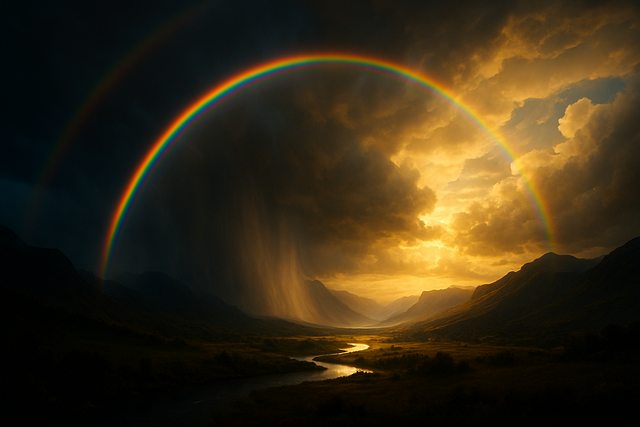
Discover what a rainbow truly symbolizes—hope, divine promise, and spiritual transformation—across mythology, dreams, and modern c…
Discover 33 powerful symbols of friendship — from the Claddagh ring to yellow roses — and the loyalty, trust, and love each one re…