Greek Mythology
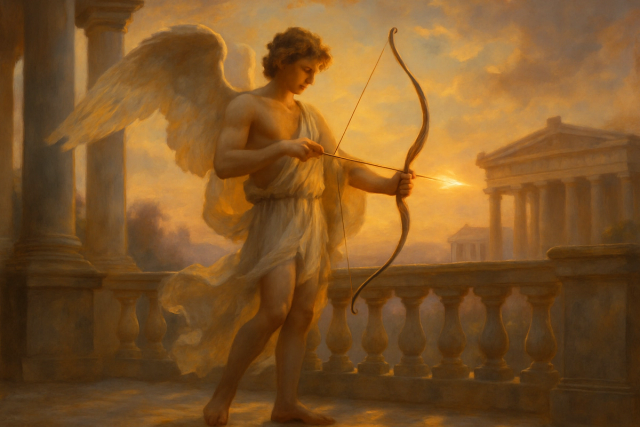
Who Was the Greek God of Love? Eros Explained
Meet Eros, the Greek god of desire and romantic love: his myths, symbols, Roman twin Cupid, and what his story reveals about passi…
 KnowMastery
 The myth of Aphrodite and Adonis tells the story of the goddess of love falling for a beautiful mortal youth who is later killed by a wild boar, after which his blood becomes the anemone flower. The tale is rooted in older Near Eastern fertility myths tied to Tammuz and Ishtar, and it symbolizes the fragile bond between love, beauty, and death. In ancient Greek and Phoenician tradition, it also explains the seasonal cycle of growth and decay, since Adonis divides his time between the underworld and the world above.
There is something unbearably human about loving someone you know you cannot keep. Aphrodite, a goddess who could have anyone, chooses a mortal man destined to die young, and she chases after him through the woods anyway, barefoot and bleeding from thorns, terrified of losing him.
That image, a goddess running scared through briars for love, has stayed with storytellers for almost three thousand years. It is not really a myth about a boar or a flower. It is about what happens when you love something you cannot control, and what you do with the grief that follows.
Adonis was not originally a Greek invention. His name comes from the Semitic word adon, meaning "lord," and his story is closely tied to the Phoenician god Tammuz and the Babylonian myth of Ishtar and Dumuzi. The Greeks picked up this dying and returning god figure through trade contact with Phoenicia and Cyprus, an island already sacred to Aphrodite herself.
The poet Panyassis and later the Roman poet Ovid, in his Metamorphoses, gave the myth its most familiar shape. In most versions, Adonis is born from Myrrha (also called Smyrna), a princess cursed by Aphrodite to desire her own father. After Myrrha is turned into a myrrh tree out of shame, Adonis is born from the tree's bark, marked by tragedy before he even draws breath.
Aphrodite is struck by one of her own son Eros's arrows, or in some tellings simply overcome by Adonis's beauty when she sees the infant born from the myrrh tree. She hides him in a chest and gives him to Persephone, queen of the underworld, to raise in secret.
Persephone becomes attached to the boy and refuses to give him back. The dispute grows so heated that Zeus, or in some versions the Muse Calliope, is called in to settle it. The judgment: Adonis will spend part of the year with Persephone in the underworld and part of the year with Aphrodite in the world above, a split that clearly echoes the seasonal myth of Demeter and Persephone.
When Adonis is with Aphrodite, she drops her usual routines entirely. She trades her golden robes for hunting gear, follows him through forests and mountains, and begs him to avoid dangerous animals, boars especially, because she has seen how reckless his courage makes him.
Adonis does not listen. Whether out of youthful pride or the jealousy of a rival god, most tellings point to Ares, Aphrodite's lover before Adonis, who transforms into a boar out of jealousy, the young hunter goes after a wild boar alone. The animal gores him fatally in the thigh or groin.
Aphrodite hears his cries too late. She runs to him through thorn bushes, cutting her feet so badly that her blood, according to legend, is what turned white roses red. By the time she reaches him, Adonis is already dying in her arms.
In her grief, Aphrodite refuses to let him vanish completely. She sprinkles nectar into his blood as it soaks the ground, and from that mixture springs the anemone, a flower whose petals fall at the first strong wind, just as Adonis's life was cut short before it could fully bloom.
This story works on several levels at once, and none of them cancel each other out.
In classical Athens, women held an annual festival called the Adonia in midsummer. They planted "gardens of Adonis," fast growing seeds like lettuce and fennel in shallow pots on rooftops. The plants sprouted quickly in the heat and just as quickly withered, standing in for Adonis's brief life. Women mourned loudly on rooftops, an unusual public display of grief that historians like Marcel Detienne have argued sat apart from the state sanctioned religion centered on grain and marriage tied to Demeter and Persephone.
In Byblos, on the Phoenician coast, the river now called Adonis River was said to turn red with the god's blood each year during a specific season, likely from iron rich sediment washed down from the mountains. Local rites mourned the god's death and celebrated his return, a practice that predates the Greek version and connects Adonis directly to Tammuz worship in Mesopotamia. The myth was never purely Greek. It traveled and changed shape as it moved between cultures and languages.
The myth became a favorite subject for Renaissance and Baroque painters. Titian's "Venus and Adonis" (1554) captures the exact moment Aphrodite, called Venus in Roman tradition, tries to hold Adonis back before his final hunt. Rubens, Poussin, and later sculptors returned to the same scene again and again because it holds so much tension in a single frame, love trying and failing to stop fate.
Shakespeare adapted the story into his narrative poem "Venus and Adonis" (1593), reshaping Adonis as reluctant and Venus as the aggressive pursuer, a reversal of typical gender roles in Elizabethan poetry that made the poem enormously popular in its time.
People who come across this myth in dream interpretation contexts, or use it symbolically in personal reflection, often connect it to a few recurring themes:
None of this requires belief in literal prophecy. The myth works as a mirror. It gives shape to feelings about impermanent love that are otherwise hard to put into words.
If the Aphrodite and Adonis story resonates with you, here are a few grounded ways to work with it:
| Myth | Main Figures | Cause of Death | Symbol Created |
|---|---|---|---|
| Aphrodite and Adonis | Aphrodite, Adonis | Gored by a boar | Anemone flower |
| Apollo and Hyacinthus | Apollo, Hyacinthus | Struck by a discus | Hyacinth flower |
| Demeter and Persephone | Demeter, Persephone, Hades | Abduction, not death | Seasonal cycle of grain |
| Orpheus and Eurydice | Orpheus, Eurydice | Snake bite | Failed rescue from the underworld |
What links these stories is a pattern: a god or goddess who cannot fully undo a mortal's death chooses instead to turn the loss into a lasting natural symbol. That pattern repeats across the Greek gods list, which suggests how central this theme was to Greek religious imagination.
Adonis was never a full Olympian like Zeus, Hera, Poseidon, or Athena. He occupied a strange middle ground, a mortal who received religious worship, particularly during the Adonia festivals, without ever gaining a permanent seat among the twelve. This half divine status is part of what made his story useful for talking about the line between human and divine experience. Some ancient commentators even claimed Artemis, goddess of the hunt, sent the boar that killed him, tying his death back to the same wild nature she governed.
Adonis was born mortal, the son of Myrrha and her father Cinyras. He received worship and religious festivals after his death, but he was never counted among the twelve Olympian gods.
Both goddesses grew attached to him while he was in their care as a child, Persephone in the underworld and Aphrodite in the mortal world. Zeus settled the dispute by dividing the year so Adonis spent time with each of them.
The red anemone is said to have sprung from Adonis's blood after Aphrodite mixed it with nectar. Some later versions of the myth also connect his story to the red rose, said to have been stained by Aphrodite's blood as she ran to reach him.
The myth suggests that beauty and desire are always shadowed by loss, and that even a goddess of love cannot stop death from taking someone she cares about. It also mirrors the natural cycle of growth and decay, with Adonis's yearly return to the surface standing for the return of spring.
Meet Eros, the Greek god of desire and romantic love: his myths, symbols, Roman twin Cupid, and what his story reveals about passi…
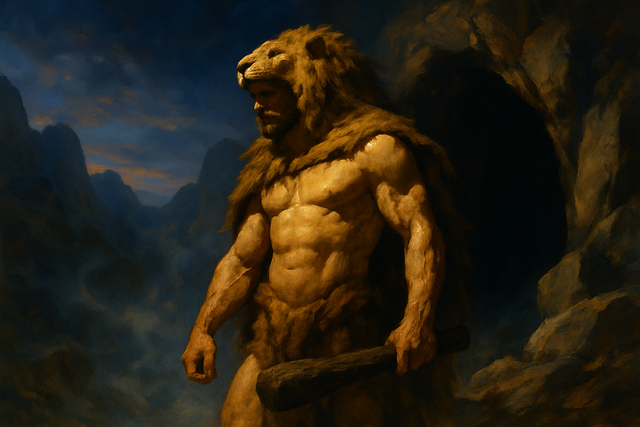
Discover who Heracles was, why he performed the Twelve Labors, and what his myth still teaches about strength, redemption, and inn…
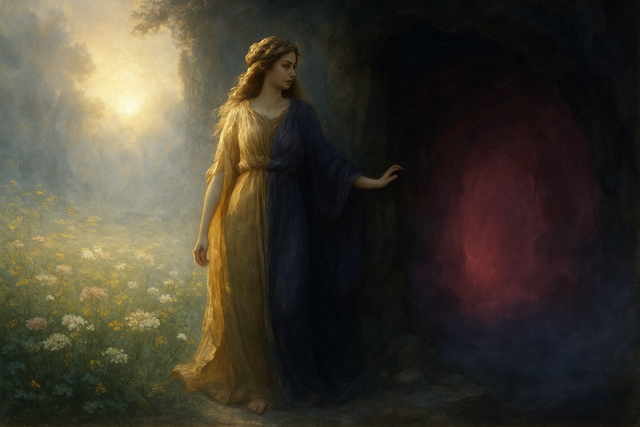
Persephone's myth, symbolism, and spiritual meaning — how the Greek goddess of spring became Queen of the Underworld.