Crystal & Stones
Discover Garnet: Healing Properties & Daily Uses
Table of Content What is Garnet? Garnet Stone: History, Culture, Mythology, and Folklore Benefits of Garnet Stone and Chakra Heali…
 KnowMastery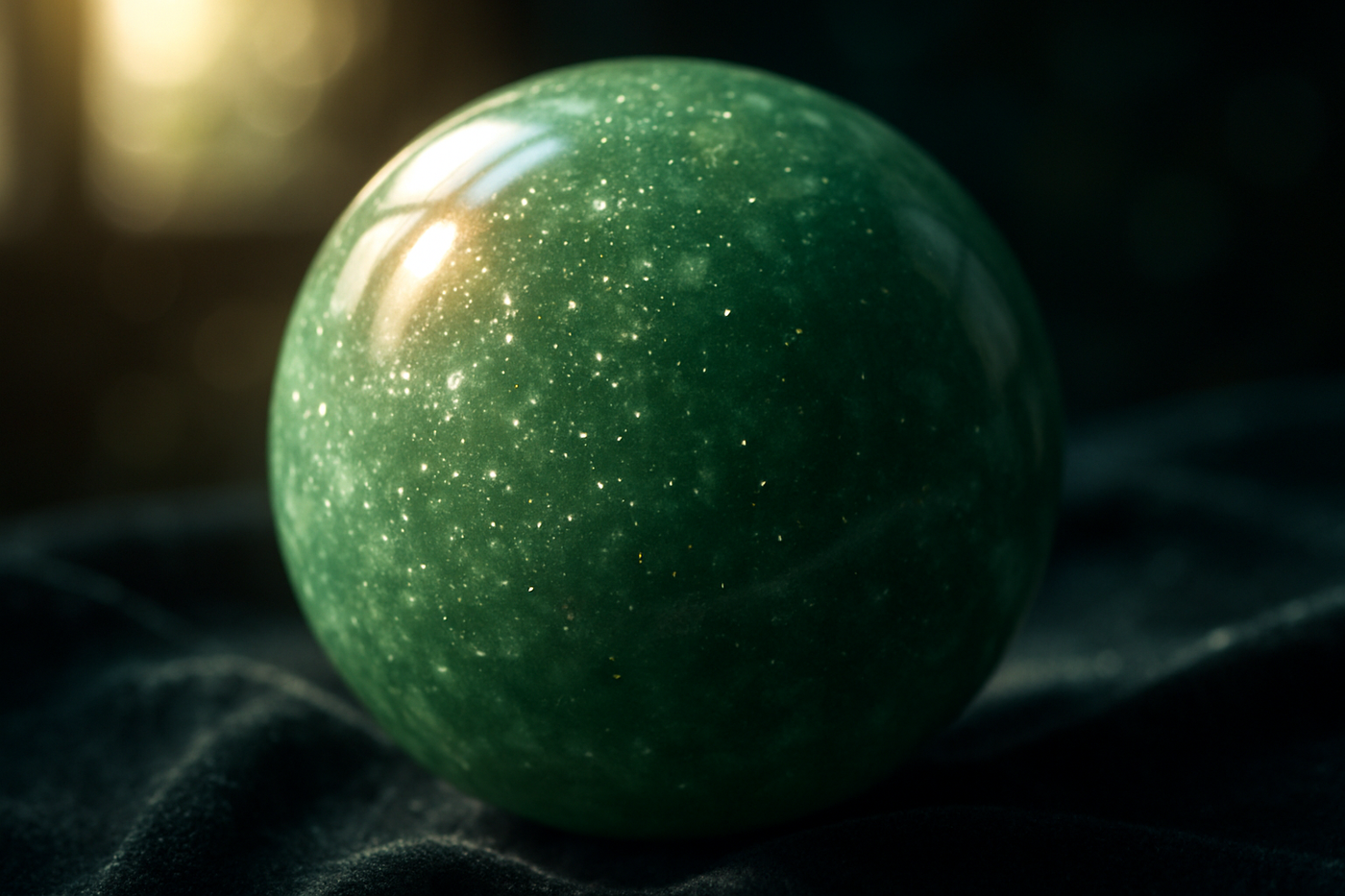
Aventurine is a form of quartz that sparkles because of tiny flat mineral inclusions, usually green fuchsite mica or reddish hematite and goethite. That flicker of light is called aventurescence. Sunstone looks similar but is a completely different mineral, a feldspar colored by copper or hematite platelets instead of quartz. "Sunflower stone" isn't a separate gemstone at all. It's a trade name jewelers use for golden or orange aventurine that shows an especially warm, petal-like glitter. In short: aventurine is quartz, sunstone is feldspar, and sunflower stone is just aventurine with a marketing makeover.
Hold a piece of green aventurine up to a window and it does something most stones don't. It flashes. Tiny green or silver flecks catch the light and vanish the moment you tilt your wrist, like a pond surface breaking into ripples.
People notice that flicker before they know anything about mineralogy. It looks alive in a way that smooth, solid-colored crystals don't, and that's exactly why aventurine got tangled up with sunstone and sunflower stone in the first place. All three share that same glinting quality, even though only two of them are actually related.
If you've ever bought a "sunflower aventurine" bracelet online and wondered whether you were sold a sunstone by mistake, you're not alone. The names get swapped constantly in jewelry listings, which is exactly why it's worth untangling them properly.
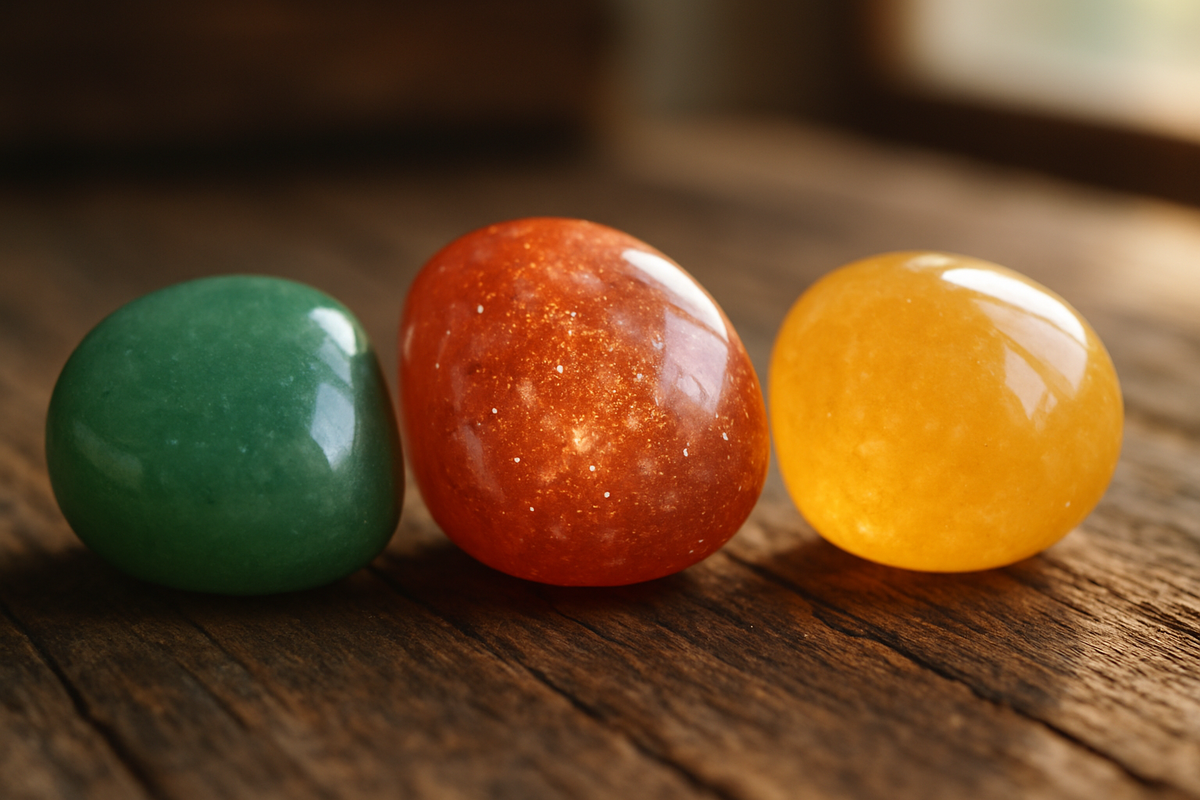
Aventurine is quartz through and through, part of the same mineral family as amethyst. What sets it apart is the microscopic mica or hematite trapped inside the quartz structure as it formed. Green aventurine, colored by fuchsite mica, is the most common variety and the one most often used in jewelry and carving. Red and orange aventurine get their color from hematite or goethite instead, which is where the golden "sunflower" look comes from.
Sunstone belongs to the feldspar group, the same mineral family as moonstone and labradorite, not quartz at all. Its glitter comes from thin copper or hematite platelets lined up inside the crystal, producing a warmer, more metallic flash than aventurine's softer shimmer. Oregon sunstone, mined in the Ponderosa area of the state, is prized for showing this effect in shades of red, green, and orange within a single stone, something aventurine never does.
Sunflower stone isn't recognized as its own mineral by any gemological body. It's a marketing name applied to golden-orange aventurine because the hematite inclusions can look like tiny flecks of pollen scattered across a petal. Some sellers also use "sunflower" for a yellow-green cristobalite from Utah with a genuinely different crystal structure, so it pays to ask what mineral is actually in your hand before buying.
| Stone | Mineral Family | What Causes the Sparkle | Common Colors |
|---|---|---|---|
| Aventurine | Quartz | Fuchsite mica or hematite inclusions | Green, red, orange, blue, peach |
| Sunstone | Feldspar | Copper or hematite platelets | Orange, red, green, colorless |
| Sunflower stone (trade name) | Usually aventurine, sometimes cristobalite | Same as aventurine or a separate crystal lattice | Golden yellow, warm orange |
Green aventurine is best known as a stone of quiet luck and steady growth, the kind that comes from persistence rather than a windfall. People keep it in wallets, cash registers, and desk drawers when they want to invite opportunity without forcing it. In chakra-based healing work, its calm green tone is linked to the heart center, and it's often reached for when someone is trying to let go of old resentment or make room for more patience with people.
Red and orange aventurine carry a different charge. They're tied to motivation, confidence, and physical vitality, which is part of why the golden "sunflower" variety became popular with people looking for a boost of warmth and optimism during darker months. Sunstone, despite being a different mineral entirely, shares this solar association almost point for point, since both stones are used to work with willpower, joy, and a sense of personal light.
The name "aventurine" comes from the Italian phrase a ventura, meaning "by chance." Glassmakers on the island of Murano near Venice are credited with the accidental 17th century discovery of aventurine glass, a copper-flecked amber glass created when metal shavings fell into a batch of molten glass. The sparkling effect was so striking that the mineral aventurine, identified later, was named after the glass rather than the other way around.
Green aventurine has long been carved in China as a stand-in for nephrite jade, which was reserved for imperial use and extremely costly to source. Chinese lapidaries shaped aventurine into snuff bottles, seals, and small animal figures, and Western traders eventually nicknamed it "Indian jade" even though most of the material actually came from Brazil and India's Andhra Pradesh region, a major historical source of green aventurine quartz.
Aventurine quartz has been worked in the Indian subcontinent for thousands of years, appearing in beads recovered from Indus Valley sites alongside carnelian and agate. Long before the word "aventurine" existed, artisans in this region were already drawn to the stone's soft glitter, using it in ornamental beadwork traded along routes that reached as far as Mesopotamia.
Seeing aventurine in a dream is often read as a sign that something you've been quietly working toward is close to paying off, especially if the stone appears green and catches light in the dream the way it does in daylight. A dream where you're holding or receiving aventurine can point to an unexpected bit of good fortune, a small win that arrives without much fanfare but still changes your outlook.
If the stone in the dream is golden or orange rather than green, closer to that sunflower shade, it can suggest renewed energy after a period of feeling drained, or a nudge to take action on an idea you've been sitting on. Dreaming of a cracked or dull aventurine, by contrast, is sometimes read as a warning against overconfidence or spreading your energy too thin.
Aventurine is soft enough for everyday jewelry but still durable at 6.5 to 7 on the Mohs scale, so it holds up to regular wear rather than staying locked away as a display piece. Here are some straightforward ways people work it into daily routines:
Aventurine also shows up in zodiac crystal work more often than people expect. It's commonly recommended for Libra, whose search for balance pairs well with the stone's calming green tone, and for Gemini, who benefits from its steady, unshowy support during periods of scattered thinking. The golden sunflower variety, with its warmer solar energy, gets linked more often to Leo, while grounded, detail-oriented Virgo is often drawn to green aventurine for its quiet, practical steadiness.
No, they are different minerals that only look alike because both show a sparkly optical effect. Aventurine is quartz colored by mica or hematite inclusions, while sunstone is feldspar colored by copper or hematite platelets, and a jeweler can tell them apart with a simple hardness or refractive index test.
Sunflower aventurine is a trade name for golden or orange aventurine that shows an especially warm, glittering pattern resembling sunflower petals. It's not a separate mineral, just aventurine with hematite or goethite inclusions instead of green fuchsite mica.
Green aventurine is associated with gradual luck, financial growth, and emotional healing, particularly around letting go of old resentment. It's commonly kept near money or carried into situations where a person wants calm confidence rather than a sudden burst of energy.
Real aventurine shows uneven, natural sparkle from mineral inclusions when you rotate it under light, while glass imitations often have a uniform, almost manufactured glitter. Dyed quartz can also bleed color if wiped with acetone on a cotton pad, something genuine aventurine will not do.
Table of Content What is Garnet? Garnet Stone: History, Culture, Mythology, and Folklore Benefits of Garnet Stone and Chakra Heali…
Table of Content Introduction to Larimar Formation of Larimar Healing Properties of Larimar Larimar in Folklore and the Zodiac Lar…

Moss Agate: An Introduction to Nature’s Landscape Stone Deep within the heart of the Earth, nature crafts a myriad of wonders, and…