Animal Symbolism
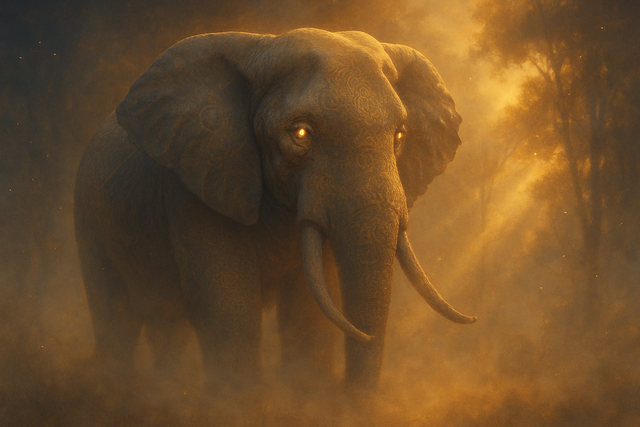
Elephant Symbolism: Spiritual Meaning, Totem & Dream Guide
What do elephants symbolize? Discover their meaning in Hindu, Buddhist & African traditions, dreams, totems, and trunk-up luck.
 KnowMastery
The bison symbolizes strength, abundance, and gratitude for what the land provides. Across Native American nations, the animal represents survival through unity, generosity toward the community, and a direct exchange between humans and the earth. In spiritual practice, the bison is often called on as a totem of grounded power, a reminder to move through hardship with patience instead of panic.
Picture a single bison standing against a cold wind on the open plain. It does not run from the storm. It turns to face it head on, lowers its massive head, and walks straight through. That image alone explains why so many people feel a quiet pull toward this animal when life gets heavy.
There is something steadying about an animal that weighs nearly a ton yet moves with calm instead of aggression. The bison does not waste energy proving its power. It simply carries it, the way some people carry grief or responsibility without ever saying a word about it.
At its core, bison symbolism rests on a few ideas that repeat across cultures: endurance, provision, and interdependence. The animal gave entire nations food, clothing, shelter, and tools, so its symbolism was never abstract. It was tied directly to whether people survived the winter.
A bison can survive blizzards that kill cattle by facing into the storm rather than turning its back to it. This single behavior became a teaching tool. Facing difficulty directly, instead of running from it, is one of the most consistent lessons attached to bison symbolism.
Before the near extinction of the 1800s, bison herds on the Great Plains numbered in the tens of millions. A single animal could supply meat, hide for shelter and clothing, bone for tools, and sinew for thread. The bison represented a complete, generous provider, which is why gratitude sits at the center of its symbolism rather than off to the side.
Bison herds protect their young by forming a circle, with weaker and younger animals shielded in the center while adults face outward toward danger. This behavior made the bison a natural symbol of collective responsibility rather than individual dominance, and it still shapes how the animal is read today: not as a lone warrior figure, but as a provider who protects the group first.
The Native American meaning of the bison changes from nation to nation, but it almost always centers on sacred exchange rather than simple admiration.
These practices show that bison symbolism was never purely spiritual in an abstract sense. It was practical, seasonal, and tied to real survival, much the way the symbolism of crows grew out of close daily observation of a bird's behavior rather than distant myth.
The bison's symbolic weight is not limited to North America. The European bison, known as the wisent, held its own place in Slavic and Germanic folklore long before American settlers ever saw the plains herds.
In the forests of what is now Poland and Belarus, the wisent was treated as a guardian of the wild, a creature belonging to older gods of the forest. Hunting it was restricted to nobility during several periods of history, which reinforced its status as a creature tied to power and the untouched wilderness of Bialowieza Forest, one of the last old growth forests in Europe.
By the late 1800s, deliberate slaughter during westward expansion reduced the American bison population from tens of millions to roughly a few hundred animals. The species became a symbol of both destruction and recovery. Conservation efforts led by figures such as William Hornaday and the American Bison Society brought the population back from the edge, work that eventually led to the bison being named the official national mammal of the United States in 2016.
In spiritual practice, the bison is treated as a grounding force. People who feel scattered, anxious, or disconnected from their own body often turn to bison imagery or meditation to settle themselves, the way someone might turn to owl symbolism when they need clarity instead of grounding.
Dreaming of a bison tends to reflect something about personal resources, stability, or an approaching stretch of life that demands endurance. The exact meaning shifts depending on the details of the dream, especially the animal's behavior and condition.
| Dream Scenario | Possible Meaning |
|---|---|
| A single bison standing still | A need for grounding, patience, or steady resolve during a hard period |
| A running or stampeding herd | Overwhelm, chaos, or fear of losing control over a fast-moving situation |
| A white bison | A sign of rare opportunity, renewal, or a spiritually significant turning point |
| A bison charging toward you | An unresolved conflict or responsibility you have been avoiding |
| A dead or dying bison | Fear around loss of resources, security, or provision |
| Feeding or caring for a bison | A reminder to nurture your own resilience or support someone who depends on you |
People who identify with the bison as a totem animal tend to be steady under pressure, generous with what they have, and slow to anger. They are not usually the loudest voice in the room, but they are often the one others rely on when things fall apart.
If the bison keeps showing up in your life through dreams, imagery, or unexpected encounters, it may be worth asking whether you are ignoring your own need for rest, community, or gratitude. The bison does not ask you to fight harder. It asks you to stand firm, conserve your energy, and trust that provision will come if you take care of what is right in front of you, the same quiet logic behind spider spiritual meaning, where patience matters more than reaction.
Seeing a bison, whether in person, in art, or repeatedly in your thoughts, is generally read as a call to slow down and trust that your needs will be met. It often appears during periods when someone feels scattered or financially insecure, nudging them toward patience instead of panic.
The white buffalo is tied specifically to the Lakota story of White Buffalo Calf Woman, who brought the sacred pipe and ceremonial law to the people. A white buffalo birth today is still treated by many Plains nations as a rare and significant sign of renewal, hope, or an approaching shift in collective fortune.
The bison is sacred because it directly determined whether a community survived the winter, supplying food, shelter, clothing, and tools from a single animal. Nations such as the Lakota, Blackfoot, Mandan, and Crow built ceremonies, tools, and prayers around it, so its sacredness grew out of daily dependence rather than distant symbolism.
A calm bison in a dream usually points to a need for grounding and steady resolve, while a stampede often reflects overwhelm or a fear of losing control. The specific details, such as the animal's color, behavior, and condition, change the meaning significantly, so it helps to look at the full scene rather than the animal alone.
What do elephants symbolize? Discover their meaning in Hindu, Buddhist & African traditions, dreams, totems, and trunk-up luck.
What does a hippo symbolize spiritually? Discover its meaning as totem, dream sign, Egyptian goddess Taweret, and guardian of emot…
Leopard symbolism explained: spirit animal & totem meaning, black and snow leopard significance, dreams, tattoos, and leopard vs p…