Symbols
29 Symbols of Unity and What Each One Truly Means
Discover 29 powerful symbols of unity — from the circle and Tudor Rose to the dove, Triquetra, and Chalcedony — and what each one …
 KnowMastery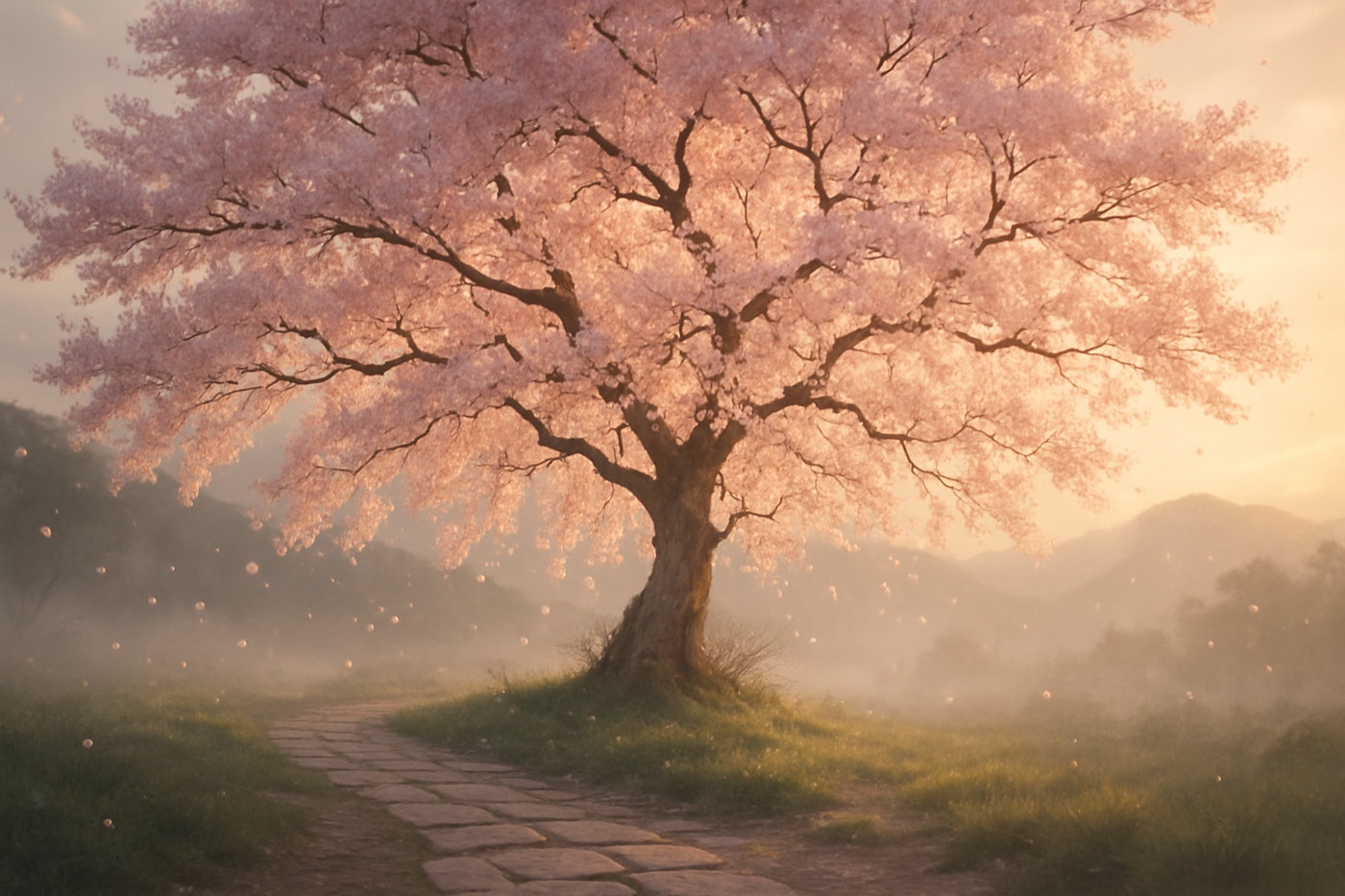
Cherry blossoms symbolize impermanence, renewal, and the fragile beauty of life. In Japan, sakura embody mono no aware — a bittersweet awareness that beauty is precious precisely because it fades. Across Japan, China, and the West, the flower also represents femininity, love, and resilience, alongside quiet remembrance of what has been lost.
Quick Answer:
There is a particular ache to watching cherry blossoms fall. One week they arrive in a soft explosion of pink and white, transforming ordinary streets into something otherworldly. The next week, the wind carries them away like confetti at a party no one wanted to end.
Maybe that's why people travel thousands of miles just to stand beneath these trees for a few days each spring. It isn't only about the flowers — it's about being reminded, gently and without cruelty, that beauty and loss are the same event seen from two directions.
At their core, cherry blossoms are a meditation on transience. Unlike roses or lilies that hold their form for weeks, sakura petals begin falling within days of full bloom — most trees stay at peak flower for barely a week. This short lifespan transformed the flower into one of the most potent natural symbols of mortality, renewal, and the preciousness of the present moment.
Cherry blossoms teach an uncomfortable truth: the things we love most intensely are often the things we can keep the least. Their symbolism asks us to stop clutching at permanence and instead appreciate intensity of experience over duration.
Because sakura bloom in early spring, often before leaves even appear, they are equally associated with fresh starts. Japan's fiscal and school years begin in April, and in many parts of Honshu this coincides with peak cherry blossom bloom.
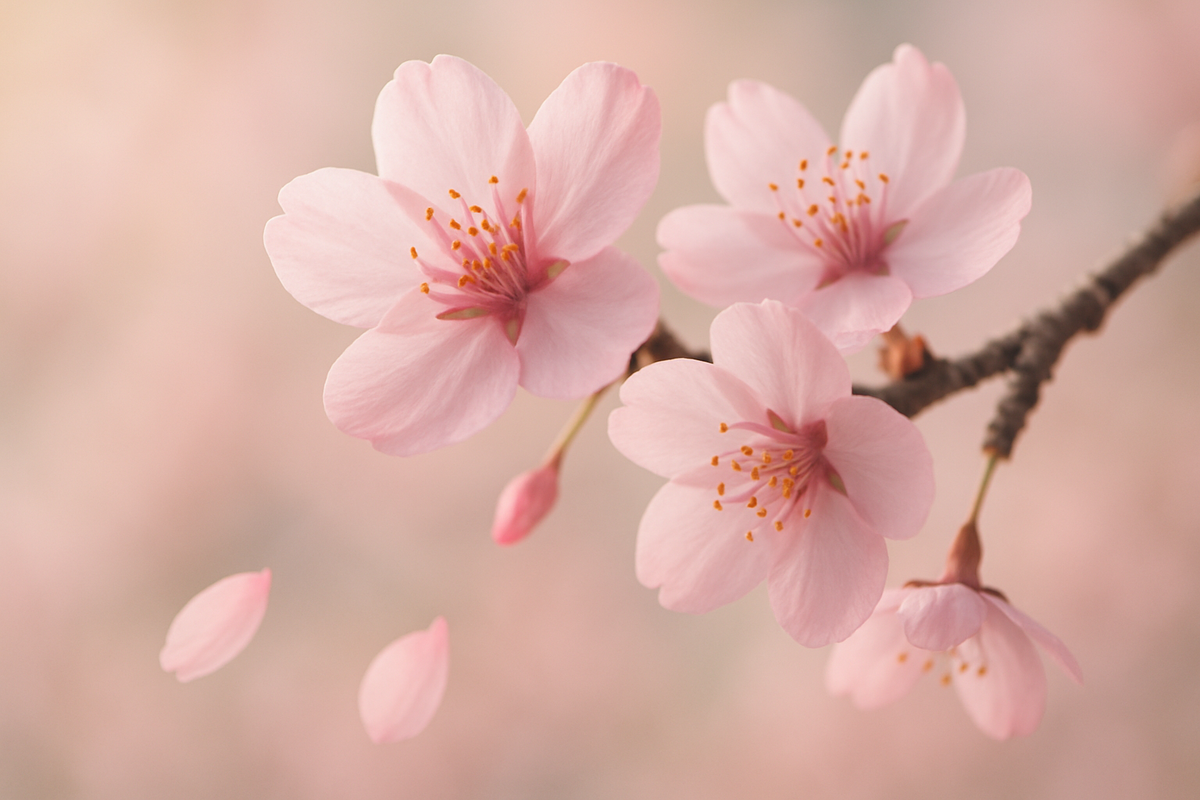
"Sakura" and "cherry blossom" are often used interchangeably, but they're not quite identical. Sakura is the Japanese word specifically for ornamental cherry trees — cultivars like Prunus serrulata and Prunus × yedoensis — bred over centuries for their flowers rather than their fruit. "Cherry blossom" is simply the English term for the flower produced by any tree in the Prunus genus, including fruit-bearing varieties like the sweet cherry (Prunus avium).
In practice, when people search for "cherry blossom meaning," they are almost always referring to the same symbolic flower the Japanese call sakura — pale, delicate, short-lived blooms rather than the trees grown commercially for cherries. The distinction matters mostly in horticulture and translation; symbolically, the two terms point to the same cultural icon.
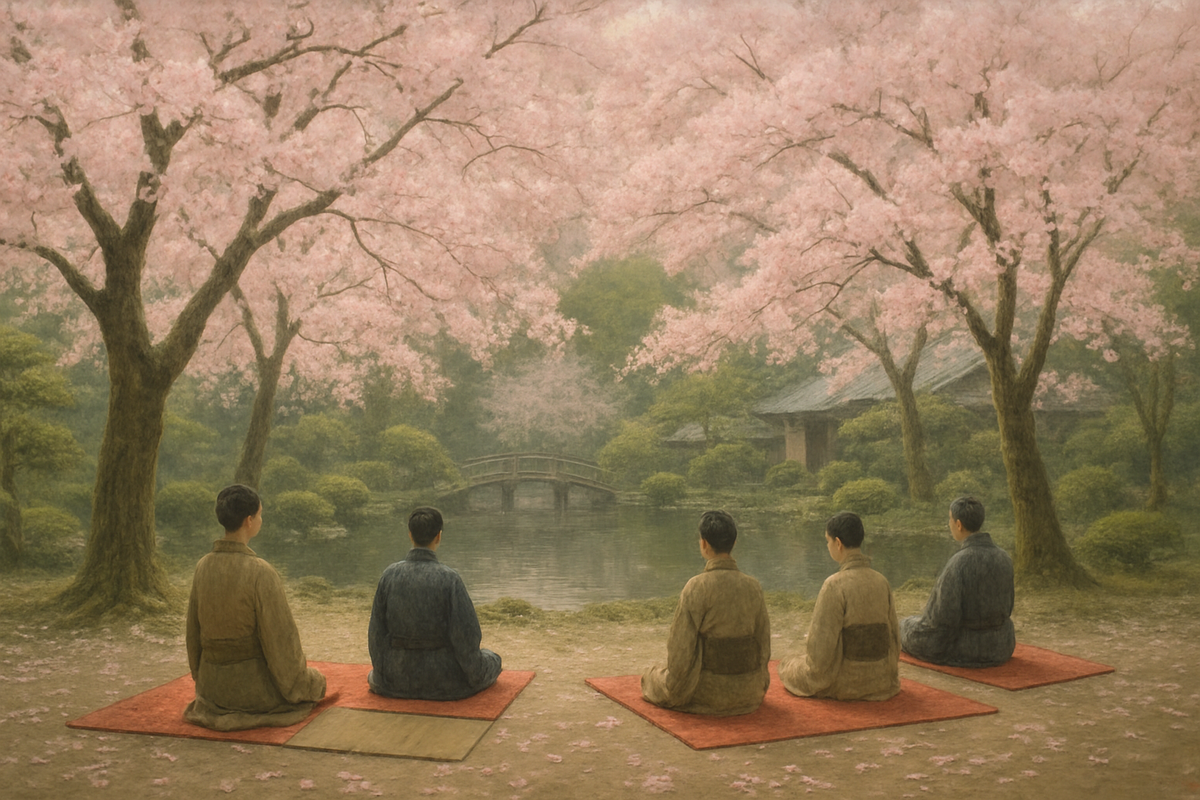
No culture has woven cherry blossom symbolism into its identity more thoroughly than Japan. The tradition of hanami — literally "flower viewing" — is traced back to 812 CE, when Emperor Saga is recorded hosting one of the earliest blossom-viewing banquets in the imperial gardens of Kyoto. What began as an aristocratic pastime of composing poetry and drinking sake beneath the blooms grew, over the following twelve centuries, into a nationwide seasonal ritual that still shapes Japanese life today.
In China, where cherry trees also grow natively, the blossom carries a different emotional register than in Japan. Rather than centering on mortality, Chinese tradition often links the flower to feminine beauty, romantic longing, and fading youth — a motif that runs through Tang dynasty poetry, where falling blossoms frequently stand in for a love affair or a season of life that cannot be recovered.
Cherry blossoms also carry associations with resilience in Chinese symbolism. Their willingness to bloom in the cold, damp air of late winter places them alongside the plum blossom, or meihua, as an emblem of quiet perseverance through hardship — a pairing celebrated in classical Chinese painting and brushwork for centuries.
In Korea, cherry blossoms — beotkkot — bloom alongside a national springtime ritual almost as prominent as Japan's, centered on festivals like the Jinhae Gunhangje Festival and Seoul's Yeouido riverside. Korean symbolism leans toward purity, gentle femininity, and the simple joy of spring's arrival, generally without the weightier philosophical undertones of mono no aware, though renewal remains central to its meaning.
Vietnam's most iconic springtime bloom is traditionally the yellow apricot blossom, or hoa mai, tied to Lunar New Year celebrations. However, cherry blossoms — hoa anh dao — have taken on their own symbolic life in cities like Hanoi and Da Lat, where trees gifted by Japan bloom briefly each year. There, the flower has come to represent friendship between nations, fleeting beauty, and hopeful new beginnings, echoing themes found across its neighboring cultures.
When Tokyo mayor Yukio Ozaki gifted more than 3,000 cherry trees to Washington, D.C. in 1912, the flower took on a new diplomatic meaning: friendship, peace, and cultural exchange between nations. Today, the annual National Cherry Blossom Festival draws more than a million visitors each spring, and the tree has become a broader Western symbol of romance, gentle optimism, and the arrival of spring itself.
In tattoo culture, cherry blossoms are among the most requested floral designs. People often choose them to honor a loved one who has passed, to mark surviving a difficult season, or simply to commemorate a personal chapter of change — a way of wearing impermanence as a badge rather than a burden.
| Culture / Region | Primary Symbolic Meaning |
|---|---|
| Japan | Impermanence, mono no aware, renewal, honorable brevity |
| China | Feminine beauty, romantic longing, resilience through hardship |
| Korea | Purity, gentle femininity, springtime renewal |
| Vietnam | Friendship, fleeting beauty, hopeful new beginnings |
| United States | Friendship, diplomacy, springtime optimism |
| Tattoo & modern culture | Personal transformation, remembrance, quiet resilience |
While pale pink is the most iconic shade, cherry blossoms range from nearly white to deep magenta, and each shade carries subtle nuance.
| Color | Symbolic Meaning |
|---|---|
| Pale Pink | Gentleness, femininity, new love, the softness of impermanence |
| White | Purity, spiritual awakening, mourning and remembrance |
| Deep Pink / Magenta | Passion, vitality, confidence, deeper romantic love |
| Yellow-Green (rare varieties) | Uniqueness, quiet transformation, subtlety |
Spiritually, cherry blossoms are often read as a gentle teacher rather than a symbol demanding interpretation. Their message tends to circle around three ideas:
Dreaming of cherry blossoms is generally considered a favorable omen, though context shapes the interpretation significantly. As with symbols encountered in a dream catcher's imagery, the details surrounding the blossoms — their color, condition, and what happens to them — matter as much as their presence.
This often signals a period of personal flourishing — new love, a creative breakthrough, or a long-awaited opportunity arriving at exactly the right time.
Dreaming of petals drifting down can point toward acceptance of a change already underway, such as the end of a relationship, job, or life phase you have quietly begun to release.
Seeing a tree without blossoms may reflect anxiety about missed timing or a fear that an opportunity has already passed you by.
Dreaming of picking blossoms from a branch, or receiving them as a gift, often reflects a desire to seize a fleeting opportunity — a signal from the subconscious that timing matters more than perfection right now.
You don't need to travel to Kyoto to let this symbol shape how you move through your days. A few grounded practices:
Cherry blossoms belong to a small family of symbols across world traditions that represent impermanence rather than permanence. Where an anchor reassures us of stability and endurance, or an unbroken circle suggests eternity, the cherry blossom's entire meaning depends on disappearing. Even among flowers, its symbolism stands apart: the lotus rises from mud to represent enlightenment that endures once achieved, and the rose is prized partly for how long it holds its shape in a vase — but the cherry blossom is honored precisely because it refuses to last.
Peak bloom is brief and location-dependent, so timing matters as much as destination. In Japan, the sakura zensen typically reaches Tokyo and Kyoto in late March to early April, though the exact date shifts slightly each year with the weather. Washington, D.C.'s Tidal Basin usually peaks during the National Cherry Blossom Festival in late March through mid-April, drawing crowds to see the descendants of Ozaki's original 1912 gift.
In Korea, the Jinhae Gunhangje Festival and Seoul's Yeouido riverside typically bloom in early April, just after Japan's earliest regions. Vietnam's imported cherry trees in Hanoi and Da Lat bloom on a similarly narrow window, often coinciding with local festivals celebrating the flower's imported symbolism of friendship and renewal.
A cherry blossom tattoo commonly represents the beauty of impermanence, personal growth, or remembrance of a loved one. Many people choose it after surviving a difficult season, using the falling petals to symbolize letting go of pain while honoring the beauty that came before it.
Cherry blossoms are central to Japanese identity because they visually embody mono no aware, the gentle sadness of transient beauty. The centuries-old hanami tradition connects modern life to samurai-era philosophy, seasonal renewal, and communal celebration under the blooms.
Dreaming of cherry blossoms typically signals emotional or spiritual flourishing, new beginnings, or the acceptance of change. Falling petals in a dream often reflect a part of your waking life you are subconsciously ready to release.
Not death itself, but mortality and the transient nature of life. Rather than mourning, the symbolism encourages appreciating a moment more deeply because it is finite, similar to how a memento mori invites reflection rather than fear.
A falling cherry blossom is widely read as a spiritual invitation to release attachment and accept change without resistance. Rather than a loss, the moment of falling is often interpreted as the flower completing its purpose gracefully, modeling how to let go of something at its peak rather than clinging until it withers.
White cherry blossoms are generally associated with purity, spiritual awakening, and remembrance, carrying a slightly more solemn tone than their pink counterparts. They are often chosen in memorial contexts or to symbolize a clean emotional slate, reflecting clarity rather than romantic passion.
Discover 29 powerful symbols of unity — from the circle and Tudor Rose to the dove, Triquetra, and Chalcedony — and what each one …
What does the triquetra mean? Explore its Celtic, Christian & Wiccan symbolism, Charmed pop-culture link, tattoo meanings, and how…

Discover what each aura color means, from red to rainbow, plus how to see, read, and cleanse your energy field.