Religion
Number 7 in the Bible: Meaning and Symbolism Explained
Discover why the number 7 appears over 700 times in scripture and what it truly means for completion, covenant, and divine order.
 KnowMastery
Guardian angel signs typically appear as white feathers, repeating numbers like 111 or 444, sudden warmth, unexplained coincidences, and a persistent sense of being watched over during moments of fear or decision-making. These signs tend to show up right when you need reassurance most—often after a prayer, a crisis, or a quiet question whispered into the dark. Recognizing them takes practice, but once you learn the pattern, they become impossible to ignore.
Maybe you felt it the night your car spun out on ice and somehow came to rest inches from a ravine. Or the morning you woke from a dream so vivid it felt like a visitor had been sitting at the edge of your bed. There's a stillness that follows these moments—a hush, as if something unseen just stepped back into the shadows after doing its work.
People across every culture and century have described this same feeling: not alone, even in solitude. This article walks through the most widely reported guardian angel signs, what they mean spiritually, how different traditions interpret them, and what to do the next time one crosses your path.
A guardian angel sign is a small, often unexplainable occurrence that feels charged with meaning—too specific, too timely, or too comforting to be pure coincidence. Unlike dramatic religious visions, these signs are usually subtle: a scent, a number, an object out of place. They function less like proof and more like a nudge, a gentle confirmation that you're being guided or protected.
In Christian theology, guardian angels are assigned to individuals from birth, a belief rooted in Psalm 91:11 ("For he will command his angels concerning you to guard you in all your ways"). Catholic tradition even dedicates October 2nd as the Feast of the Guardian Angels. Many of the visual and devotional elements tied to this belief overlap with broader Catholic symbols and their meanings, which often depict angels as protectors standing beside vulnerable figures like children crossing a bridge.
While experiences vary, certain signs recur so consistently across testimonies that they've become almost universally recognized shorthand for angelic presence.
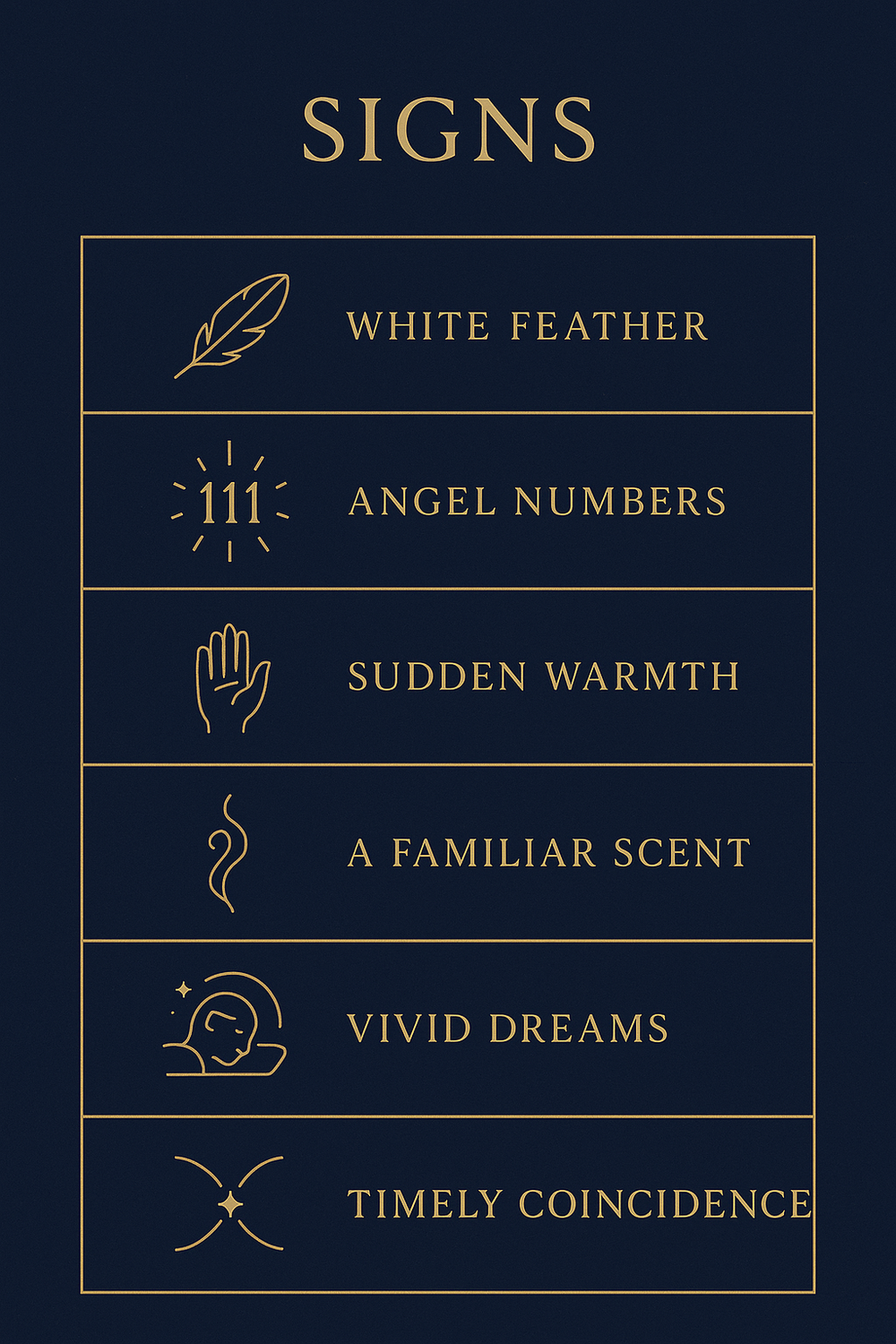

Angel numbers deserve special attention because they're among the most frequently reported signs in modern spiritual communities. The number 444 is widely associated with the presence and protection of Archangel Michael, often appearing during moments of fear or spiritual battle. Meanwhile, 222 is tied to balance and reassurance, and 111 signals a fresh start or an answered intention. These patterns aren't found in ancient scripture directly, but they've become a modern folk language for divine communication, blending numerology with angelology.
Guardian angel beliefs are far from a single tradition—they've been shaped by centuries of overlapping theology, folklore, and mysticism.
In Jewish tradition, angels (malakhim) are messengers of God assigned specific tasks rather than permanent personal guardians in the modern sense. The Talmud describes each person being accompanied by thousands of angels, and specific archangels like Archangel Gabriel are associated with delivering pivotal messages, as seen in the annunciations to Daniel and later in Christian scripture to Mary. This messenger role laid the groundwork for the later Christian concept of a dedicated personal protector.
Islam holds that every person is accompanied by two recording angels (the Kiraman Katibin) who document good and bad deeds, alongside protective angels mentioned in the Quran (Surah Ar-Ra'd 13:11) who "take turns, before and behind him, guarding him by the command of Allah." This is a distinctly structured, almost bureaucratic vision of protection compared to the more personal, emotionally resonant Christian guardian angel.
Long before Christianity formalized the concept, Zoroastrianism described fravashis—guardian spirits believed to protect individuals from birth and guide their souls after death. Many historians argue this pre-Christian Persian belief directly influenced later Judeo-Christian angelology, showing how the idea of a personal spiritual guardian is far older than any single religion.
In Mexico and much of Latin America, the Angel de la Guarda is a beloved household figure, often depicted watching over children crossing dangerous bridges—a devotional image found in homes regardless of formal church attendance. This folk devotion blends indigenous protective spirit beliefs with imported Catholic iconography, producing a warmer, more intimate guardian figure than official doctrine describes.
| Sign | Common Meaning | Tradition Most Associated |
|---|---|---|
| White feather | Confirmation of protection | Christian folk belief |
| 444 | Strength, courage, Michael's presence | Modern angel numerology |
| Sudden warmth/touch | Comfort during grief or fear | Cross-cultural testimony |
| Recurring dreams of light | Reassurance, guidance | Christian & folk traditions |
| Cardinal or dove sighting | Visit from a departed loved one | American/European folklore |
| Two recording angels | Constant moral guardianship | Islamic tradition |
| Fravashi presence | Lifelong protective spirit | Zoroastrian belief |
Dreaming of a guardian angel is one of the most emotionally powerful signs people report, often occurring during periods of grief, illness, or major decisions. A radiant or winged figure appearing calmly, without fear, is typically interpreted as reassurance rather than warning. Dreams where the angel speaks a specific word or number, points toward something, or simply sits beside the dreamer are frequently described as feeling "more real than a normal dream"—a detail dream researchers note is common in what psychologists call "high-definition" or emotionally charged dreaming states.
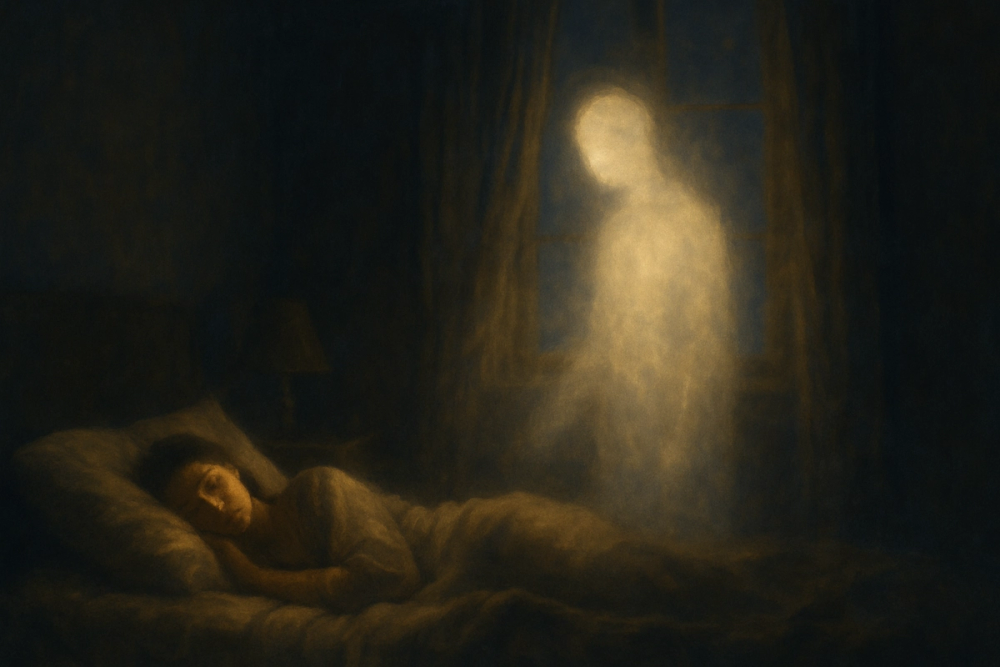
If the dream involves a deceased relative appearing peaceful and at ease, many spiritual traditions interpret this as the guardian angel using a familiar, trusted face to deliver comfort rather than a literal visitation. Waking with an unusual sense of calm, rather than confusion or dread, is often considered the clearest marker that the dream carried a protective message.
Recognizing a sign is only the first step—what you do next determines whether it becomes a meaningful spiritual practice or a fleeting curiosity.
Many people who feel guided by a guardian angel also gravitate toward tangible symbols of protection and faith, carrying or displaying an object that makes the invisible feel a little more real. This impulse isn't unique to Christian tradition—protective talismans like the ones explored in our guide to the evil eye's meaning and colors serve a strikingly similar emotional function in Mediterranean and Middle Eastern cultures, warding off harm and signaling that someone, or something, is watching over the wearer. Whether it's a feather kept in a wallet, a medal pinned to a jacket, or a bead worn on the wrist, these small objects act as anchors—physical reminders of an unseen presence during ordinary, unremarkable days.
It's worth remembering that guardian angel signs are not meant to function as scientific evidence—they operate more like a private language between you and the sacred. Skeptics will rightly point out that pattern recognition (like noticing 11:11 more often once you start looking for it) plays a role. But for those who experience these moments during genuine crisis or grief, the emotional weight of the sign—the timing, the specificity, the comfort delivered exactly when needed—often matters more than whether it can be proven.
Finding a white feather in an unlikely place—indoors, in a car, or on a walkway with no birds nearby—is widely interpreted as a sign of guardian angel protection or reassurance. Many people report finding one shortly after praying for comfort or during a period of grief, which reinforces the belief that it's a direct, gentle confirmation rather than coincidence.
Christian tradition generally teaches that each person has one guardian angel assigned from birth, though Jewish mystical texts like the Talmud suggest a person may be surrounded by thousands of angels performing different roles. There is no single universal number agreed upon across all faiths, so the answer depends largely on the specific religious or cultural tradition you follow.
Many people report meaningful encounters with birds—especially cardinals, doves, and hummingbirds—during moments of grief or major life transitions, interpreting them as a guardian angel's presence rather than a literal angel in animal form. This belief is especially strong in American and European folklore, where a cardinal appearing after a loved one's death is often called a visit from beyond.
The number 444 is the angel number most commonly associated with protection, strength, and stability, frequently linked in modern spiritual practice to the presence of Archangel Michael. Seeing it repeatedly during a stressful period is often interpreted as reassurance that you are being watched over and supported through the difficulty.
Discover why the number 7 appears over 700 times in scripture and what it truly means for completion, covenant, and divine order.
Learn what the Latin cross, crucifix, Celtic cross, and other Christian crosses mean, where they come from, and how to choose one …

What Om, the swastika, the lotus and other sacred Hindu symbols really mean, and how to use them respectfully today.