 Know
Know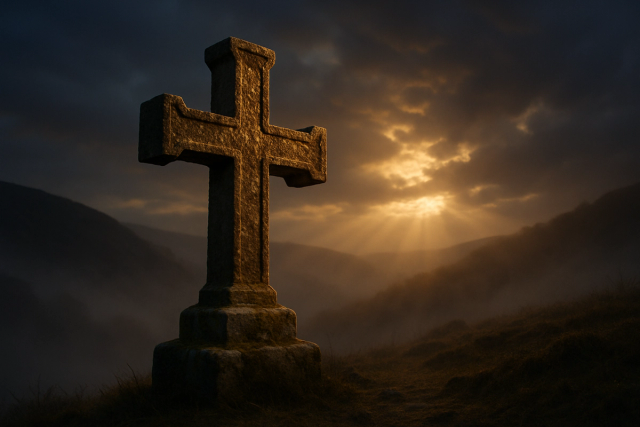
Religion
43 Types of Crosses & Their Meanings: Christian Cross Guide
Discover 43 types of Christian, Catholic & Orthodox crosses — Latin, Celtic, Maltese, Jerusalem and more — with their history, sha…
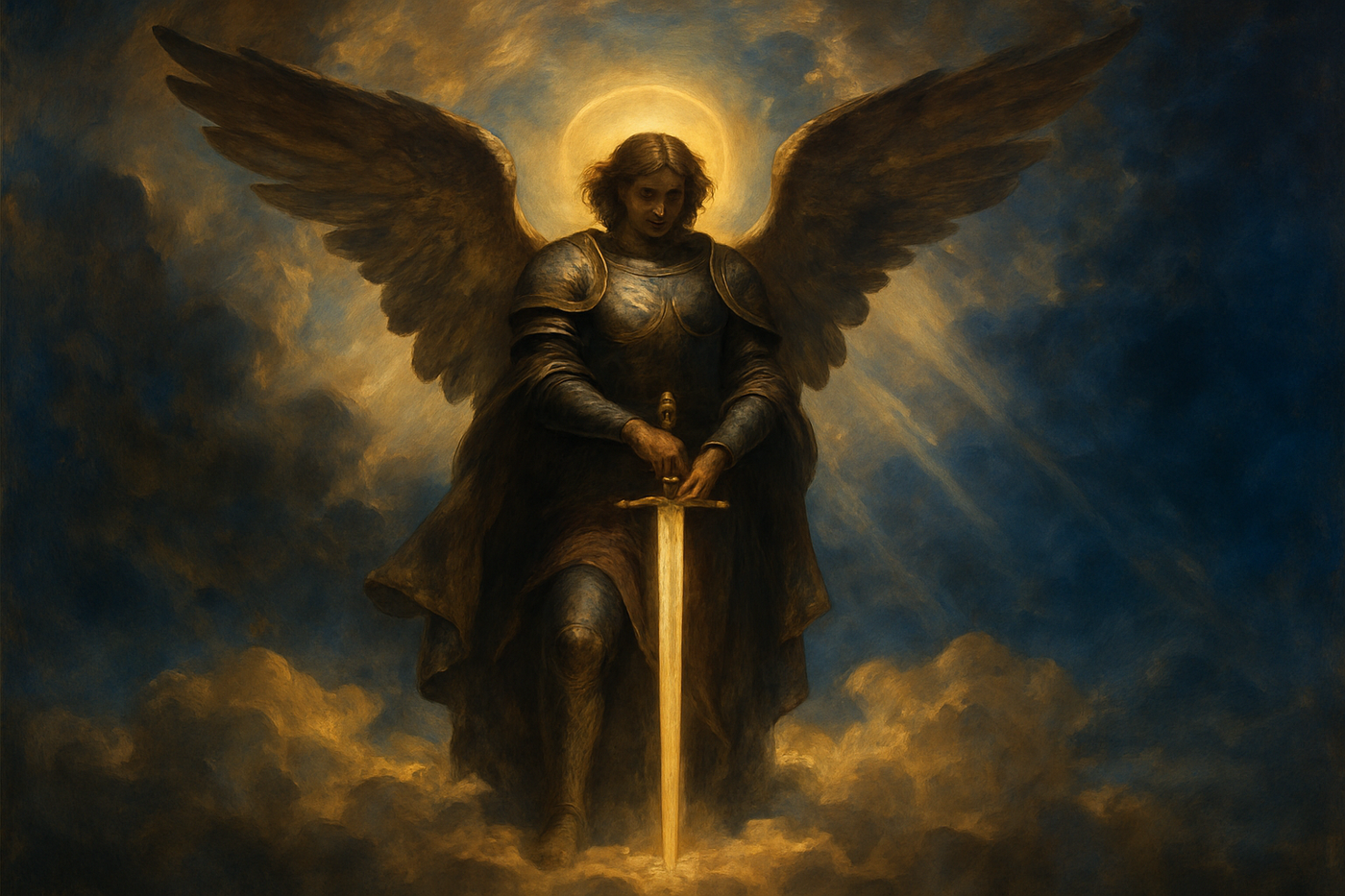
Archangel Michael is the archangel of protection, courage, and divine justice, recognized across Judaism, Christianity, and Islam as the warrior who defends the faithful against darkness. His name means "Who is like God?" in Hebrew, a rhetorical battle cry against pride and evil. Tradition holds he leads the heavenly armies, weighs souls at judgment, and intervenes at moments of crisis. People report his presence through white or blue feathers, the recurring number 444, sudden warmth, or an unshakable rush of courage arriving exactly when it's needed most.
There's a particular kind of fear that visits at 3 a.m. — the kind that has no shape, only weight. Maybe it's a diagnosis, a decision, a doorway you're afraid to walk through. In that darkness, across centuries and continents, people have whispered one name hoping for a sword of light to answer back.
That name is Michael. Not a gentle guardian who simply comforts, but a commander who fights. Understanding who he really is — and how he shows up in ordinary life — can change the way you face your own battles.
Archangel Michael is considered the highest-ranking angel in most Abrahamic traditions, often called the "Prince of Angels" or the leader of the heavenly armies. He first appears by name in the Book of Daniel, where he is described as the great protector of Israel who battles unseen princes and powers. In the New Testament's Book of Revelation, he leads the angelic host against a rebelling dragon, casting Satan out of heaven — an image that has shaped nearly two thousand years of religious art. In Jewish mystical texts such as the Zohar, he is even called Sar Ha-Olam, the "Prince of the World," reflecting his authority over nations and the course of history.
Unlike guardian angels who are believed to accompany individual souls quietly, Michael operates on a larger scale. He is invoked for protection during illness, spiritual warfare, moments of injustice, and at the hour of death, when tradition holds he escorts souls safely into the afterlife.
The Hebrew phrase Mi-cha-El translates to "Who is like God?" It isn't a boastful title but a humble challenge — a reminder that no power, however dark or seductive, can rival the divine. This is why Michael is so often depicted mid-strike, sword raised, standing on a defeated serpent: he embodies the idea that evil, no matter how convincing, is never equal to good.
Michael's story didn't stay confined to one religion. As Judaism, Christianity, and Islam developed alongside one another in the ancient Near East, his role expanded and adapted, though his core identity as a protector and warrior remained constant.
In Jewish tradition, Michael is one of the four archangels who stand at God's throne, alongside Gabriel, Raphael, and Uriel. In the Book of Daniel (10:13, 12:1), he battles the "prince of Persia" and is named the guardian of Israel who will rise to defend his people in the final days. The Talmud also credits him with mercy and intercession, pleading humanity's case before divine judgment.
Christian tradition elevates Michael to commander of heaven's armies. The Book of Revelation's vivid battle scene — Michael versus the dragon — became a defining image in medieval and Renaissance art, echoed in countless Catholic symbols found in cathedrals and devotional icons throughout Europe. Catholic tradition names him a patron of soldiers, police officers, and the dying, and the Prayer to Saint Michael, revived by Pope Leo XIII in 1886, is still recited today for protection against evil. The Eastern Orthodox Church honors him separately every November 8th at the Feast of the Synaxis of Archangel Michael, a tradition dating back to the fourth century.
Known as Mika'il in Islamic tradition, Michael is one of the four archangels mentioned by name in the Quran, appearing alongside Jibril in Surah Al-Baqarah (2:98). He is associated with providing sustenance and rain rather than warfare, showing rain as nourishment for both body and soul — a gentler but equally vital form of protection.
Beyond scripture, Michael also took root in European folk custom. In medieval England, September 29th was celebrated as Michaelmas, marking the end of the harvest and the start of the legal and academic year. Folklore held that Satan fell from heaven on this date and landed in a bramble bush, cursing it — which is why country tradition still warns against picking blackberries after Michaelmas Day. Roast goose was traditionally served at the feast for protection and prosperity through the winter, a custom that survives in pockets of Ireland and the United Kingdom.
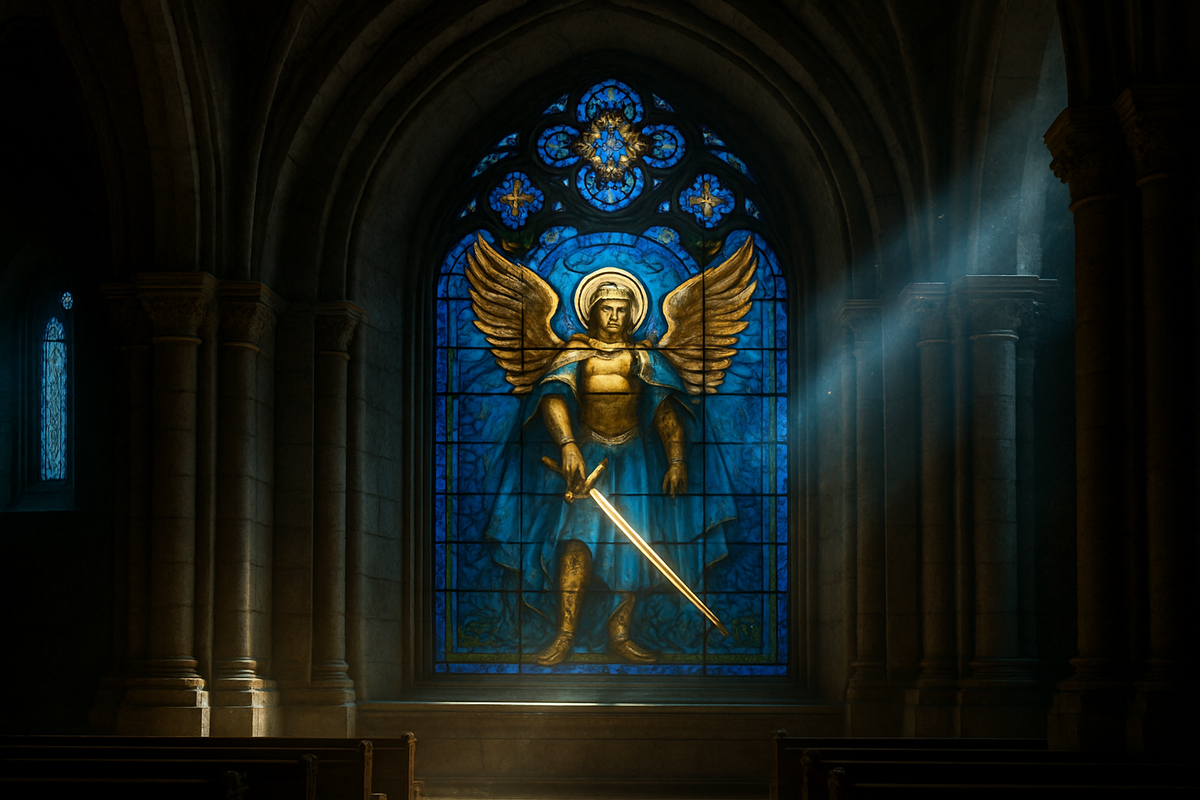
Beyond religious doctrine, Michael has become a widely recognized spiritual archetype representing courage, truth, and the clearing away of negative energy. In modern spirituality and angel-number practices, he is frequently called upon during periods of transition, fear, or when someone feels spiritually "attacked" by doubt, anxiety, or toxic influences.
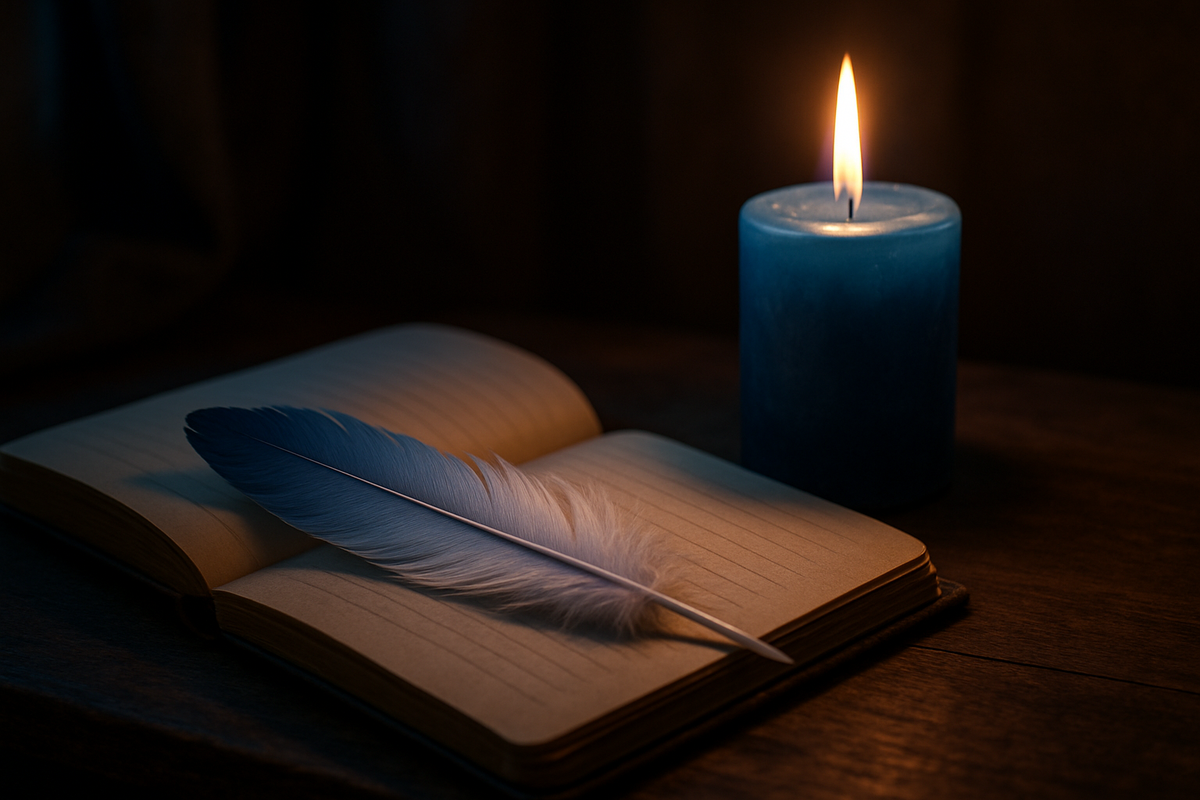
People who feel connected to Michael's energy often describe recurring, specific experiences rather than vague feelings. The most commonly reported signs include:
Dreaming of Michael, or of a sword-bearing, armored figure, is traditionally interpreted as a message of empowerment rather than fear. If he appears during a stressful season of life, it's often read as a sign that hidden strength is available to you, even if you don't yet feel it while awake. A dream where Michael defeats a serpent, dragon, or shadowy figure is commonly interpreted as reassurance that a personal struggle — an illness, addiction, toxic relationship, or fear — is being confronted at a spiritual level, even before it resolves in waking life.
| Dream Symbol | Common Interpretation |
|---|---|
| Michael with a raised sword | Courage rising to meet a challenge |
| Michael standing guard at a door | Protection during a transition or new chapter |
| Michael defeating a serpent/dragon | Overcoming fear, temptation, or a toxic influence |
| Feathers falling near Michael | Confirmation that a prayer has been heard |
| Michael weighing a scale | A pending decision or judgment resolving fairly |
Whether approached through formal prayer, meditation, or simple daily ritual, many traditions agree that intention and sincerity matter more than exact wording when seeking Michael's protection.
For centuries, Michael has been the most-depicted archangel in Western religious art, almost always shown in one of a few recognizable poses: standing triumphant over a defeated dragon, weighing souls with a scale at the Last Judgment, or leading a charge of armored angels. Guido Reni's 1636 painting Saint Michael Vanquishing Satan remains one of the most reproduced images in Christian art, still hanging in Rome's Santa Maria della Concezione church. These depictions often appear alongside other sacred iconography, including the many types of crosses found in churches dedicated to his protection throughout Europe, from Mont-Saint-Michel in France to St. Michael's Mount in England — both sites where legend holds he appeared to warn or protect local communities.
Whether understood as a literal celestial being, a psychological archetype of inner courage, or a comforting spiritual tradition passed through generations, Archangel Michael's core message remains consistent: fear does not get the final word. Across three major religions, medieval European folklore, and thousands of years of art and prayer, he has stood as a reminder that protection, justice, and courage are always within reach — even in the darkest 3 a.m. moments.
Many spiritual traditions interpret repeated 444 sightings as a sign of protection, confirmation, or reassurance that you're on the right path. It's often described as Michael's way of saying help is near, especially during uncertain decisions or moments of doubt.
Michael is widely regarded as the highest-ranking or most powerful archangel in Christian, Jewish, and Islamic tradition, often titled "Prince of the Heavenly Host." His primary role is protector and leader of the angelic armies against evil, distinguishing him from angels associated with healing or messages.
Blue and gold are the colors most commonly associated with Michael, symbolizing protection, truth, and divine will. Many people light blue candles or carry blue crystals like sodalite or lapis lazuli when praying for his protection.
Common signs include a sudden feeling of calm or courage in a frightening situation, finding blue or white feathers unexpectedly, or repeatedly noticing the number 444. These signs are typically felt as quiet reassurance rather than dramatic, unmistakable proof.
Discover 43 types of Christian, Catholic & Orthodox crosses — Latin, Celtic, Maltese, Jerusalem and more — with their history, sha…
The fascinating concept of the Evil Eye has enthralled societies around the world for many generations. This enigmatic talisman is…
Table of Contents Introduction Ancient Beginnings Religious Resonance Geometry and Mysticism From Magen David to Modern Times Beyo…