
Symbols
Symbols of Brotherhood: Uniting Bonds Through Timeless Emblems
Symbols for Brotherhood Welcome, dear readers, to a journey where we explore the profound depth and unity encapsulated in various …
 KnowMastery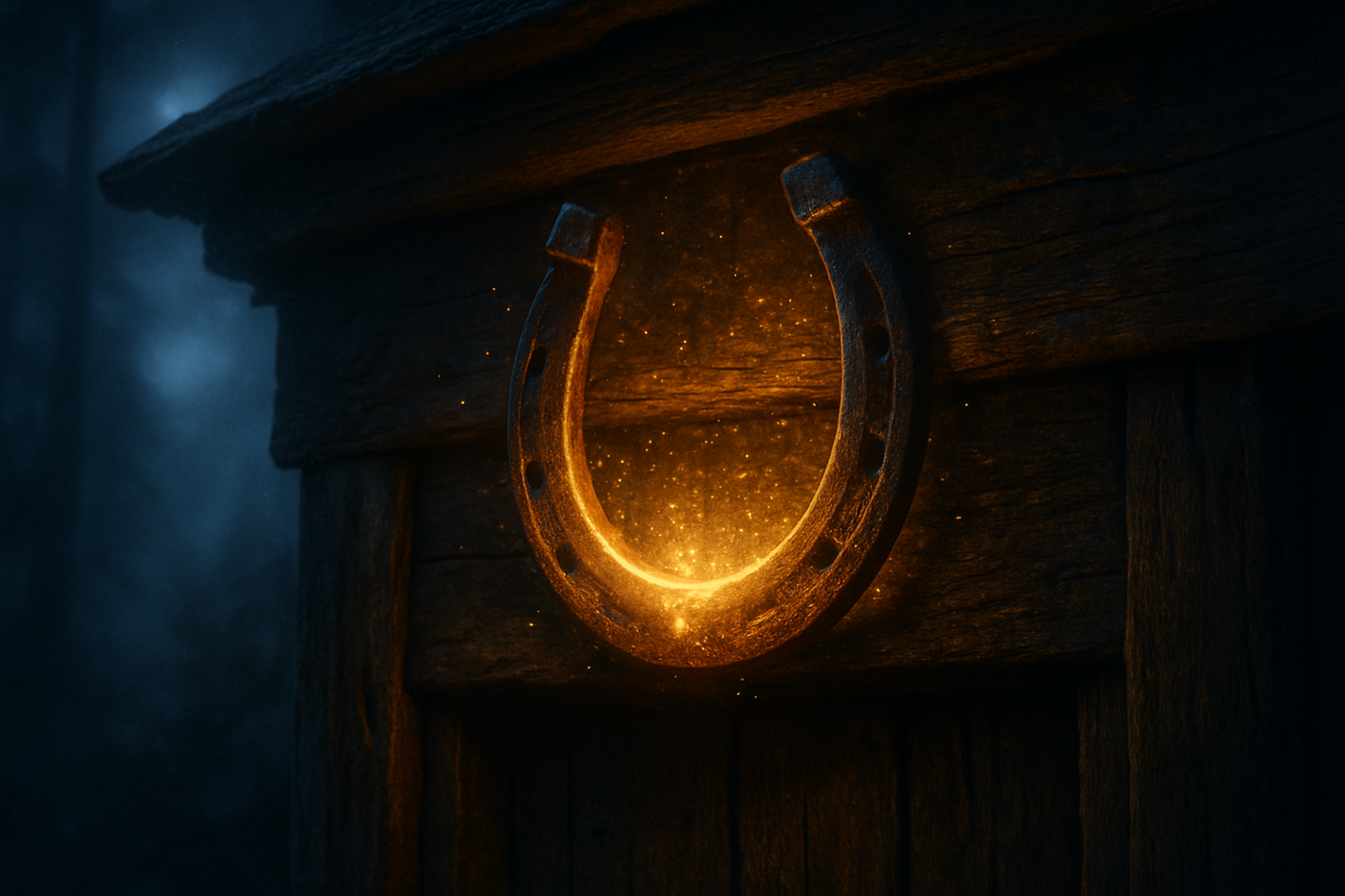
A horseshoe symbolizes good luck, protection, and prosperity. Traditionally forged from iron, it was believed to ward off evil spirits and witches, while its crescent shape linked it to ancient moon deities associated with fertility and cycles of change. The direction it faces — ends up or ends down — further shapes its meaning, determining whether it "holds" luck in or "pours" it out onto those nearby. Across cultures, from medieval Europe to modern tattoo art, the horseshoe remains one of the most recognizable symbols of fortune and spiritual safeguarding.
The horseshoe, a revered emblem across cultures, represents protection, prosperity, and good luck. It is crafted from iron, supposed to ward off harmful spirits. Its crescent shape echoes lunar deities, while its orientation—upwards or downwards—dictates the flow of luck. A horseshoe is a symbol steeped in history and spiritual symbolization, a ray of hope amidst the documented challenges today.
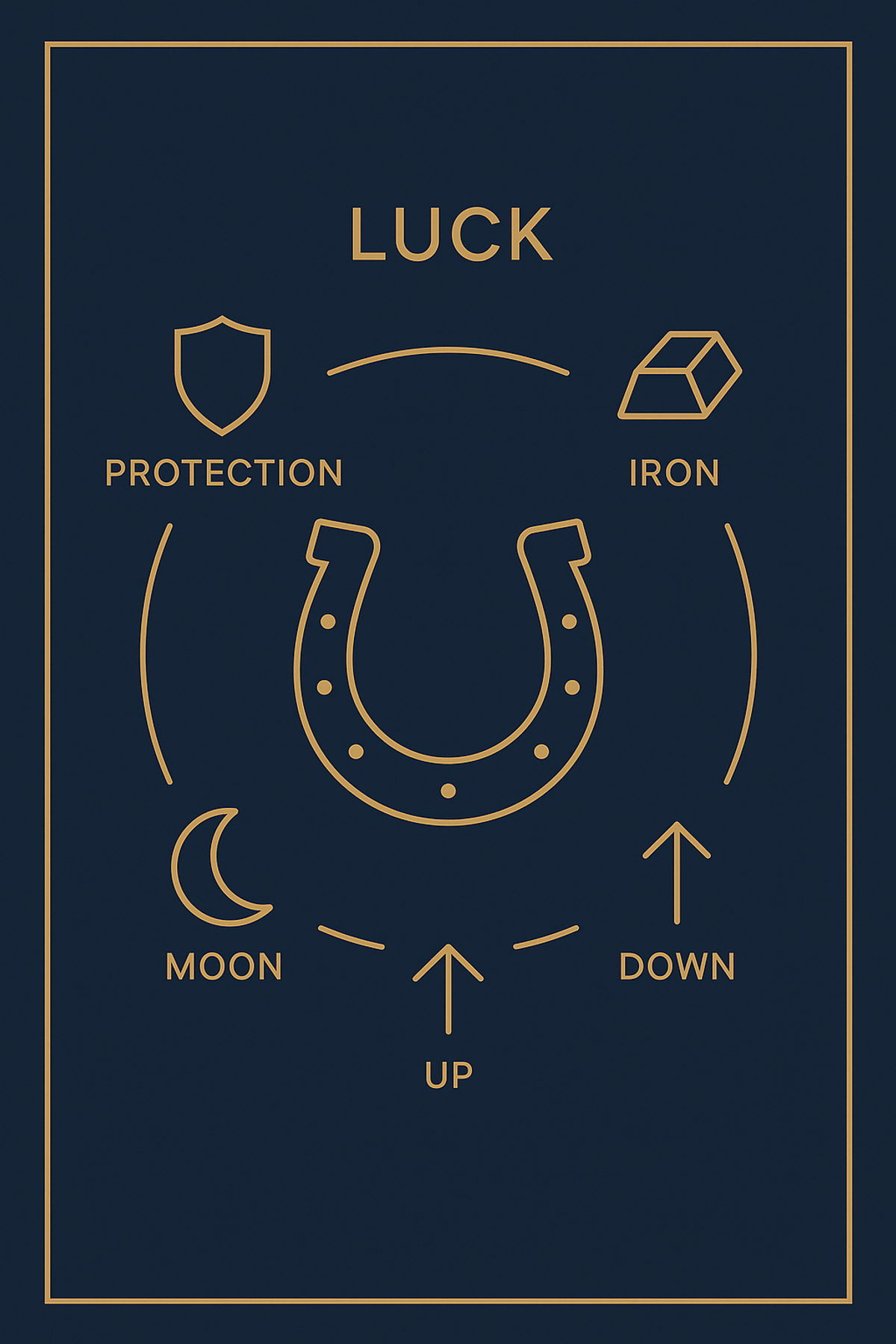
In its simplest form, a horseshoe means good luck and protection as a symbol.
It pretty much goes back to a number of folkloric traditions found in different parts of the world. In early European folklore, including among the ancient Gauls, iron was widely believed to ward off evil spirits, and the crescent shape was linked to moon goddesses such as Isis and Diana as a symbol of fertility—beliefs rooted more broadly in ancient European and Mediterranean cultures than specifically attributed to the Celts.
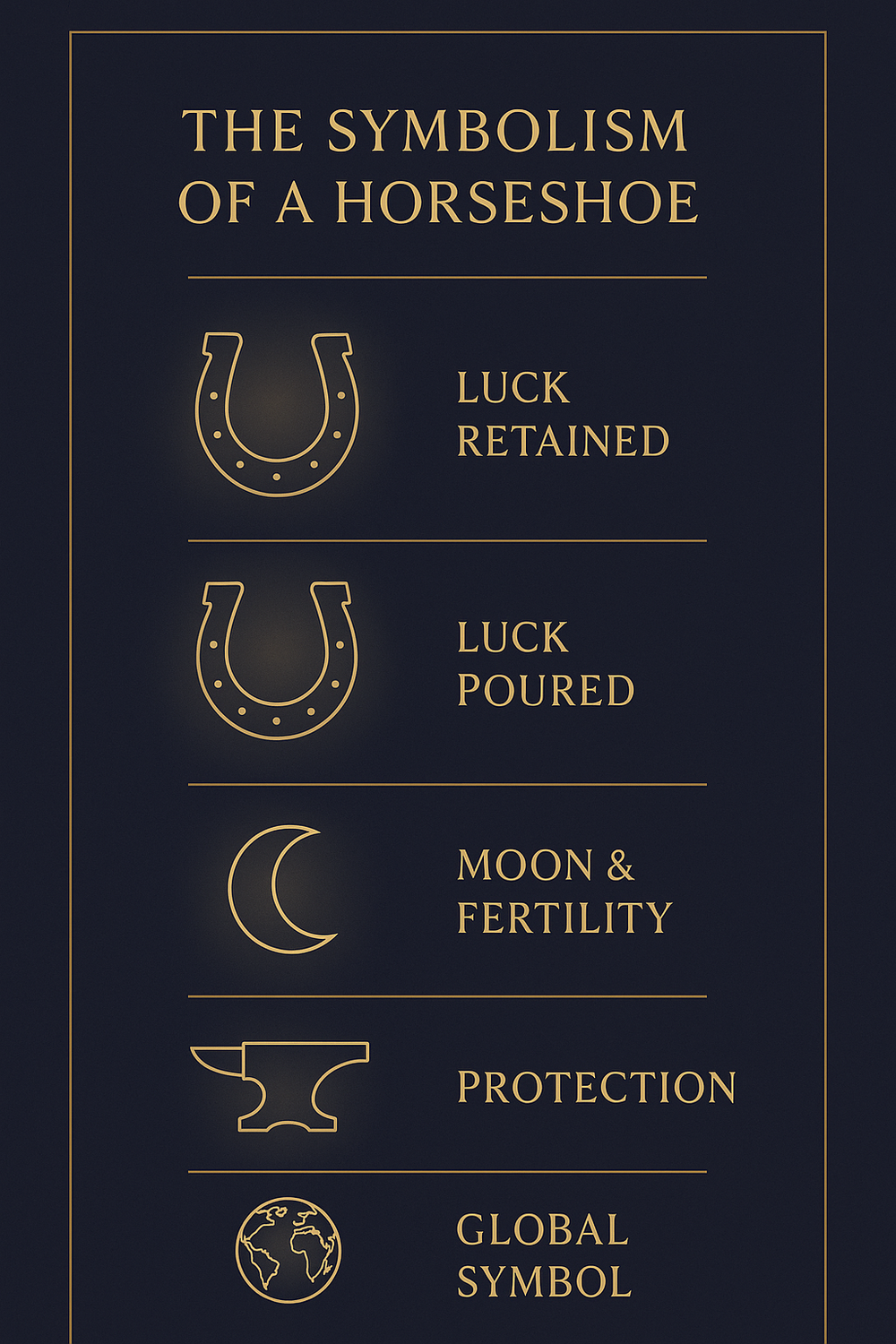
Symbolic meaning of the orientation of horseshoe also influences. When hung with ends facing up on both sides (making a ‘U’), it is believed to gather luck and retain it from spilling over. On the other hand, if it is hung with the ends pointing down then it is said to pour its luck unto those who pass under.
The practice of nailing horseshoes above doorways is a longstanding European tradition, documented from the medieval period onward, though its ultimate origins are debated among historians. In historical folklore, it was iron itself—not horses—that was believed to repel witches and evil spirits, and this belief in 'cold iron' is what made horseshoes popular witchcraft deterrents; horses, meanwhile, were more often described as victims that witches supposedly rode or harried at night.
One of the most searched horseshoe questions is whether it should hang with the ends pointing up or down. Both orientations are considered lucky, but the folklore behind each is slightly different, and the "correct" direction often comes down to regional tradition and personal preference.
| Orientation | Meaning |
|---|---|
| Ends Up (U-shape) | Believed to collect and hold luck like a cup, preventing good fortune from spilling out of the home. |
| Ends Down | Believed to pour luck downward and outward, blessing everyone who passes beneath it. |
Ultimately, neither position is considered "wrong." Many households simply choose the orientation that best matches the version of luck they hope to invite — retained luck for the home, or shared luck for visitors and passersby.
Spiritually, the horseshoe makes a powerful protective sign. It contains iron which is said to push away the malevolent spirits and energies. Iron is a spiritual grounding metal in many beliefs and stands for strength and resilience thus making the horseshoe a shield from all negativity. Much like the hamsa hand, another ancient amulet believed to guard against harmful energy, the horseshoe functions as a talisman meant to be displayed rather than hidden away.
What further connects it to spirituality is its shape of a crescent as the moon in crescent has been an important spiritual symbol in many practices signifying cycles, femininity and the waxing and waning of energies.
| Element | Spiritual Symbolism |
|---|---|
| Iron | Grounding, strength, and repelling of negative or malevolent forces. |
| Crescent Shape | Lunar cycles, femininity, renewal, and the ebb and flow of energy. |
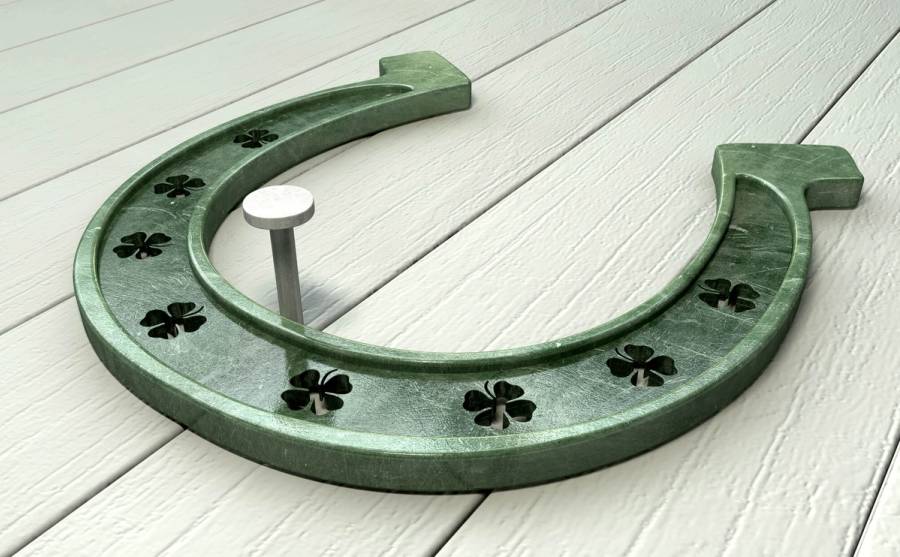
The horseshoe was a lucky charm equivocal in many cultures. Saint Dunstan was a 10th-century Archbishop of Canterbury who is said to have worked as a blacksmith, and one popular legend credits the tale of his encounter with the Devil as a reputed origin of the horseshoe's luck association, though the belief in lucky horseshoes likely predates and draws on older traditions as well. Legend has it that the devil came to Dunstan and asked him to shoe his foot. Instead, Dunstan continued nailing another shoe onto the devil’s foot, causing him much pain. Dunstan agreed to remove it only after the devil promised never to enter a place where a horseshoe is hung.
Thus came into being the tradition of keeping a horseshoe hung over the entrance of a house, signifying that it kept the devil himself, and consequently all evil away. The horseshoe therefore has often been regarded as an amulet that brings good luck and guards against ill luck or misfortune, much in the way an anchor symbolizes steadfast strength and safe harbor in maritime folklore.
The horseshoe is a popular tattoo choice precisely because its meaning is instantly recognizable: luck, protection, and resilience. People often choose a horseshoe tattoo to commemorate overcoming hardship, to carry a personal talisman permanently, or simply as a nod to family heritage tied to horses, farming, or blacksmithing traditions.
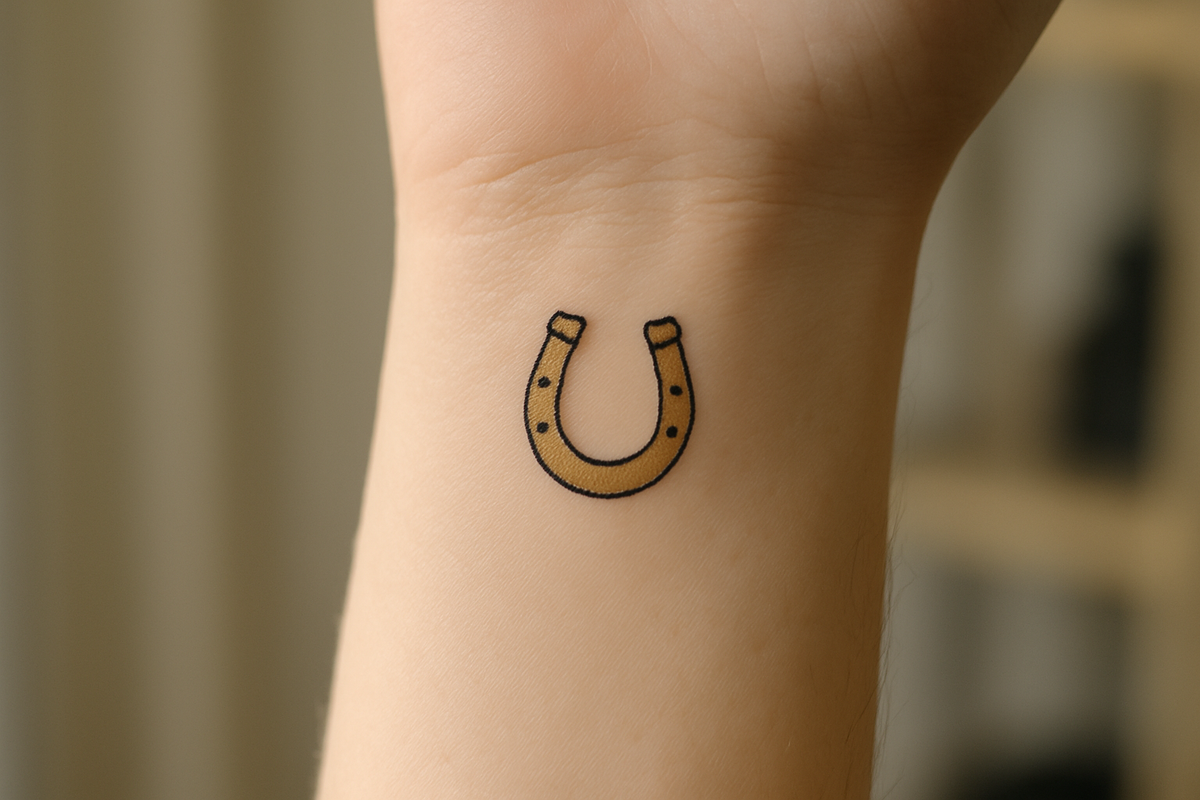
Placement and orientation matter to many people getting a horseshoe tattoo. Some prefer the ends-up position, symbolizing that they are "holding onto" their luck, while others choose ends-down to represent generosity — sharing good fortune with everyone around them. It's also common to see the horseshoe paired with other protective symbols, such as an evil eye or four-leaf clover, to layer meaning and amplify the design's symbolic weight.
The horseshoe, today being one of the most universally known symbols in many parts of the world had a historical mosaic passing through different epochs and civilizations. Its definition merely, and its symbolism itself, having indeed changed over time signaling so much regarding how it was able to prevail despite the several civilizational epochs.
| Time Period | Significance |
|---|---|
| Ancient Europe & Celtic Regions | What iron was made to be horseshoes with was to keep the dwelling away from evil spirits. The crescent shape in itself was something that was venerated due to it being a representation of the moon and its deities. |
| 10th Century | Legend of Saint Dunstan arose, connecting the horseshoe to devil protection and strengthening its status as a talisman of good luck. |
| Renaissance Era | Artists and scholars began incorporating the horseshoe in their work reflecting its magnitude and culture-related beliefs of the time. |
The horseshoe symbolism transited the ages and adapted to changing environments, much like other enduring protective symbols that continue to resurface in new forms. The core essence remained preserved inside the horseshoe but many a new interpretation and uses of it came into play that made it versatile and enduring symbol.
This universal appeal is evidenced in its presence across all the diverse cultures; the horseshoe is to be found in each, each one imbued with distinct meanings and uses.
| Region | Common Tradition |
|---|---|
| Ireland | Brides carry horseshoe charms for a fortunate marriage. |
| North America | Displayed above doorways and barns as a rural good-luck emblem. |
| Asia | Given as housewarming gifts symbolizing prosperity. |
In some cultures, the belief about finding a horseshoe has developed to needing the open end of the shoe to be facing the finder. The horseshoe acts as a cup to collect and contain good fortune luck.
Despite the various interpretations, a common thread runs through all cultures: the faith in the horseshoe’s ability to bring good fortune and ward off the malicious. This shared inclination underlines the horseshoe as being universally resonant to all people that it bridges cultural gaps.
Although there is no direct physical appearance of the horseshoe in biblical books, its symbolism has been interpreted with a Christian lens, drawing connections to biblical teachings and beliefs, much like other Catholic symbols that carry meaning beyond their literal scriptural mention.
| Aspect | Biblical Interpretation |
|---|---|
| Material | Iron, as the main composition of horseshoes, is traditionally associated with strength in the bible. In a spiritual context, it is said to serve as a repellent to evil beings thus lining up perfectly well to the beliefs that hostile powers cannot withstand the touch of iron. |
| Shape | The believers open their arms to symbolize the U-shape of the horseshoe indicating the readiness to receive grace, blessings and protection from God. |
| Protection | From this passage, biblical teachings emphasize the nature of God’s protection over believers and also the way the horseshoe is believed to protect. The horseshoe could therefore act as a reminder of the divine protection. |
Such interpretations, although not overtly provided for in biblical texts, lend a further meaning to the symbol of the horseshoe in light of Christianity. It speaks to the symbolic character of all things and how it is that symbols resonate with a wide variety of belief systems given their essentially adaptable character.
A single horseshoe, in and of itself, has centuries of reputation as a good luck charm. The double horseshoe symbol takes two horseshoes joined at the ends. It is a symbol of double luck, doubled protection and doubled prosperity. It is often affixed in connection with successful partnerships in business or personal life due to its connection as a symbol for a solid union blessed with good fortune, similar to how a Claddagh ring represents loyalty, love, and lasting partnership.
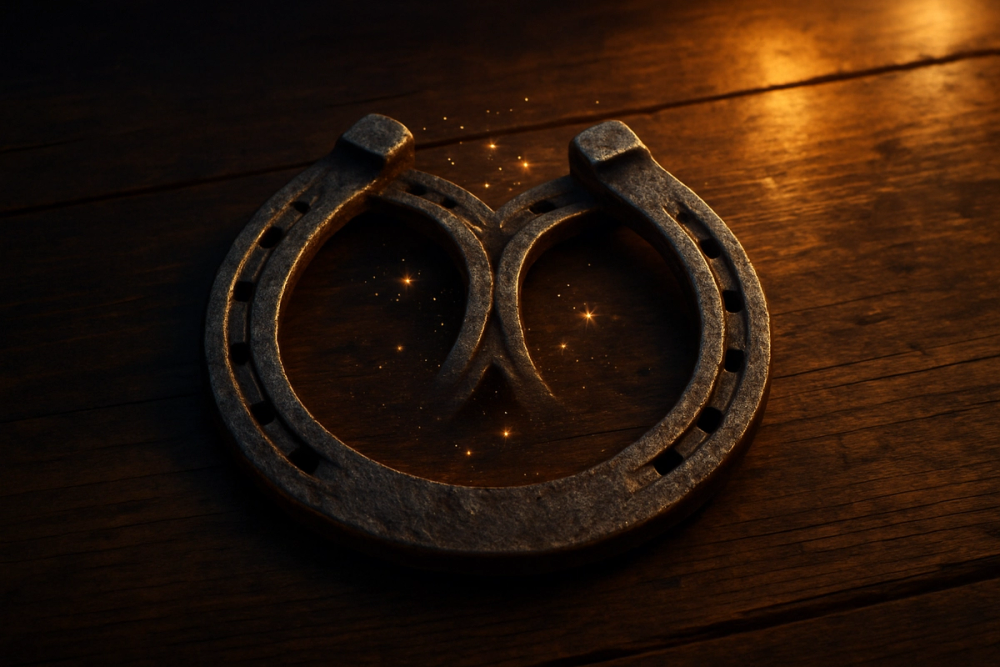
Like any symbol, the horseshoe can have different meanings given cultural, personal, or conditional context one using it in. Still, the central theme applies to its large functions: as an emblem for good luck, protecting and giving strength to something, representing through space and time and often does not differ among countries.
It has always been said that dreams are the windows of our subconscious, and these dreams may hold great meanings when motives like the horseshoe are being integrated within them. The horseshoe in a dream may talk about one’s innermost desires, fears, or hopes, much as a dream catcher is believed to filter and interpret the messages that arrive through sleep.
When horseshoe graces our dreams, the context seems to be important as well. Is it shiny and new or old and rusted? Is it alone or with other symbols in a set-up? These nuances could then provide additional insights.
Although dream interpretations can be used as a guide, it is essential to remember absolute importance of one’s personal feelings. What does the representation of this horseshoe mean personally to you? Does it evoke feeling of the past glory time, little hope or maybe just nonchalance? Reflecting on these emotions might give a more personal understanding of the dream message.
If you’re fascinated by the appearance of a horseshoe in your dream and would like further clarification, then you could try maintaining a dream journal. Keeping record of your dreams and the feelings they elicit might help you make sense of them over time and this could be the guide that will tell you that life’s journey is one best undertaken with confidence and purpose.
Whether viewed as a simple charm for good luck, a guardian talisman warding off evil, or a spiritual symbol with deep layers of meaning, the horseshoe holds an unique place in human culture. It is puzzling or rather endurable symbolism, which bridged the banality and the spiritual, the antiquity and now; thus to say, it brings to life the universal appeal of the horseshoe. However one may interpret that symbol though, but it definitely carries a message of optimism, strength, in light of its persistent positive spirit.
The horseshoe is considered a lucky charm largely because of its iron composition and crescent shape. Iron was regarded as a potent metal that repelled evil spirits, especially in European and Celtic cultures, while the crescent shape was associated with moon goddesses and symbols of fertility and prosperity. Over time these two beliefs merged into the general idea that a horseshoe attracts good luck while repelling evil.
When the evil eye symbol is combined with a horseshoe, the two amulets are believed to reinforce each other's protective power. The horseshoe wards off general bad luck and invites good fortune, while the evil eye specifically guards against negative energy caused by envy or malicious intent. Together they form a potent talisman offering both general and targeted protection.
Saint Dunstan, a blacksmith who became Archbishop of Canterbury, is central to a popular legend in which the devil asked him to shoe his foot. Dunstan instead nailed the shoe painfully to the devil's foot and only removed it after the devil swore never to enter a home displaying a horseshoe. This legend reinforced the belief that a horseshoe hung over a doorway protects the household from evil.
A horseshoe tattoo typically symbolizes luck, protection, and personal resilience, often chosen to mark overcoming a difficult period in life. The orientation inked — ends up or ends down — can carry its own meaning, with "up" suggesting retained luck and "down" suggesting shared good fortune. Many people also pair it with other protective symbols, such as an evil eye or clover, to deepen its meaning.
According to folklore, a purchased horseshoe is not considered unlucky, but it is generally seen as less potent than one found unexpectedly. A found horseshoe, especially with its open end facing the finder, is thought to represent a spontaneous gift of fortune rather than a deliberate acquisition. Still, a bought horseshoe can absolutely serve as a meaningful symbol of protection and luck when displayed with intention.
Iron's reputation as a protective material dates back centuries, when many cultures believed it repelled evil spirits and supernatural forces. It was the material of choice for tools, amulets, and weapons due to its strength and durability, qualities that were later extended into spiritual symbolism. This is why iron objects like horseshoes came to be viewed as powerful talismans against negativity.
Symbols for Brotherhood Welcome, dear readers, to a journey where we explore the profound depth and unity encapsulated in various …

Discover 49+ powerful self-love symbols — crystals, animals, flowers, and spiritual icons — and what each one means for building s…
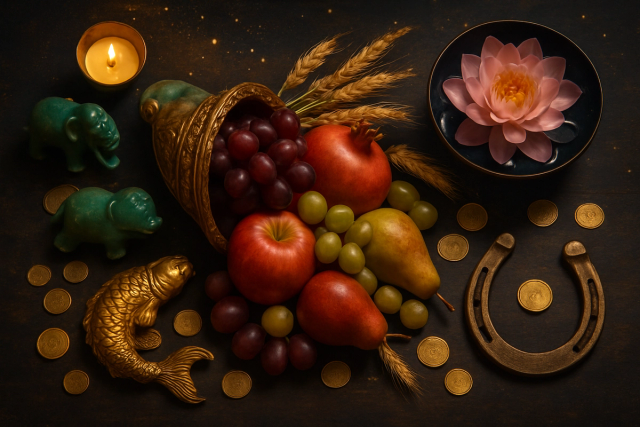
Discover the meaning behind cornucopias, koi fish, elephants and more — timeless symbols of abundance and prosperity from cultures…