
General
Puma Symbolism: Spiritual Meaning, Totem & Dream Guide
What does a puma symbolize? Discover the spiritual meaning of the puma/cougar as a totem, guardian spirit, dream sign, and symbol …
 KnowMastery
An hourglass symbolizes the passage of time, the certainty of death (memento mori), and the balance between opposing forces such as life and death, past and future. Its two glass chambers, connected by a narrow neck, show sand falling steadily from one side to the other — a visual reminder that every moment is finite and cannot be reversed. Beyond mortality, the hourglass also represents patience, spiritual renewal, and the idea that one phase of life must end before another can begin. This is why it appears everywhere from medieval tombstones to modern tattoos, tarot decks, and productivity logos.
Quick Answer:
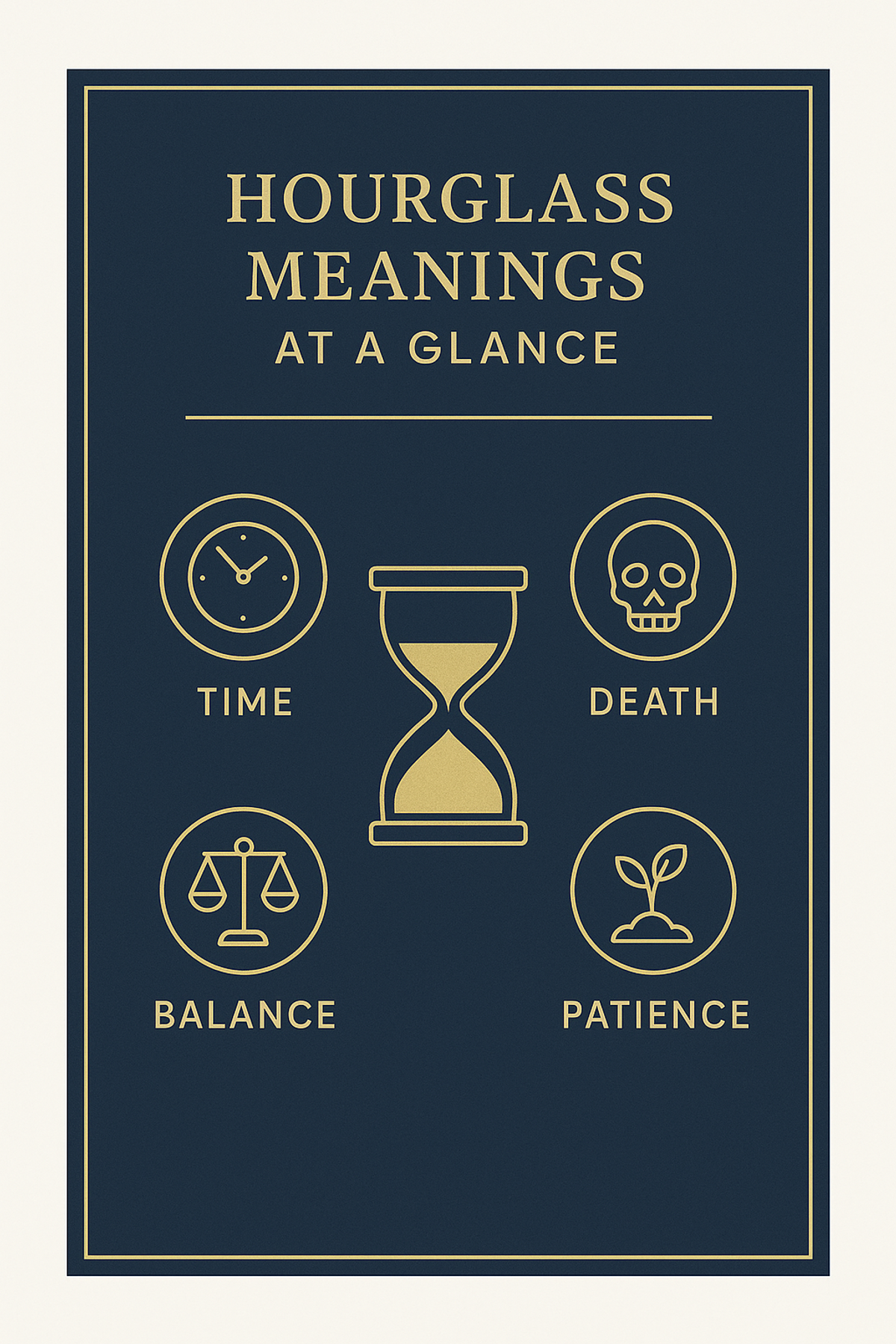
The hourglass began as a practical timekeeping tool before evolving into one of history's most recognizable symbols of human existence.
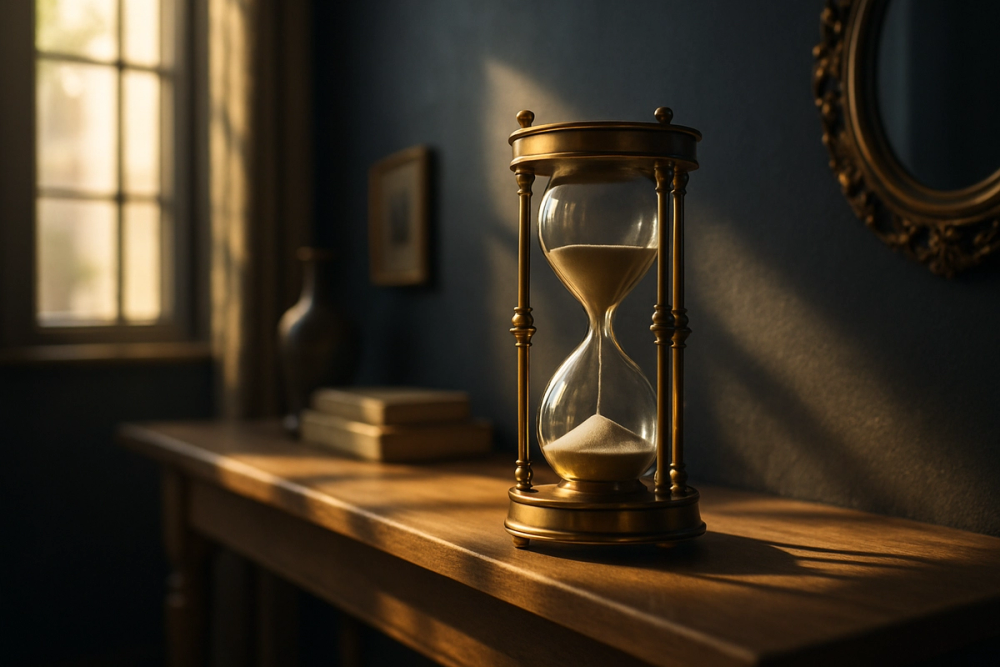
The exact origin of the hourglass is uncertain, but historians trace it to Europe as early as the 8th century, likely developed as a portable alternative to the water clock. Medieval sailors used the hourglass at sea from the 14th century onward, valuing it because, unlike water clocks, its sand flow was not thrown off by the rocking of a ship. Its portability and reliability made it one of the most important timekeeping innovations of its era.
The hourglass became established as a memento mori symbol of mortality sometime during the medieval period, with its use flourishing especially in the vanitas art of 17th-century Holland. It frequently appeared in medieval art alongside scythes and skulls, reinforcing its role as a memento mori — Latin for "remember death." This pairing cemented the hourglass as a lasting emblem of life's impermanence in Western art and culture.
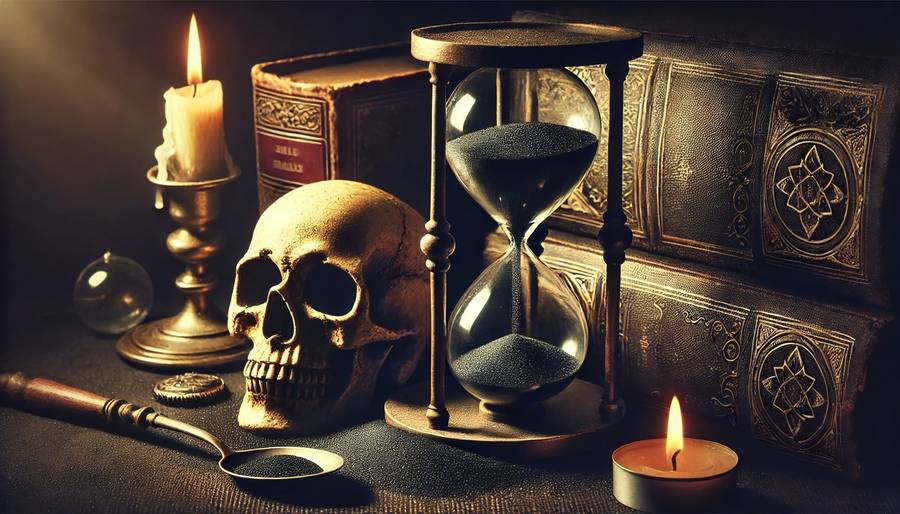
During the Renaissance, artists and thinkers reframed the hourglass as a philosophical emblem rather than a purely religious one. It came to represent not only the inevitability of death but also the balance of life's dualities — beginnings and endings, action and stillness, chaos and order.
The hourglass is far from a single-note symbol. Different cultures and eras have layered their own meanings onto its simple shape.
The most universal reading of the hourglass is its use as a marker of time. The flowing sand serves as a quiet warning to cherish each moment, since it cannot be paused or reclaimed once it has passed.
The hourglass's two chambers, joined by a narrow neck, form a natural metaphor for opposing forces held in tension — living and dying, past and future, the material and the spiritual.
In many spiritual traditions, the hourglass represents cyclical renewal. As sand empties from the upper chamber, it marks the close of one stage of life and the start of another.
While the hourglass itself is a Western invention, its message resonates with Eastern philosophy. Buddhist teachings on impermanence and mindfulness echo the same lesson the hourglass conveys visually: nothing lasts, and that is precisely why the present moment matters.
The hourglass itself did not exist in Ancient Egypt, which instead used water clocks (clepsydras) to measure time, and cyclical renewal centered on Ma'at was a central feature of Egyptian belief. Egyptians viewed time as a repeating loop in which life, death, and rebirth were intertwined, a worldview closely connected to their ideas about the cycles of life, death, and rebirth.
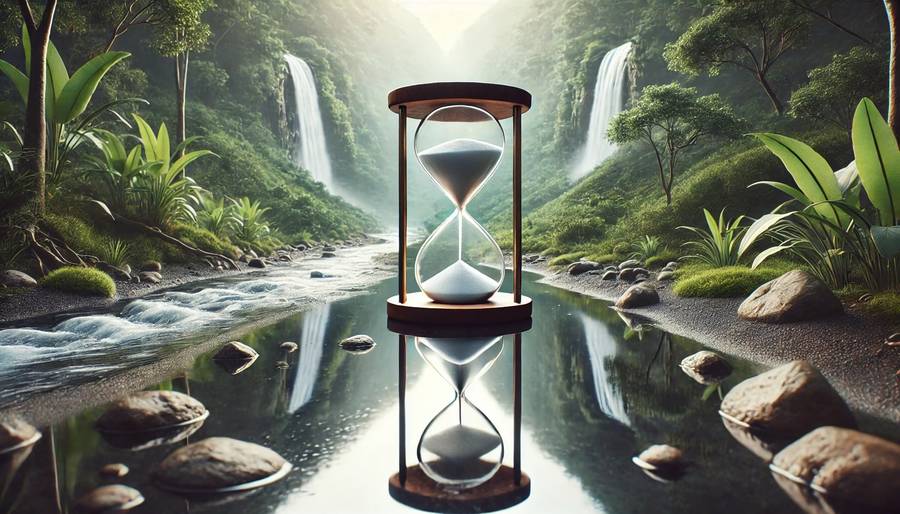
Many indigenous cultures place strong emphasis on humanity's connection to natural cycles. For some communities, hourglass-like imagery reflects seasonal shifts and lunar patterns, reminding people that nature's rhythms follow their own timing and deserve respect rather than rushing.
From medieval times through the Renaissance, the hourglass appeared frequently in European heraldry and on family crests. In this context it served as a personal memento mori: a reminder to nobility that their days, like anyone else's, were numbered, and that legacy mattered more than the passage of time itself.
Today the hourglass has become a genuinely global symbol, used everywhere from workplace productivity tools to mindfulness apps. Its ability to express something profound in a simple, instantly readable shape keeps it relevant across cultures and industries.
Beyond history and culture, the hourglass carries deep meaning for those exploring spiritual growth and self-reflection.
Dreaming about an hourglass often points to an urgent matter that needs attention or signals an approaching change in the dreamer's life. It can also reflect anxiety about running out of time, gently urging the dreamer to act rather than delay.
In tarot symbolism, the hourglass represents patience, divine timing, and the natural cycles of life. It suggests that certain outcomes cannot be rushed and encourages trust in the timing of events beyond one's control.
Watching sand fall through an hourglass is a simple but effective mindfulness exercise. The steady, visible motion helps practitioners stay anchored in the present moment and let go of distraction.
The hourglass's function — moving sand from one chamber to another — mirrors spiritual beliefs about rebirth and renewal. This connects closely to memento mori traditions, where symbols of mortality are used not to inspire fear but to encourage a more meaningful, intentional life.
The hourglass's symmetrical form carries its own spiritual weight. The two chambers represent dualities — life and death, masculine and feminine, spiritual and material — while the narrow neck acts as a bridge between them. In some New Age or crystal-healing traditions, the hourglass's narrow neck is imaginatively likened to the throat chakra, though this connection is a matter of belief rather than a documented or verified practice.
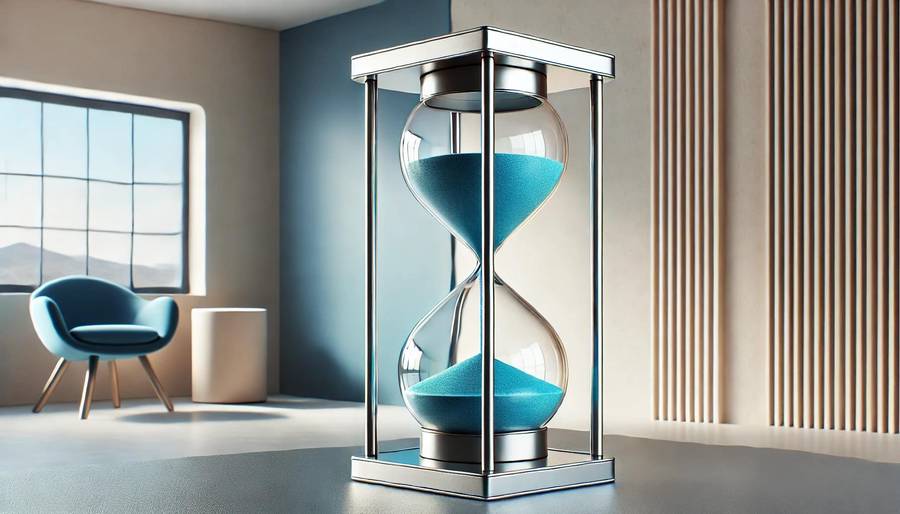
Alongside its historical and spiritual weight, the hourglass has found a lasting home in modern art, design, and entertainment.
The hourglass tattoo is one of the most popular ways people carry this symbol with them permanently, and it's easy to see why: it packs mortality, balance, and the passage of time into a single striking image.
Common pairings and their meanings include:
Placement also shapes meaning: forearm and wrist designs keep the symbol visible as a daily reminder, while ribs or chest placements are often chosen for more private, reflective significance. Larger back or thigh pieces give artists room to combine the hourglass with detailed floral or skeletal artwork for a fuller narrative.
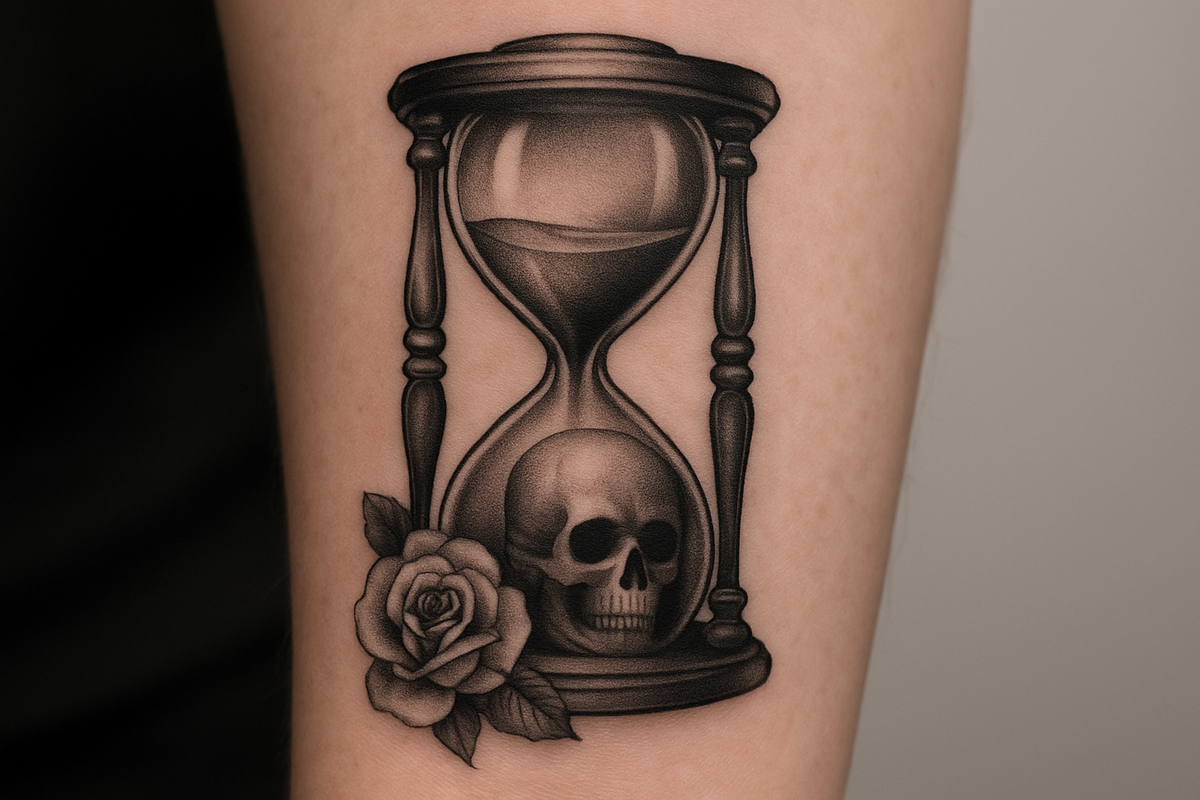
The hourglass has also found a place in modern interior design, valued for both function and aesthetics. Its clean, symmetrical shape pairs naturally with minimalist and vintage styles alike, making it a recurring favorite among designers.
Movies and shows frequently use the hourglass as a visual shorthand for urgency or an approaching deadline. The Wicked Witch's hourglass in The Wizard of Oz counts down the time before Dorothy's threatened death, while in Doctor Strange, time is instead symbolized by the Eye of Agamotto, the amulet housing the Time Stone, rather than a literal hourglass. In video games such as The Legend of Zelda and Prince of Persia, hourglasses often appear as tools for slowing or reversing time, reinforcing the same symbolic weight in interactive form.
Many brands use hourglass imagery in logos to signal reliability, longevity, and timeless craftsmanship — luxury watchmakers in particular lean on it to emphasize precision. On platforms like Instagram and Pinterest, the hourglass's clean, symmetrical design also thrives as a visual pairing for quotes about patience, mindfulness, and the value of time.
Beyond symbolism, the hourglass offers a few practical lessons that translate easily into daily life.
Watching sand pass through an hourglass is a simple way to practice staying present. Try using one during meditation or as a visual timer for focused work sessions.
The hourglass's steady, unhurried flow is a reminder that meaningful progress rarely happens all at once. Consistent effort, applied over time, tends to outperform rushed attempts.
Just as sand must fully drain from one chamber before the cycle can restart, personal growth often requires letting go of one phase before entering the next — a steadiness reflected in symbols like the anchor's meaning of stability through change.
The two connected chambers of the hourglass are a simple visual cue to check whether priorities — work and rest, ambition and contentment — are staying in balance.
| Theme | Symbolism | Where You'll See It |
|---|---|---|
| Time and Mortality | Time is limited, and so is life. | Tattoos, memento mori art, gravestones |
| Balance and Duality | Interaction of opposing forces. | Heraldry, tarot cards, jewelry |
| Spiritual Renewal | Transitions and impermanence. | Meditation tools, spiritual art |
| Patience | Trust in the timing of life. | Tarot decks, mindfulness apps |
| Precision and Legacy | Reliability across time. | Logos, branding, luxury watches |
An hourglass tattoo typically represents the passage of time, mortality, and balance. It's often paired with roses, skulls, or wings to add a more personal or specific meaning, such as honoring a loved one or marking a turning point in life.
The hourglass isn't tied to a single religion, but it appears widely in religious and spiritual art as a memento mori, or reminder of death. Christian art in particular has used it alongside skulls and scythes to encourage reflection on mortality and purposeful living.
The hourglass itself isn't mentioned in scripture, since it wasn't invented until centuries after biblical texts were written. However, Christian art has long used the hourglass as a memento mori symbol alongside biblical themes of life's brevity, such as verses comparing human life to grass that withers or a passing shadow.
The hourglass became linked to death in medieval Europe, where it was paired with skulls and scythes in art as a memento mori — a visual reminder that time, and life, are finite. Watching sand steadily disappear from one chamber makes the passage toward death feel tangible and immediate rather than abstract.
Spiritually, the hourglass represents transformation, renewal, and trust in natural timing. As sand moves from one chamber to another, it mirrors the idea that one phase of life must end before a new one can begin.
Dreaming about an hourglass often signals that something urgent needs attention or that a significant change is approaching. It can also reflect anxiety about time running out, nudging the dreamer to take action rather than delay.
In tarot symbolism, the hourglass represents patience, divine timing, and the natural cycles of life. It's a reminder that some outcomes can't be rushed and encourages trusting the process rather than forcing results.
The hourglass endures because its message is universal: time moves forward, balance matters, and every ending makes room for a new beginning. From medieval memento mori art to modern tattoos and mindfulness tools, its meaning has adapted without losing its core truth. Understanding its symbolism is less about the object itself and more about the reminder it offers — to notice the moment while it's still passing through the glass.
What does a puma symbolize? Discover the spiritual meaning of the puma/cougar as a totem, guardian spirit, dream sign, and symbol …

Throughout history, warriors have shaped the destiny of nations, led revolutions, and embodied ideals of bravery, skill, and honor…

Meet 15 legendary wizards — from mythological figures like Merlin, Circe & Baba Yaga to fantasy icons like Gandalf and Dumbledore.