Greek Mythology
Orpheus and Eurydice: The Myth, Meaning & Symbolism
The full story of Orpheus and Eurydice, its origins, symbolism, and why the tragic backward glance still speaks to grief and love …
 KnowMastery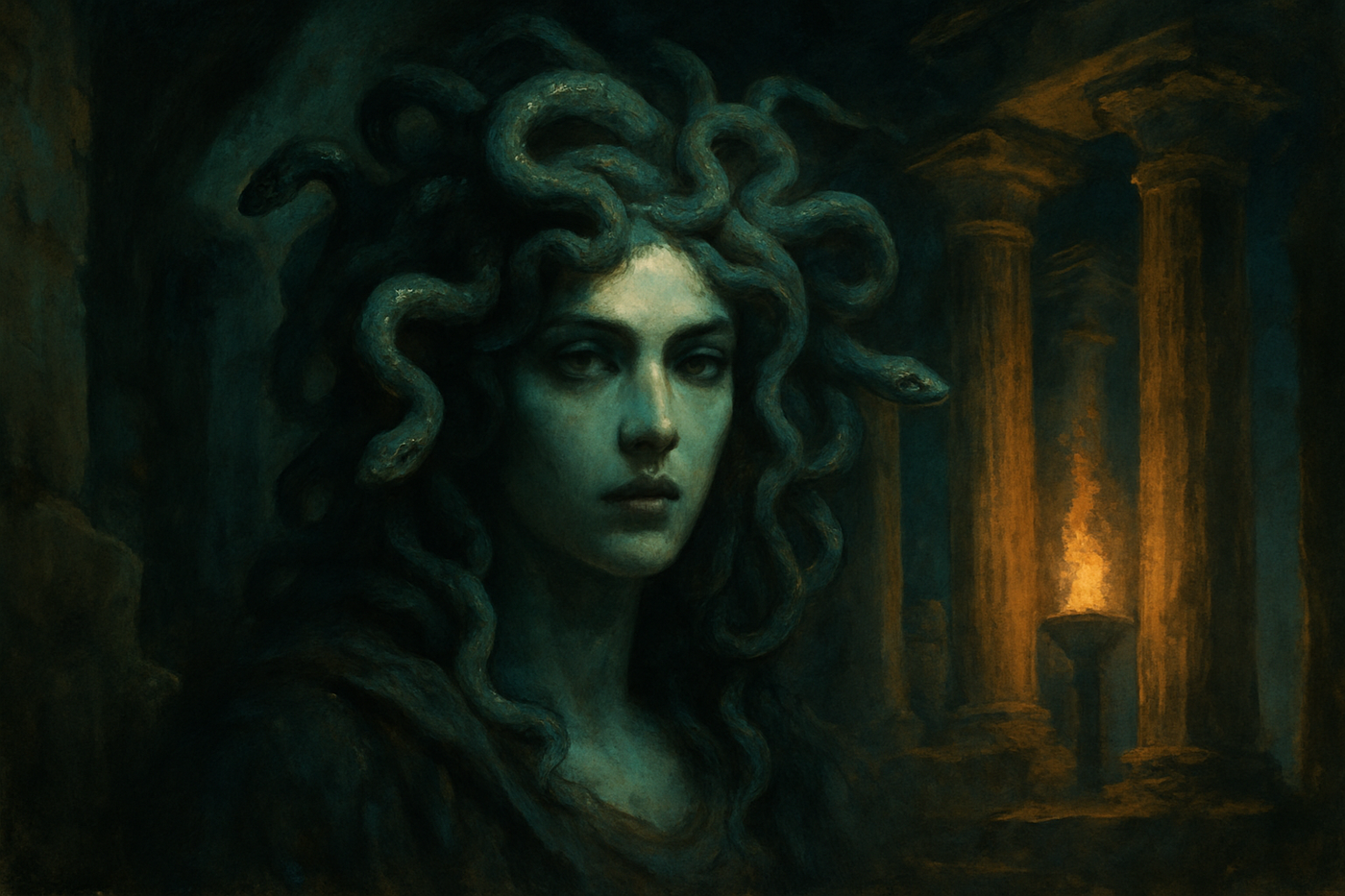
Medusa is the most famous of the three Gorgons in Greek mythology — a woman with living snakes for hair whose gaze turned onlookers to stone. Originally a beautiful priestess of Athena, she was cursed after being assaulted by Poseidon inside Athena's own temple, transformed into a monster as punishment for a crime committed against her. Symbolically, Medusa represents protection, righteous female rage, the danger of unchecked power, and the paradox of a victim recast as a threat.
Her face has guarded doorways, shields, and temple walls for nearly three thousand years. Long before she became a warning stamped onto ancient armor, she was a woman — young, devout, and beautiful — whose story was quietly rewritten by the men and gods around her.
That tension between beauty and horror, victim and monster, is exactly why Medusa still haunts us. She is not simply a creature to be slain by a hero; she is a mirror held up to power, blame, and the price women have historically paid for surviving violence.
According to the poet Hesiod, writing around 700 BCE, Medusa was one of three Gorgon sisters — Medusa, Stheno, and Euryale — daughters of the primordial sea deities Phorcys and Ceto. Unlike her immortal sisters, Medusa was mortal, which is precisely why the hero Perseus was sent to kill her: she could actually be defeated.
The more widely known version comes from the Roman poet Ovid in his Metamorphoses, written around 8 CE. In this telling, Medusa was once a stunningly beautiful young priestess serving in Athena's temple, celebrated especially for her hair. Poseidon assaulted her inside the sacred temple, and Athena, enraged that her sanctuary had been defiled, punished Medusa rather than the god responsible — cursing her hair into venomous snakes and her gaze into a weapon that turned any living thing to stone.
Medusa was exiled to a remote island, where she lived in isolation until Perseus, son of Zeus, arrived on a mission from King Polydectes to bring back her head. Using a reflective bronze shield gifted by Athena to avoid her direct gaze, winged sandals from Hermes, and a helm of invisibility from Hades, Perseus beheaded her while she slept. From her severed neck sprang Pegasus, the winged horse, and Chrysaor, a golden warrior — both conceived with Poseidon before her transformation.
Medusa's image carries layered meaning that has shifted dramatically over the centuries. Understanding these layers is key to grasping why she remains one of the most reproduced figures in Greek mythology.
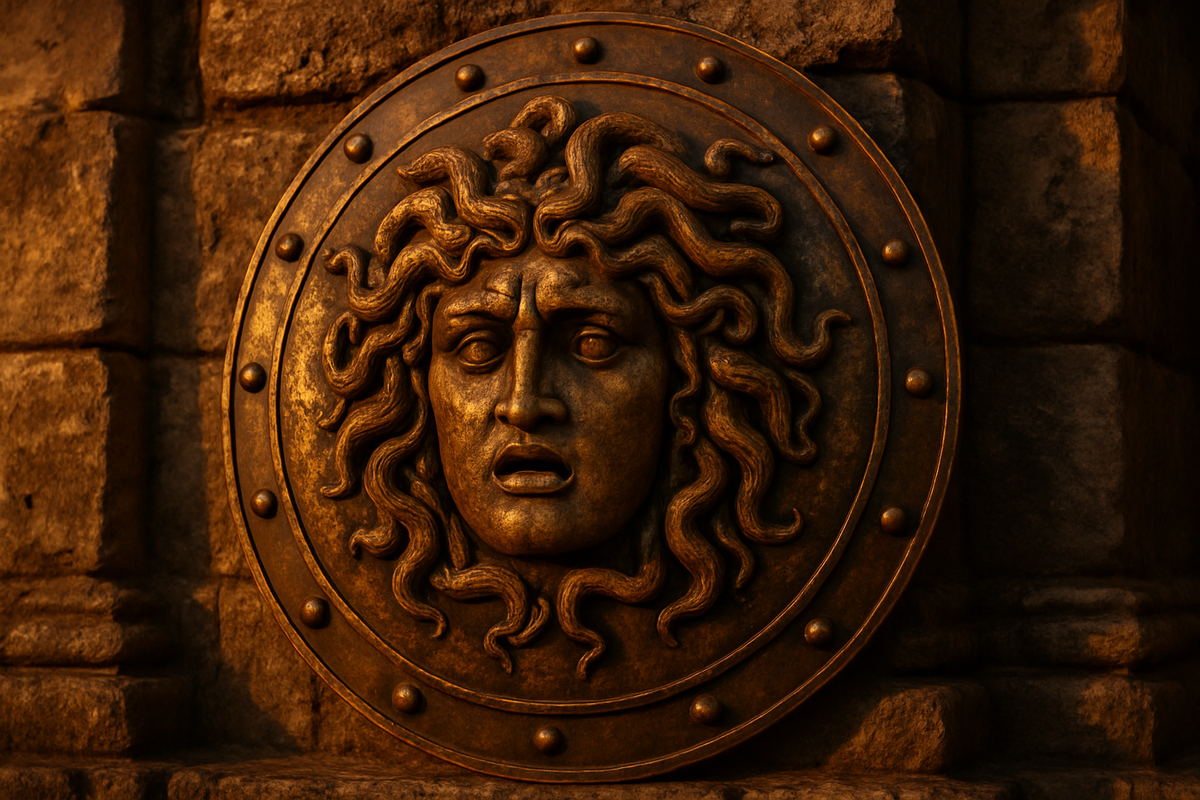
In ancient Greece, Medusa's severed head — known as the Gorgoneion — was mounted on shields, breastplates, temple pediments, and city walls. This wasn't decoration; it was functional magic. The Greeks believed her petrifying stare could be turned outward as a weapon against enemies, a concept called apotropaic symbolism — using a frightening image to ward off evil. Even Ares, god of war, and Athena herself wore the Gorgoneion on their armor.
Modern readers, particularly feminist scholars since the 1970s, have reframed Medusa as a survivor punished for the violence done to her. French theorist Hélène Cixous's 1975 essay "The Laugh of the Medusa" reclaimed her as a symbol of unsilenced female power rather than horror. In this reading, her snakes are not a curse but an armor of righteous fury — a woman who can no longer be looked at without consequence.
Sigmund Freud offered a very different lens in his short 1922 essay "Medusa's Head," published posthumously in 1940. He read her snake hair and petrifying gaze as symbols of castration anxiety — the shock of confronting something forbidden that freezes the viewer in place. Whether or not one accepts Freud's framework, it shows how the same image has been read as psychological terror by one era and reclaimed empowerment by another.
Medusa embodies duality: beauty and terror, victimhood and danger, death and creation, since Pegasus was born from her blood. She reminds us that trauma can transform a person into something the world fears, without that fear being deserved.
Medusa's meaning has never been fixed. Comparing eras shows how radically interpretation can shift around the same figure, all rooted in the wider world of Greek mythology.
| Era / Culture | Primary View of Medusa | Common Use |
|---|---|---|
| Archaic Greece (8th–6th c. BCE) | Terrifying protective demon | Gorgoneion on shields, pottery, temples |
| Classical & Hellenistic Greece | Tragic beauty cursed by the gods | Sculpture, coinage, jewelry |
| Roman Era (Ovid) | Victim of assault, punished unjustly | Literary retelling in Metamorphoses |
| Renaissance Europe | Chaos tamed by reason and virtue | Caravaggio's shield painting, Cellini's bronze statue |
| Modern Feminism (20th–21st c.) | Emblem of survivor strength and rage | Activist art, tattoos, fashion logos |
The Versace fashion house adopted Medusa's head as its logo in 1978, choosing her deliberately as a symbol of fatal fascination — something so beautiful it's dangerous to look away from. It's a direct callback to her apotropaic role in antiquity, repurposed for luxury branding.
Dreaming of Medusa or snake-haired figures often points to feelings of being watched, judged, or unfairly blamed. Common interpretations include:
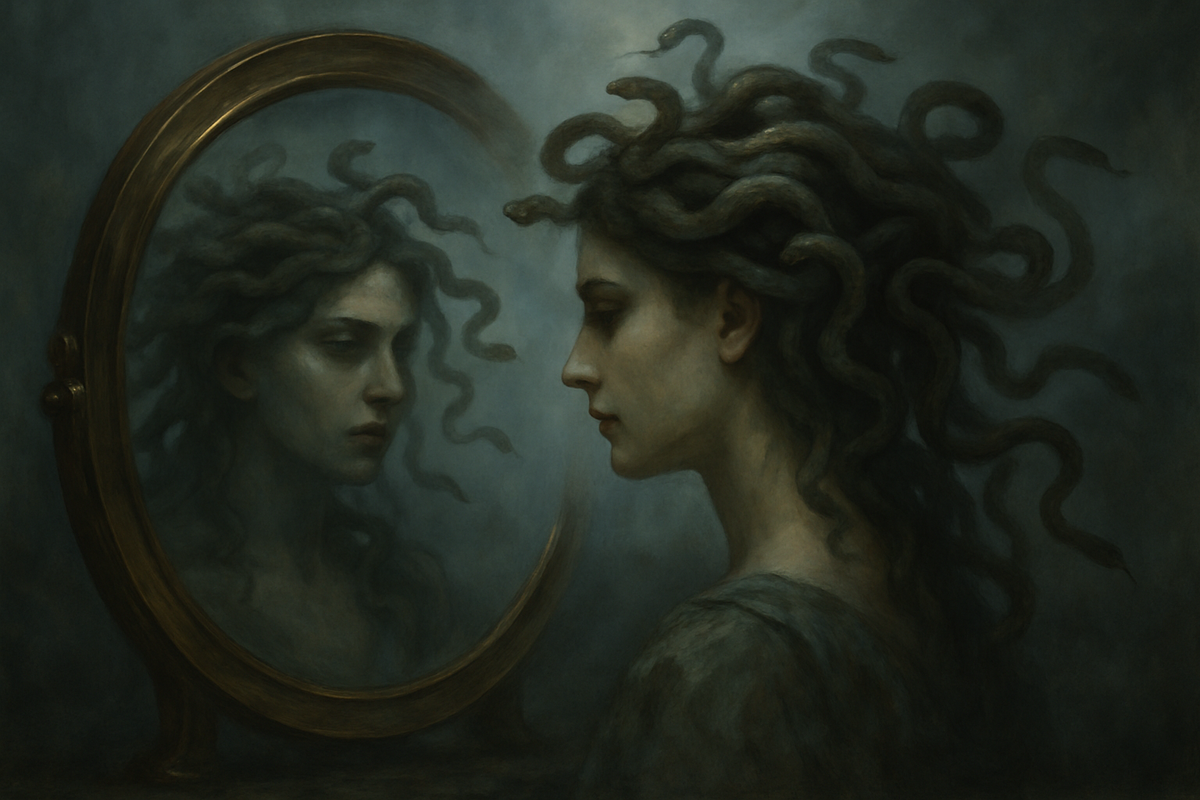
Jungian dream analysts often read Medusa as a "shadow" figure — a repressed, feared part of the self that, once faced consciously, as Perseus faced her through reflection rather than direct confrontation, can become a source of strength rather than terror.
Beyond mythology books, Medusa thrives in contemporary visual culture:
If Medusa's story resonates with you personally, here are grounded ways to work with her symbolism:
For readers exploring the wider pantheon behind her story, the overview of Greek gods, symbols, and meanings is a useful next stop.
In Ovid's version, Athena punished Medusa after Poseidon assaulted her inside Athena's own temple, viewing the act as a desecration of her sacred space. Rather than punishing Poseidon, a fellow Olympian, Athena directed her anger at the mortal victim, cursing Medusa's hair into snakes and her gaze into a petrifying weapon.
Today Medusa is widely read as a symbol of survivor strength, righteous female anger, and reclaimed power over one's body and story. She also retains her ancient role as a protective, apotropaic image meant to ward off harm, seen in everything from tattoos to fashion logos like Versace.
Dreaming of Medusa often reflects feeling frozen, judged, or punished unfairly, especially by an authority figure. It can also signal repressed anger or anxiety that needs to be faced indirectly, mirroring how Perseus defeated her using a reflective shield instead of direct confrontation.
Perseus avoided Medusa's deadly direct gaze by looking at her reflection in a polished bronze shield given to him by Athena. Using winged sandals and a helm of invisibility, he beheaded her while she slept, and from her blood sprang the winged horse Pegasus and the warrior Chrysaor.
Ancient sources present her mostly as a monster to be defeated, but Ovid's retelling makes clear she was assaulted and then punished for it, making her as much victim as villain. Most modern interpretations, especially since the 1970s, lean firmly toward reading her as a wronged woman rather than a true antagonist.
The full story of Orpheus and Eurydice, its origins, symbolism, and why the tragic backward glance still speaks to grief and love …

Discover Prometheus, the Titan who stole fire from Olympus for mankind — his myth, punishment, symbolism, and lessons for today.
Meet Nike, Greek goddess of victory: her parents, siblings, symbols, myths, and Roman name Victoria — explained clearly with facts…