Spiritual
Dream About Spiders Biting You: Spiritual Meaning Explained
What does it mean when a spider bites you in a dream? Here's the spiritual meaning, hidden fears, and what to do next.
 KnowMastery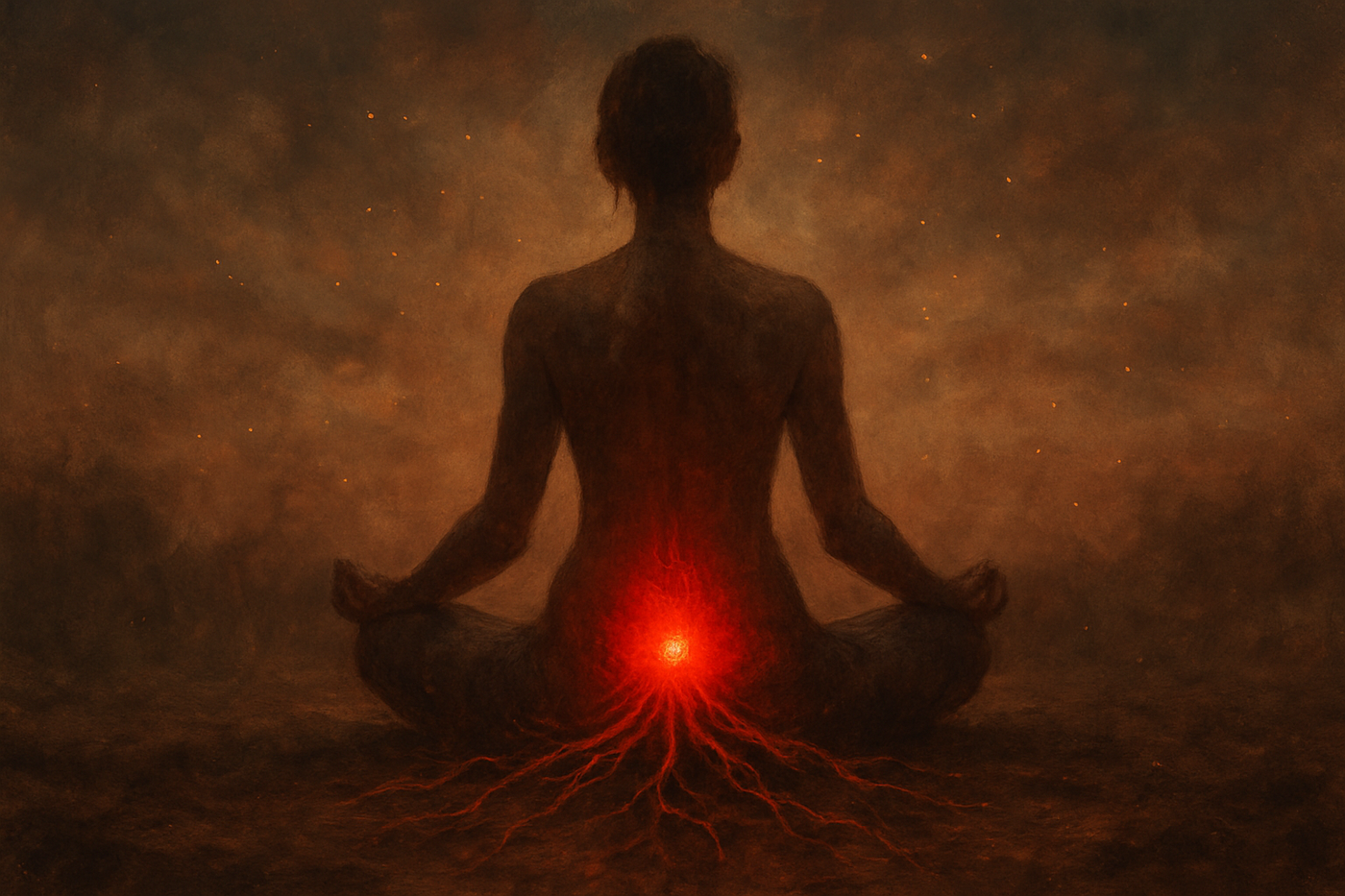
The root chakra, called Muladhara in Sanskrit, is the first of the seven main energy centers in the body, located at the base of the spine. It governs your sense of safety, stability, and belonging in the physical world. When it is balanced you feel grounded and secure; when it is blocked you may experience anxiety, financial fear, or a constant sense of being unsafe.
Think of the moment you step off a plane after a long flight and your feet finally touch solid ground. That small physical relief, the feeling of weight returning to your body, is what a healthy root chakra feels like on the inside every day.
Most people never think about this energy center until life shakes their sense of security: a job loss, a move to a new city, a relationship that ends without warning. Suddenly the ground doesn't feel steady anymore, and that instability often traces back to this exact point at the base of the spine.
Muladhara translates roughly to "root support" or "root foundation." In the traditional tantric model, it sits at the perineum, between the anus and the genitals, and is visualized as a four petaled lotus in deep red, with a yellow square at its center representing the earth element, prithvi. It is the densest and most physical of the chakras, tied directly to survival: food, shelter, safety, and the basic will to keep living.
Unlike the higher chakras, which deal with emotion, communication, or intuition, the root chakra deals with matter itself. It is the anchor point where spiritual energy meets the physical body and the earth. If you want the full picture of how it fits with the other six centers, the 7 Chakras: A Complete Beginner's Guide breaks down the entire system from base to crown.

Symbolism around the root chakra is consistent across most yogic and New Age sources, though the details shift slightly depending on the tradition. Here is a quick reference table.
| Attribute | Association |
|---|---|
| Sanskrit name | Muladhara |
| Location | Base of spine, perineum |
| Color | Deep red |
| Element | Earth |
| Seed sound (bija mantra) | LAM |
| Symbol | Four petaled lotus |
| Governing sense | Smell |
| Associated body parts | Legs, feet, spine, adrenal glands |
| Core themes | Safety, survival, stability, belonging |
The chakra system as we know it was formalized in medieval Hindu tantric texts, most notably the sixteenth century Shat-Chakra-Nirupana, written by the Bengali scholar Purnananda Swami. In this text, Muladhara is described as the seat of the coiled serpent goddess Kundalini, dormant at the base of the spine until awakened through yogic practice. Ganesha, the elephant headed god of new beginnings and obstacle removal, is traditionally associated with this chakra, since he represents the foundation everything else builds on.
The chakra concept reached the West largely through the Theosophical Society in the early twentieth century, particularly through the writings of Charles Webster Leadbeater. His 1927 book The Chakras reinterpreted the system for a Western audience and linked each center to glands in the endocrine system, placing the root chakra near the adrenal glands, which produce adrenaline and manage the body's stress response. A few years later, the psychologist Carl Jung explored the same territory in his 1932 seminar on Kundalini yoga, framing the root chakra in psychological terms as the stage of pure survival instinct, before ego or individual identity fully forms.
In Chinese Taoist practice, the lower dantian, sometimes translated as the elixir field, sits a few inches below the navel and serves a nearly identical function to Muladhara. Qigong and tai chi both begin with sinking the breath and attention into this point, since Taoist practitioners linked it to jing, the body's stored vital essence, and to the kidneys, which traditional Chinese medicine treats as the root of physical vitality. Scattered jing is said to cause fatigue and unfounded fear, the same imbalance yogic tradition assigns to a weak root chakra, even though the two systems developed independently of each other.
While not part of the chakra system, the Andean concept of Pachamama, the earth mother revered in Quechua and Aymara traditions across Peru and Bolivia, reflects a similar principle: that grounding in the physical earth is the source of all stability and abundance. Offerings to Pachamama before planting or building are, in spirit, the same gesture as grounding the root chakra: acknowledging that survival and security come from staying connected to the earth itself.
A blocked root chakra rarely announces itself directly. It shows up as a pattern of small, persistent problems that all trace back to a lack of felt safety.
An overactive root chakra shows a different pattern, since the person clings too tightly to control and physical security:
Because Muladhara governs safety and survival, it often surfaces in dream imagery tied to falling, being chased, losing your footing, or standing on unstable ground. Dreams of your house being invaded or destroyed, of losing your wallet or home, or of standing at the edge of a cliff commonly point to root chakra distress rather than a literal fear. Earthquake dreams, where the ground itself splits or shakes beneath you, point to the same distress, since they attack the literal foundation you stand on.
Snake imagery is especially significant here, since the dormant Kundalini energy is itself pictured as a serpent coiled at the base of the spine. A dream in which a snake appears calm and rooted in the earth can suggest the chakra is settling, while an aggressive or trapped snake often mirrors unresolved fear about safety. For a deeper look at what these images can mean, Dreams About Snakes: Spiritual & Psychological Meaning covers the symbolism in more detail.
Healing this chakra is less about mystical ritual and more about physically and emotionally re-establishing a sense of safety. The following practices are the most consistently recommended across yoga and energy work traditions.
Chanting the seed sound LAM during meditation is the traditional tantric method for activating this center. Alongside this, simple grounding affirmations can help: "I am safe," "I have what I need," or "My body is my home." Repeating these while both feet are flat on the floor, ideally outdoors on actual earth or grass, strengthens the effect.
Walking barefoot on grass or sand, cooking and eating root vegetables like carrots, beets, and potatoes, and keeping a stable daily routine all reinforce root chakra health. Even something as simple as paying bills on time or organizing your living space can shift the underlying sense of instability that keeps this chakra blocked. Deer symbolism is another common addition to grounding meditation, since the animal is traditionally linked to steadiness and alert calm rather than reactive fear. The deer's meaning across spiritual traditions covers this connection in more depth.
Numerology also touches on this theme: the number one represents new beginnings and independent foundation building, the same qualities linked to a grounded root chakra. Numerology Explained: Meaning of Numbers & Life Path Guide walks through how each number carries its own energetic signature, in case you want to take the pattern further.
Since a Muladhara imbalance often traces back to childhood instability, a chaotic household, or financial hardship that happened without warning, working with a therapist on somatic or trauma focused methods can do more long term good than any single crystal or pose. Grounding practices calm the nervous system in the moment, but naming the original source of the fear is usually what allows the chakra to stay open for good.
A blocked root chakra usually shows up as chronic anxiety, especially around money and security, along with physical symptoms like lower back pain or digestive trouble. It reflects a disrupted sense of safety in the physical world rather than any single event. The imbalance often traces back to an early experience of instability, such as a chaotic home or sudden financial loss.
When Muladhara is open you typically feel physically steady, financially secure regardless of your actual bank balance, and able to trust the basic stability of your life. You sleep well, feel comfortable in your body, and don't spiral into worst case scenarios during minor setbacks. Small disruptions, like a delayed paycheck or a change in plans, don't shake your baseline sense of safety.
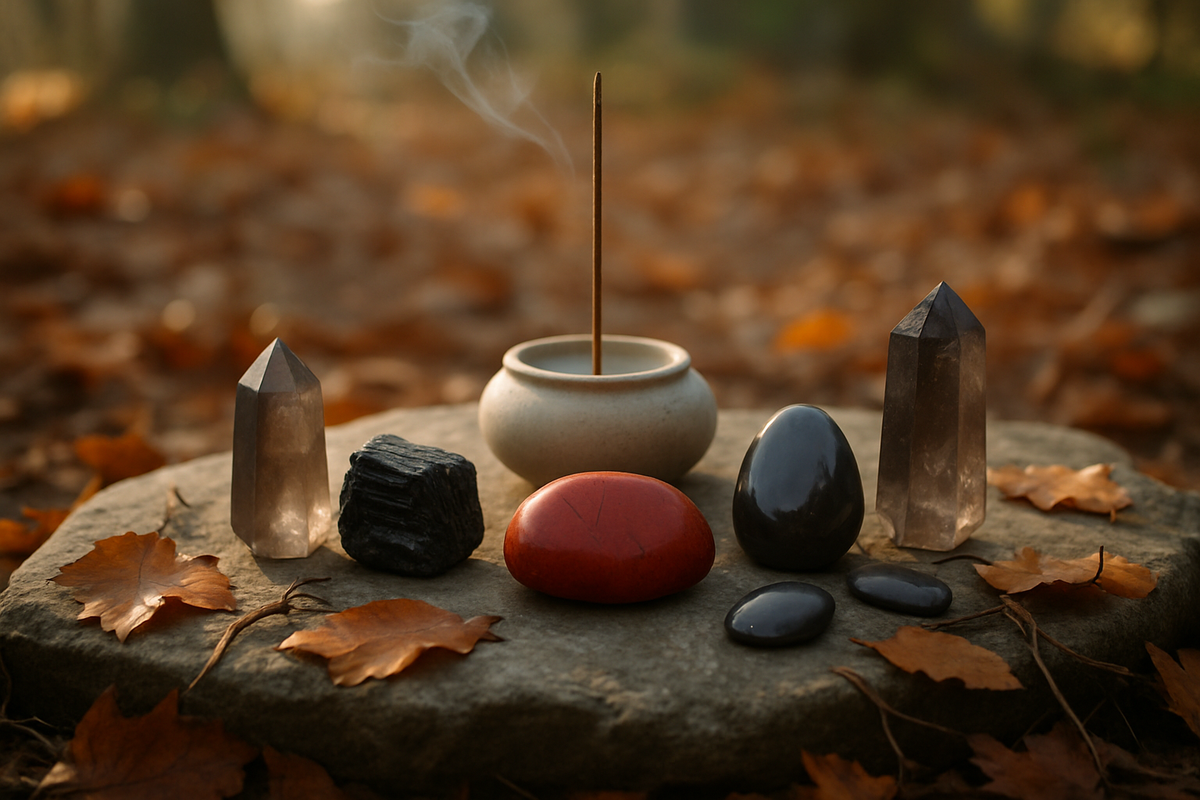
The root chakra is represented by deep red, matching its association with the earth element and physical vitality. Common crystals used for balancing it include red jasper, black tourmaline, hematite, and smoky quartz. Each is chosen for its weight and grounding quality rather than for any single fixed meaning.
Many people who work on grounding the root chakra report reduced anxiety, since the practices involved, walking barefoot, steady routines, and grounding meditation, directly calm the nervous system's stress response. It is not a replacement for professional mental health care, but it works well alongside it. Combining grounding practices with therapy tends to produce more lasting results than either approach used alone.