
Animal Symbolism
Hippo Symbolism: Spiritual Meaning, Totem & Dream Guide
What does a hippo symbolize spiritually? Discover its meaning as totem, dream sign, Egyptian goddess Taweret, and guardian of emot…
 KnowMastery
Seeing a spider almost always points to creativity, patience and the weaving of your own fate. Cultures from the Hopi Southwest to ancient Greece have read a spider's appearance in your home, path or dreams as a sign to pay attention to the choices you are making right now, since you are the one spinning the web of your future. It can also warn of tangled situations, hidden deception or a need to slow down and finish what you started.
Most people flinch first and think second when a spider drops down in front of them. That jolt of fear is real, but it is worth sitting with for a moment longer than usual.
Underneath the instinct to recoil is one of the oldest symbols humans have carried: an eight-legged architect that builds something out of nothing, waits without complaint, and catches exactly what it needs to survive. That patience is the part most people miss when they only see a creature to be swept away.
This guide walks through what a spider sighting can mean depending on where, when and how you encounter it, what different cultures have said about spiders for thousands of years, and what dreaming about them might be telling you.
At its root, the spider is a symbol of creation and fate. In Greek mythology, the weaver Arachne was turned into the first spider by the goddess Athena after a weaving contest went too far, and her name is still the root word for every arachnid alive today. That myth set the tone for how the West has viewed spiders ever since: skilled, proud, punished for overreaching, but undeniably talented.
Spiritually, a spider tends to represent:
Among the Hopi and Navajo peoples, Spider Woman, sometimes called Spider Grandmother, is a central creator figure who taught humans to weave and is credited with helping bring the world into being. She is not a trickster or a threat in these stories, she is a teacher, a protector of knowledge, and the one who gave people the tools to survive. The dreamcatcher, now widely known across North America, traces directly back to this web symbolism, meant to filter out bad dreams and let only the good ones through.
Anansi, the spider trickster of Akan storytelling from what is now Ghana, carried stories, wisdom and mischief across the Atlantic during the transatlantic slave trade and took root in Caribbean and Southern U.S. folklore. Anansi is clever rather than purely good or evil, using wit instead of strength to outsmart larger animals. He represents the idea that intelligence and patience can outweigh brute force, a message that resonated with enslaved communities who had few other tools available to them.
In Chinese tradition, a spider descending on a thread, especially one lowering itself in front of you, is considered a sign of good fortune and joy arriving from above. The character for spider sounds close to words associated with happiness in some regional dialects, which is part of why a spider dropping down is treated as a small celestial announcement rather than something to fear.
European folk tradition often treated a spider found in the home as a sign of coming money, giving rise to the old saying about spiders spinning silver into the house. In one piece of medieval Christian legend, a spider is said to have spun a web over the manger, or over a cave sheltering the Holy Family, concealing them from danger. That story is part of why spiderwebs became associated with Christmas tree decorations in parts of Eastern Europe and Germany.
| Sign or Context | Likely Spiritual Meaning |
|---|---|
| Spider in your home | Protection of the household, incoming good luck, or a nudge to finish unfinished projects |
| Spider dropping down in front of you | A message from above, often tied to good news or a reminder to stay patient |
| Spider crawling up your body | Rising creative energy or a sign that something you have been avoiding needs attention |
| Black spider | Transformation, shadow work, or confronting a fear you have been suppressing |
| White spider | Purity of intention, spiritual protection, a fresh start |
| Red or orange spider | Passion, urgency, or a warning to act before a situation worsens |
| Spider web with no spider present | A plan or structure is already in motion, even if you cannot see who is behind it |
| Spider bite in waking life | Often read as a wake-up call to address something toxic you have been ignoring |
Context matters more than the spider itself. A spider calmly building a web in a corner of your home is generally read as a positive sign of protection and productivity. A spider that bites you, appears aggressive, or shows up during a moment of fear or conflict is more often read as a caution to examine what in your life feels tangled or deceptive.
European and Appalachian folk magic traditions generally treat killing a spider on purpose as bad luck, since you are destroying a symbol of patience and creation rather than simply redirecting it outside. If you are uncomfortable sharing space with one, gently relocating it is the more traditional approach across most folk traditions that treat spiders as omens rather than pests.
Dreams involving spiders are among the most commonly reported animal dreams, and they tend to cluster around a few repeating themes.
For a deeper breakdown of specific spider dream scenarios and totem interpretations, the extended spider symbolism and totem guide covers each scenario in more detail.
If a spider crosses your path and you sense it carries meaning for you, a few grounded steps can help you work with the sign rather than just react to it.
People who feel a strong, repeated pull toward spiders as a totem often describe themselves as natural planners who prefer to build quietly rather than chase loudly. A spider totem is associated with craft, writing, teaching and any work where the result is built one careful thread at a time. It pairs well with other small-creature totems discussed in animal symbolism traditions, including the grasshopper as a symbol of leaps of faith and the ladybug as a sign of protection and luck, since all three carry symbolic weight through patience rather than size or power.
Spiders also sit in the same category as other animals with a double-edged reputation, feared on one hand and respected on the other, similar to how the scorpion carries both protective and dangerous symbolism or how a crow sighting can be read as either a warning or a message depending on the number seen and the situation. Across these animals, fear and respect tend to sit right next to each other rather than cancel each other out.
A spider appearing suddenly, especially dropping down from above, is traditionally read as a sign of incoming good news or a reminder that something you have been working toward patiently is about to take shape. It is rarely interpreted as a bad sign unless the spider seems aggressive or you are already in a moment of fear.
In most folk traditions, killing a spider is considered bad luck because the spider symbolizes creation, patience and protection of the home. The more traditional response, especially in European and Appalachian folk belief, is to gently move the spider outside rather than kill it.
A spider inside the home is generally seen as a sign of protection, good fortune, or a nudge to finish a project you have left incomplete. European folk belief in particular ties a house spider to coming prosperity, rooted in the old saying about spiders spinning silver into the household.
Spider dreams usually relate to feeling caught in a complicated situation, or to creative plans that are starting to come together behind the scenes. The specific meaning shifts depending on whether you are watching the spider build, feeling trapped in its web, or confronting a giant spider that represents an oversized fear.
What does a hippo symbolize spiritually? Discover its meaning as totem, dream sign, Egyptian goddess Taweret, and guardian of emot…
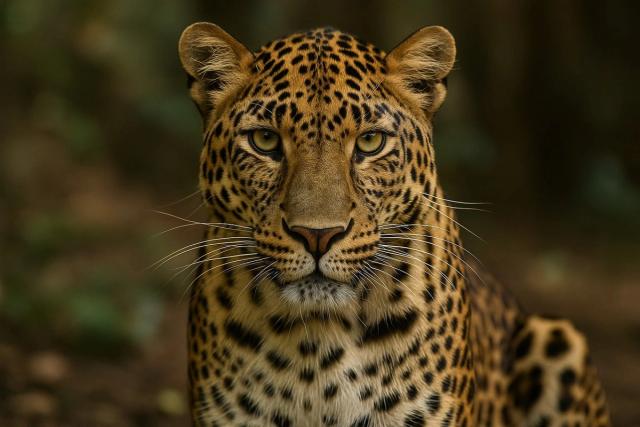
Leopard symbolism explained: spirit animal & totem meaning, black and snow leopard significance, dreams, tattoos, and leopard vs p…

Manta ray spirit animal meaning: what it symbolizes, key personality traits, and signs it's guiding you right now.