Symbols
51 Powerful Self-Love Symbols & Their Meanings (2024 Guide)
Discover 49+ powerful self-love symbols — crystals, animals, flowers, and spiritual icons — and what each one means for building s…
 KnowMastery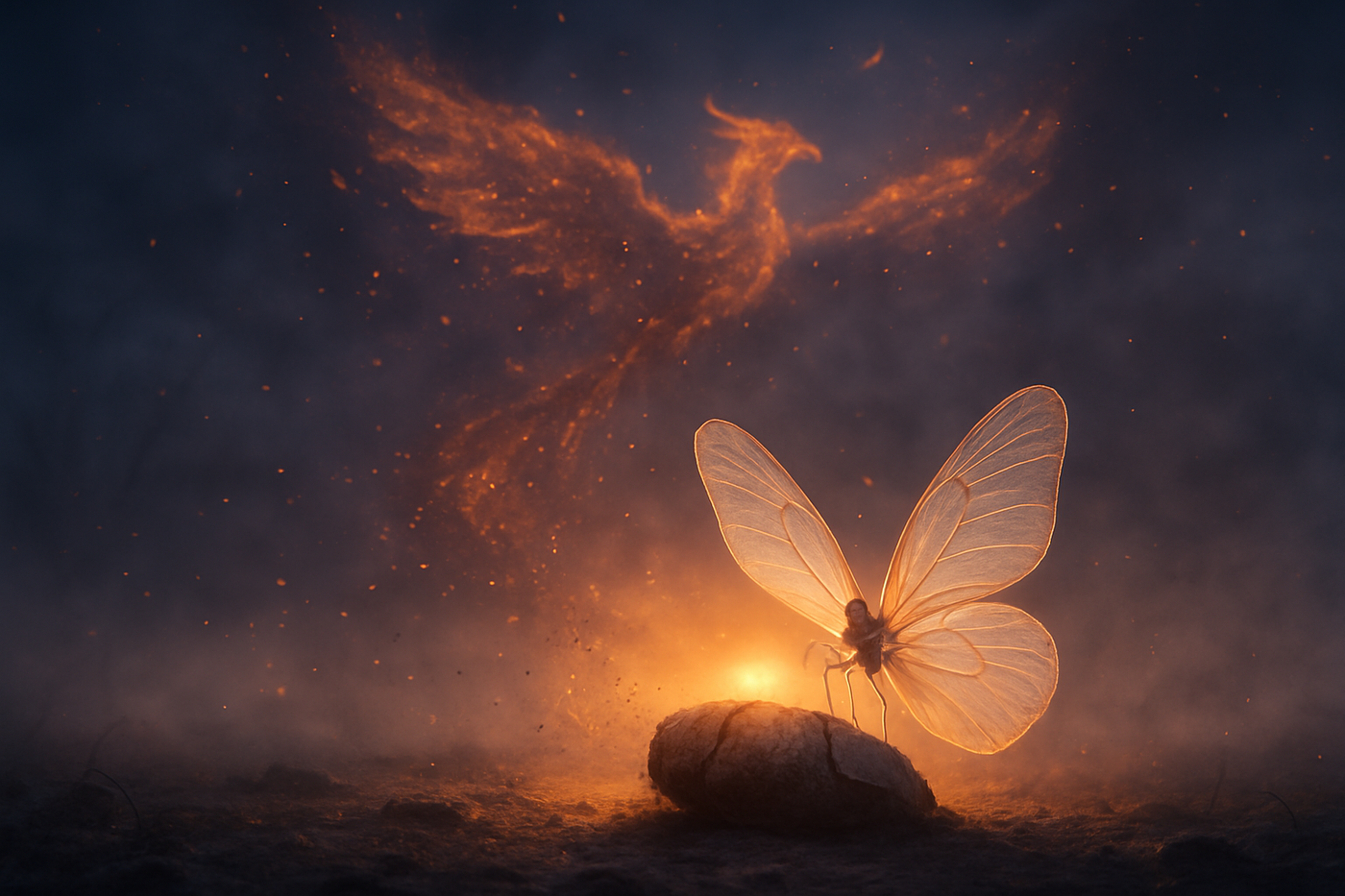
The most universal symbols of change and new beginnings are the butterfly, the phoenix, the lotus flower, the snake shedding its skin, spring and dawn, and the number nine in numerology. These images appear again and again in Egyptian, Greek, Chinese and Indigenous American traditions because they all point to the same truth: something has to end before something else can grow. A caterpillar has to stop being a caterpillar. Ash has to be ash before a phoenix can rise from it.
There is a reason we reach for these images instead of just saying "things are different now." Change on its own feels formless, even frightening. But a butterfly leaving its cocoon, or a snake pulling free of old skin, gives that fear a shape we can hold in our hands.
Maybe that is why, whenever someone starts over, whether after a breakup, a move, a recovery, or a loss, they end up drawn to the same handful of images their ancestors used thousands of years ago. The symbols change hands across centuries, but the need behind them stays exactly the same.
Change is disorienting because it removes the ground you were standing on before you have new ground to replace it. Symbols give that disorientation a picture to hold onto. Instead of trying to describe an abstract internal shift, a person can point to a butterfly, a sunrise, or a river and say, "that is what is happening to me right now."
This is also why transformation symbols show up so often in tattoos, jewelry, funeral rites, coming-of-age ceremonies and New Year traditions in places that never had contact with each other. They mark a before and an after. A tattoo of a butterfly on someone's wrist after a divorce or a recovery is not decoration, it is a small public record that something ended and something else began.
The butterfly is probably the single most recognized symbol of change in the world. It goes through four distinct stages, egg, larva, pupa, adult, and each stage looks nothing like the one before it. In Ancient Greece, the word for butterfly, "psyche," was also the word for soul, which is why Greek art sometimes shows the soul leaving the body in the shape of a butterfly at the moment of death.
In Mexican Day of the Dead traditions, the monarch butterfly is believed to carry the spirits of ancestors back to visit the living each autumn, timed with the monarch migration that arrives in central Mexico around the same weeks as the holiday. Families still watch for the first monarchs of the season as a kind of signal that the dead are close by.
The phoenix myth appears in Ancient Greek writing through Herodotus, who described an Egyptian bird called the Bennu that burned itself and rose again from its own ashes every five hundred years. The Chinese Fenghuang and the Persian Simurgh carry similar themes of a bird tied to renewal, though each has its own separate mythology and symbolism beyond rebirth alone. The core idea that survives across all of them is the same: destruction is not always an ending, sometimes it is the only way forward.
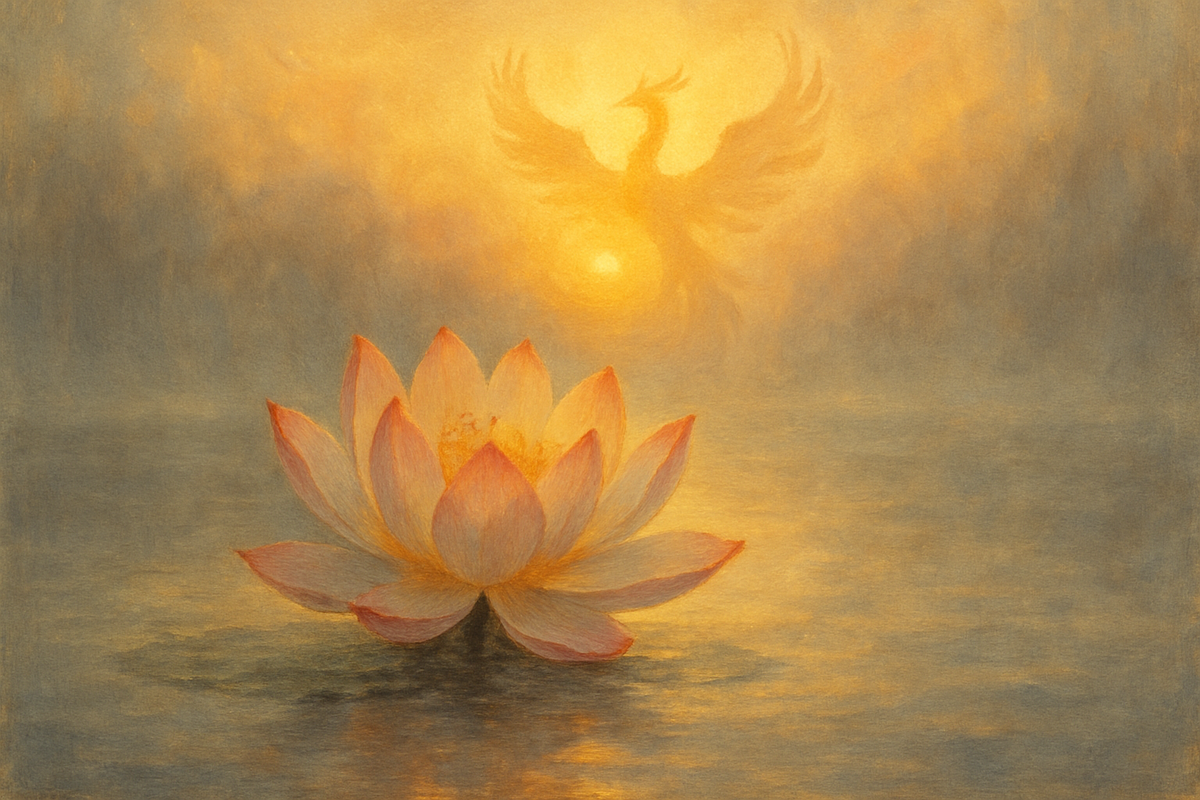
The lotus closes at night and sinks below the water, then opens again at dawn, rising out of mud that would choke most other plants. In Ancient Egyptian belief, the lotus was linked to the sun god Ra and the daily rebirth of the sun. In Buddhist and Hindu tradition, the lotus represents the soul rising through suffering into enlightenment without being stained by the mud it grew from, which is why statues of the Buddha are so often shown seated on one.
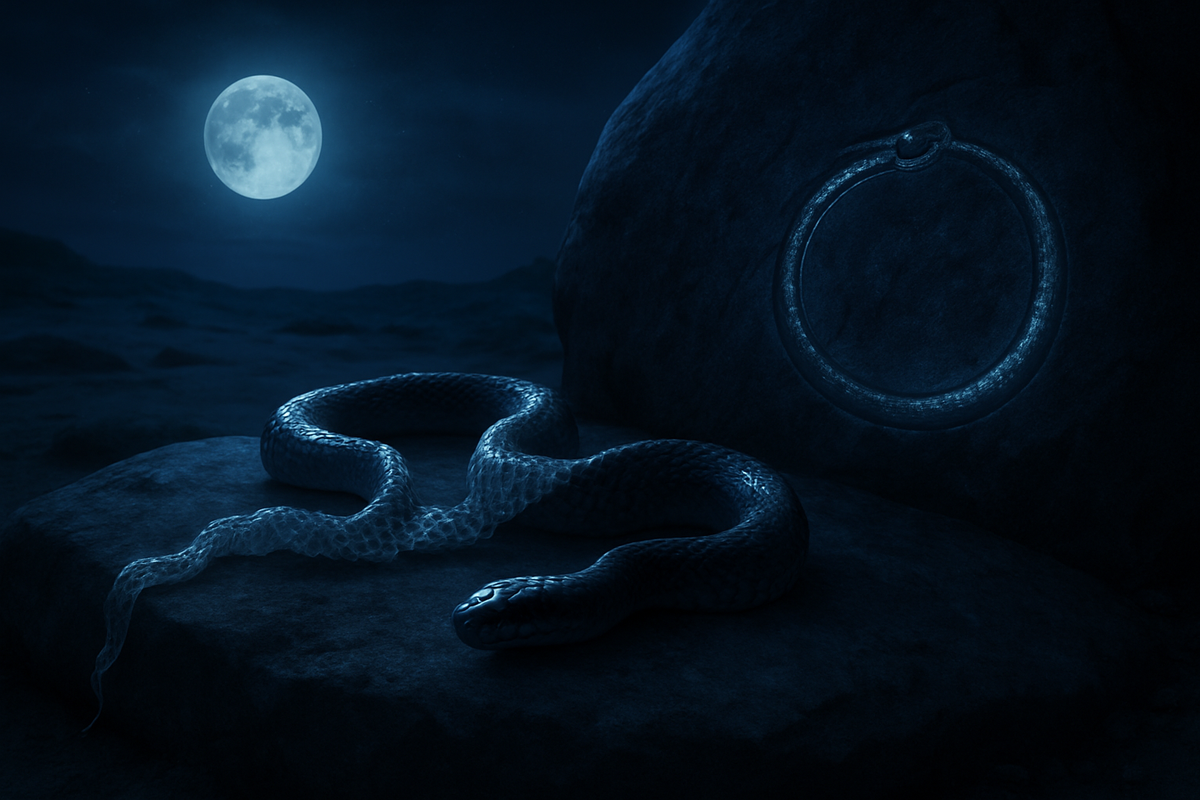
Snakes appear as renewal symbols in cultures that never had contact with each other, which says something about how directly this image speaks to people. Norse mythology, Aztec belief tied to the god Quetzalcoatl, and West African traditions all use the snake's shed skin as proof that an old self can be left behind while the same creature keeps living underneath it. Unlike the butterfly, which transforms once, the snake sheds its skin repeatedly over a lifetime, which is part of why it is often read as a symbol of ongoing growth rather than a single dramatic change.
Egyptian religion did not treat death as an end point. The scarab beetle, which the Egyptians watched emerge from soil as though born from nothing, became a symbol of Ra's daily rebirth and appeared constantly in funerary jewelry and amulets. The dead were prepared for a passage, not an erasure, which is part of why so much Egyptian symbolism revolves around cycles: the rising sun, the Nile's yearly flood, and beetles pulling themselves out of the earth.
Taoist philosophy treats change as the basic condition of existence rather than something to resist. The yin and yang symbol shows this directly: each half contains a small circle of the opposite color, meaning nothing stays purely one thing forever. Day becomes night, growth becomes decline, and the symbol is built to show that motion, not fixed identity, is what nature actually looks like.
Many Plains nations, including the Lakota, use the medicine wheel to mark the four directions alongside the four seasons and four stages of life. Spring in this framework is not just weather, it is infancy and new growth. Winter is not just cold, it is elder wisdom and rest before the cycle turns again. Change here is not a single event but a wheel that a person moves through more than once across a lifetime, which is a different way of thinking about transformation than a single before-and-after moment.
| Symbol | Origin | What It Represents |
|---|---|---|
| Butterfly | Ancient Greece, Mexico | Metamorphosis, the soul, ancestral return |
| Phoenix / Bennu | Ancient Egypt, Greece | Death and rebirth, resilience |
| Lotus | Egypt, Buddhism, Hinduism | Rising above hardship without being tainted by it |
| Snake shedding skin | Norse, Aztec, West Africa | Renewal, healing, letting go of the old self |
| Scarab beetle | Ancient Egypt | Daily rebirth, protection through transition |
| Ouroboros | Egypt, Greek alchemy | Endless cycles, the idea that endings feed beginnings |
| Spring / dawn | Global, seasonal traditions | Fresh starts, light returning after darkness |
In numerology, the number 9 is traditionally tied to endings and completion, the last single digit before numbers cycle back to 1. Seeing repeating numbers like 444 or 999 during a rough patch is often read as a sign that one chapter is closing so another can start, though numerology treats this as a pattern to reflect on rather than a fixed prediction.
The Tree of Life is another symbol worth mentioning here, since it appears in Norse, Kabbalistic and Celtic traditions as an image of continuous growth: roots dying back in winter, new branches reaching up in spring, the same tree never actually finished growing. Some people keep a small tree of life pendant specifically as a reminder that they are still in progress, not stuck, just mid-cycle.
Dreams about caterpillars turning into butterflies, snakes, or unfamiliar houses often surface right before a person makes a real decision, even if they have not admitted it to themselves yet. A caterpillar or cocoon in a dream is frequently read as a sign that you are in the uncomfortable middle stage of a transformation, not finished but no longer who you were either.
Water dreams, rivers especially, tend to point to emotional change moving whether you feel ready or not. Some people who are going through an unsettled period also start hanging a dream catcher above their bed, based on the belief that it filters out the anxious, chaotic dreams that transitions often stir up and lets the calmer ones through.
Symbols are only useful if you actually use them. Here are a few concrete ways people bring these images into a period of transition instead of just admiring them from a distance:
The butterfly is the most widely recognized animal symbol of transformation because its life cycle physically shows an old form dissolving into a completely new one. The snake comes second, largely because shedding skin is a visible, repeated act of renewal rather than a one-time change.
The lotus is the flower most associated with new beginnings, since it closes each night and reopens fresh at dawn, and it grows up clean out of muddy water. Cherry blossoms are also tied to new beginnings, especially in Japanese tradition, because they bloom briefly at the very start of spring.
The number 9 is traditionally linked to endings and completion in numerology, since it is the final single digit before the sequence returns to 1. Because of that, 9 is often read as a signal that one phase is wrapping up to make room for something new.
Dreaming about transformation, such as a caterpillar becoming a butterfly or a snake shedding skin, usually points to a change you are already living through, even if you have not fully processed it while awake. It often shows up right before a decision you have been avoiding finally gets made.
Discover 49+ powerful self-love symbols — crystals, animals, flowers, and spiritual icons — and what each one means for building s…
What does the crescent moon mean? Explore its spiritual symbolism, mythology, dream meaning, necklace significance, and rituals fo…
Discover what a horseshoe symbolizes — luck, protection, orientation meaning, dream interpretation, and its biblical and spiritual…