Symbols
Lotus Flower Meaning: Purity, Enlightenment & Rebirth
Discover the lotus flower's meaning across Hinduism, Buddhism & Egypt—purity, enlightenment, rebirth—plus colors, dreams, and how …
 KnowMastery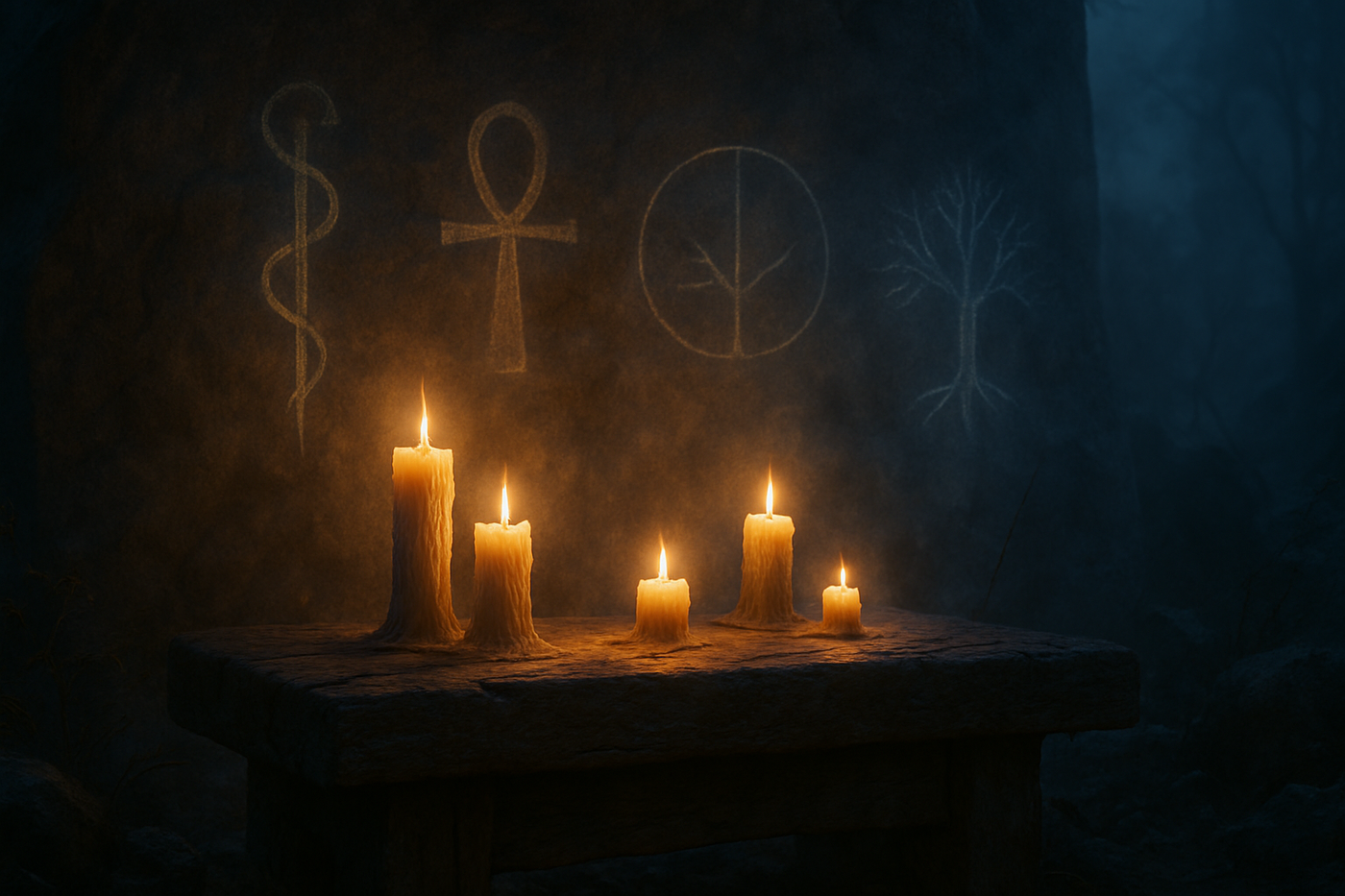
Symbols of healing are ancient visual signs—such as the Rod of Asclepius, the Egyptian Ankh, the Hamsa hand, and the Yin Yang—that cultures worldwide have used for thousands of years to represent physical recovery, emotional balance, and spiritual wholeness. They appear in medicine, religion, jewelry, and ceremony, acting as bridges between the physical body and the unseen forces believed to restore it. Whether carved into temple stone, tattooed onto skin, or hung above a child's bed, these images carry one shared belief: recovery is never purely mechanical, and mind, body, and spirit heal together.
There is something quietly moving about the fact that humans separated by oceans and centuries kept reaching for the same idea: that healing is not just chemical or clinical, but sacred. A grandmother in the Ozarks stitching a dreamcatcher, a Taoist monk tracing the curve of the Yin Yang, an Egyptian priest carving an Ankh into limestone—all of them were trying to answer the same quiet question: how do we mend what is broken?
These symbols were never just decoration. They were prayers made visible, worn on the body or painted on temple walls, carried into battle and whispered over sickbeds. Understanding them today gives us a richer, more human way to think about wellness—one that predates hospitals by millennia.
A healing symbol is any image, object, or gesture believed to channel restorative power—physical, emotional, or spiritual. Some, like the Rod of Asclepius, are tied to formal medical practice. Others, like the Hamsa or the Tree of Life, function more broadly as protective and life-affirming emblems used in ritual, art, and personal adornment.
What unites them is intention. A symbol becomes a healing symbol when a community agrees, generation after generation, that it represents the possibility of restoration—whether that means curing illness, mending grief, or realigning a person's spirit with balance.
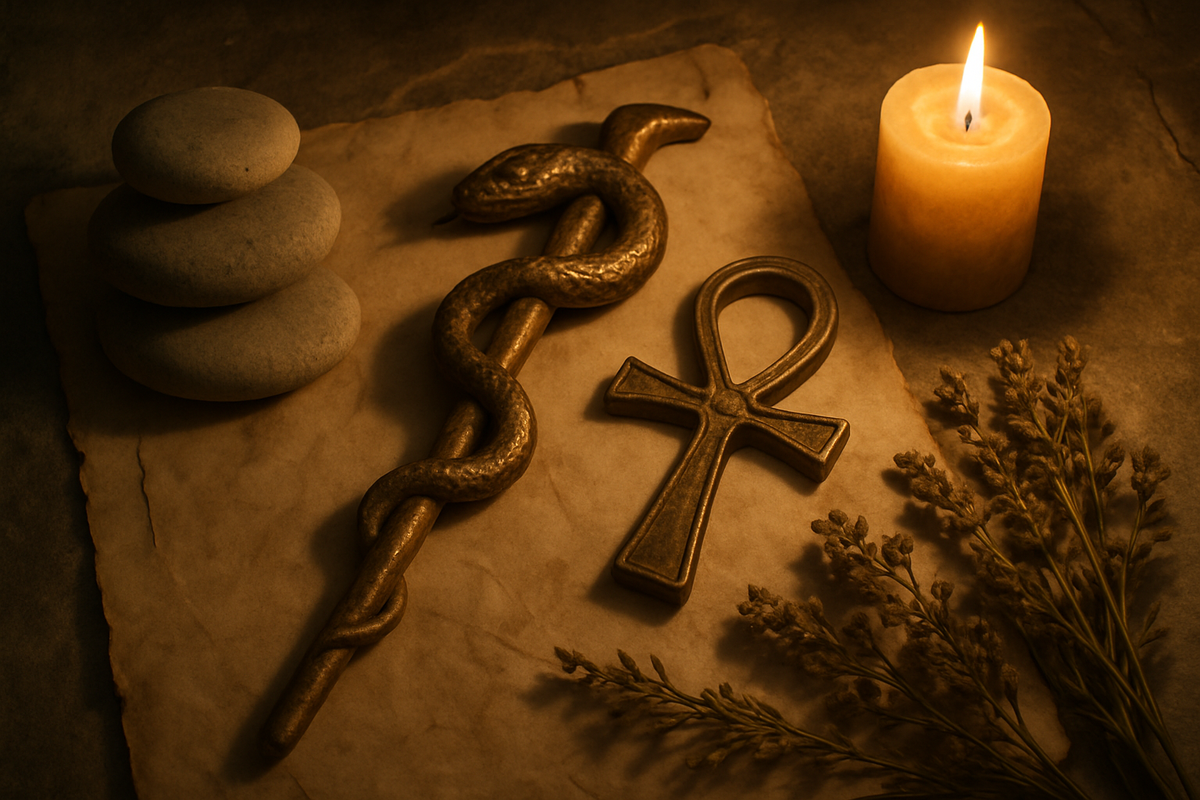
Named for Asclepius, the Greek god of medicine, this symbol shows a single serpent coiled around a wooden staff. In Greek mythology, Asclepius was so skilled at resurrecting the dead that Zeus struck him down out of fear he would make humanity immortal. The snake was chosen because ancient Greeks observed it shedding its skin—a visible act of renewal—and associated it with rebirth and vitality. The Rod of Asclepius remains the official emblem of the World Health Organization today.
The Caduceus, featuring two serpents wrapped around a winged staff, actually belonged to Hermes, the messenger god associated with commerce and communication—not medicine. A 19th-century mix-up by the U.S. Army Medical Corps popularized it as a medical symbol in America, though historically it has nothing to do with healing.
The Ankh, a cross topped with a loop, was Egypt's key symbol of life force and vitality. Deities like Isis and Osiris are frequently depicted holding it to the noses of the dying or newly born, symbolically transferring life-giving breath. Egyptian healers, or sunu, invoked the Ankh in medical papyri as a request for divine restoration of health.
In Traditional Chinese Medicine, illness is understood as an imbalance between opposing forces—heat and cold, activity and rest, yin and yang. The Yin Yang symbol represents the goal of every healing practice in this tradition: not the elimination of one force, but the harmonious balance of both. Acupuncture, herbal medicine, and qigong all trace their philosophy back to this single image.
Among the Lakota, Ojibwe, and Cree nations, the Medicine Wheel is a sacred circle divided into four quadrants, each representing a direction, a season, a stage of life, and an aspect of the self—physical, mental, emotional, and spiritual. Healing ceremonies built around the wheel aim to restore balance across all four dimensions, reflecting a worldview in which sickness in the body cannot be separated from disharmony in the spirit.
Shaped like an open palm, often with an eye at its center, the Hamsa is used across Jewish, Islamic, and Middle Eastern folk traditions to ward off illness, misfortune, and the "evil eye." It is less about curing sickness already present and more about preventing it—a protective form of healing rooted in vigilance and community blessing.
From the Norse world-tree Yggdrasil to the Celtic knotwork tree to the Kabbalistic Sephirot, the Tree of Life represents continuous renewal, deep roots, and resilience through cycles of loss and growth. It's frequently used in grief and recovery contexts today precisely because it visually captures the idea that healing is not linear—it branches, dies back, and grows again.
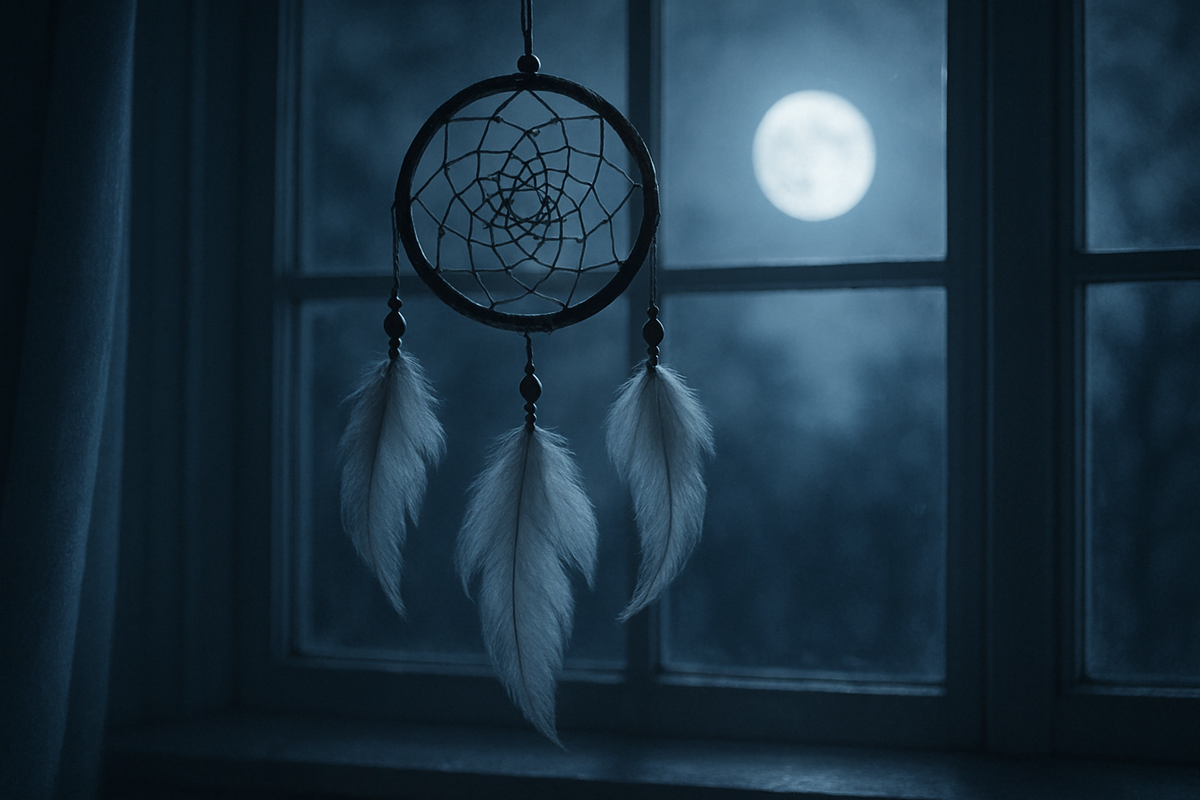
Originally an Ojibwe protective charm, the dreamcatcher was traditionally hung above a child's bed to filter out nightmares and negative energy while allowing good dreams to pass through. Its healing function is psychological and spiritual—restoring peaceful sleep, which many Indigenous healing traditions consider essential to overall wellbeing.
In the Hebrew Bible, Moses lifts a bronze serpent called the Nehushtan on a pole to heal Israelites suffering snakebites in the wilderness—an image later echoed in Christian iconography as a symbol of salvation and physical restoration. The pairing of serpent and raised pole recurs across several ancient Mediterranean healing traditions, showing how widely the "wounded made whole through a lifted symbol" motif traveled between cultures that never directly met.
| Symbol | Cultural Origin | Core Meaning | Modern Use |
|---|---|---|---|
| Rod of Asclepius | Ancient Greece | Medicine, renewal, restoration | Official medical/WHO emblem |
| Ankh | Ancient Egypt | Life force, vitality, breath of life | Jewelry, protective amulets |
| Yin Yang | Taoist China | Balance of opposing forces | Traditional medicine, wellness art |
| Medicine Wheel | Indigenous North America | Wholeness of body, mind, emotion, spirit | Ceremony, therapy frameworks |
| Hamsa | Middle East / North Africa | Protection from illness and harm | Amulets, home decor, jewelry |
| Tree of Life | Norse, Celtic, Kabbalah | Renewal, resilience, growth | Tattoos, grief-support imagery |
| Dreamcatcher | Ojibwe Nation | Protection during sleep, peace of mind | Bedroom decor, sleep aid symbolism |
Across nearly every tradition, healing symbols share three spiritual threads. First, they suggest that illness is rarely purely physical—it reflects imbalance, whether energetic, emotional, or moral. Second, they treat healing as a process requiring intention, not passivity; wearing a Hamsa or meditating on the Yin Yang is an active invitation for restoration, not a magic guarantee. Third, many healing symbols double as symbols of hope during difficult recovery periods—much like the anchor, historically used by early Christians as a covert symbol of steadfast hope in suffering, and later adopted by sailors as a talisman of safe return and stability.
Dream interpretation traditions, from Jungian psychology to folk dream dictionaries, treat healing symbols as messages from the subconscious about restoration already underway. Dreaming of a snake shedding its skin often signals emotional transformation. A tree blooming after appearing bare can represent recovery from grief or illness. Seeing a Yin Yang or a circle divided into balanced halves may point to a need—or a readiness—to reconcile opposing parts of yourself, such as work and rest, or logic and emotion. These dream images typically appear during periods of genuine life transition, making them worth journaling rather than dismissing.
You don't need to belong to a specific tradition to draw meaning from these symbols—though it's worth learning their origins with respect rather than treating them as trend accessories. Here are grounded ways to incorporate them:
Whatever symbol resonates with you, treat it as a companion to—not a replacement for—medical care, therapy, or grief support when you actually need it. Across every tradition explored here, the symbol was always paired with community: a priest, a healer, an elder, a family member offering real care alongside the image. The picture pointed toward healing; the people carried it out.
The Rod of Asclepius, featuring a single serpent coiled around a staff, is the most globally recognized medical healing symbol, used by the World Health Organization and countless medical associations. However, symbols like the Hamsa and Tree of Life are equally significant for spiritual and emotional healing across other traditions.
The Rod of Asclepius has one snake and represents Greek medicine and healing, while the Caduceus has two snakes and wings and belonged to Hermes, the messenger god of commerce. The Caduceus became associated with American medicine due to a 19th-century military insignia mistake, but historically it has no healing meaning.
Dreaming of healing symbols like a serpent shedding skin, a blooming tree, or a balanced circle typically reflects an inner sense of recovery or readiness for transformation. It often surfaces during real-life transitions such as recovering from illness, grief, or major stress.
You can, but it's respectful to first learn the symbol's origin, meaning, and any sacred restrictions attached to it, especially for symbols tied to specific Indigenous or religious communities. Wearing it with genuine understanding, rather than as a trend, honors the tradition it comes from.
Discover the lotus flower's meaning across Hinduism, Buddhism & Egypt—purity, enlightenment, rebirth—plus colors, dreams, and how …

The Moon has been a source of wonder and inspiration for humanity since the dawn of time. Its ever-changing phases and the gentle …

Discover what stars truly symbolize—guidance, hope, and destiny—across cultures, dreams, and spiritual traditions, plus how to use…