Animal Symbolism
Raven Omens at Samhain: Death Symbolism & Fallen Raven Meaning
Find a fallen raven or see one at Samhain? Explore the death omens, myths, and dream meanings behind this ancient harbinger of the…
 KnowMastery
A bat in the house usually points to transformation, a warning to pay closer attention to your surroundings, or in Chinese feng shui, a sign of incoming luck and blessings. Western folklore tends to treat it as an omen of death or change, Christian tradition links it to spiritual blindness or misplaced priorities, and Chinese culture treats it as one of the luckiest visitors a home can receive. The meaning depends heavily on which tradition you are reading it through. Context matters more than the bat itself.
You hear the wings before you see them. A soft, erratic flutter in the dark hallway, then a shadow cutting across the ceiling light. Your heart jumps. Something about a bat indoors feels different from a moth or a fly trapped behind the curtains.
People have reacted to this moment the same way for centuries: with a mix of fear and fascination. A creature that belongs to the night, to caves, to the space between sleeping and waking, suddenly standing in your living room. It makes sense that so many traditions built entire belief systems around what it means when one finds its way inside.
At its root, a bat in the house represents a threshold moment. Bats navigate by echolocation, moving confidently through total darkness, so across most traditions their symbolic job is to guide you through something you cannot yet see clearly: a transition, a loss, a rebirth, or a decision you have been avoiding.
A few themes come up again and again when people interpret this encounter:
In most spiritual and New Age frameworks, a bat appearing indoors is not treated as a coincidence. It is read as a form of animal messenger symbolism, the same way a owl showing up at night is treated as significant rather than ordinary.
Shamanic traditions in Central and South America, particularly among the Zapotec and Maya, associated bats with the underworld and with death that leads to renewal rather than an ending. A bat in your home, in this lens, suggests an old identity or habit is dying so a new one can take its place.
Because bats trigger an instinctive startle response in most people, their appearance is often interpreted as an invitation to confront whatever you have been avoiding, whether that is a conversation, a financial decision, or a pattern you keep repeating.
Some practitioners treat a bat sighting the same way they treat a spider appearing unexpectedly, as a sign your intuitive senses are sharpening and worth paying attention to in the days that follow, through dreams, gut feelings, or small coincidences.
The Bible does not treat bats kindly. In Leviticus 11:13-19 and Deuteronomy 14:11-18, bats are listed among the unclean birds the Israelites were forbidden to eat, grouped with owls, vultures, and other creatures considered impure under Mosaic law.
Isaiah 2:20 goes further, describing a day when people will throw their idols of silver and gold "to the moles and to the bats," using the bat as a symbol of darkness and things cast away in shame. Taken together, the biblical view treats the bat less as an active evil omen and more as a symbol of spiritual blindness or misplaced priorities.
If you hold a Christian worldview and a bat gets into your house, Christian commentators often read it as a prompt for self-examination: a reminder to check what you have been worshipping, literally or figuratively, in place of clearer values.
This is the tradition that breaks most sharply from Western fear. In Mandarin, the word for bat, fu, sounds identical to the word for fortune or blessing. Because of this wordplay, bats have decorated Chinese art, porcelain, and architecture for centuries as symbols of happiness and good luck rather than dread.
Five bats together form the Wu Fu, the Five Blessings: longevity, wealth, health, virtue, and a peaceful death. A red bat is considered especially auspicious since red itself symbolizes luck, making a red bat a double blessing in traditional Chinese symbolism.
In medieval England and parts of Germany, a bat flying into a house three times was widely believed to predict a death in the family within the year. Separately, old farming almanacs in rural England treated a bat flying low around a house at dusk as a sign of an approaching storm, tying the animal to weather prediction rather than mortality.
Among the Apache and Creek peoples, bats appear in oral stories as tricksters who outwit larger, more powerful animals through cleverness rather than strength. The Cherokee version of the "ball game" myth has the bat volunteering to help the four-footed animals after every other creature refuses, earning its place as a symbol of resourcefulness and quiet usefulness.
Feng shui practice draws directly on the Chinese fu wordplay above, treating a bat indoors as a potential sign of incoming prosperity rather than something to fear outright. That said, the number and color of bats involved shifts the specific reading.
| Bat Symbol | Feng Shui Meaning |
|---|---|
| A single bat | One area of your life, often career or finances, is about to improve |
| Two bats | Double happiness, often linked to relationships or partnerships |
| Five bats | The Wu Fu, complete blessing covering health, wealth, virtue, longevity, and peace |
| A red bat | Amplified good fortune, considered the most auspicious version |
| A bat flying in, then out quickly | Fortune passing through, a reminder to stay alert for an opportunity |
Practitioners of feng shui generally advise against killing a bat that enters under this framework, since harming a fu symbol is thought to reverse the luck it was bringing. Instead, the recommended move is to calmly open a window or door and let it leave on its own.
Dreaming about a bat inside your home carries a slightly different weight than a waking encounter, since dream symbolism tends to reflect internal states rather than external omens.
Whatever meaning resonates with you, there is a practical side to this experience that matters just as much. Bats can carry rabies, and direct contact, even a scratch you barely notice, warrants a call to your doctor or local health department.
Treat the encounter the same way you would treat seeing a hawk circling overhead: as a prompt to notice your current circumstances more closely, not as a fixed prediction you cannot influence.
It depends on the tradition. In Chinese feng shui, a bat indoors is considered good luck and a sign of fortune. In older European folklore, it was more often read as a warning or even an omen of death, so the meaning you take from it depends on which cultural lens you apply.
Spiritually, it is usually read as a sign of transformation, a call to trust your intuition more, or a nudge to confront something you have been avoiding. The bat's role as a night navigator makes it a common symbol for moving through uncertainty with confidence.
The Bible lists bats among the unclean animals in Leviticus and Deuteronomy, and Isaiah 2:20 uses bats as a symbol of worthless idols being cast aside. The overall biblical tone treats bats as a symbol of darkness or misplaced priorities rather than an active evil force.
No, in most places bats are protected species and killing one can be illegal, on top of being considered bad luck under feng shui tradition. The safer approach, both practically and symbolically, is to calmly guide it toward an open window or door.
Find a fallen raven or see one at Samhain? Explore the death omens, myths, and dream meanings behind this ancient harbinger of the…
Seeing 3 butterflies flying together? Discover what this rare sign means for love, family, grief and spiritual growth, plus what t…
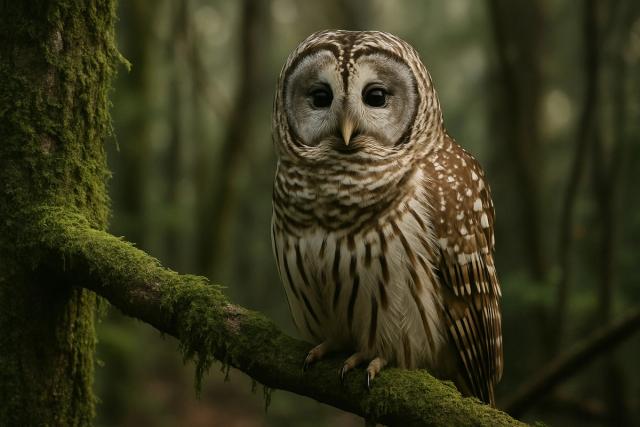
What does a barred owl's call really mean? Discover the spiritual symbolism behind its cry, daytime sightings, dreams, and cultura…