Animal Symbolism
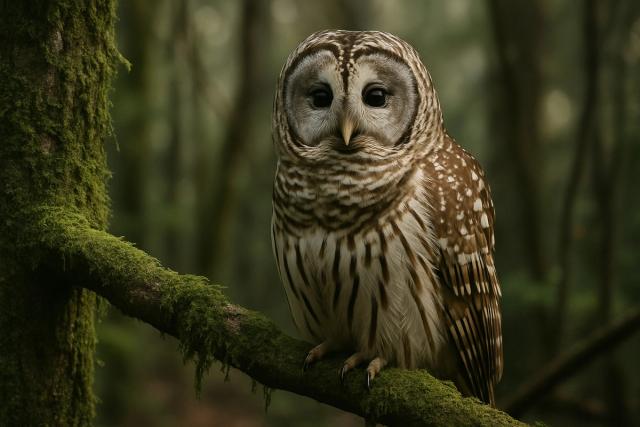
Barred Owl Spiritual Meaning & Call Interpretations
Ever heard the haunting call of a barred owl and felt a shiver down your spine? It’s not just the eerie sound that captivates; it’…
 KnowMastery
 A black cat crossing your path does not universally mean bad luck. In Britain, Japan, and parts of Germany, a black cat is actually a sign of good fortune, protection, and prosperity. The "bad omen" version of the myth mostly comes from medieval Western Europe, where black cats were tied to witchcraft accusations. Today, most spiritual traditions view black cats as guardians, intuitive messengers, and symbols of independence rather than harbingers of doom.
There is a particular stillness in the way a black cat watches you from a doorway at dusk, eyes catching the last bit of light like two small lanterns. Something in that gaze feels older than superstition, older than the stories we tell to explain what we do not understand.
Maybe that is why people have argued about black cats for centuries. They are the same animal as any other cat, yet we have loaded them with meaning: bad luck in one country, treasured luck in the next, sacred in another. A black cat does not change. Our fears and hopes around it do.
At its core, black cat symbolism centers on three ideas: mystery, protection, and transition. Cats in general have long been linked to intuition and the ability to move between worlds, seen and unseen. The black coat sharpens that association because black itself is often read as the color of the unknown, night, and hidden knowledge.
Rather than a single fixed meaning, a black cat tends to represent whatever a culture already fears or values about the dark. Where darkness is feared, the cat becomes a scapegoat. Where darkness is respected as a source of rest, magic, or the underworld, the cat becomes a guardian.
Cats do not perform loyalty the way dogs do. They choose their company. A black cat, often singled out and stereotyped, still moves through the world with total self-assurance. Spiritually, this reads as a lesson in trusting your own instincts even when others misread you.
In many folk traditions, cats were kept near doors and thresholds because they were believed to sense spirits and warn of danger before humans noticed anything. A black cat sitting at your door, in this reading, is not inviting misfortune in, it is standing guard against it.
The "bad luck" reputation is real, but it is regional, not universal. Tracing where each superstition comes from makes it easier to separate folklore from fear.
The dark reputation of black cats in the West traces largely to the 13th century, when Pope Gregory IX issued a document called Vox in Rama linking black cats to devil worship. During the witch trials that followed in England, Scotland, and parts of continental Europe, black cats were frequently cited as evidence against accused women, described as their supposed "familiars." This period is the direct root of the American and Western European belief that a black cat crossing your path brings misfortune.
In England, Scotland, and Ireland, a black cat crossing your path or arriving on your doorstep is traditionally considered lucky, not unlucky, despite the opposite belief taking hold across the Atlantic. Fishermen's wives in coastal English villages once kept black cats at home specifically because they believed it would keep their husbands safe at sea. A black cat given as a wedding gift in parts of Britain was also considered a blessing on the marriage.
In Japan, black cats are considered protective and lucky, particularly for warding off evil spirits and stalkers. Single women in Japanese folklore were sometimes advised to keep a black cat for protection. This connects to the broader Japanese fondness for cats, seen in the beckoning Maneki Neko figures displayed in shop windows to invite prosperity.
Long before the medieval witch panic, ancient Egypt held cats of all colors, including black, in near sacred status. The goddess Bastet, protector of the home and of women, was depicted as a cat or a cat-headed woman. Killing a cat in ancient Egypt, even by accident, could carry the death penalty. Families who lost a cat to natural causes were known to shave their eyebrows in mourning.
German folklore adds a strange technicality: a black cat crossing your path from right to left is considered a bad omen, while one crossing from left to right is a good one. This detail shows how even within "unlucky" traditions, the meaning was never as simple as black cat equals doom.
| Region | Traditional Meaning | Notes |
|---|---|---|
| United States | Bad luck | Inherited from medieval European fear, especially strong around Halloween |
| Britain and Ireland | Good luck | Especially lucky if the cat comes to your home uninvited |
| Japan | Protection and prosperity | Linked to Maneki Neko and safety for women |
| Ancient Egypt | Sacred and divine | Associated with the goddess Bastet |
| Germany | Depends on direction | Right to left is unlucky, left to right is lucky |
In folk magic and modern witchcraft, black cats are often kept because practitioners believe the animal absorbs or filters negative energy in a home. Others say the cat's presence sharpens intuition during ritual work, much the way certain animals are treated as messengers in other symbolic systems, such as the symbolism carried by crows.
Black, as a color, is not inherently negative in most spiritual frameworks. It represents the void before creation, fertile dark soil, the womb, and rest. A black cat carries that same symbolism: not absence, but potential. Seeing one repeatedly may be less about doom and more about being asked to sit with uncertainty instead of rushing to control it.
People who feel a strong pull toward black cats as a totem often describe themselves as private, intuitive, and comfortable operating outside the mainstream. If a black cat feels like your totem, it may be reflecting these traits back at you:
Dreaming of a black cat rarely predicts an outside event. More often it reflects something happening internally, especially around instinct, secrecy, or independence.
This is generally read as a sign that your intuition is trying to get your attention. If the cat is calm and friendly, it suggests you are being guided toward a decision you already sense is right but have been hesitant to trust.
This can point to internal conflict, often around a part of yourself you have suppressed or judged harshly. It is less a warning about an enemy and more a nudge to stop fighting your own instincts.
This often reflects a truth you are aware of but not yet ready to face directly, similar to how spider dreams can point to something being quietly woven together behind the scenes of your waking life.
Beyond Bastet in Egypt, black cats appear across a wide range of mythic traditions, almost always tied to thresholds, magic, or the feminine divine.
These stories share a pattern found in other creatures too. The nocturnal wisdom linked to owls echoes the same idea: the animals we fear most at night are often the ones guarding us.
If old superstition has you uneasy after a black cat crosses in front of you, folk tradition offers some practical, low stress responses rather than panic.
If you are drawn to black cats as a recurring symbol in your life, whether through dreams, real encounters, or a pull toward keeping one as a pet, it is worth treating it the way you would any other repeating sign, similar to noticing patterns with hawk symbolism or the sudden appearance of a ladybug. Track when it happens, what you were feeling, and whether a pattern of intuition versus fear emerges.
No, this belief is regional rather than universal. It is common in the United States and parts of Western Europe due to medieval witchcraft associations, but in Britain, Ireland, and Japan, a black cat crossing your path is traditionally considered good luck.
Spiritually, seeing a black cat is often read as a nudge to trust your intuition and pay attention to what is hidden or unspoken in a situation. It is also linked to protection, since cats were historically believed to guard homes from harmful spirits.
The association began in medieval Europe, particularly after Pope Gregory IX's 1233 decree linking black cats to devil worship. During the witch trials in England and Scotland, black cats were often described as "familiars" of accused women, which cemented the fearful stereotype in Western folklore.
No, there is no meaningful difference in temperament between black cats and cats of any other color, aside from coat genetics. Many shelters report that black cats are adopted less often due to lingering superstition, which makes them, in practical terms, some of the most in need and rewarding cats to adopt.
Ever heard the haunting call of a barred owl and felt a shiver down your spine? It’s not just the eerie sound that captivates; it’…

What does it mean when a bee visits you? Explore bee spiritual meaning, dreams, totem energy, and omens from cultures around the w…

Cicada symbolism explained: rebirth, patience, and voice, with dream meanings, cultural history, and ways to work with the sign.