Animal Symbolism
Lynx Symbolism: Spiritual Meaning & Significance
Discover what the lynx symbolizes spiritually—secrecy, intuition, and hidden truth—plus its meaning in dreams, myth, and as a tote…
 KnowMastery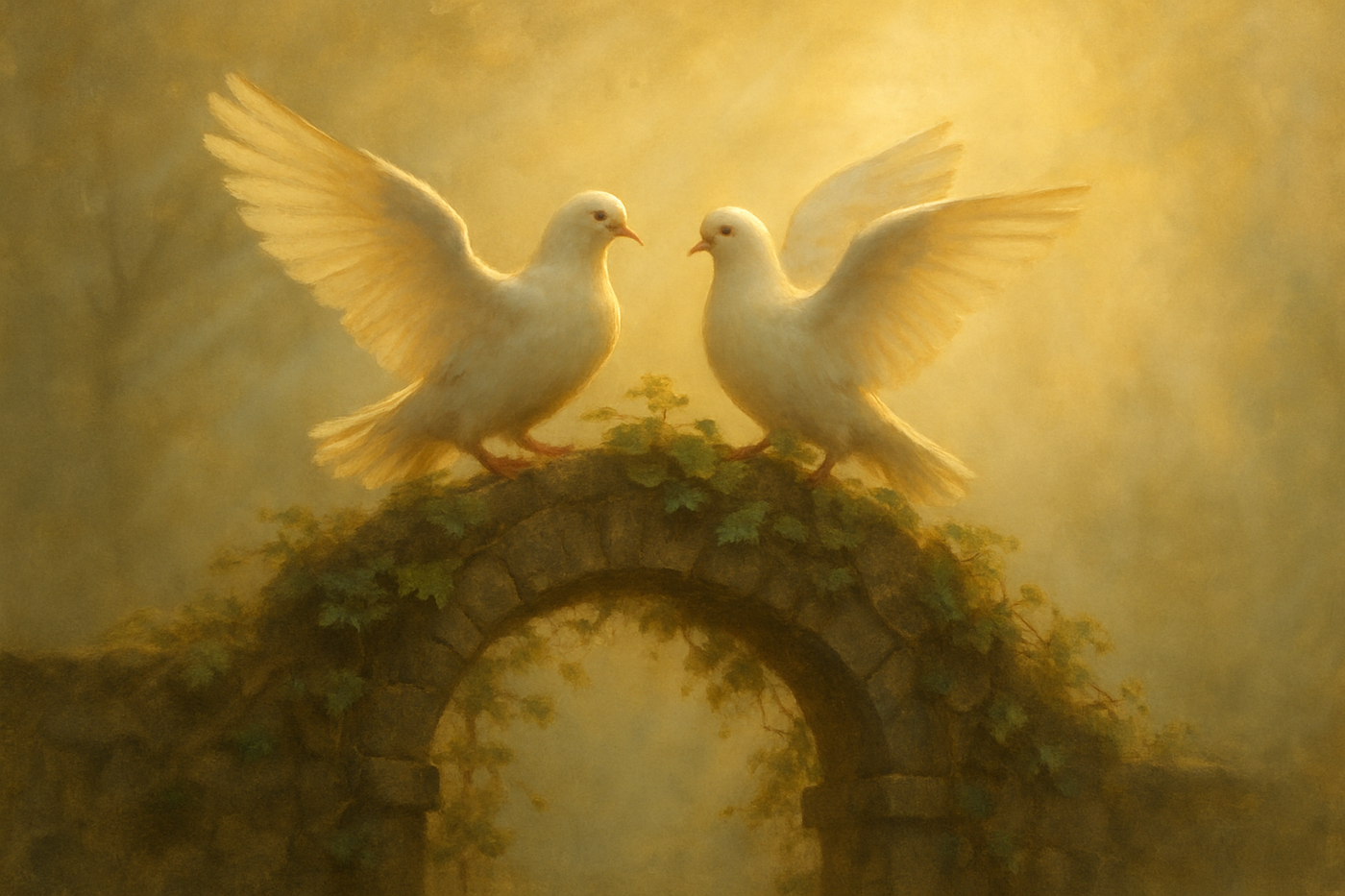
A dove symbolizes peace, purity, love, and the presence of spirit. Across cultures it has represented the soul leaving the body, a messenger between heaven and earth, and a sign of reconciliation after conflict. When a dove crosses your path, whether in waking life or in a dream, it usually points to calm returning after a hard season, a reminder of a loved one who has passed, or a nudge toward gentleness in how you handle a current situation.
There is something disarming about a dove. It doesn't screech like a crow or dive like a hawk. It coos softly, walks with a small bob of the head, and settles on a windowsill as if it has all the time in the world. People notice doves precisely because they don't demand attention, and that quiet arrival is part of why so many traditions read them as messages rather than just birds.
Maybe you saw one perched outside a hospital room, or a pair nesting above your front door the week before a wedding. Maybe you dreamed of a white dove flying through a storm and woke up feeling strangely lighter. These moments stick with people because the dove seems to show up right when reassurance is needed most.
At its simplest, the dove stands for peace, gentleness, fidelity, and hope. It is one of the few animal symbols that carries an almost entirely positive meaning, with none of the fear or ambiguity attached to creatures like the scorpion. Doves mate for life in many species, which is why they became shorthand for loyalty and devoted love. Their soft grey and white feathers, along with their habit of returning to the same nest year after year, reinforced ideas of home, faithfulness, and safe return.
Because doves are gentle scavengers rather than predators, they were also read as symbols of innocence and vulnerability. A dove doesn't fight for dominance the way a hawk does. It survives through cooperation, flocking, and a kind of quiet persistence, which is why the bird so easily became a stand-in for the parts of ourselves that seek harmony instead of conflict.
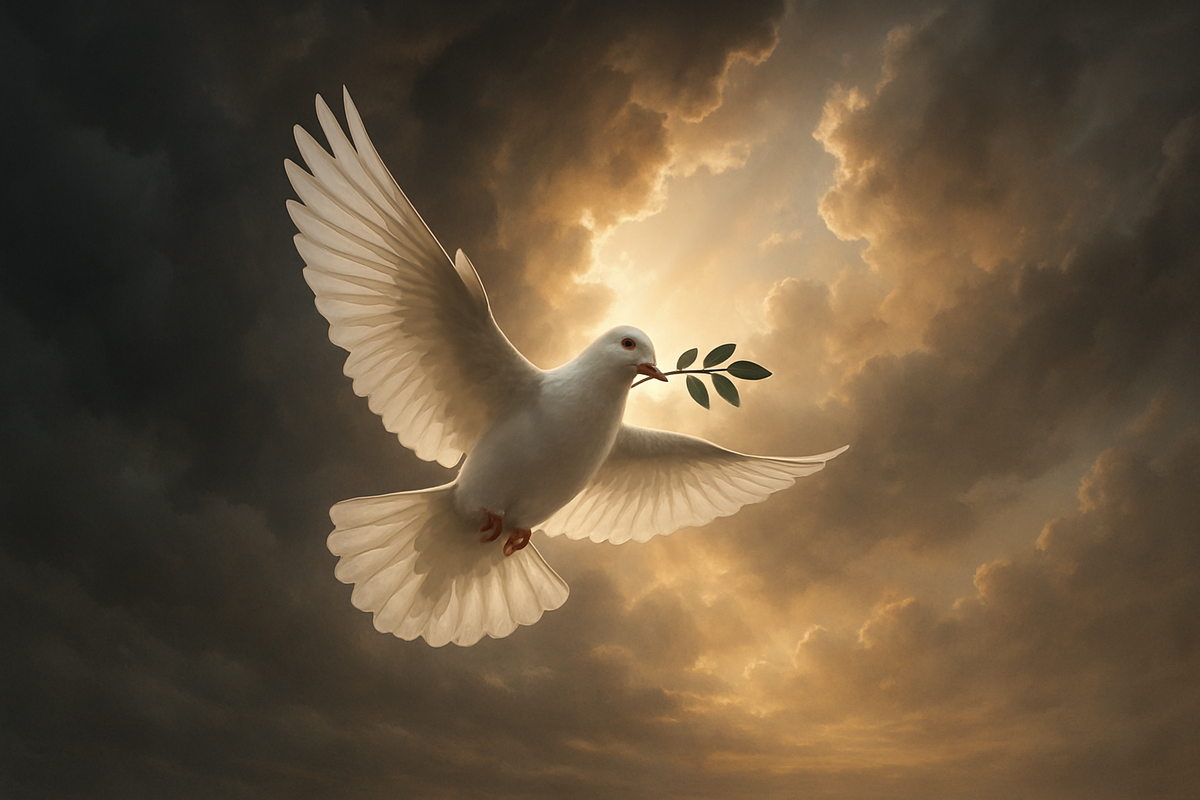
In spiritual terms, the dove almost always signals that a period of struggle is ending. Seeing one after an argument, a divorce, or a long illness is often interpreted as a sign that the worst has passed and calmer days are ahead. This reading is not new. It goes back to one of the oldest stories in the Bible, where a dove returns to Noah's ark carrying an olive branch, confirming that the flood waters have receded and life on land is possible again.
In Christian tradition, the dove is the visual form the Holy Spirit takes at the baptism of Jesus in the Gospels of Matthew, Mark, and Luke. This single image fixed the dove as a symbol of divine presence, purity, and grace throughout Western art, from Renaissance frescoes to modern church stained glass. Because of this, people who aren't especially religious still describe an unexpected dove sighting as feeling watched over or blessed.
In folk Christian traditions across Europe and Latin America, a white dove seen shortly after a death is said to be the soul of the departed passing on peacefully, or a sign sent to comfort the grieving. This idea overlaps with older Roman beliefs about birds carrying souls skyward, and it explains why doves are released at funerals and memorial services in the United States, the United Kingdom, and much of Latin America today.
In Greek mythology, doves were sacred to Aphrodite, goddess of love and beauty, and were said to pull her chariot. The Romans carried this association forward with Venus, their own goddess of love, whose temples often kept doves as living symbols of desire and devotion. This is one reason doves still appear on wedding invitations and Valentine's Day imagery thousands of years later.
Long before Greece, the ancient Mesopotamians linked doves to Ishtar, goddess of love and war. Clay figurines and temple reliefs from Babylon and Nineveh show doves alongside her image, suggesting the bird already carried associations with fertility, passion, and feminine power thousands of years before the Christian era began.
In Islamic folklore, a dove is said to have helped shield the Prophet Muhammad by building a nest at the entrance of the cave where he hid during his flight from Mecca, discouraging pursuers from looking inside. Because of this story, doves are treated with particular tenderness in many Muslim communities and are commonly kept near mosques.
Some Indigenous nations of North America, including the Ojibwe, associated the mourning dove's low, sorrowful call with grief, memory, and the honoring of ancestors. Unlike the white dove of European Christianity, this bird's symbolism leaned into loss and remembrance as much as peace, showing that even within the dove family, meaning shifts with the species and the culture observing it.
Color changes the emotional tone of a dove sighting. Here is a quick breakdown of common interpretations.
| Dove Color | Common Symbolic Meaning |
|---|---|
| White dove | Peace, purity, divine presence, a departed soul at rest |
| Grey or mourning dove | Quiet grief, remembrance, gentle transition through loss |
| Black dove | Rare sighting, often read as a warning to slow down or reflect before acting |
| Two doves together | Partnership, marriage, reunited love, balance between two people |
| Dove with olive branch | End of conflict, forgiveness, a fresh start after hardship |
Dream interpretation traditions treat the dove almost as gently as waking-life symbolism does, though the details of the dream matter.
Unlike a dream about the sharp-eyed hawk or the watchful owl, which usually ask you to sharpen your focus or trust your intuition, dove dreams tend to ask something softer of you: slow down, forgive, or simply breathe.
People who feel a strong connection to the dove as a totem or spirit animal often describe themselves as peacemakers within their families or friend groups. They tend to be the ones who smooth over arguments, who value loyalty above almost everything else, and who find it hard to walk away even from difficult relationships. The dove totem asks these individuals to protect their gentleness rather than treat it as a weakness, while also learning when quiet diplomacy needs to give way to a firmer boundary.
This is different from someone drawn to the crow as a totem, who tends to carry sharper instincts and a tolerance for darker truths. The dove's gift is patience, not speed, and its followers rarely chase attention the way bolder totem animals do.
If a dove has shown up in your life lately, in a dream, on a walk, or somewhere that felt oddly timed, consider these steps rather than dismissing it as coincidence.
Doves rarely demand dramatic change. Their message is usually quieter: rest, forgive, trust that calm is returning. That is different from the transformation themes tied to the swan, which often signals a shift in identity or a coming change in love, rather than the steady reassurance a dove offers.
Most traditions read a dove sighting as a sign of peace returning, reassurance from a higher power, or comfort from a loved one who has passed. The exact meaning usually depends on what is happening in your life at the time, such as recovering from an argument or grieving a loss.
In folk Christian traditions across Europe and Latin America, a white dove appearing shortly after a death, especially near a funeral or on a birthday, is often read as a comforting sign from that person. The belief isn't part of official church doctrine, but it remains a common source of comfort for grieving families in these regions.
Black doves are far less common in symbolism than white ones and are often interpreted as a call to pause and reflect before making a decision, rather than a purely negative omen. Some readings connect the black dove to hidden truths or unresolved grief that still needs attention.
Two doves together typically represent partnership, marriage, or a reunion between two people who care for each other deeply. Because doves often mate for life, the image of a pair is closely tied to loyalty and lasting love rather than a short-term connection.
Discover what the lynx symbolizes spiritually—secrecy, intuition, and hidden truth—plus its meaning in dreams, myth, and as a tote…
Magpie symbolism explained: one for sorrow/two for joy, spirit animal traits, dream meanings, and what it means when a magpie cros…
What do moths really symbolize? Explore the spiritual meaning of moths—transformation, intuition, and hidden light—across myth, dr…