
Animal Symbolism
Seahorse Symbolism: Spiritual Meaning & Significance
Discover what the seahorse truly symbolizes - patience, protection, fatherhood, and inner strength - across myth, dreams, and mode…
 KnowMastery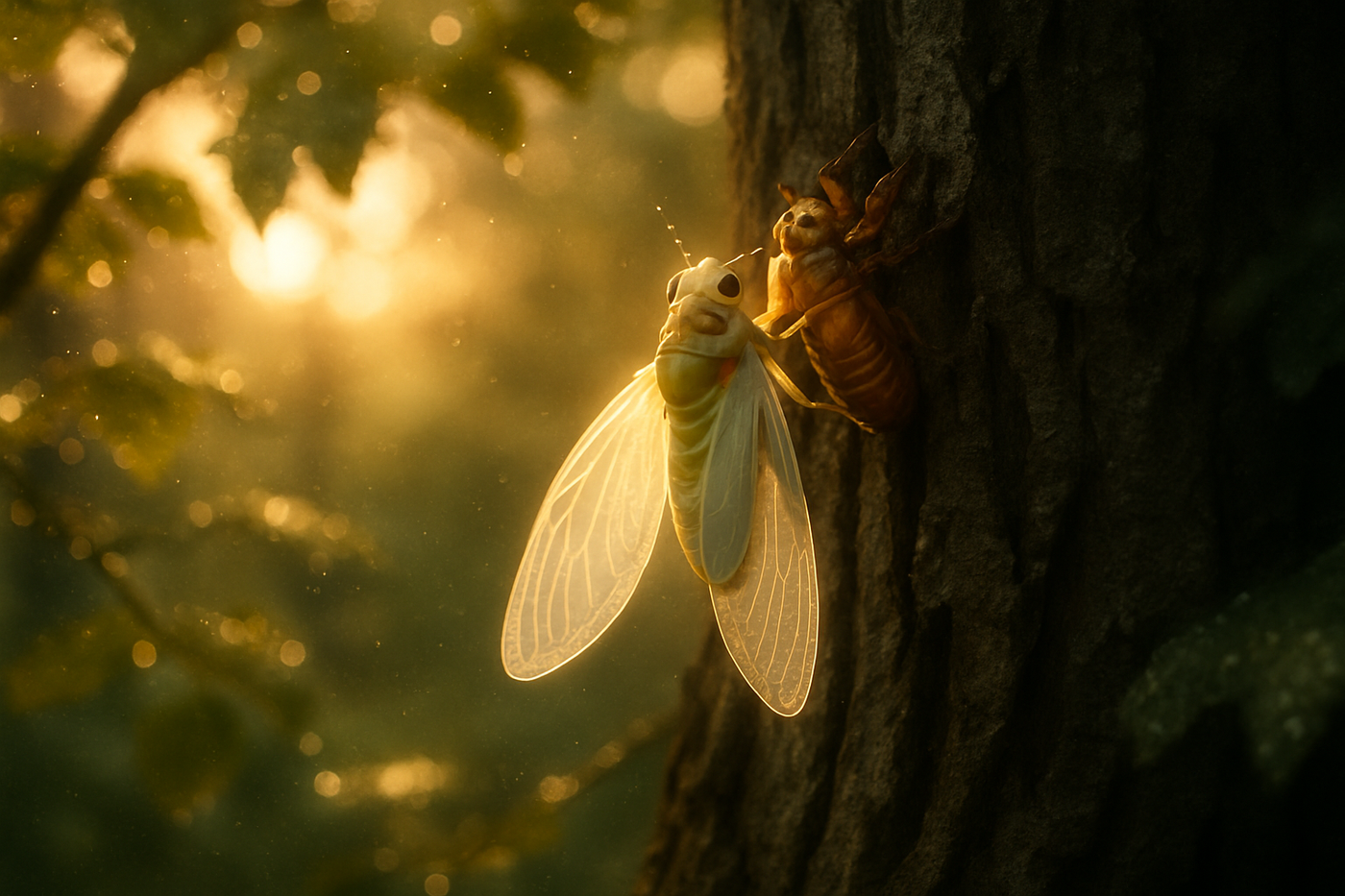
Cicada symbolism centers on rebirth, transformation, and the patience required before a breakthrough. Because the insect spends years underground before emerging to sing and mate for only a few weeks, it has become a widespread symbol of resurrection, timing, and the reward that comes after a long, hidden period of growth. Seeing or hearing a cicada is often read as a sign that a personal cycle is ending and a louder, more visible chapter of your life is about to begin.
There is something almost eerie about the first cicada song of the year. One moment the woods are quiet, and the next they are filled with a rising, pulsing drone that seems to come from everywhere at once. People who grew up around cicadas remember that sound the way others remember thunderstorms, a background hum of summer that marked the changing of seasons.
For many, that sound also carries a strange kind of comfort. It arrives after a long silence, sometimes years of silence in the case of periodical cicadas, and it announces that something patient and hidden has finally reached the surface. That contrast between the quiet waiting and the sudden, unmistakable noise is exactly why the cicada has held spiritual weight in so many separate cultures.
At its core, the cicada represents a cycle: burial, waiting, emergence, song, and death. Nearly every spiritual tradition that references the cicada builds on this same basic pattern, though the emphasis shifts depending on the culture.
This mix of waiting, sudden appearance, and short adult life is why cicadas show up so often in poetry, folklore, and spiritual writing as a stand-in for the human soul itself.
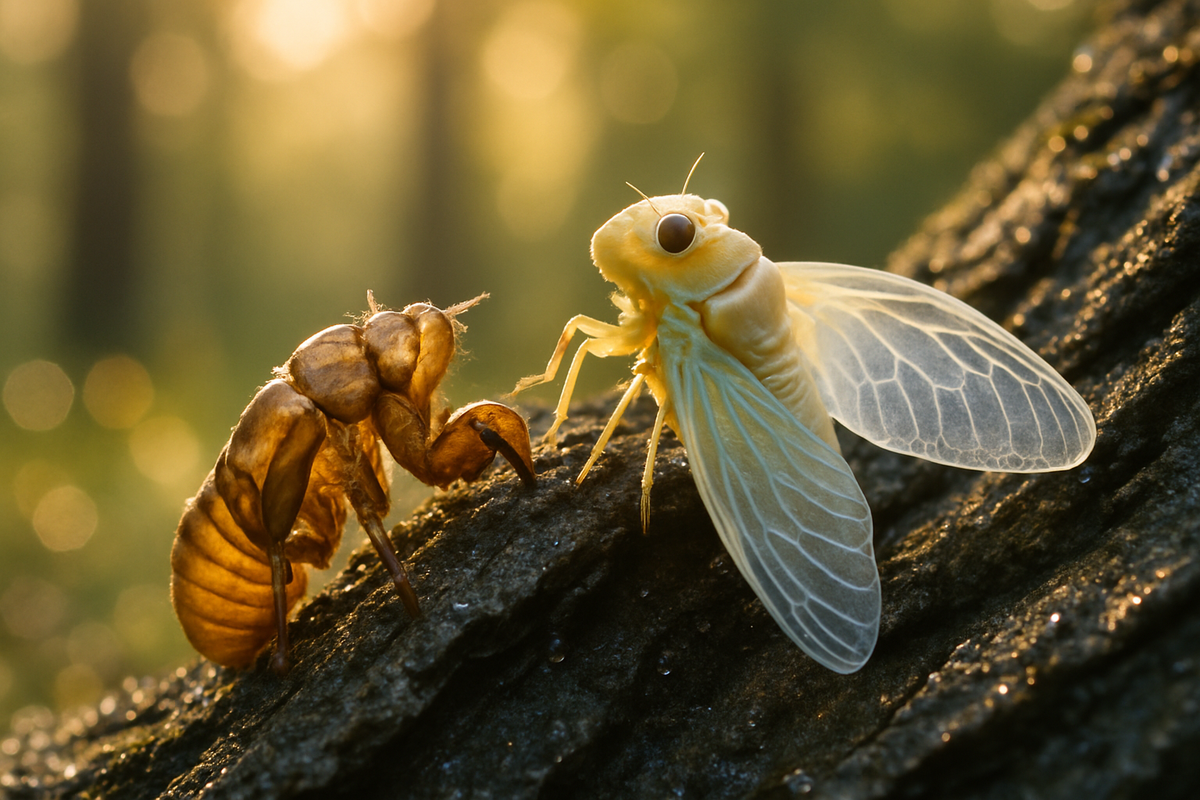
The cicada nymph digs itself out of the soil, climbs a tree or a fence post, and splits its own back open to release the winged adult inside. The empty shell stays behind, still gripping the bark, perfectly shaped but hollow. Spiritually, this is read as a picture of shedding an old identity while leaving the form of the past self visible behind you. It is a slower, more gradual version of the transformation symbolism found in hummingbird spiritual meaning, where change is sudden and darting rather than earned through years underground.
Periodical cicadas in North America spend either 13 or 17 years as nymphs feeding on root sap before ever seeing daylight. Spiritually, this long underground stage is compared to periods in a person's life that feel stagnant or invisible: years of study, quiet healing, or waiting for the right conditions. The cicada suggests that this waiting is not wasted time but preparation, and that the emergence, when it comes, will be loud and undeniable.
Male cicadas produce sound using ribbed membranes called tymbals on the sides of their abdomen, and some species reach volumes over 100 decibels, loud enough to cause hearing damage at close range. As a spiritual sign, a cicada appearing or singing nearby is often read as encouragement to speak up, sing, write, or otherwise stop staying quiet about something important. In this sense the cicada carries a message close to the messenger symbolism attached to the crow, another creature whose voice is impossible to ignore.
After years underground, an adult cicada may live for only two to six weeks. That short window is spent almost entirely on mating and laying eggs before it dies. This extreme gap between the long wait and the brief adult life has made the cicada a common symbol of impermanence, urging people to use their time fully once a goal or dream finally arrives rather than letting it pass unused.
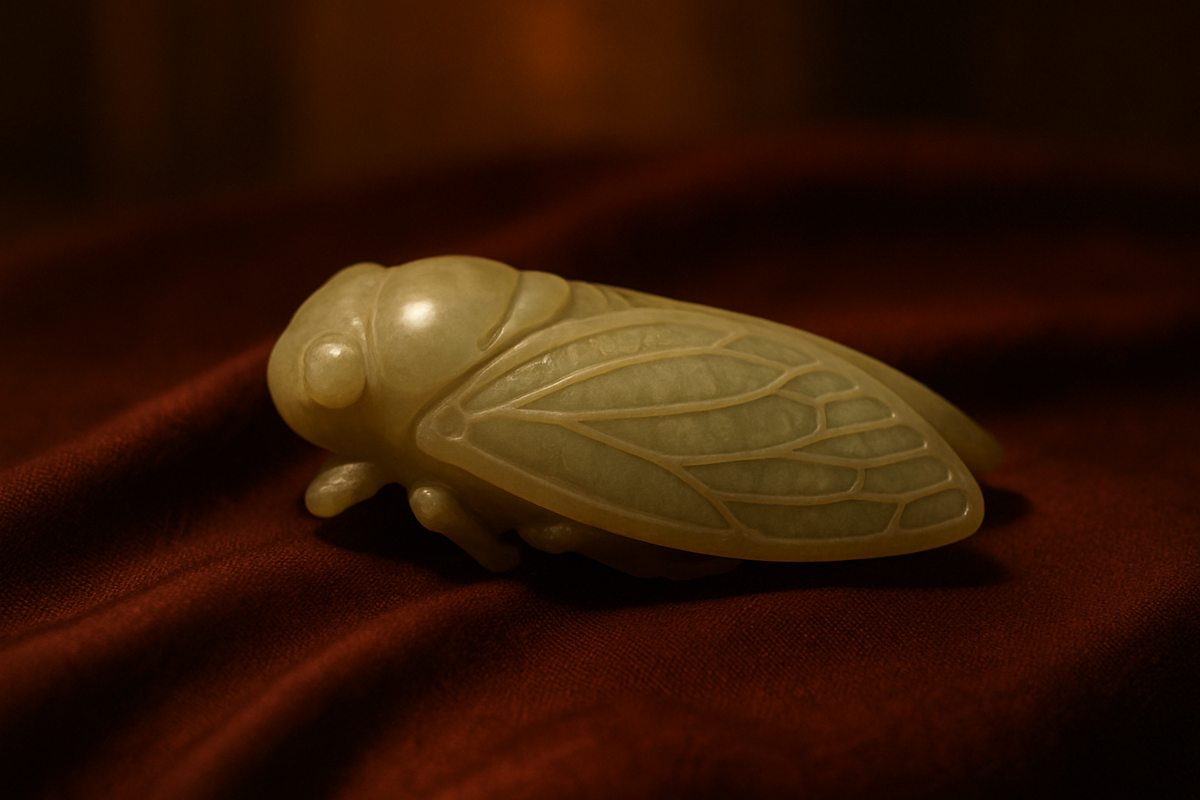
In Chinese tradition, the cicada is one of the oldest and most consistent symbols of immortality and rebirth. Jade cicada carvings were placed in the mouths of the dead during the Han dynasty, based on the belief that the insect's emergence from the earth mirrored the soul's release from the body. Chinese scholars and officials also linked cicadas to purity and moral integrity, since the insect was believed to survive on dew alone rather than eating other creatures.
Greek writers, including Plato in the Phaedrus, described cicadas as former humans who loved song so much that they forgot to eat or sleep and were transformed by the Muses into insects that could sing forever without needing food. Cicadas were also associated with the philosopher and teacher, since their constant singing was compared to the pursuit of wisdom and eloquence. In Athens, some citizens wore golden cicada pins in their hair as a sign that they were native-born Athenians, tying the insect to identity and belonging to the land itself.
Among Hopi and other Southwestern nations, the cicada is connected to the flute player figure Kokopelli, whose hump is sometimes interpreted as a cicada shape strapped to his back. The cicada's song was linked to fertility, the changing of seasons, and the return of warm weather needed for planting. In Hopi tradition, the cicada is also described as a teacher figure who reminds people to greet the sun and sing gratitude at the start of each day.
In Japan, the cicada, or semi, is closely tied to summer and to the Buddhist idea of mono no aware, the bittersweet awareness that beautiful things are temporary. The insect's short, loud life after years of silence is used in poetry, including haiku by Matsuo Basho, as a reminder of how quickly a season, a life, or a moment of happiness passes.
| Culture | Core Cicada Meaning | Practical Symbol |
|---|---|---|
| China | Immortality, purity, rebirth of the soul | Jade cicada carvings placed with the dead |
| Greece | Devotion to song, wisdom, native identity | Golden cicada hairpins |
| Hopi and Southwest tribes | Fertility, seasonal change, gratitude | Kokopelli flute player imagery |
| Japan | Impermanence, bittersweet beauty of summer | Semi in haiku and seasonal poetry |
Dreaming about cicadas usually points to something in your waking life that has been building quietly and is about to surface. The details of the dream change the specific reading.
These dream patterns sit alongside other insect dream symbolism, such as the sudden-leap energy found in grasshopper spiritual meaning or the fate-and-connection themes covered in spider spiritual meaning. Where the spider dream often points to webs of connection and control, the cicada dream points more directly to timing and release.
People who feel a pull toward the cicada as a totem or spirit animal are often drawn to periods of quiet, patient work rather than constant visible progress. A cicada totem suggests you trust long timelines and are comfortable being underground, unseen, and building strength before you show anyone what you have become.
This differs from a totem built around sudden, sharp transformation, like the scorpion, whose symbolism leans more toward defense, intensity, and confrontation with death. The cicada totem is gentler and more cyclical. It rewards those who can wait out a hard season without giving up, then use their voice fully once the waiting ends.
If cicadas keep appearing in your dreams, your yard, or your thoughts, treat it as a nudge rather than a demand. A few practical ways to work with the sign:
A cicada landing on you is generally read as a personal, direct message rather than a general omen, often tied to rebirth or a signal that you are ready for a change you have been putting off. In Chinese folklore, this direct contact is treated as a sign of good luck or protection, since the insect chose you specifically during its brief and busy adult life.
In Chinese tradition, the cicada is generally considered a positive symbol tied to rebirth, purity, and long life rather than bad luck. Western folklore has no strong negative association either, so a cicada sighting is usually treated as a neutral to positive sign of change rather than a warning.
The sound of a cicada is often interpreted as a call to speak your truth, sing your own song, or stop suppressing something you have wanted to say. Because the sound arrives after years of silence underground, it is also read as confirmation that a long wait is finally paying off.
The empty cicada shell, still shaped like the insect but hollow, is treated in several cultures as a symbol of the soul leaving an old body or an old identity behind. Finding one is often read as encouragement to release a past version of yourself that you have already outgrown.
Discover what the seahorse truly symbolizes - patience, protection, fatherhood, and inner strength - across myth, dreams, and mode…
Why black cats are tied to Halloween, luck, and witchcraft, and what their spiritual meaning actually is across history and cultur…
An owl at night isn't random. Here's what it means spiritually, across cultures, and what to do when one visits you after dark.