Symbols
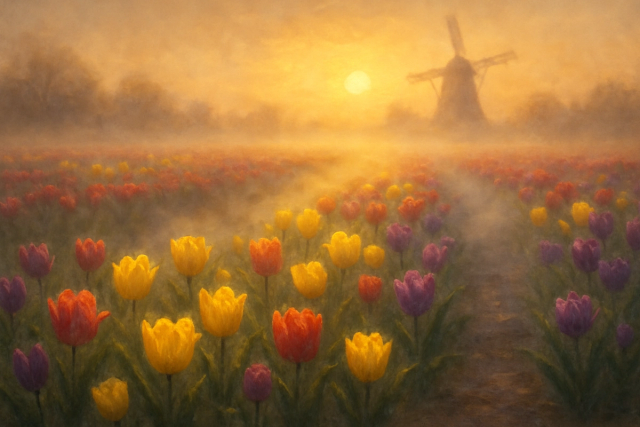
Tulip Flower Meaning and Symbolism Explained
What tulips really mean by color and culture, from Ottoman sultans and Dutch tulip mania to modern love and dreams.
 KnowMastery
 Symbols of death and rebirth represent the belief that endings are never final, they are transformations. Across the ancient world, cultures used images like the phoenix rising from ash, the snake shedding its skin, the lotus growing from mud, and the skull resting beside new wheat to teach the same lesson: destruction clears space for renewal. These symbols show up in mythology, funerary art, tattoos, and modern spiritual practice because the fear of death and the hope of continuation are two of the oldest human experiences there are.
Think of a wildfire moving through a forest. From a distance it looks like pure loss, blackened trunks and smoke. But walk through that same forest a year later and you find green shoots pushing through the ash, wildflowers that only bloom after fire, seeds that needed the heat to crack open. That is the entire idea behind death and rebirth symbolism in one image.
Humans have been telling this story for thousands of years, in tombs along the Nile, in Norse sagas carved into stone, in Buddhist temples, and in the marigold covered altars of Mexico. The details change, but the shape of the story stays remarkably consistent.
At their core, these symbols express a cyclical view of existence rather than a strictly linear one. Instead of birth, life, death, the end, many traditions insert a fourth step: return. Death becomes a threshold, a doorway, or a season rather than a wall.
This idea shows up in nature constantly, which is likely why it became such a common symbol language:
Ancient people watched these patterns closely, since their survival depended on understanding cycles of harvest and scarcity. It made sense to apply the same logic to human mortality.
The phoenix appears in Greek, Egyptian, and Persian sources as a bird that bursts into flame at the end of its life and rises again from its own ashes. Herodotus described it in the 5th century BC as a bird from Arabia that visits Egypt once every 500 years to bury its predecessor in a temple of the sun. The phoenix has since become shorthand across Western culture for surviving something that should have destroyed you.
The ouroboros, a serpent eating its own tail, first shows up in Egyptian funerary texts around the 14th century BC, later carried into Greek philosophy and alchemy. It represents a closed loop with no true beginning or end, life feeding on its own death to keep circling forward. Carl Jung later used it as a symbol for psychological wholeness and the integration of opposites, an idea that connects closely to the balance found in yin and yang symbolism.
In European art the skull became known as memento mori, Latin for "remember you must die," appearing in paintings from the 1500s onward to remind viewers that wealth and beauty are temporary. In Mexico the same shape carries the opposite emotional tone. During Dia de los Muertos, sugar skulls called calaveras are decorated in bright colors and given as sweet gifts, treating death as something to celebrate rather than fear.
In Buddhist and Hindu traditions the lotus grows up through murky pond water to bloom clean and untouched at the surface. It represents the soul rising through suffering toward enlightenment, and it appears constantly in depictions of Buddha seated on an open lotus throne.
Ancient agricultural societies used grain as a natural metaphor for resurrection. In the Eleusinian Mysteries of ancient Greece, initiates connected the myth of Persephone's descent into the underworld directly to the planting of seed in autumn and its return as wheat in spring.
Egyptian religion built its entire cosmology around resurrection. Osiris, murdered and dismembered by his brother Set, was reassembled and revived by his wife Isis, becoming ruler of the underworld and a symbol of continued life after death. The scarab beetle, seen pushing dung balls that Egyptians associated with the sun's daily rebirth, became a common amulet placed on mummies to guarantee resurrection in the afterlife.
Norse cosmology centers on Yggdrasil, the great ash tree connecting nine worlds, an idea closely related to the broader tree of life symbolism found in many other traditions. Ragnarok, the prophesied destruction of the gods and the world itself, is not the final chapter of the Norse story. Surviving texts describe a new earth rising from the sea afterward, green and fertile, with surviving gods and two human survivors repopulating the world.
Samsara, the wheel of birth, death, and rebirth, sits at the center of both traditions. Souls are reborn according to karma accumulated in past lives, cycling through different forms until they achieve moksha or nirvana, release from the wheel entirely. This wheel is often depicted literally, held in the jaws of Yama, the lord of death, which turns the concept into something visually unavoidable in temple art.
Aztec religion treated death as a doorway rather than a punishment. Xolotl, a dog headed god, was believed to guide the dead through the underworld of Mictlan. The modern Mexican holiday Dia de los Muertos descends from these older beliefs blended with Catholic All Souls' Day traditions, resulting in altars decorated with marigolds, photographs, and favorite foods of the deceased, inviting spirits back for a night of reunion rather than mourning.
The Celtic festival of Samhain, held at the end of the harvest season, marked the point where the boundary between the living and the dead was believed to thin. Bonfires were lit and offerings made, a practice that later blended into modern Halloween. The triskelion spiral, found on Celtic monuments like Newgrange in Ireland, is often read as a symbol of three part cycles: life, death, and rebirth, or past, present, and future.
| Symbol | Origin | Core Meaning |
|---|---|---|
| Phoenix | Greek, Egyptian, Persian | Rising renewed from total destruction |
| Ouroboros | Ancient Egypt, later Greek alchemy | Endless cycle with no true beginning or end |
| Scarab beetle | Ancient Egypt | Daily rebirth of the sun and the soul |
| Wheel of Samsara | Hinduism, Buddhism | Continuous cycle of birth and death until enlightenment |
| Sugar skull | Mexico | Death honored with celebration, not fear |
| Lotus flower | India, Southeast Asia | Spiritual rising through suffering |
| Triskelion | Celtic Ireland and Britain | Three part cycle of existence |
Dreaming about death rarely predicts an actual death, according to most dream interpretation traditions. It tends to signal a major life transition already underway.
If these dreams repeat, it can help to write down what was ending in your waking life around the same time. The pattern usually points to something concrete rather than something mystical.
You do not need to belong to a specific tradition to use death and rebirth symbolism as a tool for reflection. Here are a few grounded ways people apply it:
These symbols also show up frequently alongside other protective or transitional imagery, such as the dream catcher, which was originally used to filter bad dreams before they reached a sleeping child. Looking at symbols side by side often shows how separate cultures landed on similar visual answers to the same fear of ending.
Christian tradition frames resurrection as its central event rather than a background theme. The crucifixion and resurrection of Jesus, commemorated at Easter, follows the same three day death then return structure found in older Mediterranean myths, though within Christianity it is understood as a single historical event rather than a repeating natural cycle. Many Catholic symbols, including the empty tomb and the rooster of Peter's denial, carry this same theme of failure followed by renewal.
The phoenix is probably the most widely recognized symbol of death and rebirth in Western culture, appearing in Greek, Egyptian, and Persian sources long before it became a modern shorthand for personal recovery. The ouroboros and the lotus flower are close runners up, especially in discussions of cyclical time and spiritual transformation.
The snake is the most common animal used this way, since it visibly sheds its own skin and appears to emerge as a new creature. The scarab beetle held a similar role in ancient Egypt, tied to the daily rebirth of the sun.
The lotus is the primary flower associated with rebirth, especially in Hindu and Buddhist art, because it grows up through muddy water to bloom clean at the surface. In Mexican tradition, marigolds carry a related meaning, used to guide spirits back to their families during Dia de los Muertos.
No, most dream interpretation traditions treat death dreams as symbolic of change rather than as a literal warning. They usually point to a job, relationship, or personal identity that is ending, making room for something new to begin.
What tulips really mean by color and culture, from Ottoman sultans and Dutch tulip mania to modern love and dreams.
Every culture has its share of symbols and traditions where the legend or tradition has more meaning than can be described within …
What does the crescent moon mean? Explore its spiritual symbolism, mythology, dream meaning, necklace significance, and rituals fo…