Spiritual
Heart Chakra Meaning: Signs, Symbols & How to Heal It
Discover the heart chakra's true meaning, signs of imbalance, and simple practices to open Anahata for more love, connection, and …
 KnowMastery
Deja vu is spiritually interpreted as a moment when your soul recognizes something beyond ordinary time - a fragment of a past life, a fated encounter, or a glimpse of your soul's chosen path resurfacing into conscious awareness. While neuroscience explains it as a brief memory-processing glitch, spiritual traditions see it as a signal that you are exactly where you are meant to be, or a nudge to pay closer attention to the present moment because it carries deeper significance.
You're walking into a room you've never entered, meeting someone you've never met, and yet your whole body hums with the certainty: I've done this before. The feeling lasts only seconds, but it leaves behind a strange residue - as if a curtain briefly lifted on something larger than the life you thought you were living.
For most of us, deja vu isn't just a curiosity. It's unsettling in a beautiful way. It makes us question the shape of time itself, and whether our lives are as linear as they seem. If you've been chasing the meaning behind these moments, you're not alone - and the spiritual world has a lot to say about it.
Spiritually, deja vu is often described as a crack between timelines - a moment where your soul's memory, your intuition, and your physical reality briefly align. Instead of a malfunction, it's treated as a form of remembering: your consciousness catching up to something your spirit already knew.
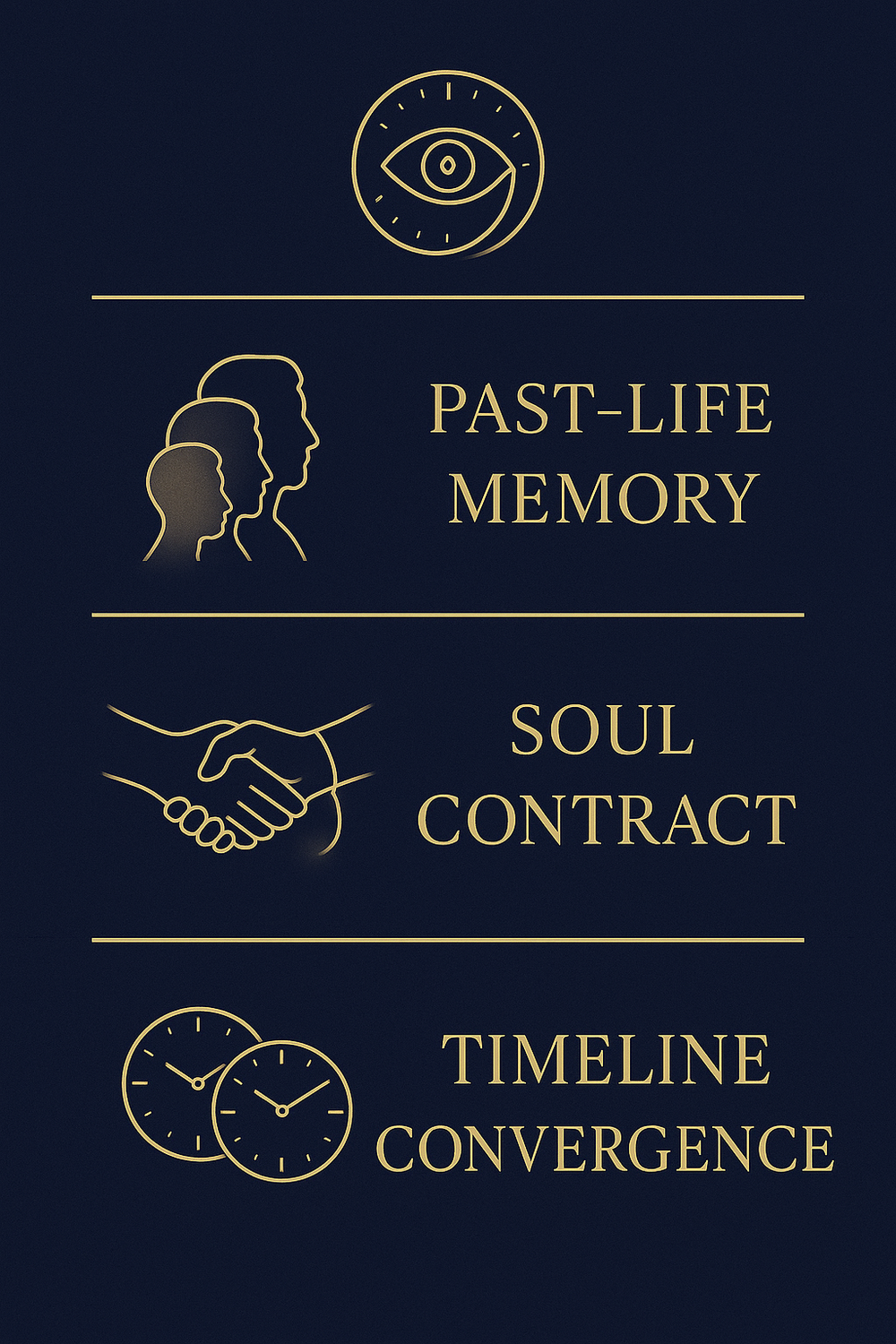
Three broad spiritual explanations show up again and again across traditions:
Long before psychologists coined the French term deja vu ('already seen') in the late 19th century, cultures around the world had their own frameworks for this exact experience - and most of them treated it as meaningful rather than accidental.
In Hindu philosophy, the soul (atman) undergoes countless incarnations, and deja vu is often understood as a flash of samskara - subtle impressions carried from previous lives that shape our instincts, attractions, and reactions in this one. A sudden familiarity with a stranger or place is seen as karmic residue surfacing briefly into awareness.
Buddhism frames deja vu less as a literal memory and more as evidence of the cyclical, repeating nature of existence within samsara - the wheel of birth, death, and rebirth. Some Buddhist teachers interpret the feeling as a gentle reminder that patterns repeat until we learn from them, encouraging mindfulness rather than fixation on the sensation itself.
Ancient Egyptians believed the soul (ka) traveled between the physical and spiritual worlds during sleep and moments of altered perception, which some scholars link to Egyptian accounts of prophetic familiarity recorded in temple writings. In Ancient Greece, Plato's theory of anamnesis proposed that all learning is really remembering - the soul recalling eternal truths it knew before birth. A deja vu moment, in this light, is the soul briefly touching that eternal knowledge again.
Some modern writers on spirituality associate déjà vu with Andean and Siberian shamanic traditions of soul travel and spirit memory, though no documented ethnographic source describes déjà vu specifically within these traditions. It's treated as evidence that the boundary between worlds is thinner than we assume, and elders in these traditions often encourage paying close attention to what surrounded the moment rather than dismissing it.
Spiritual practitioners often point to specific circumstances where deja vu tends to intensify. Recognizing these can help you understand what your experience might be pointing toward.
| Trigger | Common Spiritual Interpretation |
|---|---|
| Meeting a new person instantly familiar | Possible soul contract or past-life connection |
| Arriving in an unfamiliar city or landscape | Past-life residence or ancestral memory |
| Recurring dreams matching waking events | Precognitive dreaming or soul-level foresight |
| Sudden deja vu during major life decisions | Confirmation you're aligned with your soul's path |
| Deja vu paired with strong emotion (fear, joy, grief) | Unresolved karmic pattern resurfacing |
Notice how many of these triggers involve people. This is one reason deja vu comes up so often in discussions about twin flame connections - many people report an overwhelming sense of deja vu the moment they meet a significant soul in this lifetime, as if the meeting had already been rehearsed somewhere beyond memory.
Deja vu doesn't only happen while awake. Some people experience a haunting familiarity within a dream itself, or wake up realizing a dream from months earlier is now playing out in real life. Dream researchers and spiritual interpreters alike suggest a few explanations:
If deja vu dreams are a recurring pattern for you, it may be worth exploring your broader dream life more closely - much like how dreams about flying often symbolize a desire for freedom, or dreams about snakes can point to transformation, your deja vu dreams may be carrying a consistent symbolic thread worth tracking in a journal.
Many spiritual teachers frame deja vu as one of several signs of alignment - alongside repeating numbers, recurring symbols, or synchronistic encounters that seem too precise to be coincidence. If deja vu clusters around a specific decision or season of your life, spiritually minded practitioners often interpret this as confirmation that you're on the right path, or that an important turning point is close.
Deja vu can also feel connected to a sense of destined companionship, similar to what people describe when they meet kindred spirits - that instant, inexplicable sense of having known someone before words are even exchanged.
Rather than dismissing the sensation or overanalyzing it, spiritual practitioners recommend treating deja vu as an invitation to pause and observe. Here's a practical approach:
Occasionally, deja vu is described in folklore not as comfort but as caution. In Scottish Highland folklore, 'second sight' was believed to grant certain people visions of events yet to come, often deaths or misfortunes, a form of precognition distinct from the déjà vu sense of reliving a moment already experienced. Similarly, some Irish folk traditions treated an unexplained wave of familiarity as a sign that a person was retracing a path their ancestors once walked, for better or worse. In both cases, the feeling wasn't meant to be feared outright, but taken seriously as information. If your deja vu consistently arrives with dread rather than wonder, it's worth treating it as a prompt to change course, not just something to observe passively.
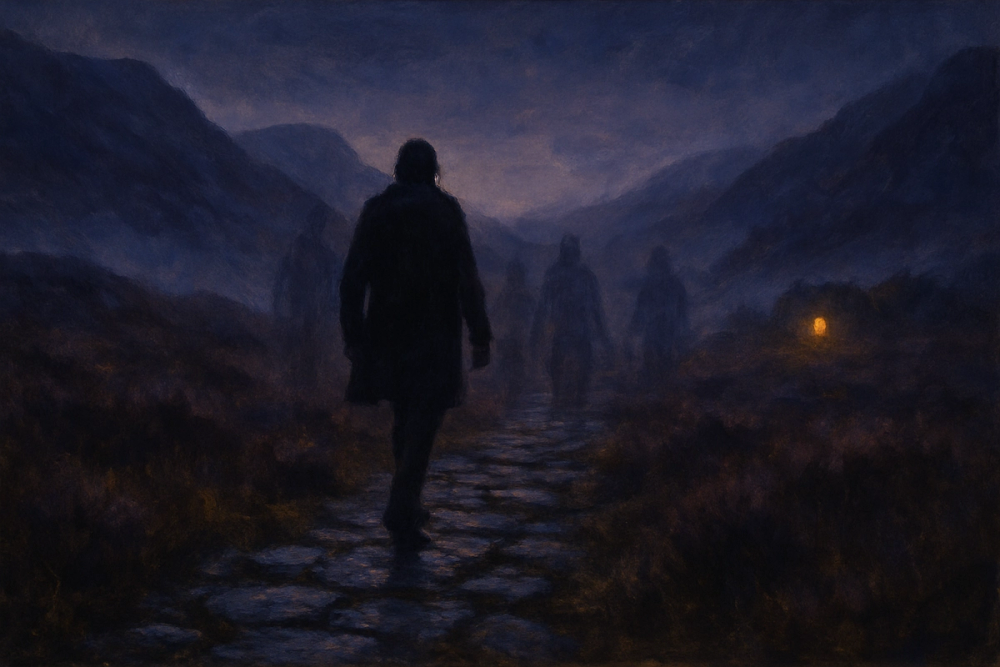
Spiritually, deja vu involving a specific person is often interpreted as a sign of a soul contract - an agreement your souls made before this lifetime to meet again. It can also indicate a past-life connection, especially if the familiarity feels emotionally intense rather than purely visual.
Many spiritual traditions, particularly those rooted in Hindu and Buddhist reincarnation beliefs, view deja vu as a flicker of memory from a previous incarnation. While science attributes it to memory-processing quirks, spiritual interpretations treat it as evidence of a soul's long journey across multiple lifetimes.
Recurring deja vu tied to the same theme, place, or person often points to an unresolved pattern your soul is asking you to notice and address. Spiritually, it's treated less as coincidence and more as a repeated nudge until the lesson or connection is acknowledged.
Some spiritual and dream researchers link deja vu to precognitive experiences, suggesting your subconscious processed information about an event before it happened. While not scientifically proven, many people report deja vu moments that later feel like they foreshadowed a significant life event.
Discover the heart chakra's true meaning, signs of imbalance, and simple practices to open Anahata for more love, connection, and …
What pregnancy dreams really mean spiritually: new beginnings, hidden fears, cultural insights, and how to interpret yours.
Dreaming your teeth are falling out? Discover what it means spiritually, biblically, and psychologically — plus what recurring ver…