History
History of Lockets: Meaning and Evolution Through Time
Where lockets came from, what they symbolized through history, and why people still wear them close to the heart today.
 KnowMastery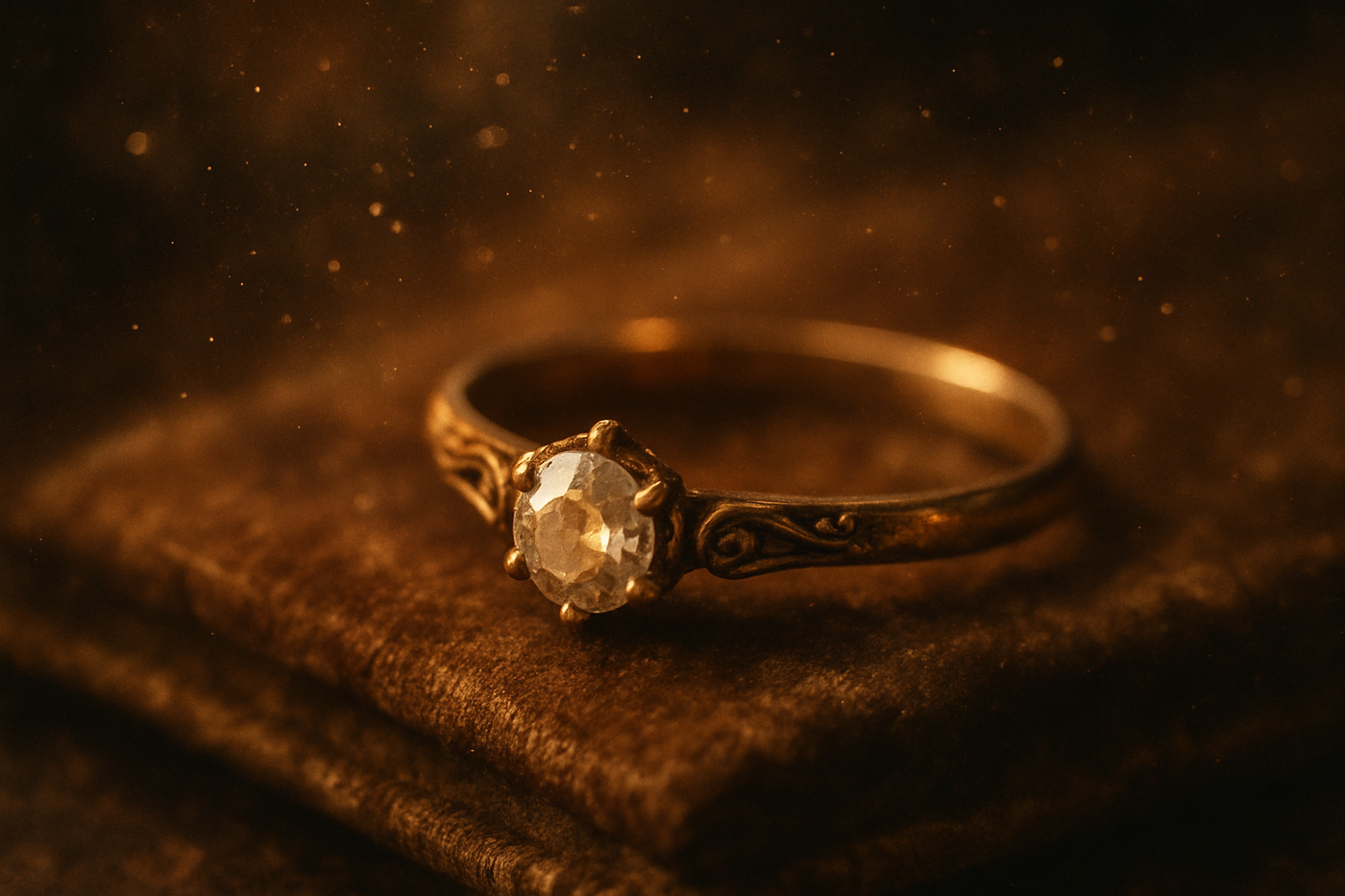
An engagement ring is a piece of jewelry exchanged as a public pledge of marriage, a tradition that began as a Roman legal custom around the 2nd century BC and evolved through medieval sentiment, royal commissions, and a 20th-century advertising campaign into today's diamond-dominated norm. Early rings functioned less as love tokens and more as binding proof of a financial and legal agreement between two families. We wear the ring on the left hand because of an ancient Egyptian and Roman belief that a vein there ran straight to the heart, and diamonds did not become the default choice until 1947, when a De Beers advertising campaign reshaped how the world thought about proposing marriage.
Quick Answer
There is something quietly strange about a small metal band carrying so much weight. A single ring can hold a proposal, a family history, an inheritance, or a promise whispered in a moment of nerves. People have cried over these rings, pawned them in hard times, buried them with the dead, and passed them down four generations later still warm from someone else's hand.
Before it became a jewelry store purchase, the engagement ring was a legal document you could wear. Before that, it was a piece of iron meant to outlast a marriage that might not. The story of how we got from there to a diamond on a velvet cushion says a lot about how societies have understood love, ownership, and commitment over time.
The ancient Egyptians are usually credited with the earliest version of the ring as a symbol of eternity. In a popular but historically unverified tradition, ancient Egyptians are said to have exchanged reed or hemp rings as tokens of affection as far back as 3000 BC, worn on the left ring finger in the belief that a vein ran from it to the heart. The Egyptians called this vessel the "vena amoris," a phrase the Romans later borrowed and made famous.
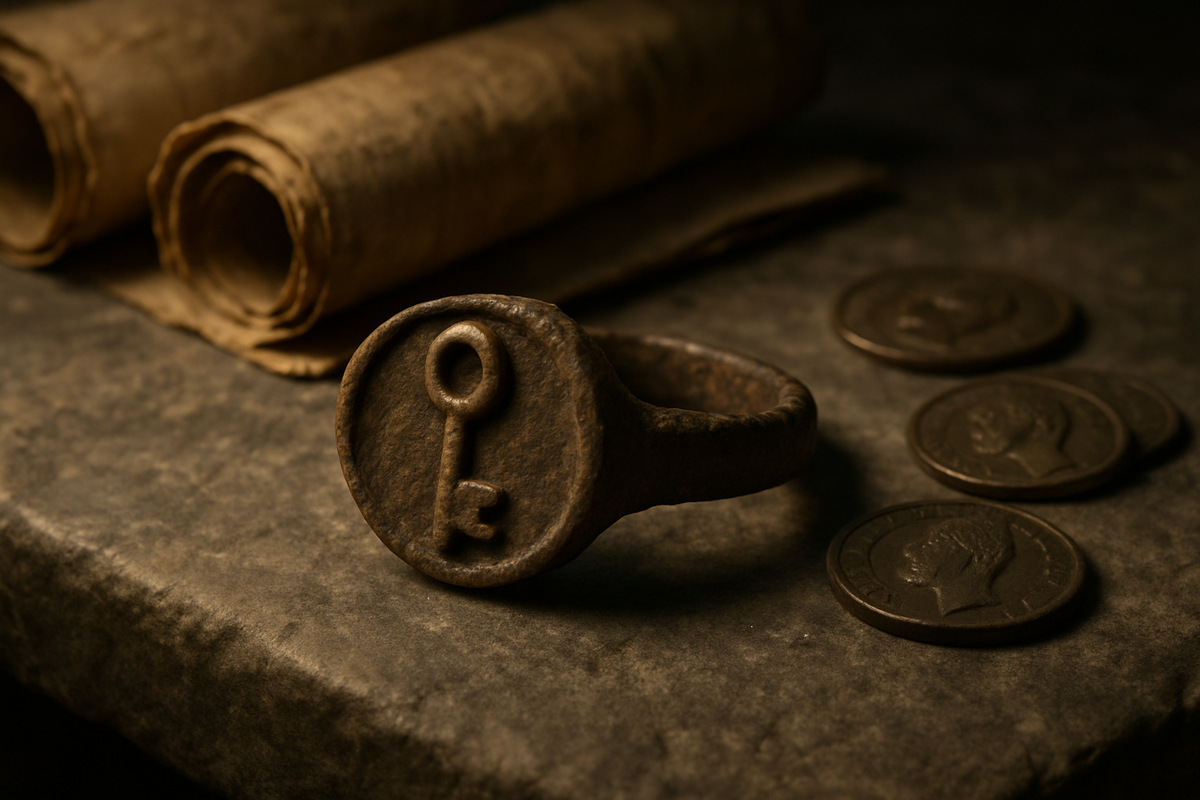
Roman betrothal customs involved a legal agreement between families, often tied to dowry arrangements, with an iron ring serving as a token or pledge of that contract rather than the contract itself. Roman brides received two rings: a gold one to wear in public and an iron one to wear at home while doing housework, since gold was too soft and precious for daily labor. The iron band was not sentimental. It was a public marker that a woman was spoken for, and it doubled as a symbol of the legal and financial arrangement between two families. Pliny the Elder documented Roman wives receiving a plain iron betrothal ring with no stone at all, while a separate Roman style of 'key ring' is sometimes linked to a wife's custodianship of household stores.
By the Middle Ages, rings had started to mean something more personal. Posy rings, small gold bands engraved with short romantic verses in French or English, became popular across Europe in the 15th and 16th centuries. Phrases like "my heart is yours" were carved into the inner or outer surface, meant to be read only by the wearer or a very close observer.
Gimmel rings, made of two or three interlocking bands that separated and rejoined, were another medieval favorite. Couples would each wear one half during their engagement and reunite the pieces at the wedding ceremony, a physical enactment of two lives joining into one. This era also overlaps with the broader story told in the history of jewelry, where ornamentation shifted from pure status display toward personal and emotional meaning.
In 1477, Archduke Maximilian of Austria commissioned a diamond ring for Mary of Burgundy to secure their betrothal. The 1477 ring is popularly said to have been set with thin, flat diamonds arranged in the shape of an 'M', though this detail comes from tradition rather than confirmed court records. This is the first documented diamond engagement ring in European history, though centuries passed before diamonds became common for anyone outside royalty and the very wealthy.
For most of history, engagement rings were made of whatever a family could afford: iron, gold, garnet, ruby, or plain bands with no stone at all. That changed dramatically in the late 1800s and early 1900s, driven less by tradition and more by business strategy.
Major diamond deposits were discovered in South Africa in 1867, and a company called De Beers gained control of most of the global supply by the 1880s. N.W. Ayer's copywriter Frances Gerety created the 'A Diamond is Forever' slogan for De Beers in 1947, one milestone in a decades-long marketing campaign that gradually made diamonds the standard engagement ring choice. The campaign linked diamond size to the depth of a man's love and pushed the idea that a ring should cost roughly one to two months' salary, a guideline invented by copywriters that had no historical basis but stuck for decades.
Key Dates at a Glance:
Not every culture arrived at the diamond solitaire the same way, and several traditions never adopted it at all in their original form.
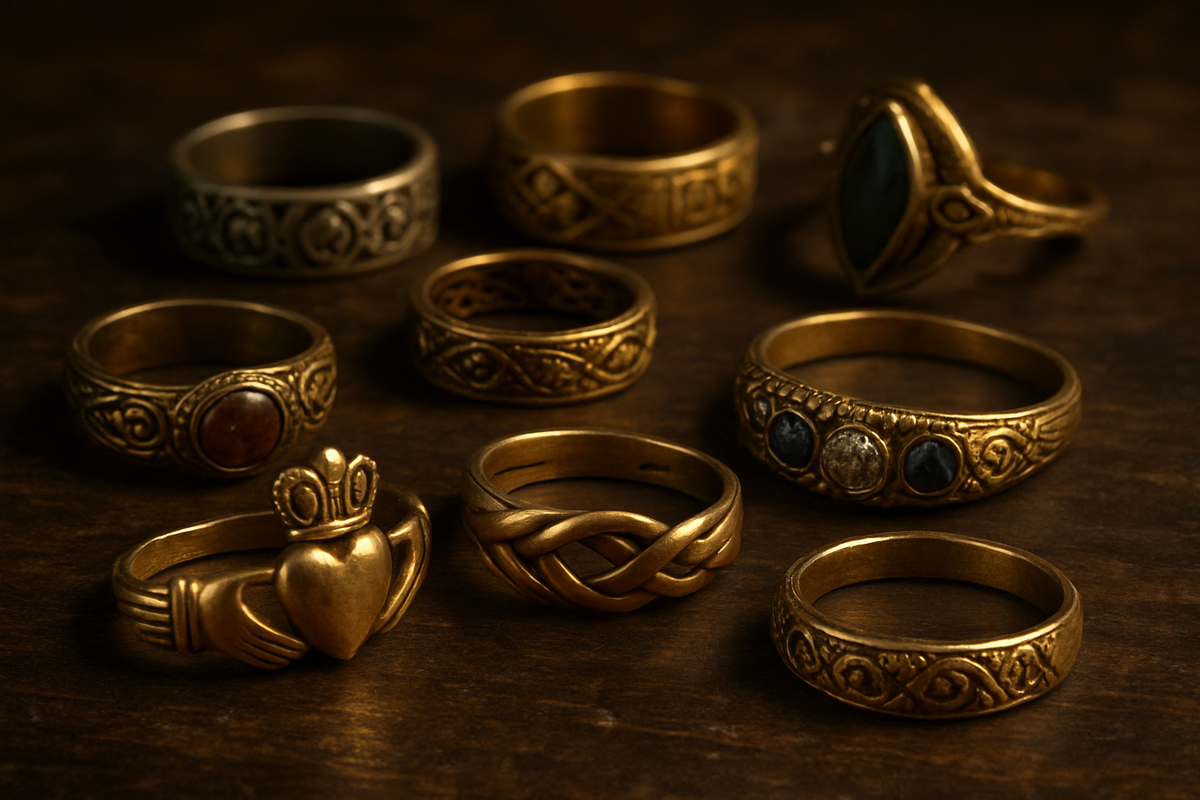
The Claddagh ring, originating in the fishing village of Claddagh near Galway in the 17th century, shows two hands holding a heart topped with a crown, representing friendship, love, and loyalty. How it is worn communicates relationship status: pointing outward on the right hand for single, inward on the right hand for a relationship, and inward on the left hand for marriage or engagement.
Puzzle rings, made of several interlocking bands that separate into pieces and require a specific sequence to reassemble, have roots in Turkey and the broader Ottoman world. Legend holds that a husband could tell if his wife had removed the ring in his absence, since reassembling the puzzle correctly required skill or memorized instruction.
In Russia and parts of Eastern Europe, the wedding and engagement ring is traditionally worn on the right hand rather than the left, a practice tied to Orthodox Christian custom where the right hand is associated with oaths and blessings.
| Culture or Era | Typical Ring Material | Core Symbolism |
|---|---|---|
| Ancient Rome | Iron, later gold | Legal ownership and domestic contract |
| Medieval Europe | Gold posy or gimmel bands | Personal affection, secret messages |
| Ireland (Claddagh) | Gold or silver | Friendship, loyalty, love |
| Ottoman Turkey | Interlocking bands | Fidelity, trust |
| 20th century West | Diamond solitaire | Status, permanence, romantic ideal |
The circle itself carries meaning older than any specific tradition. A ring has no beginning and no end, which is why so many separate cultures independently landed on it as a symbol of eternity and unbroken commitment. Placing it on a finger connected, at least symbolically, to the heart reinforced the idea that the promise was not just social but physical and emotional.
In Ayurvedic and yogic tradition, the ring finger is linked to the sun and to personal vitality, and some practitioners connect it to the heart chakra, or Anahata, as a spiritual framework rather than an anatomical fact. Whether or not one takes that literally, the ring functions the way other small wearable objects have throughout history, similar to how a carved cameo brooch once identified a person's lineage or loyalty at a glance, an engagement ring marks a bond on sight, no explanation needed.
In folk dream interpretation, receiving an engagement ring is read as a desire for stability or commitment, not necessarily romantic, sometimes tied to a career decision or a long-term plan the dreamer is finally ready to commit to. Losing a ring in a dream is commonly read as anxiety about a relationship or a fear of losing security. Dreaming of buying a ring for someone else can point to a wish to take responsibility for another person's happiness or wellbeing.
Strip away the advertising history and the ring still does the job it did in ancient Rome: it announces a commitment before words are needed. What has changed is what that commitment is understood to mean. Where the Roman iron band signaled legal ownership and a transfer of property between families, a modern engagement ring is more commonly read as a symbol of mutual choice, partnership, and emotional investment between equals.
That shift shows up in practical ways. Couples increasingly choose heirloom stones, colored gemstones, or custom designs over a standard diamond solitaire, echoing older traditions like garnet and sapphire rings that predate the diamond's dominance by centuries. Same-sex couples have reshaped the symbolism further, with many choosing matching bands for both partners rather than a single ring given by one person to another, which pushes the tradition back toward its oldest root: two people making a visible, voluntary promise to each other, with no built-in assumption about who proposes or who wears which ring.
The financial symbolism has also loosened. The "months' salary" guideline, invented by a 1947 ad agency rather than inherited from any genuine tradition, carries far less cultural weight today, and many couples now treat ring cost as a personal budgeting decision rather than a measure of devotion. In that sense, the modern ring has started circling back toward something closer to its ancient role: a meaningful object chosen deliberately, rather than a status symbol dictated by outside pressure.
Knowing where the tradition came from can change how you approach it. A few practical ways to apply that:
The engagement ring sits alongside other wearable markers of identity and status that have shifted meaning across centuries, carrying a weight that few other everyday objects do. Objects we wear rarely stay simple for long.
The practice dates to ancient Rome around the 2nd century BC, where iron rings marked a legal betrothal agreement between families. Diamonds specifically entered the tradition much later, starting with Archduke Maximilian's proposal to Mary of Burgundy in 1477.
The custom comes from an ancient Egyptian and later Roman belief that a vein in the fourth finger of the left hand, called the vena amoris, ran directly to the heart. This idea had no anatomical basis, but the symbolism stuck across most Western cultures.
Diamonds became standard mainly because of a 1947 De Beers advertising campaign, "A Diamond is Forever," which linked diamond size to romantic devotion for American consumers after World War II. Before this, engagement rings commonly used iron, gold, garnet, or other gemstones depending on the family's wealth and region.
In folk dream interpretation, receiving a ring is usually read as a wish for stability or commitment in some area of life, not always romantic. Losing a ring in a dream typically points to anxiety about security in a relationship rather than a literal prediction.
Spiritually, the ring's circular shape is widely read as a symbol of eternity and unbroken commitment, since it has no visible beginning or end. Some traditions, including Ayurvedic practice, also connect the ring finger to the heart chakra or to personal vitality, framing the ring as a physical anchor for an emotional and spiritual promise.
No, there is no genuine historical rule about how much an engagement ring should cost. The "two months' salary" guideline was invented by advertising copywriters working for De Beers in the mid-20th century and has no basis in older tradition, so couples today are free to spend whatever fits their own budget and priorities.
Where lockets came from, what they symbolized through history, and why people still wear them close to the heart today.
A full history of the signet ring, from Mesopotamian wax seals to today's heirloom and statement rings, with meanings and modern s…

A full review of 'Who Loves the Sun' (2006): plot breakdown, cast guide, ending explained, and where the Canadian dramedy was film…