History
History of Mirrors: Timeline From Obsidian to Glass
A full timeline of mirror history—from 6000 BCE obsidian to Venetian glass—plus the myths, superstitions, and dream meanings behin…
 KnowMastery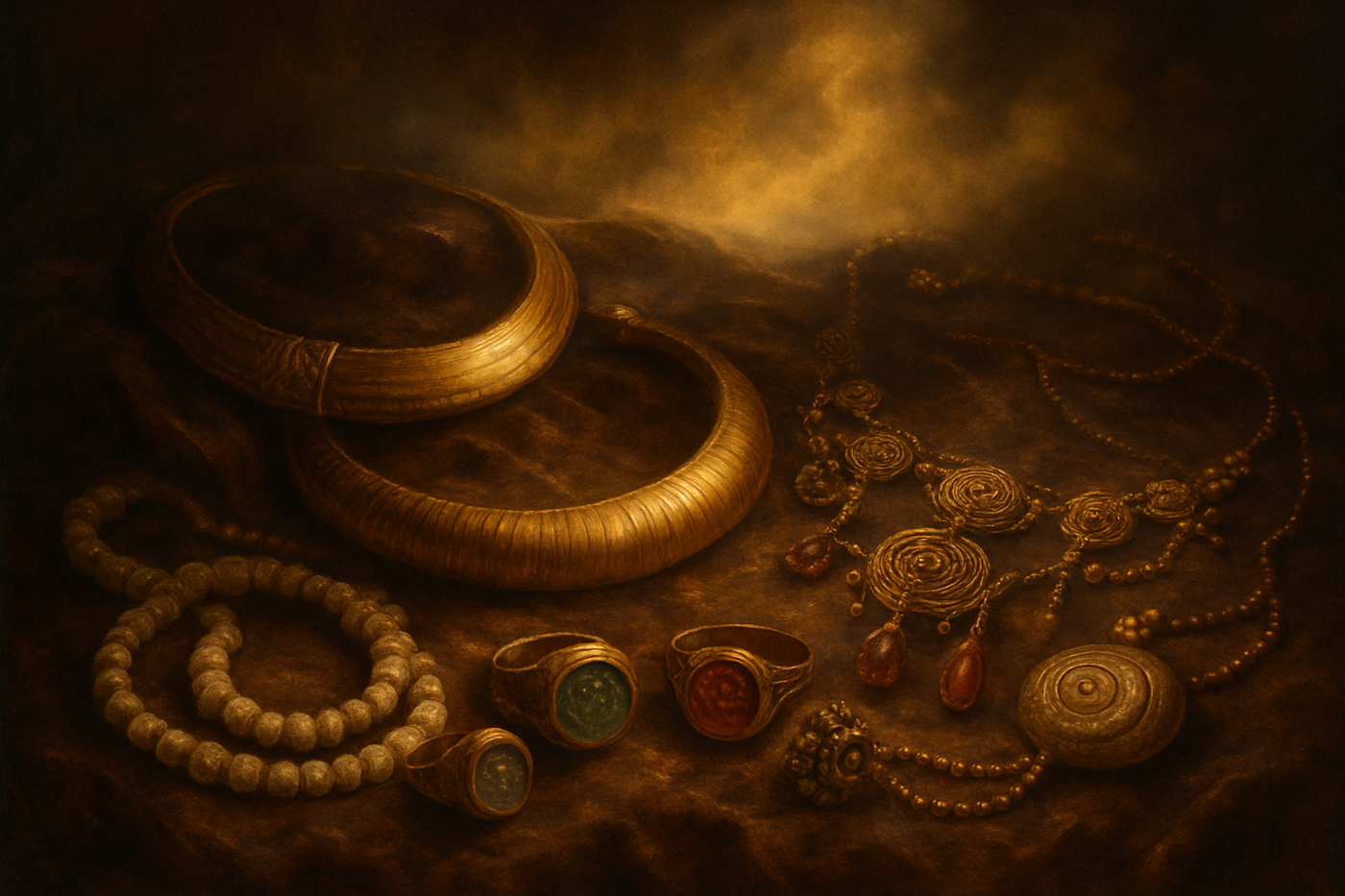
Jewelry began roughly 100,000 years ago as pierced shells and beads, worn not for vanity but for identity, protection, and status. Archaeological finds in Africa and the Middle East show that early humans used ornaments to signal group belonging, mark rites of passage, and invoke spiritual protection. Over millennia, this instinct spread across Egypt, Mesopotamia, India, Europe, and the Americas, each civilization adding its own materials and beliefs. From those first shell necklaces to today's engagement rings, jewelry has always served the same core purpose: turning materials into meaning.
Picture a Neolithic mother tying a string of polished bone beads around her child's neck before a dangerous journey - not decoration, but a talisman against the unknown. Thousands of years later, an Egyptian priestess slides a scarab ring onto her finger, believing it will carry her safely into the afterlife. The materials change, the motivations barely do.
That thread - the human need to wear belief, love, and belonging on our bodies - is what makes the history of jewelry so much richer than a story about gold and gemstones. It is a story about us.
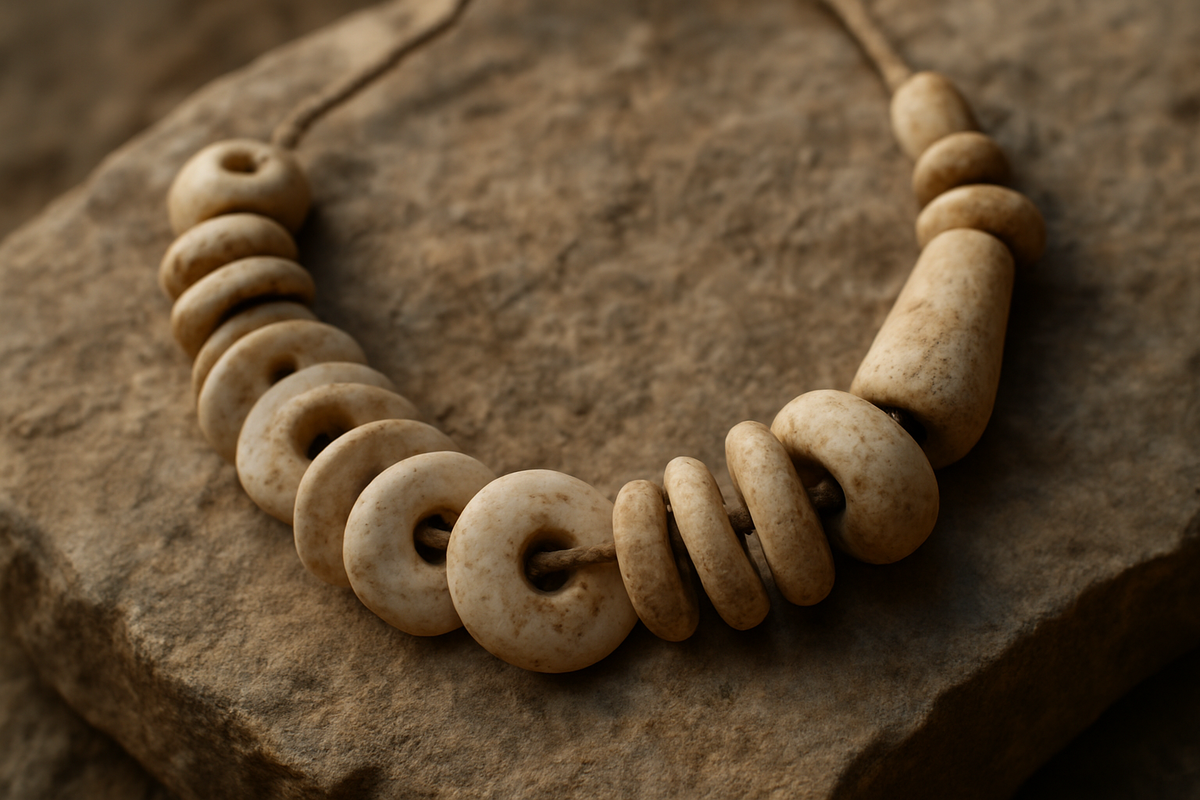
The oldest known jewelry - perforated Nassarius shell beads found in Israel, Algeria, and Morocco's Grotte des Pigeons cave - dates back around 100,000-135,000 years. These were not random decorations. Researchers believe they marked tribal identity, social rank, or served as protective charms against evil spirits and misfortune. Similar early ornaments made from animal teeth, ivory, and ostrich eggshell have been found across Africa and Europe, including 40,000-year-old eggshell beads from Enkapune Ya Muto in Kenya, suggesting that symbolic adornment emerged alongside language and early ritual practice.
By the Neolithic period, humans were carving jade, turquoise, and bone into pendants and bracelets. In China, jade was already considered a bridge between the earthly and spiritual worlds - a belief that persists in Chinese culture today, where jade is still gifted for protection and good fortune.
Ancient Egyptians elevated jewelry into a spiritual technology. Gold, believed to be the flesh of the sun god Ra, was fashioned into collars, amulets, and rings buried with the dead to protect and empower them in the afterlife. The scarab beetle, symbolizing rebirth, appeared constantly in Egyptian rings and pectorals. Lapis lazuli, imported at great expense from Afghanistan, represented the night sky and divine truth. Tutankhamun's tomb alone contained over 5,000 pieces of jewelry, underscoring how central adornment was to Egyptian cosmology.
In Sumer, around 2500 BCE, the royal graves of Ur revealed intricate gold headdresses, lapis lazuli necklaces, and carnelian beads belonging to figures like Queen Puabi - evidence of advanced granulation and filigree techniques still studied by goldsmiths today. Mesopotamian jewelry often depicted deities and mythological creatures, echoing the same symbolic instinct explored in legendary mythical creatures across world folklore, where beasts and hybrid beings were believed to carry protective or divine power.
Greek jewelry favored naturalistic motifs - laurel leaves, animals, and gods - crafted in gold with exceptional detail. The Greeks believed certain gemstones held protective properties tied to their myths; amethyst, for instance, was linked to Dionysus and thought to prevent intoxication. The Romans, ever practical, turned jewelry into a visible marker of social class. Sumptuary laws restricted who could wear gold rings, and engraved signet rings were used to seal official documents, merging beauty with bureaucratic function.
India has mined diamonds since at least 400 BCE and developed one of the world's richest jewelry traditions. Hindu and Buddhist beliefs infused gemstones with planetary and spiritual significance - the navaratna, or nine-gem setting, was worn to balance celestial influences and attract prosperity, health, and protection. This astrological approach to gemstones still shapes jewelry choices in South Asia today.
Long before European contact, Mesoamerican and Andean cultures developed jewelry traditions rooted in cosmology rather than currency. The Maya and Aztec prized jade above gold, associating its green hue with maize, water, and the breath of life; rulers were often buried with jade mosaic masks and ear flares. In the Andes, Moche and later Inca metalworkers hammered gold and silver into ceremonial masks and tumi knives, believing gold embodied the sun god Inti while silver represented the moon goddess Mama Killa.
In medieval Europe, jewelry became deeply intertwined with Christian faith. Reliquary pendants held saints' relics, while rings inscribed with prayers were believed to ward off illness and sin. Posy rings - engraved with short romantic verses - became popular tokens of love and betrothal, a direct ancestor of the modern engagement ring.
The Renaissance brought a revival of goldsmithing artistry and a fascination with gemstone symbolism rooted in alchemy. Emeralds were thought to reveal truth and protect against deception; rubies symbolized vitality and were worn by nobility to signal both wealth and supposed protection in battle. Portrait miniatures set into lockets also emerged during this era, turning jewelry into an intimate keepsake of memory and identity - much like how perfumes were once bottled as sacred, personal talismans rather than everyday luxuries.
The 18th and 19th centuries transformed jewelry into an emotional language. Georgian jewelers created mourning jewelry incorporating woven human hair to memorialize the dead. Queen Victoria popularized this practice further after Prince Albert's death, wearing black jet jewelry as a symbol of grief that swept across Europe.
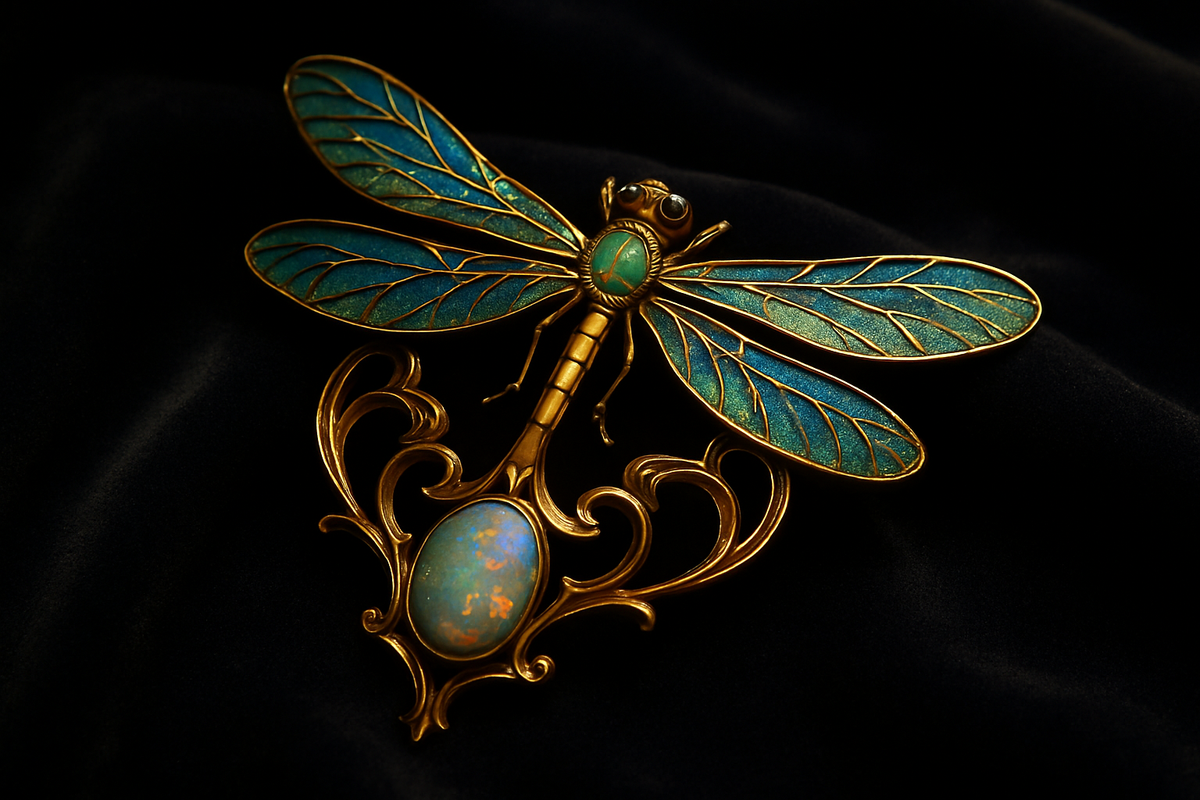
By the late 1800s, the Art Nouveau movement rejected rigid Victorian formality in favor of flowing, nature-inspired designs - dragonflies, orchids, and female figures rendered in enamel and opal by designers like René Lalique. This period paralleled shifting ideals of beauty seen in the history of makeup, where cosmetics also moved from moral taboo toward artistic self-expression.
The Industrial Revolution mechanized jewelry-making, making gold-plated and costume jewelry accessible to the middle class for the first time. The 20th century saw diamonds transformed from rare luxury to the default engagement stone, largely through De Beers' famous "A Diamond is Forever" campaign launched in 1947 - one of history's most successful marketing strategies.
Today, jewelry spans an enormous spectrum: fine heirloom pieces passed through generations, ethically sourced lab-grown diamonds, minimalist everyday gold, and 3D-printed experimental designs. Just as watches evolved from sundials to smartwatches, jewelry has absorbed technology while still carrying its oldest purpose - marking milestones, memory, and identity.
| Culture/Era | Key Materials | Primary Meaning |
|---|---|---|
| Ancient Egypt | Gold, lapis lazuli, carnelian | Afterlife protection, divine favor |
| Sumer (Mesopotamia) | Gold, lapis lazuli, carnelian beadwork | Royal status, divine favor |
| Ancient Rome | Gold, engraved gems | Social status, official authority |
| Ancient India | Diamonds, navaratna gemstones | Astrological balance, prosperity |
| Pre-Columbian Americas | Jade, gold, silver | Cosmic order, sacred kingship |
| Victorian Europe | Jet, hair, pearls | Mourning, remembrance, sentiment |
| Modern West | Diamonds, gold, lab-grown stones | Romantic commitment, personal style |
Across nearly every culture, jewelry has functioned as more than adornment - it is worn intention. Some recurring symbolic threads include:
Understanding this history can shape how you choose jewelry now. If you want a piece with genuine resonance, consider its symbolic lineage rather than just its aesthetic:
Buying with intention - rather than trend alone - turns jewelry back into what it was for most of human history: a deeply personal talisman rather than a disposable accessory.
The oldest known jewelry consists of perforated Nassarius shell beads discovered in Israel, Algeria, and Morocco, dating back roughly 100,000 to 135,000 years. These were likely worn to signal group identity or as protective charms rather than purely decorative items.
Egyptians believed gold represented the flesh of the sun god Ra and that gemstones like lapis lazuli held protective, divine properties. Jewelry was buried with the deceased to protect and empower them during their journey through the afterlife.
Diamond engagement rings became widely popular in the 20th century, largely due to De Beers' 1947 "A Diamond is Forever" advertising campaign. Before that, engagement rings more commonly featured rubies, sapphires, or simple engraved gold bands.
Across cultures, jewelry has symbolized protection, status, love, mourning, and spiritual alignment, often through specific gemstones or materials believed to hold energetic or astrological significance. This symbolic function has remained remarkably consistent, from ancient Egyptian scarab rings to modern birthstone jewelry.
A full timeline of mirror history—from 6000 BCE obsidian to Venetian glass—plus the myths, superstitions, and dream meanings behin…

12 key milestones in shoe history, from 40,000-year-old prehistoric footwear to Crocs and smart sneakers. See the full timeline an…
Discover how shoes evolved from 8,000-year-old sandals to smart sneakers — explore ancient, medieval, and modern footwear history …