
History
History of Shoes: From Ancient Sandals to Modern Sneakers
Discover how shoes evolved from 8,000-year-old sandals to smart sneakers — explore ancient, medieval, and modern footwear history …
 KnowMastery
 The mangalsutra is a sacred necklace worn by married Hindu women in India, typically strung with black and gold beads and tied by the groom around the bride's neck during the wedding ceremony. The name comes from Sanskrit: "mangal" means auspicious and "sutra" means thread. Hindu tradition holds that the black beads absorb negative energy and protect the marriage, while the gold represents prosperity and the permanence of the bond. The practice dates back over a thousand years and varies widely by region, caste and family custom across India.
Picture a wedding hall in Tamil Nadu sometime in the ninth century. Oil lamps flicker against stone pillars, and a priest chants verses that have been repeated for generations. A young groom ties three knots in a thread strung with turmeric-stained beads around his bride's neck. No one in that room could have guessed that this small, private gesture would outlast empires, colonization and centuries of changing fashion to become one of the most recognized pieces of jewelry in the world.
That is the quiet power of the mangalsutra. It is not loud. It does not need to be. A thin strand of black beads can carry more weight than a diamond tiara, because it is not meant to impress strangers. It is meant to be felt by the two people who know exactly what it represents.
The earliest written references to a marriage thread appear in Vedic literature, where texts describe a "mangala sutra," an auspicious cord tied during wedding rites. The Rigveda and the later Grihya Sutras, which lay out Hindu domestic rituals, mention cords used to bind a couple symbolically, though the black-and-gold bead style familiar today developed much later, likely during the medieval period in South India.
By the time of the Chola dynasty, which ruled much of southern India between the ninth and thirteenth centuries, the thali or thirumangalyam had become a defined part of Tamil wedding ritual. Temple inscriptions and bronze sculptures from this era show women wearing neck ornaments believed to be early thali forms. Around the same period, in what is now Andhra Pradesh and Telangana, a related custom took shape as the pustelu, a pendant made of two gold cups joined by a black-beaded chain.
Jewelry historians also point to the bead trade that moved through Indian ports during the colonial era. Glass beads arriving through Goa and Surat, carried by Portuguese and later other European traders, gave artisans a cheaper and more consistent black bead than stone or onyx, which likely helped the style spread beyond the wealthiest households and into wider use.
The word "mangalsutra" itself became more common in Maharashtra and other parts of western and northern India, where the design evolved into the black-and-gold bead necklace most people picture today. As trade routes and migration carried the custom across regions, families adapted the symbol to their own materials and tastes while keeping its original purpose intact: marking a woman as married and invoking protection over her union.
At its core, the mangalsutra represents protection, commitment and auspiciousness held together in one object. Each material used in its construction carries its own meaning, and together they form a layered symbol rather than a single one.
Black is traditionally considered a color that absorbs negative energy in Hindu belief. The black beads, usually made of glass or onyx, are thought to guard the wearer and her husband against the evil eye, jealousy and misfortune. This protective function is similar to the symbolism found in charm bracelets and amulets worn across other cultures, where small objects are believed to ward off harm before it reaches the body.
Gold does not tarnish, which made it a natural choice to represent a bond meant to last a lifetime. In many Hindu households, gold is also associated with the goddess Lakshmi, who brings wealth and stability into a home. Wearing gold near the heart, where the mangalsutra rests, was meant to invite that stability into the marriage itself.
Before gold chains became common, the original thread was tied in three knots during the wedding ceremony. Each knot is said to represent a separate vow: fidelity to the husband, respect for his family, and devotion to the household. The groom ties the thread himself, which makes the mangalsutra one of the few pieces of jewelry in Indian tradition placed on the body by someone other than the wearer.
India does not have one mangalsutra. It has dozens, shaped by language, geography and local craft traditions. The table below compares some of the most recognized regional versions.
| Region | Local Name | Distinct Features |
|---|---|---|
| Maharashtra | Mangalsutra | Black beads with gold vatis (cup-shaped pendants), often two or four |
| Tamil Nadu | Thali / Thirumangalyam | Gold pendant originally on a turmeric-dyed thread, later replaced with a gold chain |
| Andhra Pradesh and Telangana | Pustelu | Two gold cups joined by a black-beaded chain, minimal design |
| Karnataka | Dhare / Thali | Combines black beads with coral or gold discs depending on community |
| Kerala | Minnu | Thin gold leaf pendant on a simple thread, no black beads used |
| Bengal | Not a mangalsutra; shell and coral bangles serve a similar marital role | Worn on the wrists instead of the neck |
These regional differences show that the mangalsutra was never a single fixed object. It was a concept, protection and permanence marked on the body, that local communities shaped with their own materials and aesthetics, in much the same way cameo brooches carried different meanings depending on where and when they were carved and worn in Europe.
Beyond its role as a marital marker, the mangalsutra carries deeper spiritual weight in Hindu practice. It is tied during an auspicious time determined by astrologers, often down to the exact minute, because the moment of tying is believed to set the tone for the marriage that follows. Removing the mangalsutra, except for specific rituals such as bathing before certain ceremonies, is traditionally avoided, since doing so is thought to interrupt the protective bond it represents.
In some households, widows stop wearing the mangalsutra entirely, a practice rooted in older beliefs that the object's purpose ends with the husband's death. This custom has softened in modern urban families, where many women now decide for themselves whether to keep wearing it, treating it as a personal or sentimental item rather than a strict requirement.
In Swapna Shastra, the traditional Indian framework for dream interpretation, dreaming of a mangalsutra breaking or going missing is often read as a sign of tension or instability in a relationship, though it is rarely treated as a literal prediction. Dreaming of receiving one, or of a mangalsutra glowing or shining, is generally associated with upcoming commitment, stability or good news tied to marriage. As with most dream symbolism, context matters more than the object itself: a dream about a broken mangalsutra during a stressful week usually reflects everyday worry rather than any real threat to the marriage.
Today the mangalsutra has moved well beyond its original ritual function. Jewelry designers in Mumbai, Chennai and Hyderabad now make versions meant to be worn daily with Western clothing, using slimmer chains, diamond accents or detachable pendants. Some women wear a simple black-beaded chain for everyday use and save a heavier, more ornate version for festivals and family gatherings.
Among Hindu communities living outside India, in cities like London, Toronto and New Jersey, jewelers now stock lighter mangalsutra designs built for daily wear under office clothing, since many women there want to keep the tradition without the weight or bulk of older styles. This shift mirrors what happened with other personal items that started as symbolic markers and later became everyday accessories, similar to how pocket watches moved from status symbols into practical tools, or how perfume moved from sacred ritual use into daily grooming.
Some brides now treat the mangalsutra the way other cultures treat engagement jewelry, choosing a design that fits personal taste rather than following strict tradition, much like the shift seen in personal adornment practices that moved from purely ritual use toward individual expression over time.
The mangalsutra symbolizes the marital bond between a husband and wife, with black beads representing protection from negative energy and gold representing prosperity and permanence. It is tied by the groom during the wedding ceremony and is treated as sacred throughout the marriage.
Black beads are believed in Hindu tradition to absorb and deflect negative energy, including the evil eye, protecting both the wearer and her husband. This belief is close to the protective symbolism found in amulets and charms worn in other cultures around the world.
Traditionally, many communities expect widows to stop wearing the mangalsutra, since its symbolism is tied directly to an active marriage. This custom has softened considerably in modern urban families, where the choice is increasingly left to the individual woman.
The thali, also called thirumangalyam in Tamil Nadu, serves the same cultural purpose as a mangalsutra but differs in design, typically featuring a gold pendant rather than the black-and-gold bead chain common in Maharashtra. Both objects mark a woman as married and come from the same ancient marital symbolism.
Discover how shoes evolved from 8,000-year-old sandals to smart sneakers — explore ancient, medieval, and modern footwear history …
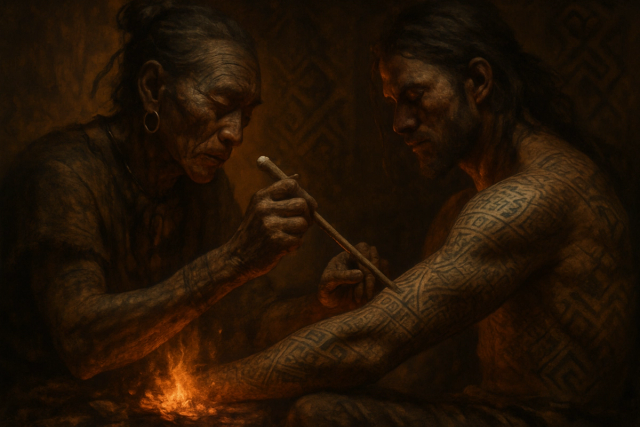
From Ötzi's 5,300-year-old ink to Polynesian rites and Japanese irezumi - discover how tattoos evolved from sacred ritual to self-…
From ancient Greek gem carvers to Queen Victoria's jewelry box, trace how the cameo brooch became a lasting symbol of beauty and s…