
History
History of Engagement Rings: From Ancient Rome to Today
Where engagement rings began, why diamonds took over, and what the ring on your finger really means across history and culture.
 KnowMastery
The oldest known shoes are 9,300-to-10,000-year-old sagebrush-bark sandals discovered in Oregon's Fort Rock Cave, while the oldest surviving leather shoe—Armenia's 5,500-year-old Areni-1 shoe—reveals just how sophisticated ancient shoemaking had already become. High heels didn't start as women's fashion at all; they began as 10th-century Persian riding gear for mounted soldiers. Centuries later, the Industrial Revolution turned shoemaking from a slow handcraft into mass-market manufacturing, setting the stage for the sneakers, Crocs, and smart shoes we wear today.
Below is a complete timeline of the 12 milestones that shaped footwear across more than 40,000 years of human history—from the first foot-wraps our ancestors used to survive, to the controversial, comfort-first designs of the 21st century. Read on for the full story, and for the broader cultural context behind each era, see our companion piece on the full history of shoes.
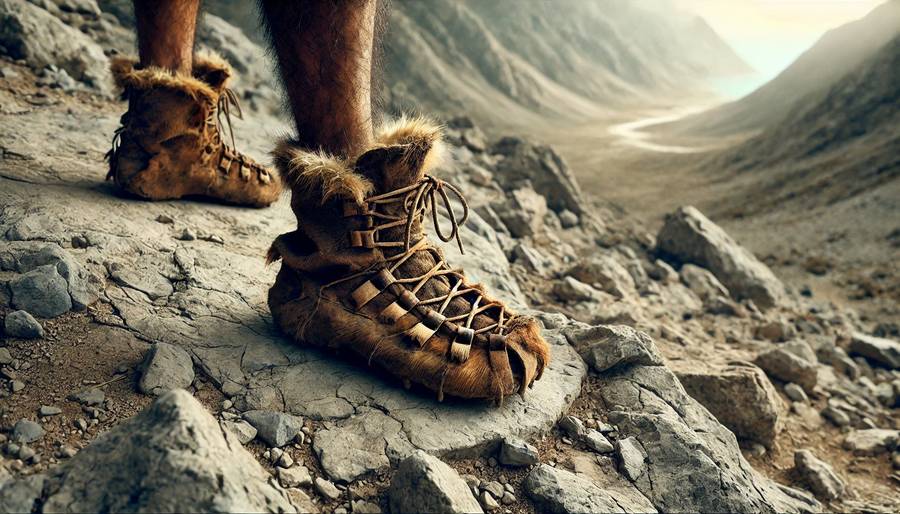
Have you ever wondered when humans first decided to protect their feet? The story of the first shoe is as old as humanity itself.
Anthropologists believe that our ancestors began wearing foot coverings at least 40,000 years ago. This fascinating conclusion comes from studying changes in the toe bones of ancient human remains—smaller, less robust toe bones suggest feet that were no longer gripping the ground directly, a telltale sign of footwear.
Imagine a world where every step was a potential injury. Sharp rocks, thorny plants, and extreme temperatures were constant threats. Our resourceful ancestors crafted the first footwear to shield their feet from these dangers.
Picture a simple wrap made from animal hide, secured with primitive laces. These early shoes were likely crude by today's standards, but they marked a significant leap in human evolution. The first shoe wasn't just about protection—it allowed our ancestors to travel further, explore new territories, and adapt to diverse environments. This small innovation had a massive impact on human migration and survival.
Archaeological finds have given us tantalizing glimpses into this dawn of footwear. Fossilized footprints discovered in various parts of the world show clear impressions of primitive shoes, offering a window into our distant past. Even mythology hints at how far footwear captured the human imagination early on—think of the winged sandals worn by messenger gods in stories about mythical creatures and heroes, symbols of speed and divine power.
Fort Rock Cave sandals were discovered in 1938 and are usually dated to roughly 9,300 to 10,500 years old.
Imagine the excitement of the archaeologists as they carefully brushed away layers of volcanic ash to reveal these perfectly preserved sandals. Made from woven sagebrush bark, these shoes are a testament to the ingenuity of ancient civilizations.
The Fort Rock sandals weren't just functional; they were a work of art. The intricate weaving pattern shows that even our distant ancestors cared about style and craftsmanship. What's truly fascinating is how similar these sandals are to modern designs. It seems that when it comes to comfortable footwear, some ideas are truly timeless.
The Areni-1 leather shoe was discovered in 2008 in an Armenian cave and, at 24.5 cm long (European size 37), is roughly equivalent to a woman's size 6 to 7.
What's truly astonishing about this ancient footwear is its striking similarity to modern shoes. It's not just a primitive foot covering, but a carefully crafted piece with a distinct shape and design. The shoe was made from a single piece of cowhide, laced up the front and back. Stuffed with grass, perhaps for insulation or maintaining its shape, it paints a vivid picture of prehistoric life.
But how did this shoe survive for 5,500 years? The cave's cool, dry conditions and a thick layer of sheep dung created the perfect preservation environment. It's as if nature conspired to give us this remarkable glimpse into our past. This excellent preservation condition allows us to see details that would otherwise be lost to time.
This archaeological find isn't just about the shoe itself. It provides valuable insights into the skills and daily lives of our ancestors. The craftsmanship involved in creating such a shoe suggests a sophisticated understanding of leatherworking and design.
In ancient Egypt, sandals were more than mere footwear; they were symbols of status. Pharaohs and high-ranking officials adorned their feet with intricate designs, often made from gold and precious gems—materials so prized they're still central to the history of jewelry today.
Imagine Tutankhamun's golden sandals, discovered in his tomb. These weren't just shoes; they were works of art, meant to carry the young pharaoh into the afterlife in style. Much like the elaborate crowns worn by rulers, elaborate footwear was a direct signal of rank and divine authority.
As we move from the Nile to the Tiber, we see a shift in sandal design. The Roman military sandal, or caliga, was a marvel of practical engineering.
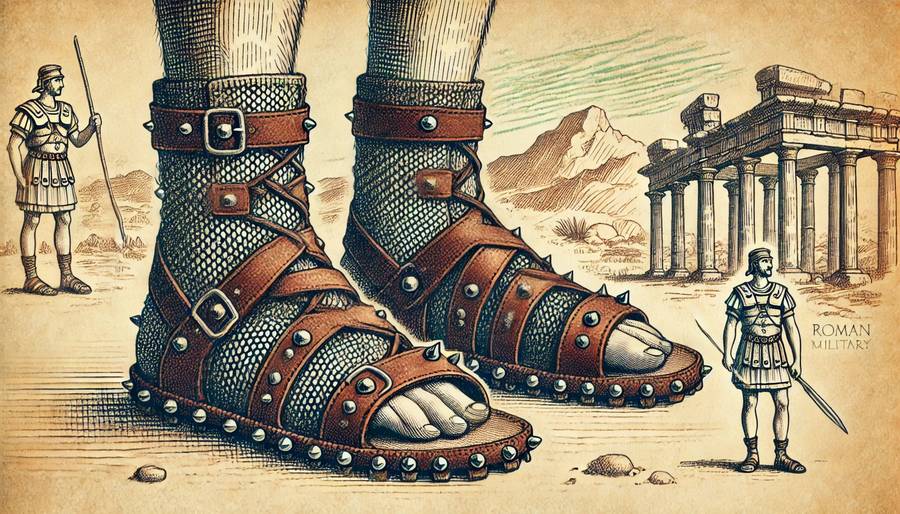
Picture a Roman legionnaire, marching across Europe in sandals designed for long-distance travel. These caligae had thick soles studded with iron nails for durability, and an open design to keep feet cool during long marches.
Romans didn't stop at military footwear. Their sandals became a canvas for displaying the empire's grandeur. Senators wore distinctive red sandals, while emperors had the privilege of purple ones. A Roman-era lady's leather slipper, found in a London excavation, shows the level of craftsmanship. Decorated with openwork patterns, it's a testament to the Romans' flair for combining style with functionality. Throughout the Mediterranean basin, the intricate designs and materials used in sandal-making often indicated the wearer's social status and wealth.
Have you ever wondered why high heels, now associated with fashion and femininity, were originally designed for men? Let's step back in time to uncover this fascinating journey.
Picture this: 10th-century Persia, where mounted soldiers ride into battle. Their secret weapon? High-heeled boots. These weren't for style, but for stability—the raised heel locked into the stirrup, giving riders a crucial advantage in combat.
Fast forward to the 17th-century European courts. High heels had marched their way from Persian battlefields to the polished floors of European palaces.
Imagine Louis XIV, the Sun King, striding into his court wearing red-heeled shoes. These weren't just any shoes; they were a symbol of nobility. Only those in the king's favor could wear these coveted red heels.
High heels quickly became a status symbol among European nobility. The higher the heel, the higher the status. In an era where streets were muddy and unsanitary, elevated shoes were practical—but more than that, they literally and figuratively elevated the wearer above the common folk. These early high heels weren't just functional; they were works of art, adorned with intricate designs, jewels, and fine materials.
As we step into the Enlightenment era, we witness a fascinating twist in the evolution of shoes timeline. High heels, once a symbol of masculinity and power, began their journey toward becoming a staple of women's fashion.
Picture this: the late 18th century, a time of radical change. Men's fashion took a dramatic turn toward simplicity and practicality. This shift, known as the "Great Male Renunciation," saw men abandoning the ornate styles of the past, including high heels.
As men stepped down from their heels, women stepped up. Imagine Marie Antoinette, the fashion icon of her time, strutting through Versailles in her high heels. She wasn't just following a trend; she was making a bold statement about gender roles and power. By the 19th century, high heels had become firmly associated with femininity, transforming from a symbol of male aristocracy to an emblem of female allure and power.
The Industrial Revolution wasn't just about steam engines and factories; it completely transformed the way we make and wear shoes. Let's lace up and take a walk through this era of incredible innovation.
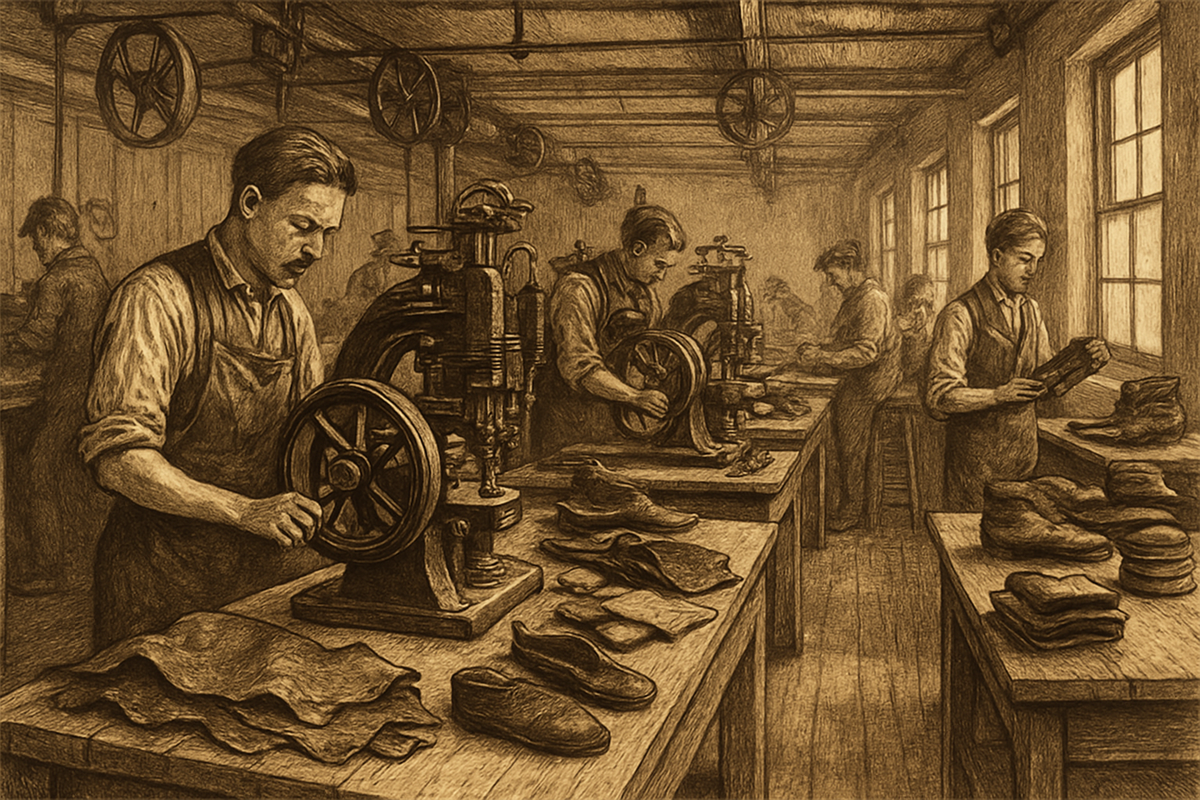
Imagine a world where every shoe was handmade. Now, picture the revolution that came with the invention of shoe-making machines. M.I. Brunel is credited with developing one of the first mass-production systems for shoes, built to supply boots to the British Army during the Napoleonic Wars, a project sources date to around 1810-1812. Shoes that once took days to make could now be produced in hours.
In 1839, Charles Goodyear accidentally discovered the process of vulcanization. This made rubber more durable and elastic, perfect for shoe soles. Imagine the excitement when people realized they could have waterproof, comfortable shoes!
The invention of the sewing machine in the mid-19th century allowed for faster, more precise stitching, leading to sturdier and more diverse shoe designs. Later, Henry Ford's assembly line concept didn't just revolutionize car production—shoe manufacturers adopted the method too, dramatically increasing output and reducing costs.
Before the Industrial Revolution, shoes were often made to order. But mass production needed standardization, which led to the development of shoe sizes, making it easier for people to find their perfect fit—paving the way for the modern marvels we see today, from air-cushioned soles to self-lacing sneakers.
As we lace up and sprint into the 20th century, we witness a game-changing development: the birth of sports shoes. This era saw footwear transform from mere protection to performance-enhancing gear.
Imagine the 1908 Olympics. Athletes competed in what we'd now consider dress shoes. But change was on the horizon. In 1917, Marquis Converse created the first shoe specifically designed for basketball. The Converse All-Star was born, revolutionizing not just sports, but fashion for decades to come.
The 1960s saw a surge in jogging's popularity, and shoe companies raced to meet the demand. In 1964, Bill Bowerman and Phil Knight founded Blue Ribbon Sports, which would later become Nike. Picture Bowerman pouring rubber into his wife's waffle iron. This moment of inspiration led to the creation of the waffle sole, a major breakthrough in running shoe design.
As we entered the modern era, sports shoes became high-tech marvels, incorporating air cushions, gel pads, and even computer chips. From Michael Jordan's iconic Air Jordans to Kanye West's Yeezys, sports shoes have become cultural phenomena, blurring the lines between athletic gear and high fashion. Looking ahead, "smart" shoes that track performance and adjust their fit are emerging alongside a growing focus on sustainable materials.
Splash! Let's dive into the world of rubber footwear, a true modern marvel in the evolution of shoes timeline. This waterproof wonder has revolutionized how we approach wet conditions, both in work and play.
Picture a rainy day in the 19th century. Your leather shoes are soaked, your feet are cold—then came the rubber revolution. In 1823, Charles Macintosh discovered how to waterproof fabric using rubber, laying the groundwork for waterproof footwear. The first rubber overshoes, known as galoshes, appeared in the 1830s.
Charles Goodyear's 1839 discovery of vulcanization was a watershed moment for waterproof footwear. In the mid-19th century, Hiram Hutchinson bought the patent for vulcanization in France and created the first rubber boot, naming it after the Duke of Wellington. These "wellies" quickly became popular among farmers and outdoor workers, and by the 20th century, rubber boots had found their way into fishing, hunting, and everyday leisure. Today's rubber footwear includes lightweight, breathable rain boots, neoprene waders, and even fashionable rubber-soled shoes for everyday wear.
In recent years, the shoe world has seen designs that have turned heads, raised eyebrows, and sparked heated debates. Let's step into the world of Crocs and minimalist shoes, two of the most controversial footwear trends of the modern era.

Picture this: it's 2002, and a new shoe appears that looks like a cross between a clog and a boat shoe, riddled with holes. Meet Crocs. Originally designed as a boating shoe, Crocs quickly became a global phenomenon thanks to their comfort and practicality, especially among healthcare workers and chefs. But Crocs also faced intense criticism for their unconventional appearance, called everything from "ugly" to "a fashion sin." Despite this—or perhaps because of it—Crocs have remained popular, even becoming an ironic fashion statement.
On the other end of the spectrum, we have minimalist shoes. Inspired by barefoot running, these shoes aim to mimic the natural movement of the foot. Imagine a shoe so thin you can feel every pebble beneath your feet. Brands like Vibram FiveFingers, with their individual toe pockets, epitomize this trend.
Both Crocs and minimalist shoes have faced their share of controversy:
| Era/Year | Milestone | Region | Why It Matters |
|---|---|---|---|
| c. 38,000 BC | Prehistoric footwear (toe-bone evidence) | Global | Earliest evidence humans wore foot coverings |
| c. 8,000–10,200 years ago | Fort Rock sagebrush sandals | Oregon, USA | Oldest surviving footwear ever discovered |
| c. 3500 BC | Areni-1 Armenian leather shoe | Armenia | Oldest known leather shoe; shows advanced craftsmanship |
| c. 1550–1070 BC | Egyptian ceremonial sandals | Egypt | Footwear as a symbol of royal status |
| c. 100 BC–400 AD | Roman caligae | Roman Empire | Standardized military footwear; social-rank signaling |
| 10th century | Persian heeled riding boots | Persia | True origin of the high heel, built for stirrup stability |
| 17th century | European red heels (Louis XIV) | France | High heels become an aristocratic status symbol |
| Late 18th–19th century | Great Male Renunciation / gender shift | Europe | High heels transition from menswear to womenswear |
| 1810–1890s | Industrial Revolution shoemaking | UK/USA | Mass production, standardized sizing, vulcanized rubber |
| 1917–1970s | Birth of sports shoes | USA | Converse, Nike, and performance-driven design emerge |
| 1823–1850s | Rubber footwear & Wellington boots | UK/France | First reliable waterproof footwear for work and leisure |
| 2002–present | Crocs & minimalist shoes | USA/Global | Comfort-first design sparks fashion debate |
As we step away from this journey through shoe history, we've traversed millennia of innovation, culture, and style. From the humble beginnings of sagebrush sandals to the cutting-edge designs of today, shoes have been more than mere foot coverings—they've been storytellers of human progress.
Here's a quick recap of the 12 milestones covered in this timeline:

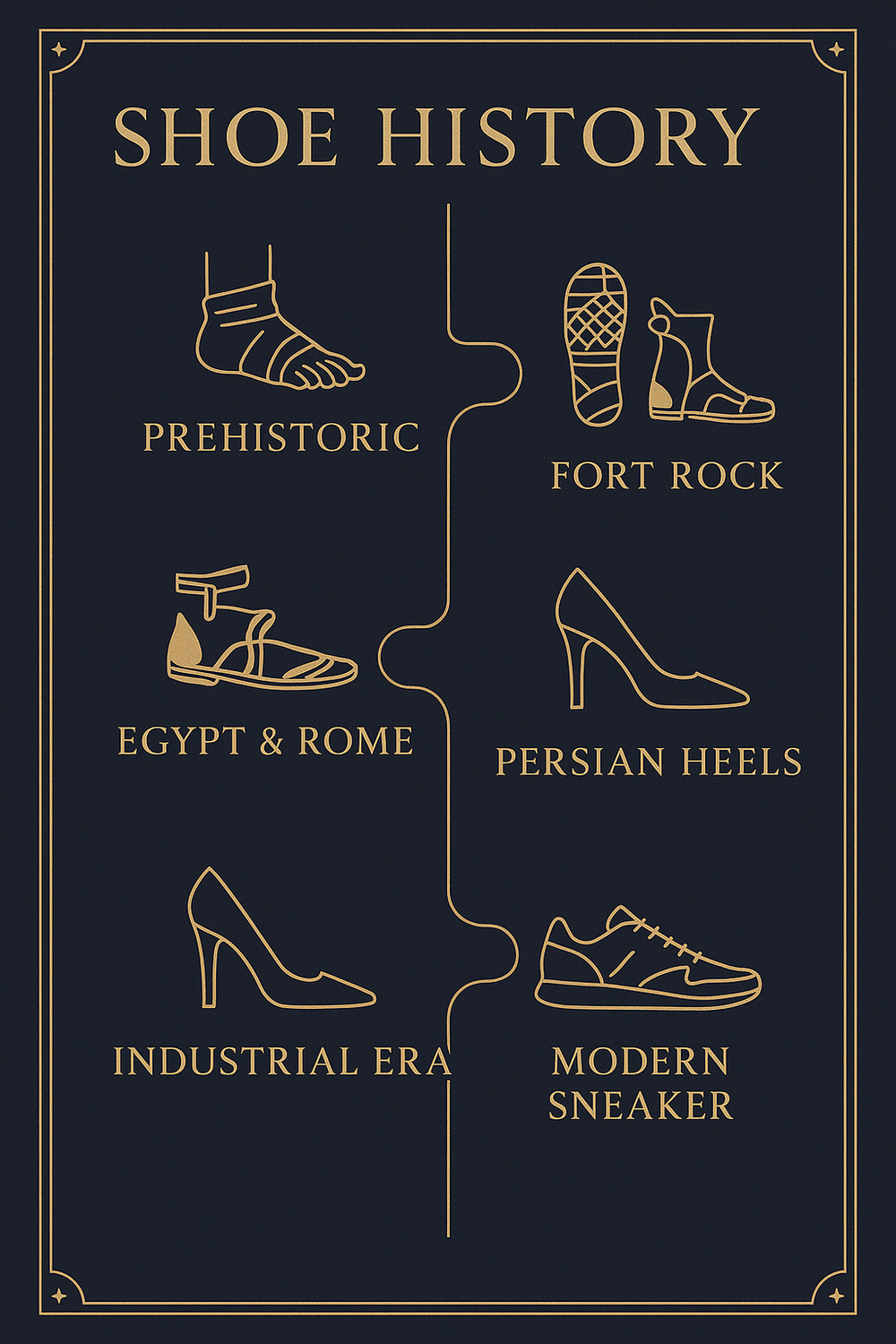
This evolution reflects our ingenuity, our social structures, and our ever-changing needs. Whether it's practical Roman military sandals or status-defining high heels, each milestone in shoe history offers a unique glimpse into the lives of those who came before us. For a broader look at how footwear intersects with fashion, class, and culture across the ages, don't miss our companion article on the full history of shoes.
As we look to the future, it's clear that footwear will continue to evolve, blending form and function in exciting new ways. The next time you slip on your favorite pair, take a moment to appreciate the rich history and countless innovations that have led to that moment. After all, every step we take is a small part of this ongoing story—a story that began with our ancestors and continues with each of us today.
The oldest surviving footwear overall is a pair of sagebrush-bark sandals from Fort Rock Cave, Oregon, dated to roughly 9,300–10,200 years ago. The oldest surviving leather shoe is Armenia's Areni-1 shoe, a 5,500-year-old cowhide shoe discovered in 2008.
High heels were originally developed by 10th-century Persian soldiers, who wore heeled boots to help lock their feet into stirrups while riding and shooting arrows on horseback. They later spread to European nobility in the 17th century as a symbol of status rather than practicality.
Standardized shoe sizes emerged during the Industrial Revolution, once shoemaking shifted from custom, made-to-order craftsmanship to factory-based mass production. Standard sizing systems made it possible for manufacturers to produce shoes in bulk that still fit a wide range of customers.
Women began widely adopting high heels during the Enlightenment era, following the "Great Male Renunciation," when men abandoned ornate fashion, including heels, in favor of simpler styles. Women, including trendsetters like Marie Antoinette, embraced heels as a bold fashion and social statement, cementing their shift toward femininity by the 19th century.
One of the earliest purpose-built sports shoes was the Converse All-Star, created in 1917 as the first shoe specifically designed for basketball. It set the stage for later innovations like Nike's 1964 waffle sole, which launched the modern performance running shoe category.
Where engagement rings began, why diamonds took over, and what the ring on your finger really means across history and culture.
Discover how charm bracelets evolved from ancient protective amulets to the sentimental keepsake jewelry millions wear today.

From Ötzi's 5,300-year-old ink to Polynesian rites and Japanese irezumi - discover how tattoos evolved from sacred ritual to self-…