Animal Symbolism
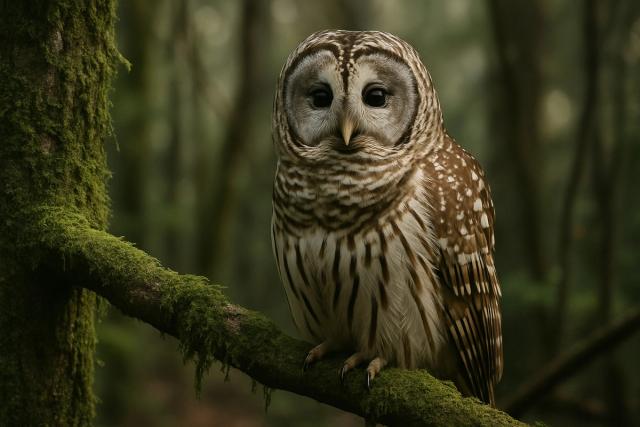
Barred Owl Spiritual Meaning & Call Interpretations
Ever heard the haunting call of a barred owl and felt a shiver down your spine? It’s not just the eerie sound that captivates; it’…
 KnowMastery
 Magpie symbolism centers on duality, communication, and sharp intelligence. Across folklore in Europe and Asia, this black and white bird is read as an omen bringer that signals incoming news, good or bad depending on how many you count, and as a trickster whose plumage puts light right next to dark. Spiritually, a magpie sighting is treated as a nudge to pay closer attention, since the bird is known for noticing small details, communicating loudly, and guarding what matters to it.
There is something unsettling and magnetic about a magpie's stare. It cocks its head, studies you for a beat too long, then lets out that dry rattling call before flying off with something shiny in its beak. People have been telling stories about that look for a thousand years.
Maybe you saw one on your windowsill this morning, or two sitting on a fence post outside your office, and now you can't stop thinking about it. That instinct to pay attention is old and worth trusting. Magpies rarely show up as background noise.
The magpie carries a reputation as one of the smartest birds on the planet. It belongs to the corvid family alongside crows, ravens, and jays, and it shares their talent for problem solving, memory, and even recognizing individual human faces. Because of this intelligence, the magpie is read spiritually as a messenger bird, something that bridges the ordinary world and whatever lies just past it.
Its two tone coloring, black feathers next to flashes of white and an iridescent blue green sheen, has led many traditions to treat the magpie as a symbol of duality: light and dark, luck and misfortune, honesty and theft. It refuses to sit neatly on one side of any story.
The most famous piece of magpie lore in English speaking countries is the old nursery rhyme "One for sorrow, two for joy," a counting rhyme that assigns meaning based on how many magpies you see together. Versions of it date back at least to the 1700s in parts of England, where farmers and travelers used it to read the day ahead before setting out.
| Number of Magpies | Traditional Meaning |
|---|---|
| One | Sorrow or a warning |
| Two | Joy or good news |
| Three | A girl or a wedding |
| Four | A boy or a birth |
| Five | Silver or unexpected wealth |
| Six | Gold or a significant gain |
| Seven | A secret never to be told |
In Korean folklore, the magpie, called kkachi, is considered a bringer of good news and welcome guests. People say that if a magpie calls near the home, a visitor or happy news is arriving that day. Korean New Year paintings called minhwa often show a magpie perched in a pine tree beside a tiger, a composition meant to invite good fortune into the household for the coming year.
Chinese tradition treats the magpie with similar warmth. It appears in the legend of the Weaver Girl and the Cowherd, two lovers kept apart by the Milky Way who are allowed to meet once a year, on the seventh day of the seventh lunar month, when a flock of magpies forms a bridge across the sky so they can cross. Because of this story, the magpie is tied to romance, reunion, and loyalty in Chinese culture, and it shows up often in wedding art and poetry.
European tradition runs darker. In parts of Scotland and northern England, a lone magpie near a house was once read as a sign of death or bad luck, strong enough that people built small rituals to counter it, such as saluting the bird, spitting three times, or saying "good morning, Mr. Magpie, how is your wife today" to acknowledge its mate and soften the omen. In Italy, Gioachino Rossini's 1817 opera "La Gazza Ladra" (The Thieving Magpie) cemented the bird's reputation as a compulsive collector of shiny objects, a trait modern bird researchers actually dispute, since controlled studies have found magpies tend to be more wary of unfamiliar shiny items than drawn to them.
People who feel a pull toward the magpie as a totem or spirit animal tend to be quick thinkers who read social situations fast and adapt without much friction. If the magpie feels like your animal guide, you likely:
The magpie totem also carries a warning. Its reputation for theft, even if exaggerated by folklore, is a reminder to check whether you are taking more than your share in relationships or work, whether that is credit, attention, or resources that belong to someone else.
This dual nature of guardian and opportunist places the magpie in similar symbolic territory to other sharp eyed birds like the hawk, which represents focus and vision, though the magpie's meaning leans more toward social intelligence than solitary power.
Beyond the counting rhyme, context matters. A magpie tapping on a window is often read as a sign that someone is thinking of you or trying to reach you. A magpie following you on a walk suggests you are being guided toward paying closer attention to your surroundings or a decision you have been avoiding. A pair of magpies building a nest near your home is traditionally seen as a sign of stability and a growing family, echoing the partnership themes that show up in swan symbolism as well.
If a magpie crosses your path while you are walking or driving, some folk traditions treat this as a nudge to slow down and reconsider your next move rather than a strict warning of danger. The bird's role here is closer to a question mark than a verdict.
Dreaming of a magpie usually reflects something going on with communication, trust, or hidden information in waking life.
Dream interpretation across animal symbolism tends to follow this same logic: the creature's daily behavior shapes its symbolic role in sleep. A loud, observant bird that hoards objects becomes a dream figure tied to attention, hidden motives, and the things we hold onto a little too tightly, the same way an owl in a dream tends to point toward hidden knowledge rather than noise.
Magpies are often confused symbolically with crows and ravens since all three are corvids with dark feathers and sharp minds, but their folklore diverges in a few clear ways.
| Bird | Primary Symbolic Theme | Common Cultural Reading |
|---|---|---|
| Magpie | Duality, news, cleverness | Omen bird tied to counting rhymes and news |
| Crow | Transformation, mystery | Linked to death and rebirth in many traditions |
| Raven | Wisdom, prophecy | Associated with Norse mythology and Odin's messengers |
If you have had repeated encounters with black birds in general, it helps to compare notes on how crow symbolism is read, since the two birds often get blended together in modern folklore despite having distinct roles historically. The raven leans toward prophecy and death, the crow toward transformation, and the magpie toward news and a dual nature.
If magpies keep appearing in your life, whether in dreams, on your commute, or outside your window, there are a few grounded ways to work with the symbol instead of just noting it and moving on.
None of this requires belief in magic. It is simply a structured way of using a striking natural encounter as a prompt for reflection, the same approach people use when a hummingbird shows up at a meaningful moment or a season turns right when a decision needs to be made.
A magpie visit is traditionally read as a sign that news, a visitor, or an important message is on the way. In Korean folklore specifically, a magpie calling near the home is considered a sign of a welcome guest arriving that day.
It depends on the tradition and how many you see. English folklore ties a single magpie to bad luck while two or more signal joy, whereas Korean and Chinese traditions generally treat the magpie as a positive, welcome sign regardless of number.
Spiritually the magpie represents duality, balancing light and dark, and sharp awareness of your surroundings. It is often seen as a messenger between the everyday world and something beyond it, nudging people to pay attention to details they might otherwise miss.
The idea comes largely from folklore and Rossini's opera about a thieving magpie, but modern bird behavior studies have found magpies tend to be cautious around unfamiliar shiny items rather than drawn to steal them. The reputation says more about human storytelling than actual magpie behavior.
Ever heard the haunting call of a barred owl and felt a shiver down your spine? It’s not just the eerie sound that captivates; it’…
What does a cat symbolize spiritually? Explore cat meaning by color, culture, dreams, and spirit animal signs — plus what it means…
Crows and ravens look alike but carry different spiritual meanings. Here's how to tell them apart and what each one is really tell…