General
The Greatest Warriors of All Time: A Comprehensive Guide
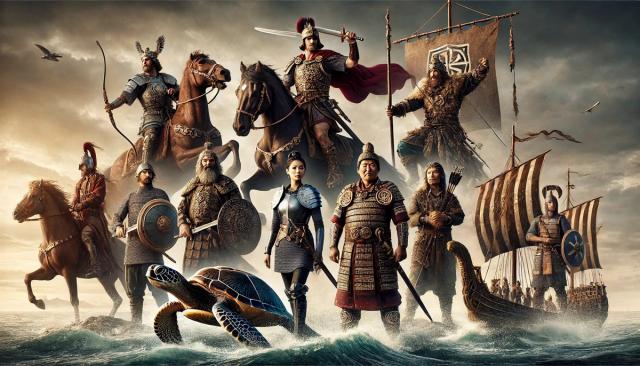
Throughout history, warriors have shaped the destiny of nations, led revolutions, and embodied ideals of bravery, skill, and honor…
 KnowMastery
Non-humanoid mythical beasts are legendary creatures built from animal, elemental or composite forms rather than human bodies. The category includes dragons, phoenixes, krakens, chimeras and shapeshifting spirits found in myth cycles from Scandinavia to West Africa. Unlike centaurs, mermaids or gods who keep a human torso or face, a true non-humanoid beast reads as fully animal, serpent, bird or hybrid creature. These beings usually stand for forces beyond ordinary human control: chaos, fertility, guardianship, death and rebirth.
Picture a temple keeper in old China lighting incense before a painted dragon coiled around a pillar, not because the creature walks among the living, but because its breath is said to shape rain and river. Picture a Norse sailor scanning gray water for the shadow of a sea serpent rising beneath his longship. These are not costume monsters invented for entertainment. They are old attempts to give shape to forces people could feel but not explain.
That is the pull of this subject. Every culture that ever watched a storm roll in or lost a ship at sea eventually built a creature to hold that fear, and some of those creatures turned into guardians, teachers or omens of luck instead. This guide breaks down the major types of non-humanoid mythical beasts, where they come from, what they mean, and how people still use their symbolism today.
Mythology is full of hybrid beings. Centaurs have horse bodies but human chests. Mermaids have fish tails but human faces. Sphinxes and harpies mix bird or lion bodies with a human head. Those figures belong to a separate category because they keep a recognizably human element at their core, usually the face, the torso or the mind.
Non-humanoid beasts drop that human anchor entirely. A dragon is reptilian from snout to tail. A phoenix is a bird, full stop. A kraken is cephalopod on a monstrous scale. Even composite creatures like the Greek chimera, built from lion, goat and serpent parts, stay entirely animal. This distinction matters for reading symbolism correctly: human-hybrid creatures tend to represent the tension between civilization and instinct, while fully non-humanoid beasts usually represent nature, fate or the divine acting without human agency at all. A griffin guarding gold still answers to human-style motives like greed or loyalty. A kraken pulling a ship under answers to nothing. It simply is the sea's indifference given a body.
Most legendary beasts fall into a handful of recognizable groups, even across unrelated cultures that never had contact with each other.
The table below lines up the main categories with well known examples and what they typically symbolize across their cultures of origin.
| Creature Type | Examples | Common Symbolism | Cultural Origin |
|---|---|---|---|
| Serpentine/Draconic | Chinese dragon, Norse Jormungandr, Aztec Quetzalcoatl | Power, water, cosmic order, fertility | China, Scandinavia, Mesoamerica |
| Avian | Phoenix, Thunderbird, Roc | Rebirth, storms, divine messages | Greece/Egypt, North America, Middle East |
| Aquatic | Kraken, Leviathan, Jiangshi fish spirits | Chaos, the unknown, divine punishment | Scandinavia, Hebrew Bible, East Asia |
| Composite/Hybrid | Chimera, Manticore, Qilin | Danger, moral warning, balance, good fortune | Greece, Persia, China |
| Shapeshifter | Kitsune, Werewolf, Skinwalker | Transformation, trickery, consequence | Japan, Central Europe, Navajo tradition |
In Chinese tradition the dragon, or long, controls rivers, rain and the fortunes of emperors. It is benevolent by default, a symbol of authority a ruler wanted to be associated with rather than fear. Imperial robes carried five-clawed dragons as a mark of legitimate rule, and dragon dances at New Year still call on that same creature to bring good fortune for the coming year.
Norse mythology takes the opposite view. Jormungandr, the World Serpent, circles the earth biting its own tail and will fight Thor at Ragnarok, the end of the world. Nidhogg gnaws at the roots of Yggdrasil, the World Tree, as a constant threat to cosmic stability. Where the Chinese dragon stabilizes the world, the Norse serpent threatens to unravel it. Same basic animal, opposite moral role.
In West African oral tradition, animal spirits often act as intermediaries between the human world and the realm of ancestors or deities. Yoruba tradition includes beast forms associated with orishas, divine forces that can manifest through animals like the leopard or the python, each carrying specific protective or punishing qualities depending on how people have behaved toward the natural world.
In Aztec cosmology, Quetzalcoatl appears as a feathered serpent, combining the sky-bound qualities of a bird with the earth-bound body of a snake. That fusion was deliberate: it represented the union of heaven and earth, spirit and matter. The Maya held a close relative of this figure, Kukulkan, whose stepped pyramid at Chichen Itza is built so that sunlight creates the illusion of a serpent slithering down the staircase during the equinox. A world away in ancient Egypt, the serpent Apep played the opposite role, rising each night to attack the sun god Ra's boat and threatening to swallow the sun before dawn, proof that serpent symbolism can split just as sharply as dragon symbolism does between Beijing and the Norse fjords.
Across most traditions, non-humanoid beasts cluster around a short list of recurring meanings:
These meanings connect naturally to other symbolic systems. A beast tied to fire, like the phoenix or salamander, often carries the same themes covered in fire symbolism, where purification, destruction and renewal happen in the same breath. Beasts associated with specific colors, a red dragon versus a white one, can also be read through the lens used in aura color meaning, where red suggests vitality and conflict while white suggests purity and clarity.
In Jungian dream analysis, beast dreams get read as messages from the unconscious about instinct and power rather than literal fear. A dragon in a dream often points to buried ambition or a conflict you have been avoiding in waking life. A serpent or sea creature usually signals something emotional moving beneath the surface, a truth you sense but have not fully faced. A bird-beast like a phoenix or thunderbird tends to show up during periods of major change, suggesting that an ending is close but not final.
Context matters more than the creature itself. A dragon that attacks you reads differently from a dragon that guards you. The first suggests internal conflict demanding attention, the second suggests untapped strength you have not yet claimed. Pay attention also to where the beast appears: water, sky or fire settings tend to echo the themes already tied to that element in waking symbolism.
You do not need to believe in literal dragons to use their symbolism in a practical way. Some people use these creatures as focal points for meditation, journaling or setting intentions.
If you need courage before a confrontation, a lion-based beast like the manticore or a fire creature like the phoenix gives you a concrete image to focus on. If you need patience and long-term thinking, a serpent or dragon tied to rivers and seasons fits better.
Some people keep a small drawing or carving of their chosen beast somewhere visible, the same way someone might use symbols for inner peace to stay centered during a hard week. The beast works as a quick visual reminder of the quality you are trying to build in yourself.
Stories of beast-slaying heroes, which overlap heavily with the figures covered in greatest warriors of all time, are rarely just about combat. The beast usually represents an obstacle the hero has to understand before defeating it, not just overpower. Reading these myths with that lens turns them into something closer to a guide for facing your own obstacles.
In many myth systems, beasts answer to specific figures rather than acting on their own, whether that is a dragon bound to a sorcerer's will or a phoenix tied to a particular temple. Several of the spellcasters covered in famous wizards are defined as much by the creatures they summon or tame as by the spells they cast, which says something about how closely myth links mastery of magic to mastery of the animal world.
"Mythical creature" is the broad umbrella term that covers everything from gods to ghosts to hybrids like centaurs. "Mythical beast" usually narrows that down to animal-based beings, whether fully non-humanoid like a dragon or partly hybrid like a griffin.
There is no single umbrella name, but they are generally grouped by type: dracontic or serpentine beasts, avian beasts, aquatic beasts, composite hybrids and shapeshifters. Folklore studies also use the term "zoomorphic creature" for any being that takes fully animal form.
The dragon or serpent-dragon figure appears in more independent mythologies than any other non-humanoid beast, showing up in China, Scandinavia, Mesoamerica, Egypt and the Hebrew Bible with strikingly similar traits despite no shared contact between these cultures.
Jungian and other dream analysts generally read beast dreams as symbols of instinct, buried ambition or emotional material moving beneath conscious awareness. The specific meaning usually depends on whether the creature is threatening, protective or in the middle of a transformation within the dream.
Throughout history, warriors have shaped the destiny of nations, led revolutions, and embodied ideals of bravery, skill, and honor…

Fragrances are a major extension of personality and fashion, but each is usually identified by its characteristic name and degree …

Are you puzzled by the differences between surgical and stainless steel? You’re not alone. These two materials often cause confusi…