Birth Flowers
February Birth Flowers: Violet & Primrose Meanings Explained
February's birth flowers are the Violet and Primrose. Discover their meanings, colors, history, mythology, and zodiac ties in this…
 KnowMastery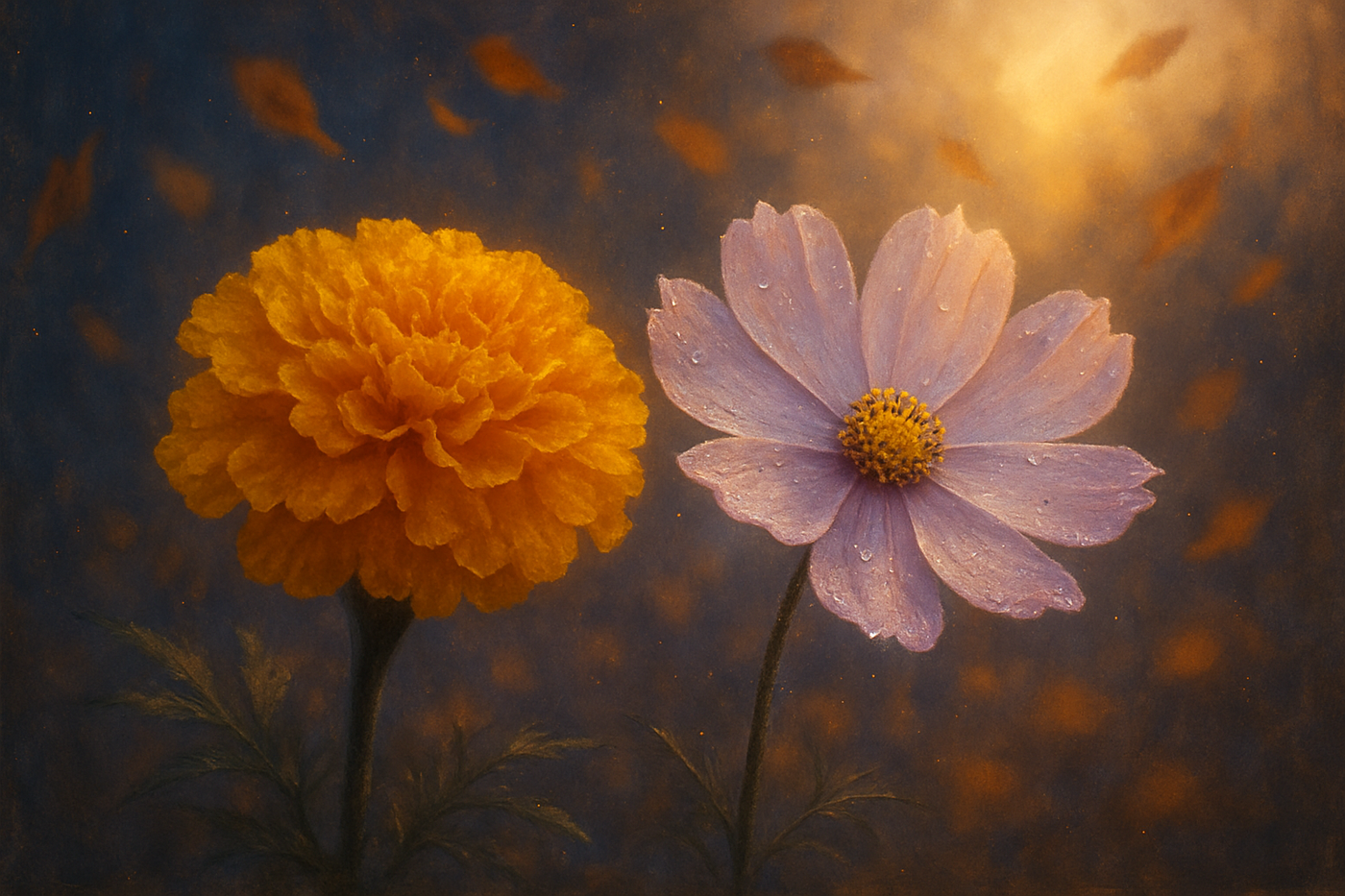
October has two official birth flowers: the Marigold, which symbolizes passion and creativity, and the Cosmos, which symbolizes harmony and peace. The Marigold's golden, sun-like petals echo warmth and life, while the Cosmos's delicate, star-shaped blooms evoke balance and quiet beauty. Together they capture October's dual spirit — bold celebration on one hand, gentle reflection on the other. If you'd like the full picture of how birth flowers work month by month, see our Birth Flowers Guide, and if September is closer to your birthday, check the September birth flowers instead.
| Quick Facts | Marigold | Cosmos |
|---|---|---|
| Primary Meaning | Passion, creativity, remembrance | Harmony, peace, love |
| Common Colors | Gold, orange, yellow, red | White, pink, red, yellow, orange |
| Zodiac Sign | Libra | Libra |
| Native Region | Mexico and Central America | Mexico |
| Best Occasion | Celebrations, remembrance ceremonies, gifts of encouragement | Weddings, sympathy bouquets, gifts symbolizing calm and love |
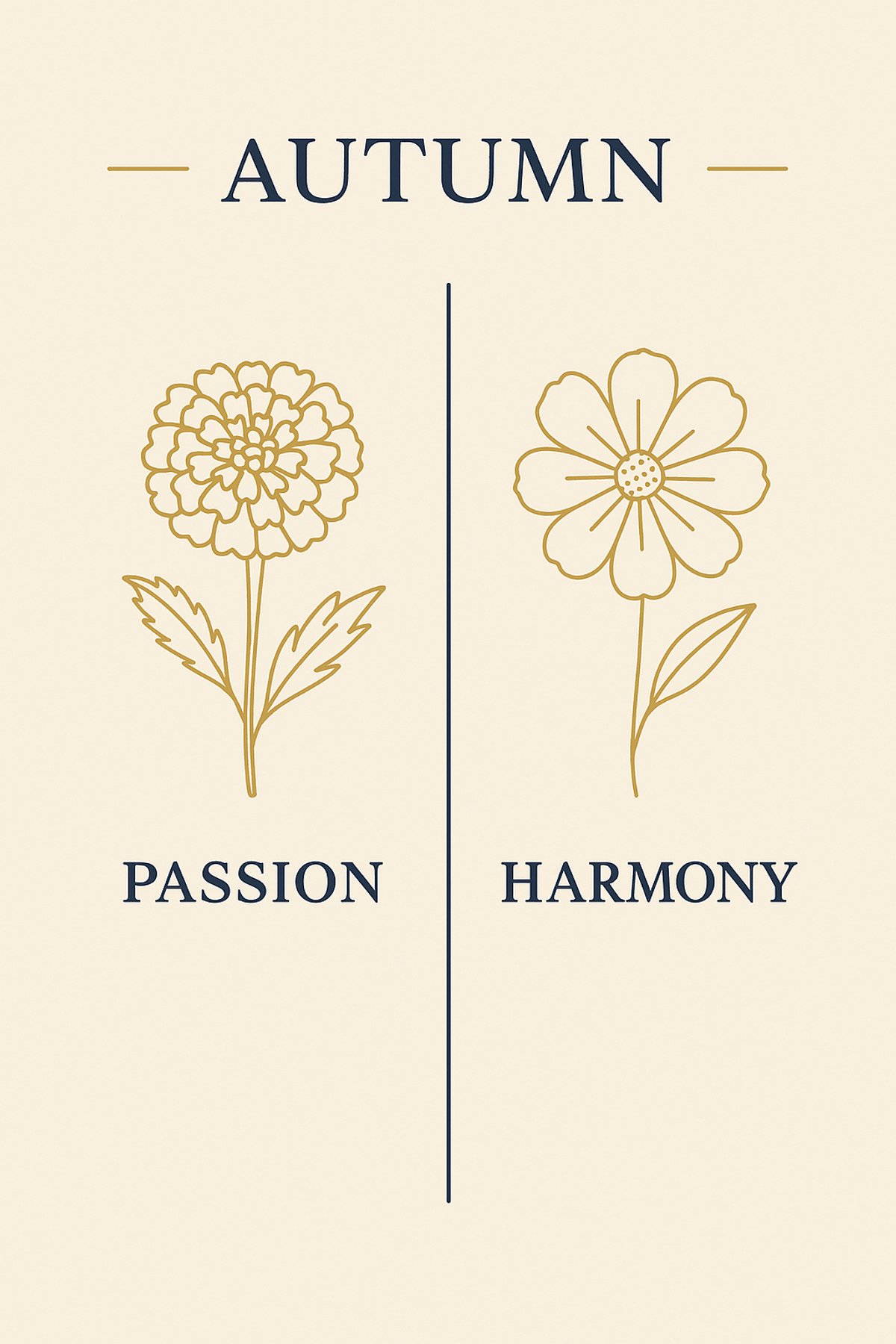
For readers who just want the essentials before diving deeper, here is October's birth flower story at a glance:
Though they share a birth month and a zodiac sign, the Marigold and Cosmos look and behave quite differently. The Marigold is compact and dense, with layered petals in fiery golds, oranges, and reds that make it feel bold and grounded. The Cosmos, by contrast, is tall and airy, with feathery foliage and open, star-shaped blooms that read as delicate and dreamy.
Symbolically, Marigold leans toward passion, remembrance, and protection — it's the flower of ceremony and sun-drenched intensity. Cosmos leans toward harmony, tranquility, and love — it's the flower of quiet balance and universal connection. In the garden, Marigold prefers full sun with regular watering and well-draining soil, while Cosmos is more drought-tolerant and actually performs better in leaner, less fertile soil. Neither flower outranks the other as "the" October birth flower; most modern flower calendars list them as a complementary pair, much like June's Rose and Honeysuckle or August's Gladiolus and Poppy.
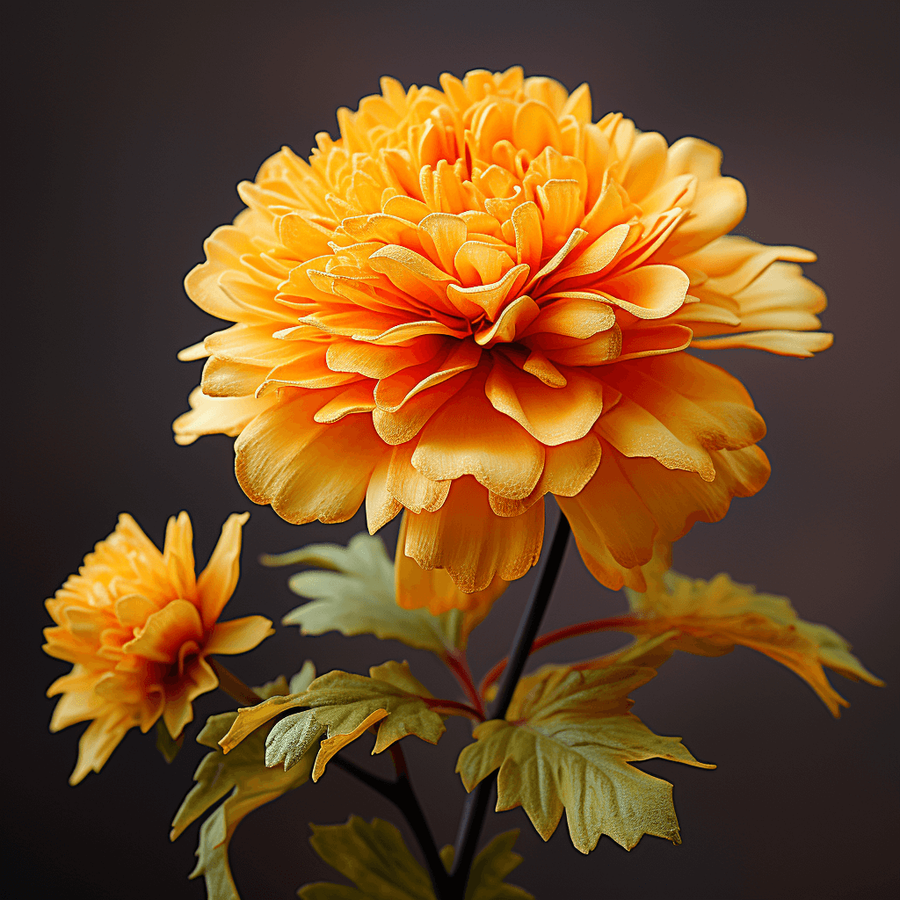
The Marigold, often bathed in shades of gold, orange, and yellow, is a flower that has captivated hearts for centuries. Its vibrant colors are reminiscent of the sun's golden rays, making it a symbol of warmth, life, and positivity. But beyond its visual appeal, the Marigold holds deep symbolic meanings that have evolved over time.
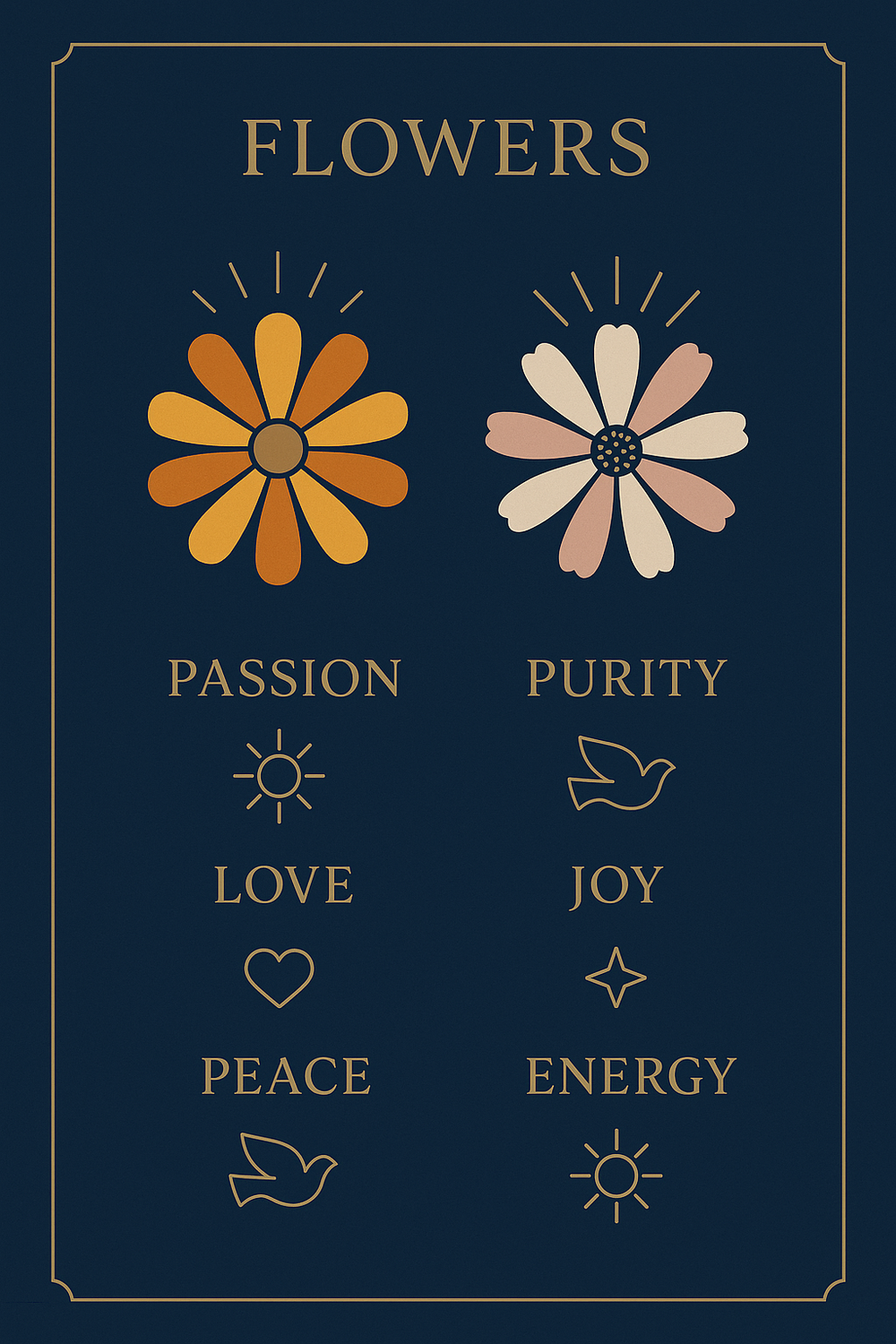
Whether gracing gardens with their presence or being used in rituals and ceremonies, Marigolds carry a message of hope, love, and transformation. Their symbolism is a testament to their enduring role in human history and the myriad of emotions they evoke.
The Marigold, with its sun-kissed petals, has been a significant flower in various cultures for centuries. Its historical roots are as deep and varied as the shades of its blooms. Here's a look at how different civilizations have used and honored it.
| Civilization | Usage & Significance |
|---|---|
| Ancient Egypt | Marigolds were valued for their reputed rejuvenating properties and were associated with solar symbolism, reflecting their bright, sun-like appearance. |
| Roman Empire | Calendula, a marigold relative, was woven into ceremonial garlands, and flowers more broadly featured in Roman wedding customs as symbols of love and prosperity. |
| India | Marigolds hold a sacred place in Hindu rituals. They are used extensively in festivals like Diwali and Durga Puja, symbolizing purity, prosperity, and positivity. |
| Mesoamerica | In Mexico, Marigolds (cempasúchil) are central to Día de los Muertos, believed to guide the spirits of the departed back to the world of the living with their color and scent. |
From ancient civilizations to modern-day practices, the Marigold's historical significance is a testament to its enduring appeal and multifaceted role in human culture. Its presence in rituals, ceremonies, and daily life showcases its profound impact on societies throughout history.

October, dominated by the balanced and harmonious sign of Libra, finds a fitting floral counterpart in the Marigold. Just as Libra seeks equilibrium and beauty in all things, the Marigold stands as a symbol of passion, creativity, and warmth.
Both the flower and the zodiac sign celebrate beauty, balance, and deep connections, making the pairing a natural one for October.
The Marigold comes in a variety of shades, each carrying its own symbolism. These vibrant hues not only add aesthetic beauty to gardens and bouquets but also convey distinct sentiments.
| Color | Meaning |
|---|---|
| Golden Yellow | Often likened to the sun, golden yellow Marigolds symbolize warmth, positivity, and creativity. |
| Orange | This vibrant hue stands for enthusiasm, energy, and celebration, and is often used in festivities. |
| Red | Red Marigolds convey deep emotions, passion, and love. |
| White | Symbolizing purity, peace, and innocence, white Marigolds are often used in spiritual settings. |
Whether you're choosing Marigolds for a garden, a bouquet, or a special occasion, understanding the meanings behind their colors can add depth and significance to your choice.
The Marigold, with its radiant petals, has been a subject of reverence in various cultures. Much of its folklore is passed down through oral tradition rather than a single documented source, so these stories are best understood as cultural belief and legend rather than verified history.
From guiding souls to symbolizing the sun's energy, the Marigold's presence in mythology and folklore is vast and varied, enriching our understanding of its cultural and spiritual value even where sources are more legend than record.
The Marigold has found its way into the traditions of cultures around the world, from spiritual ceremonies to daily life.

| Culture | Significance & Use of Marigold |
|---|---|
| Mexico | Marigolds play a pivotal role in Día de los Muertos celebrations. Known as "Flor de Muerto," they decorate altars and graves, believed to guide the spirits of the deceased. |
| India | Marigolds hold spiritual significance in Hindu rituals, used extensively in ceremonies, weddings, and festivals like Diwali as a symbol of purity and positivity. |
| Nepal | In the Tihar festival, Marigolds are made into garlands and used to decorate homes, symbolizing the victory of light over darkness. |
| Europe | Pot marigold (Calendula) has long been used in traditional skincare for minor irritations and wounds, and was also believed to offer protection. |
| Africa | In some regions, Marigolds are planted in vegetable gardens as companion plants believed to help deter certain pests. |
From bustling festivals in India to quiet gardens in Europe, the Marigold's presence is a testament to its universal appeal.
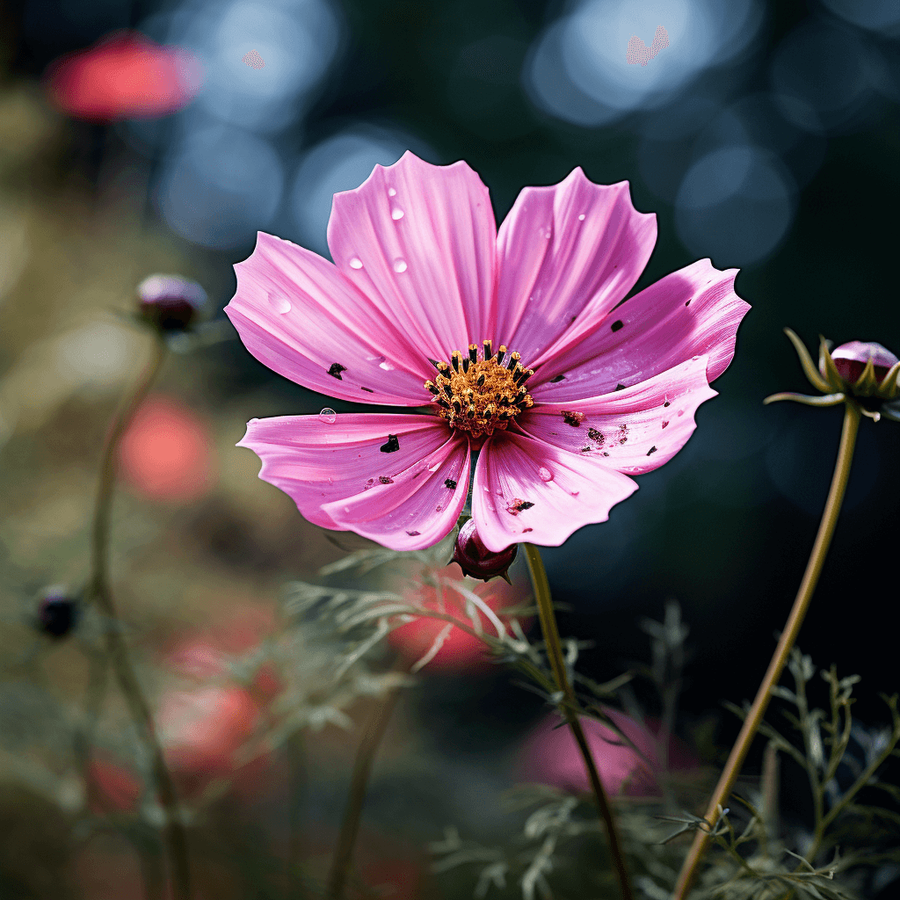
Named after the Greek word for 'order' or 'world', the Cosmos flower is a symbol of harmony and the universe's vast expanse. With its delicate petals and feathery foliage, the Cosmos embodies a sense of wonder, balance, and serenity.
The Cosmos flower, with its symmetrical petals, is often seen as a representation of harmony and equilibrium, believed to bring a sense of order to any garden.
Gifting Cosmos flowers is a gesture of deep love and affection in many cultures. Their gentle appearance and soft hues convey warmth and heartfelt emotion.
The Cosmos's serene demeanor resonates with peace and calmness, making it a popular choice for moments of introspection or meditation.
With their free-swaying stems, Cosmos flowers symbolize freedom, spontaneity, and unrestrained joy, encouraging one to embrace life's unpredictability.
In the vast tapestry of nature, the Cosmos stands out as a beacon of beauty, balance, and boundless wonder — a reminder of the universe's infinite beauty and the delicate balance that sustains it.
The Cosmos flower, with its starry petals, has a history that spans continents. Originating in Mexico, this bloom has traveled far and wide, leaving a trail of stories and traditions in its wake.
Mexico's landscapes first saw the Cosmos's delicate petals unfurl. Its name, derived from the Greek word for 'order', is thought to reference the neatly arranged pattern of its petals.
Spanish explorers brought Cosmos seeds back to Europe. The flower became established in Spanish gardens by the late 18th century, after botanists cultivated Mexican seed stock at Madrid's Royal Botanical Garden and formally described the plant in 1791.
In Victorian England, the language of flowers was a popular way to convey emotions, and the Cosmos, representing love and beauty, became a favored gift among friends and lovers.
Today, the Cosmos is a beloved garden addition worldwide, prized for its easy-to-grow nature and its ability to attract pollinators.
From Mexico to gardens across the globe, the journey of the Cosmos is a testament to its timeless beauty and adaptability.
October, a month dominated by the balanced scales of Libra, finds a floral counterpart in the Cosmos. Just as Libra seeks harmony and equilibrium, the Cosmos, with its symmetrical petals, mirrors this balance on Earth.
Libra, ruled by Venus, craves harmony and beauty. The Cosmos, with its evenly spaced petals, is a fitting representation of Libra's intrinsic qualities — its name literally means 'order' in Greek.
Venus, the planet of love and aesthetics, finds a terrestrial echo in the Cosmos flower, whose delicate appearance resonates with Venusian energies of attraction and appreciation of beauty.
The star-shaped arrangement of Cosmos petals is reminiscent of the night sky, aligning with October's theme of longer nights and star-filled skies.
Those born under Libra are known to thrive in balanced environments; similarly, the Cosmos flourishes in well-balanced soil, symbolizing equilibrium both in the heavens and on Earth.
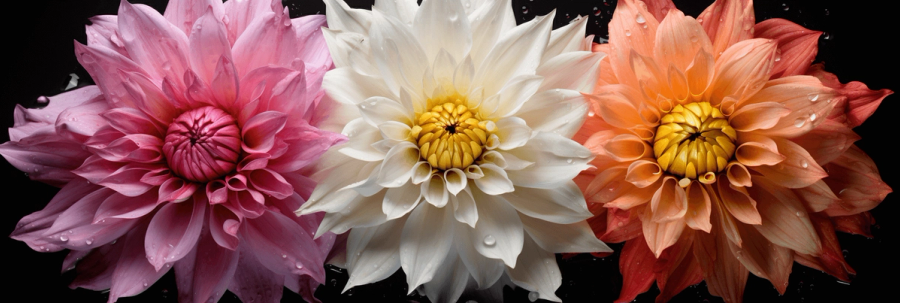
The Cosmos flower comes in a spectrum of colors, each carrying its own symbolism and message, making it a versatile flower for various occasions.
| Color | Symbolism |
|---|---|
| White Cosmos | Representing purity, innocence, and peace, white Cosmos are often used in weddings and spiritual ceremonies. |
| Pink Cosmos | Symbolic of romance, tenderness, and femininity, pink Cosmos are perfect for expressing gentle emotions. |
| Red Cosmos | These fiery blooms stand for passion, strength, and love. |
| Yellow Cosmos | Yellow Cosmos flowers radiate joy, positivity, and warmth. |
| Orange Cosmos | Representing enthusiasm, creativity, and energy, orange Cosmos are a burst of vibrancy. |
It's worth noting that Cosmos hues can vary based on soil quality, sunlight, and cultivation practices. Regardless of shade, Cosmos flowers remain a favorite among gardeners for their beauty and the depth of emotions they represent.
The Cosmos flower, with its ethereal beauty, has inspired many cultures throughout history. Its name, derived from the Greek word for 'order' or 'world,' hints at its symbolic weight, though — as with much flower folklore — these stories are cultural tradition rather than documented fact.
In ancient Greek thought, the concept of "cosmos" represented order, peace, and the universe's harmonious arrangement. Later floral symbolism drew on this idea, framing the flower as a manifestation of love and beauty, sometimes associated with the goddess Aphrodite.
Originating from Mexico, the Cosmos flower holds a special place in local folklore, sometimes linked to Day of the Dead traditions and the cycle of life, death, and rebirth.
Some Native American oral traditions associate the Cosmos with universal love and unity, with a folk belief that planting it in one's garden invites harmony into the household. As with much plant folklore, these accounts vary by tribe and region and are passed down orally rather than through a single written source.
Today, the Cosmos flower is often associated with serenity and a deep connection to the universe, valued in gardens and bouquets for the sense of peace it brings.
The Cosmos, with its dainty petals, has captured the hearts of gardeners across the globe, each culture attributing its own significance to the bloom.
In its native land, the Cosmos is deeply rooted in cultural practice, seen as a symbol of joy and love and used in local festivals.
In Japan, the Cosmos, known as "Akizakura" (autumn cherry blossoms), is celebrated as an emblem of fall, its bloom evoking nostalgia and the transient nature of life.
In India, the Cosmos is admired for its beauty and also used in traditional practices valued for its soothing qualities.
European gardeners have long cherished the Cosmos for its easy cultivation and long-lasting blooms, popular in gardens and floral arrangements.
In the U.S., the Cosmos is often planted in memory gardens as a tribute to loved ones, symbolizing hope and the enduring spirit of life.
Both October birth flowers translate beautifully into personal, meaningful designs and gifts. A Marigold tattoo is a popular choice for commemorating a loved one or celebrating resilience — its bold, layered petals work well as a standalone piece or combined with a birth month or date. Because of its ties to Día de los Muertos, Marigold ink is also chosen as a tribute to family heritage or as a remembrance piece for someone who has passed.
A Cosmos tattoo tends to appeal to those drawn to minimalism — its simple, star-like outline suits fine-line work on the wrist, ankle, or behind the ear, and it's often chosen to represent inner peace, balance, or a fresh start. Some choose to combine both flowers in a single piece to represent the push-and-pull of passion and calm.
For gifts, a bouquet or potted Marigold suits congratulatory occasions, new ventures, and celebrations of a milestone, while Cosmos arrangements are a thoughtful choice for sympathy, new beginnings, or a birthday gift for someone who values calm over drama. Pairing either flower with October's birthstones — Opal or Tourmaline — makes for a meaningful, personalized birthday gift; our birthstone guide has full pairing details.
Discover the characteristic birth flowers of other months and their symbolic representations:
| Month | Birth Flowers |
|---|---|
| January | Carnation & Snowdrop |
| February | Violet & Primrose |
| March | Daffodil & Jonquil |
| April | Daisy & Sweet Pea |
| May | Lily of the Valley & Hawthorn |
| June | Rose & Honeysuckle |
| July | Larkspur & Water Lily |
| August | Gladiolus & Poppy |
| September | Aster & Morning Glory |
| October | Marigold & Cosmos |
| November | Chrysanthemum & Peony |
| December | Narcissus & Holly |
Marigold is most associated with gold, orange, and deep red, while Cosmos is most associated with white and pink, though it also comes in red, yellow, and orange. Together, the two flowers cover almost the entire warm end of the color spectrum, which is why October-themed arrangements often lean into golds paired with soft pinks.
Neither flower is exclusively "official" — most modern flower calendars, much like birthstone lists, assign two flowers per month, and October's pair is Marigold and Cosmos. Marigold tends to get top billing due to its long ceremonial history, but Cosmos is equally recognized in gardening and gifting traditions.
A Marigold tattoo typically symbolizes passion, remembrance, and resilience, and is often chosen as a tribute to a loved one. A Cosmos tattoo usually represents peace, balance, and new beginnings, and its simple star-like shape makes it a popular choice for fine-line or minimalist designs.
October's birthstones are Opal and Tourmaline, both of which pair naturally with the Marigold and Cosmos in gifts and jewelry design. Opal's shifting colors complement the Cosmos's soft palette, while Tourmaline's warm tones echo the Marigold's golden hues — see our full birthstone guide for more pairing ideas.
Marigold is compact and dense with fiery gold, orange, and red petals, while Cosmos is tall and airy with feathery foliage and a wider color range. For a full comparison of their meanings, care, and appearance, see the "Marigold vs Cosmos" section above.
Marigolds like full sun, well-draining soil, and regular but moderate watering, with deadheading to encourage more blooms. Cosmos are more drought-tolerant, prefer leaner soil, and also benefit from deadheading spent flowers to keep them blooming continuously.
Yes, both flowers are edible. Marigold petals are often used as a saffron substitute in cooking, offering a slightly tangy flavor, while Cosmos petals can be added to salads and have a mild, lettuce-like taste.
Marigold, particularly calendula, has traditionally been used for its anti-inflammatory and antiseptic properties and appears in ointments for wound healing and skin irritation. Cosmos is less established in traditional medicine but has been used in some cultures for mild soothing effects.
Marigolds are robust and adapt to various climates but prefer warmer temperatures and are frost-sensitive. Cosmos are heat-loving, drought-tolerant, and also perform best in warm climates with full sun exposure.
Both can be grown indoors with enough light. Marigolds need at least six hours of direct sun, ideally from a south-facing window, while Cosmos started from seed also need ample light and moderately moist soil to thrive indoors.
Marigolds are generally considered deer-resistant thanks to their strong scent, though deer may still nibble them in high-pressure areas. Cosmos are not particularly deer-resistant and may attract browsing deer where populations are high.
Water Marigolds when the top inch of soil feels dry, since overwatering can cause root rot. Cosmos are drought-tolerant and prefer deep, infrequent watering once the soil is dry a couple of inches down.
Marigolds can attract spider mites, aphids, and whiteflies, though they're also used as companion plants to repel other pests. Cosmos can attract aphids and thrips, so it's worth checking leaf undersides and treating with insecticidal soap or neem oil if needed.
Yes, both work well in bouquets. Marigolds add vibrant color and longevity as a focal flower, while Cosmos, with its long stems and delicate look, adds elegant height to tall vases and centerpieces.
February's birth flowers are the Violet and Primrose. Discover their meanings, colors, history, mythology, and zodiac ties in this…
January's birth flowers are the Carnation and Snowdrop, symbolizing deep love and hope. Discover their colors, history, myths, and…
As the gentle warmth of June graces the world, two flowers rise to prominence, capturing the essence of this sun-kissed month: the…