Spiritual
Autumn Equinox Meaning: Spiritual Symbolism & Rituals
What the autumn equinox means spiritually, its Celtic, Persian, and Japanese traditions, plus simple rituals and dates to mark the…
 KnowMastery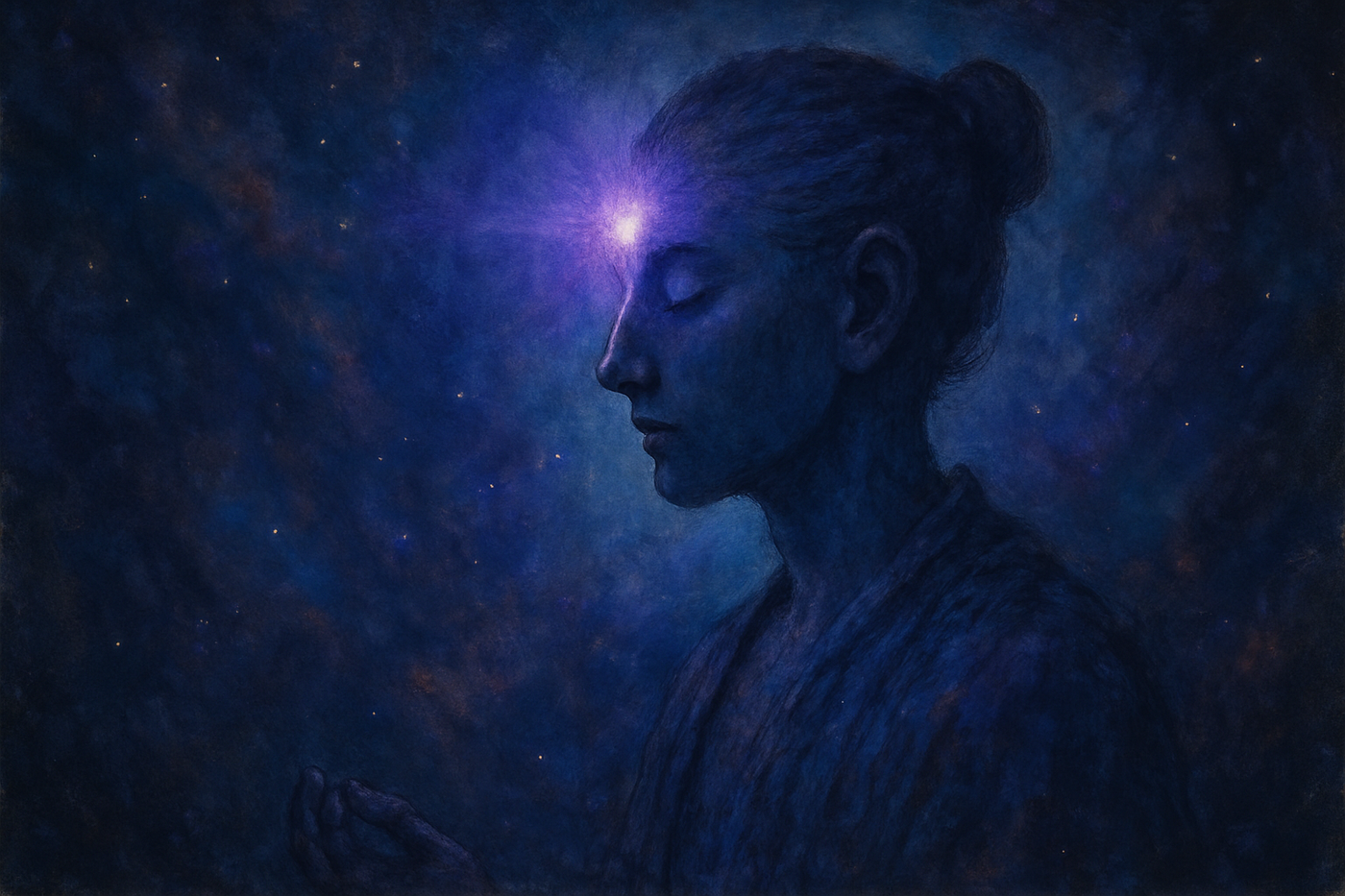
The third eye is the symbolic inner eye associated with intuition, higher perception, and spiritual insight beyond ordinary sight. Located energetically at the center of the forehead, between the eyebrows, it corresponds to the ajna chakra in yogic tradition and is said to let a person perceive subtle energy, hidden truths, and psychic impressions the physical eyes cannot detect. Awakening it is less about literal vision and more about deepening self-awareness, discernment, and clarity of thought.
Close your eyes for a moment. There is a quiet space just behind your forehead, a stillness that feels older than memory. People across centuries and continents have paused in that same spot, sensing something watching from within, something that knows before the mind catches up.
Maybe you've felt it too: a gut instinct that turned out true, a dream that warned you, a sudden clarity that arrived without logic. That flicker is often described as the whisper of the third eye, a faculty many traditions believe we are all born with but few of us learn to trust.
In spiritual and esoteric traditions, the third eye is not a physical organ but an energetic center of perception. It is most commonly linked to the pineal gland, a small pinecone-shaped gland deep in the brain that regulates melatonin and our sense of light and darkness. Because of its central location and light-sensitivity, philosophers and mystics have long treated it as the physical seat of a spiritual sense organ, a bridge between the biological and the symbolic.
The third eye represents:
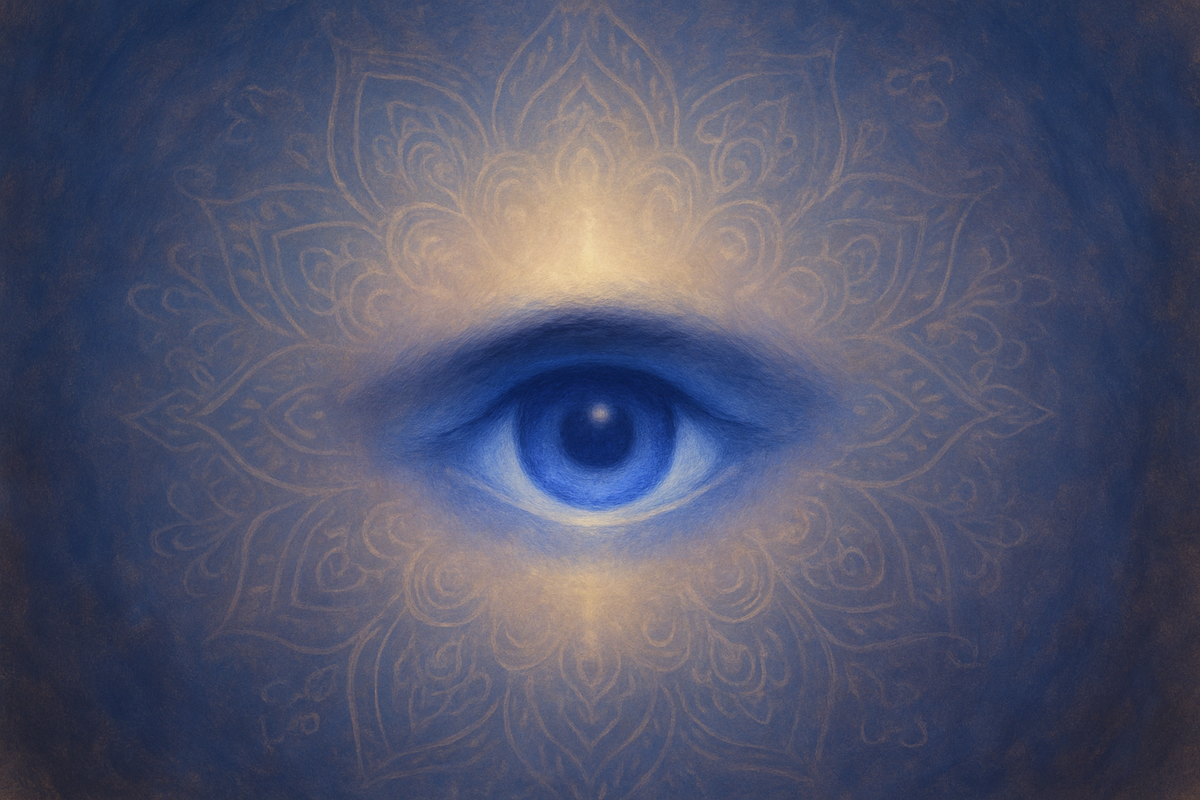
In the seven-chakra model rooted in Indian tantric philosophy, the third eye is the sixth chakra, called ajna, meaning "command" or "perceive." It sits between the eyebrows and governs thought, imagination, and the ability to receive guidance beyond the rational mind. When balanced, ajna offers mental clarity and vivid intuition; when blocked, it can manifest as confusion, poor concentration, or a disconnect from one's inner compass. Some yogic texts describe ajna as the meeting point of the body's two main energy channels, ida and pingala, which is one reason it is treated as a gateway between ordinary awareness and deeper states of consciousness. If you want a broader foundation, our 7 Chakras: A Complete Beginner's Guide walks through how ajna relates to the other six energy centers.
People who feel this center becoming more active often describe a cluster of the same experiences, regardless of their spiritual background:
In Hindu iconography, deities like Shiva are depicted with a literal third eye on the forehead, representing wisdom and the destructive power of illusion (maya). Shiva's third eye is said to reduce anything false to ash when opened, a metaphor for how true perception dissolves illusion. Hindu women and worshippers also wear a bindi or tilaka at this exact spot, historically marking the ajna chakra as a point of focus and protection.
The Eye of Horus, one of the most enduring symbols from ancient Egypt, represented protection, royal power, and health, and is closely tied to the mythological story of Horus losing and regaining his eye in battle with Set. Egyptologists and esoteric writers alike have connected this symbol to inner vision and spiritual restoration, since the eye was believed to see beyond the physical realm into the underworld and back.
In the late 19th century, Theosophist Helena Blavatsky popularized the term "third eye" in the West, linking it to the pineal gland and describing it as a vestigial organ of psychic perception, once active in earlier stages of human evolution. This idea was later picked up by New Age movements in the 20th century, cementing the pineal gland's reputation as the biological anchor for spiritual sight.
In Taoist internal alchemy tradition, the 'Upper Dan Tien' at the brow is held to be the point where spiritual energy (shen), refined lower in the body, is ultimately transmuted toward emptiness (wu wei). Qigong practitioners often direct breath and attention to this point during "microcosmic orbit" meditations to circulate energy through the body's central channels.
The terms often get blurred, but they describe different layers of the same idea. The third eye is the symbolic center said to make heightened perception possible; clairvoyance and other psychic abilities are the specific skills some traditions believe that center can produce, such as sensing energy, reading emotional undercurrents, or perceiving information beyond the five senses. Think of the third eye as the instrument and psychic sight as one possible function it performs - you can strengthen the instrument through meditation and stillness without ever claiming to predict the future or read minds.
Dreaming of a third eye, or of gaining a new eye altogether, is often interpreted as a message that your subconscious is urging you to pay attention to something you've been ignoring - a truth, a decision, or an unspoken feeling. Common dream themes include:
As with any dream symbol, context matters more than a fixed rulebook. If you're drawn to symbolic dream interpretation generally, our guide on Dream Catcher: Unraveling Its Profound Symbolism and Meaning explores how dream imagery has been filtered and interpreted across cultures.
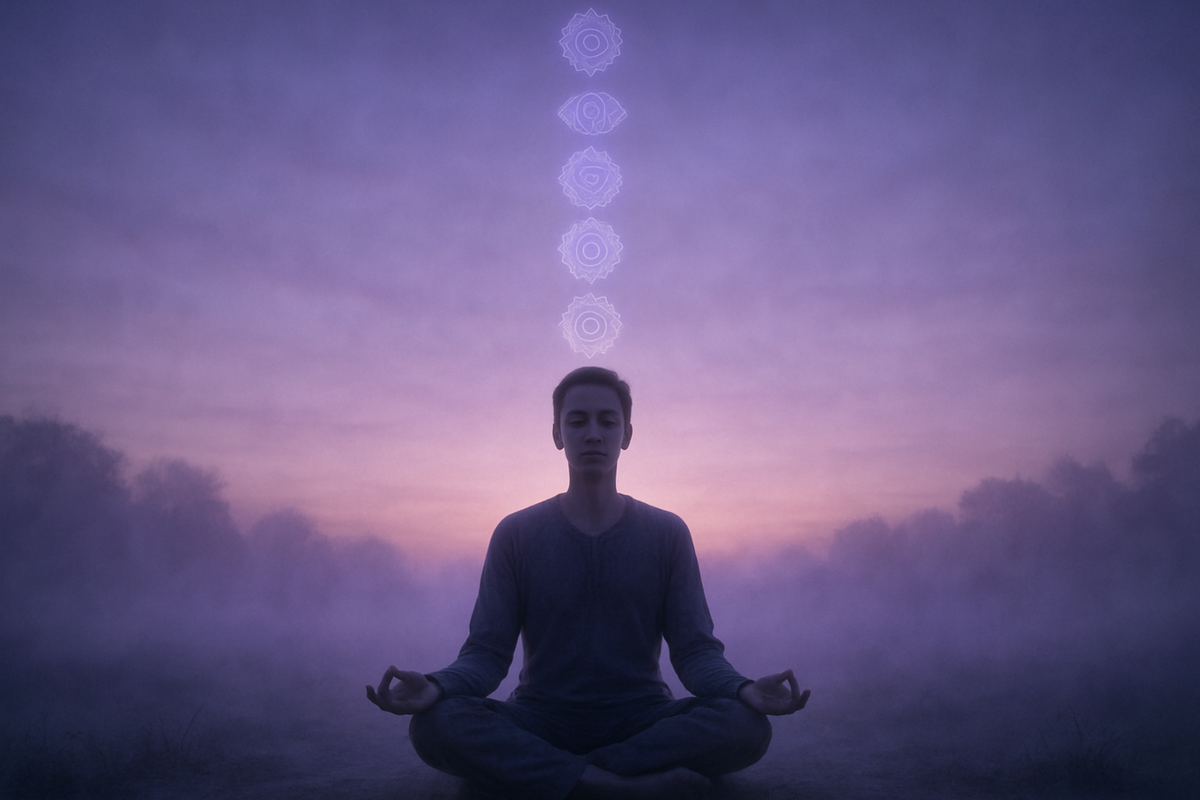
In chakra work, ajna is traditionally associated with indigo, though modern practitioners sometimes use violet or deep blue-purple tones in visualization. Here's how the color and its common associations break down:
| Color | Common Association | Practice Context |
|---|---|---|
| Indigo | Intuition, depth of perception, wisdom | Traditional chakra meditation |
| Deep Violet | Spiritual connection, transcendence | New Age crystal and energy work |
| Silver-White | Clarity, higher guidance | Visualization during meditation |
| Black (Egyptian kohl) | Protection, ritual marking | Historical Eye of Horus symbolism |
Whether you approach this symbolically or as a genuine spiritual practice, the following methods are widely used to cultivate intuition and mental clarity. None require special equipment - just consistency over weeks and months.
These practices don't promise mystical visions overnight; they build the same quiet attentiveness that people who study numerology or chakra work often describe as the real reward - a mind that notices patterns it used to miss.
You don't need a mystical framework to benefit from "third eye thinking." Most people already experience it in small, unnamed moments throughout an ordinary week:
These moments are, in essence, the third eye functioning quietly in the background of ordinary life, long before anyone labels it "spiritual."
An open third eye is generally described as a state of heightened intuition, mental clarity, and sensitivity to subtle energy or emotional undercurrents. People who feel theirs is active often report vivid dreams, strong gut instincts, and an easier time sensing what's unspoken in a situation.
The third eye is not a literal eye, but many traditions link its symbolism to the pineal gland, a real gland in the brain that regulates light perception and melatonin. The spiritual meaning is metaphorical, representing inner perception rather than physical eyesight.
There is no fixed timeline; some people report shifts in intuition within weeks of consistent meditation, while for others it develops gradually over months or years. Consistency in practices like meditation, journaling, and quiet reflection matters more than speed.
The third eye corresponds to the ajna chakra, the sixth of the seven main chakras in the yogic system, located between the eyebrows. It governs intuition, imagination, and inner vision, and is traditionally represented by the color indigo.
What the autumn equinox means spiritually, its Celtic, Persian, and Japanese traditions, plus simple rituals and dates to mark the…
Dreaming someone died isn't a warning sign. Here's what it actually means spiritually, psychologically, and across cultures.
Dreaming your teeth are falling out? Discover what it means spiritually, biblically, and psychologically — plus what recurring ver…