Crystal & Stones
Fluorite Crystal: A Treasure Trove of Data and Healing Properties
Table of Content What is Fluorite? History, Culture, Mythology, and Folklore Benefits of Fluorite Stone and Chakra Healing Gemolog…
 KnowMastery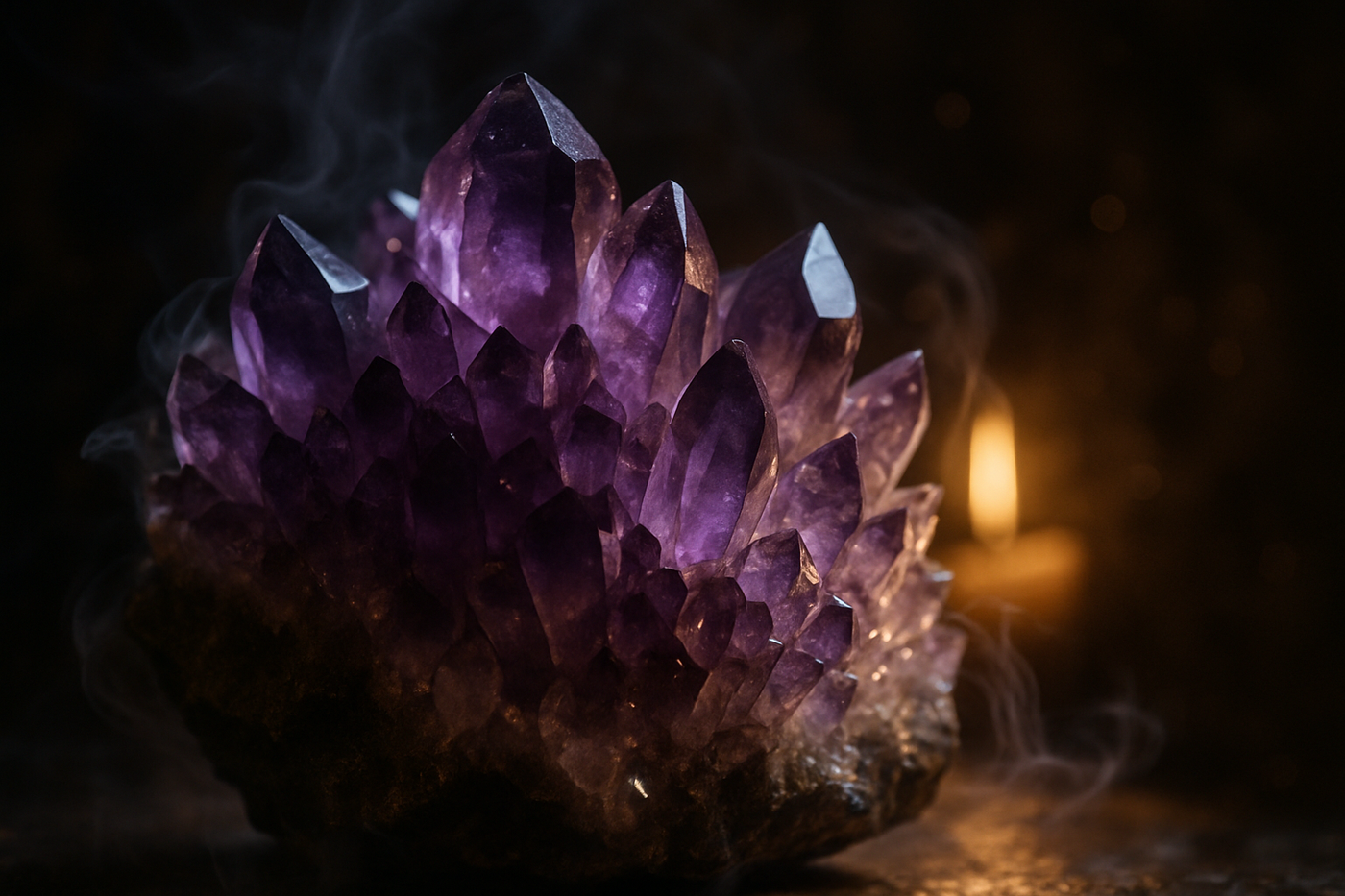
Amethyst is a purple variety of quartz, prized since antiquity as a symbol of calm, protection, and spiritual clarity. Its violet color comes from trace iron within the quartz crystal lattice, altered by natural irradiation deep underground. Today amethyst is worn as jewelry, used in meditation and energy work, and treasured as the official birthstone of February.
No other gemstone tugs on our imagination quite like the tantalising amethyst. Famous for its stunning violet hue, this beguiling crystal has held humanity in its thrall for centuries and remains one of the most treasured gemstones in the world today.
Amethyst is a species of quartz, the same mineral family that produces citrine and rose quartz. It ranges from delicate lilac to deep, bright violet and plum, and this fascinating color palette is often seen as a gradient within a single specimen, with color zoning running from light to dark purple.
These crystals grow inside the hollow walls of a geode, a rock cavity lined with crystalline structures. Over thousands of years, groundwater carrying dissolved silicon dioxide slowly trickles into the cavity and deposits layer upon layer of quartz. Trace amounts of iron, combined with natural irradiation and specific temperature ranges, are what produce amethyst's signature purple color.
Amethyst is found all over the world, with the largest deposits in Brazil and Uruguay inside quartz geodes within volcanic rock. Other important sources include the United States (Arizona), Canada, India, Sri Lanka, and Russia — each contributing its own subtly different shade of purple.
With the basics covered, let's explore amethyst's historical importance, birthstone symbolism, geology, and much more, so you can gain a deeper appreciation for the beauty and depth each amethyst crystal holds.
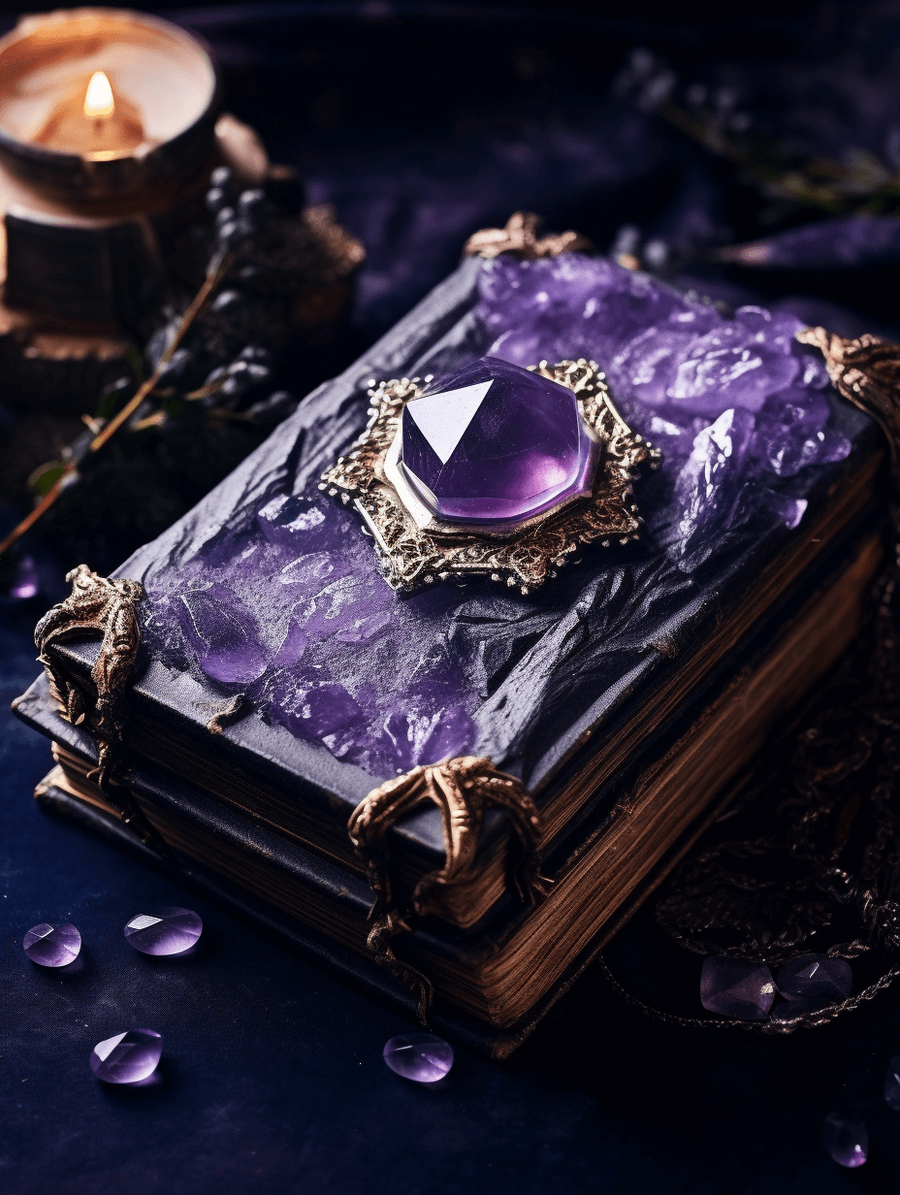
The charm of amethyst has remained constant throughout cultures and continents, with its striking color and supposed spiritual properties admired across civilizations for millennia.
The word amethyst comes from the Greek "amethystos," meaning "not drunken." The Greeks believed that wearing the gem would protect them from intoxication, so wine goblets were carved from it and amulets were worn to guard against the effects of alcohol. Amethyst was also associated with Dionysus, the god of wine and revelry. In one myth, Artemis (Diana), goddess of chastity, transformed the maiden Amethyste into stone to protect her from Dionysus's pursuit; the wine-god's tears then stained the quartz purple, creating the first amethyst.
Among royalty and religion, amethyst held a place of real consequence. Ancient Egyptians used it in personal adornment and as a protective talisman, while its rich purple color became associated with power and wealth among European royal families.
In Christianity, amethyst has long been linked to piety and purity. Bishops traditionally wore amethyst rings, a practice that continues today, with the purple color believed to symbolize Christ and to raise the wearer's spiritual insight.
Across the ocean, Pre-Columbian cultures in Central and South America treasured amethyst in ceremonial and decorative contexts, crafting artifacts and using the stone in healing rituals. In Eastern traditions, amethyst was one of the nine gems of the Navaratna, an ancient Indian talisman, while Chinese Feng Shui associates it with wealth and recommends placing it in the wealth corner of the home.
This rich tapestry of history explains amethyst's worldwide appeal — a thread connecting us to our past and to nature's ability to astound, protect, and adorn humans for centuries. Let's see how these historical roots helped establish amethyst's reputed spiritual, metaphysical, and healing properties.
Amethyst is the official birthstone of February, a royal emblem of qualities most often associated with those born under the signs of Aquarius and Pisces.
Amethyst is coveted as a symbol of serenity, balance, and temperance — ideals mirrored in its calming violet hue. It's said to foster a balanced perspective where logic blends with creativity and passion aligns with tranquility, complementing those born in February who are often imaginative, intuitive, and introspective.
Protection: Amethyst is believed to provide protection in physical, mental, and emotional ways, acting as a shield against negative energies and a shelter for calmness and purity.
Calmness and Clarity: Amethyst is widely considered a gemstone for calmness and clarity, with its harmonizing purple tones said to help reduce stress and anxiety while supporting mental peace.
Spiritual Growth: Amethyst's deep spiritual significance mirrors the reflective, intuitive nature often attributed to February-born individuals. The crystal is associated with meditation and rituals believed to help connect a person with their higher self.
Celebrating a February birthday with amethyst means embracing these qualities and the journey of self-growth they suggest. Next, let's explore what makes this gem as remarkable beneath the surface as it is beautiful to the eye.
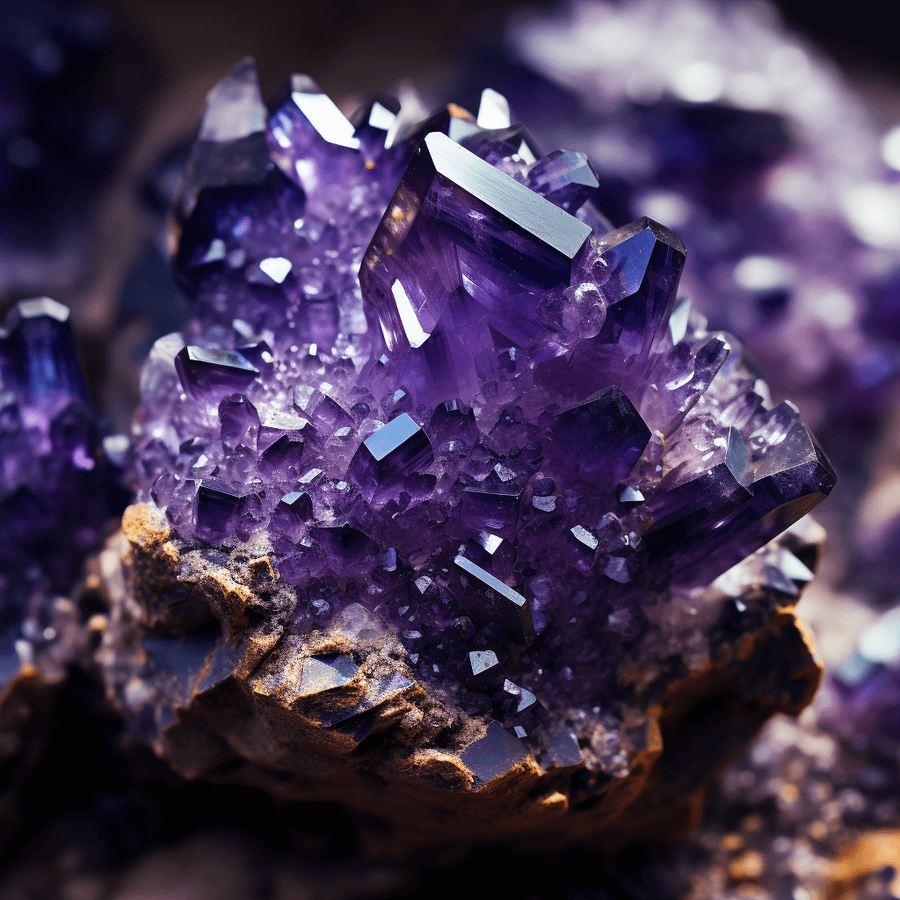
Understanding the geology of amethyst takes us into the heart of the earth's crust, where this purple gemstone owes its existence to millions of years of pressure, time, and a touch of natural radioactivity.
Amethyst crystals are usually found in hollow rocks called geodes. The process begins when silica-rich solutions seep into cavities and cracks formed within volcanic rock or limestone. Over millions of years, the solution slowly cools and crystallizes into layers of quartz. When trace amounts of iron are present and exposed to natural background radiation over long periods, the iron is activated to produce amethyst's signature purple pigment.
Amethyst is a variety of quartz, one of the most common minerals on the planet, chemically composed of silicon dioxide (SiO2). Trace amounts of iron and other elements give amethyst its distinctive violet-to-purple color among quartz varieties.
A typical feature of amethyst is the presence of inclusions — tiny natural "imperfections" that often add character and authenticity to the crystal. These may appear as fingerprint-like patterns, healed fractures, or veils within the stone, making each specimen unique.
Here is a summary of amethyst's key geological properties:
| Property | Details |
|---|---|
| Chemical Category | Mineral (quartz group) |
| Chemical Formula | Silicon Dioxide (SiO2) |
| Crystal System | Trigonal, forming hexagonal prismatic crystals |
| Color | Pale violet to deep purple, sometimes with red or blue flashes |
| Transparency | Transparent to translucent |
| Hardness (Mohs Scale) | 7 — durable enough for most jewelry |
| Specific Gravity | Approximately 2.65 |
| Refractive Index | 1.544–1.553 |
| Common Inclusions | Goethite, hematite, fingerprint-like veils |
This combination of geological properties explains amethyst's continued appeal: a mesmerizing aesthetic paired with a genuinely fascinating story of formation deep within the Earth.
From ancient civilizations to contemporary alternative healing practices, amethyst has been honored for its supposed spiritual and metaphysical qualities. Its violet hue is said to represent a higher state of consciousness, giving it a special place among healing crystals.
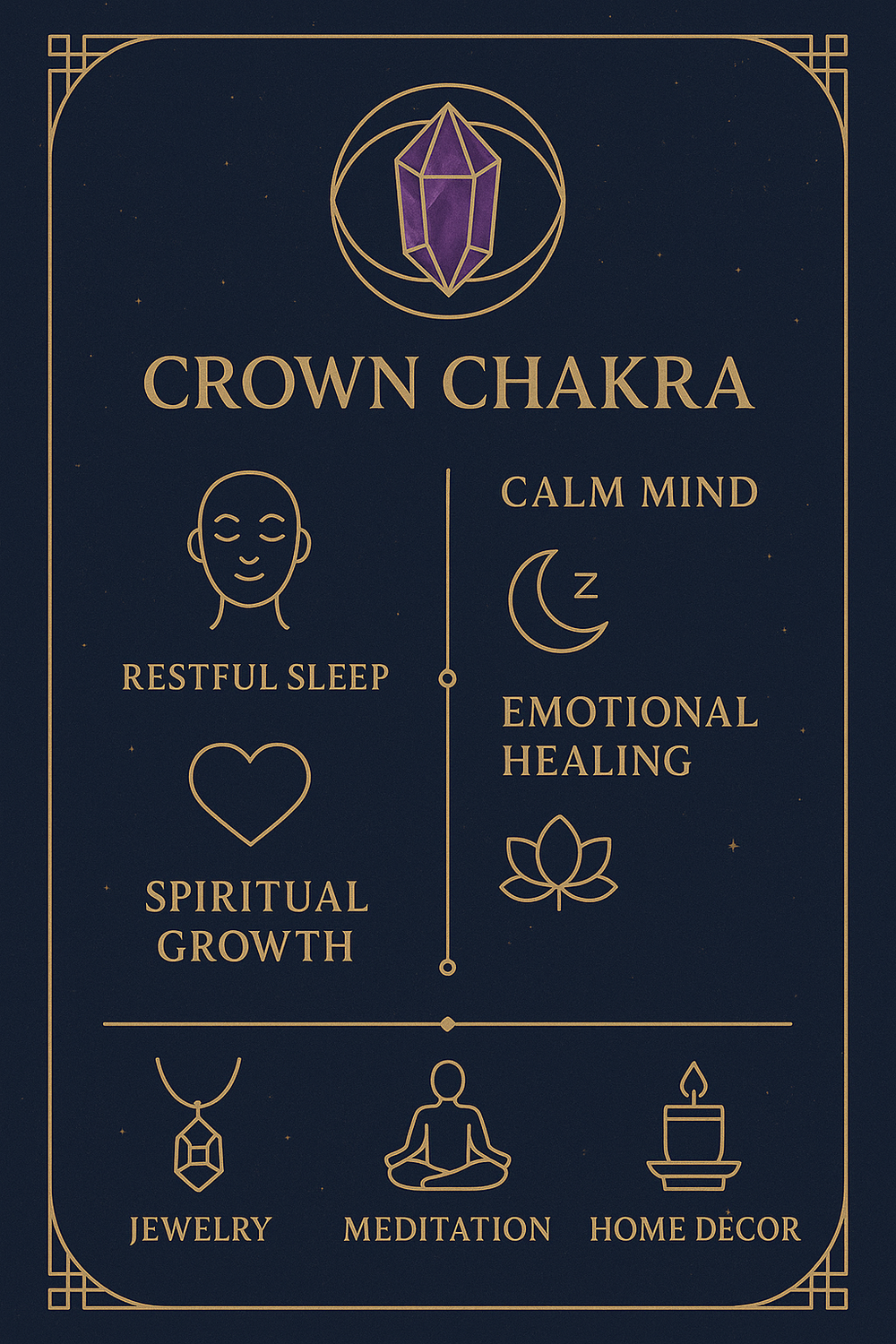
Amethyst is strongly connected to the Crown Chakra, the seventh chakra located at the top of the head. This is considered the gateway to consciousness beyond the physical body, governing how we think and connect to the world beyond ourselves. Amethyst's violet-to-purple color is thought to resonate naturally with this chakra, helping balance it and encourage introspection and self-realization. Some practitioners place an amethyst crystal at the crown during meditation to enhance the flow of positive energy.
Amethyst holds a cherished place in meditation practice, said to enhance mental clarity and support a calmer, more ordered state of mind. Practitioners often hold a piece in hand or keep one nearby during meditation to draw on its relaxing effect and deepen their connection to the crown chakra.
Amethyst is widely known as the "Stone of Tranquility" for its gentle, calming influence, believed to disperse negativity, stress, and anxiety. It has also traditionally been used to ease grief and anger while encouraging patience, and some believe it promotes restful sleep and wards off nightmares.
These metaphysical properties won't hold up under scientific testing, but many people are still drawn to amethyst's aesthetics and tranquil aura — making it a meaningful companion in the pursuit of inner peace, regardless of belief system.
Amethyst has long formed the cornerstone of alternative therapeutic traditions, with claimed benefits ranging from emotional to physical. It's worth noting there is no scientific evidence supporting these claims, so amethyst should never replace conventional medicine — it can, however, serve as a calming complement to it.
Amethyst is considered highly effective for spiritual healing, believed to help release negative emotions such as fear, anger, and anxiety while promoting serenity. Many people turn to amethyst during emotional stress, heartache, or grief to draw on its calming energy. It's also sometimes used to support sobriety and self-control, a belief rooted in the Greek myth of Dionysus.
Amethyst has also been credited with various physical healing properties in folklore, though none are scientifically proven:
These are folk beliefs without scientific backing, so always consult a healthcare professional for medical concerns. That said, if any of these ideas resonate with you, amethyst can still be a meaningful addition to a holistic self-care practice.
Amethyst is a wonderful gem to incorporate into daily life thanks to its flexibility, beauty, and claimed benefits — adding sophistication to your wardrobe or home décor while its calming energy supports personal well-being.
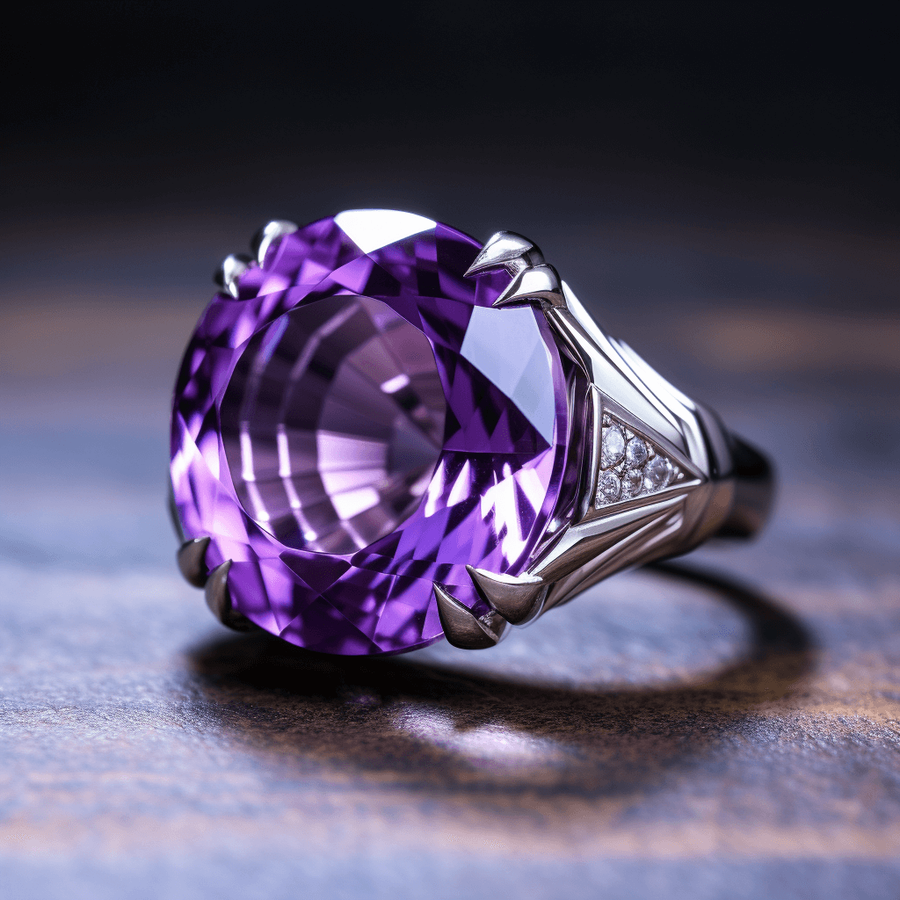
The easiest way to carry amethyst with you is through jewelry. Rated 7 on the Mohs scale, amethyst is sturdy enough for rings, bracelets, necklaces, and earrings, and its rich, regal color adds striking appeal to any piece. Wearing amethyst is also said to keep its calming, balancing properties close to you throughout the day.
Raw amethyst clusters make eye-catching decorative pieces, often placed in living rooms, home offices, or bedrooms to promote a calming, creative atmosphere. Feng Shui practitioners believe amethyst purifies energy and supports intuition, recommending it be placed in the northeastern corner of a home to enhance personal growth.
Amethyst is one of the most popular stones for meditation and wellness practices, often held during meditation or placed in a yoga space to support a tranquil, centered practice.
Incorporating amethyst into daily life lets you enjoy both its beauty and the sense of peace it's known to foster — from personal adornment to home décor and wellness routines.
Amethyst's versatile, hypnotizing tints and rich symbolism make it a beautiful choice of jewelry, glowing as easily in breathtaking statement pieces as it does in subtle daily wear.
Amethyst's hardness of 7 on the Mohs scale means it's durable enough for daily wear, yet soft enough for jewelers to cut and shape into creative designs.
Amethyst's color — from soft lavender to deep purple — has long been linked with royalty, mystery, and spirituality, and it complements a wide range of skin tones. It's also relatively inexpensive compared to many other gemstones; while exceptionally vivid, evenly colored pieces can command higher prices, the stone's abundance means there's something to fit nearly every budget. Another contributing factor to its popularity is simply belief in its calming and healing properties — wearing amethyst offers a tangible way to keep those positive associations close.
Whether you're drawn to the gemstone for its color, symbolism, or affordability, there's no denying the lasting appeal amethyst holds within the world of jewelry.
Amethyst belongs to the same quartz family as rose quartz and citrine, but each stone carries a distinct color, chakra association, and meaning. Here's a quick side-by-side comparison:
| Stone | Color | Chakra | Main Meaning | Typical Price Range |
|---|---|---|---|---|
| Amethyst | Light lilac to deep violet | Crown | Calm, protection, spiritual clarity | $ – $$ (affordable, widely available) |
| Rose Quartz | Soft pink | Heart | Love, compassion, emotional healing | $ (very affordable) |
| Citrine | Yellow to golden-brown | Solar Plexus | Abundance, confidence, positivity | $$ (moderate, natural citrine costs more) |
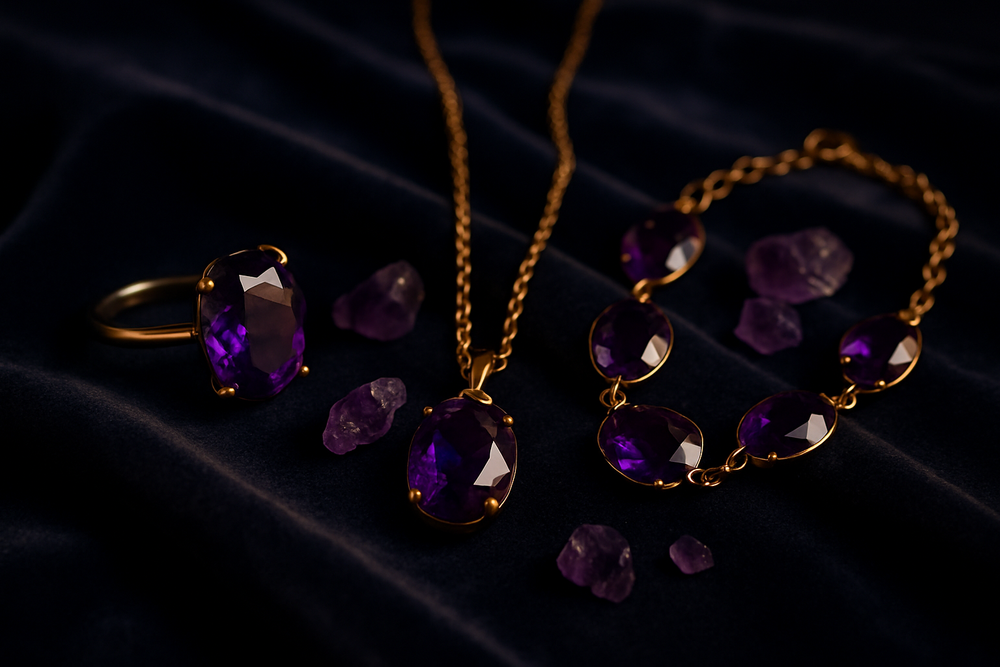
Buying amethyst is a delightful experience, whether you're drawn to its spiritual associations or its stunning color. Knowing what to look for — and how to care for your piece afterward — will help it shine for generations.
Amethyst is hard and durable, but it still needs gentle care to keep its sparkle:
Buying an amethyst isn't just about acquiring a gemstone — it's investing in a piece that can last in your collection for years. With careful selection and simple maintenance, amethyst will keep its timeless charm for generations.
Amethyst's enchanting purple hue has cemented its place in history, gracing the collections of royals, museums, and renowned institutions. Here are some of the most notable examples.
During the 18th and 19th centuries, Russia's Ural Mountains yielded some of the finest amethysts ever found, causing a sensation among European nobles. Despite the name, "Siberian" amethyst is something of a misnomer, since Siberia itself has no known amethyst production — yet the term still describes the benchmark for the highest-quality, most saturated purple color.
Russian Empress Catherine the Great was a devoted collector of amethyst jewelry. Among her most notable pieces is a large amethyst brooch set in diamonds, a striking statement of her rich and vivid taste.
Amethysts appear among the United Kingdom's coronation regalia, set into the Sovereign's Orb and Sceptre — verified pieces still used in royal ceremonies today. These historic settings reflect the stone's long association with monarchy and power across European history.
The Smithsonian Institution in Washington, D.C. holds one of the world's largest collections of amethyst gemstones and jewelry, including a 96-carat faceted amethyst and a 56-carat carved amethyst brooch.
Displayed at the Natural History Museum in London, this striking piece features a large, oval 169-carat amethyst pendant surrounded by 20 cushion-cut amethysts, 21 oval amethysts, 110 round amethysts, and a string of 61 golden topaz gems — a design that continues to capture attention with its regal charm.
These legendary pieces highlight the enduring appeal of amethyst, whether owned by royalty, displayed in museums, or worn as a personal talisman.
Through the centuries, amethyst has inspired myths, legends, and folklore that reinforce its reputation as a spiritual and healing stone.
According to Ancient Greek myth, Dionysus, god of wine and revelry, vowed revenge on the next mortal he encountered — a beautiful maiden named Amethystos on her way to pray at the temple of Diana. To save her, Diana transformed Amethystos into a statue of pure quartz. Moved by her purity, Dionysus wept tears of wine that stained the quartz purple, giving rise to the gemstone amethyst and its legendary power to ward off drunkenness.
In Christianity, amethyst is associated with piety, humility, and spiritual wisdom. The stone was traditionally worn in rosaries and bishops' rings, and legend holds that St. Valentine, patron of romantic love, wore an amethyst ring engraved with an image of Cupid.
In Ancient Egypt, amethyst was considered protective and was carved into heart-shaped amulets placed with the dead to help guide them through the afterlife.
In Eastern philosophy, amethyst is associated with the crown chakra, the energy center believed to link consciousness to a plane beyond the physical body and serve as a gateway to spiritual insight and enlightenment.
Buddhist tradition holds that at the moment of Buddha's enlightenment, the heavens showered precious stones, amethyst among them. As a result, amethyst mala beads are considered treasured tools for meditation practice, believed to support wisdom and a clear mind.
These myths and legends from around the world have humanized amethyst, giving it a mystical appeal that transcends both civilizations and time.
Today, amethyst's timeless appeal continues to hold attention through media, lifestyle trends, and interior design, thanks to its rich color and reputed healing associations.
Amethyst has long symbolized luxury, mystery, and supernatural power in film and television — most notably as the name of a main character in the animated series "Steven Universe." The gemstone is also a favorite theme in literature, frequently used to symbolize something precious or otherworldly.
Amethyst remains popular in fashion, its purple tones pairing beautifully with both modern and vintage jewelry styles. It's a recurring presence on runways and at red carpet events, and its resurgence in wellness and spirituality trends means it's now commonly used in meditation, reiki, and yoga practices, or placed on a personal altar. Amethyst pairs nicely as a complementary stone for those exploring crystals for Libra, whose balance-seeking nature echoes the stone's calming symbolism.
Amethyst geodes and crystal clusters have become popular decorative pieces, bringing a sense of sophistication and serenity to living and working spaces. From luxury hotels to chic urban lofts, amethyst continues to create an atmosphere of calm and visual interest.
From ancient lore to modern interpretations, amethyst has had a rich and varied journey. Its enchanting color, fabled history, and versatility have ranked it among the greatest gemstones in the world.
Whether worn as jewelry, incorporated into spiritual practices, admired in a museum, or displayed in your living space, amethyst offers a touch of beauty, intrigue, and connection to the ages. There's clearly much more to this purple gemstone than meets the eye — let its ancient wisdom and contemporary charm inspire your own collection.
Spiritually, amethyst symbolizes calm, protection, and higher consciousness. It's traditionally associated with sobriety, clarity of mind, and a stronger connection to one's higher self, making it a popular stone for meditation and reflection.
Amethyst is most closely associated with the Crown Chakra, the seventh chakra located at the top of the head. It's believed to help balance this energy center, supporting spiritual connection, introspection, and self-realization.
Genuine amethyst typically shows natural color zoning (uneven bands of light and dark purple) rather than a perfectly uniform tone, and it often contains tiny natural inclusions visible under magnification. Real amethyst also feels cool to the touch initially and is hard enough (7 on the Mohs scale) to resist scratching by glass; if in doubt, a reputable jeweler can confirm authenticity with a refractive index test.
Brief rinsing in lukewarm water is fine for cleaning amethyst, but prolonged soaking isn't necessary and ultrasonic cleaners should be avoided. Extended exposure to direct sunlight or heat can fade amethyst's purple color over time, so it's best stored away from windowsills and heat sources.
Yes — amethyst is widely considered one of the best beginner crystals thanks to its affordability, wide availability, and gentle, calming associations. Its durability (7 on the Mohs scale) also makes it practical for everyday jewelry and handling.
Amethyst is the birthstone for February and is traditionally linked to Aquarius and Pisces. It's also sometimes recommended as a complementary stone for Libra, whose emphasis on balance and harmony pairs well with amethyst's calming symbolism.
Table of Content What is Fluorite? History, Culture, Mythology, and Folklore Benefits of Fluorite Stone and Chakra Healing Gemolog…
Moissanite vs. Cubic Zirconia: A Comprehensive Guide Choosing the perfect gemstone for jewelry, particularly for engagement rings …
Discover amber's spiritual meaning, healing properties, chakra links, zodiac ties, and how to spot genuine amber vs fakes.