Symbols
Lotus Flower Meaning: Purity, Enlightenment & Rebirth
Discover the lotus flower's meaning across Hinduism, Buddhism & Egypt—purity, enlightenment, rebirth—plus colors, dreams, and how …
 KnowMastery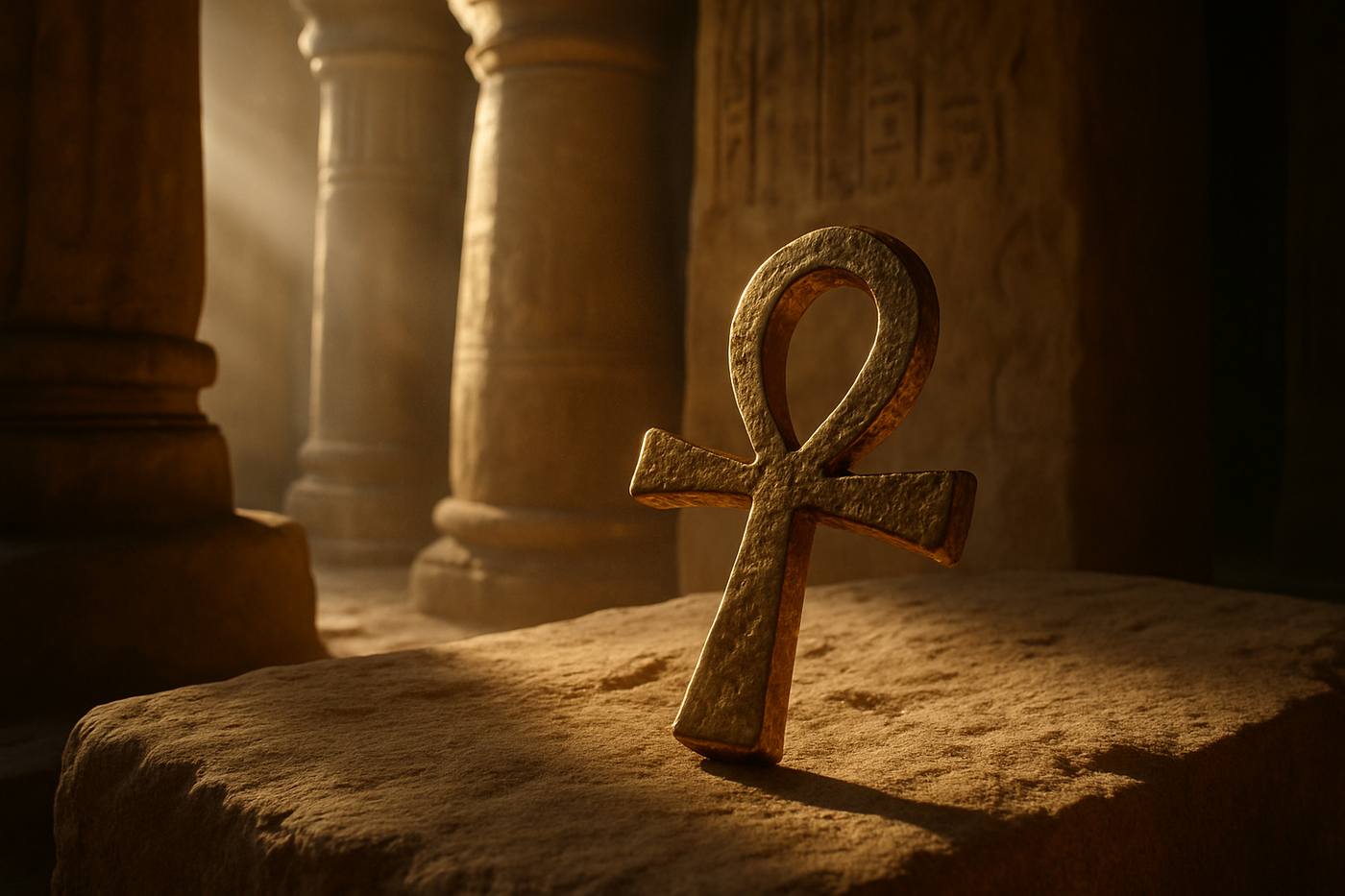
The Ankh is the ancient Egyptian symbol of eternal life, shaped like a cross topped with a teardrop loop. To the Egyptians it represented the union of male and female, earth and sky, mortality and immortality — the literal key that unlocked the afterlife. Gods are shown holding it to a pharaoh's lips, breathing life into rulers and the dead alike. Today it remains one of the most recognized spiritual symbols in the world, worn as a talisman of vitality, balance, and rebirth.
Picture a temple wall at Karnak, sun bleaching the limestone, and a carved god extending a small looped cross toward the nose of a king. No words are needed — the gesture says everything. Life is being given, breath by breath, from the divine to the human.
That single image has outlived empires. Long after the temples crumbled and the hieroglyphs went silent, people still reach for the Ankh when they want to hold something that says: I am alive, and I intend to stay that way — in this world and the next.
The Ankh (also called crux ansata, Latin for "cross with a handle") is one of the oldest symbols in continuous use on Earth, appearing in Egyptian art as early as the Early Dynastic Period, around 3000 BCE. Structurally it combines a T-shaped cross with an oval or teardrop loop at the top, and it was carved into tombs, painted on sarcophagi, molded into amulets, and clutched in the hands of gods like Isis, Osiris, and Ra in nearly every temple relief that has survived from the Old Kingdom through the Ptolemaic era.
Unlike purely religious icons reserved for priests, the Ankh was everywhere in daily Egyptian life — on mirrors, perfume bottles, jewelry boxes, and the walls of ordinary homes. It functioned less like a strict religious doctrine and more like a universal shorthand for "life" itself, both the hieroglyph for the word and the physical embodiment of the concept.
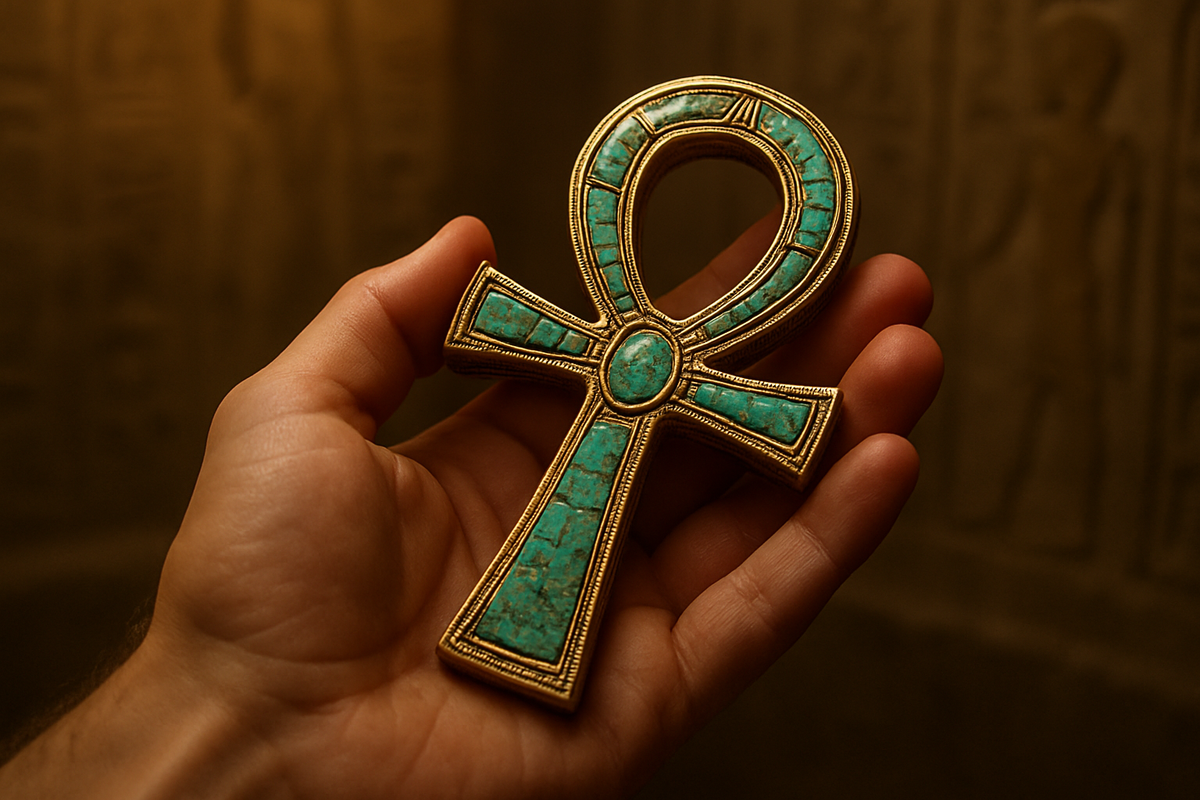
Egyptologists have proposed several theories for what the Ankh's distinctive shape originally represented, and most scholars agree it likely fused several ideas at once rather than a single literal object.
In tomb paintings and temple carvings, deities are depicted extending the Ankh toward the nostrils of the pharaoh — a gesture meaning the breath of eternal life was being transferred directly from the divine to the ruler. This scene is carved repeatedly on the walls of the Temple of Seti I at Abydos, where gods like Horus and Wepwawet perform the ritual for the king. Osiris, god of the afterlife and resurrection, is almost always shown holding an Ankh in one hand and the crook and flail in the other, symbolizing power over both death and renewed life. Isis, his wife and the mother goddess, wears it as jewelry at her temple in Philae and offers it in funerary scenes as a promise that death is not the end.
The Ankh also appears constantly in the Book of the Dead — most famously in the Papyrus of Ani, now held at the British Museum — painted alongside the deceased as they are judged before Osiris. This reinforces its role not just as decoration but as an actual passport into the afterlife: a literal key that unlocked the door between the world of the living and the realm of the gods.
When Christianity spread through Egypt in the early centuries CE, Coptic Christians adapted the Ankh into what became known as the crux ansata, blending it visually with the Christian cross on tomb stelae and church carvings in cities like Alexandria and Antinoöpolis. For early Coptic communities it symbolized eternal life through Christ, showing how a pre-Christian symbol was reinterpreted rather than erased — a pattern of religious layering also seen across the many types of crosses found throughout Christian history.
Since the 1960s counterculture and later the goth and alternative fashion movements, the Ankh has been embraced far outside Egyptology. Practitioners of modern spirituality often use it as a meditation focus for vitality and balance, pairing it conceptually with the Tree of Life, another symbol representing growth, connection, and continuity beyond the physical self.
| Symbol | Origin | Core Meaning | Typical Use |
|---|---|---|---|
| Ankh | Ancient Egypt | Eternal life, divine breath, balance of opposites | Amulets, temple carvings, jewelry |
| Tree of Life | Multiple cultures (Norse, Kabbalah, Celtic) | Growth, interconnection, ancestry | Jewelry, tattoos, home decor |
| Yin Yang | Ancient China | Balance of opposing forces | Philosophy, meditation, design |
| Latin Cross | Christianity | Sacrifice, salvation, resurrection | Religious worship, jewelry |
People drawn to the Ankh in a modern spiritual context often connect it with several intertwined meanings:
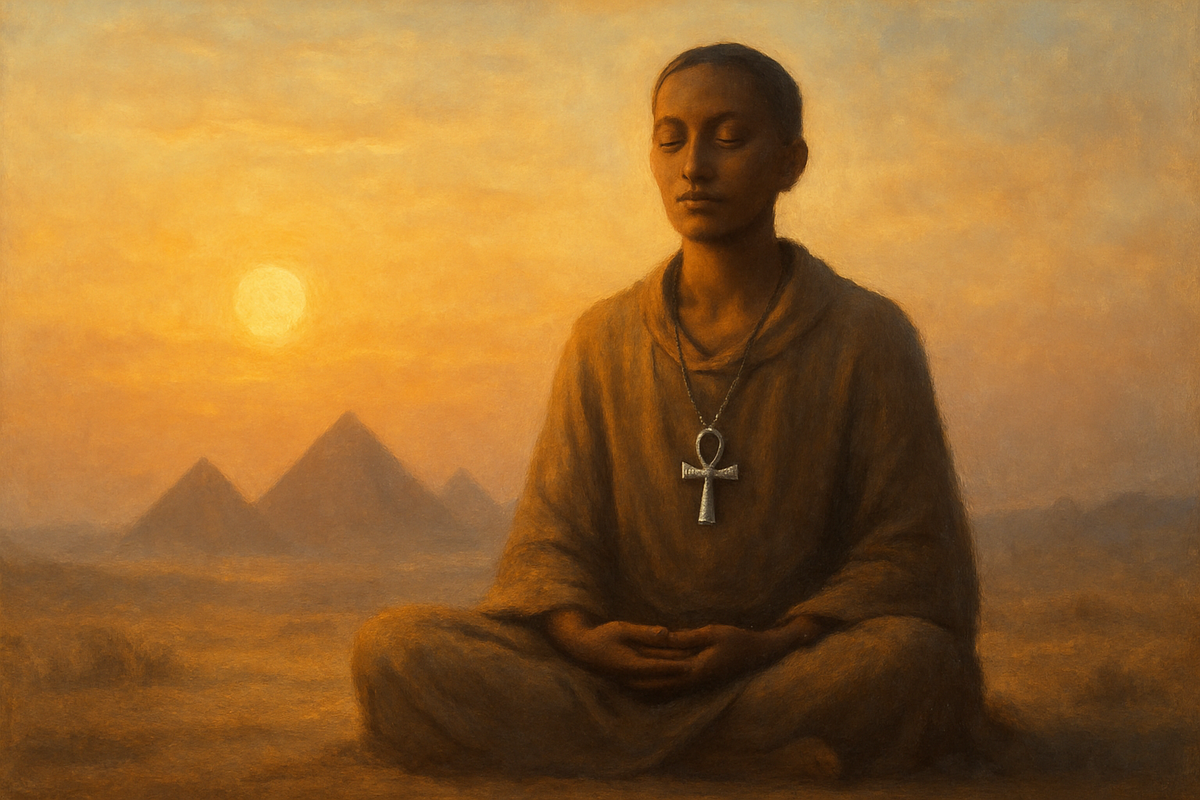
Dreaming of an Ankh is generally interpreted as a message about renewal — the psyche signaling that a chapter of life is ending and a more vital, awakened one is beginning. If the Ankh appears broken or cracked in a dream, it may point to anxiety about mortality, health, or feeling disconnected from a sense of purpose. If it glows or is offered by a figure, much like the gods offering it to pharaohs in Egyptian art, it can suggest that guidance or protection is arriving at a pivotal moment, similar to how symbols like the dream catcher are believed to filter and transform the messages of sleep.
The Ankh doesn't require any particular religious belief to be meaningful. Here are practical ways people incorporate it:
| Material/Color | Common Association |
|---|---|
| Gold | Divinity, the sun god Ra, incorruptible life |
| Silver | The moon, intuition, feminine energy |
| Turquoise/Faience | Rebirth, the Nile, protection (common in original Egyptian amulets) |
| Black onyx | Grounding, protection from negative energy |
It's worth separating fact from popular myth. The Ankh was never exclusively a symbol of death, despite its heavy presence in tombs — it was a symbol of life used to affirm that death was simply a transition. It also wasn't reserved for royalty or priests; ordinary Egyptians used it on cosmetic items and household objects during the New Kingdom and later periods. And while it visually resembles a cross, it predates Christianity by roughly three thousand years, making it historically distinct from the crosses that emerged much later within the Christian tradition.
The Ankh means "life" in ancient Egyptian and represents eternal life, the breath of the gods, and the balance between opposing forces such as male and female or earth and sky. It was carved on tombs and temples as a promise that death led to renewed existence rather than an ending.
Generally, wearing an Ankh is not considered disrespectful, since ancient Egyptians themselves wore it widely as everyday jewelry rather than restricting it to priests. As with any symbol borrowed from another culture, wearing it with awareness of its origin and meaning, rather than purely as a costume prop, is the most respectful approach.
The Ankh predates the Christian cross by thousands of years and centers on the concept of life and rebirth rather than sacrifice or salvation. Structurally, its defining feature is the looped top, which the standard Latin cross does not have.
Dreaming of an Ankh typically symbolizes renewal, protection, or the beginning of a more vitalized period of life. A broken or damaged Ankh in a dream may reflect fears around health or mortality, while a glowing or gifted Ankh often suggests guidance arriving during an important transition.
Discover the lotus flower's meaning across Hinduism, Buddhism & Egypt—purity, enlightenment, rebirth—plus colors, dreams, and how …

Discover what a rainbow truly symbolizes—hope, divine promise, and spiritual transformation—across mythology, dreams, and modern c…
The Healing Power of Forgiveness Symbols In a world often marred by conflict and discord, the symbols of forgiveness stand as beac…