General
Celtic Knot Meaning: Symbolism of Eternity, Love & Loyalty
What does a Celtic knot really mean? Discover the symbolism of eternity, love, loyalty & protection behind Trinity, Dara, Shield &…
 KnowMastery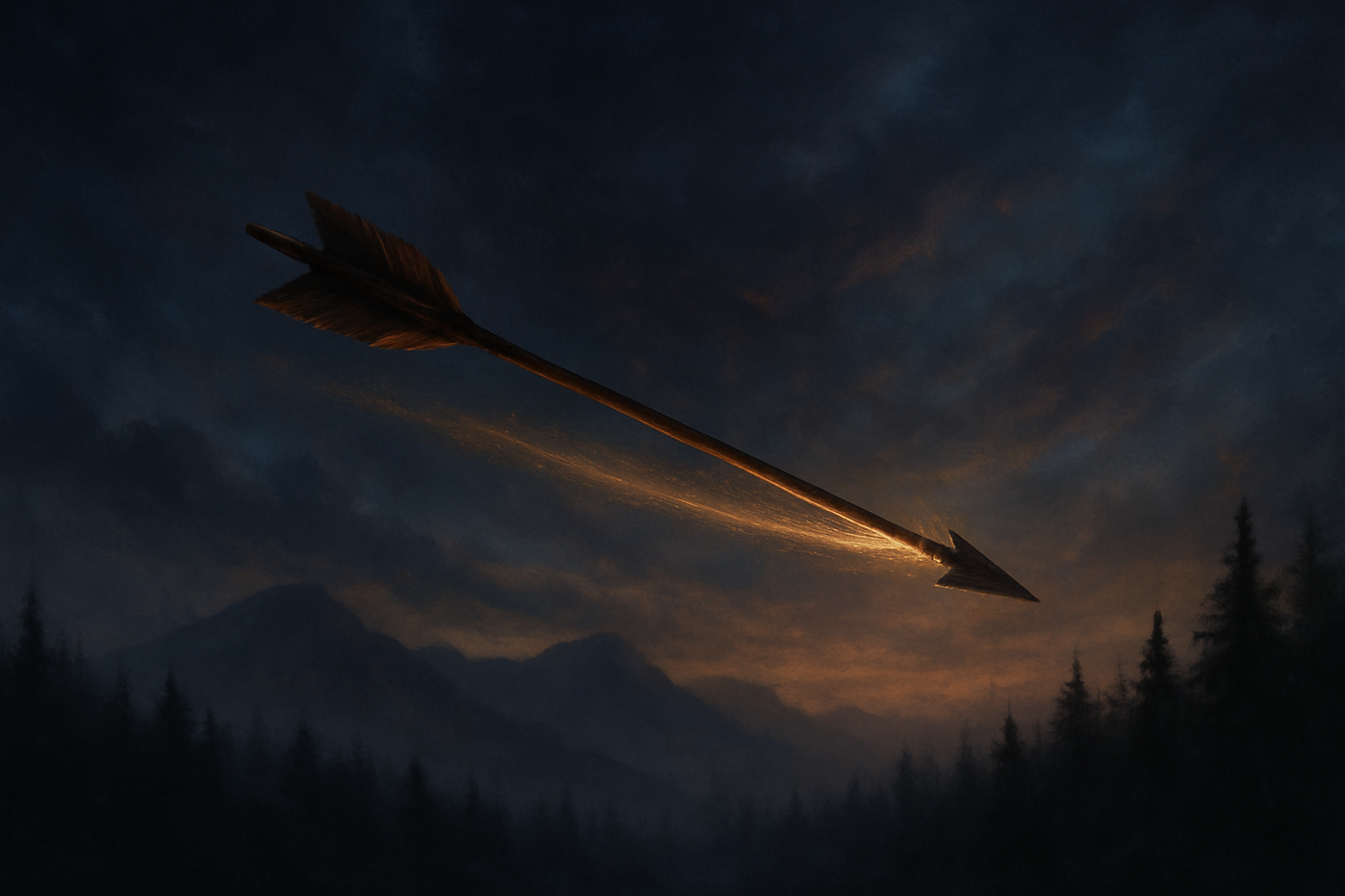
The arrow symbolizes forward momentum, focused ambition, and protective guidance. Across cultures, it represents the path from where you stand to where you're meant to go, while its arrowhead—historically a weapon and hunting tool—also carries meanings of defense, precision, and spiritual guardianship. In dream symbolism, tattoo culture, and spiritual practice, the arrow's core message stays consistent: aim with intention, release what holds you back, and trust the direction you've chosen. Whether pointing straight ahead or bent backward to signal a lesson learned, it endures as one of humanity's oldest symbols of purpose.
There's something quietly thrilling about a drawn bow. The string pulled taut, breath held, eyes locked on a single point in the distance—that split second before release captures a feeling most of us know intimately: the moment before we commit to a goal.
Long before arrows flew through the air of ancient battlefields, they were already flying through human imagination. They marked paths on cave walls, guided hunters toward survival, and eventually became etched into skin as permanent reminders of resilience. The arrow endures not because it's decorative, but because it says something true about being alive: you cannot move forward without letting go of the past.
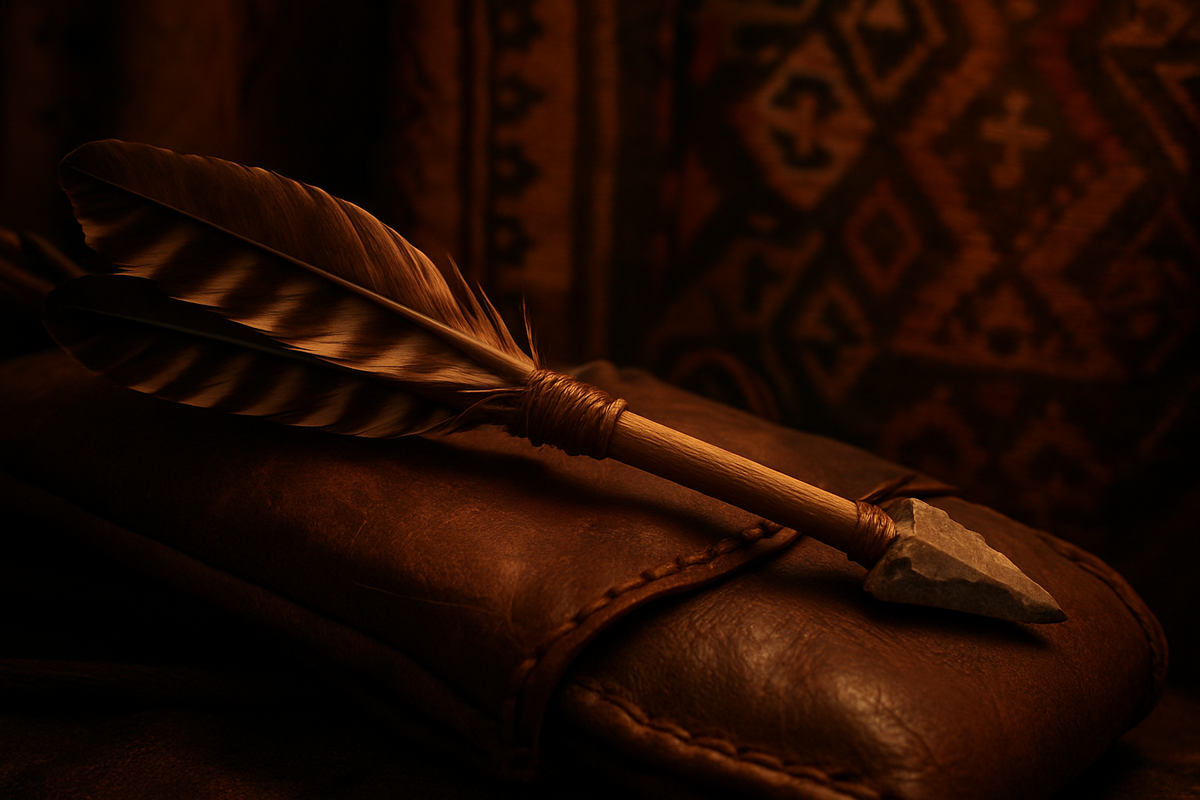
At its core, the arrow is a symbol of direction and purpose. Its shape alone tells a story—a straight shaft, a sharpened point, feathered fletching at the back for stability. Every part serves the same mission: to travel in a straight line toward a target.
Perhaps the most quoted piece of arrow symbolism is this: "Sometimes you have to go through the worst kind of pain to be pulled back, only to be launched further ahead." This idea resonates especially with people navigating hardship, breakups, career setbacks, or grief. The arrow doesn't move forward despite the tension—it moves forward because of it.
Arrows appear in mythology, religion, and folklore on nearly every continent, and their meanings shift depending on who is holding the bow.
Among many Native American nations, the arrow carried both practical and spiritual weight. A single arrow often symbolized protection and defense, while a bundle of arrows bound together represented unity and strength in numbers—a concept still echoed in modern iconography, including the bundle of arrows held in the talons of the American bald eagle on the U.S. Great Seal. Crossed arrows could signal friendship or the end of conflict, while an arrow pointing downward sometimes marked peace, similar in spirit to symbols found on a dream catcher, another protective object rooted in Indigenous tradition.
In Greek mythology, arrows belonged to gods who controlled fate and passion. Apollo's golden arrows brought plague and death, while his silver arrows healed. Eros (known as Cupid in Roman mythology) carried two types of arrows: gold-tipped ones that inspired uncontrollable love, and lead-tipped ones that caused aversion and rejection. Artemis, goddess of the hunt, wielded a silver bow associated with the moon, wilderness, and protection of the vulnerable. Here, the arrow becomes an instrument of divine will—swift, irreversible, and often beyond mortal control.
In Christian iconography, arrows are closely tied to martyrdom—most famously Saint Sebastian, often depicted pierced by arrows yet unbroken in faith, making the arrow a symbol of suffering endured for a higher purpose. This mirrors themes found across Catholic symbols, where instruments of pain often transform into emblems of devotion and triumph.
In Hindu tradition, the god Kama, deity of desire, carries a bow strung with a line of bees and arrows tipped with fragrant flowers, symbolizing how love and attraction can pierce the heart as swiftly as any weapon. In parts of Southeast Asia and among various Siberian shamanic traditions, arrows were used in divination rituals, shot or cast to interpret the will of spirits or ancestors—a practice that treated the arrow itself as a messenger between worlds, carrying questions to the unseen and returning with answers written in where it landed.
| Culture/Tradition | Primary Arrow Meaning | Notable Symbol or Figure |
|---|---|---|
| Native American | Protection, unity, peace | Bundle of arrows, crossed arrows |
| Greek Mythology | Divine will, love, death, healing | Apollo, Artemis, Eros |
| Christian Iconography | Martyrdom, endurance, faith | Saint Sebastian |
| Hindu Tradition | Desire, love, transformation | Kama |
| Norse/Germanic Folklore | Fate, warning, omen | Elf-shot arrows |
Spiritually, the arrow is often interpreted as a message from the universe to stay the course. It appears in meditation practices, tarot-adjacent oracle decks, and angelic symbolism as a nudge toward clarity when someone feels stuck between two paths.
Many spiritual practitioners interpret repeated arrow imagery—on signs, in nature, in synchronicities—as confirmation that you're on the right track. Just as recurring numbers are treated as spiritual signals in numerology, arrow sightings are treated as a call to trust your direction rather than second-guess it.
Historically a weapon of defense, the arrow retains protective symbolism today, often worn as jewelry to ward off negative energy or to symbolize a shield against life's obstacles, similar in intent to how a hamsa is worn to guard against harm.
Dreaming of arrows often reflects the dreamer's relationship with goals, decisions, and unresolved tension.
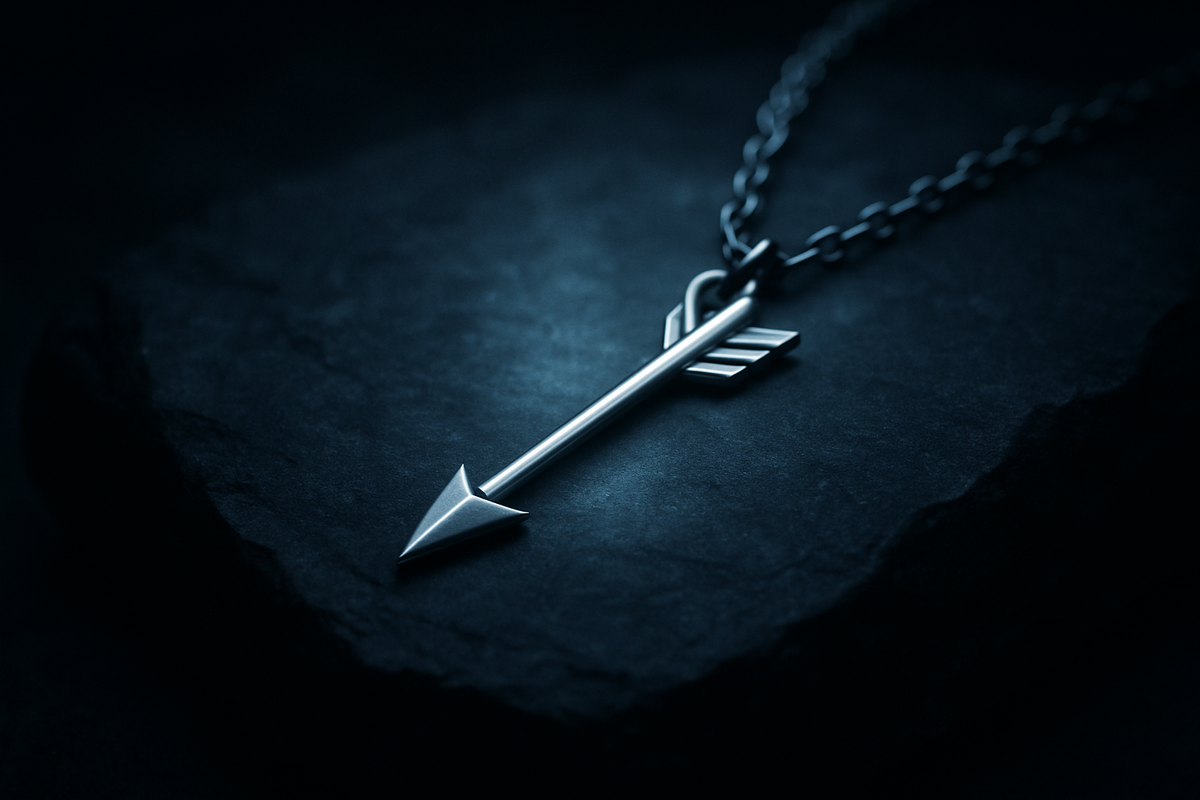
The arrow remains one of the most requested minimalist tattoo designs, and its popularity isn't just aesthetic—each variation carries distinct symbolism.
Much like how a Claddagh ring encodes loyalty, love, and friendship into a single design, an arrow tattoo compresses an entire life philosophy—resilience, direction, sacrifice—into one clean, simple line.
Symbols only matter if you let them inform how you live. Here's how to actually apply arrow symbolism when you notice it showing up in your life:
The arrow's final lesson is one of release: growth requires letting go just as much as it requires aim. You cannot hit a new target while still holding onto the string.
Spiritually, an arrow symbolizes direction, alignment, and forward momentum toward one's true purpose. It's often seen as a sign to trust your current path or as a protective symbol against negative energy and obstacles.
A broken or bent arrow traditionally symbolizes peace, the end of conflict, or a truce—an idea rooted in Native American symbolism where a broken arrow signaled war had ended. Today it's also used to represent letting go of past pain or abandoned struggles.
People get arrow tattoos to represent focus, resilience, and moving forward despite setbacks, since an arrow must be pulled back before it can be launched. It's also a popular symbol for friendship (crossed arrows) or love (arrow through a heart).
Repeatedly seeing arrows is often interpreted as a spiritual nudge toward clarity, urging you to commit to a decision or direction rather than remain uncertain. In dream symbolism specifically, it can reflect anxiety about achieving a goal or confidence that you're already on the right track.
What does a Celtic knot really mean? Discover the symbolism of eternity, love, loyalty & protection behind Trinity, Dara, Shield &…
Discover what finding a feather really means - spiritual messages, color symbolism, dream meanings, and how to respond when one cr…
Discover what a horseshoe symbolizes — luck, protection, orientation meaning, dream interpretation, and its biblical and spiritual…