
Symbols
29 Symbols of Unity and What Each One Truly Means
Discover 29 powerful symbols of unity — from the circle and Tudor Rose to the dove, Triquetra, and Chalcedony — and what each one …
 KnowMastery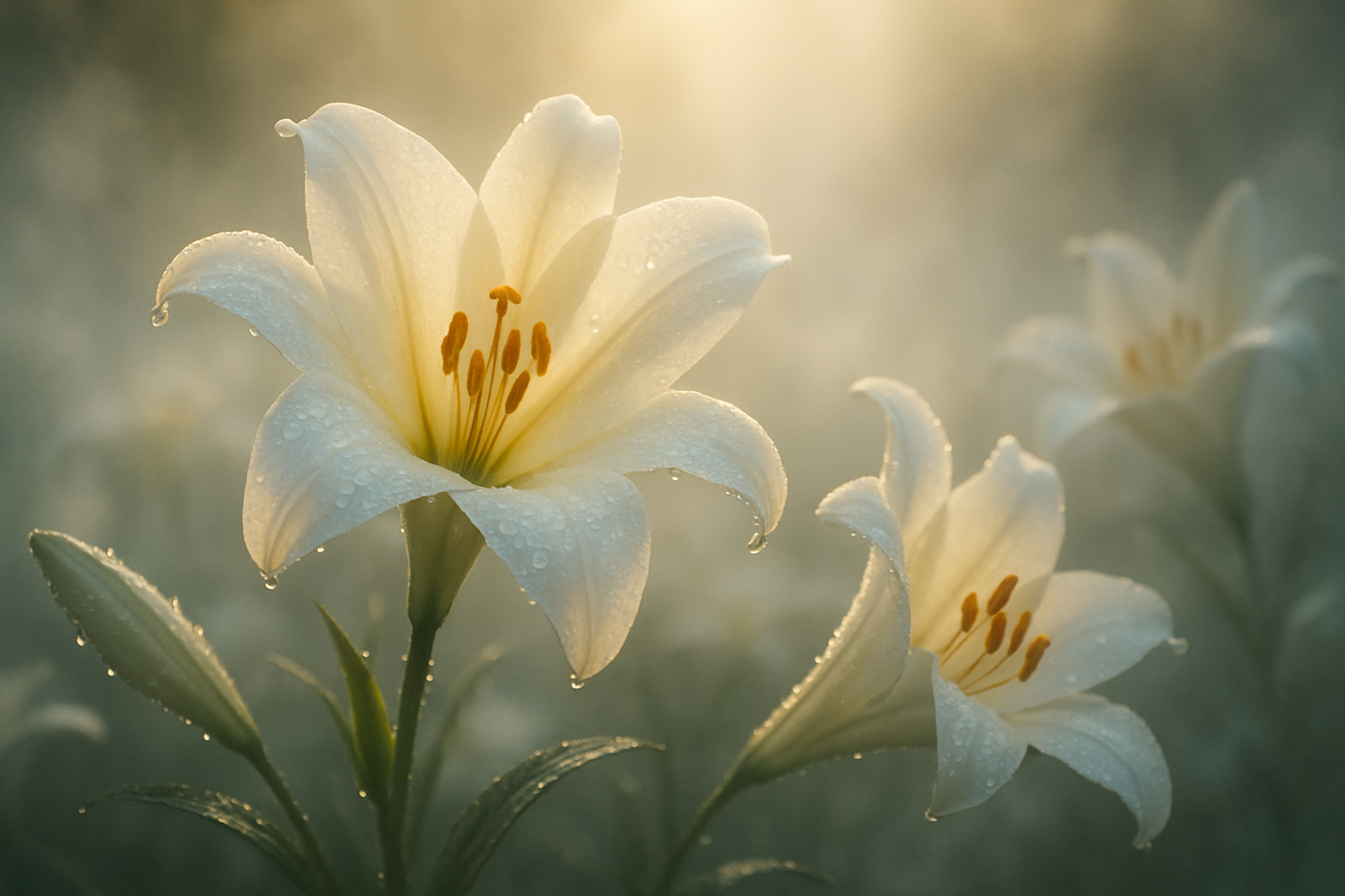
The lily flower symbolizes purity, renewal, and devotion, making it one of the most spiritually significant blooms across nearly every major culture and religion. White lilies represent innocence and rebirth, often appearing at both weddings and funerals, while other colors carry meanings ranging from passionate love to royal majesty. Rooted in ancient Egyptian, Greek, Christian, and Chinese symbolism, the lily has stood at the crossroads of life, death, and transformation for more than 3,500 years.
There is something almost otherworldly about the moment a lily opens. The petals unfurl slowly, almost reluctantly, as if the flower knows the weight of what it's about to reveal. For thousands of years, people have paused at that moment—at gravesides, at altars, at the feet of goddesses—sensing that this particular bloom carries a message beyond its fragrance.
Maybe you've received lilies during a difficult season, or maybe you planted a bulb and watched it return year after year, stubbornly pushing through soil that seemed to have given up on spring. Whatever brought you here, the lily has a way of meeting people exactly where they are—in grief, in celebration, in quiet hope for something new.
At its heart, the lily represents the tension and harmony between fragility and strength. Its trumpet-shaped petals appear delicate, yet the plant itself is remarkably resilient, regrowing from bulbs season after season for decades. Archaeologists have found lily motifs painted on a fresco at Akrotiri, on the Greek island of Santorini, dating to around 1580 BCE—evidence that humans have prized this flower's meaning for well over three millennia. This duality between softness and endurance is why the lily became a universal symbol of renewal—the promise that beauty can return even after seasons of dormancy or loss.
Purity is the second pillar of lily symbolism, especially tied to the white lily (Lilium candidum), historically called the Madonna Lily. Its unblemished white petals and clean, six-pointed structure made it a natural emblem of chastity, honesty, and spiritual clarity long before organized religion adopted it as an icon.
Devotion rounds out the trio of meanings. Because lilies were frequently laid on altars, carried in bridal processions, and placed in temples from Crete to Karnak, they became linked to loyalty, faithful love, and steadfast commitment—both romantic and spiritual.
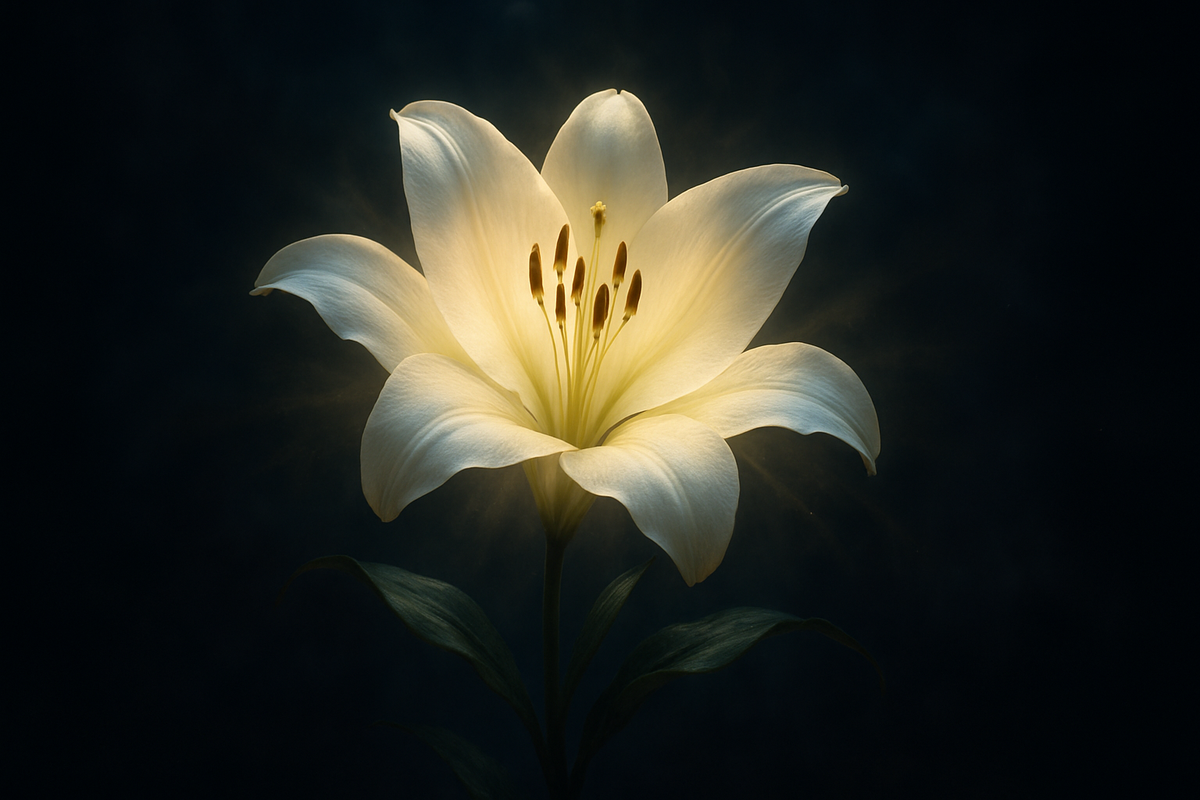
In Christian tradition, the white lily is closely associated with the Virgin Mary, symbolizing her purity and divine grace. Renaissance paintings frequently depict the Archangel Gabriel presenting Mary with a white lily during the Annunciation. This is why lilies remain a staple in Easter services, representing resurrection, hope, and the triumph of life over death—much like other sacred imagery found throughout Catholic symbols and their meanings.
Long before Christianity, the lily held sacred status in Egyptian mythology, associated with fertility and rebirth and sometimes linked to the goddess Isis. In Greek mythology, the lily was said to have sprung from the breast milk of Hera, queen of the gods, as she nursed the infant Heracles—an origin story that cemented the flower's connection to motherhood, purity, and divine power.
In Chinese culture, the lily (百合, bǎihé) is a homophone for "a hundred years of harmony," making it a traditional gift at weddings to wish the couple lasting union and forever love. This concept of balance and harmonious partnership echoes ideas found in Yin Yang philosophy, where opposing forces unite into something whole. In Japan, the mountain lily, or yamayuri, carries a similar reputation for sincerity and dignity; it appears often in traditional ikebana arrangements because its upright stem and quiet fragrance are thought to reflect makoto, or truthfulness of heart.
While white lilies dominate spiritual symbolism, the color of a lily dramatically shifts its message. Understanding these distinctions helps when choosing lilies for gifts, ceremonies, or personal reflection.
| Lily Color | Primary Meaning | Common Use |
|---|---|---|
| White | Purity, innocence, rebirth | Weddings, funerals, Easter |
| Orange | Confidence, passion, pride | Celebrations, encouragement gifts |
| Pink | Admiration, prosperity, femininity | Mother's Day, birthdays |
| Yellow | Joy, gratitude, new beginnings | Get-well gifts, new home |
| Red | Passionate love, desire | Anniversaries, romantic gestures |
| Purple | Royalty, admiration, dignity | Formal ceremonies |
Perhaps no flower is more entwined with mortality and hope than the lily. In many Western funeral traditions, white lilies symbolize the restored innocence of the departed soul, suggesting that death is not an ending but a return to purity. Victorian mourning customs frequently included lilies precisely for this reason—they softened grief with a message of peaceful transition. In the United States, the Bermuda-grown Lilium longiflorum became known as the "Easter lily" after nurseryman Louis Houghton brought bulbs home from Bermuda in 1882, cementing its place in Christian Easter services as a symbol of resurrection.
This dual role—present at both births and deaths, weddings and funerals—mirrors the symbolism found in the Tree of Life, another motif representing the continuous, cyclical nature of existence rather than a linear end.
Dream analysts note that lilies, like most flowers that bloom and fade in visible cycles, tend to surface during periods of personal transition. Dreaming of lilies is generally considered a positive omen, though the context of the dream matters:

Roman brides wore lily wreaths mixed with wheat to symbolize both purity and fertility, hoping to secure a prosperous, fruitful marriage. The flower's connection to both innocence and abundance made it uniquely suited to wedding rites, much like the enduring symbolism behind the Claddagh ring in Irish marriage traditions today.
Persian poets such as Hafez and Rumi returned often to the lily as an image of eloquent silence, describing it as a flower with "ten tongues, yet no voice"—a reference to the ten petal-like tepals encircling its quiet center. In Sufi thought, this became a metaphor for the wise soul who has much to say but speaks only when truth requires it, reinforcing the lily's link to humility and inner devotion rather than boastfulness.
During the 19th century, floriography—the coded language of flowers—assigned specific emotional meanings to nearly every bloom. Lilies communicated messages too delicate for words: a white lily meant "I am worthy of you," while a tiger lily signaled wealth and pride. This tradition shows how deeply symbolic gestures, much like the intentions behind a modern purity ring, have always relied on physical objects to express unspoken commitments.
You don't need a special occasion to invite the lily's meaning into your life. Here are practical ways to connect with its symbolism intentionally:
Spiritually, the lily represents purity of spirit, rebirth after hardship, and devotion to something greater than oneself. It's frequently used in religious ceremonies to mark transitions like resurrection, marriage, and spiritual awakening.
Receiving a white lily traditionally signals respect, sympathy, or an acknowledgment of your inner strength during a difficult time. Historically it also communicated deep admiration or a wish for someone's continued innocence and happiness.
Lilies symbolize the soul's return to a state of purity after death, offering comfort by framing passing as a peaceful transition rather than a final end. This tradition dates back to Victorian mourning customs and remains common in Christian funeral services today.
A lily tattoo often represents personal renewal, purity of intention, or devotion to a loved one, and the meaning shifts depending on the color chosen. Many people select lily tattoos to commemorate motherhood, overcoming hardship, or honoring someone who has passed away.
Discover 29 powerful symbols of unity — from the circle and Tudor Rose to the dove, Triquetra, and Chalcedony — and what each one …
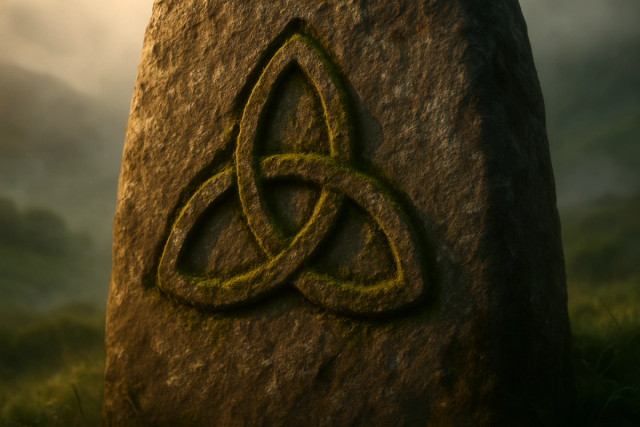
What does the triquetra mean? Explore its Celtic, Christian & Wiccan symbolism, Charmed pop-culture link, tattoo meanings, and how…

Discover what each aura color means, from red to rainbow, plus how to see, read, and cleanse your energy field.