Animal Symbolism
Frog Symbolism: Spiritual Meaning, Dreams & Luck
What does a frog symbolize spiritually? Explore frog meaning in dreams, cultures, colors, tattoos, and as an omen of luck or trans…
 KnowMastery
Dolphin spiritual meaning centers on joy, intuition, healing, and community—dolphins are widely regarded as one of the most benevolent totem animals, symbolizing the marriage of intellect and emotion. Across cultures and spiritual traditions, they appear as messengers of divine guidance, protectors of sailors, and symbols of emotional healing and rebirth. When a dolphin appears in your life or dreams, it often signals a call to trust your intuition, release heaviness, and reconnect with the flow of joy and community.
There is something about the sight of a dolphin breaking the surface of the water — that quick silver arc, the sound of breath, the sense that it is smiling at you — that reaches a place words rarely touch. People who have swum near wild dolphins often describe it as one of the most emotionally moving experiences of their lives, as if an ancient friend had simply resurfaced to check on them.
Maybe that's why dolphins have swum through human mythology for thousands of years, from Greek shipwrecks to Amazonian river legends to the coastal creation stories of California. They ask us to remember something we tend to forget in adulthood: that wisdom and play are not opposites, and that survival sometimes depends on staying light enough to rise.
Quick answer: A dolphin spiritually represents joy, intuition, healing, and community — the balance between emotional depth and lightness of spirit. It's considered one of the most benevolent totem animals, encouraging trust in inner wisdom and connection to others. Seeing or dreaming of a dolphin is traditionally read as a sign that support, clarity, or emotional renewal is close at hand.
Spiritually, the dolphin is considered one of the most benevolent totem animals, representing the marriage of intellect and emotion. Unlike land predators that symbolize power through dominance, the dolphin's power comes from cooperation, communication, and grace under pressure.

Across the ancient world, dolphins were rarely feared. Instead, nearly every seafaring or river-dependent culture cast them as allies of humans, protectors of the vulnerable, and go-betweens for the divine.
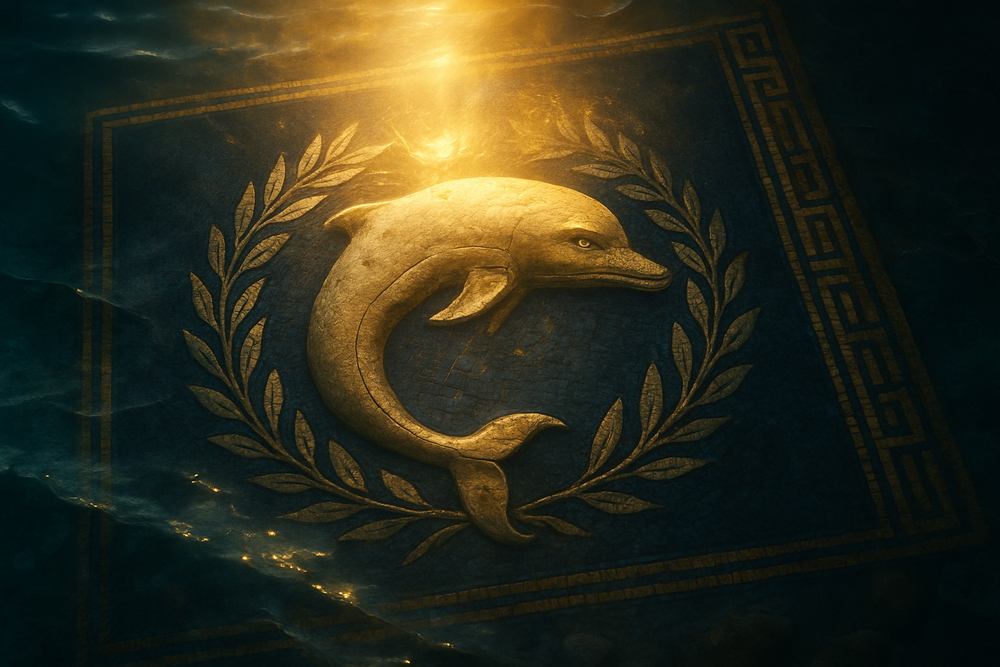
In Greek mythology, the dolphin was sacred to Apollo, who is said to have taken the form of a dolphin to guide the founders of Delphi to their sacred site — the very name "Delphi" is linked to the Greek word for dolphin, delphis. Poseidon, god of the sea, was also closely tied to dolphins, and sailors who spotted them believed the gods were signaling safe passage. The myth of Arion, a poet saved from drowning by a dolphin who carried him to shore after hearing his music, cemented the animal's reputation as a rescuer of the faithful and the artistic.
In Hawaiian culture, dolphins (naiʻa) are considered ʻaumakua, or family guardian spirits, believed to guide swimmers away from danger and offer comfort to those who honor the ocean. Native Hawaiian healers have long spoken of dolphins as bringers of pono — right action and balance — and some traditional practitioners describe swimming with dolphins as a spiritual cleansing that realigns a person's energy.
In Amazonian folklore, particularly among riverside communities in Brazil, the pink river dolphin or boto is said to transform into a handsome man at night, attending festivals and seducing villagers before returning to the river by dawn. While the tale carries a cautionary undertone, it reflects the deep respect and mild unease the boto commands — a creature seen as shapeshifting, magical, and closely tied to fertility and transformation.
According to a Chumash oral tradition, the earth goddess Hutash created the first people from magic seeds on Limuw (Santa Cruz Island) and later built a rainbow bridge so they could cross to the mainland; those who looked down and fell into the channel were turned into dolphins so they would not drown, though this story exists in several variant retellings rather than one fixed version. Some travelers grew dizzy midway and fell toward the sea; rather than let them drown, Hutash transformed them into dolphins as they fell. Because of this origin story, some Chumash descendants still refer to dolphins as marine relatives, treating them with the same respect owed to family rather than as ordinary wildlife.
In Roman-era art the dolphin was reinterpreted from pagan myth into a symbol of Christ and salvation in catacomb imagery, while the anchor separately became an early Christian emblem of steadfast hope; the dolphin-and-anchor device itself, however, is best attested as a Roman imperial symbol (used by emperors Titus and Vespasian) rather than a documented combined catacomb motif. — much like the way a dolphin escorted a drowning sailor to shore in older Mediterranean lore. Separately, Celtic sailors regarded dolphins as protective spirits of the sea, often carving their likeness onto the prows of boats before long voyages in the belief that the animal's presence warded off storms and misfortune.
| Culture/Tradition | Primary Symbolism | Key Association |
|---|---|---|
| Ancient Greece | Divine guidance, artistic protection | Apollo, Poseidon, Arion myth |
| Hawaiian (Polynesian) | Guardian spirit, family protector | ʻAumakua, healing energy |
| Amazonian (Boto legend) | Transformation, seduction, fertility | Shapeshifting river spirit |
| Chumash (Native American) | Ancestral kinship, rebirth | Hutash creation myth |
| Christianity & Celtic lore | Salvation, protection, safe passage | Catacomb art, ship-prow carvings |
| Modern spirituality | Joy, intuition, emotional healing | Totem animal work, dream interpretation, and synchronicity signs |
If the dolphin is your spirit animal, you likely lead with empathy and read emotional undercurrents in a room before anyone speaks a word — a sensitivity similar to what people describe when working with the intuitive nature of spider spirituality, though the dolphin's version is warmer and more socially oriented. Dolphin people are often natural healers, therapists, or communicators, drawn to environments where they can mediate and soothe.
Those with a dolphin totem are also encouraged to guard against emotional exhaustion. Dolphins rest only half their brain at a time while swimming — a biological reminder that even the most giving, social souls need built-in recovery, not constant output. Practitioners of totem work often suggest treating this as a literal instruction: schedule genuine rest before burnout forces the issue.
Dreaming of dolphins is generally considered one of the most positive dream omens in folk dream interpretation, often pointing toward emotional breakthroughs rather than warnings.
Whether it comes as a literal sighting, a recurring dream, or simply an image that keeps catching your eye, a dolphin encounter is typically an invitation rather than a demand. Here is how to work with it intentionally:
Much like how the sudden appearance of a hummingbird is often read as a nudge toward savoring the present moment, or how a hawk sighting can signal heightened perspective, the dolphin's arrival tends to be gentler but no less meaningful — it asks you to soften, not sharpen.
It helps to place dolphin symbolism alongside other commonly encountered spirit animals. While the owl often represents deep wisdom, omens, and the ability to see what others miss, and the swan speaks to grace, love, and transformation, the dolphin's message centers specifically on joyful intelligence — the idea that wisdom doesn't require heaviness or solitude. Compared to the watchful, solitary nature of the owl and the transformative solitude of the swan, the dolphin's growth always happens within a pod, in relationship, never alone.
Seeing a dolphin in the wild is traditionally interpreted as a sign of good fortune, protection, and emotional renewal. Many coastal cultures, from ancient Greek sailors to Hawaiian fishing communities, viewed it as confirmation that you are on the right path or that help is nearby during a difficult time.
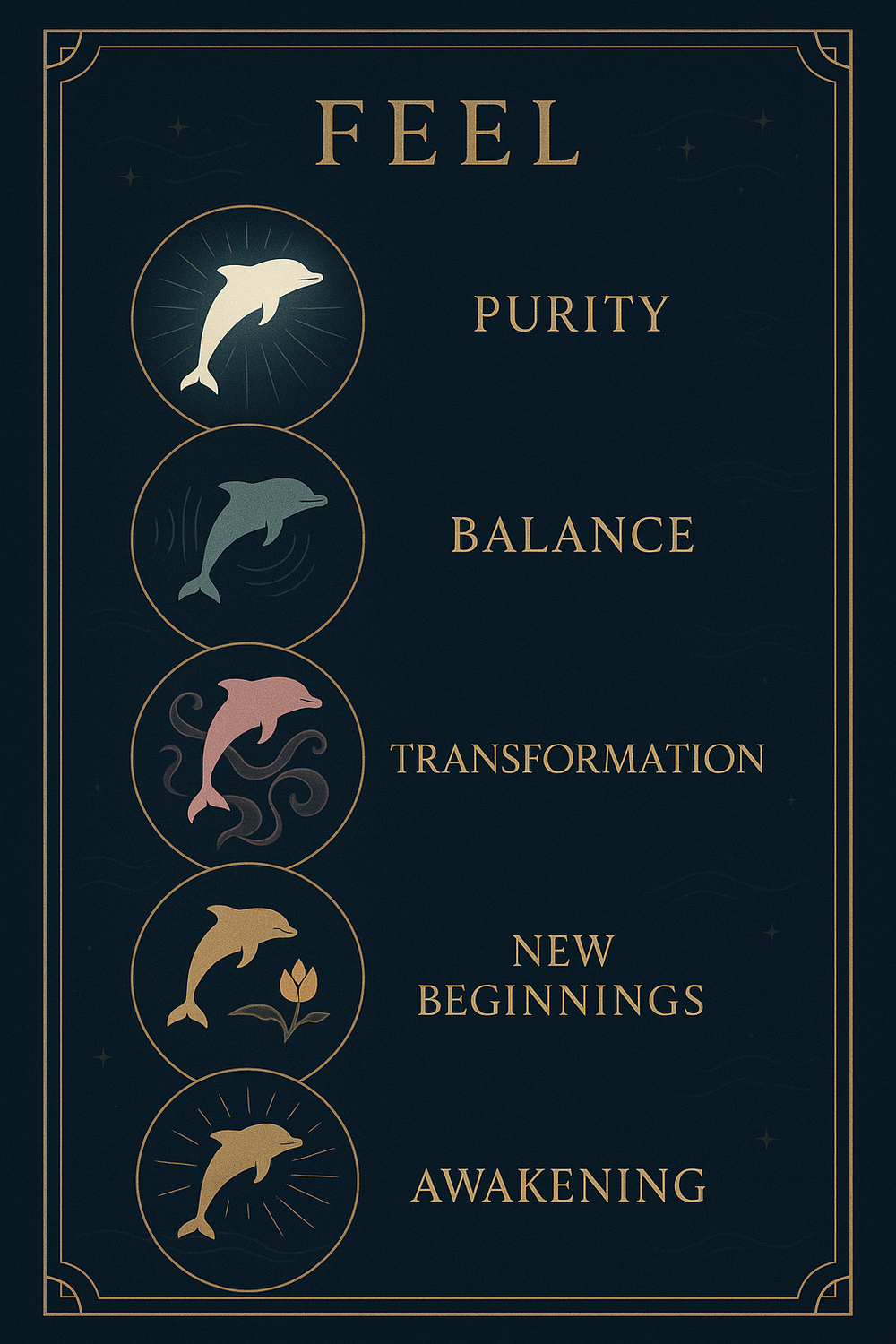
Dolphins themselves are not explicitly named in most Bible translations, but scholars have long noted the connection between the "badger skins" or "porpoise skins" mentioned in Exodus (used to cover the tabernacle) and dolphin or porpoise hides common in the ancient Near East. Beyond that direct reference, dolphin symbolism entered Christian tradition mainly through early church art rather than scripture itself, where the animal represented salvation and the soul's safe passage through dangerous waters.
In early Christian catacomb art, dolphins symbolized salvation and resurrection, often depicted alongside an anchor or cross to represent the soul's safe passage. The imagery drew on the dolphin's ancient reputation as a rescuer of drowning sailors, reinterpreted as a symbol of Christ guiding believers to safety.
A dolphin tattoo typically symbolizes joy, freedom, intuition, and a deep emotional connection to the ocean or to a close-knit community of family and friends. Many people choose dolphin tattoos to mark a period of healing, a love of travel and water, or an identity rooted in playfulness paired with inner wisdom, and the specific color or pose (leaping, paired, or in a pod) often personalizes the meaning further.
Yes, the dolphin is considered one of the most positive and benevolent spirit animals, associated with joy, intuition, and healing rather than danger or warning. People who resonate with the dolphin totem tend to be empathetic communicators who value emotional connection and playfulness, though they should watch for burnout.
Dreaming of dolphins is generally a positive omen, often reflecting emotional breakthroughs, renewed joy, or trustworthy intuition guiding you through a real-life situation. The specific meaning shifts depending on context, such as whether the dolphin is playing, guiding you, or appearing injured, which can point instead to burnout or suppressed emotions.
Many people report dolphin sightings clustering around moments of repeating numbers or synchronicity, and both are typically read the same way spiritually: as gentle confirmation that you're aligned with your intuition and on the right path. If a dolphin appears shortly after noticing a number pattern like 11:11, it's often interpreted as an amplified message to trust the emotional or intuitive nudge you're already feeling rather than two separate, unrelated omens.
What does a frog symbolize spiritually? Explore frog meaning in dreams, cultures, colors, tattoos, and as an omen of luck or trans…
Discover what a horse symbolizes spiritually — from dream meanings and colors to spirit animal traits and mythology across culture…

Discover 10 animals that symbolize integrity, from loyal wolves to honest elephants, and what their quiet honesty can teach us.