
Spiritual
Dreams About Water: Spiritual Interpretations Explained
Discover what dreams about water really mean spiritually - from oceans to floods - and how to interpret their emotional and symbol…
 KnowMastery
You're running, legs heavy like wet sand, and the distance between you and whatever's behind you never closes. You wake with your heart pounding, sheets tangled, relieved it wasn't real, though your body hasn't caught up yet.
Being chased is one of the most common dream themes people report. It shows up during stressful weeks, after big life changes, and sometimes for no reason you can point to.
Dreams about being chased usually mean you're avoiding a problem, emotion, or responsibility in waking life. The chaser stands in for whatever feels too big to face directly: stress, a hard decision, an old wound, or a fear you keep putting off. Most dream researchers read this as your mind pushing you to stop running and turn around, not as a warning of literal danger.
At its simplest, a chase dream is a stand-in for avoidance. You're not literally being hunted. Your mind is dramatizing a pattern from daily life, like dodging a conversation you need to have, ignoring a health issue, procrastinating on a deadline, or refusing to admit a relationship isn't working.
The identity of the chaser matters, but so does how you react in the moment, which is why two people can have almost the same dream and walk away with different lessons.
Chase dreams often trigger real stress responses, a racing heart, sweating, a jolt awake, because the brain's fear centers don't fully separate a dreamed threat from a real one. This is the same fight-or-flight system explored in dreams about falling, another anxiety dream that produces a physical jolt at the moment of perceived danger.
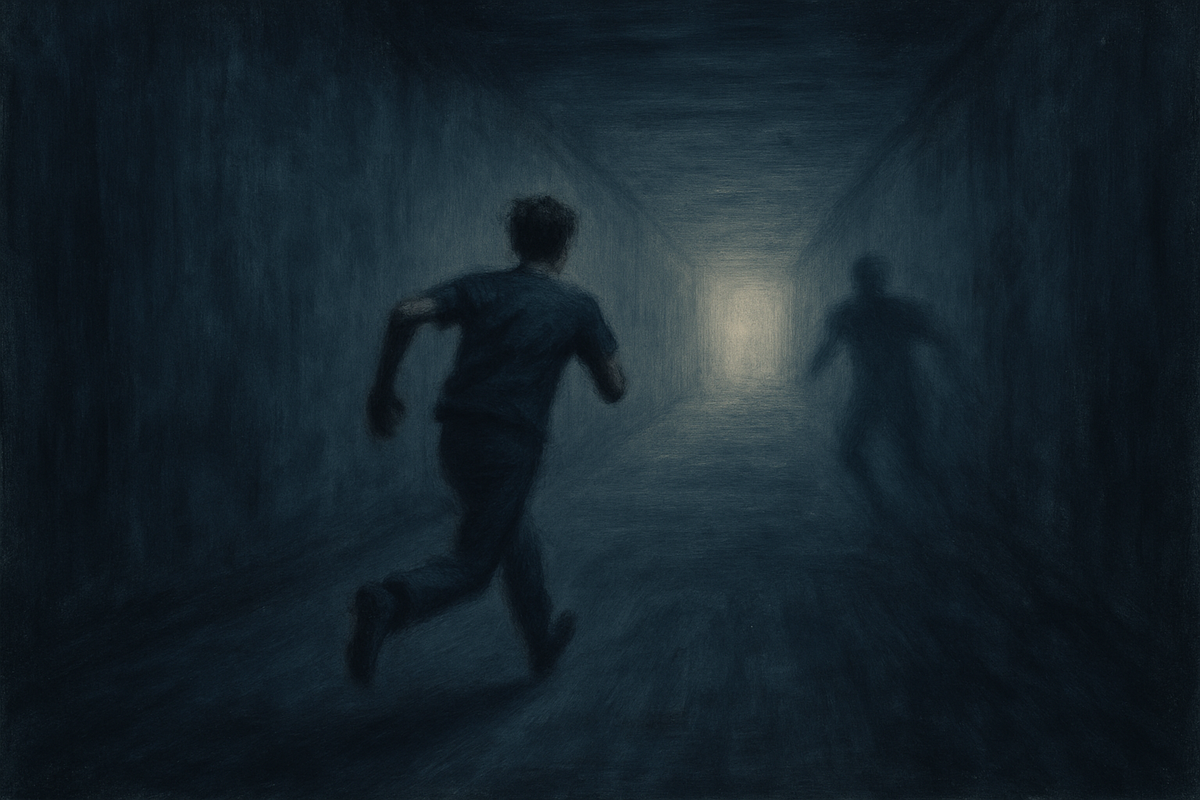
In spiritual dreamwork, being chased is often read as a message from your inner self rather than a threat from outside. The pursuit represents an unresolved part of your inner life, something you keep circling back to instead of dealing with.
Long before modern psychology described anxiety dreams, older traditions had their own frameworks for why we dream of being pursued.
In the second century, the Greek writer Artemidorus of Daldis compiled the Oneirocritica, one of the earliest known dream interpretation manuals. He treated chase dreams as reflections of unresolved conflicts with rivals or enemies. To Artemidorus, being pursued by a wild animal pointed to an aggressive enemy, while a domesticated animal pointed to conflict within the family.
The Zhou Gong Jie Meng, a Chinese dream dictionary attributed to the Duke of Zhou and used for centuries, assigns specific fortunes to chase dreams depending on the chaser. Being chased by a dog was traditionally read as a warning about betrayal from a friend. Being chased by a tiger was linked to authority figures or trouble at work. The tradition treats dreams less as psychology and more as omens tied to daily fortune.
The Senoi people of the Malay Peninsula built a cultural practice around dream mastery. Anthropological accounts describe a Senoi custom of teaching children to turn and confront threatening figures in their dreams rather than flee, treating the chase as a rehearsal for courage. A pursuer that is faced, in this tradition, often transforms into an ally or a gift.
Carl Jung's concept of the shadow, the parts of ourselves we deny or suppress, gives a Western psychological version of the same idea found in older traditions. For Jung, a dream chaser frequently symbolizes a disowned trait or desire demanding recognition, not punishment for having it, just acknowledgment.
The identity of your pursuer often points directly to what you're avoiding. Here's a quick reference for some of the most reported chase dream variations.
| Who or What Is Chasing You | Common Meaning |
|---|---|
| A faceless stranger or shadow figure | An unnamed fear or anxiety you haven't identified yet |
| An animal (dog, wolf, snake) | Instinctual fear, or a specific person or trait the animal represents |
| A monster or demonic figure | Deep-seated guilt, trauma, or an inner conflict you find frightening to face, similar to themes explored in demon names and their meanings |
| Someone you know | Unresolved tension or unspoken feelings toward that specific person |
| A vehicle or crowd | Feeling overwhelmed by external pressure, deadlines, or social expectations |
| Police or authority figure | Guilt, fear of judgment, or feeling you've broken a rule you set for yourself |
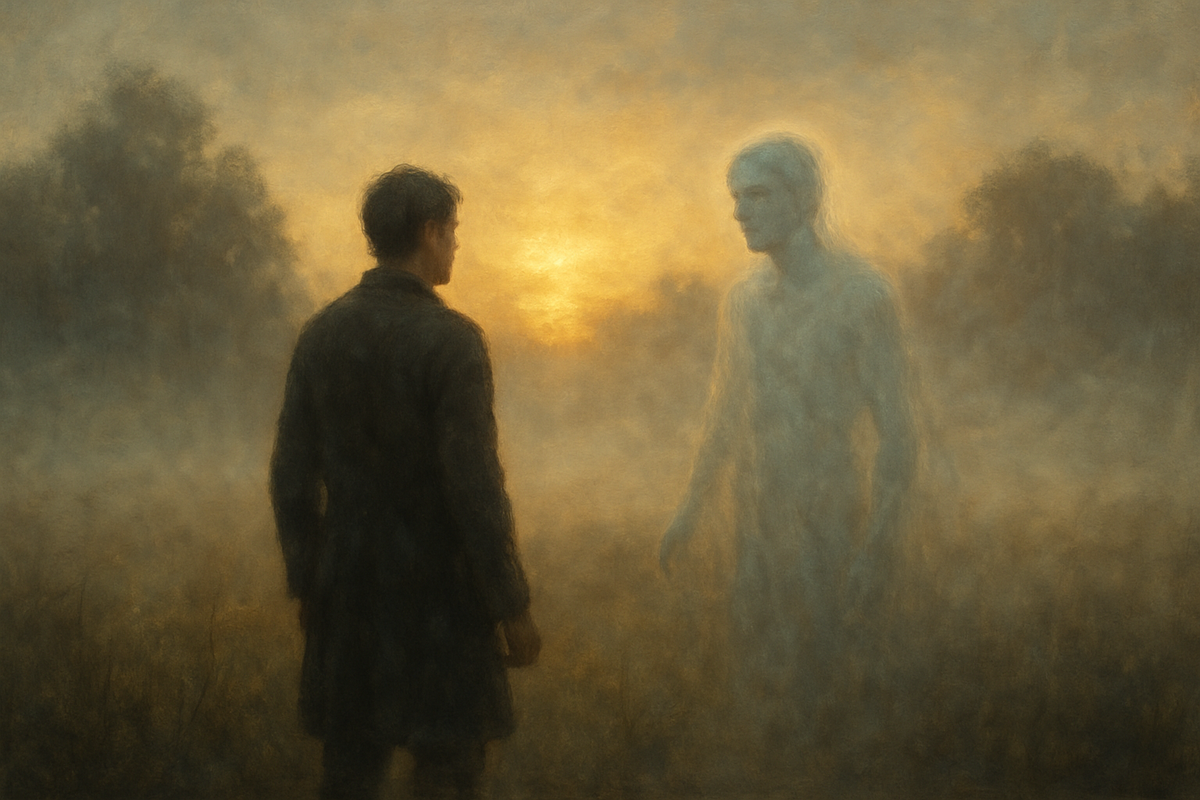
Chase dreams tend to repeat until the underlying issue gets some attention. A few practical steps can help you decode and eventually quiet them.
If chase dreams show up alongside other recurring themes, like dreams about flying or falling, it helps to track patterns over a few weeks rather than analyzing a single night on its own. Some people also keep a dream catcher near their bed, a tradition rooted in Ojibwe culture meant to filter out bad dreams while letting good ones through.
This is one of the most common variations and usually reflects feeling stuck or powerless in a waking situation, like a problem you know you need to deal with but feel unable to act on. It often points to fear of failure or fear of confrontation rather than the chase itself.
No, it's rarely a bad omen in the predictive sense. Most interpretations, spiritual and psychological, treat it as a signal to pay attention to avoidance patterns rather than a warning of literal danger ahead.
Being chased by a specific person often points to unresolved tension, guilt, or unspoken feelings connected to that relationship. It doesn't necessarily mean the person poses a real threat, more that your mind is processing something unfinished between you.
Recurring chase dreams usually mean the underlying issue hasn't been resolved or even acknowledged yet. Once the real life stressor is addressed, even partially, these dreams tend to fade or change form.
Discover what dreams about water really mean spiritually - from oceans to floods - and how to interpret their emotional and symbol…
Found a cardinal feather? Here's what it really means spiritually, from visiting loved ones to good luck, across cultures and drea…
Seeing a sunflower alongside 000 is a nature sign of pure potential and fresh starts. Here is what this pairing means spiritually.