Spiritual
Solar Eclipse Spiritual Meaning: What It Really Signals
What a solar eclipse means spiritually: ancient omens, cultural myths, dream meanings, and rituals for release and renewal.
 KnowMastery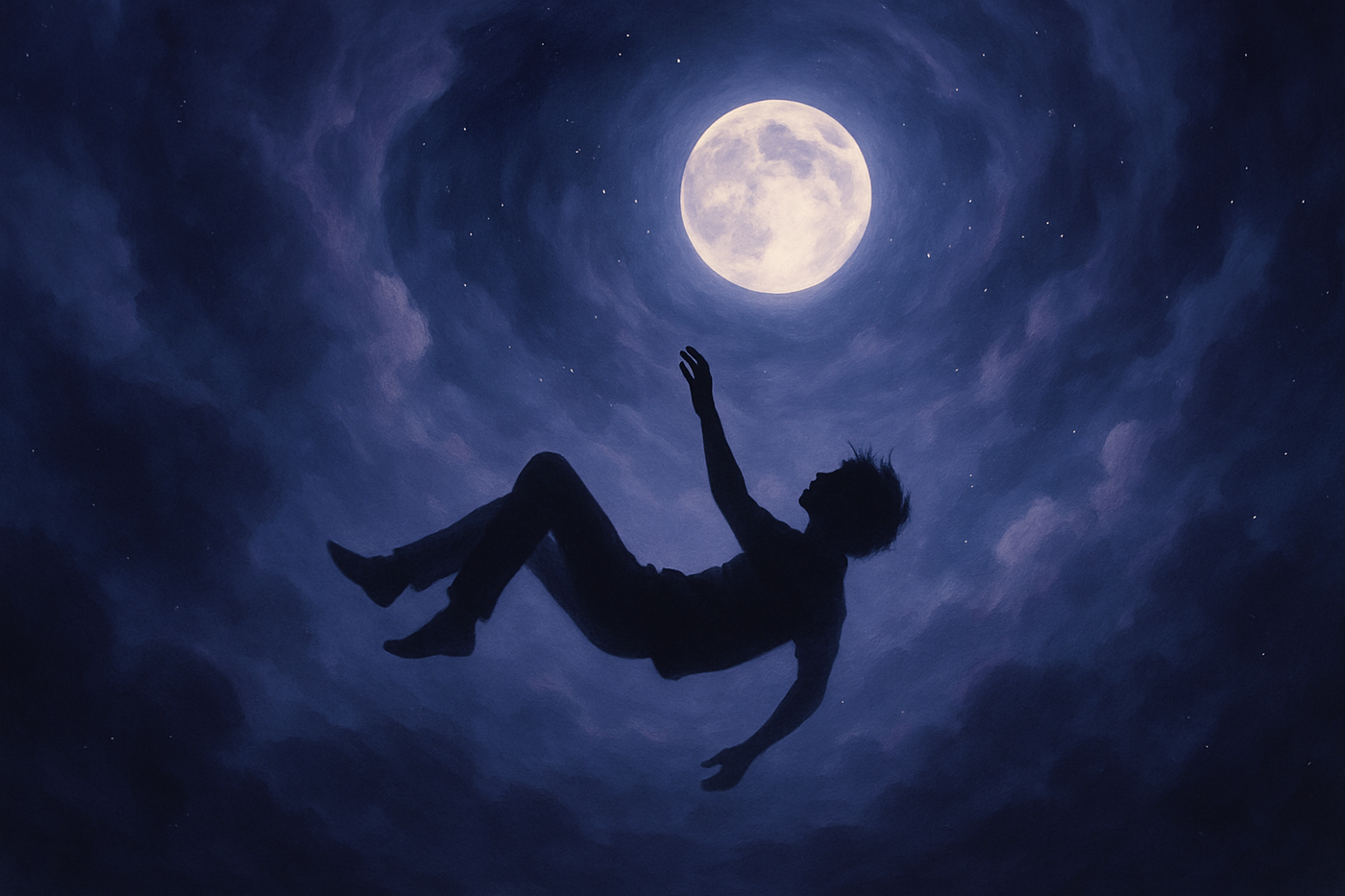
You're standing on solid ground, then your stomach drops as the floor disappears beneath you. Arms flailing, heart slamming against your ribs, right before you hit anything you jolt awake, breathing hard with the sheets twisted around you.
Nearly everyone has had this dream. It's one of the most common dream experiences on record, showing up in children, adults, and people across very different cultures, which makes it tempting to write off as background noise from a busy brain.
Dreams about falling almost always point to a loss of control, stability, or confidence in some part of your waking life. They tend to surface during stress, big decisions, money trouble, or a relationship that feels shaky, moments when your subconscious registers that the ground under you, literal or otherwise, is no longer solid. Some of it is purely physical: a hypnic jerk, the muscle spasm that happens as your body drops into sleep, can create the exact same sensation. The rest is your mind flagging where you feel unsupported so you can do something about it while you're awake.
Falling dreams tend to fall into a few recognizable patterns: losing control of a situation, losing standing or reputation, or losing your footing in a relationship or plan you'd committed to. Which one applies usually depends on what's happening in your life right now, not on some fixed universal code you can look up once and forget.
If you're falling from a height, like off a cliff or out of a building, the dream often ties to a fear of failing after you've already succeeded at something. If you land softly, it can mean a situation you dreaded is more survivable than you think. If the falling never stops, that's usually linked to anxiety that hasn't been dealt with, or a decision you keep putting off answering.
Sigmund Freud linked falling dreams to a loss of moral or social standing, the fear of giving in to temptation or losing self-control in front of others. Modern sleep science takes a more physical view. As your body drops from wakefulness into deep sleep, the brain sometimes misreads muscle relaxation as an actual fall and fires off a hypnic jerk, the full-body twitch that snaps you awake mid-fall. It's a normal part of the nervous system settling down, not a sign anything is wrong, and sleep clinics have noted it shows up more often in people running on irregular schedules or too much late-day caffeine.
Psychologist Calvin Hall studied thousands of dream reports in the 1940s and 1950s and found falling was one of the most universal dream types he recorded, appearing in dreamers from very different backgrounds and lifestyles. His work supports the idea that falling reflects a general anxiety response rather than one specific fear tied to a single cause.
In spiritual dream work, falling gets read as a message about surrender rather than punishment. The idea is that you've been gripping too tightly to control, and the dream is pushing you to let go and trust the process instead of fighting gravity the whole way down. Some practitioners tie falling dreams to disruption in the root chakra, the energy center associated with safety and basic survival needs. When that center feels shaken by money stress or an unstable home life, falling dreams tend to show up more often. You can read more about how this energy center works in this guide to the 7 chakras.
Falling dreams often get grouped with other intense sleep experiences, like waking with a jolt or a strong sense of familiarity that doesn't add up, the kind of sensation covered in deja vu spiritual meaning. Dream workers treat both as moments when the subconscious pushes something urgent to the surface, whether you're ready for it or not.
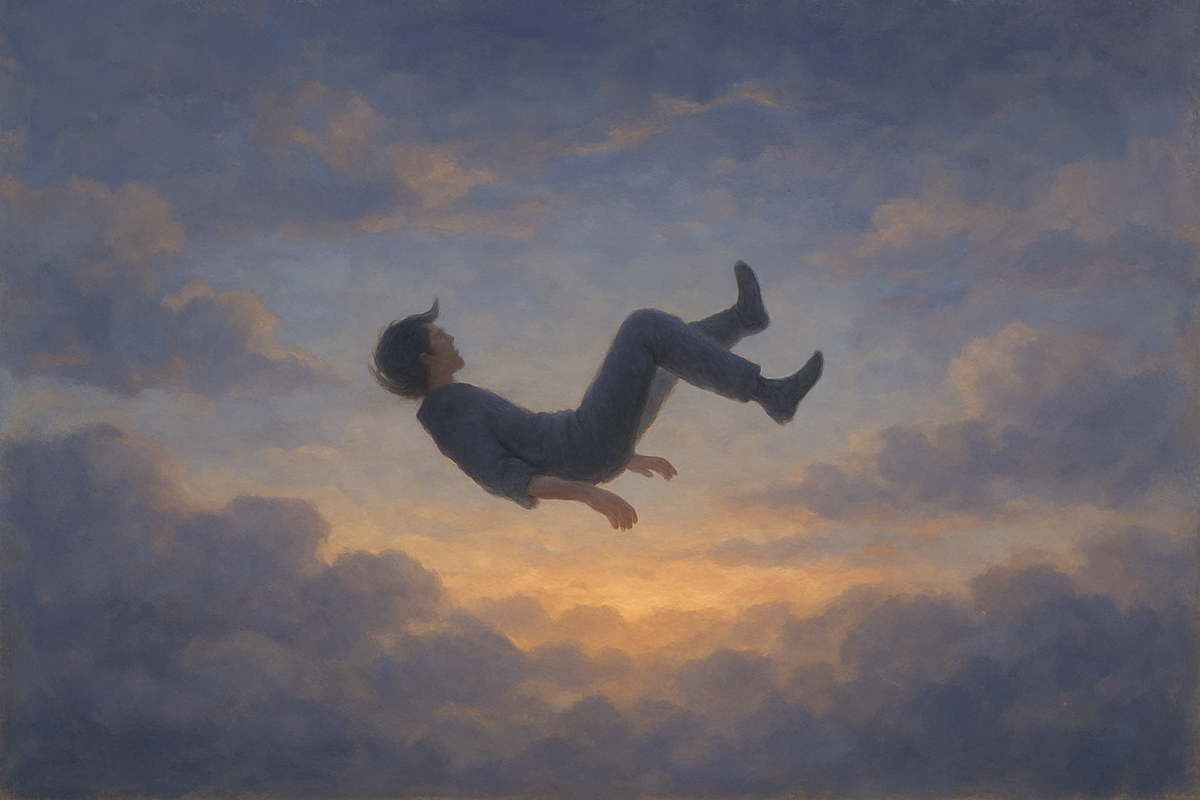
Different traditions built their own explanations for why we fall in our sleep, and setting a few side by side shows how much the interpretation depends on cultural ideas about control, fate, and the soul.
In traditional Chinese dream interpretation, falling was sometimes linked to a disruption between the body and the hun, one of the spiritual souls believed to travel during sleep. A falling dream could mean the hun was struggling to stay connected to the body, usually blamed on emotional strain or overwork. The response wasn't fear, it was rest and emotional balance to steady the soul's connection to the body.
Some Native American tribes, including groups within the Iroquois Confederacy, treated dreams as messages that called for action, not just symbols to sit with quietly. A falling dream might mean the dreamer needed to fix an imbalance: a strained relationship, a broken promise, a decision left unmade for too long. The dream wasn't just information, it was a prompt to respond before the situation got worse.
A widespread belief across parts of England and Germany held that if you hit the ground in a falling dream, you would die in your sleep. This old wives' tale has no basis in medical fact, and sleep researchers have documented plenty of people hitting the ground in falling dreams and waking up completely fine, just startled and a little shaky.
| Dream Scenario | Common Meaning |
|---|---|
| Falling from a building or cliff | Fear of losing status, failure after success, or being exposed |
| Falling and never landing | Ongoing anxiety about an unresolved decision or situation |
| Falling and landing safely | A feared outcome may be less damaging than expected |
| Falling while flying | Loss of confidence or momentum after a period of success, related to themes in dreams about flying |
| Being pushed and falling | Feeling forced into a situation by someone else's decisions |
| Falling into water | Being overwhelmed by emotions you haven't processed yet |
| Watching someone else fall | Concern about someone in your life losing stability or support |
Falling dreams tend to spike at specific points: right after a job loss, during a divorce, in the weeks before a big exam or presentation, after a financial setback that catches you off guard. The common thread is a sense that something you counted on, income, a relationship, a daily routine, has stopped feeling reliable. Sleep researchers have also found falling dreams increase with sleep deprivation, since fatigue makes hypnic jerks both more frequent and more intense.
If you've noticed falling dreams clustering around a certain time of year or life event, it's worth tracking on paper. Keep a notebook by the bed and jot down the date, the dream, and what was going on that week. After a few months, patterns usually show up clearly, the same way symbolic dreams about animals, like the ones covered in dreams about snakes, tend to connect to specific triggers once you look at them over time instead of in isolation.
A falling dream isn't a warning to panic over, but it is useful information if you treat it that way. Here's a practical approach:
Some people keep a dream catcher near the bed as a symbolic way to filter out anxious dream patterns before they settle in for the night. You can read about where that tradition comes from in dream catcher meaning.
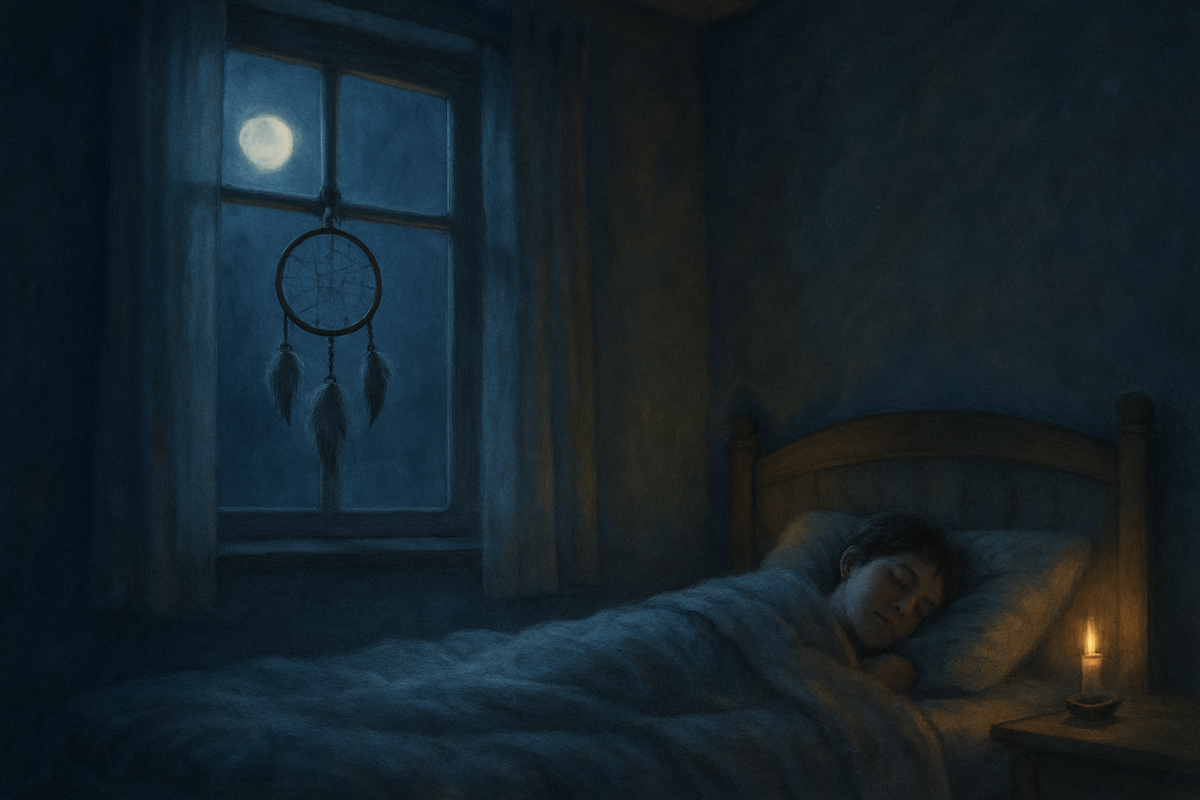
Not every falling dream is a warning. Some dream workers read a soft landing or a controlled fall, gliding down instead of plummeting, as a sign you're finally releasing something you've been holding onto too tightly. This shows up after therapy, after ending a relationship that wasn't working, or after making a hard decision you'd been putting off for months. The falling in these dreams feels more like release than danger, and people often wake up calm instead of shaken.
This connects to a broader pattern in dream psychology: the body often processes emotional surrender through physical sensation, and gravity is one of the most direct ways that shows up while you sleep. If your falling dream ends in relief rather than fear, it's worth asking what you've recently stopped fighting against in waking life.
This is usually a hypnic jerk, a natural muscle spasm that happens as your body relaxes into deep sleep and your brain briefly misreads it as falling. It's not dangerous and happens to most people at some point, especially when overtired or under stress.
Not inherently. It's one of the most common dream themes and typically reflects everyday stress, uncertainty, or a loss of control in some area of your life rather than a warning about anything harmful.
Recurring falling dreams often point to an ongoing source of instability that hasn't been resolved, such as a stressful job, a shaky relationship, or a financial worry sitting in the background. The repetition usually stops once the underlying situation gets addressed or resolved.
No, this is a widespread myth without any medical or scientific backing behind it. People regularly hit the ground or die in falling dreams and wake up completely unharmed, just startled from the sudden sensation.