
General
Hourglass Symbolism: Meaning of Time, Death & Balance
What does an hourglass symbolize? Explore its meaning of time, mortality, balance and spiritual renewal — plus tattoo, dream and t…
 KnowMastery
Integrity symbolism draws on colors, flowers and objects, most often white, blue and gold, the white rose and larkspur, and icons like the anchor, the scale and the oak tree, to represent honesty, moral consistency and inner strength. These images give a visible shape to a quality nobody can actually see. You cannot photograph integrity, so across history people borrowed from gardens, metals and myth to point at it instead.
There is a particular kind of person everyone remembers: the one who told the truth when a lie would have been easier, the one who kept a promise long after the other person forgot it was made. That memory sticks because integrity is rare enough to feel almost mythic. It is the quiet backbone behind trust, and people have spent thousands of years trying to give it a face.
Flowers that never fully close, colors that resist staining, stones that hold their shape under pressure: all of these became stand-ins for a virtue that stays invisible until it gets tested. This guide walks through the flowers, colors and symbols tied to integrity, what they meant historically, and how to bring them into daily life with intention.
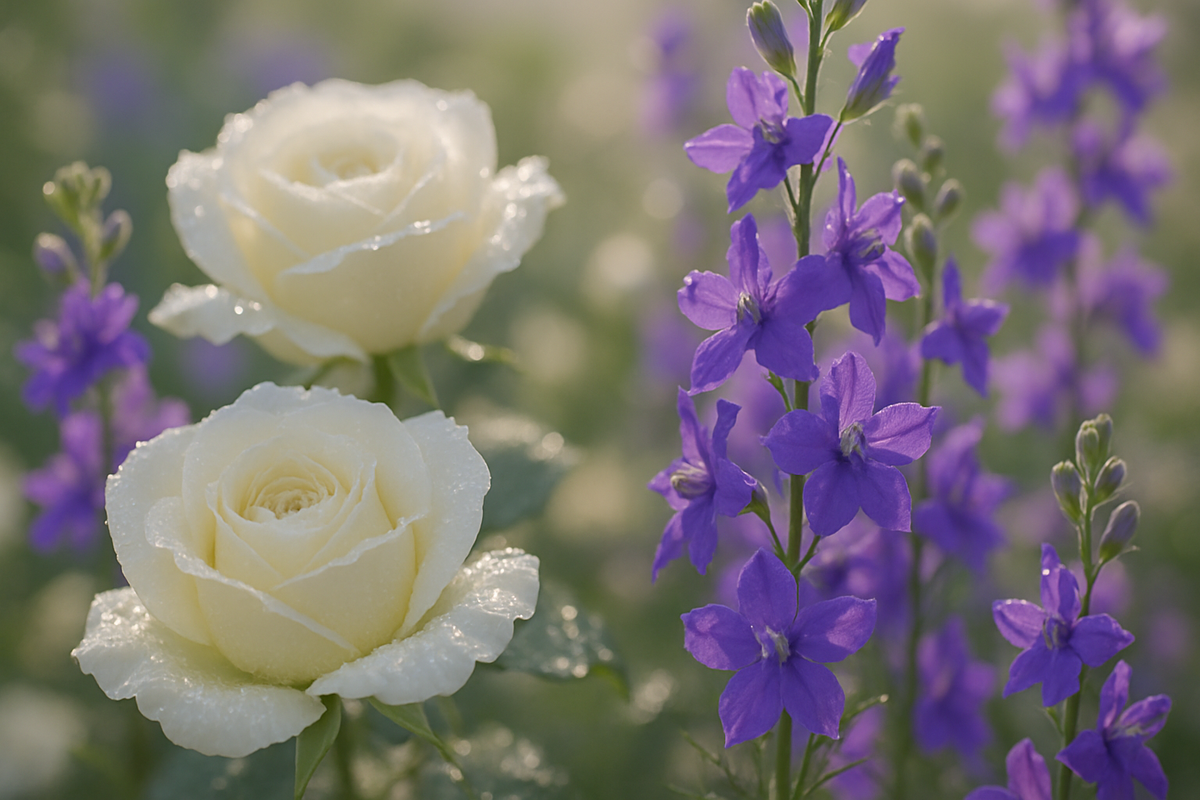
Victorian floriography, the formal language of flowers that flourished in 19th century England, assigned specific virtues to specific blooms. A handful of these held onto their meaning of honesty and moral steadiness long after the trend itself faded.
Color carries meaning almost instantly, before language catches up. Court systems in the Netherlands, Germany and the United Kingdom still use black robes for judges, and mints from ancient Rome to modern national treasuries have chosen gold for medals of honor because it does not tarnish. A handful of colors have carried this weight of moral steadiness across very different traditions.
| Color | Symbolic Meaning | Cultural Context |
|---|---|---|
| White | Purity, honesty, a clean conscience | Used in ancient Greek philosophy and Christian iconography for truth and innocence |
| Blue | Trust, loyalty, calm honesty | Corporate and legal branding worldwide, and the blue of judicial robes in several European courts |
| Gold | Honor, incorruptible value | Used for medals of honor and religious relics because gold does not tarnish |
| Green | Moral growth, groundedness | Associated in Celtic tradition with steady, rooted character |
| Black | Unshakable resolve, quiet strength | Worn by judges in many Western courts as a sign of impartial, unwavering judgment |
Beyond plants and colors, several concrete objects have carried the weight of moral steadiness for centuries.
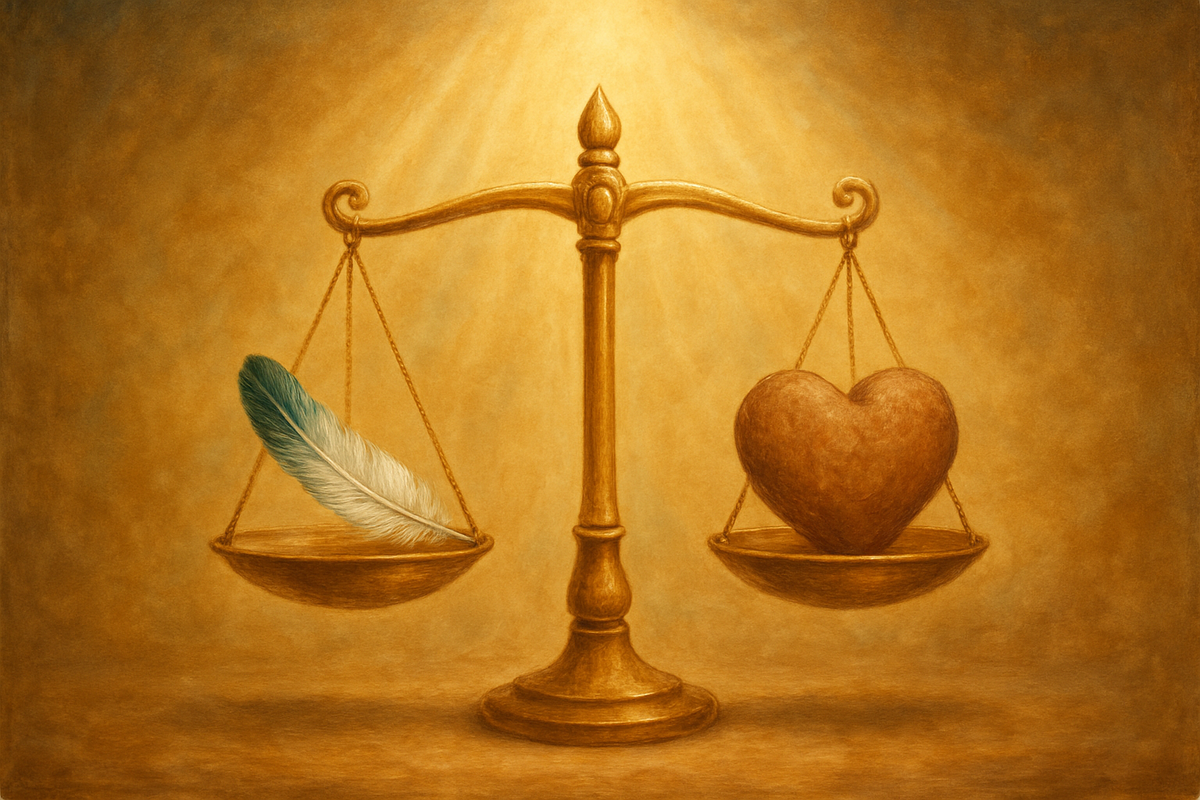
In Egyptian belief, the goddess Ma'at represented truth, balance and cosmic order. After death, a person's heart was weighed against her ostrich feather. A heart heavier than the feather, weighed down by lies and wrongdoing, meant the soul could not pass into the afterlife. Integrity was not an abstract virtue here, it was literally the price of admission to eternity.
The samurai code of Bushido listed seven core virtues, and Gi, meaning rectitude or moral integrity, sat at the center of them. A samurai without Gi was considered dangerous no matter how skilled with a blade, because strength without honesty was seen as a threat rather than an asset.
Confucius named Xin, trustworthiness, as one of the five constant virtues alongside benevolence, righteousness, propriety and wisdom. A person who kept their word, even in small matters, was considered further along the path toward moral maturity than one who simply followed rules out of fear.
These traditions did not need each other to arrive at the same conclusion: integrity is what makes a person predictable in the best sense, someone whose actions can be trusted before they even happen. Whether measured against a feather, a code of seven virtues, or a list of five constants, the standard barely changes from one culture to the next.
Dreams involving integrity tend to center on tests, whether you pass them or not.
Dream symbols like these work the same way a dream catcher does in Ojibwe tradition, filtering out what is false and letting through what is true, a fitting parallel for dreams that circle around honesty.
Symbols only matter if they change behavior, even slightly. Here are practical ways to bring integrity symbolism into everyday routines.
The white rose is the flower most commonly linked to integrity, honesty and purity in Victorian floriography. Larkspur and snowdrop are close seconds, representing an open heart and hope through hardship.
White and blue are the two colors most consistently tied to integrity, with white standing for a clean conscience and blue for trust and loyalty. Gold is also used, particularly for honors and medals, because it resists tarnish the way an honest character resists corruption.
The anchor and the scale are the two most widely recognized symbols of integrity. The anchor represents steadiness against pressure, while the scale represents fairness and balanced judgment.
Dreams about courtrooms, scales or being weighed usually reflect a real situation where your character or decisions are under scrutiny, either from others or your own conscience. It is often a sign your mind is working through guilt, pressure, or a decision you have not fully made peace with.
What does an hourglass symbolize? Explore its meaning of time, mortality, balance and spiritual renewal — plus tattoo, dream and t…
Discover what keys symbolize across cultures—unlocking secrets, opportunity, and new beginnings—plus dream meanings and how to use…

Discover the lily flower's meaning—purity, rebirth, and devotion—plus color symbolism, dream meanings, and how to use it with inte…