Symbols
Symbols of Death Across Cultures and What They Mean
Explore skulls, scythes, ravens and more death symbols from Egypt to Mexico, and what they reveal about how we face mortality.
 KnowMastery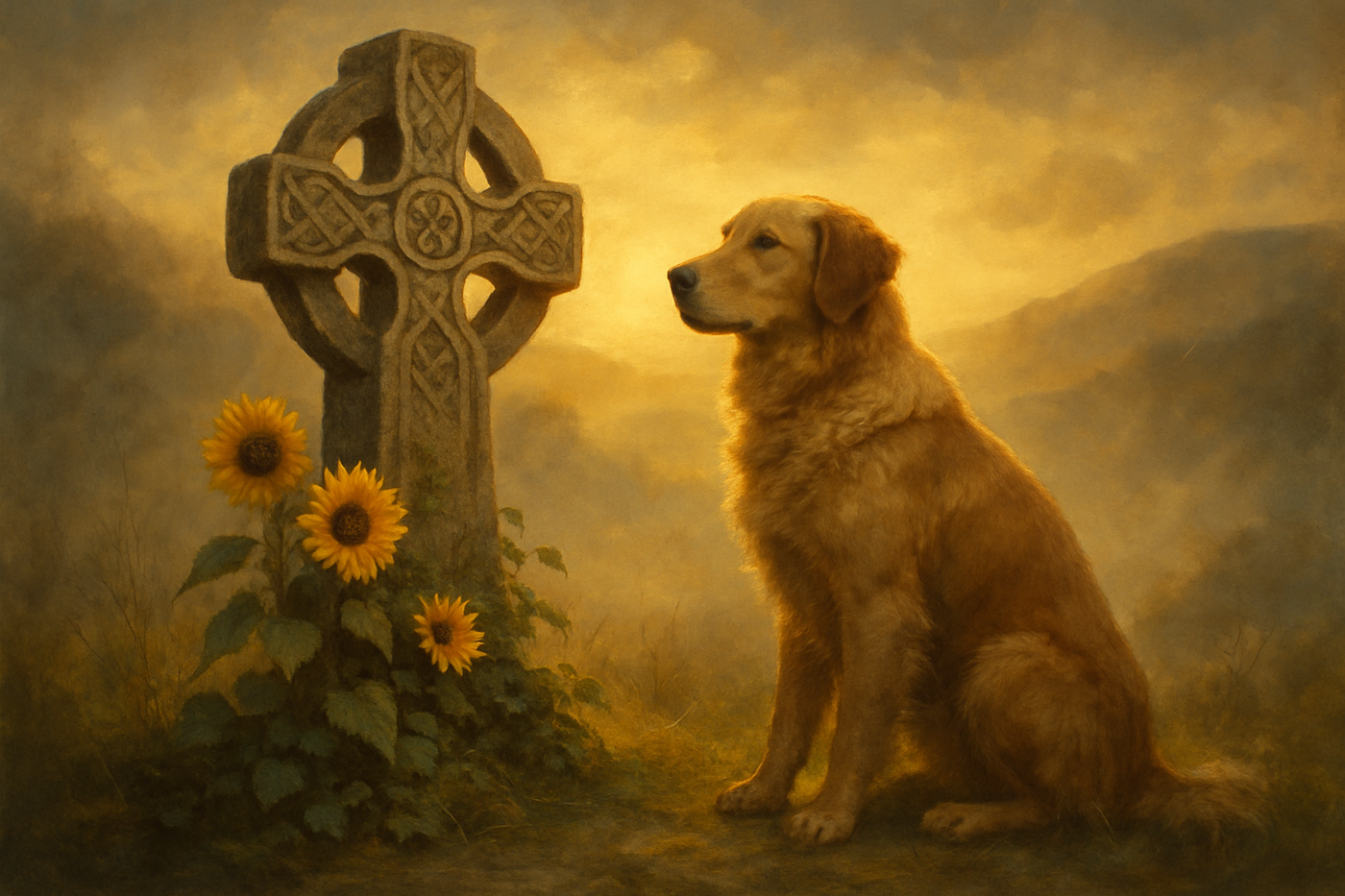
Loyalty is most often symbolized by the dog, the wolf, and the elephant among animals, by the sunflower and ivy among flowers, and by icons like the Claddagh ring, the anchor, and the Celtic knot. Each carries a specific story about devotion, whether it's a dog that waits by a grave for years or a flower that turns to follow the sun. Together they give us a language for something words alone can't always hold.
There's a reason we reach for symbols when we talk about loyalty. Real devotion is quiet most of the time. It shows up in small, repeated choices rather than grand gestures, and that makes it hard to point to directly. A symbol gives loyalty a shape you can wear on a ring, plant in a garden, or ink into your skin.
If you've ever picked out a gift for someone who has stayed by your side through everything, or looked for a tattoo that says "I don't leave," this guide walks through the animals, flowers, and icons that people have used for centuries to say exactly that.
Animal symbolism tends to come from direct observation. People watched how certain creatures behaved toward their mates, families, or groups, and built meaning from what they saw.
The dog is the most universal symbol of loyalty in the world, and it earned that reputation honestly. In Greek mythology, Argos waited for Odysseus for twenty years and recognized him the instant he returned. In Japan, the story of Hachiko, an Akita who came to Shibuya Station every day for nine years after his owner died, became a national symbol of devotion, and a bronze statue of him still stands at the station today. Medieval European tombs frequently show a dog carved at the feet of a knight, a visual shorthand for faithful service that lasted beyond death.
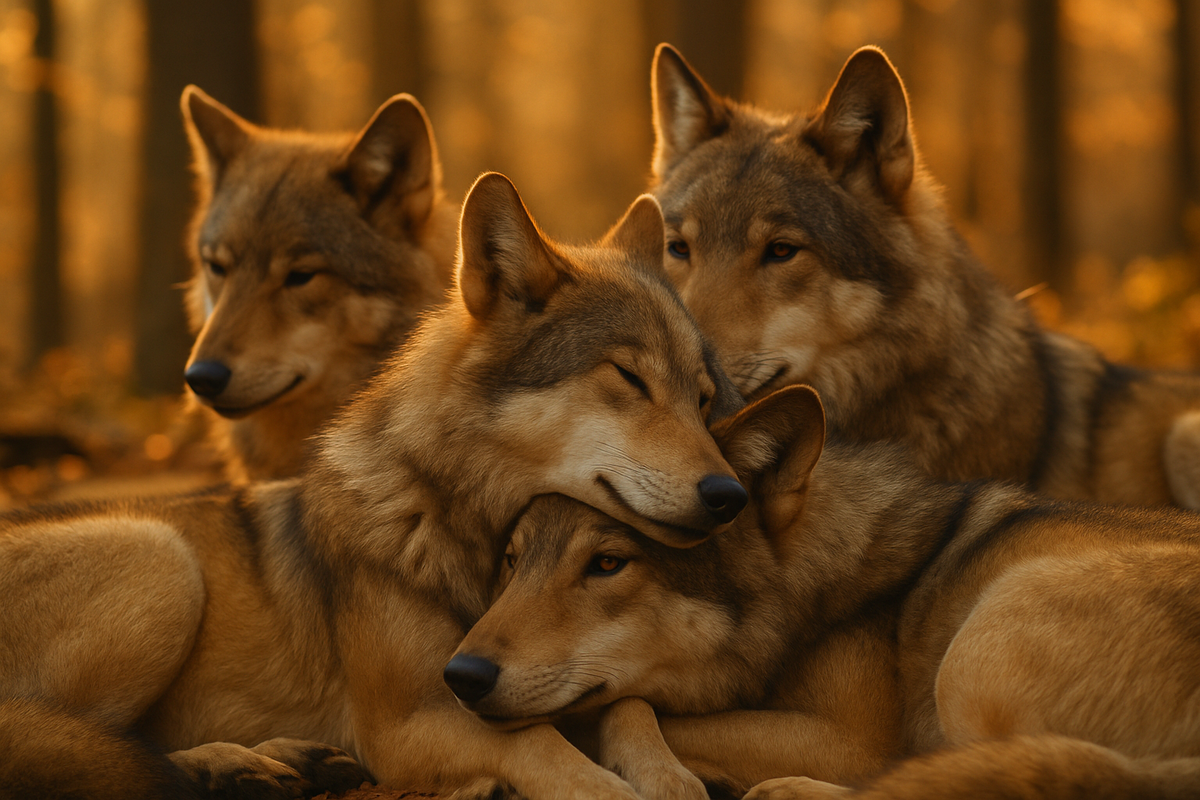
Wolves live and hunt in packs where loyalty to the group determines survival. Norse mythology treats wolves with more complexity than most cultures, pairing the loyal wolves Geri and Freki, who accompany Odin, against the destructive Fenrir. Native American traditions among the Pawnee and Cheyenne peoples associated wolves with family protection and steadfast bonds between pack members, since a lone wolf rarely survives long.
Elephant herds are matriarchal, and the loyalty within them runs deep. Female elephants stay with their birth herd for life, and researchers have watched elephants stand guard over sick or injured herd members for hours at a time. In Hindu tradition, the elephant-headed god Ganesha is tied to steadiness and the removal of obstacles for those devoted to him, which ties the animal to protective, unwavering support.
Swans mate for life in most cases, and this single fact turned them into a symbol of romantic loyalty across European folklore, from Celtic legend to Victorian love poetry. Geese carry a similar reputation. Canada geese fly in formation and mate for years, sometimes for life, which is why wedding traditions in parts of North America still reference the goose as a symbol of a devoted marriage.
Salmon return to the exact stream where they were born to spawn, swimming upstream against currents that kill many of them along the way. Pacific Northwest tribes, including the Coast Salish, viewed this behavior as a form of loyalty to origin and homeland, a devotion to place rather than a person.
Flower symbolism became a formal system during the Victorian era, when sending the wrong bloom could send the wrong message entirely. Loyalty had its own specific flowers within that system.
Beyond nature, human-made symbols have long been used to formalize loyalty into something visible and shareable, worn on the body or displayed in the home.
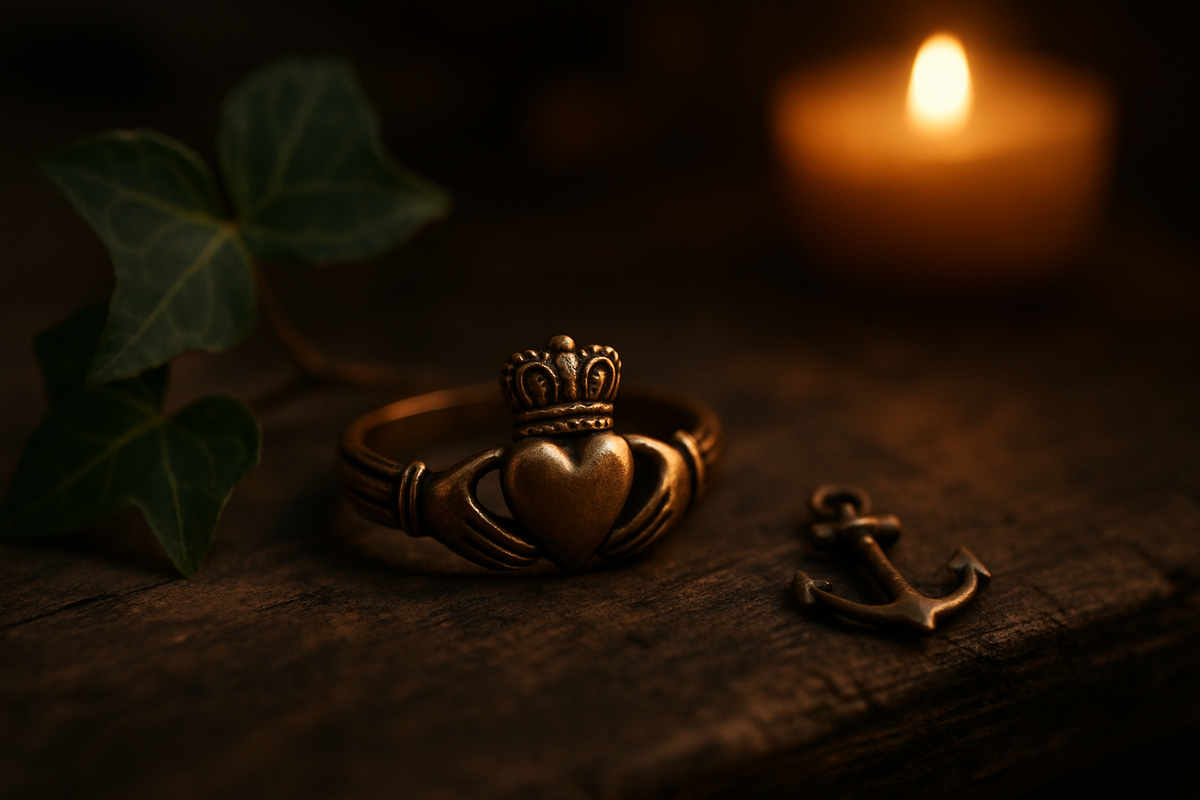
Originating in the fishing village of Claddagh near Galway, Ireland, this ring shows two hands holding a heart topped with a crown. The hands represent friendship, the heart represents love, and the crown represents loyalty. It has been passed down as an engagement or wedding ring for centuries. You can read the full history in this guide to the Claddagh ring meaning.
Sailors adopted the anchor as a symbol of stability long before it became popular in tattoo culture. An anchor holds a ship steady against drifting currents, which made it a fitting emblem for loyalty that doesn't move no matter what pulls at it. Early Christians also used the anchor as a hidden symbol of steadfast faith. The full symbolism is covered in this piece on anchor meaning.
Celtic knots are drawn as a single unbroken line looping endlessly back on itself. That continuous line, with no beginning and no end, became a natural symbol for loyalty that doesn't break under pressure. Irish and Scottish jewelry still uses knotwork specifically for this reason in wedding bands and friendship rings.
Within Christian tradition, the cross represents loyalty to faith even under suffering, since it commemorates a sacrifice made out of devotion. Different cross designs carry slightly different shades of meaning across denominations and history, which you can explore in this breakdown of different types of crosses and their meanings.
A more modern icon, the purity ring is worn as a personal pledge of loyalty to one's own values or to a future partner before marriage. It works on the same symbolic logic as older loyalty icons, using a permanent object to represent an ongoing commitment rather than a one-time promise.
Loyalty shows up differently depending on what a culture values protecting, whether that's a chief, a homeland, or a family line.
Norse culture tied loyalty tightly to the warband and the oath. A warrior's loyalty to his chief was sealed through ring giving ceremonies, where a lord literally gave rings to bind followers to him. Celtic culture leaned more toward loyalty to land and family, which is why the Tree of Life became such a strong symbol there, representing the unbroken connection between ancestors and descendants.
Japan built an entire code of conduct, bushido, around loyalty as a central virtue for the samurai class, expressed through service to one's lord that didn't waver even under threat. The forty-seven ronin, who avenged their master's death in 1703 knowing it would cost them their own lives, remain one of the most retold loyalty stories in Japanese history, and their graves at Sengaku-ji temple in Tokyo are still visited today.
Among many Plains nations, loyalty was expressed through kinship obligation rather than individual pledges. Objects like the dream catcher were tied to protecting family bonds through generations, filtering out harm so that good remains within the circle of the people who depend on one another.
Dreaming about a loyal dog often points to a need for reassurance about a relationship in your waking life, or a reminder that someone you trust isn't going anywhere. A dream about a wolf pack usually reflects your own place within a family or team, and whether you feel protected or left out of it. Dreaming of a wedding ring or a knot that won't come undone frequently shows up during periods of commitment anxiety, whether about a relationship, a job, or a promise you're not sure you can keep.
These symbols work best when chosen with intention rather than picked at random off a shelf.
| Symbol | Category | Origin | Core Meaning |
|---|---|---|---|
| Dog | Animal | Global, notably Greek and Japanese lore | Faithfulness that outlasts absence or death |
| Wolf | Animal | Norse, Native American | Loyalty to the pack or family group |
| Elephant | Animal | Hindu tradition, African savanna cultures | Steady, protective devotion |
| Sunflower | Flower | Victorian floriography | Constant, unwavering devotion |
| Ivy | Flower | Ancient Greek wedding custom | Fidelity that holds on tightly |
| Chrysanthemum | Flower | Japan | Loyalty to country and lineage |
| Claddagh Ring | Icon | Galway, Ireland | Love, friendship, and loyalty combined |
| Anchor | Icon | Maritime tradition, early Christianity | Steadfastness under pressure |
| Celtic Knot | Icon | Ireland and Scotland | Unbroken, endless loyalty |
The dog is the animal most universally associated with loyalty, thanks to real stories like Hachiko in Japan and cultural references going back to Argos in Greek mythology. Wolves and elephants come close behind because of their strong family and pack bonds.
The sunflower and the ivy are the two flowers most tied to loyalty in romantic contexts. The sunflower represents constant devotion because it follows the sun, while ivy represents fidelity because of the way it clings and never lets go.
The Claddagh ring represents three things at once: the hands stand for friendship, the heart stands for love, and the crown stands for loyalty. It's traditionally passed down through families as both a romantic ring and a symbol of lasting commitment.
Dreaming about a loyal dog or a wolf pack usually reflects your own need for security in a relationship, family, or team. It can also point to a hidden worry about whether someone in your life will stay committed to you.
Explore skulls, scythes, ravens and more death symbols from Egypt to Mexico, and what they reveal about how we face mortality.
“There are two sides of every coin.” The age-old saying deciphers the meaning of duality, a concept as old as human thought. Duali…

The Healing Power of Forgiveness Symbols In a world often marred by conflict and discord, the symbols of forgiveness stand as beac…