Greek Mythology
Apollo: Greek God of Music — Lyre, Muses & Symbolism
Why is Apollo the Greek god of music? Explore his lyre, the Muses, laurel, and swan symbolism, plus how he differs from Apollo the…
 KnowMastery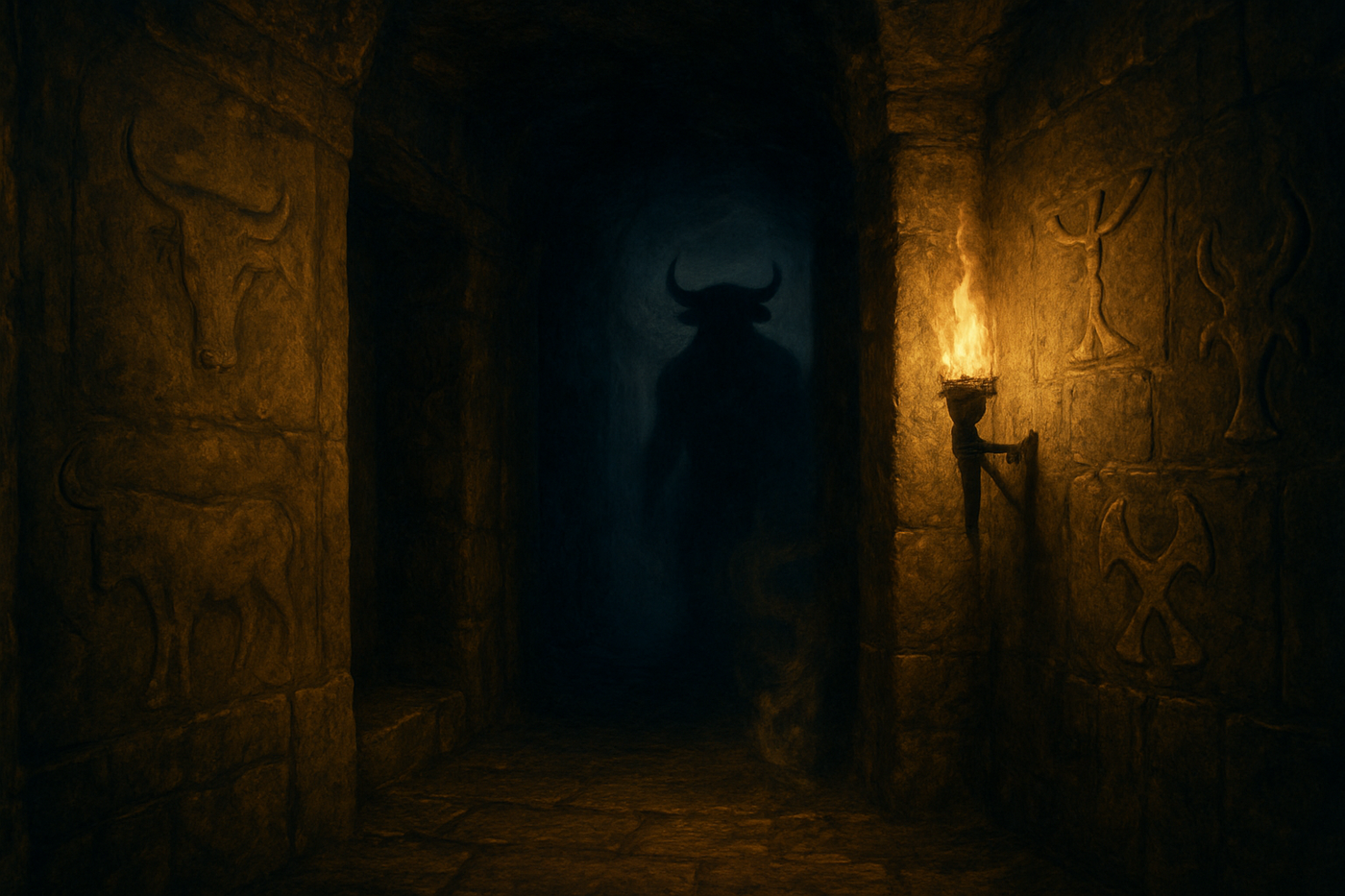
The Minotaur was a bull-headed man imprisoned beneath the Cretan palace of Knossos, born to Queen Pasiphae after a divine curse from Poseidon. The Athenian hero Theseus killed the creature deep inside its maze-like prison, the Labyrinth, using a spool of thread given to him by Princess Ariadne to find his way back out.
| Quick Fact | Answer |
|---|---|
| Real name | Asterion |
| Parents | Pasiphae and the Cretan Bull (sent by Poseidon) |
| Home | The Labyrinth beneath the palace at Knossos, Crete |
| Killed by | Theseus, with help from Ariadne's thread |
| Symbolizes | The shadow self, repressed instinct, and the cost of hubris |
Picture a young Athenian, barely more than a child, walked through torch-lit stone corridors that twist back on themselves like something alive. Somewhere ahead, breathing echoes off the walls - not quite human, not quite animal. This was the dread that gripped Athens every nine years, when fourteen youths were shipped to Crete to feed a monster born of shame and divine punishment.
But the Minotaur's story is more than a horror tale. It is a myth about what happens when desire, pride, and secrecy collide - and about the thread that leads us back to the light. Few Greek myths have survived so vividly into modern language, art, and psychology as this one.
According to Greek myth, King Minos of Crete asked Poseidon for a magnificent white bull as a sign of divine favor, promising to sacrifice it in return. Awed by the animal's beauty, Minos kept it instead and sacrificed a lesser bull. Furious at the broken vow, Poseidon punished Minos in the cruelest way imaginable: he cursed his wife, Pasiphae, with an unnatural passion for the bull itself.
With help from Daedalus, a brilliant Athenian craftsman living in exile at the Cretan court, Pasiphae concealed herself inside a hollow wooden cow to mate with the bull. The result was the Minotaur - originally named Asterion - a being with a human body and a bull's head, monstrous in appearance and appetite. Ashamed and horrified, Minos ordered Daedalus to build a structure so complex the creature could never escape: the Labyrinth.
The Minotaur's lineage is tangled with gods, kings, and some of Greek mythology's most famous heroines. Untangling it helps explain why his story is bound so tightly to themes of pride, punishment, and inherited consequence.
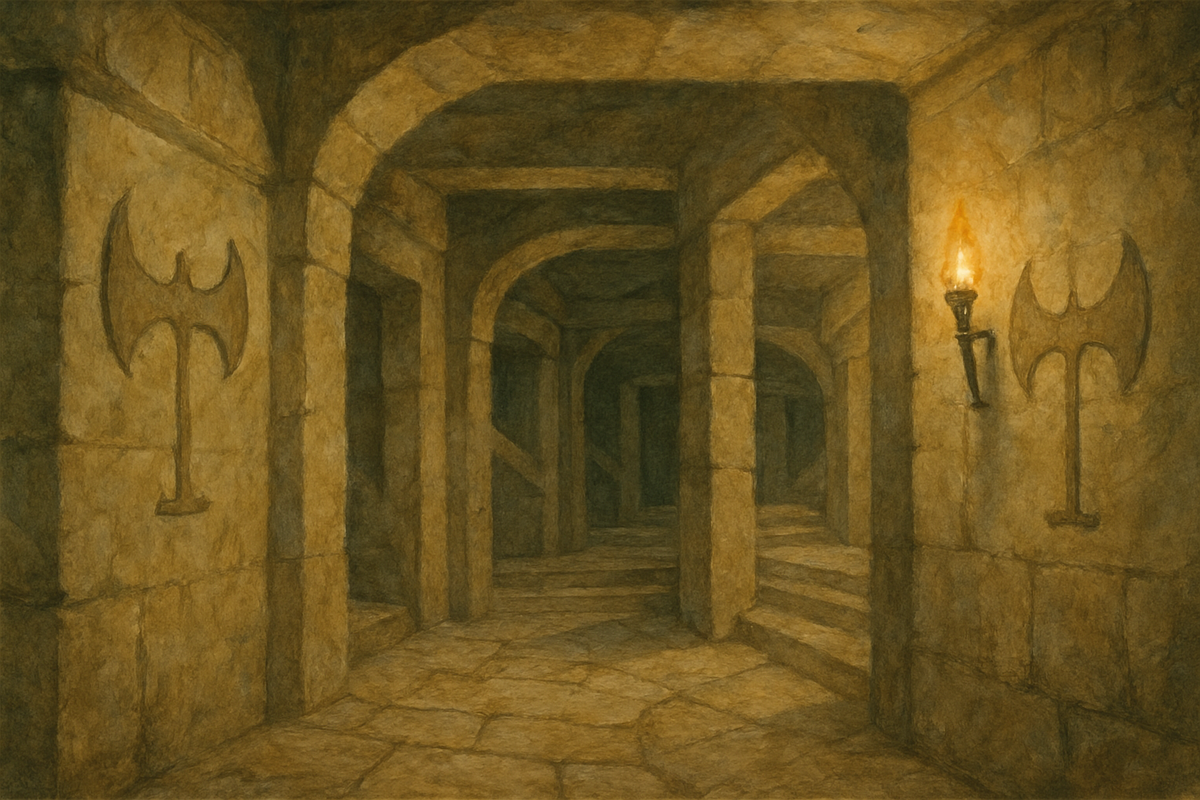
The Labyrinth was said to lie beneath or beside the palace at Knossos, its corridors folding endlessly upon themselves. Ancient writers like Ovid and Plutarch described it as a place where even Daedalus, its own architect, could barely find his way out. It wasn't simply a cage - it was a psychological trap, designed so that anyone who entered would lose all sense of direction and hope before ever reaching the beast at its center.
Minos's son Androgeos was killed in Athens, and in his grief and rage, Minos went to war against the city. The tribute consisted of seven young men and seven young women, sent according to most versions of the myth every nine years, though some ancient sources say every year or every seventh year. These fourteen youths were led into the Labyrinth, never to return, devoured by the Minotaur or lost forever in its passages.
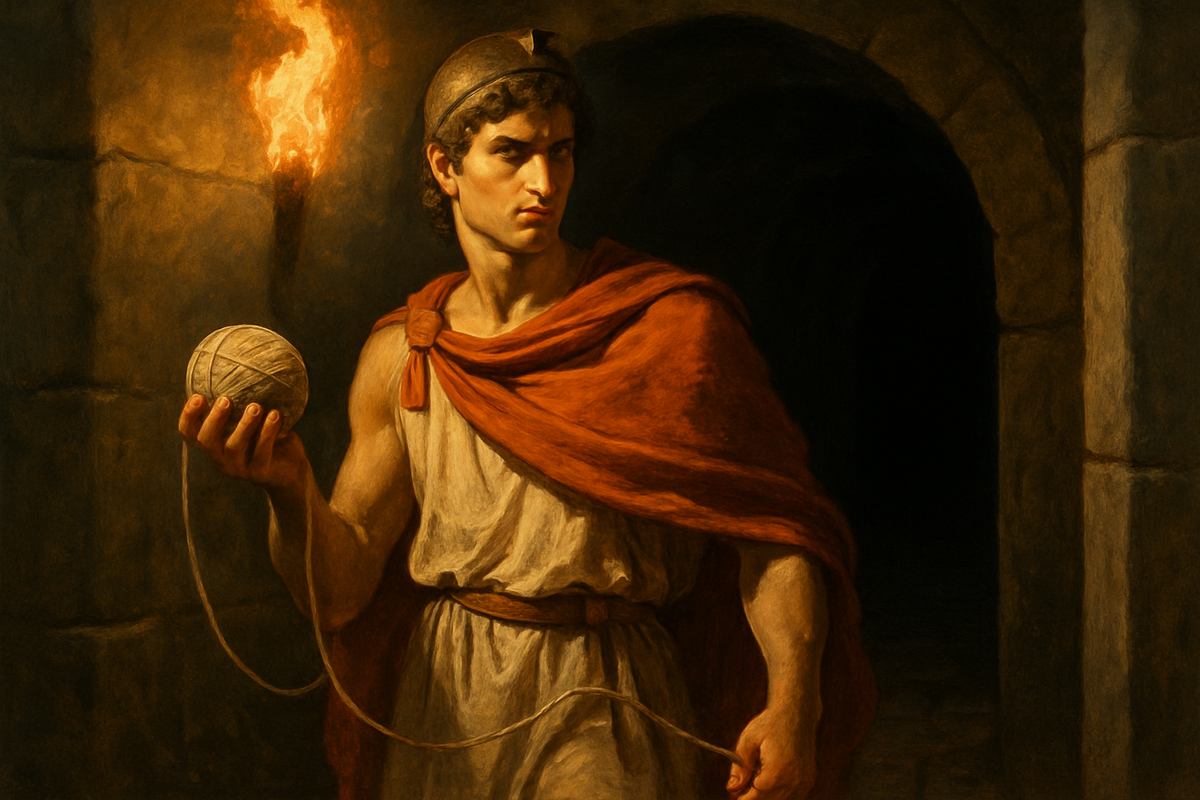
When the third tribute came due, Theseus, son of King Aegeus, volunteered to go among the sacrifices, determined to end the horror. In Crete he caught the attention of Ariadne, Minos's daughter, who fell in love with him at once, a passion as sudden and consuming as the ones Ares and his fellow gods so often inspired in mortals throughout Greek myth. She turned to Daedalus for help, and the architect offered a solution as elegant as the maze was cruel: a simple ball of thread.
The aftermath carries its own tragedy. Theseus later abandoned Ariadne on the island of Naxos, and in his grief-stricken return to Athens forgot to change his ship's black sails to white, leading his father Aegeus to believe him dead and take his own life in despair. Even the myth's triumphant ending is shadowed by loss.
Beyond its narrative thrills, the Minotaur myth has inspired centuries of symbolic reading. Its central images - the maze, the monster, the thread - map remarkably well onto inner human experience.
Carl Jung and later depth psychologists interpreted the Labyrinth as a symbol of the unconscious: a twisting inner landscape where instinct, shame, and repressed desire hide from the rational, civilized self. The Minotaur, born of an unnatural union and locked away out of sight, represents the parts of ourselves we refuse to acknowledge - what Jung called the shadow. Entering the Labyrinth becomes an act of confronting that shadow rather than fleeing it.
In the framework of the hero's journey, the Labyrinth functions as an underworld descent - a trial faced alone, in darkness, with only a thin connection to the outside world (Ariadne's thread) as a guide. Many mythologists compare this passage to initiation rites found across Mediterranean religious practice, where symbolic death and rebirth prepared young people for adulthood.
The myth is equally a warning about hubris. Minos's decision to cheat Poseidon out of the promised sacrifice sets the entire tragedy in motion. Ancient Greek audiences would have recognized this immediately as a classic pattern: mortals who deceive the gods, even in small ways, invite consequences that ripple through generations. The Minotaur is not born evil - it is the fallout of a king's broken promise.
Long after its origins as a moral warning, the Minotaur myth kept being retold, reshaped, and reinterpreted by later civilizations who saw their own anxieties reflected in its imagery. From real archaeology to modern art, the story proved endlessly adaptable.
Arthur Evans excavated Knossos beginning in 1900 and found bull-leaping frescoes, labrys symbols, and horned altars; labrys is one proposed, but linguistically debated, etymological root of 'labyrinth'. Many historians believe the myth encodes a distorted memory of real Minoan bull-worship rituals, with the palace's genuinely maze-like architecture inspiring the legend of an inescapable maze.
The Roman poet Ovid retold the story in his Metamorphoses, emphasizing Daedalus's cunning and the tragedy of Icarus, Daedalus's son, who later died attempting to fly out of Crete on wings of wax and feather. Roman audiences were drawn to the myth's themes of ingenuity, exile, and the price of hubris, connecting it to broader Roman anxieties about ambition and downfall.
The Minotaur experienced a dramatic revival in the twentieth century, most notably through Pablo Picasso, who used the creature obsessively in etchings and paintings during the 1930s as a symbol of violent, animalistic impulse coexisting with human vulnerability. Jorge Luis Borges also reimagined the myth in his short story "The House of Asterion," giving the monster a lonely, almost sympathetic inner voice - a being who welcomes death as an escape from endless solitude.
Dreaming of a labyrinth or a bull-headed figure is often interpreted symbolically rather than literally, since these images tap into universal anxieties about being lost, trapped, or confronted by something we cannot fully control.
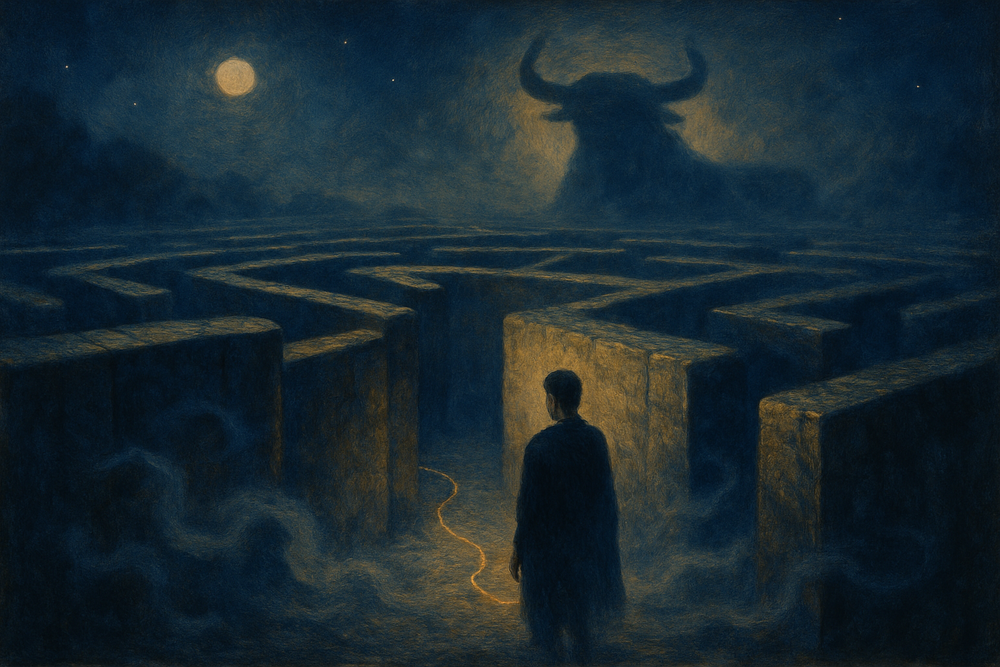
Rather than fearing these dream images, many dream-work traditions suggest treating them as an invitation: what "monster" in your waking life needs to be faced directly, instead of avoided?
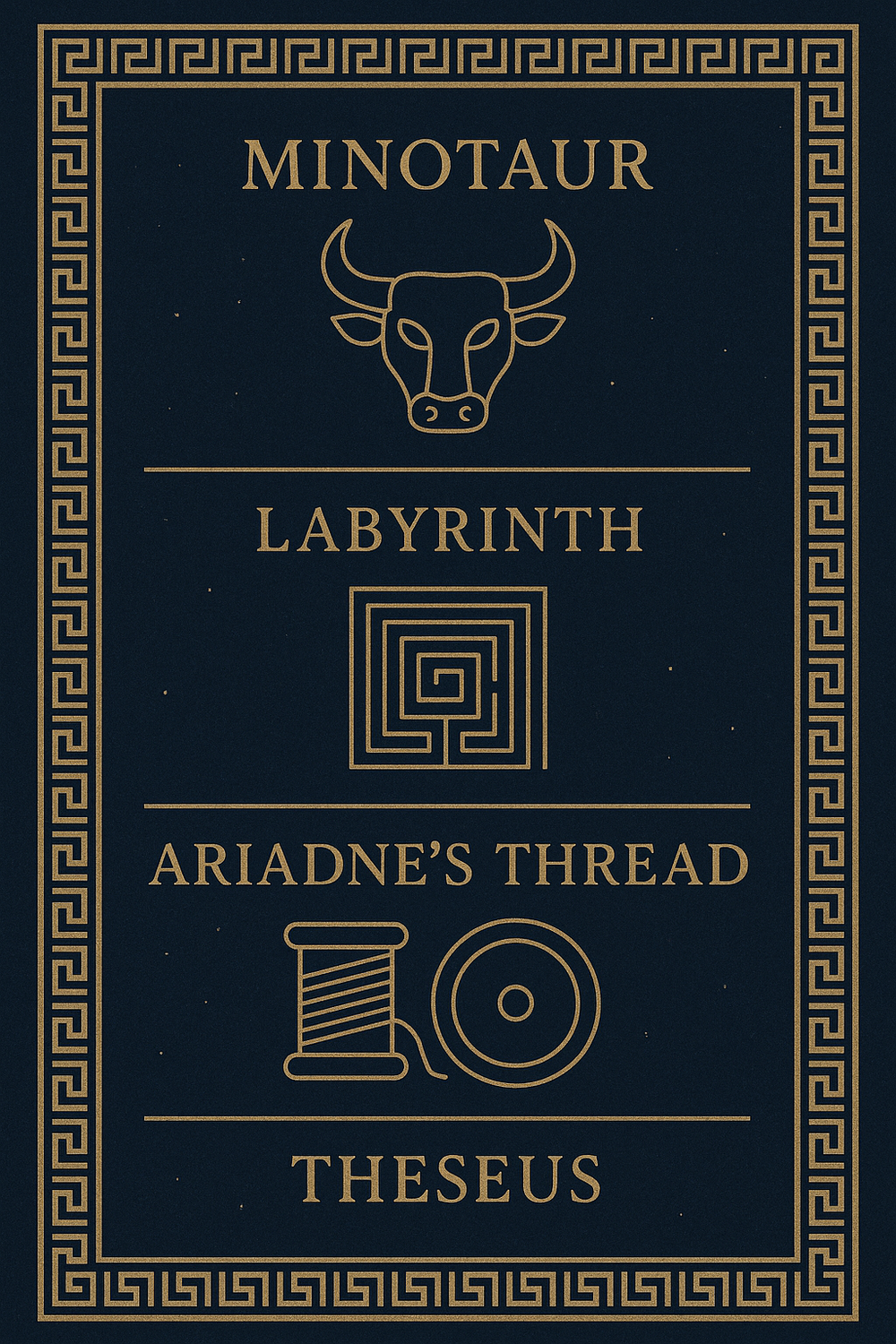
| Symbol | Traditional Meaning | Modern Interpretation |
|---|---|---|
| The Minotaur | Divine punishment made flesh; monstrous appetite | The repressed shadow self; instinct versus reason |
| The Labyrinth | An inescapable prison built by human genius | The complexity of the unconscious mind |
| Ariadne's Thread | A lover's gift enabling escape | Guidance, memory, or insight that keeps us grounded |
| Theseus | A civic hero saving Athens from tribute | The conscious will confronting inner darkness |
You don't need to believe in monsters to find this myth useful. Its imagery offers a practical framework for facing complicated emotional or life situations.
Many readers first encounter the Minotaur through broader study of the Greek gods and their conflicts with mortals, since this myth is deeply tied to divine punishment and the will of Poseidon. Others come to it through comparisons with heroes favored by Athena, goddess of strategic wisdom, whose influence shaped many Greek quest narratives that prized cunning over brute strength.
The Minotaur was a mythological being, not a historical animal, but many scholars believe the story was inspired by real Minoan bull-worship rituals and the genuinely maze-like palace architecture at Knossos on Crete. The myth likely blended distant cultural memory with symbolic storytelling about civilization, instinct, and divine punishment.
Theseus volunteered to join Athens's tribute of youths sent to Crete specifically to end the cycle of sacrifice, and he killed the Minotaur to free his city from this recurring horror. He succeeded with crucial help from Ariadne, who gave him a thread to navigate the Labyrinth and find his way back out after the confrontation.
The Labyrinth is widely interpreted as a symbol of the human unconscious - a place where hidden fears, instincts, and shame are locked away from ordinary life. Entering it and confronting what lies at its center is often read as a metaphor for psychological or spiritual self-confrontation.
Dreaming of a bull-headed monster like the Minotaur often reflects suppressed anger, instinctual urges, or a part of yourself you have been avoiding. It can also signal that you're navigating a genuinely confusing or overwhelming situation in waking life that requires direct confrontation rather than avoidance.
The Minotaur's given name was Asterion, meaning "starry one," a name shared with Pasiphae's mortal husband King Minos's own legendary ancestor. The title "Minotaur" itself simply means "bull of Minos," a label rather than a proper name, referring to his connection to the king rather than his own identity.
The Minotaur originates in Greek mythology, tied specifically to the island of Crete and the palace of Knossos long before Rome adopted Greek myths into its own literary tradition. Roman writers like Ovid later retold the story in works such as the Metamorphoses, but the core myth and its earliest sources are Greek.
In tattoos and modern pop culture, the Minotaur is frequently used to represent inner struggle, hidden rage, or the battle between primal instinct and rational control. It also appears in fantasy fiction, video games, and film as a stand-in for overwhelming obstacles or the "monster" a protagonist must confront to grow.
Asterion was the birth name of the Minotaur, given to him despite his monstrous form as the son of Pasiphae. The name is also notable because it echoes an earlier Cretan king named Asterion, suggesting the myth may have deliberately linked the monster to Crete's older royal lineage.
Why is Apollo the Greek god of music? Explore his lyre, the Muses, laurel, and swan symbolism, plus how he differs from Apollo the…
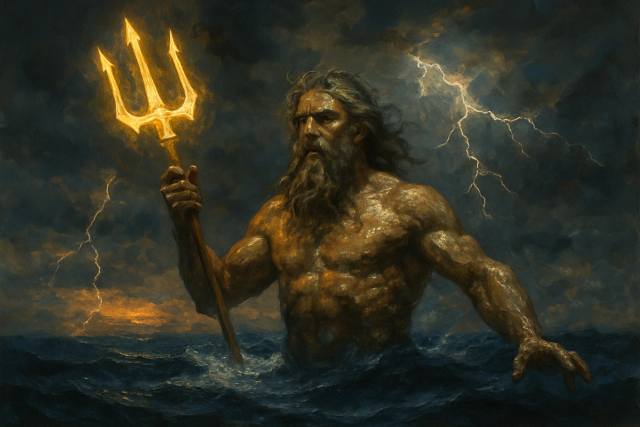
Poseidon, Greek god of the sea: his trident, powers, family, famous myths, Roman equivalent Neptune, and his meaning in dreams tod…
The complete myth of Icarus and Daedalus, what it means, and why flying too close to the sun still works as a warning today.