
Animal Symbolism
Cicada Symbolism and Spiritual Meaning Guide
Cicada symbolism explained: rebirth, patience, and voice, with dream meanings, cultural history, and ways to work with the sign.
 KnowMastery
An owl appearing at night, especially one that lingers near your window or calls out repeatedly, is traditionally read as a message from the spirit world rather than a random animal encounter. In most folklore traditions, owls act as messengers between the living and the dead, so a night visit can signal an approaching death, a warning to pay closer attention to your surroundings, or a departed loved one checking in on you. The exact meaning shifts depending on the owl's species, its behavior, and which culture is doing the interpreting.
Maybe the owl landed on the fence post the same week your grandmother passed. Maybe it called three times outside your window at 3 a.m. and you haven't slept the same since. People remember these moments with a clarity that ordinary nights don't earn, and that's not an accident.
Owls move differently than other birds. They fly in near silence because of the soft, comb-like edges on their feathers. They can turn their heads nearly all the way around. They see in almost total darkness. For thousands of years, people watching these birds from their doorsteps and hillsides decided that something this strange had to belong to a different world, one layered just beneath or beside our own.
Across most traditions, the owl stands for hidden knowledge, the boundary between life and death, and the ability to see what others miss. It is a creature of the in-between hours, active while the rest of the world sleeps, which is exactly why it got tied to the unseen so early in human storytelling.
Owls are also tied to intuition and inner sight. Because they hunt by sound and move unseen through darkness, they became symbols of people who sense things before anyone explains them out loud. An owl showing up during a period of confusion is often interpreted as a nudge to trust a gut feeling rather than wait for outside proof.
The owl's reputation as a death bird is old and specific, not a vague modern superstition. A few examples show how consistently different peoples arrived at the same conclusion from completely separate starting points.
The Roman naturalist Pliny the Elder recorded that owl screeches were believed to precede the deaths of major public figures, including Julius Caesar and the emperor Augustus. A hooting owl near a home or temple was treated as a genuine civic warning, serious enough to be written into historical records rather than dismissed as folk talk.
Among the Apache and several other Native American nations of the Southwest, owls were connected directly to death and the spirits of the deceased. In some of these traditions, saying an owl's name aloud, or even imitating its call, was thought to invite the bird's attention and, with it, misfortune or illness. Children were warned away from mocking the bird for this reason.
Greek belief pulled in the opposite direction. The owl was sacred to Athena, goddess of wisdom and strategic warfare, and its image appeared on Athenian coins as a mark of protection and civic pride. Seeing an owl before battle was considered a sign of favor, not doom. This split shows that the owl's symbolism was never universal. It depended on the local relationship with the bird and the mythology built around it.
In Celtic tradition, the owl was associated with the Cailleach, the crone figure linked to winter, wisdom, and the thinning veil between worlds. Rather than a straightforward death warning, the owl here functioned as a guide figure, something that helped souls move between states instead of simply announcing an ending. Some Welsh folk accounts even treated an owl near a sickbed as a sign that the Cailleach herself was standing watch.
If you're curious how this compares with other birds tied to mortality and transformation, the crow symbolism traditions run on very similar logic, though crows lean more toward collective warning while owls tend to feel personal and direct.
Not every owl sighting carries the same weight. The species, the behavior, and the setting all shift the reading.
| Owl Type / Context | Common Cultural Reading | General Spiritual Theme |
|---|---|---|
| White or barn owl | English and Appalachian death omen | Transition, warning, spirit presence |
| Great horned owl at dusk | Southwestern US and Mexican folklore | Being watched or thought of by someone |
| Owl calling three times | Multiple Native American traditions | Serious warning, often about illness or loss |
| Owl in Greek/Athenian symbolism | Protection of Athena | Wisdom, strategic insight, favor |
| Owl as Lakshmi's vahana (Hindu tradition) | Companion to the goddess of wealth | Prosperity, hidden fortune, patience |
That last entry matters because it's easy to assume the owl is universally a dark omen. In Hindu tradition, the owl serves as the vahana, or vehicle, of the goddess Lakshmi, representing wealth, patience, and the ability to see value others overlook, even in darkness. Context and tradition decide the tone far more than the bird itself does.
Dream interpretation around owls tends to follow the same themes as waking encounters, just filtered through whatever emotion the dream carried.
If an owl encounter has unsettled you, the goal isn't to panic over a death warning but to treat the moment as information worth sitting with.
It also helps to compare the owl against other nighttime or omen-linked creatures you might encounter. Daytime birds of prey carry a different message entirely, as explored in the guide to hawk symbolism, while ground-based omens like the scorpion's spiritual meaning focus more on sudden change and self-protection than on messages from the departed. For a broader look at the owl itself, including totem meanings and additional dream scenarios, the full owl symbolism guide covers ground this article doesn't.
The honest answer to "what does an owl visit mean" is that it depends on where you stand. A farmer in rural Appalachia, a Hindu devotee of Lakshmi, and a student of Greek mythology would each read the same silent, staring bird differently, and none of them would be wrong within their own framework. What stays consistent is the owl's role as a marker of transition, a creature positioned at the edge between what's known and what isn't.
If an owl has entered your life recently, the most useful approach is to hold both readings at once: respect the weight the symbol carries in human history, while staying grounded in what's actually happening around you. Birds show up near homes because of food, shelter, and quiet, not because they've chosen you specifically. But the feeling an owl stirs, that quiet alertness in the middle of the night, is worth listening to regardless of where you land on the omen itself.
Not universally. In English, Appalachian, and ancient Roman folklore, a night owl sighting was often treated as a death warning, but in Greek tradition it symbolized protection through the goddess Athena, and in Hindu tradition it's linked to the goddess Lakshmi and prosperity. The meaning depends heavily on the cultural lens and the specific behavior of the bird.
Several Native American traditions treat a triple hoot as a more serious warning than a single or occasional call, often associated with illness or an approaching loss within the family. It's generally read as a signal to pay closer attention rather than a confirmed prediction.
White or barn owls are the species most tied to death omens in British and Appalachian folklore because of their pale, ghost-like appearance in the dark. In dream interpretation, a white owl is also linked to clarity, purity, and emotional transitions, including unresolved grief.
No. Most traditions describe the owl as a messenger or warning sign rather than a guaranteed prediction of death. It's more commonly interpreted as a call to notice something, check on loved ones, or face a truth you've been avoiding.
Cicada symbolism explained: rebirth, patience, and voice, with dream meanings, cultural history, and ways to work with the sign.
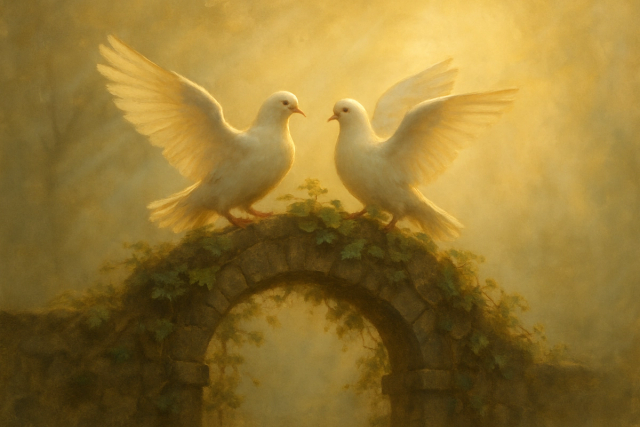
What dove symbolism really means: peace, inner calm, eternal love, the Holy Spirit, and comfort in dreams across cultures.
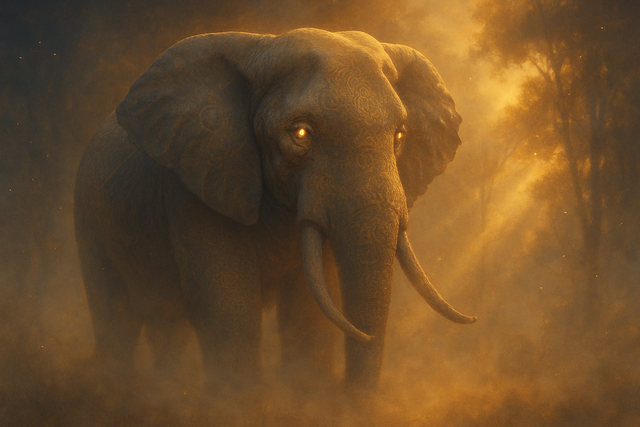
What do elephants symbolize? Discover their meaning in Hindu, Buddhist & African traditions, dreams, totems, and trunk-up luck.