Greek Mythology
10 Fascinating Facts About Hera You Probably Didn't Know
Uncover 10 surprising facts about Hera, Greek queen of the gods, from her sacred animals to her fierce role as protector of marria…
 KnowMastery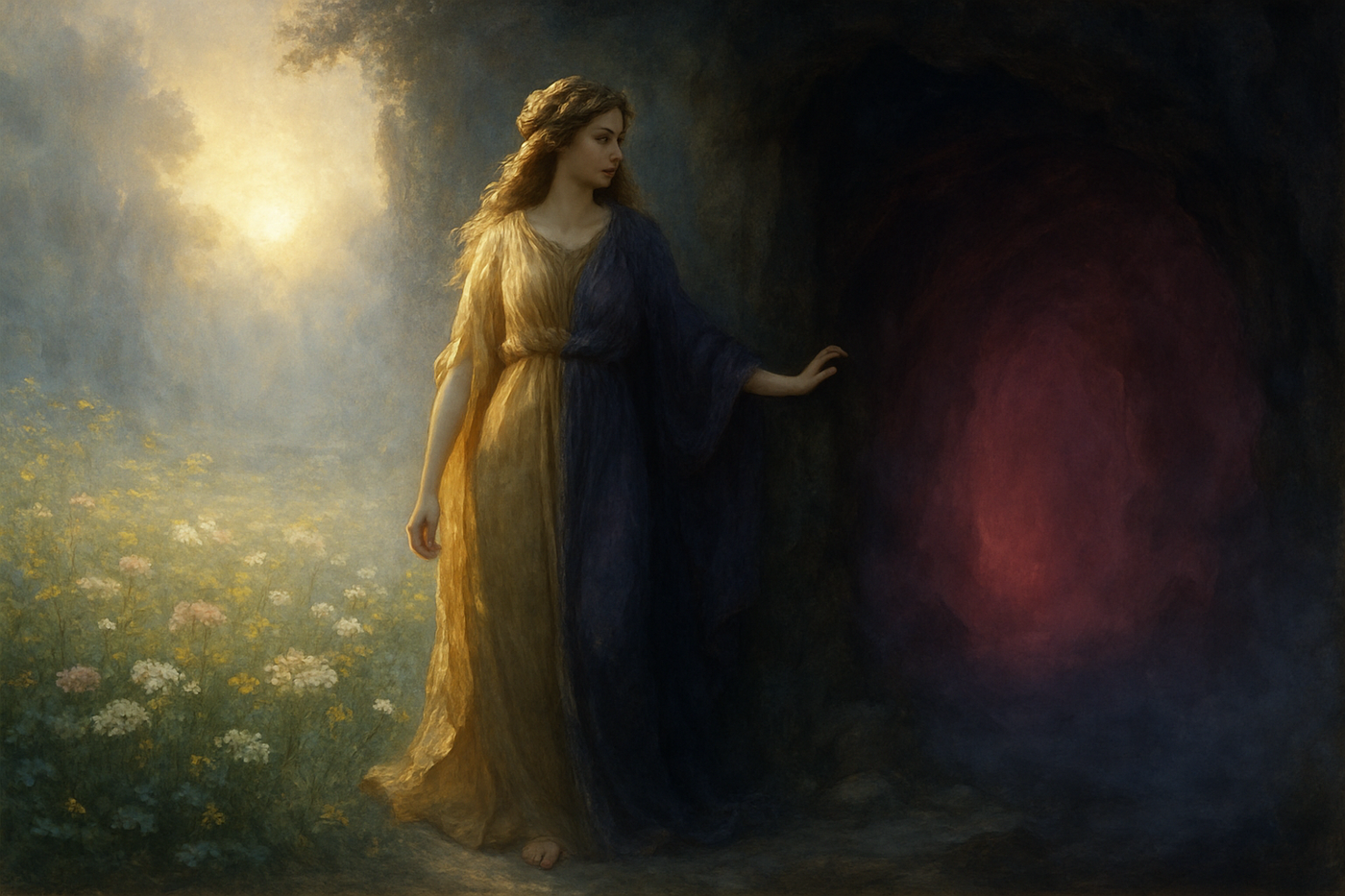
Persephone is the Greek goddess of spring and vegetation who becomes Queen of the Underworld after Hades pulls her into his dark kingdom, splitting her year between the world of the living and the realm of the dead. As the daughter of Zeus and Demeter, she embodies the turning point where innocence hardens into authority, and where loss becomes a doorway to power rather than an ending. Ancient Greeks used her seasonal disappearance to explain autumn and winter, and her yearly return to explain the earth's renewal each spring. Today her myth offers a spiritual language for grief, transformation, and reclaiming power inside change we never chose.
Picture a girl picking flowers in a sunlit meadow, laughing among nymphs, unaware that the earth is about to open beneath her feet. One moment she is innocence itself. The next, she is pulled into darkness by a god she has never met, while the world above turns cold and silent with her mother's grief.
This is not simply a story about a kidnapping. It is a story about what happens when a person is forced to grow up too fast, when loss splits a life into a "before" and "after," and when someone discovers that the underworld they feared becomes, against all odds, a throne.
Persephone's myth has survived for nearly three thousand years because it names something universal: we all move between light and shadow, and our deepest power is sometimes found in the very darkness we once dreaded.
Persephone — also called Kore, meaning "maiden," in her youthful form, and sometimes Despoina, "the mistress," in cult worship — is the daughter of Zeus and Demeter, goddess of the harvest. She was gathering flowers in the fields of Nysa or Enna when Hades, god of the underworld, opened a chasm in the earth and carried her away in his chariot to become his bride and queen.
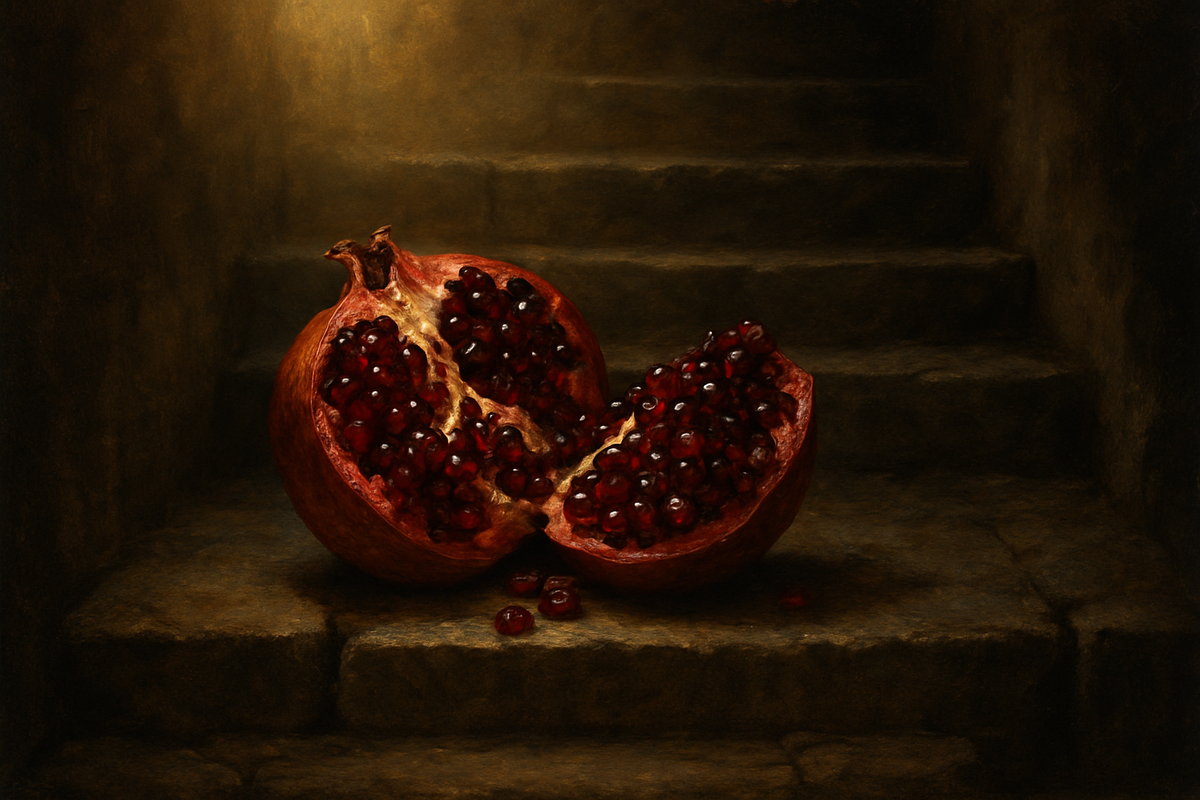
Demeter searched the earth in mourning, and in her grief the crops withered and famine spread across humanity. Eventually Zeus intervened, and Hades agreed to release Persephone — but not before she ate several pomegranate seeds, a detail that bound her permanently to the underworld. The compromise: Persephone would spend part of the year below with Hades and part of the year above with her mother, and the earth would bloom or wither accordingly.
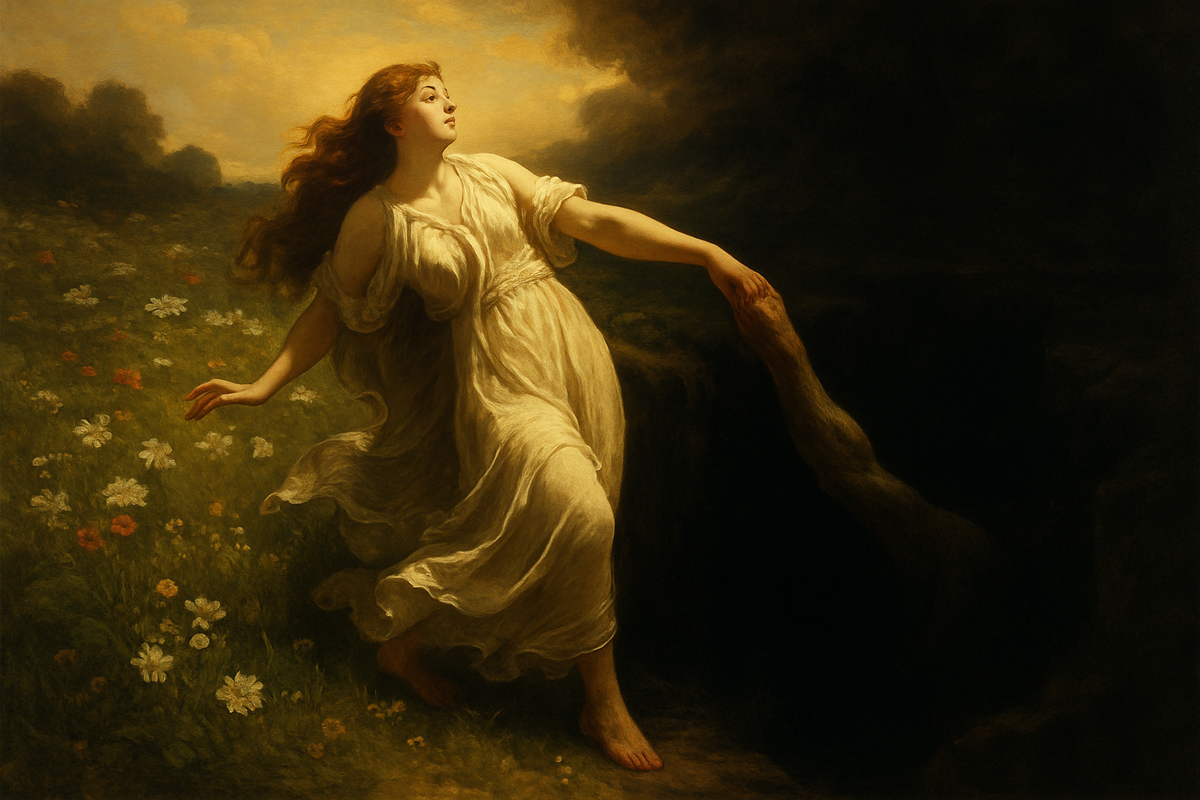
In modern spiritual and psychological interpretation, Persephone represents the part of the psyche that must descend into darkness before it can fully mature. Her myth is often read through a Jungian lens as an archetype of initiation: the maiden torn from her mother's world is not simply victimized, she is initiated into deeper knowledge — of sexuality, mortality, and rulership — that she could not have accessed while remaining a carefree girl in the meadow.
Practitioners of goddess spirituality and modern Hellenic paganism invoke Persephone during major life transitions: divorce, illness, grief, career upheaval, or any season that feels like being pulled underground against one's will. She is called upon not to escape the darkness, but to learn how to rule within it — to find agency even inside circumstances that were never chosen.
Unlike deities who visit the underworld temporarily, Persephone becomes its sovereign. This distinguishes her from figures like Orpheus or even Apollo, who interact with death but never rule it. Her enthronement suggests that true spiritual authority often comes only after surviving an experience of profound loss or disempowerment — she does not merely survive the underworld, she becomes its queen.
In ancient Greece, Persephone was central to the Eleusinian Mysteries, one of the most important religious rites of the ancient world. Held annually at the sanctuary of Eleusis near Athens from roughly the 15th century BCE until the rites were suppressed under Emperor Theodosius I in 392 CE, initiates reenacted Persephone's descent and return as a symbol of the soul's own journey through death into a promised afterlife. Cicero and other ancient writers described the Mysteries as transformative, teaching initiates "to die without fear." The rites remained secret, but their core message was clear: what looks like an ending can be the beginning of something sacred.
The Romans absorbed Persephone into their pantheon as Proserpina, wife of Pluto. The poet Ovid, in his "Metamorphoses," gave the story a more melodramatic, romantic flavor, emphasizing Pluto's infatuation and Ceres' (the Roman Demeter) frantic search. Centuries later, Gian Lorenzo Bernini's marble sculpture "The Rape of Proserpina" (1622) captured this same dramatic, physical version of the abduction — a striking contrast to the solemn Greek reliefs at Eleusis, which emphasized sacred procession over struggle. This Roman lens shaped medieval and Renaissance European art, where Proserpina's abduction became a favorite subject for painters exploring love, force, and fate, quite distinct from the ritual-focused Greek treatment centered on agricultural renewal and mystery cult initiation.
| Tradition | Name | Primary Emphasis |
|---|---|---|
| Classical Greek Religion | Persephone / Kore | Seasonal cycle, agricultural fertility, mystery initiation |
| Eleusinian Mysteries | Kore | Death, rebirth, and hope for the afterlife |
| Roman Mythology | Proserpina | Romantic abduction narrative, marriage to Pluto |
| Modern Goddess Spirituality | Persephone | Archetype of transformation, feminine power in darkness |
Dreaming of Persephone, pomegranates, or descending into an underground realm often signals a period of psychological transition. Dream analysts and spiritual counselors commonly interpret these images as follows:
Whether you approach Persephone as myth, archetype, or devotional figure, her story offers concrete practices for anyone moving through a difficult transition:
Persephone's story is deeply woven into the wider Greek pantheon. Her mother Demeter's grief-driven strike against humanity shows how intertwined the gods' emotional lives were with the natural world, and her father Zeus arbitrated the final compromise the same way he settled disputes among the Olympians, including conflicts involving Hera. Some myths also link Persephone to Aphrodite, who once desired the beautiful youth Adonis and placed him in Persephone's care in the underworld, sparking a dispute over his time between the two goddesses — a subplot that echoes Persephone's own seasonal division of time. Readers curious about the wider family of deities can explore the complete overview of Greek gods and their meanings for more context on how these relationships fit together.
Persephone endures because her story refuses easy categorization. She is victim and sovereign, spring and death, daughter and queen, all at once. In a culture increasingly interested in reclaiming power after trauma, her myth offers a template that doesn't ask us to pretend the darkness never happened — it asks us to rule within it, and to trust that we, too, will bloom again above ground.
Persephone is neither good nor evil in the moral sense used for later religious traditions; she is a complex Greek goddess embodying both life-giving spring and the authority of death. Ancient Greeks approached her with reverence and a mixture of hope and fear, much as they did with death itself.
According to the most common version of the myth, Persephone ate a handful of pomegranate seeds while in the underworld, either out of hunger or because Hades encouraged her to. In ancient Greek belief, eating food offered in the underworld created a binding tie to that realm, which is why she was required to return there for part of each year.
In modern spiritual practice, Persephone symbolizes transformation through crisis, the integration of light and shadow aspects of the self, and the reclaiming of personal power after periods of loss or forced change. She is often invoked during major life transitions, grief work, and seasonal rituals tied to the equinoxes.
Persephone is the daughter of Demeter, goddess of the harvest, and was abducted by Hades to become his wife and Queen of the Underworld. The resulting compromise between Hades, Demeter, and Zeus established Persephone's yearly cycle between the underworld and the living world, which the Greeks used to explain the changing seasons.