
Symbols
50+ Symbols of Kindness and Compassion (With Meanings)
Discover 50+ symbols of kindness and compassion — from the heart and dove to Guan Yin and the lotus — and what each one truly mean…
 KnowMastery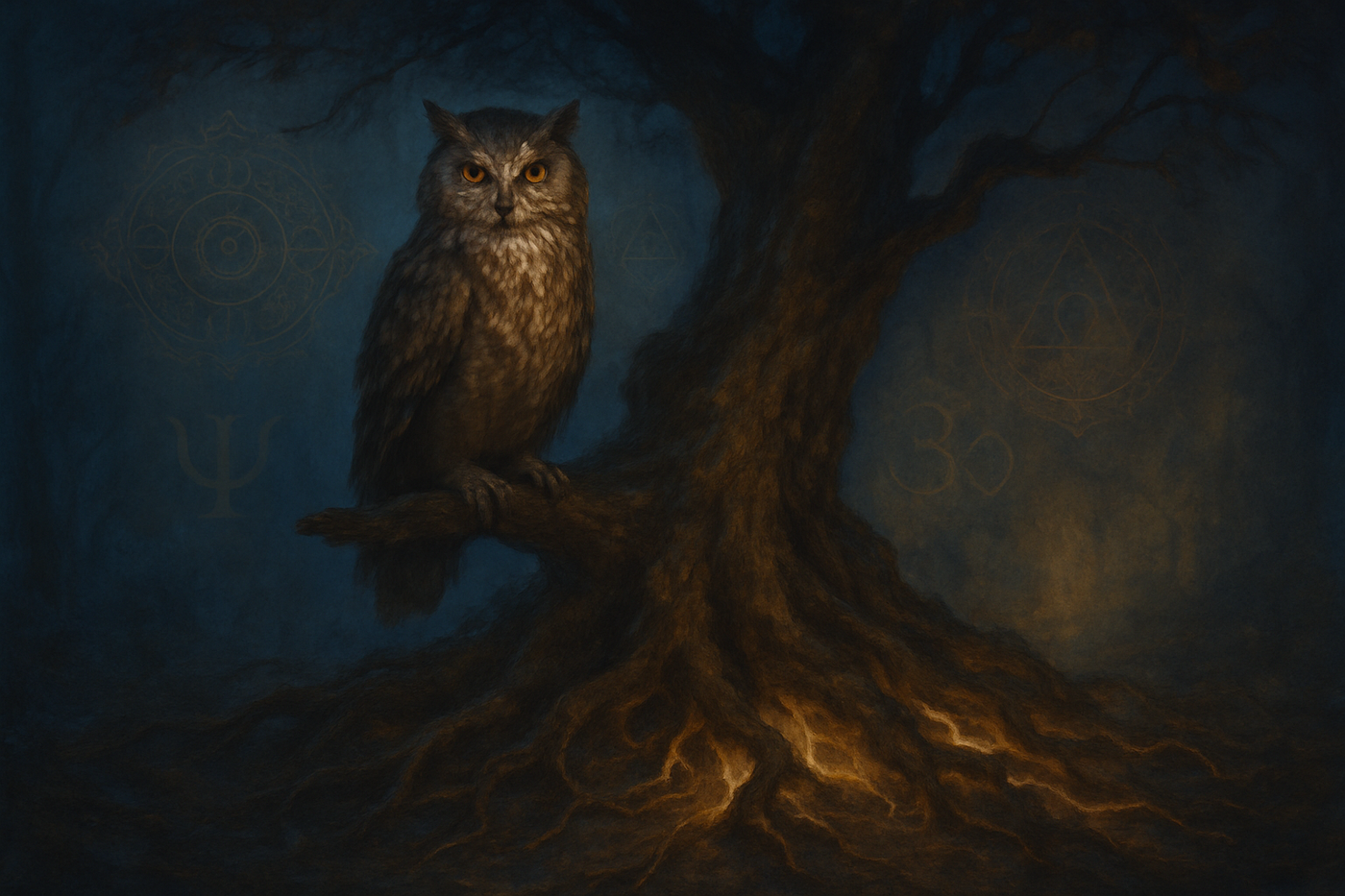
Symbols of wisdom are visual emblems—like the owl, the Tree of Life, the Yin Yang, or the elephant-headed Ganesha—that cultures around the world have used for thousands of years to represent insight, discernment, and higher understanding. From the owl of Athena in ancient Greece to the ibis of Thoth in Egypt, these images distill abstract knowledge into a single recognizable form. The imagery differs by civilization, but the underlying message stays remarkably consistent: true wisdom blends knowledge, patience, and moral clarity, not just raw intelligence.
Picture a Greek philosopher pausing beneath an olive tree at dusk while an owl calls somewhere in the branches above. Centuries later, on the other side of the world, a Celtic bard recites the legend of a salmon that swallowed nine hazelnuts of knowledge from a sacred well. Neither person ever met the other, yet both reached for the same truth: wisdom is precious, elusive, and worth encoding into a symbol that could outlive them.
That is the quiet power of these emblems. Long before universities or written philosophy existed, people carved owls into pottery, painted elephants on temple walls, and wove protective eyes into amulets—each an attempt to capture something invisible: the exact moment knowledge becomes understanding.
This guide walks through the most enduring wisdom symbols from around the world, what they meant to the people who first created them, what they can mean in dreams, and how you can bring their meaning into your own life today.
Across unrelated civilizations, the symbols chosen to represent wisdom share surprising patterns. Nocturnal animals like owls and cats appear repeatedly because they can perceive what others miss in darkness—a metaphor for insight beyond surface appearances. Long-lived beings such as elephants, tortoises, and ancient trees represent wisdom accumulated slowly, over decades rather than in a single flash. Cyclical imagery, like a snake shedding its skin or the balanced curves of the Yin Yang, reflects the idea that wisdom grows through repeated experience rather than one dramatic revelation. Recognizing these shared threads makes it easier to understand why a particular animal, plant, or shape became sacred to a specific culture in the first place.
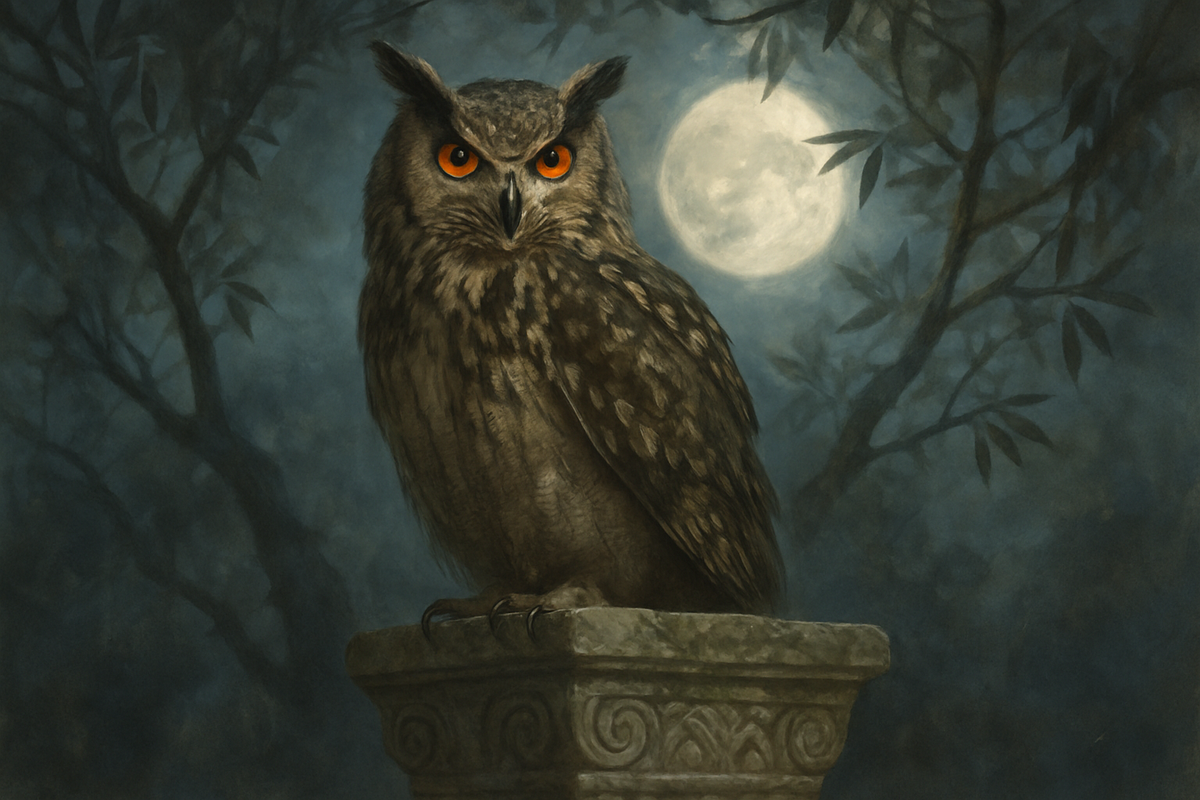
In classical Greece, the little owl (Athene noctua) was the sacred companion of Athena, goddess of strategic wisdom and warfare. The bird's ability to see clearly at night made it a natural emblem for insight that pierces ignorance. Owls were minted onto Athenian coins, painted onto pottery, and treated as good omens before battle. The phrase "owl of Minerva," referencing the Roman equivalent of Athena, later became philosophical shorthand for wisdom that arrives only after events have already unfolded.
The Egyptian god Thoth, often depicted with the head of an ibis or as a baboon, was credited with inventing writing, mathematics, and the calendar. As scribe of the gods and keeper of the underworld's records, Thoth linked wisdom directly to the written word rather than to spoken tradition alone. The ibis's long, curved beak was associated with the crescent moon, tying lunar cycles to intellectual illumination.
In Norse tradition, the god Odin sacrificed one of his own eyes at Mimir's well in exchange for a single drink of cosmic knowledge. He traveled with two ravens, Huginn ("thought") and Muninn ("memory"), who flew across the nine worlds each day and returned each evening to whisper what they had seen. The myth suggests wisdom requires both sacrifice and the constant renewal of information—a strikingly modern idea encoded in an ancient story.
In Hindu belief, the elephant-headed deity Ganesha is invoked before starting any new venture, precisely because elephants are seen as patient, intelligent, and capable of remembering vast amounts of information across a lifetime. Ganesha's large ears symbolize deep listening, while his small eyes represent focused concentration—both considered prerequisites for genuine wisdom rather than mere cleverness or quick wit.
Celtic mythology tells of a salmon that ate nine hazelnuts fallen from the Tree of Knowledge into the Well of Wisdom, absorbing all the world's understanding in a single bite. The young hero Fionn mac Cumhaill accidentally tasted the salmon's juice while cooking it for his teacher and instantly gained the fish's wisdom, using this gift throughout his later adventures. The story echoes a broader Celtic reverence for sacred trees as sources of interconnected knowledge linking the underworld, earth, and sky.
Among the Akan people of Ghana, the Sankofa symbol depicts a bird with its feet facing forward and its head turned backward, often holding an egg in its beak. It teaches that wisdom means learning from the past before moving into the future—a philosophy still referenced today in West African art, oral proverbs, and Adinkra cloth patterns worn at funerals and celebrations alike.
| Symbol | Culture / Origin | Core Wisdom Meaning |
|---|---|---|
| Owl | Ancient Greece | Insight that sees through darkness and illusion |
| Ibis (Thoth) | Ancient Egypt | Wisdom recorded through writing and knowledge |
| Ravens (Huginn & Muninn) | Norse Mythology | Thought and memory in constant motion |
| Elephant (Ganesha) | Hindu Tradition | Patience, discernment, obstacle removal |
| Salmon | Celtic Legend | Absorbed wisdom of the natural world |
| Sankofa Bird | Akan, West Africa | Learning from the past to guide the future |
| Yin Yang | Chinese Taoism | Balance as the foundation of true understanding |
Organized religions each developed their own visual language for wisdom. In Kabbalistic Judaism, the Tree of Life maps ten interconnected spheres, or Sephirot, representing the flow of divine wisdom from its highest source down into the material world—each branch a lesson meant to be integrated slowly, not memorized all at once. In Middle Eastern and North African traditions, the Hamsa hand is worn not only for protection but also to symbolize heightened, watchful awareness; the eye often placed at its center represents the ability to perceive truth beyond surface illusion.
Christian iconography contributes its own imagery of wisdom, most notably the all-seeing Eye of Providence and the dove representing the Holy Spirit's gift of counsel and understanding, both common in church art and stained glass. Meanwhile, Chinese Taoist philosophy frames wisdom not as an object to be acquired but as a lived state of equilibrium, illustrated beautifully by the interlocking dark and light halves of the Yin Yang described earlier.
Numbers have long carried symbolic weight tied to wisdom. In numerology, the number 7 is consistently linked to introspection, spiritual analysis, and the search for deeper truth—it appears in the seven chakras, the seven classical planets, and the seven days of biblical creation. If you're curious how your own birth date might point toward a wisdom-oriented life path, our full breakdown of numerology and life path numbers explains how these patterns are calculated and interpreted.
Wisdom-related imagery often surfaces in dreams during periods of decision-making or personal growth. A few common examples:
If symbolic dream imagery appears frequently for you, it can help to track the pattern over time the same way you might record encounters with protective symbols like the dream catcher, which was traditionally used by Ojibwe communities to filter negative visions and let clear, wise thoughts pass through to the sleeper.
These symbols were never meant to be purely decorative—they were tools for daily reflection. Here are a few practical ways to work with them:
The owl is the closest thing to a universal wisdom symbol, appearing in Greek, Roman, and various Indigenous traditions as a creature that sees clearly in darkness. Its meaning isn't identical everywhere, though—some cultures, including certain Native American tribes, associate owls with death or warning rather than pure wisdom, so context always matters.
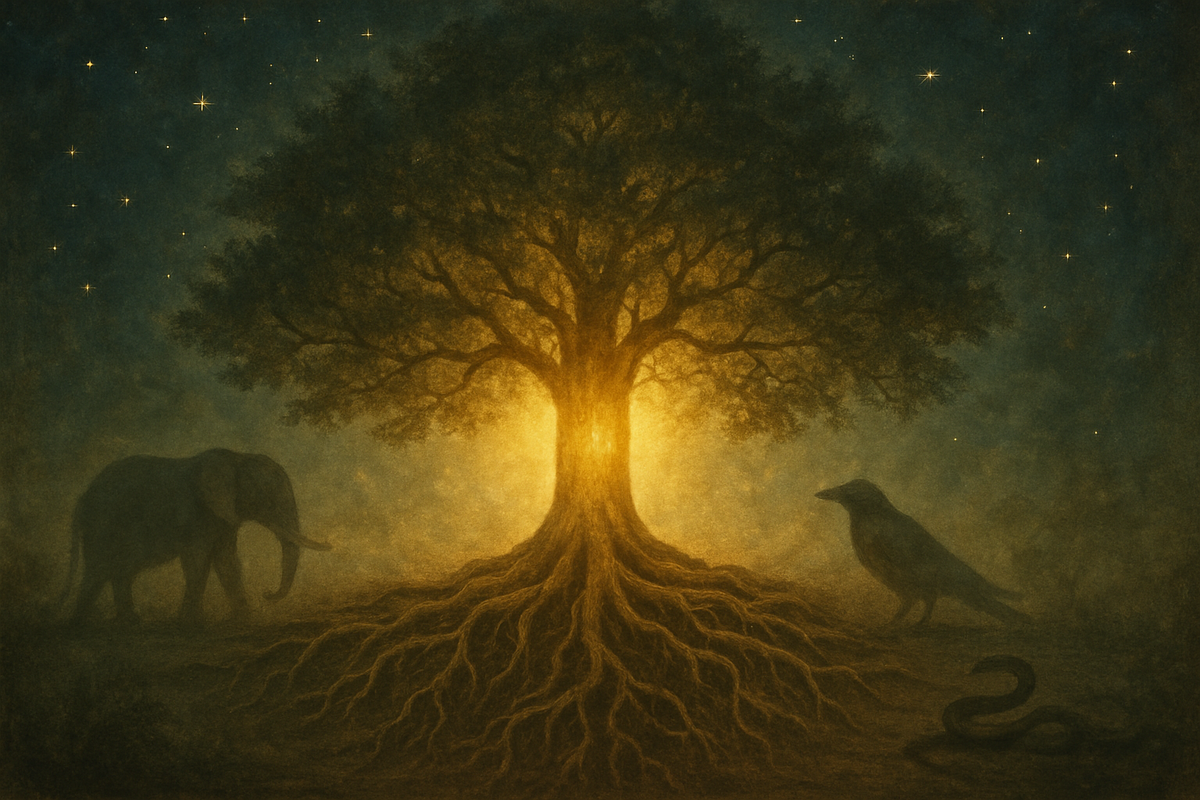
The elephant is one of the most consistently wisdom-linked animals, especially through Ganesha in Hindu tradition and through African folklore celebrating the elephant's memory and patience. Snakes and tortoises also frequently represent wisdom because of their longevity and cyclical nature.
The Tree of Life appears in Kabbalistic, Norse, and Celtic traditions as a map connecting different realms of existence and knowledge, with its roots and branches symbolizing how wisdom draws from both grounded experience and higher understanding. Its structure is often used as a meditative tool for organizing spiritual growth step by step.
Dreaming of a traditionally wise animal usually points to a decision you're weighing while awake, with the animal's specific traits hinting at what's needed—an owl suggests trusting intuition, while an elephant suggests patience. These dreams tend to appear more often during transitions, such as a new job or a major life choice.
Discover 50+ symbols of kindness and compassion — from the heart and dove to Guan Yin and the lotus — and what each one truly mean…

Discover 49+ powerful self-love symbols — crystals, animals, flowers, and spiritual icons — and what each one means for building s…
Explore skulls, scythes, ravens and more death symbols from Egypt to Mexico, and what they reveal about how we face mortality.